


 by Tom Gurney
Tom Gurney BSc (Hons) is an art history expert with over 20 years experience
Published on June 19, 2020 / Updated on September 27, 2026
Email: tomgurney1@gmail.com / Phone: +44 7429 011000
A face caught between youth and age
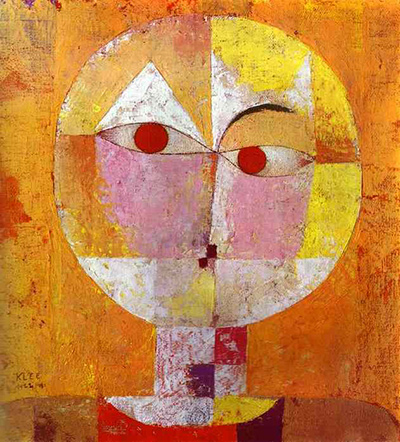
A large round head almost fills Paul Klee’s Senecio. Its red eyes meet ours, but they do not look in quite the same direction. One eyebrow rises in a white triangle; the other turns down in a dark curve. A fine line divides the face, while pink, yellow, ochre and violet areas refuse to settle into an ordinary portrait. Klee makes a person immediately recognisable from a handful of shapes, then makes it difficult to say what that person is feeling or even how old he is.[1][2][3]
The painting was made in 1922, during Klee’s Weimar Bauhaus years, and is now in the Kunstmuseum Basel. Basel records its full title as Senecio (Baldgreis). The two names are a productive way into the picture: Senecio is a botanical genus, while the German Baldgreis suggests someone who will soon be an old man. The title is playful, but the plant connection is documented by the owning museum, not an eccentric guess to be dismissed. Nor does it identify a performer or diagnose a real sitter.[1][2][4]
Explore the details of Senecio
Select a numbered area to examine its detail at high resolution.
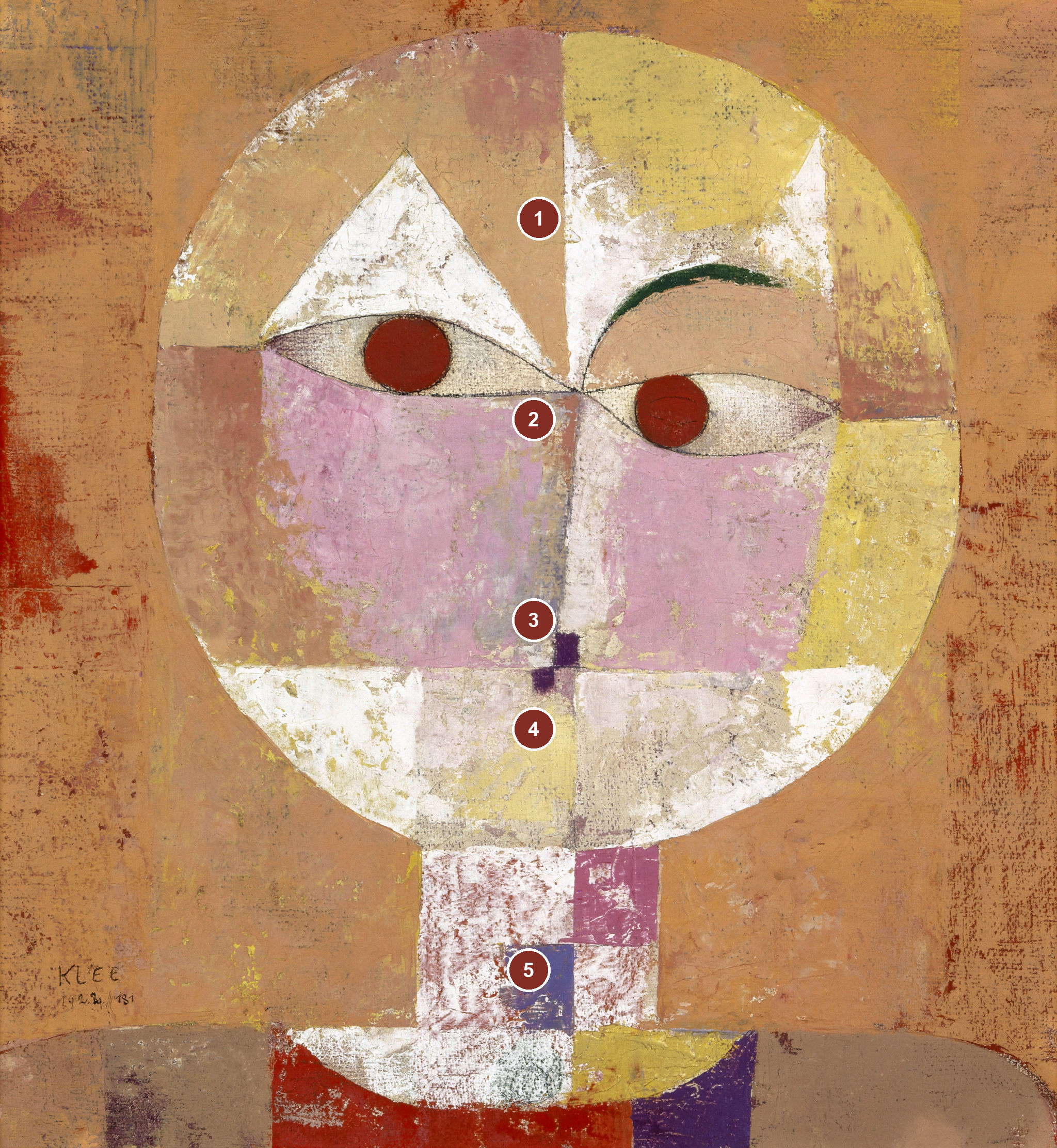
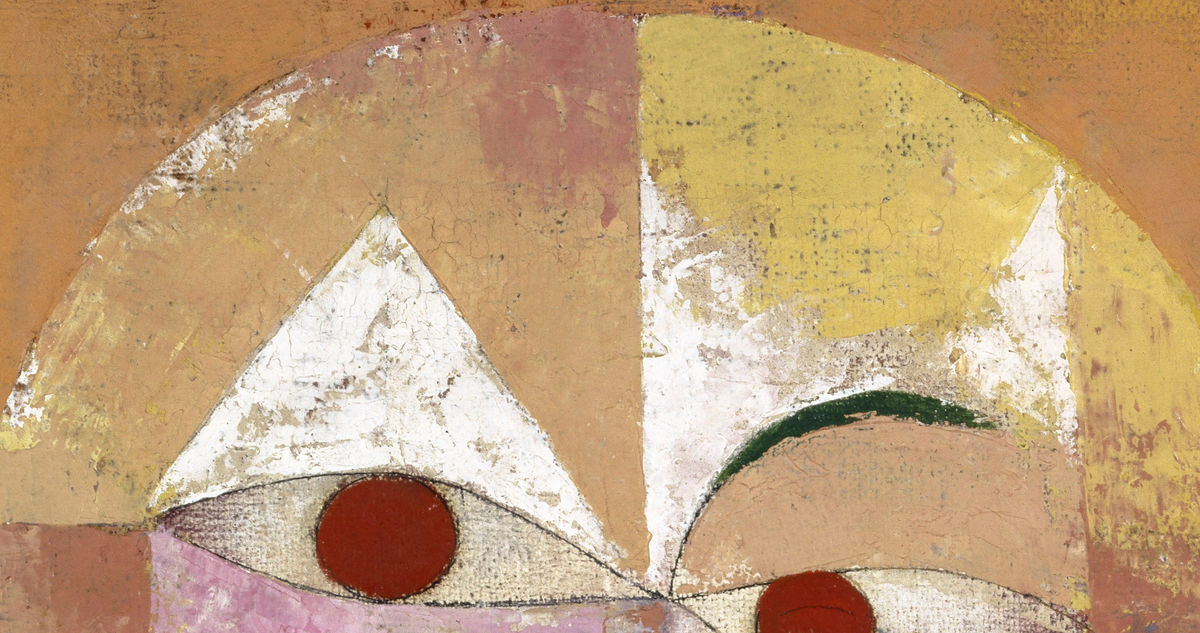
Upper head and divided colour
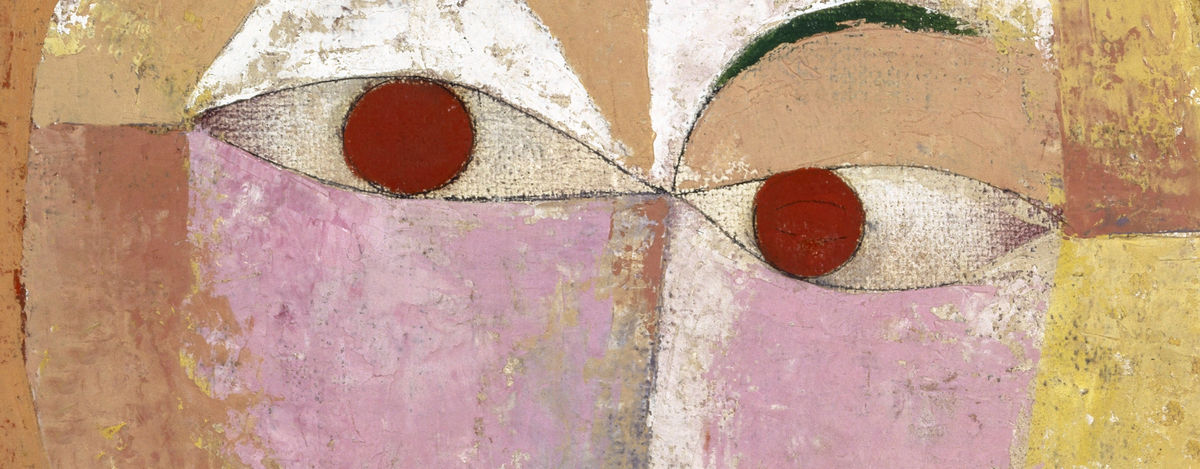
Unequal eyes
Cheeks and central divide
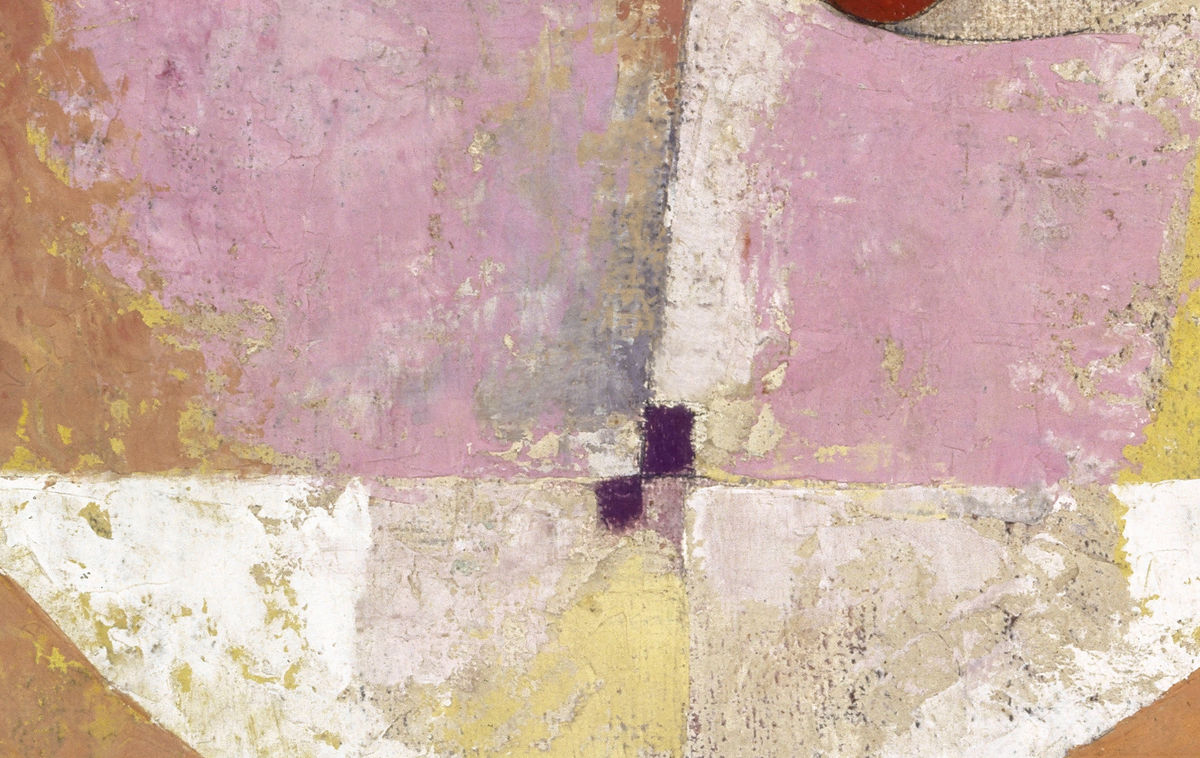
Nose and mouth junction
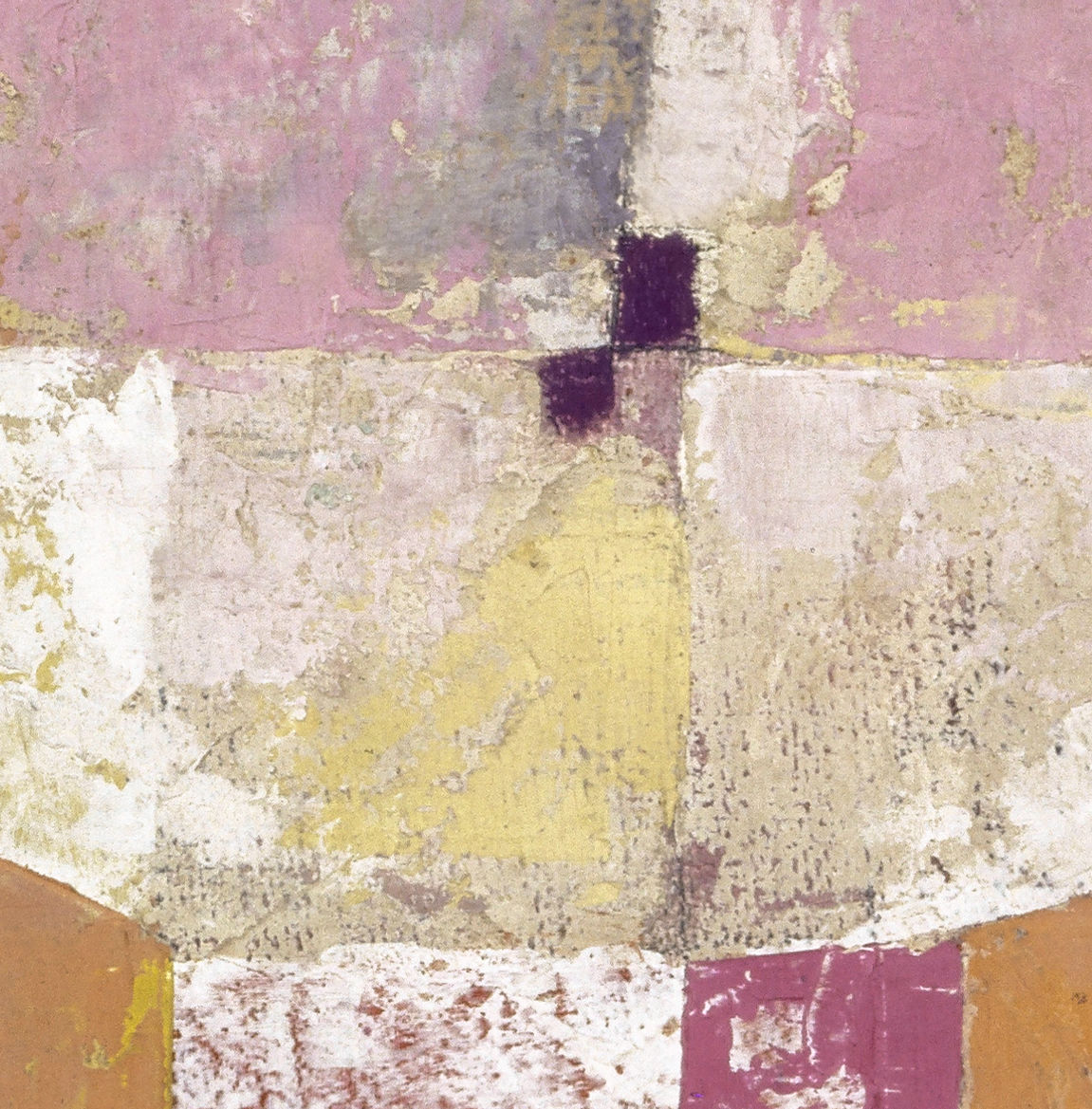
Lower neck and painted ground
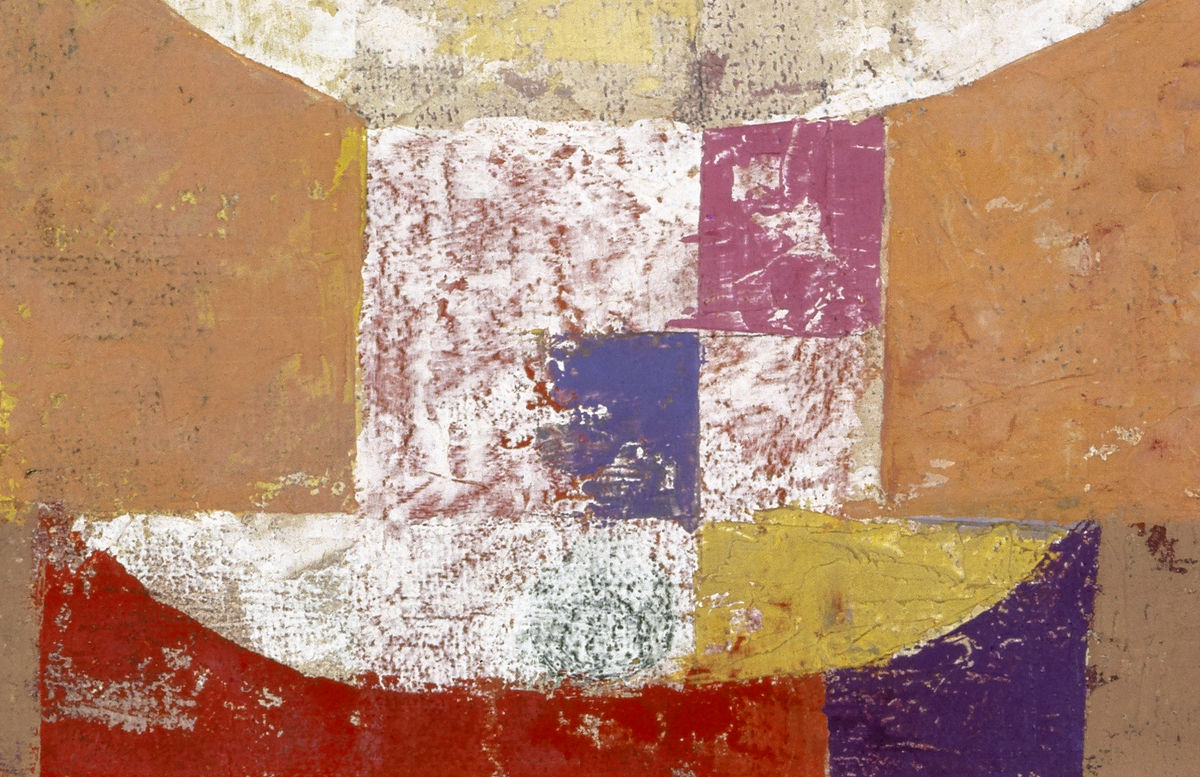
Contents
- Which painting is Senecio?
- Why a plant name for a face?
- Look at the circle and the grid
- Colour and surface at close range
- A painting of the Bauhaus years
- How the painting reached Basel
Which painting is Senecio?
Basel identifies the work as 1922, 181, a year and number from Klee’s own system of recording his production. Its museum inventory number is 1569. The dated collection record transcribes a lower-left signature and date, KLEE / 1922///181, as well as a partly illegible notation on the reverse. These numbers have different jobs: Klee’s 181 distinguishes the painting within his output for 1922, while the Basel number identifies the object in the museum. The printed nine-volume Catalogue raisonné Paul Klee lists it in volume 3, page 446, entry 3005, according to Basel’s bibliography; that catalogue page has not been directly examined for this account.[2]
The work measures 40.3 × 37.4 cm. Basel specifies oil on a chalk ground on gauze on cardboard. Each layer matters. Gauze is the fabric support; the chalk ground prepares it for paint; cardboard gives the small picture a stiff backing. The museum’s older record also includes an original yellow-painted frame in its material description. A reproduction usually isolates the painted rectangle, so the frame can disappear from a viewer’s impression even though it belongs to the documented object. A photograph can show colour and some texture, but cannot establish the sequence in which Klee applied particular paints or the present condition of the underlying support.[1][2][3]
The head is set against a warm, roughly rectangular field. It is not a portrait in the ordinary sense of a documented individual, and the museum has not identified a sitter. Basel’s English rendering of the alternative title is Soon to be Aged and its French rendering is bientôt vieillard. The popular phrase Head of a Man Going Senile changes the sense: “senile” suggests an impairment that neither the German word nor the museum’s object information requires. The face may evoke a mask, an old man, a child, a comic figure or several of these at once; none of those impressions gives the figure a biography.[2][3]
Why a plant name for a face?
The Kunstmuseum Basel explicitly explains the title through Senecio vulgaris, the botanical name for common groundsel, in German Gewöhnliches Greiskraut. Its older object record says that Klee called the painting Baldgreis in his own oeuvre catalogue and suggests a possible play on the German plant name. “Possible” is the museum’s careful word: the relation between the names is clear enough to discuss, but the exact joke in Klee’s mind is not preserved as a complete explanation from him.[1][2]
The name Senecio itself comes from Latin senex, “old man.” Kew’s botanical reference explains the name through the conspicuous white pappus, the tuft attached to the fruits of these plants, which can recall an old man’s white hair. Kew confirms Senecio vulgaris as an accepted species. This gives the title a sharper point than saying vaguely that Klee painted “nature”: it is a real plant name whose language already carries an image of age. Basel’s German Baldgreis adds another twist, because bald means soon, not the English adjective for someone without hair.[1][2][4][5]
There is no need to force the plant’s exact outline into the face. The circular head is not a botanical illustration of common groundsel, and the red eyes do not need to be flowers. A title can set off an association without turning every brushstroke into a code. Klee’s combination of a human face and a plant name lets youth, age and natural change overlap. The picture looks both childlike and weathered; its appearance and its names work together to keep the question of age open.[1][2][3][4]
The title also shows how misleading a simple translation can be. Senecio is neither a Latin word for “old man” standing alone nor evidence that a person named Senecio posed for Klee. It names a botanical genus whose etymology refers to age. Baldgreis is a compact German coinage that gives the face a future tense. That future is part of the humour: the apparent old man may still be on his way to becoming one.[2][4]
Look at the circle and the grid
The most commanding shape is the nearly complete circle of the head. It presses close to the top and side edges of the painted field, leaving a relatively narrow border of orange and reddish ground. A thin vertical divide runs from the crown toward the small dark mouth; a horizontal division follows the eyes and cheeks. The divisions promise a simple diagram. Yet the areas they make do not fit like four equal, flat quarters. Colour crosses their borders, and the paired features refuse to match.[3]
The forehead is particularly unstable. On one side, an ochre and rose field meets a tall white triangular brow. On the other, yellow sits above a white patch and a green-black arc. These are simple forms to name, but their roles change as one looks: the white triangle might be a raised eyebrow, part of a mask, or a bright piece of forehead. Basel’s educational team introduces children to the painting through circles, squares and triangles. That is a useful first inventory of shapes, not a claim that geometry has removed expression from the face.[3][6]
The eyes carry the strongest expression. Long, narrow white forms hold the two round red pupils. The left eye sits higher, under the angular brow, and the right eye appears lower beneath the curve. They are linked near the centre, but neither is a reflection of the other. Because the red discs are so strong against the pale eye shapes, a slight displacement becomes conspicuous. The gaze can seem alert, startled, weary or comic depending on how the viewer reads the brows and the tiny mouth; the painting does not secure one emotion.[3]
Across the middle of the circle, broad rose and lavender passages make the cheeks. A light strip runs down the nose. Near its lower end is a very small dark mark, which can become a mouth or a nose-and-mouth junction. The white lower band of the circular face is wider than a conventional chin and contains pale ochre and grey marks. Beneath it, a short column of light, red and violet rectangles suggests a neck or garment. At the bottom edge, sweeping red, dark and yellow shapes hint at shoulders. Klee has given the head a body just substantial enough to keep it from floating free, without supplying costume, setting or identity.[3]
Spanish scholar Ricardo Devesa Devesa describes the composition as a case of asymmetrical balance. In his architectural study, the divided circle creates a centre while differing eyes, brows, mouth, neck and coloured fields keep the two halves active. This is more precise than calling the image simply symmetrical or simply chaotic. The eye repeatedly checks one side against the other, discovers a mismatch and returns to the central line. Devesa’s analysis is a later formal reading; it does not make the painting an illustration of a building or a Bauhaus teaching chart.[3][7]
That push and pull explains some of the painting’s peculiar vitality. A perfect diagram of two eyes and a mouth would be easy to classify and then leave behind. Here a triangular brow, a curved brow, two slightly displaced pupils and uneven colour fields keep the face in motion without making it anatomically realistic. The central axis is a support for difference, not a rule that erases it.[3][7]
Devesa’s choice of this picture also reveals an unusual route of later reception. He records a copy of Senecio on a room divider in Marcel Breuer’s second house in New Canaan, built in 1951, and relates Klee’s divided circle to Breuer’s concern with balance around an axis. The copy is evidence that the image circulated beyond painting collections and remained important to another Bauhaus figure. It is not the Basel original in an American house, and the architectural comparison is Devesa’s argument rather than an instruction left by Klee for architects. The work’s portability as an image may even hide how materially particular the small gauze-and-cardboard original is.[1][3][7]
Colour and surface at close range
The image’s warm field is not an empty background. Orange, ochre, rust and small darker marks gather around the circle, while warm colours also enter the face. It can be hard to decide where “face colour” ends and “background colour” begins. The most dramatic oppositions are local: red pupils against pale eyes, a dark green curve beside white, lavender cheeks under yellow and ochre. The little violet mouth is almost lost until the viewer finds the light nose that points toward it.[3]
The high-resolution reproduction shows irregular marks and the suggestion of a fabric texture in places, particularly inside pale passages. This is consistent with Basel’s description of a painted gauze support, but a digital image is a limited witness. It may reveal a change in colour density or a visible scratch; it cannot by itself tell us whether a feature is in the paint, the ground, a later alteration, an artefact of photography or the display screen. Without a conservation report, claims about an exact layer order, the chemical composition of colour or the cause of every worn-looking area would go beyond the evidence.[1][2][3]
The original yellow frame is worth remembering here. A frame contributes a boundary and another colour beside Klee’s orange field. The Rawpixel reproduction used for the existing details below presents the painted image without that frame. It is excellent for studying the face’s relations at close range, but it does not recreate the painting’s full framed appearance in Basel. The five close-ups can help distinguish the upper division, the unequal eyes, the meeting of cheek colours, the tiny central mark and the narrow neck. Each crop should be checked against the whole painting, because the balance depends on relationships across the circle.[2][3]
A painting of the Bauhaus years
Klee was teaching at the Bauhaus in Weimar when he painted Senecio. The Bauhaus-Archiv describes his teaching in the study of form and colour alongside the work of other masters. That context helps explain why relations among line, plane, colour and movement are useful questions to ask here. It does not mean the painting is an exercise sheet, a student project or a demonstration of a single formal law. Its joke about a plant and an aging face belongs to a particular artwork.[1][8]
Later teaching material can sharpen our looking but needs to be dated correctly. Klee’s Pedagogical Sketchbook was published in 1925, three years after this painting. It may help a reader understand ideas about lines and movement circulating in his Bauhaus work, but the later publication cannot be made into a source that Klee followed in making a 1922 picture. Likewise, the proximity of Oskar Schlemmer and the Bauhaus stage does not by itself identify the head as a theatrical role. The older local account’s statement that “Senecio himself was a performer” has no support in Basel’s records.[2][8]
Basel’s older object record reports art historian Jim M. Jordan’s suggestions of formal relationships with a Picasso portrait of Wilhelm Uhde, a Chagall figure, Schlemmer’s Bauhaus emblem and disc-headed figures in Asante puppetry. These are comparisons offered in scholarship, not a list of proven sources Klee set in front of him. The museum’s language about Klee’s knowledge of the Asante figures is qualified. Jordan’s original relevant pages have not been directly studied for this manuscript, so neither his full argument nor a specific object-to-object borrowing should be asserted here. A broad phrase such as “African simplicity” would obscure the particular visual comparison and make an entire continent into a single style.[2]
One can see why comparisons arise. A round, flat head with simplified features has affinities with many modern pictures and designed objects, while its grid and colour divisions look deliberately constructed. But resemblance alone cannot trace influence. Klee’s own face differs from a conventional Cubist portrait: it does not require a viewer to reconstruct one person from several visible viewpoints. Its most immediate problem is how a simple circle can become a complex expression.[2][3][7]
The painting’s humour is also open to later readings. In a 2025 Zentrum Paul Klee exhibition guide, curator Dieter Roelstraete places Senecio near satire and asks whether its small mouth and apparent mood suggest anger or silence. These are questions from the work’s reception, not a dated statement of Klee’s political intention in 1922. The guide also notices the image’s later life on book covers. Such uses show how readily the face can carry new meanings precisely because it does not identify one individual or one fixed emotion.[9]
How the painting reached Basel
The picture had a public life before it became a museum favourite. Basel’s dated object bibliography records it in a 1924 Stuttgart exhibition catalogue as no. 89, in Hans Goltz’s Munich Klee exhibition of 1925 as no. 14, and in a 1929 Kunsthalle Basel Bauhaus exhibition catalogue as no. 93. Kunsthalle Basel’s own archive confirms that it held an exhibition called bauhaus dessau in 1929 with Klee among its listed artists. The catalogue entries are evidence of contemporary circulation and attention, though the original catalogues have not been checked page by page here; they should not be turned into a story of the painting’s movements between every intervening city.[2][10]
Basel’s provenance account names the dealer Alfred Flechtheim in Düsseldorf and Berlin, Galerie Neue Kunst Fides / Rudolf Probst in Dresden and Mannheim in 1927, and later the Graphisches Kabinett of Günther and Sophie Franke in Munich. It prints an explicit gap between the Fides and Franke stages. The Kunstmuseum Basel bought the work from the Frankes in 1931. The gap is a fact about the present documentation, not a blank to be filled by an attractive narrative. Additional archival records may refine the chain; this page follows what the museum currently publishes.[1]
There is a more specific institutional trail for that final sale. The Kunstmuseum Basel’s finding aid lists a 1931 Otto Fischer correspondence file containing material on Günther Franke and the purchase of Senecio. A finding aid tells us that a dossier exists and what topic it covers; it does not give the terms of a transaction or resolve the earlier ownership gap. Historian Nikolaus Meier, writing about Fischer, notes that Fischer had already encountered the painting in the 1924 Stuttgart exhibition and later bought it for Basel as an example of a new tendency towards abstraction. Meier cites the museum’s 1931 annual report for this assessment. The primary report and letters would be the next sources for a fuller account of Fischer’s choice; their contents should not be invented from the file listing.[12][13]
The museum describes Senecio as one of its early acquisitions of modern painting. That position matters in a Basel exhibition about the collection’s fractured modern history: the 1931 purchase predates the museum’s separate 1939 acquisitions of works confiscated from German museums under National Socialism. It would be misleading to merge those two episodes simply because they appear in the same exhibition booklet. Klee himself suffered Nazi pressure after 1933, but that later persecution cannot be made the cause of this already completed 1922 painting or its 1931 sale without specific evidence.[1]
Basel’s bibliography follows the work into subsequent museum catalogues and exhibitions, including Klee retrospectives in 1941, 1967 and 1976, a 1969–70 Paris catalogue whose cover reproduced the image, and a 1979 Cologne show. Those references document how widely the painting was reproduced and discussed; they are not a substitute for reading each exhibition’s own interpretation. A Spanish government indemnity notice records a later Madrid loan context in 2015. None of this changes the work’s ownership by the Kunstmuseum Basel.[2][11]
The face’s later familiarity can make it seem simpler than it is. A circle and two red eyes make a memorable icon at a glance. In the painting itself, the eyes are unequal, the colours do not settle into neat quarters, and the title slips between a person and a plant. The work remains funny without being a mere caricature, geometric without being a diagram, and portrait-like without giving us a sitter. Looking between the whole image and its close details is a way to experience that unresolved balance rather than to solve it too quickly.[1][2][3][7]
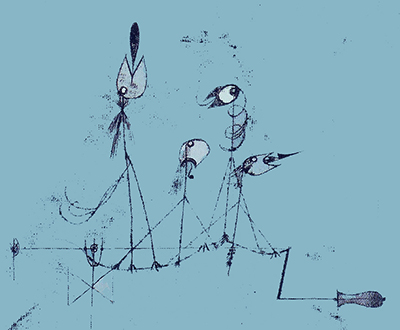
For related reading, explore Klee’s Bauhaus years and the materials and techniques guide. Cat and Bird offers another compact image of a face and animal association, while Twittering Machine shows Klee using an apparently simple title to set a more ambiguous image in motion.
Explore selected works from Klee’s much larger oeuvre. Titles without a link have an authenticated catalogue identity but no reviewed article yet.
Artworks directory
| Name | Date | Medium |
|---|---|---|
| A Gate | 1939 | Painting and mixed media |
| A Woman for Gods | 1938 | Watercolour and mixed media |
| Ab Ovo | 1917 | Watercolour and mixed media |
| Above Mountain Summit | 1917 | Drawing and mixed media |
| Abstract Trio | 1923 | Drawing and mixed media |
| Acrobats | 1915 | Watercolour and mixed media |
| Actor's Mask | 1924 | Painting and mixed media |
| Ad Marginem | 1930 | Drawing and mixed media |
| Ad Parnassum | 1932 | Painting and mixed media |
| Adventurer Ship | 1927 | Drawing and mixed media |
| Affected Place | 1922 | Drawing and mixed media |
| After a Sketch from Zurich | 1914 | Watercolour and mixed media |
| After Drawing | 1919 | |
| After The Floods | 1936 | Watercolour and mixed media |
| All Souls' Picture | 1921 | |
| Ancient Harmony | 1925 | Painting and mixed media |
| Angel Applicant | 1939 | Drawing and mixed media |
| Angel Serves the Desired | 1920 | |
| Angel, Still Female | 1939 | Painting and mixed media |
| Angelus Novus | 1920 | Drawing and mixed media |
| Animal Terror | 1926 | Painting and mixed media |
| Arab Song | 1932 | Painting and mixed media |
| Archangel | 1938 | Painting and mixed media |
| Architecture | 1923 | Painting and mixed media |
| Architecture of the Plain | 1923 | Drawing and mixed media |
| Around the Fish | 1926 | Painting and mixed media |
| Arrival of the Air Steamer | 1921 | Drawing and mixed media |
| Asiatic God | 1924 | Painting and mixed media |
| Astrological Fantasy Portrait | 1924 | Drawing and mixed media |
| Athlete's Head | 1932 | Watercolour and mixed media |
| Aufgehender Stern | 1931 | Painting and mixed media |
| Autumn Flower | 1922 | Painting and mixed media |
| Bad Band | 1920 | Drawing and mixed media |
| Baroque Centaur | 1939 | Painting and mixed media |
| Before the Blitz | 1923 | Drawing and mixed media |
| Before the Snow | 1929 | Drawing and mixed media |
| Besessenes Madchen | 1924 | Watercolour and mixed media |
| Bird Garden | 1924 | |
| Bird Wandering Off | 1926 | Watercolour and mixed media |
| Blossoms in the Night | 1930 | Watercolour and mixed media |
| Blue-Bird-Pumpkin | 1939 | Painting and mixed media |
| Boats in the Flood | 1937 | Painting and mixed media |
| Botanical Theatre | 1934 | Drawing and mixed media |
| Boy in Fancy Dress | 1931 | Watercolour and mixed media |
| Broken Key | 1938 | |
| Brother and Sister | 1930 | Watercolour and mixed media |
| But the Red Roof | 1935 | Painting and mixed media |
| C - C = Fisch | 1931 | Watercolour and mixed media |
| Cacti | 1912 | Painting and mixed media |
| Camel (in Rhythmic Landscape with Trees) | 1920 | Drawing and mixed media |
| Captive Pierrot | 1923 | Drawing and mixed media |
| Castle and Sun | 1928 | Drawing and mixed media |
| Cat and Bird | 1928 | Drawing and mixed media |
| Cathedrals | 1925 | Watercolour and mixed media |
| Chalice of the Heart | 1937 | Painting and mixed media |
| Characters in Yellow | 1937 | Painting and mixed media |
| Chosen Site | 1927 | Mixed media |
| Christmas Picture | 1923 | Drawing and mixed media |
| City of Towers | 1916 | Painting and mixed media |
| Clarification | 1932 | Painting and mixed media |
| Collection of Figurines | 1926 | Painting and mixed media |
| Colorful Architecture | 1917 | Painting and mixed media |
| Comedians' Handbill | 1938 | |
| Comic Opera Singer | 1927 | Painting and mixed media |
| Composition | 1939 | Painting and mixed media |
| Composition with Figures | 1915 | Drawing and mixed media |
| Composition with the Yellow Half-Moon and the Y | 1918 | Watercolour and mixed media |
| Conch–Still Life II | 1939 | Watercolour and mixed media |
| Cosmic Composition | 1919 | Painting and mixed media |
| Crystal Gradation | 1921 | Drawing and mixed media |
| Dance of the Grieving Child | 1922 | Painting and mixed media |
| Dancing Girl | 1940 | Painting and mixed media |
| Das Licht und Etliches | 1931 | Mixed media |
| Death and Fire | 1940 | Painting and mixed media |
| Death for the Idea | 1915 | |
| Demon as Pirate | 1926 | Watercolour and mixed media |
| Diana | 1931 | Painting and mixed media |
| Diavolo Player | 1923 | Drawing and mixed media |
| Die Kapelle | 1917 | Watercolour and mixed media |
| Die Vase | 1938 | Painting and mixed media |
| Doctor | 1930 | Drawing and mixed media |
| Dredger and Sailboat | 1931 | Watercolour and mixed media |
| Ein Tor | 1939 | Painting and mixed media |
| Ein Weib fur Gotter | 1938 | Mixed media |
| Embrace | 1939 | Watercolour and mixed media |
| Episode before an Arab Town | 1923 | |
| Equals Infinity | 1932 | Painting and mixed media |
| Eros | 1923 | Drawing and mixed media |
| Error on Green | 1930 | Watercolour and mixed media |
| Evening Figure | 1935 | Drawing and mixed media |
| Falling Bird | 1919 | |
| Fermata | 1932 | Watercolour and mixed media |
| Fire Clown | 1921 | Watercolour and mixed media |
| Fire Full Moon | 1933 | Watercolour and mixed media |
| Fire in the Evening | 1929 | Painting and mixed media |
| Fish in the Harbour | 1916 | Watercolour and mixed media |
| Fish Magic | 1925 | Watercolour and mixed media |
| Flock of Birds | 1917 | Drawing and mixed media |
| Flora on Sand | 1927 | Watercolour and mixed media |
| Flower Myth | 1918 | |
| Flower Stand with Watering Can and Bucket | 1910 | Watercolour and mixed media |
| Flowering Tree (Abstraction with Reference to a Flowering Tree) | 1925 | Painting and mixed media |
| Flowers in Pots | 1923 | |
| Flowers in Stone | 1939 | Painting and mixed media |
| Forest Witch | 1938 | Painting and mixed media |
| Fright of a Girl | 1922 | Drawing and mixed media |
| Fruits on Red | 1930 | Drawing and mixed media |
| Full Moon | 1919 | Mixed media |
| Föhn Wind in Franz Marc's Garden | 1915 | Watercolour and mixed media |
| Garden in St Germain, The European Quarter near Tunis | 1914 | Watercolour and mixed media |
| Ghost Chamber with the Tall Door (New Version) | 1925 | |
| Ghost of a Genius | 1922 | Drawing and mixed media |
| Girl in Mourning | 1939 | Painting and mixed media |
| Glance of a Landscape | 1926 | Watercolour and mixed media |
| Gluht Nach | 1939 | Drawing and mixed media |
| Golden Fish | 1925 | Watercolour and mixed media |
| Goldfish Wife | 1921 | Watercolour and mixed media |
| Green Plant, Blood, Louse | 1924 | Drawing and mixed media |
| Hafenbild | 1918 | Mixed media |
| Hammamet with Mosque | 1914 | Watercolour and mixed media |
| Harbour with Sailing Ships | 1937 | Painting and mixed media |
| Hauptweg und Nebenwege | 1929 | Painting and mixed media |
| Heavenly and Earthly Time | 1927 | Drawing and mixed media |
| Heroic Fiddling | 1938 | Painting and mixed media |
| Heroic Roses | 1938 | Painting and mixed media |
| Heroic Strokes of the Bow | — | Mixed media |
| Highway and Byways | 1929 | Drawing and mixed media |
| Houses near the Gravel Pit | 1913 | Watercolour and mixed media |
| Howling Dog | 1928 | Painting and mixed media |
| In the Current Six Thresholds | 1929 | Painting and mixed media |
| In the Style of Kairouan | 1914 | Drawing and mixed media |
| Individualized Altimetry of Stripes | 1930 | Painting and mixed media |
| Insula Dulcamara | 1938 | |
| Interior with the Clock | 1913 | Watercolour and mixed media |
| Irma Rossa the Animal Tamer | 1918 | Drawing and mixed media |
| Journey in Corsica | 1927 | Drawing and mixed media |
| Landscape with Bluebirds | 1919 | Watercolour and mixed media |
| Legend of the Nile | 1937 | Painting and mixed media |
| Lemon Harvest | 1937 | Watercolour and mixed media |
| Likeness in the Bower | 1930 | Watercolour and mixed media |
| Limits of Reason | 1927 | Painting and mixed media |
| Little Hope | 1938 | Watercolour and mixed media |
| Magdalena before the Conversion | 1938 | Drawing and mixed media |
| Mask of Fear | 1932 | Painting and mixed media |
| May Picture | 1925 | Painting and mixed media |
| Monument in a Cemetery | 1922 | Watercolour and mixed media |
| Monuments at G | 1929 | Watercolour and mixed media |
| Municipal Jewel | 1917 | Watercolour and mixed media |
| Mural from the Temple of Longing Thither | 1922 | |
| Nach der Uberschwemmung | 1936 | Watercolour and mixed media |
| New Harmony | 1936 | Painting and mixed media |
| New House in the Suburbs | — | Mixed media |
| Old Steamboat | 1922 | Drawing and mixed media |
| On the Edge | 1930 | Drawing and mixed media |
| Once Emerged from the Gray of Night | 1918 | Drawing and mixed media |
| One Who Understands | 1934 | Painting and mixed media |
| Oriental Pleasure Garden | 1925 | Painting and mixed media |
| Park of Idols | 1939 | Watercolour and mixed media |
| Passing by Red Pillars | 1928 | Watercolour and mixed media |
| Persian Nightingales | 1917 | Drawing and mixed media |
| Popular Wall Painting | 1922 | Painting and mixed media |
| Prestidigitator | 1927 | Watercolour and mixed media |
| Rainy Day | 1931 | Watercolour and mixed media |
| Red and White Domes | 1914 | Watercolour and mixed media |
| Red Balloon | 1922 | Drawing and mixed media |
| Redgreen and Violet-Yellow Rhythms | 1920 | Drawing and mixed media |
| Refuge | 1930 | Watercolour and mixed media |
| Rhythmic Rythmical | 1930 | Painting and mixed media |
| Saint of the Inner Light | 1921 | |
| Scaffolding of a New Building | 1930 | Painting and mixed media |
| Scholar in Dealing with Stars | 1926 | Watercolour and mixed media |
| Seated Woman | 1930 | Drawing and mixed media |
| Senecio | 1922 | Painting and mixed media |
| Separation in the Evening | 1922 | Drawing and mixed media |
| Sinbad the Sailor | 1923 | Drawing and mixed media |
| Skeptically Smiling | — | Mixed media |
| Small House in the Garden City | 1928 | Watercolour and mixed media |
| Small Portrait of a Girl in Yellow | 1925 | Painting and mixed media |
| Southern Gardens | 1919 | Watercolour and mixed media |
| Static-Dynamic Gradation | 1923 | Drawing and mixed media |
| Still Life | 1927 | Painting and mixed media |
| Still Life with Gladioli | 1932 | Watercolour and mixed media |
| Strange Garden | 1923 | Drawing and mixed media |
| Stricken City | 1936 | Painting and mixed media |
| Strong Dream | 1929 | Watercolour and mixed media |
| Struck from the List | 1933 | Drawing and mixed media |
| Structural I | 1924 | Drawing and mixed media |
| Sumpflegende | 1919 | Painting and mixed media |
| Temple Gardens | 1920 | Drawing and mixed media |
| The Arrow before the Target | 1921 | Drawing and mixed media |
| The Barbed Noose with the Mice | 1923 | Watercolour and mixed media |
| The Flora of the Heath | 1925 | Watercolour and mixed media |
| The Goldfish | 1925 | Watercolour and mixed media |
| The Hour Before One Night | 1940 | Painting and mixed media |
| The Man in Love | 1923 | |
| The Mask with the Flag | 1925 | Mixed media |
| The Pathos of Fertility | 1921 | |
| The Rhine at Duisburg | 1937 | Painting and mixed media |
| The Way to the Citadel | 1937 | Painting and mixed media |
| Three Houses and a Bridge | 1922 | Watercolour and mixed media |
| Tightrope Walker | 1923 | |
| Tomb in Three Parts | 1923 | Watercolour and mixed media |
| Tomcat's Turf | 1919 | Watercolour and mixed media |
| Tower in Orange and Green | 1922 | Drawing and mixed media |
| Tree and Architecture - Rhythms I | 1920 | Watercolour and mixed media |
| Tree and Architecture - Rhythms II | 1920 | Painting and mixed media |
| Tropical Dawn with the Owl | 1921 | Mixed media |
| Tropische Dammerung | 1921 | Painting and mixed media |
| Twittering Machine | 1922 | Drawing and mixed media |
| Variations (Progressive Motif) | 1927 | Watercolour and mixed media |
| Ventriloquist and Crier in the Moor | 1923 | |
| Viaducts Break Ranks | 1937 | Drawing and mixed media |
| Villa R | 1919 | Painting and mixed media |
| Village Carnival | 1926 | Painting and mixed media |
| Vor dem Blitz | 1923 | Drawing and mixed media |
| Wald-Hexen | 1938 | Painting and mixed media |
| Young Forest | 1925 | Drawing and mixed media |
Related artworks
Explore eight other Klee works, beginning with works close in date to this one.
Red Balloon
1922
Twittering Machine
1922
Crystal Gradation
1921
Sinbad the Sailor
1923
Actor's Mask
1924
Angelus Novus
1920
Ancient Harmony
1925
Fish Magic
1925
Discussion
Senecio is a face made from simple forms, yet its titles and expression leave room for different readings.
The Basel record establishes the object and botanical title; later interpretations ask what the face might suggest.
Reader Insights
How do the two unequal brows change the expression you see?
Where does the central grid organise the head, and where do colours cross it?
Does knowing the common-groundsel title change your reading of the face?
Join the Conversation
Share the particular painted detail or source behind your reading.
References
- Kunstmuseum Basel, Zerrissene Moderne: Die Basler Ankäufe «entarteter» Kunst, German exhibition booklet, PDF p. 6 (source page 5): object caption, 1931 purchase, named provenance stages and explicit gap, botanical explanation, and collection context, View source.
- Kunstmuseum Basel, Senecio (Baldgreis) collection record as printed 4 April 2017, pp. 1–3, a dated museum-record facsimile hosted by a third party. Source for annual and inventory numbers, inscription, original frame, bilingual title translations and bibliography. The current live collection interface has not yielded equivalent fully readable text, View source.
- Rawpixel, exact-match Senecio image item 3590266, item-level CC0 high-resolution reproduction; visual observations checked against the project’s unenhanced 3712 × 4031 px master, natively 300 dpi. This is an image source, not a conservation examination. The existing splash and five detail images derive from this master, View source.
- Royal Botanic Gardens, Kew, Senecio genus account and etymology and accepted Senecio vulgaris record, Plants of the World Online. Botanical naming and Latin derivation, not an interpretation of Klee’s intent.
- Kunstmuseum Basel, French Zerrissene Moderne exhibition booklet, French title and séneçon commun wording. Translation of reference 1, not an independent object study, View source.
- Kunstmuseum Basel, “Mein Museum – Mitmachbogen Nr. 7: Ich mal anders” (6 May 2020), German educational account of the work’s elementary geometric forms; a later teaching use, View source.
- Ricardo Devesa Devesa, Aportes teóricos al proyecto de arquitectura: la Casa y el Árbol (doctoral dissertation, Universitat Politècnica de Catalunya, 2012), printed pp. 97–99. Spanish formal analysis of balance and a later Marcel Breuer comparison. The university PDF was read directly; its images are not reused, View source.
- Bauhaus-Archiv, “Unterricht” (German), Klee’s Weimar form and colour teaching, and Bauhausbücher 5 / Pedagogical Sketchbook publication note (English), 1925 publication context. These provide period setting, not proof of a specific lesson behind Senecio.
- Dieter Roelstraete, “Senecio: Paul Klee und das Altern/Schweigen,” Fokus. Cover Star Klee, Zentrum Paul Klee digital exhibition guide (2025). A curatorial reception essay whose satirical and emotional readings are speculative, not artist statements, View source.
- Kunsthalle Basel, bauhaus dessau exhibition archive, 1929 show with Klee named. Its displayed dates differ by a day from Basel’s older bibliography; only the year is used above, View source.
- Boletín Oficial del Estado, 2015 Spanish state indemnity notice, later Madrid loan context. This official notice is a reception/loan anchor, not a source for the painting’s creation or interpretation, View source.
- Kunstmuseum Basel archive, Otto Fischer correspondence finding aid, dossier F 001.024.006.000 for 1931; its summary names Günther Franke and the purchase of Senecio. The underlying letters have not been read, View source.
- Nikolaus Meier, “Ars una: Der Kunsthistoriker Otto Fischer (1886–1948)”, p. 176, citing Jahresberichte 1931, p. 5, for Fischer’s acquisition of Senecio from a Klee exhibition. The 1931 report itself remains to be checked, View source.