

 by Tom Gurney
Tom Gurney BSc (Hons) is an art history expert with over 20 years experience
Published on October 6, 2016 / Updated on April 16, 2026
Email: tomgurney1@gmail.com / Phone: +44 7429 011000
Monet's Haystacks: Light, Time and the Birth of a Series
Claude Monet's Haystacks series (often referred to as Grainstacks), painted between 1890 and 1891 near his home in Giverny, is one of the defining achievements of Impressionism.
Across around twenty-five canvases, Monet returned again and again to the same simple subject: stacks of harvested grain standing in an open field. What changes from painting to painting is not the object itself, but the conditions surrounding it — light, season, atmosphere, and time of day.
Rather than treating the haystacks as agricultural objects, Monet used them as a stable structure through which to explore perception. Morning frost, bright midday sun, winter snow, and the fading glow of evening all transform the same motif into something entirely different. In doing so, Monet demonstrated that a single subject could generate a whole sequence of distinct visual experiences.
One of the most celebrated examples from the series, often titled Grainstack in Sunlight, shows how radically colour and form can shift under changing conditions. The stack itself remains simple and solid, but the surrounding light dissolves its edges and fills the scene with atmosphere. This approach lies at the heart of the series.
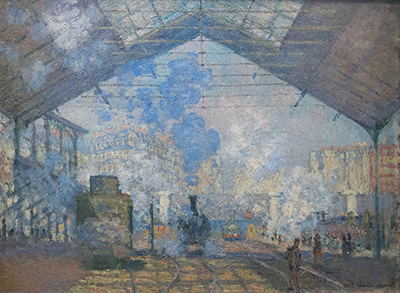
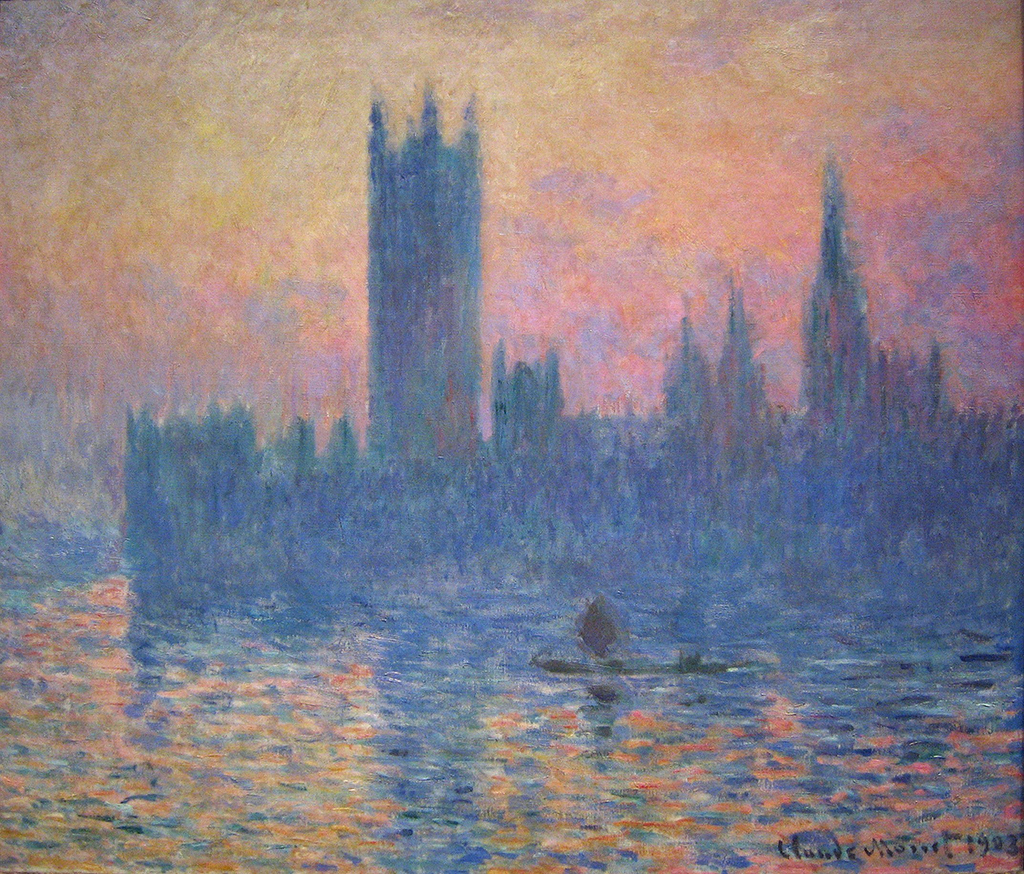
This idea of returning to the same subject under shifting conditions would later reach a new level in Monet's London series, where fog, smoke, and river reflections transformed entire architectural forms.
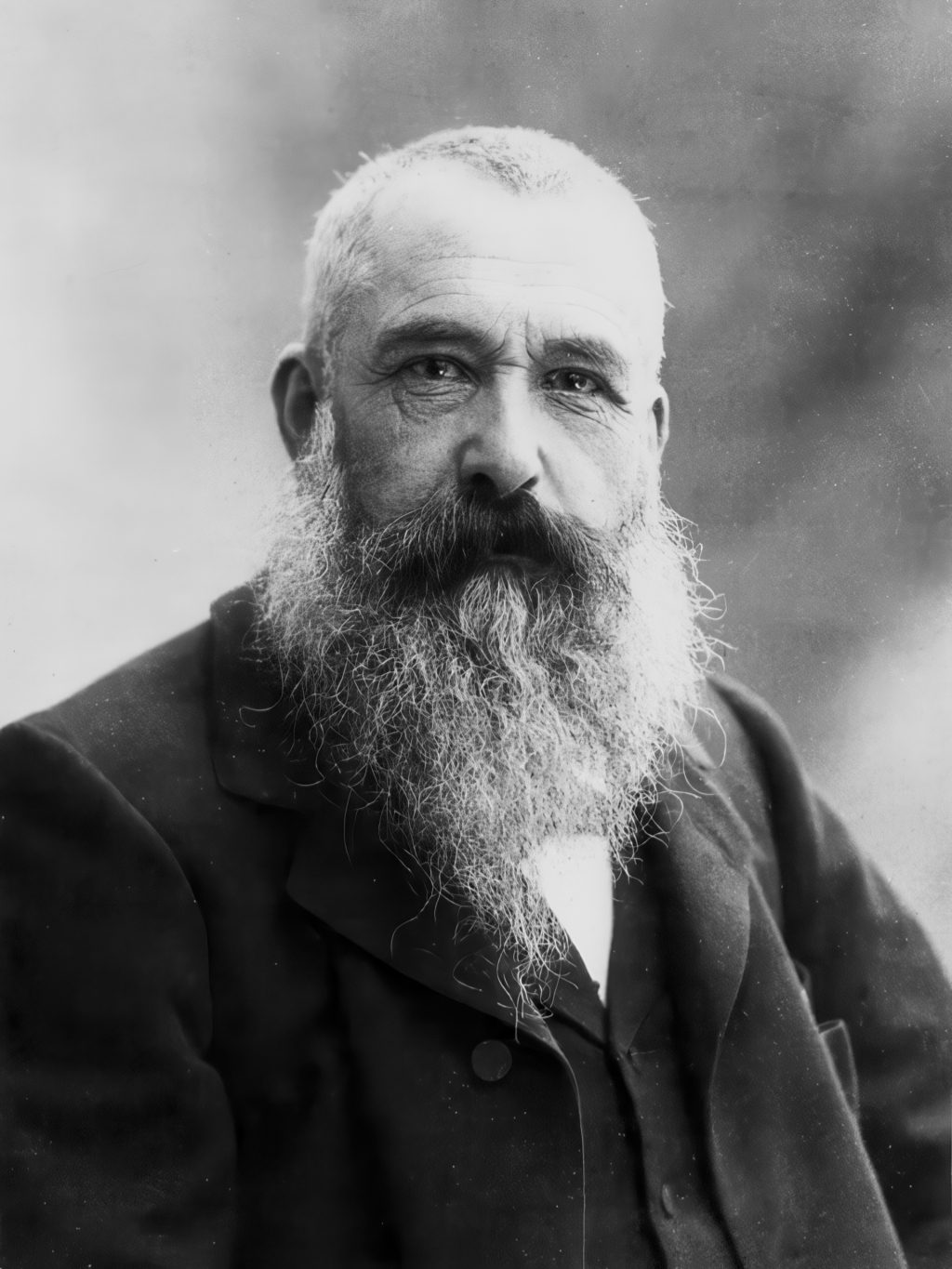
You have to know how to seize just the right moment in a landscape instantaneously, because that particular moment will never come again.
Table of Contents
- Introduction
- The Series
- Top 10 Haystacks Explained
- Development of Impressionism
- Why Haystacks?
- How Monet Painted the Series
- Recurrent Motif in Monet
- Importance of the Haystacks Series
- Commercial Success
- Complete List of Monet's Haystacks Series
- Leave your Comments
- Artist: Claude Monet
- Date: 1890–1891
- Movement: Impressionism
- Medium: Oil on canvas
- Subject: Stacks of harvested grain near Giverny
- Location: Various museums and private collections worldwide
- Series Size: Approximately 25 paintings
- Significance: Pioneering study of light, time, and serial painting
- Also Known As: Grainstacks
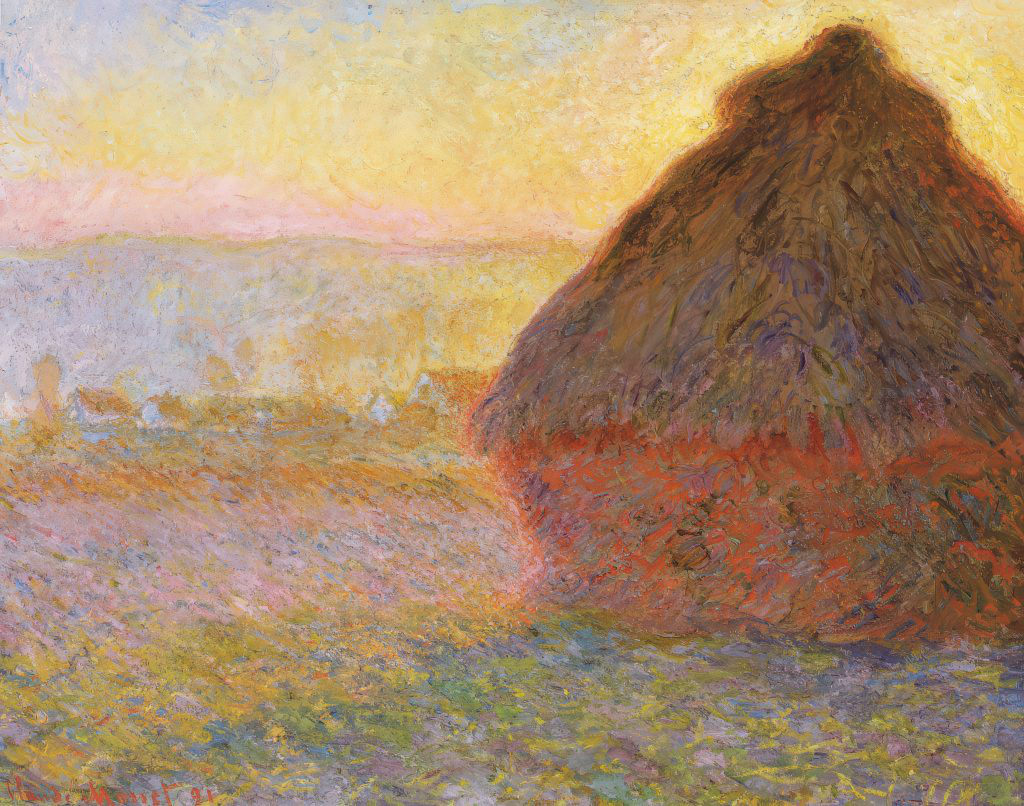
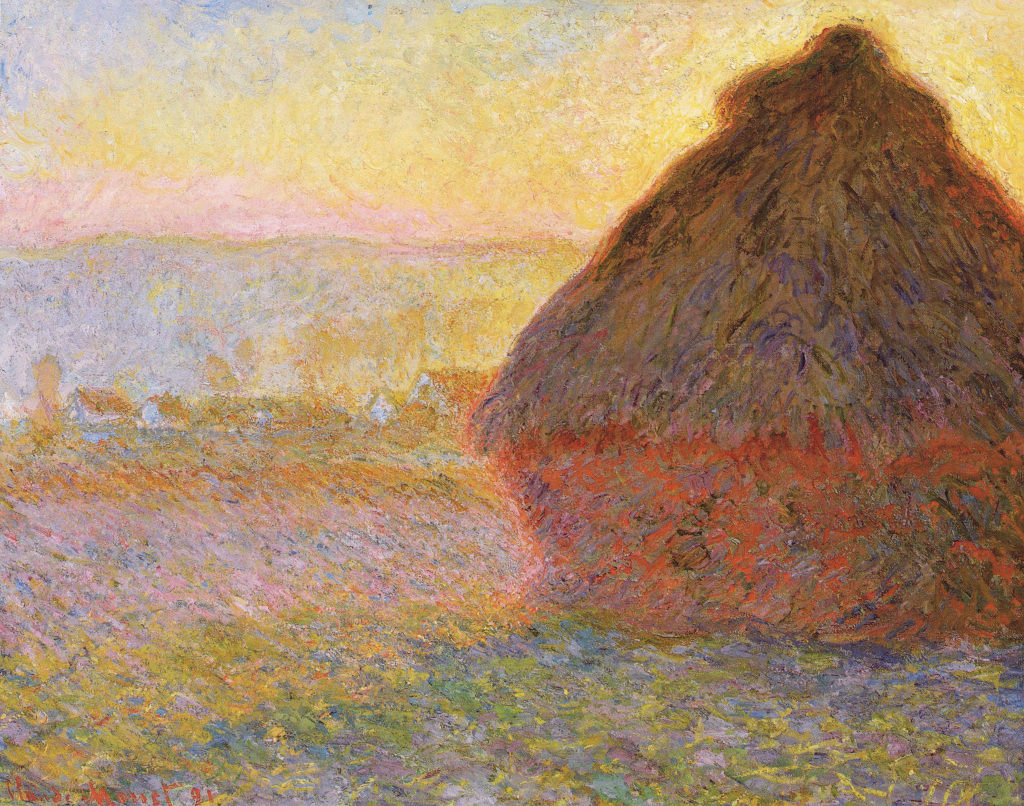
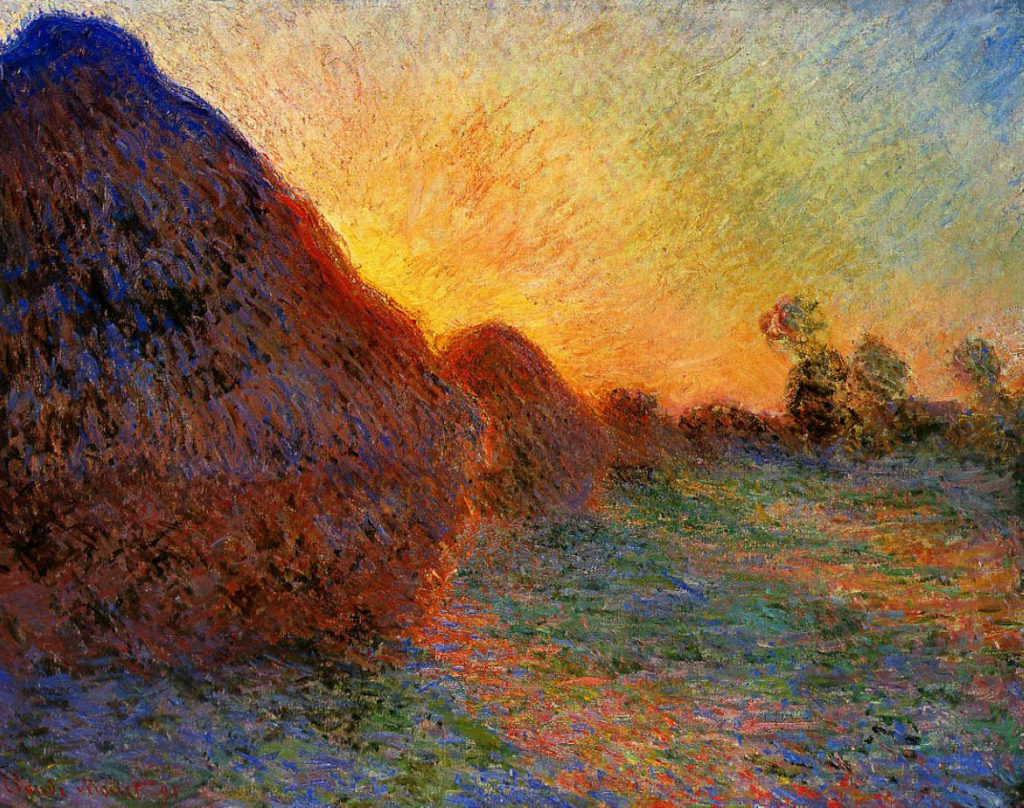
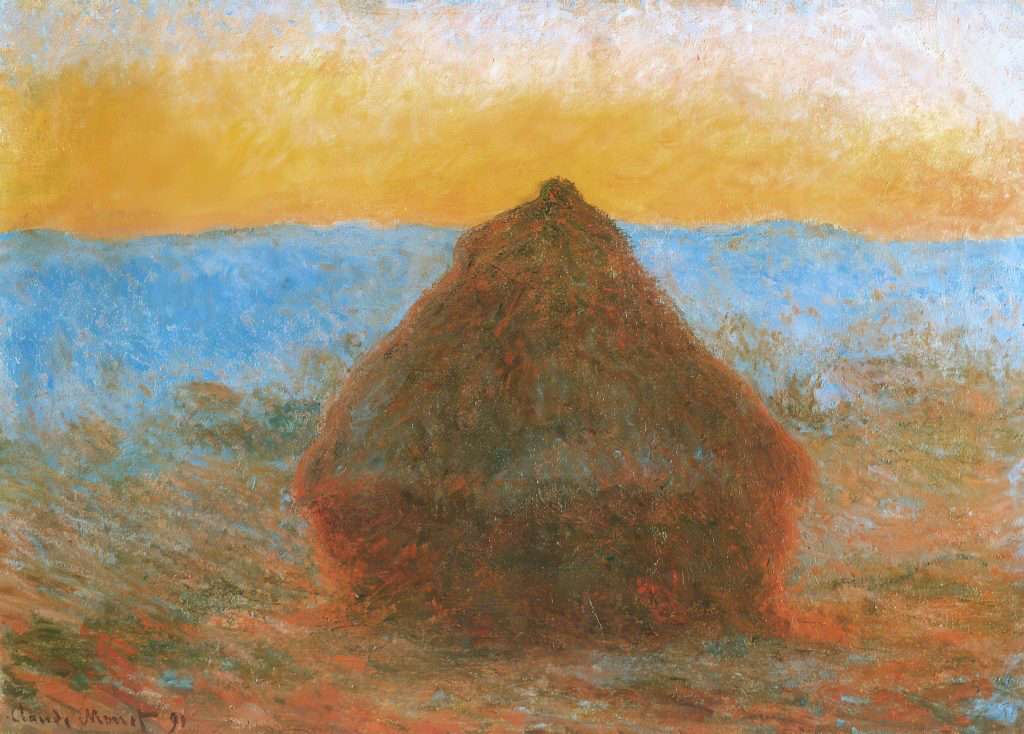
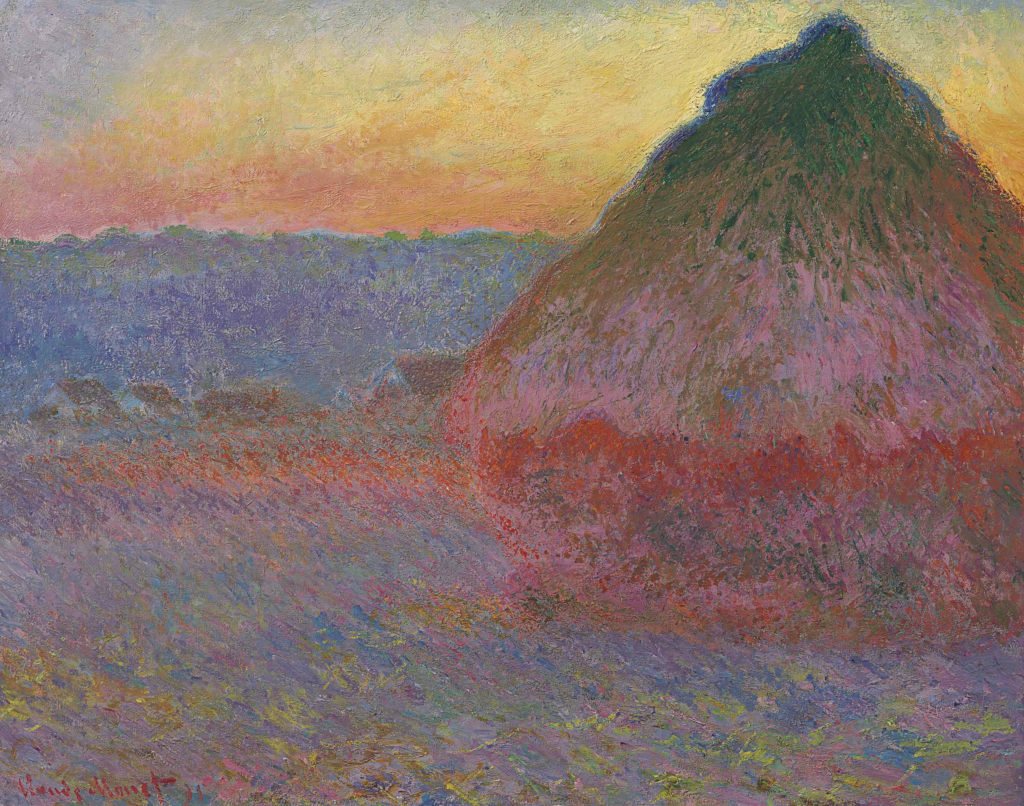
In this painting, Monet explores how light transforms both colour and form. The upper sky is filled with shifting tones of gold and yellow, suggesting the warmth and movement of late afternoon light. Subtle hints of red near the horizon evoke the final moments of the day, when colour becomes richer and more atmospheric.
The haystack itself is far from a simple yellow form. Monet builds it through layered browns, muted reds, and soft purples, allowing it to absorb and reflect the surrounding light. Its edges dissolve slightly into the air, creating a sense that the object is shaped as much by atmosphere as by structure. The result is a surface that seems to shimmer, capturing not just a scene, but a moment in time.
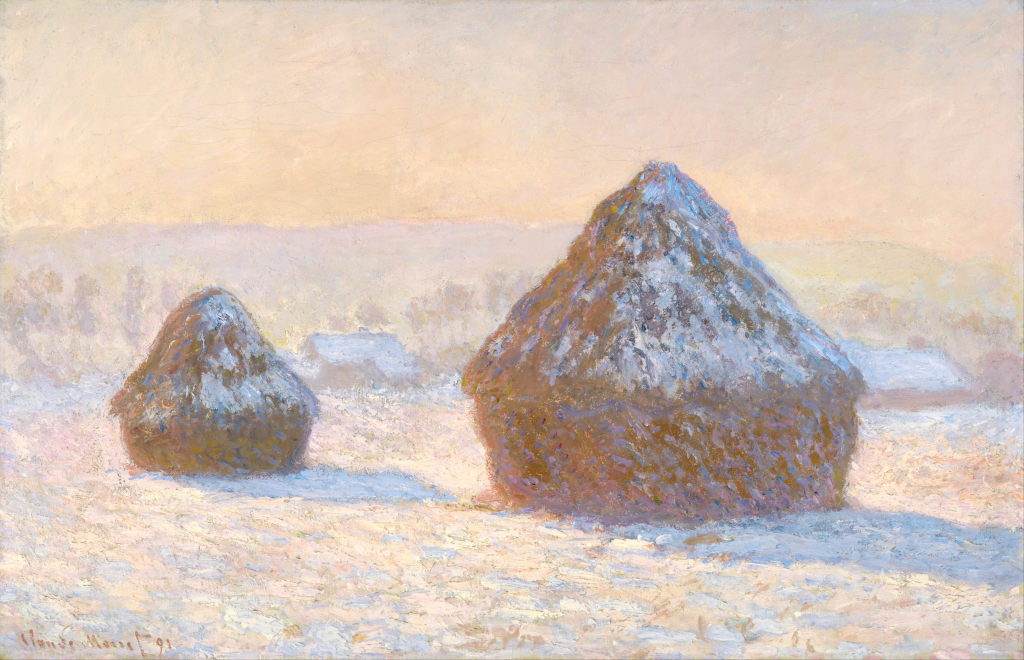
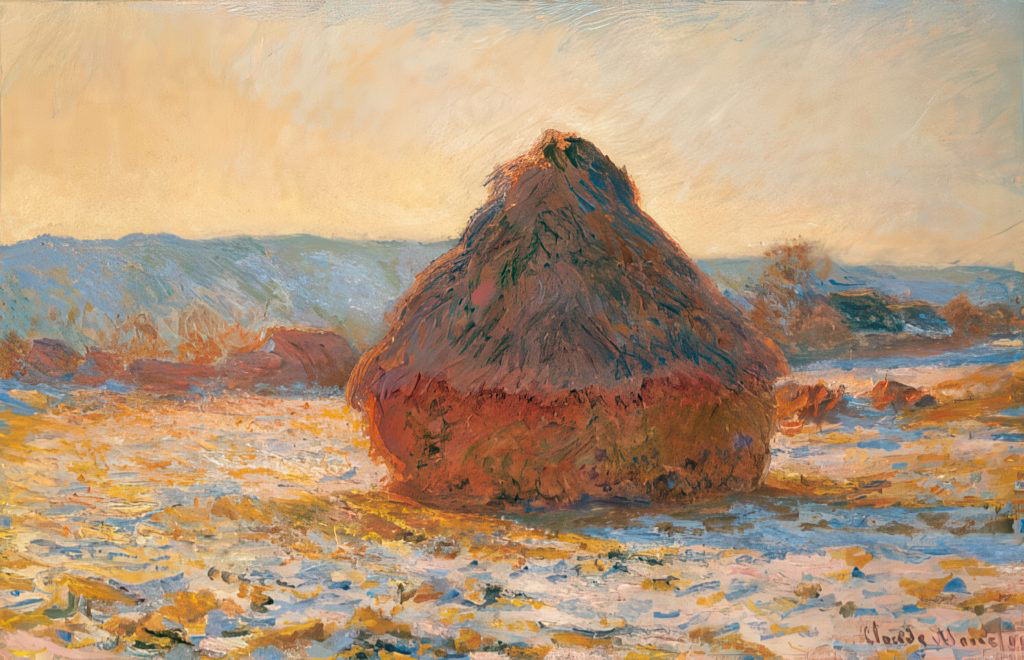
Grainstacks in the Morning, Snow Effect, Claude Monet, J Paul Getty Museum, Ref: W1276
The Series
The Haystacks paintings were conceived as a unified series rather than isolated works. Monet worked on multiple canvases at once, switching between them as the light changed. A stack seen in early morning required a different canvas from one painted at sunset or in snow. In this way, each painting records a specific moment, while the series as a whole reveals a broader study of time and perception.
Titles across the series reflect these changing conditions, including Grainstack at Sunset, Grainstack, Snow Effect, and Grainstack, Morning Effect. Although the compositions remain broadly similar, the differences in colour, tone, and atmosphere give each canvas its own character.
The works were first exhibited together in 1891 at the gallery of Paul Durand-Ruel in Paris. Seen as a group, they demonstrated a new way of painting: not a single finished image, but a sequence of related impressions shaped by time and light.
Which of Monet's Haystacks is the most beautiful, the most radical, or the most atmospheric? These ten are among the best places to begin.
Top 10 HAYSTACKS Explained
Monet's Haystacks are not simply repeated views of the same subject. Each canvas records a different combination of light, season, atmosphere, and time of day. The stacks remain almost unchanged, but the world around them is constantly shifting. That is what makes the series so compelling. Below are ten of the most interesting paintings in the group, each revealing a different side of Monet's ambition.
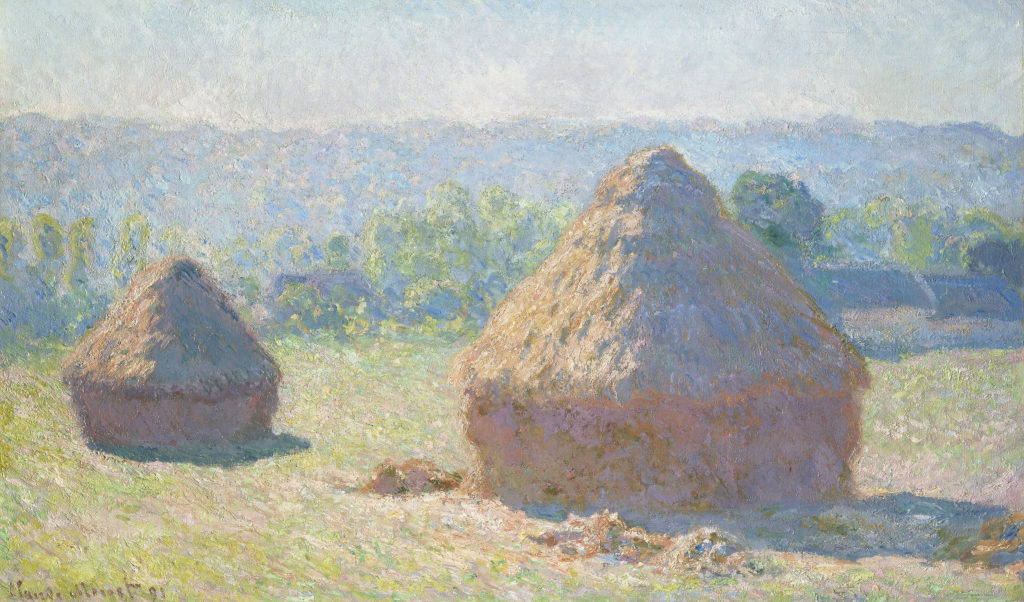
Grainstack, End of Summer
This is one of the clearest introductions to the series. The subject still feels solid and agricultural, but Monet is already turning it into a vehicle for light. The warm late-summer tones give the stack a golden density, while the surrounding air softens its outline. It stands at the point where observation becomes something more poetic.
Grainstack at Sunset
Here Monet pushes colour toward drama. The stack is no longer just a farm structure in a field. It becomes a dark silhouette set against an atmosphere charged with evening light. The painting shows how a familiar form can be transformed by the simplest change in hour.
Grainstack, Snow Effect
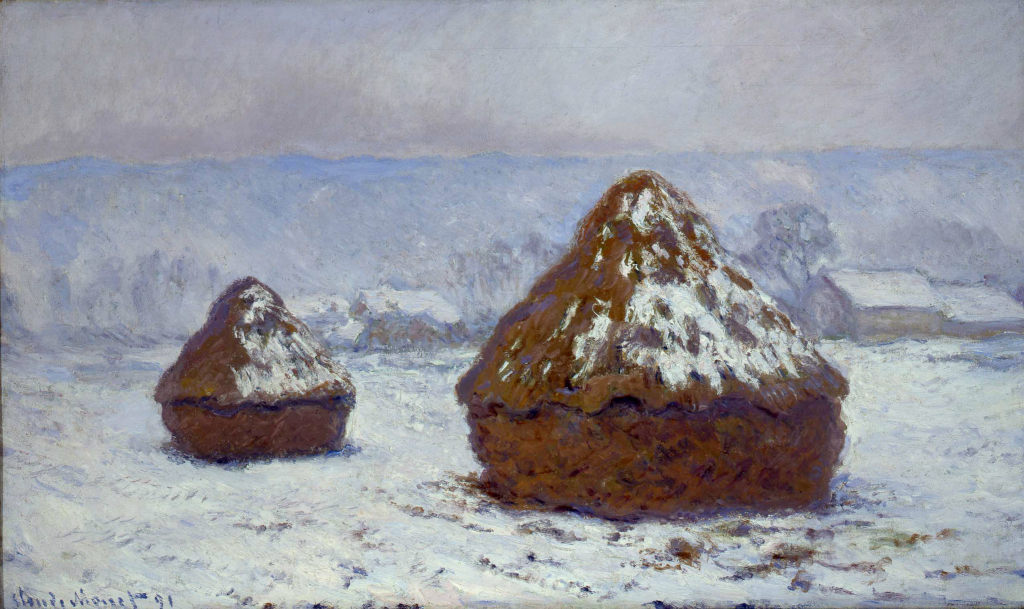
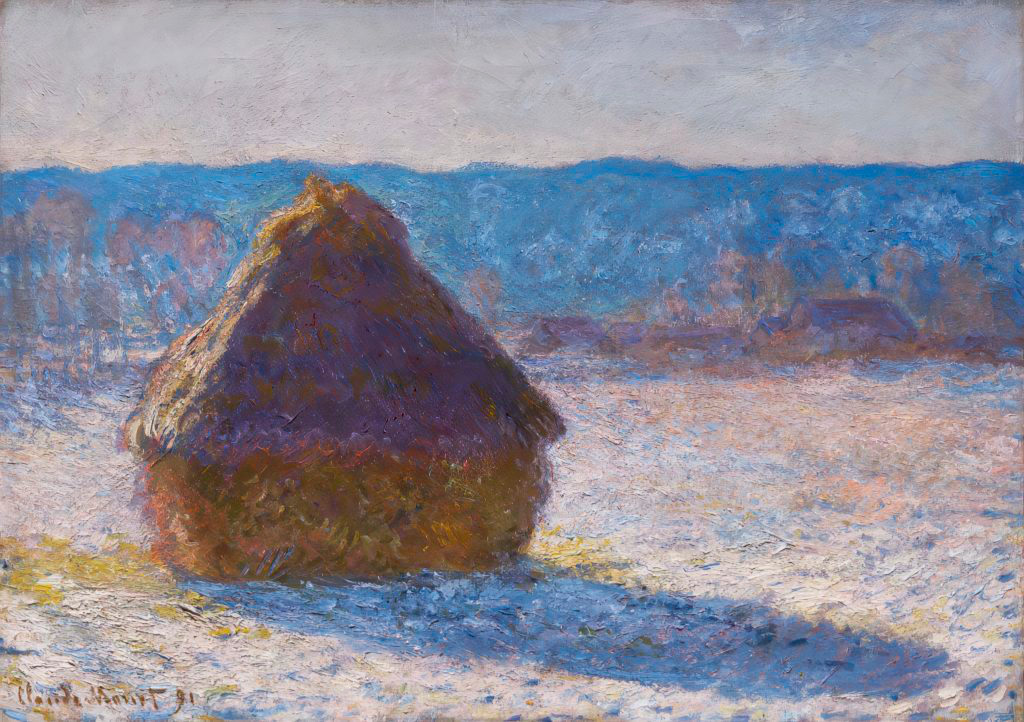
The winter versions are among the most revolutionary in the series. Snow allowed Monet to study reflected colour with extraordinary subtlety. Instead of treating white as blank or neutral, he fills it with blues, pinks, violets, and pale gold. The result is a painting about temperature as much as vision.
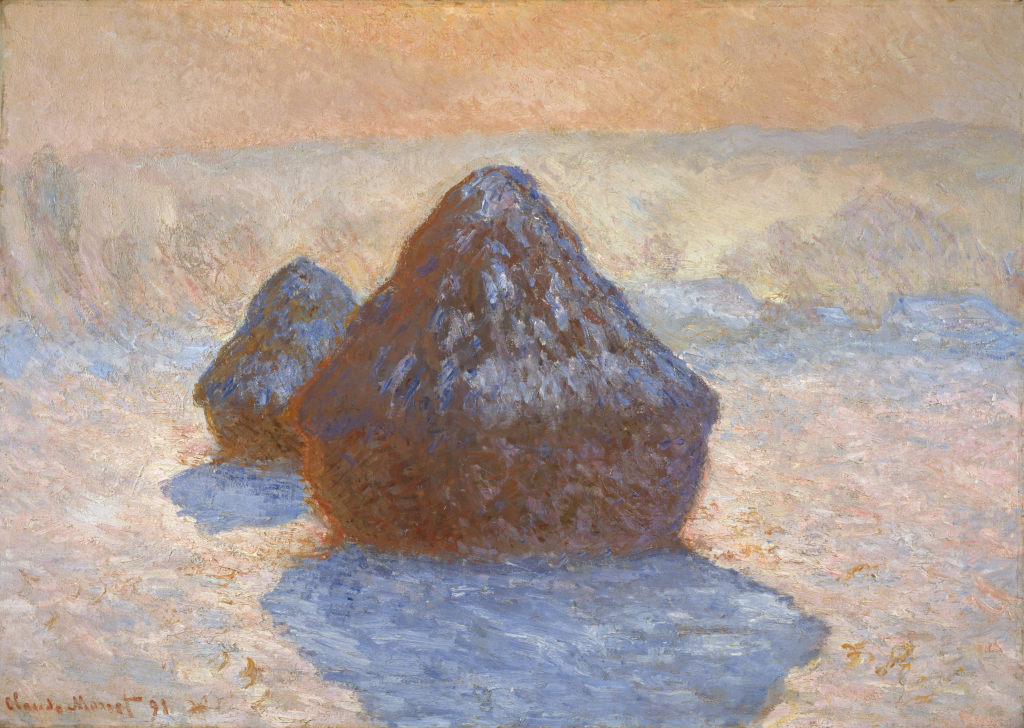
Grainstack, Frost Effect
This work is quieter and cooler, but no less ambitious. The frosty surface of the field creates a silvery atmosphere in which the stack seems to emerge gradually from the morning air. Monet is less interested in describing the exact texture of straw than in capturing the sensation of cold light settling over the land.
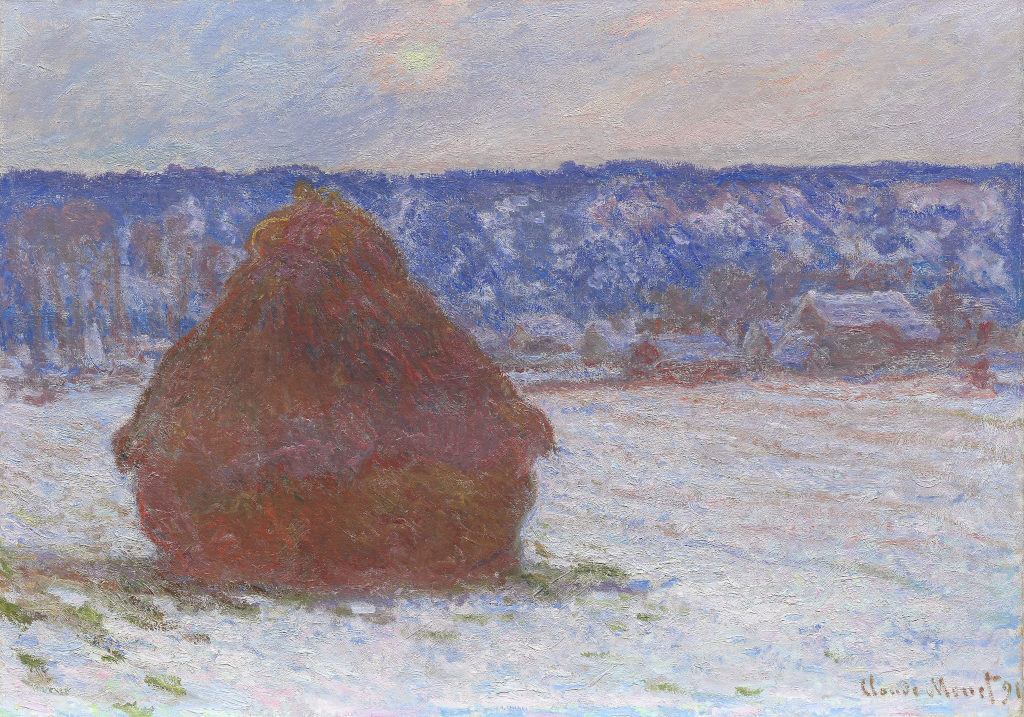
Grainstack, Bright Sun
In the brightest versions, Monet tests how much light a painted surface can hold. The form becomes simpler, the contrasts stronger, and the stack feels almost sculptural. Yet even in direct sunlight, he avoids heaviness. The painting remains luminous, as though the object were made of light rather than straw.
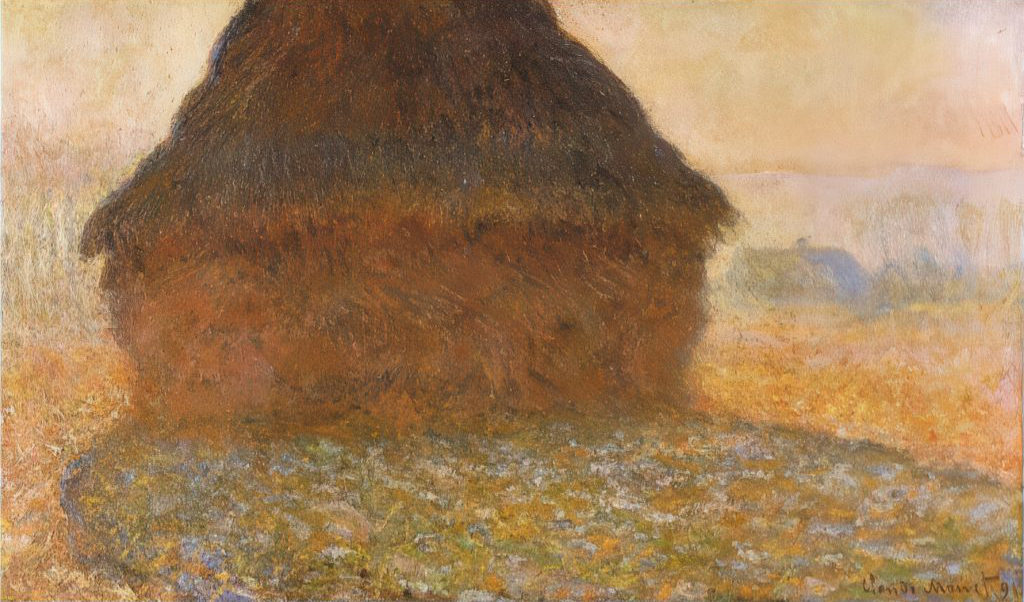
Grainstack, Sun in Mist
This is where the series becomes almost dreamlike. Mist softens edges and reduces certainty, allowing Monet to explore atmosphere as the true subject. The stack is still present, but it feels suspended in air rather than anchored to earth. These more veiled canvases are some of the most modern in spirit.
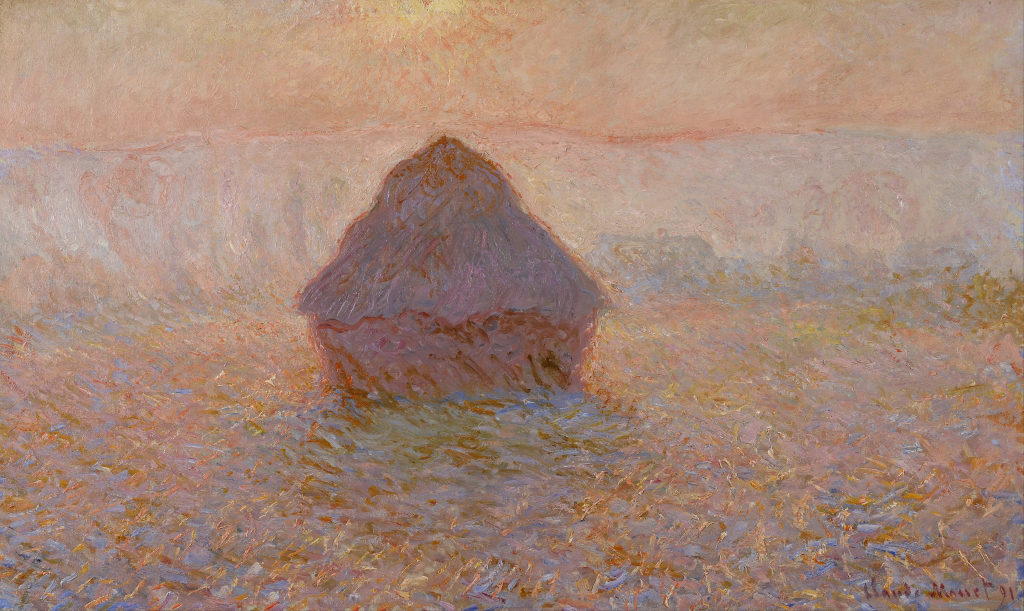
Grainstack, Sunset Glow
Monet loved the final moments of the day because they dissolved ordinary appearances so quickly. In works like this, colour becomes emotional as well as descriptive. The stack catches the last warmth of the sun, while the field and sky begin to cool around it. The painting feels both radiant and fleeting.
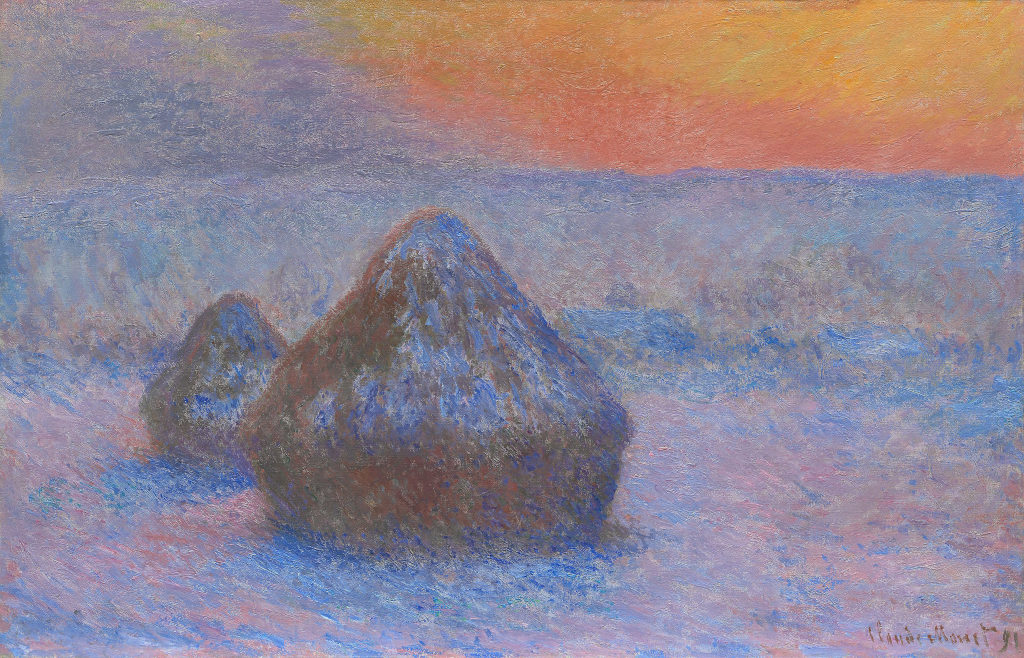
Grainstack, Snow, Blue Effect
This is one of the strongest demonstrations of Monet's refusal to see snow as merely white. Blue dominates, but it is never flat or monochrome. Instead it shifts across the canvas in delicate tonal changes, giving the winter field depth, atmosphere, and mood. The haystack becomes a warm counterpoint within a cold world.
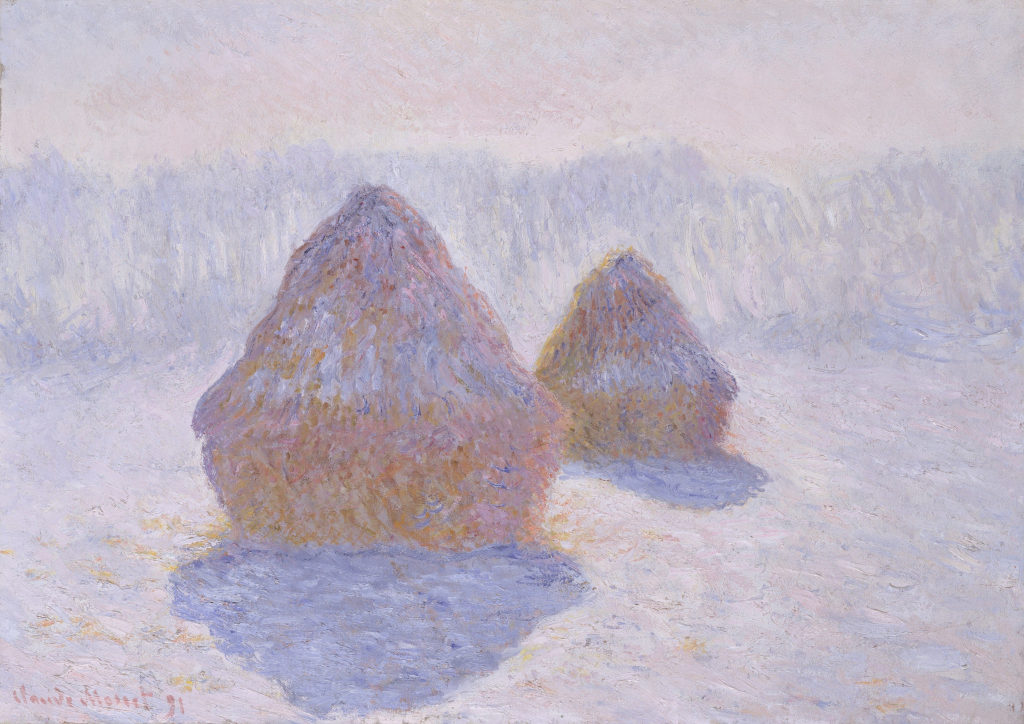
Grainstack, Late Afternoon
The late-afternoon pictures often feel especially balanced. The light is lower and richer, shadows lengthen, and the forms settle into a calm rhythm. In such paintings Monet achieves something remarkable: the stack appears stable and monumental, yet everything about the colour tells us the moment is already passing.
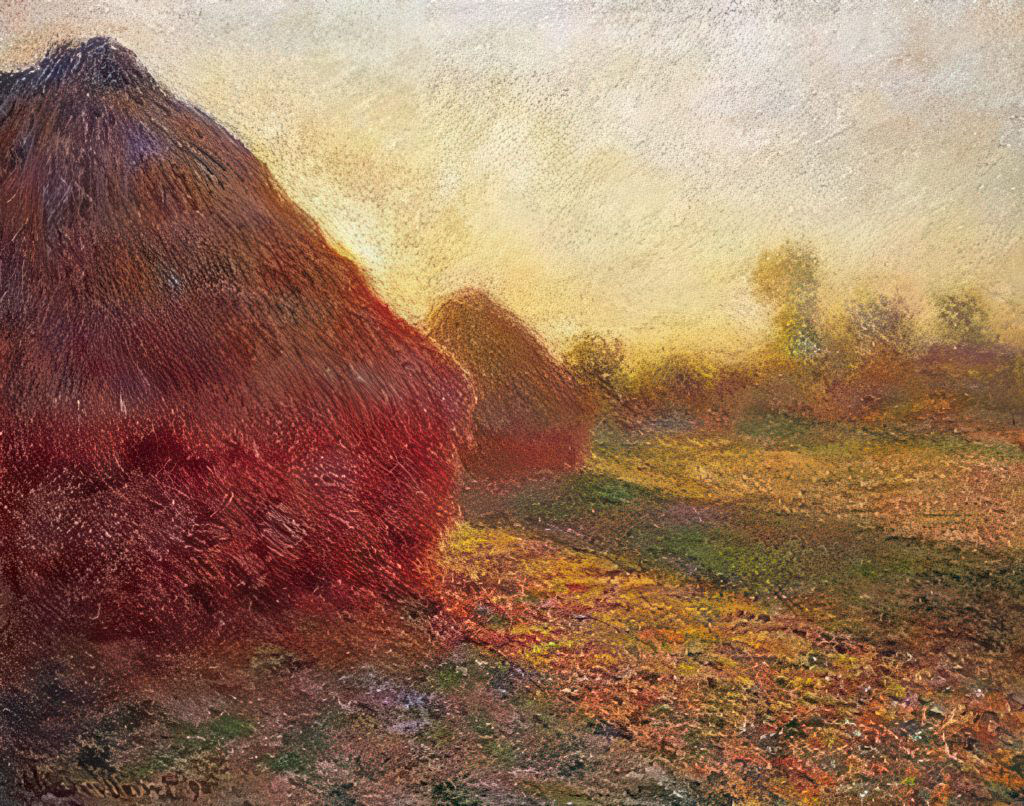
Grainstack, Twilight
The twilight versions come close to abstraction. Detail recedes, edges blur, and the stack becomes a dark, almost mysterious presence against fading light. These paintings reveal how far Monet could go while still remaining faithful to observed nature. The subject is simple, but the effect is profound.
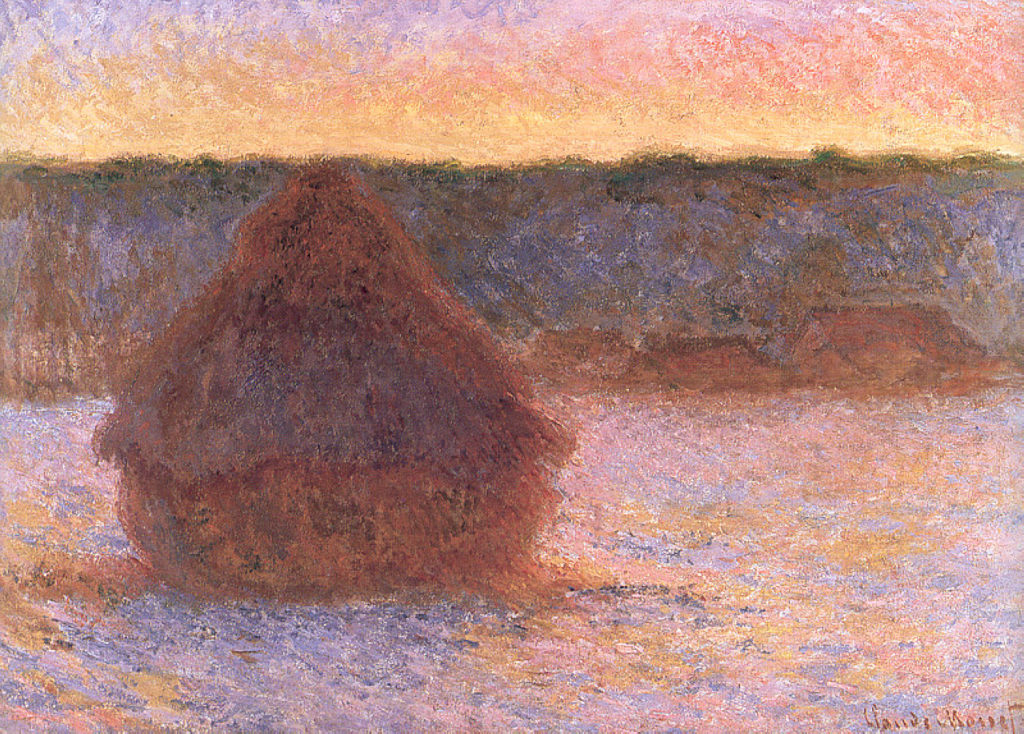
Haystacks and the Development of Impressionism
By the time Monet painted the Haystacks series, Impressionism had already emerged as a challenge to traditional academic painting. Instead of carefully composed studio works, artists like Monet sought to capture the fleeting effects of light and atmosphere through direct observation.
Monet's earlier experiences painting outdoors, particularly alongside artists such as Renoir and Pissarro, had convinced him that the appearance of a landscape was never fixed. Light, weather, and time continually altered what the eye perceived. The Haystacks series represents one of the clearest expressions of this idea.
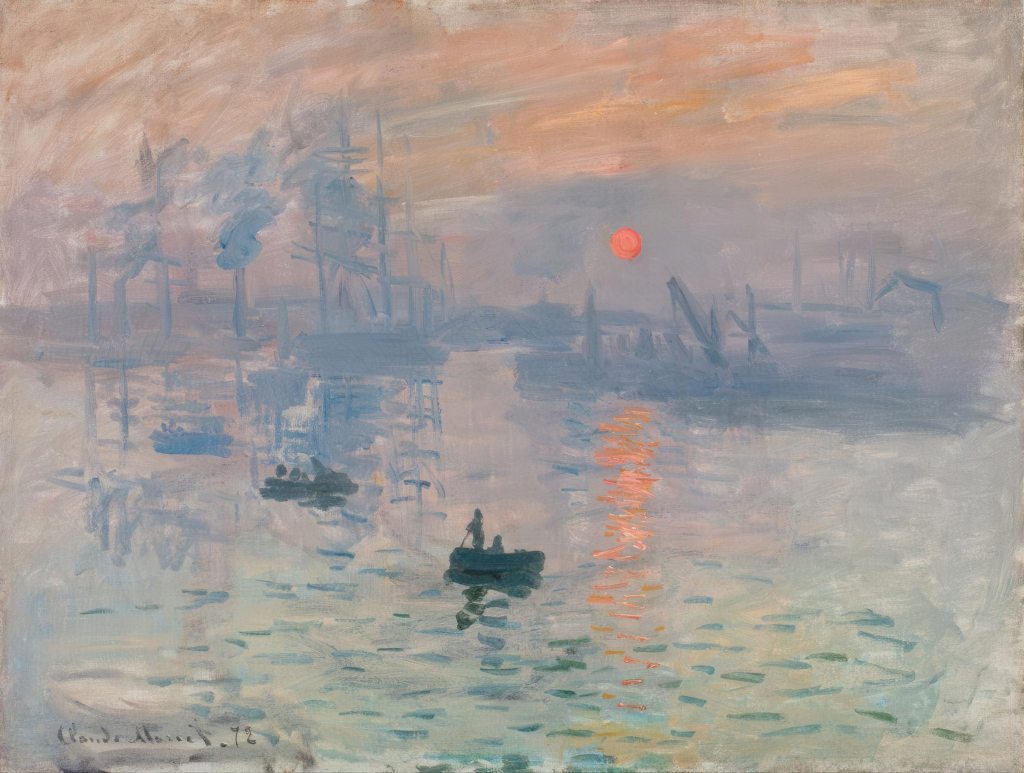
The term “Impressionism” itself originated in a review of Monet's painting Impression, Sunrise, first exhibited in 1874. What began as a criticism became a defining label for a movement that prioritised perception over precise representation.
By the late 19th century, artists across Europe were beginning to challenge traditional studio painting. In France, Monet and his contemporaries developed what became known as Impressionism — a style focused on capturing the immediate effects of light and atmosphere. Rather than constructing carefully staged compositions indoors, they painted directly from observation, a practice known as peinture sur le motif.
This approach marked a significant shift in artistic priorities. Instead of fixed, idealised scenes, painters sought to record the changing appearance of the world — how colour shifts in different light, how shadows behave, and how atmosphere alters perception. Monet refined this method through years of outdoor painting, often working rapidly to capture fleeting conditions.
The Haystacks series represents one of the most complete expressions of this idea. Here, time, season, and light become the true subjects of the painting, while the haystack itself provides a constant point of reference.
Why Haystacks?
The choice of haystacks was not accidental. Monet selected a subject that was simple, stable, and familiar, yet capable of absorbing a wide range of visual effects. Their solid, geometric form provided an ideal structure against which changes in light and atmosphere could be observed.
Although common in the agricultural landscape around Giverny, the stacks are never treated as purely functional objects. Instead, they become vehicles for exploring colour, temperature, and mood. A stack in winter snow appears cold and subdued, while one in late afternoon light can seem warm and radiant.
In this way, Monet transformed an ordinary rural motif into one of the most important subjects in modern art.
How Monet Painted the Series
To capture changing conditions, Monet worked on multiple canvases at once. As the light shifted, he would move from one canvas to another, selecting the painting that best matched the current moment. This method allowed him to remain faithful to direct observation while building a coherent series over time.
The process required speed and precision. Some canvases were worked on for only a short period before conditions changed. Others were revisited over several days or weeks. The result is a group of paintings that feel immediate, yet carefully structured.
"For me, a landscape does not exist in its own right, since its appearance changes at every moment; but the surrounding atmosphere brings it to life."
Claude Monet
As the days shortened, Monet stood on farmer Queruel's land, the Clos Morin, and in his series Haystacks repeatedly depicted six metre conical haystacks against horizontal bands of fields, distant hills and sky. Responding to them as a majestic group, he painted the stacks alone or in pairs of large and small... Blanche [Monet's stepdaughter] worked on her own Haystacks canvases at his side and fetched and carried canvases.
Jackie Wullschlager, Monet - The Restless Vision [3]
Recurrent motif in Monet
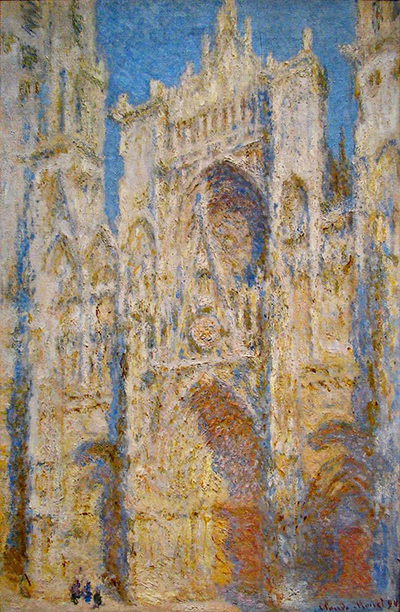
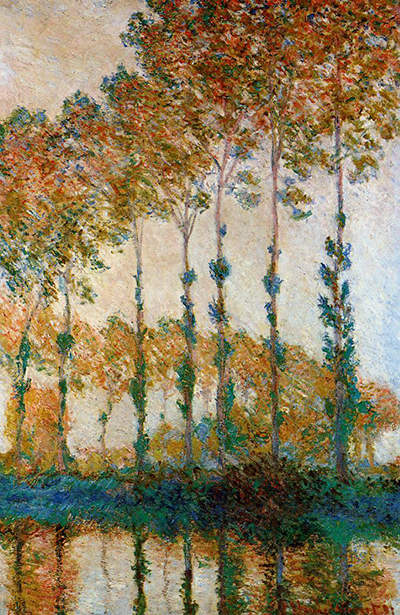
The repeated use of a single motif became central to Monet's later work. The Haystacks were followed by other major series, including the Rouen Cathedral paintings and the Poplars, each exploring how light and atmosphere transform a fixed subject.
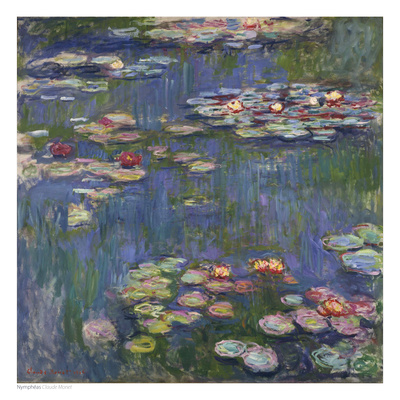
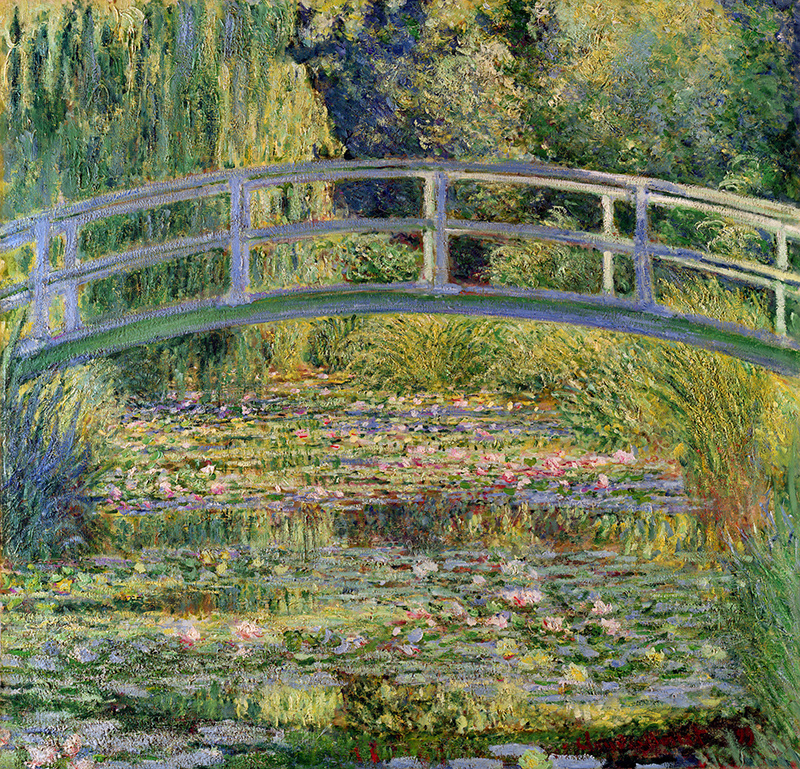
This approach would reach its fullest expression in the Water Lilies, where the subject itself becomes almost secondary to colour and reflection. Monet was not alone in this exploration — artists such as Vincent van Gogh also returned to repeated rural motifs — but Monet's systematic approach to series painting was uniquely influential.
Importance of the Haystacks Series
The Haystacks series marks a turning point in Monet's career. It was one of the first times he systematically explored a single subject across multiple canvases, establishing the serial approach that would define much of his later work.
This method would continue in series such as Rouen Cathedral, Poplars, and the Water Lilies. In each case, Monet used repetition not to duplicate a scene, but to reveal variation.
Today, the Haystacks are recognised as one of the clearest demonstrations of how painting can move beyond representation to capture the experience of seeing itself.
This was the breakthrough. Monet had built landscapes on nuances of effect through the 1880s, especially at Belle-Ile, but it was something else to construct them deliberately as a moment-by-moment series - paintings declaring themselves to be primarily about time rather than place.
Jackie Wullschlager, Monet - The Restless Vision [3]
Critical Reception
When did Monet's colours ever come together in more harmonious clamour, with more sparkling impetus? It was the evening sun that most exalted Haystacks: in summer, they were haloed in purple flakes of fire; in winter, their phosphorescent shadows rippled in the sun, and, a sudden frost enameling them blue, they glittered on a sky first pink, then gold.
Camille Pissarro, in a letter to his son, Lucien [2]
Commercial success
The series of which Haystacks Pink and Blue, Impressions was a part was exhibited by Durand-Ruel in May 1891 and was well-received.
The Haystacks series was exhibited in 1891 at the gallery of Paul Durand-Ruel in Paris, where it achieved both critical and commercial success. The paintings sold quickly, marking an important turning point in Monet's career and establishing the series as a major artistic achievement.
This success significantly improved Monet's financial position, allowing him to secure his home at Giverny and develop the gardens that would later inspire the Water Lilies. The series therefore represents not only an artistic breakthrough, but also a moment of personal stability that shaped his later work.
The artist was able to sell many of his Haystacks series at 2,500 - 3,000 francs each, and his record income for 1891 was an impressive 97,000 francs. Aside from boosting his progress as a professional artist, Monet was also able to focus on his home and garden in Giverny, taking pressure off himself and his family. [2]
The local landscape around his own home was also inspirational and filled with haystacks, poppies, lilies and all sorts of different varieties of trees that themselves made it into his paintings.
The series of Haystacks paintings numbered a total of 25 and were displayed together in a notable impressionist exhibition. The series itself was created in 1890 and covered a full harvest season where Monet concentrated on as many aspects of the environment and it's effects on his subjects as possible.
The large number of works in this series fortunately makes it relatively easy to get to see at least one of them with your own eyes, with the originals spread all over North America and Europe, always amongst the finest galleries and museums who were able to purchase them plus cover future insurance costs.
Haystacks in Sunset is another of the series of 25 on Haystacks, and a noble member of this select group of paintings. Monet did feature Haystacks on occasion outside of this 1890 set but they rarely get the same level of exposure.
Complete List of Claude Monet's Haystacks Series
The Haystacks series by Claude Monet consists of around twenty-five paintings created between 1890 and 1891, each capturing the same subject under different conditions of light, weather, and season.
The table below provides a complete catalogue of the series, including Wildenstein reference numbers, titles in both English and French, dates, and current locations. Taken together, these works reveal how Monet transformed a single rural motif into one of the most important studies of perception in modern art.
| Image | Wildenstein No. | Title (English) | Year | Current Location | Reference |
|---|---|---|---|---|---|
|
|
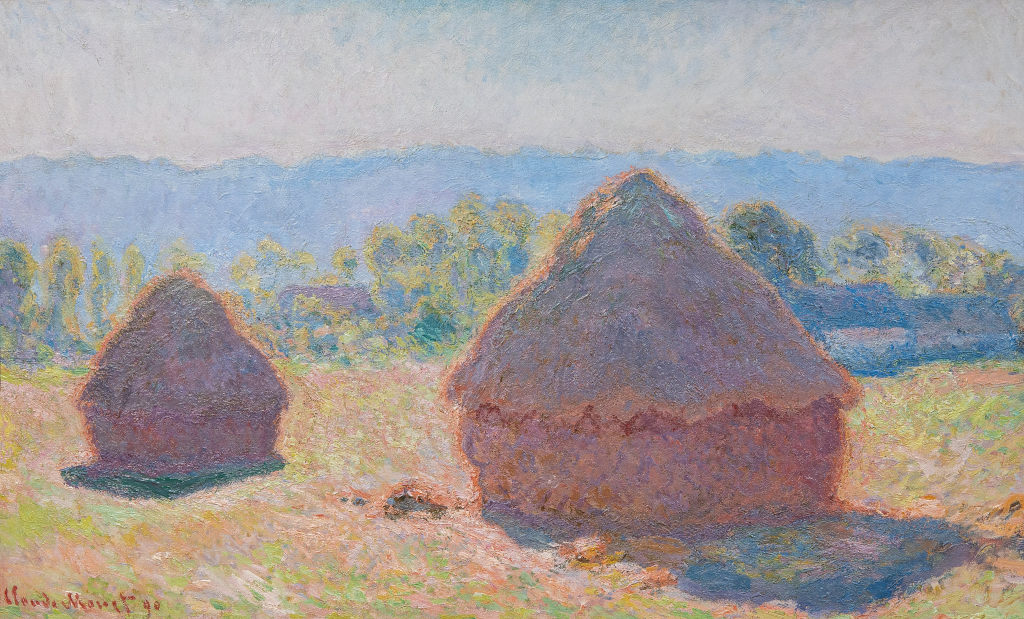
W1266 | Haystacks at the End of Summer, Morning Effect | 1890 | Musée d'Orsay, Paris | View source [4] |
|
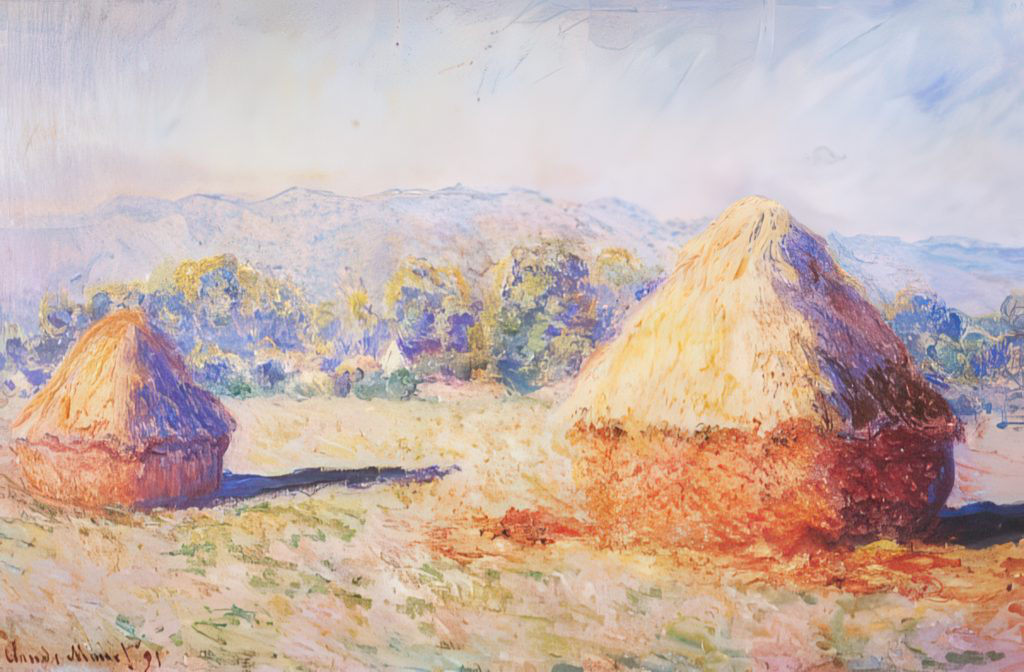
W1267 | Grainstacks in Bright Sunlight | 1890 | Hill-Stead Museum, Farmington, USA | View source [5] |
|
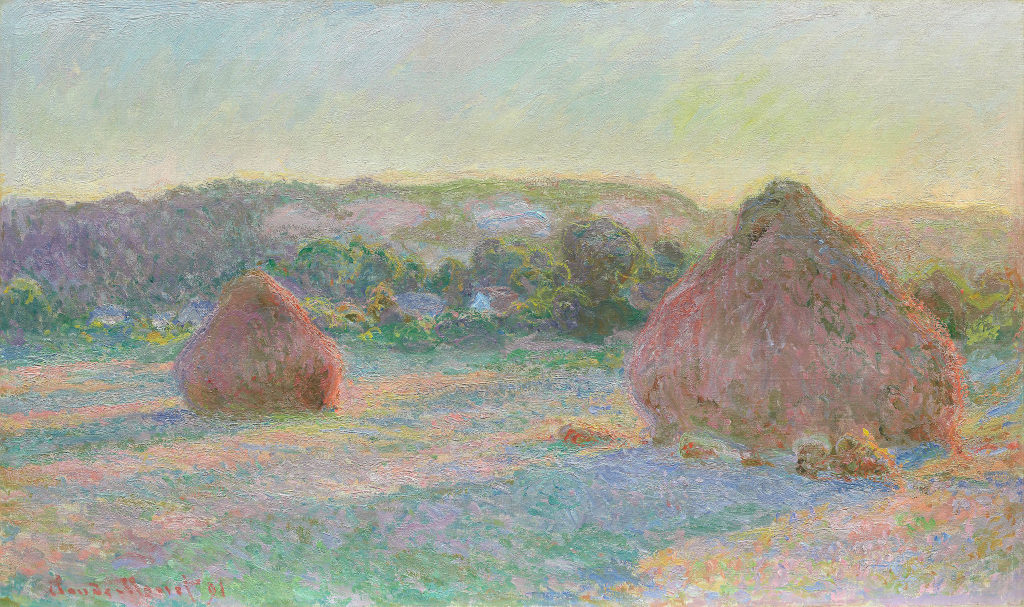
W1268 | Grainstacks in the Sunlight, Morning Effect | 1890 | Private Collection | View source [6] |
|
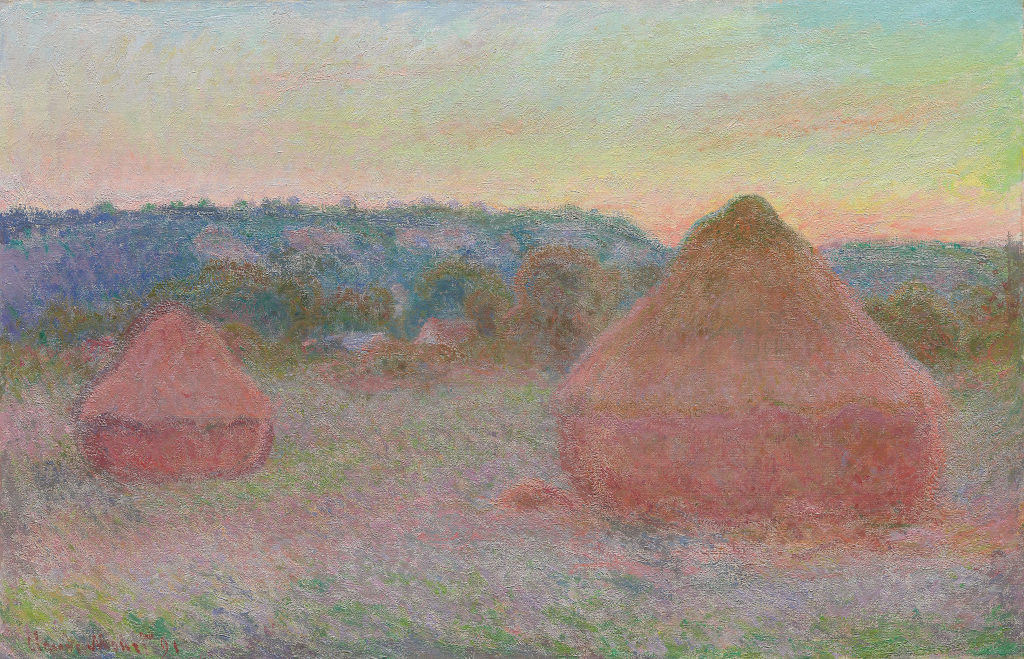
W1269 | Grainstacks at the End of Summer, Evening Effect | 1890 | Art Institute of Chicago | View source [7] |
|
W1270 | Two Grainstacks at the End of the Day, Autumn | 1890 | Art Institute of Chicago | View source [8] |
|
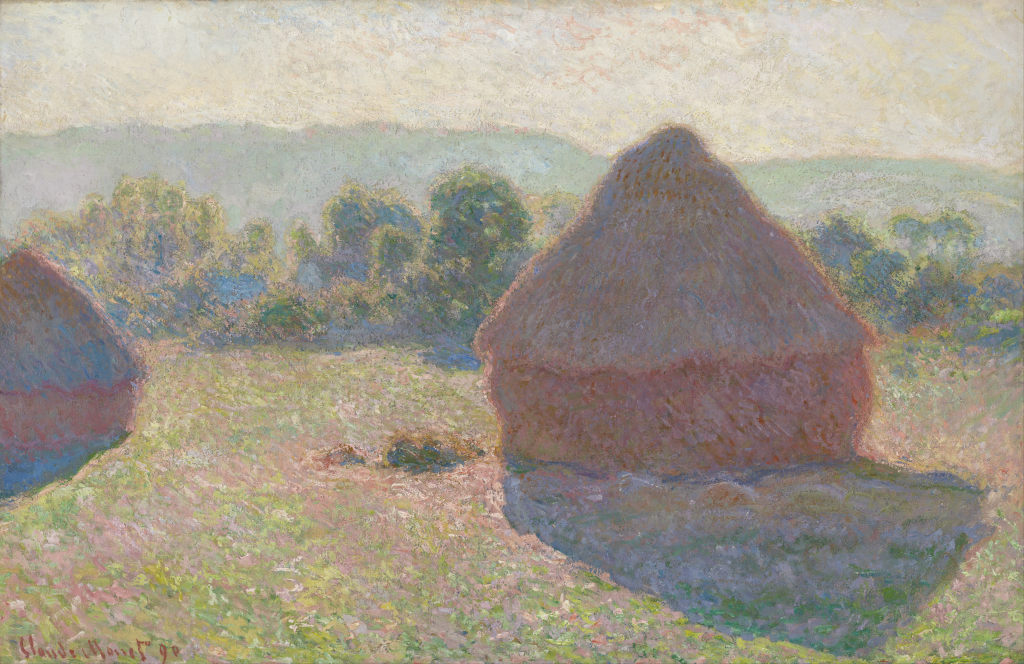
W1271 | Grainstacks in the Sunlight, Midday | 1890-91 | National Gallery of Australia, Canberra | View source [9] |
|
|
W1272 | Grainstacks, Last Rays of the Sun | 1890 | Private Collection | View source [10] |
|
W1273 | Grainstacks | 1890 | Private collection | View source [11] |
|
W1274 | Grainstacks, Snow Effect | 1891 | Shelburne Museum | View source [6] |
|
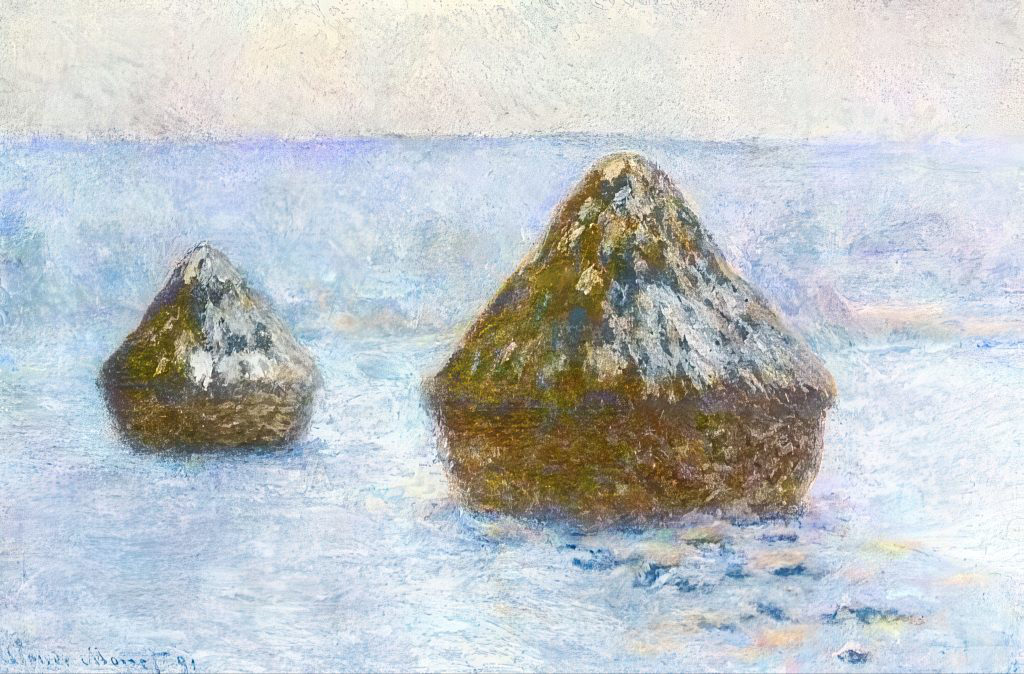
W1275 | Grainstacks, Winter | 1891 | Private Collection | View source [10] |

|
W1276 | Grainstacks in the Morning, Snow Effect | 1891 | J. Paul Getty Museum, Los Angeles | View source [6] |
|
|
W1277 | Haystacks, Snow Effect | 1891 | National Galleries of Scotland, Edinburgh | View source [4] |
|
|
W1278 | Grainstacks at Sunset, Snow Effect | 1890-91 | Art Institute of Chicago | View source [10] |
|
|
W1279 | Grainstacks, Effect of Snow and Sun | 1890-91 | Metropolitan Museum of Art, New York | View source [6] |
|
W1280 | Grainstack in the Morning, Snow Effect | 1890-91 | Museum of Fine Arts, Boston | View source [4] |
|
|
W1281 | Grainstack in Overcast Weather, Snow Effect | 1890-91 | Art Institute of Chicago | View source [10] |
|
|
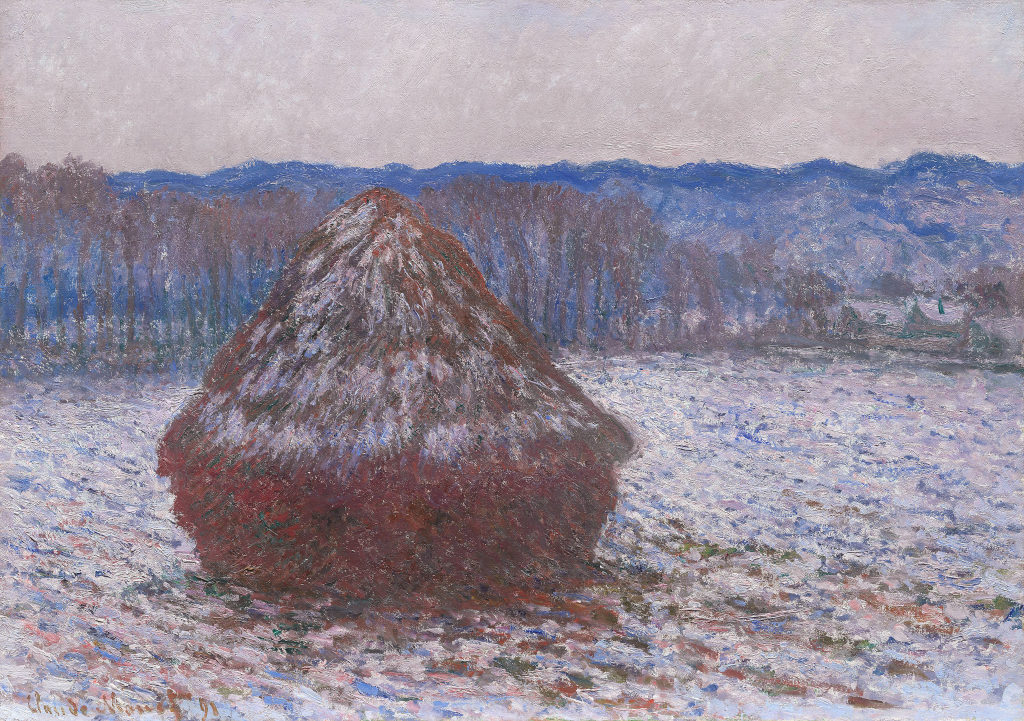
W1282 | Grainstack at Sunset, Winter | 1890-91 | Private Collection | View source [6] |
|
W1283 | Grainstack | 1890-91 | Art Institute of Chicago | View source [10] |
|
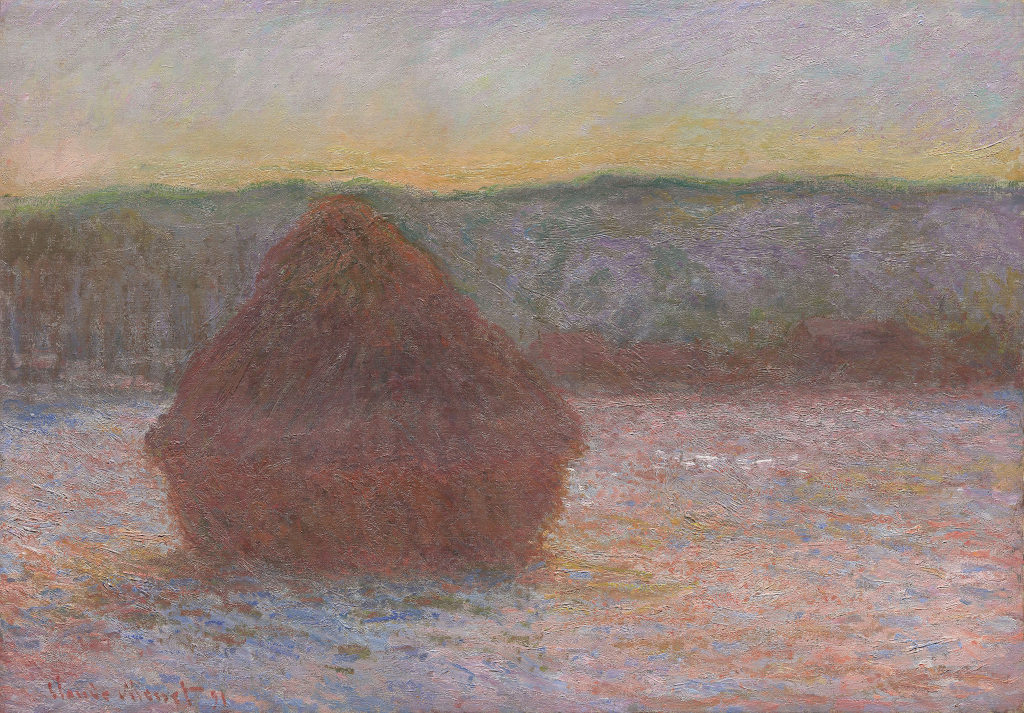
W1284 | Grainstack, Thaw, Sunset | 1890-91 | Art Institute of Chicago | View source [4] |
|
W1285 | Grainstack | 1891 | Private Collection | View source [6] |
|
|
W1286 | Grainstack, Sun in the Mist | 1891 | Minneapolis Institute of Art | View source [10] |
|
W1287 | Grainstack in the Sunlight, Snow Effect | 1891 | Private Collection | View source [4] |
|
|
W1288 | Grainstack in Sunshine | 1891 | Kunsthaus Zürich | View source [10] |
|
|
W1289 | Grainstack at Sunset | 1891 | Museum of Fine Arts, Boston | View source [6] |
|
W1290 | Grainstack in the Sunshine | 1891 | Private Collection | View source [4] |
FAQs
Discussion
Claude Monet's Haystacks series continues to fascinate viewers because it transforms an ordinary rural subject into something luminous, atmospheric, and unexpectedly profound. Rather than painting haystacks simply as objects in a field, Monet used them to explore how light, season, colour, and time of day could alter the appearance of the same motif again and again.
The series often prompts discussion about repetition, perception, and the changing experience of nature. Which version of the haystacks speaks to you most strongly?
Reader Insights
What strikes me most is that the haystacks do not really feel like farm objects by the end of the series. Monet turns them into forms of light and colour, so they seem to change personality from one canvas to the next.
The most remarkable thing is how the same subject can feel warm, cold, tranquil, or almost glowing depending on the time of day. The haystacks stay the same, but the atmosphere around them changes everything.
Do you think Monet was more interested in painting the haystacks themselves, or in using them as a structure through which to paint changing light and perception?
Join the Conversation
Have a thought or observation about Haystacks? Share it below — thoughtful responses may be added to this section.
References
- Daniel Wildenstein, Gilles Neret, Monet: Catalogue Raisonne, Cologne: Wildenstein Institute and Taschen, 1996.
- Daniel Wildenstein, Monet: The Triumph of Impressionism, Cologne: Taschen, 2015.
- Jackie Wullschlager, Monet - The Restless Vision, Milton Keynes: Allen Lane, 2023.
- Web Gallery of Art, “Monet - Haystacks,” Web Gallery of Art, View source.
- Art Institute of Chicago, “Haystack (End of Summer),” Art Institute of Chicago, View source.
- Sotheby's, “Monet's Meules,” Sotheby's, View source.
- Museum of Fine Arts, Boston, “Grainstack at Sunset,” MFA Boston Collections, View source.
- The Metropolitan Museum of Art, “Haystacks (Snow Effect),” The Met Collection, View source.
- Musée d'Orsay, “Meule, effet de gel,” Musée d'Orsay, View source.
- Christie's, “Monet Haystacks,” Christie's, View source.
- National Gallery of Australia, “Monet,” National Gallery of Australia, View source.