

 by Tom Gurney
Tom Gurney BSc (Hons) is an art history expert with over 20 years experience
Published on October 6, 2016 / Updated on April 8, 2026
Email: tomgurney1@gmail.com / Phone: +44 7429 011000
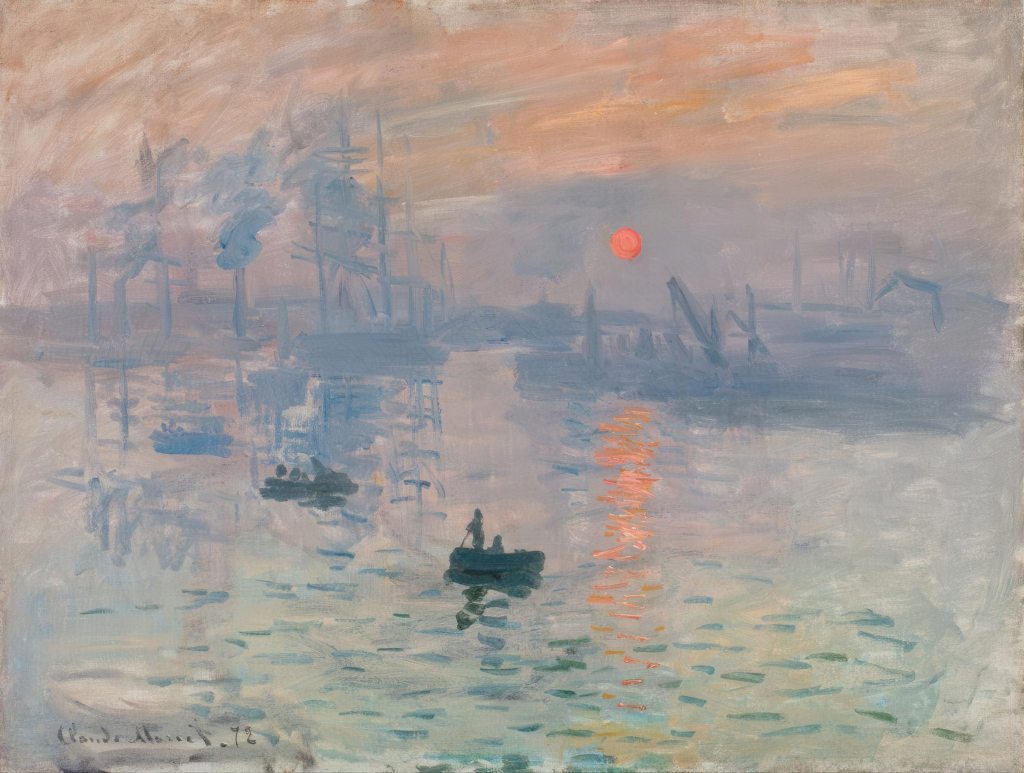
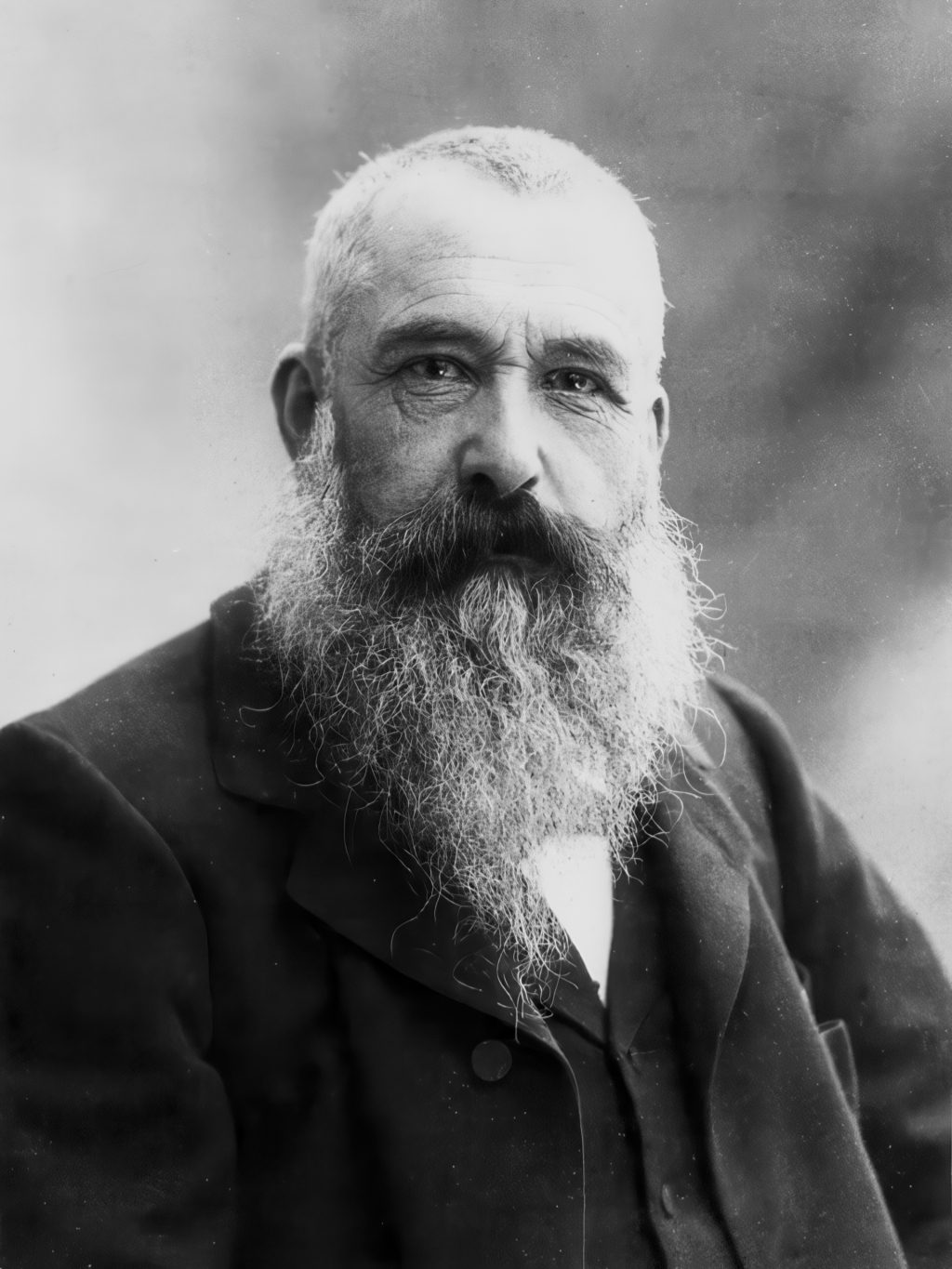
Impression, Sunrise (1872) is a painting by Claude Monet that gave its name to the Impressionist movement.
Impression, Sunrise is one of the defining works of modern art. Rather than describing Le Havre in precise detail, Monet captured the sensation of light, atmosphere, and a fleeting moment at dawn.
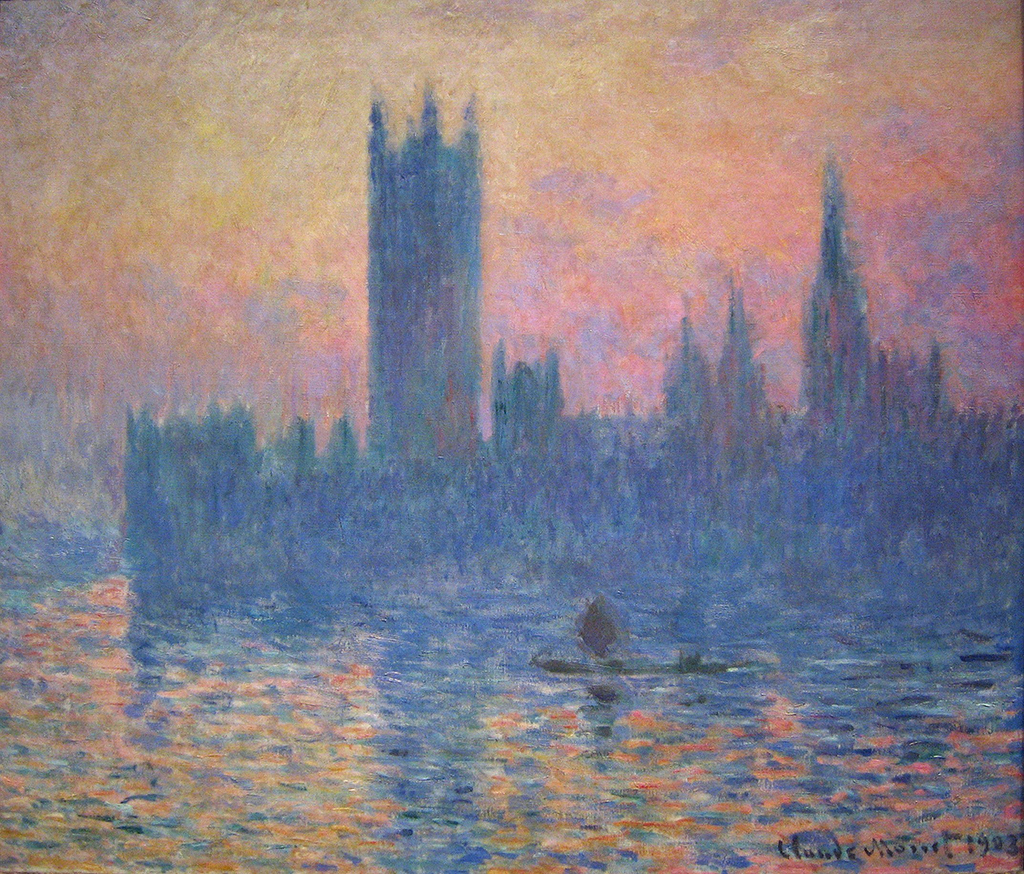
Later in his career, Monet would push this exploration of light even further in his London series, where fog and atmosphere dissolved entire cityscapes along the Thames.
Monet in Le Havre
Le Havre, Monet's birthplace, gave the painting both a personal and modern setting. In 1872 he returned to the port and painted a group of harbour views under different conditions; Impression, Sunrise is the most famous of them, likely painted from a hotel window at dawn.
Painted in 1872 from a vantage point overlooking the harbour, probably a hotel window, the scene is grounded in the real structure of Le Havre, including quays, masts, cranes, and industrial traffic.
The composition is deceptively simple. The horizon sits high, allowing the water to dominate the foreground, while the small boats create a loose diagonal that leads the eye toward the rising sun.
The sun appears vivid, yet its brightness is close to that of the surrounding sky. Its intensity comes from colour contrast rather than luminance, which is why it almost disappears when the painting is viewed in black and white.
Equally revealing is what Monet chose to leave out. The actual view included houses to the left of the jetty, yet he deliberately omitted them, allowing the industrial elements of the harbour to dominate the scene. This choice shifts the painting away from a picturesque view and toward a modern, working port.
Monet worked rapidly, and the foreground boats and orange sun appear to have been added late in the process, heightening the sense of immediacy.
The power of the painting lies in the tension between structure and atmosphere. Smoke, mist, and diffused light soften the port's forms, while the boats and sun provide just enough clarity to anchor the composition.
- Artist:Claude Monet
- Title:Impression, Sunrise
- Year:1872
- Medium:Oil on canvas
- Movement:Impressionism
- Location:Musée Marmottan Monet, Paris
- Subject:Le Havre harbour at sunrise
- Significance:Gave Impressionism its name
Lecture Video on Claude Monet and Impressionism
This video offers a useful introduction to Monet's handling of light, colour, and atmosphere in Impression, Sunrise.[5]
Why Impression, Sunrise Matters
Although modest in scale, Impression, Sunrise became one of the most influential paintings of the nineteenth century because its title came to define Impressionism itself.[2]
Impression, Sunrise has become the epitome of Impressionist painting not just because of the title but above all because of its character and execution... The picture records not a scene but a mood.
Birgit Zeidler, Monet - Art in Focus[7]
Table of Contents
- Introduction
- Monet in Le Havre
- Lecture Video on Claude Monet and Impressionism
- Why Impression, Sunrise Matters
- First Exhibited in 1874
- Origins of the Term 'Impressionism'
- Close-Up Details Explained
- Critical Reception
- Subject and Interpretation
- Technique
- Painting Location
- FAQs
- References
[It was] something done out of my window at Le Havre, sunlight in the mist with a few masts in the foreground jutting up from the ships below.[9]
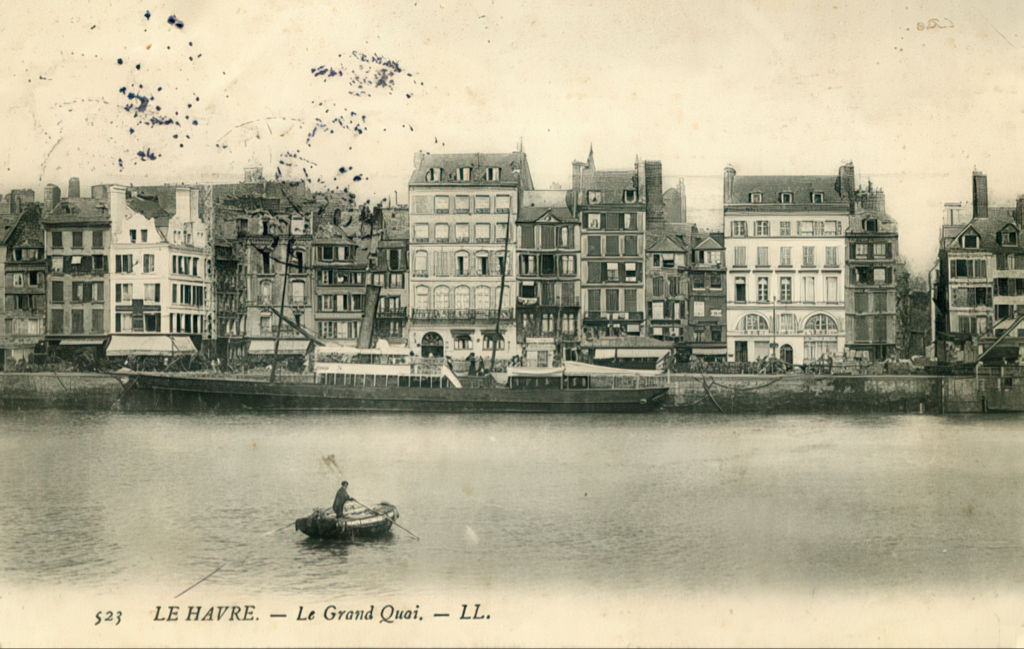
Postcard of Le Havre's harbour, circa 1900, featuring the white Hôtel de l'Amirauté at the center - the very building where Monet painted Impression, Sunrise (Bibliothèque municipale du Havre).
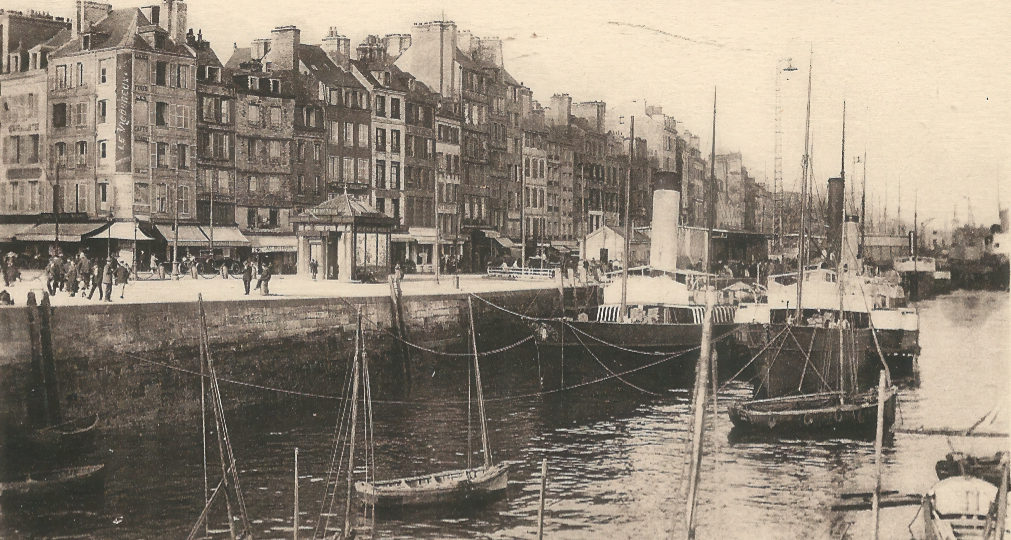
Photograph of Southampton Quay in Le Havre Harbour
First Exhibited in 1874
Impression, Sunrise was first exhibited in April 1874 at the group exhibition organised by the artists who would soon become known as the Impressionists.
It appeared alongside works by around 30 artists, including Degas, Sisley, Renoir, and Pissarro, in the independent exhibition staged outside the official Salon.
Origins of the Term 'Impressionism'
According to Monet, he gave the painting a title as he was asked to do so for the exhibition catalogue. In explanation of his title choice, he attributed his hazy painting style to using the term Impression as he felt that the term view was not an accurate reflection of the painting style. Therefore, he titled the piece Impression: Soleil Levant, or Impression, Sunrise.
The story has it that Edmond Renoir, who was responsible for printing the catalogue, asked Monet for his titles. For his work painted the previous year at Le Havre, Monet answered "Put 'Impression'". Hence the famous appelation: Impression, Sunrise." [1] [5]
Some later said that he chose the title to avoid criticism from those who would say the painting lacked detail or appeared unfinished. Regardless of the title, the piece did receive criticism for exactly those reasons.
The word impressionism had been used before in French art criticism, but after the 1874 exhibition it became attached specifically to Monet and his circle.
Following the exhibition featuring Monet's Impression, Sunrise, the term impressionism was applied in a different way. Louis Leroy reviewed the exhibition for the La Charivari newspaper and referred to it as the 'Exhibition of the Impressionist'. His review described the style of work displayed in the exhibition as impressionism and described Monet's work as representing this style perfectly. Thus, the movement of impressionism was born.
Close-Up Details Explained
Although Impression, Sunrise appears simple at a distance, a closer look reveals a complex arrangement of forms and brushstrokes. Monet carefully balanced abstraction and suggestion, allowing the viewer's eye to complete the image.
The Boats in the Foreground
The small rowing boats are among the most defined elements in the painting, yet even they are rendered with minimal detail. Their dark silhouettes stand out against the lighter water, providing contrast and anchoring the composition.
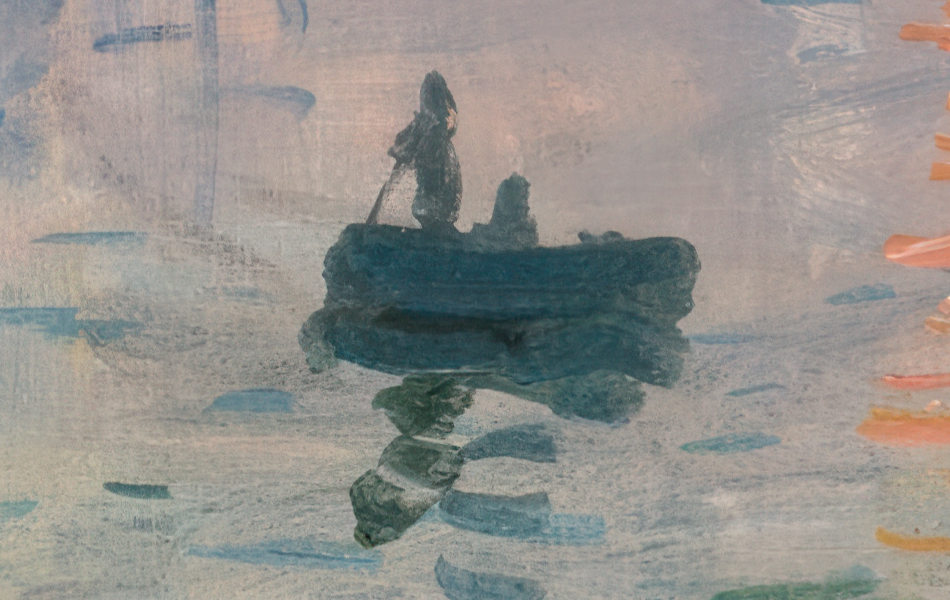
Boats in the Foreground
The Ships in the Distance, with Smoke and Industrial Haze
Behind the boats, larger vessels emerge faintly through the mist. These forms are barely outlined, their shapes softened by the atmosphere. Monet suggests their presence without fully describing them.
Rising smoke blends into the sky, merging industrial activity with natural atmosphere. This subtle detail reflects the modern character of the port, where industry and environment coexist.
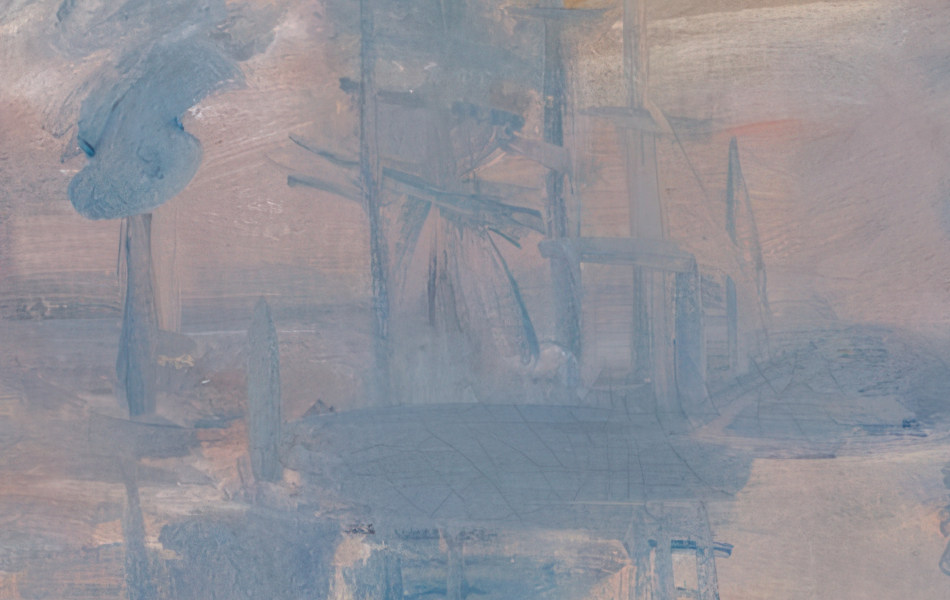
Ships in the Distance & Smoke and Industrial Haze
The Reflection of the Sun
The orange reflection stretches vertically across the water, broken into shimmering strokes. Rather than painting a precise reflection, Monet captures the effect of light flickering on the surface.
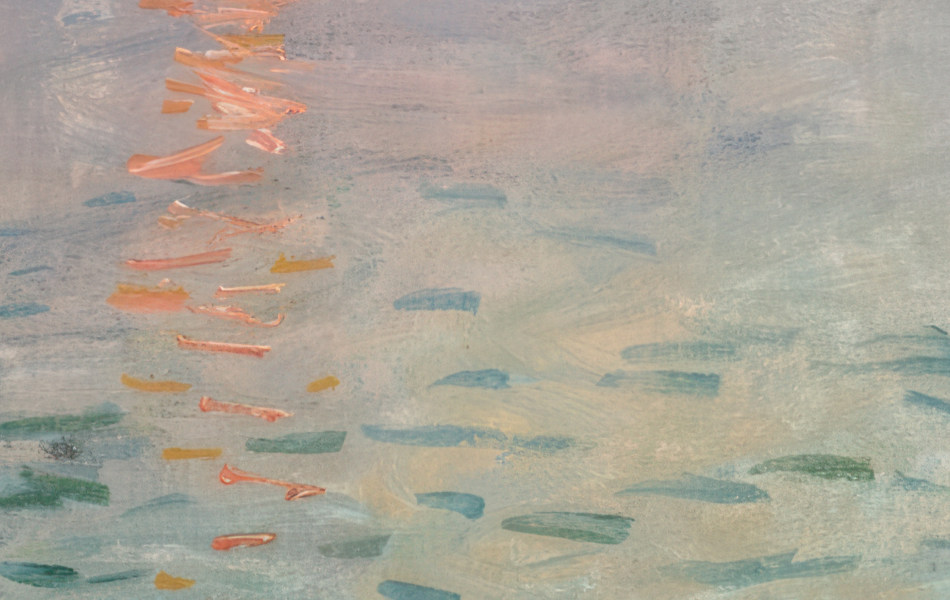
Reflection of the Sun
Sun Rising
The sun is small, but it dominates the painting because of its intense orange contrast against the cool blue-grey harbour.
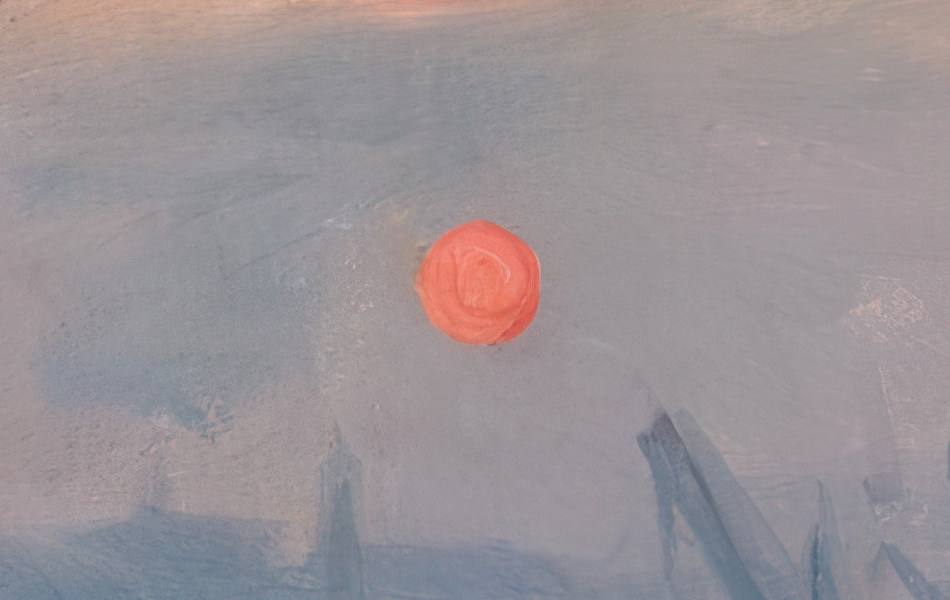
Sun Rising
Impression, Sunrise is also a calculated work that shows an interest in colour theory. While the sun appears to pierce the morning mist because of its intense orange colour, in reality it has the same luminance as its surroundings. In a black-and-white photograph, the sun is almost indistinguishable, an effect that Monet did not achieve by accident.
Stephen Farthing, 1000 Paintings You Must See[8]
Critical Reception
When Impression, Sunrise was exhibited in 1874, it attracted relatively little direct attention. Only a handful of reviews mentioned the painting, as critics focused more broadly on the unconventional style of the exhibition as a whole.
Reactions were divided. Some critics dismissed the loose brushwork and lack of detail, while others recognised that these artists were not attempting to depict scenes precisely, but to capture their visual impression.
At a distance, one hails a masterpiece in this stream of life... But come closer and it all vanishes. There remains only an indecipherable chaos of palette scrapings.
Ernest Chesneau, French art critic[5]
The translucent, ethereal light of a misty sunrise and the ghostly structures looming in the haze bore the brunt of their derision.
Tamsin Pickeral, Monet - The World's Greatest Art[6]
Impression, Sunrise was not intended as a manifesto, yet its reputation was shaped by these early responses. What critics initially struggled to interpret—the sketch-like handling and emphasis on atmosphere—would later be understood as a defining feature of Impressionism.[3]
Subject and Interpretation
Impression, Sunrise can be read on several levels at once: as a harbour scene, as a study of perception, and as an image of modern industrial life. The sun, boats, smoke, and distant ships are all lightly defined, yet together they create a convincing sense of atmosphere, movement, and change.
The painting also carries a distinctly modern character. Le Havre was a major industrial port, and the prominence of steamships, smoke, and harbour activity suggests that Monet was not simply painting nature, but a world shaped by commerce and industry.
At its core, Impression, Sunrise is less concerned with describing a scene than with capturing the experience of seeing it. Forms dissolve into light and atmosphere, and the boundaries between sky, water, and reflection become fluid. Rather than presenting a fixed image, Monet offers a moment of perception—an impression shaped by light, movement, and the conditions of the morning. This emphasis on experience over description would become a defining principle of Impressionism.[4]
Technique
Monet used light and loose brush strokes that simply suggested the scene rather than exactly depicting what the eye could see. It is said that Monet worked at great speed on paintings in this style as though he was trying to capture the movement of the light as it happened.
When he painted Impression, Sunrise, Monet did not mix colours to create different hues. Nor did he wait for one layer of paint to dry before applying the next. Rather, he used natural colours in layers that each then mixed with the layer of paint below. The production of light, shade and colours would then happen directly on the canvas.
Also, Monet demonstrates a different attitude towards what he is painting in comparison to the work of other artists. Traditionally, artists had focused on form, structure and colour. For Monet, the primary focus was light and the way it interacted with the various elements of the landscape. He also concentrated on saturation and composition.
Impression, Sunrise was painted predominantly in varying shades of grey that were added in layers that give depth to the painting.
Monet used loose, visible brushwork and a restrained palette of blue-greys punctuated by orange. Rather than describing forms precisely, he let the sky, water, smoke, and harbour merge, so that the viewer experiences the scene as a fleeting effect of light.
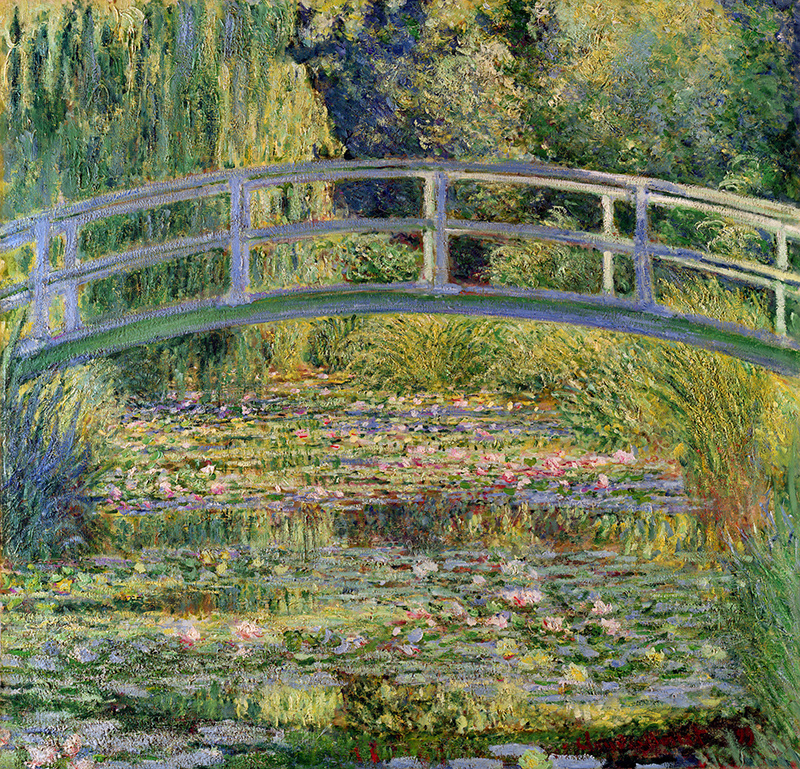
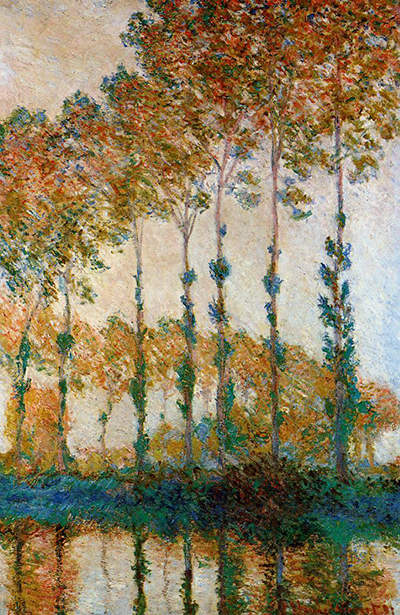
Although Impression, Sunrise is a single harbour view, it also points toward Monet's later practice of revisiting the same subject under changing conditions of light, weather and time.
The motif is insignificant for me; what I want to represent is what lies between the motif and me.
Claude Monet
Painting Location
You will find Impression, Sunrise exhibited at Musée Marmottan Monet in Paris, France. The museum is home to the largest collection of Monet's works in the world.
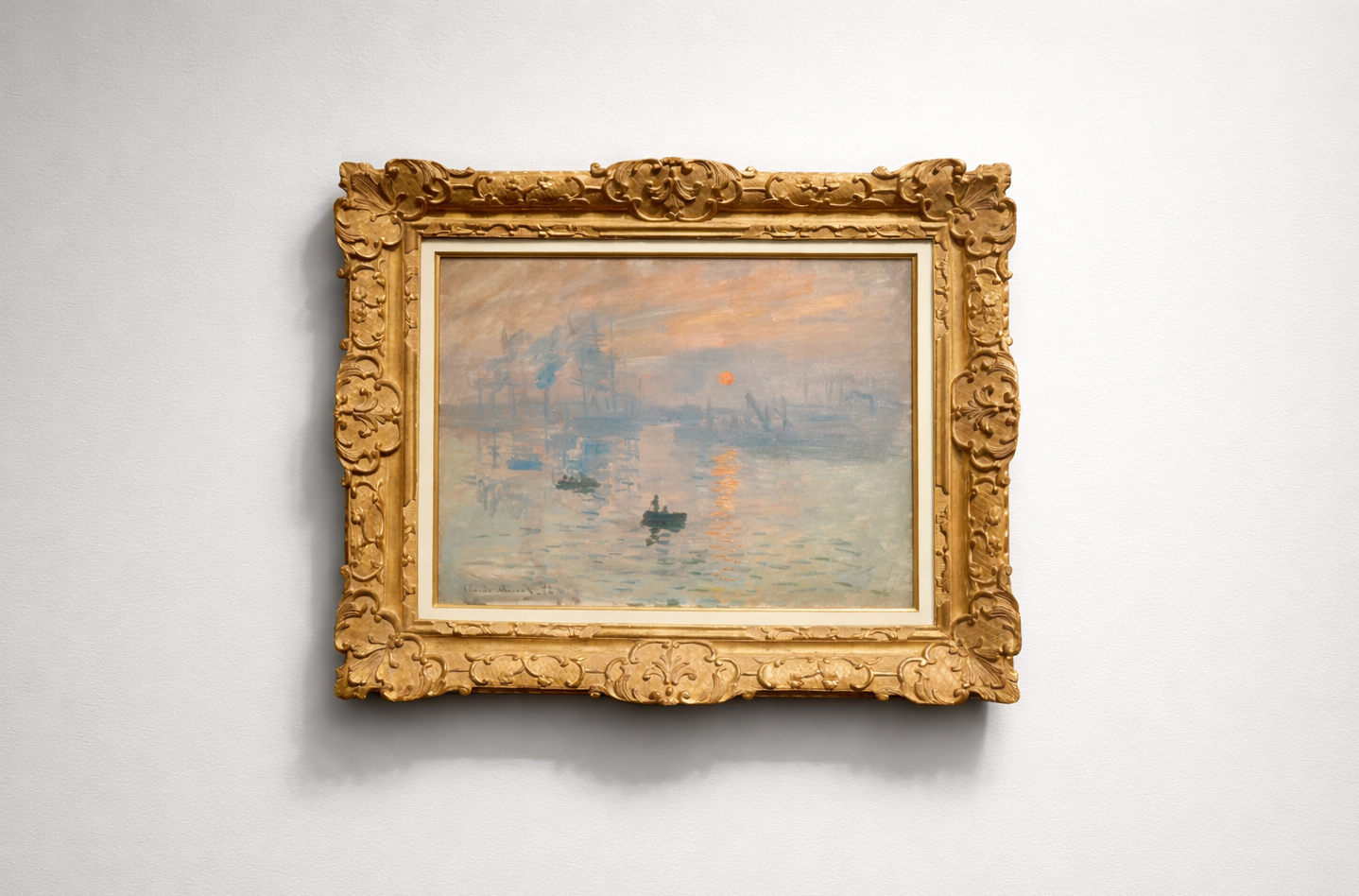
Impression Sunrise on Display
From the industrial haze of Le Havre to the dense fog of London, Monet repeatedly returned to the same question: how can painting capture light as it changes moment by moment? His London paintings represent one of his most ambitious answers.
3 Things Most People Miss
- The sun is not brighter than the sky: its force comes from colour contrast.
- The boats are only lightly defined: Monet suggests their form rather than fully describing it.
- The scene is industrial: smoke, ships, and harbour activity are central to the painting's meaning.
FAQs
References
- Daniel Wildenstein, Monet: The Triumph of Impressionism, Cologne: Taschen, 2015.
- Musée Marmottan Monet, "Impression, soleil levant," Musée Marmottan Monet (in French), View source.
- National Gallery of Art (Exhibition context), “Monet: Impression Sunrise,” National Gallery of Art, View source.
- Study.com (art historical analysis), "Monet's Impression, Sunrise," Study.com, View source.
- Jones Gallery & Auction House, "Claude Monet: Early Work and Impression, Sunrise" YouTube, accessed 2026, 45:35 .
- Tamsin Pickeral, Monet - The World's Greatest Art, London: Flame Tree Publishing, 2011.
- Birgit Zeidler, Monet - Art in Focus, Florence: Konemann, 2005.
- Stephen Farthing, 1000 Paintings You Must See, Beijing: Cassell Illustrated, 2008.
- Jackie Wullschlager, Monet - The Restless Vision, Milton Keynes: Allen Lane, 2023.