



 by Tom Gurney
Tom Gurney BSc (Hons) is an art history expert with over 20 years experience
Published on June 19, 2020 / Updated on October 30, 2026
Email: tomgurney1@gmail.com / Phone: +44 7429 011000
Self-Portrait with Skull Cap by Édouard Manet: Introduction
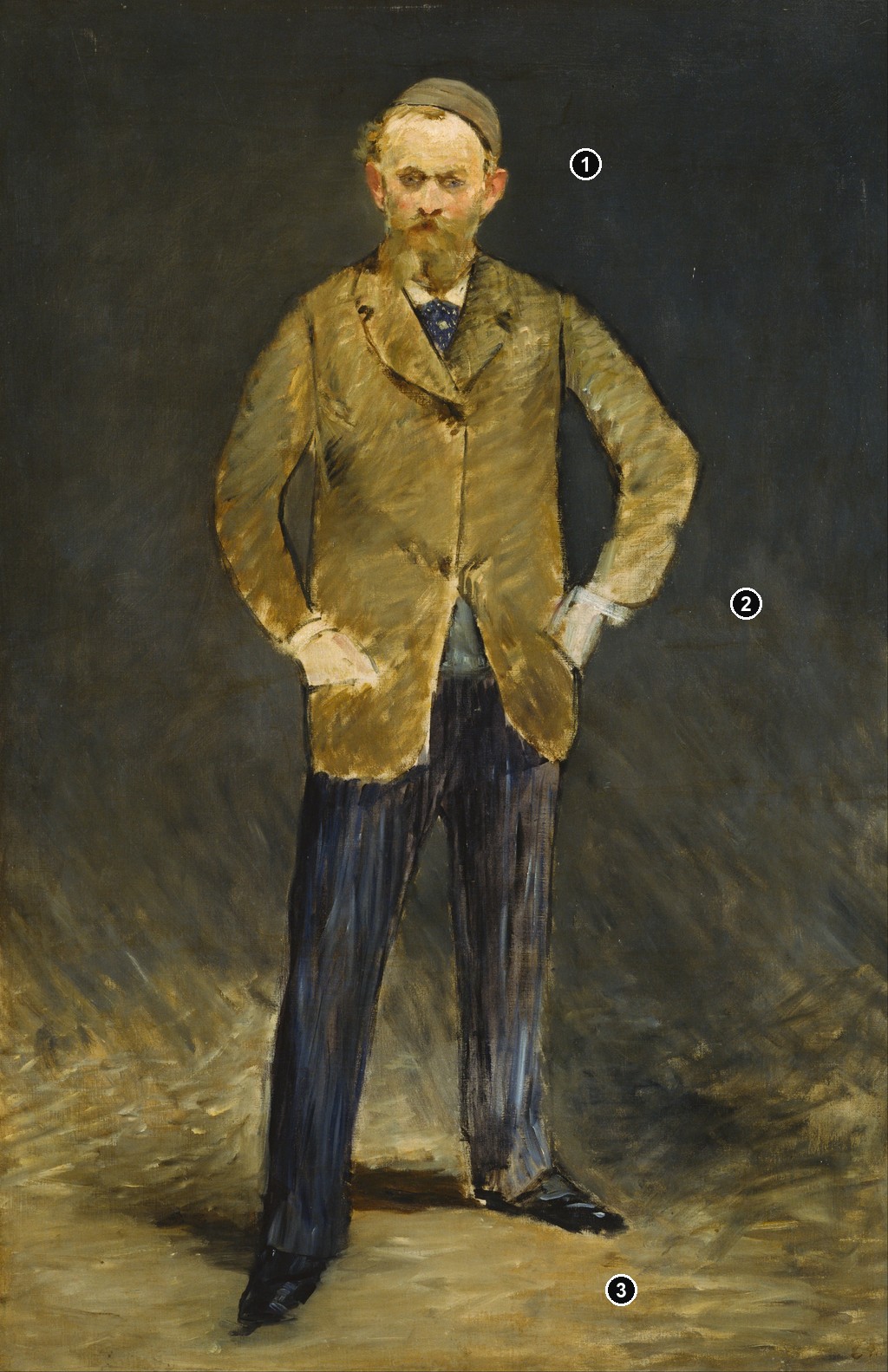
Hands in his pockets, elbows spread and feet apart, Édouard Manet faces us across a spare, dark setting. His small cap leaves the forehead exposed, and his pale face draws attention above a broadly painted brown jacket. Self-Portrait with Skull Cap, dated 1878–79, belongs to the Artizon Museum, Ishibashi Foundation, in Tokyo.[1] The standing pose gives the whole body a part in the encounter.
At a Glance
- ArtistÉdouard Manet
- TitleSelf-Portrait with Skull Cap
- Date1878–79
- MediumOil on canvas
- Dimensions95.4 × 63.4 cm, height × width.[2]
- CollectionArtizon Museum, Ishibashi Foundation, Tokyo
- French titleManet à la Calotte
- Catalogue numberRouart–Wildenstein I277.[3]
This work across Édouard Manet’s career
Contents
- A Face Beneath a Small Cap
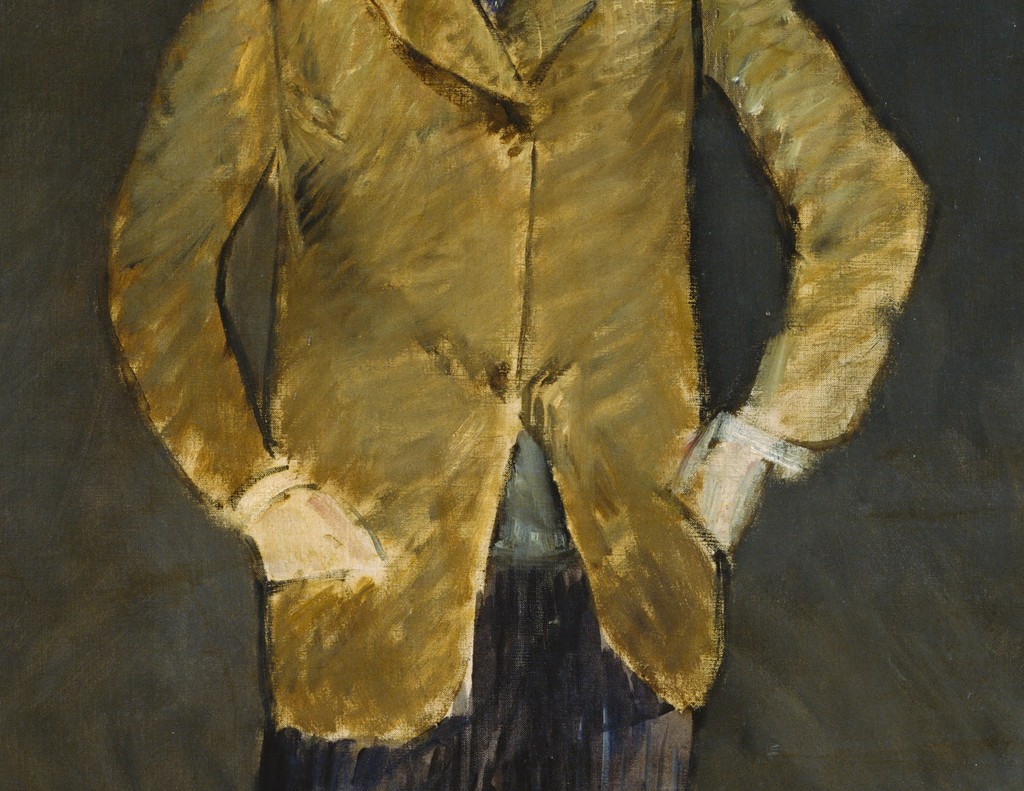
- Jacket and Hands in the Pockets
- The Figure from Cap to Shoes
- A Setting Made from Broad Marks
- Comparing Self-Portrait with Palette
- Looking and Judging
- The Painting in Tokyo
- Annotated details
A Face Beneath a Small Cap
The cap sits close to the head, following its rounded shape. A narrow dark edge separates it from the forehead, while its muted brown-grey surface blends with the surrounding tones. It supplies a compact upper boundary to the figure without projecting far beyond the hair. Below it, the breadth of the illuminated forehead becomes especially conspicuous.
Short golden-brown curls remain visible at the sides. The ears and cheeks introduce warmer pink notes, and darker touches around the eyes give the nearly frontal face its concentrated address. Manet does not turn far enough for one side of the head to disappear. We meet the two eyes across the bridge of the nose, beneath brows that interrupt the light forehead.
The moustache and beard extend this small area of concentrated description downwards. Light and dark strokes separate the hair around the mouth, then gather into a longer shape above the collar. The beard makes a connection between the bright face and the warmer, more loosely handled jacket below. Its irregular outline prevents the head from ending in a sharply isolated oval.
The gaze is direct, but the surrounding marks keep it from becoming a photographic stare. Small differences of colour and direction describe the features. Attention moves from the likeness to the strokes that make it visible.
Jacket and Hands in the Pockets
The jacket widens the figure beneath the narrow head. Broad lapels descend towards its centre, framing a white collar and a small dark-blue area of patterned neckwear. Dark lines mark folds and edges without following every seam continuously. Across the chest, warmer and cooler strokes overlap, allowing the cloth to appear substantial while the brushwork stays apparent.
The arms introduce a more angular arrangement. Each elbow projects beyond the torso before the forearm returns towards a pocket. At the viewer’s right, a dark triangular interval separates sleeve from body. That opening lets us follow the bend of the arm even where similarly coloured passages of jacket meet.
At the pockets, pale patches of skin and light cuffs interrupt the brown fabric. The hands are partly concealed, yet their positions are clear. Their downward movement ends at the hips, giving the upper body a contained, settled arrangement. The elbows establish breadth; the pocket openings bring the arms back towards the centre.
The jacket’s lower edges spread around an opening above the trousers. One side hangs in a broad rounded flap; the other turns back through a sequence of lighter and darker strokes. These uneven contours make the coat feel worn on a body rather than drawn as a symmetrical outline. They also lead the eye from the compact torso into the long lower half of the picture.
The Figure from Cap to Shoes
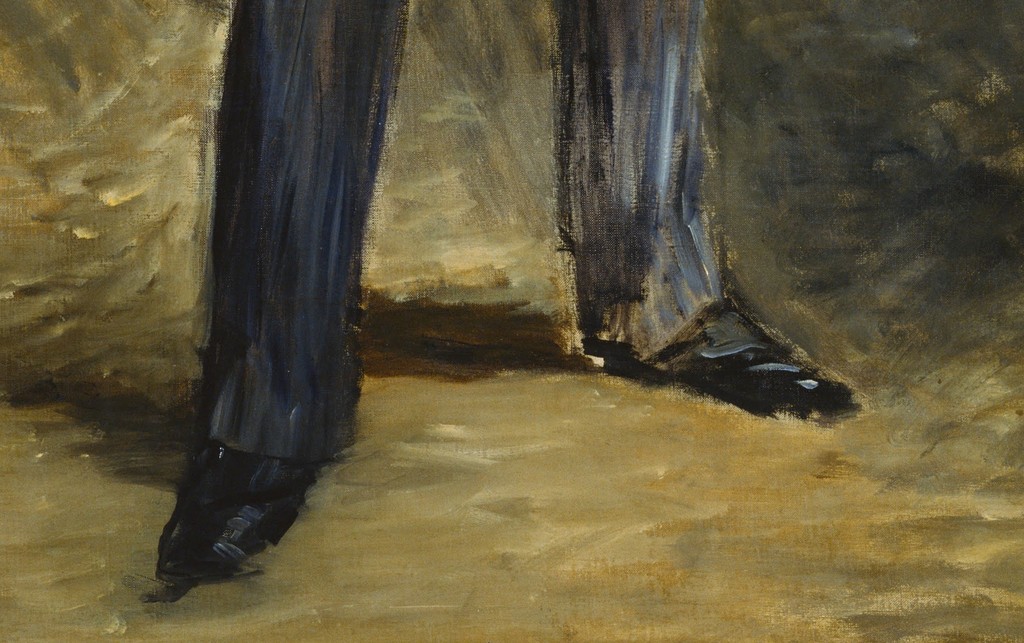
Manet leaves room for the legs and feet to establish the stance. Long blue-grey strokes descend through the dark trousers. Some run almost uninterrupted; others break into neighbouring brown and black passages. Their vertical movement differs from the crossing and diagonal marks across the coat, extending the body towards the ground.
The leg at the viewer’s left comes further forward and ends in a dark shoe near the lower edge. The other foot points outwards to the right. The space between them gives the figure a broad base, while their different directions prevent a rigidly symmetrical pose.
The shoes are small but decisive shapes. Pale touches cross their dark surfaces, separating them from the surrounding ground. Behind the feet, a low dark passage helps anchor the figure. In front, the floor opens into a lighter area that allows the nearer shoe’s pointed outline to register clearly.
This longer view changes the pace of looking. The face occupies only a small part of the upright canvas; reaching it from below means passing through ground, shoes, trousers and jacket. The stance remains present even when attention returns to the eyes. Recognition depends on the face, but the portrait’s particular presence depends on much more of the body.
A Setting Made from Broad Marks
The darkest passages lie around the upper figure. Further down, the surrounding field becomes browner and more varied, before opening into lighter strokes around the shoes. There is no firm architectural line dividing wall from floor. Changes of tone and brush direction give the figure somewhere to stand without enclosing it in a carefully described room.
Diagonal marks gather beside the legs, while shorter, crossing strokes spread across the ground. Near the lower left, these touches are particularly distinct. Their restless directions contrast with the trouser legs’ long verticals. The figure holds a pose within a surface whose many separate marks remain easy to follow.
Edges vary in clarity. The warm jacket separates strongly from the darkness near the shoulders and elbows. Parts of the dark trousers are harder to distinguish from their surroundings. This uneven separation makes the figure emerge by degrees: the upper body announces itself through colour and light, while the lower body requires a closer look at boundaries and intervening spaces.
Comparing Self-Portrait with Palette
Artizon identifies this painting and Self-Portrait with Palette as Manet’s two surviving self-portraits in oils, made at almost the same time.[1] Their similar jackets and dark settings make their different formats especially noticeable.
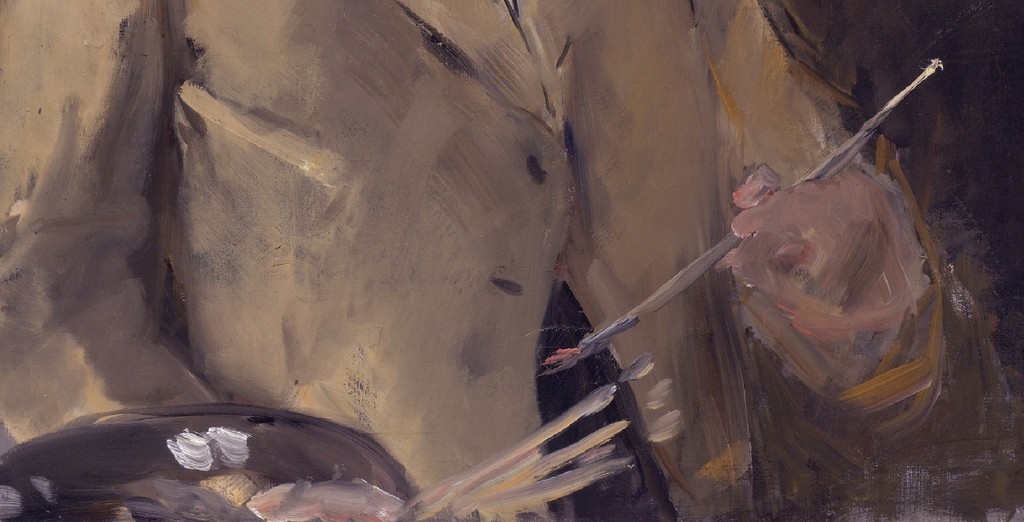
In the palette picture, a black brimmed hat gives the head a wider outline. The face turns slightly, and the body is brought much closer to the picture’s edges. Below the chest, a palette and brushes enter the foreground. A slender brush rises diagonally across the coat from the hand at the viewer’s right.
Here, the small cap stays close to the skull and the head faces us more squarely. The whole body remains visible, with space around the feet. The hands disappear into pockets, leaving the stance to occupy the place that the tools take in the closer portrait. We recognise the same painter through two different arrangements of his presence.
The equipment in the palette picture offers a specific activity to follow. In the standing portrait, the viewer encounters a person holding a position before an otherwise loosely defined setting. One brings a painter’s implements towards us; the other sets his entire figure at a greater distance.
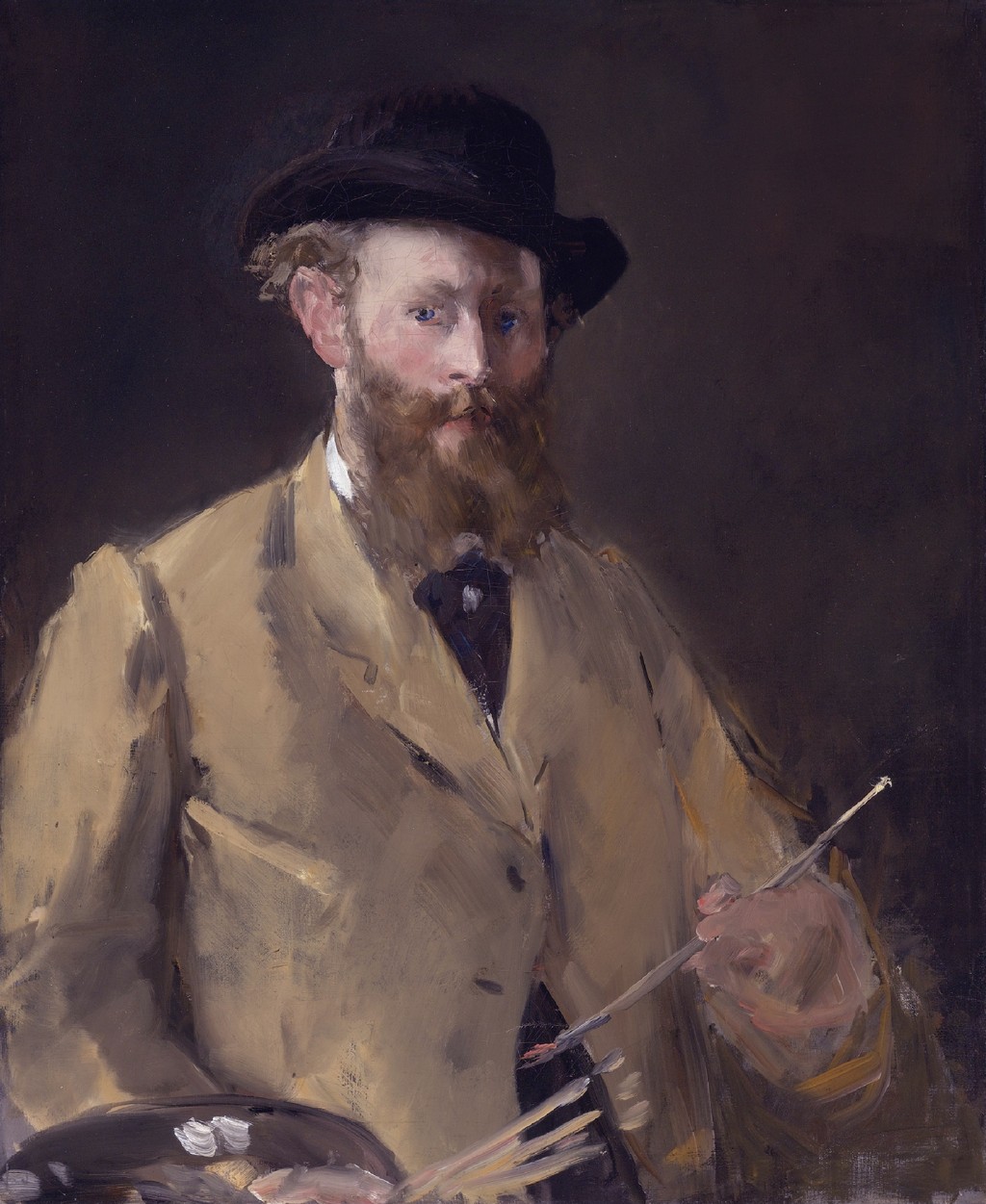
Édouard Manet, Self-Portrait with Palette. Oil on canvas. Private collection. The Yorck Project reproduction via Wikimedia Commons; Public Domain Mark 1.0. Image source. Public domain. Whole supplied reproduction resized for web display. No enlargement or retouching.
Annotated Details from Self-Portrait with Skull Cap
The numbered points identify visible features discussed in this article. Return from each detail to the whole composition. Each caption identifies the work shown.
Self-Portrait with Skull Cap
Édouard Manet, Self-Portrait with Skull Cap, 1878–79. Oil on canvas, 95.4 × 63.4 cm. Artizon Museum, Ishibashi Foundation, Tokyo. Google Art Project reproduction via Wikimedia Commons; Public Domain Mark 1.0. Image source. Public domain. Numbers added to a separate resized overview. Detail crops from the public-domain reproduction via Wikimedia Commons; no enlargement or retouching.
Self-Portrait with Palette
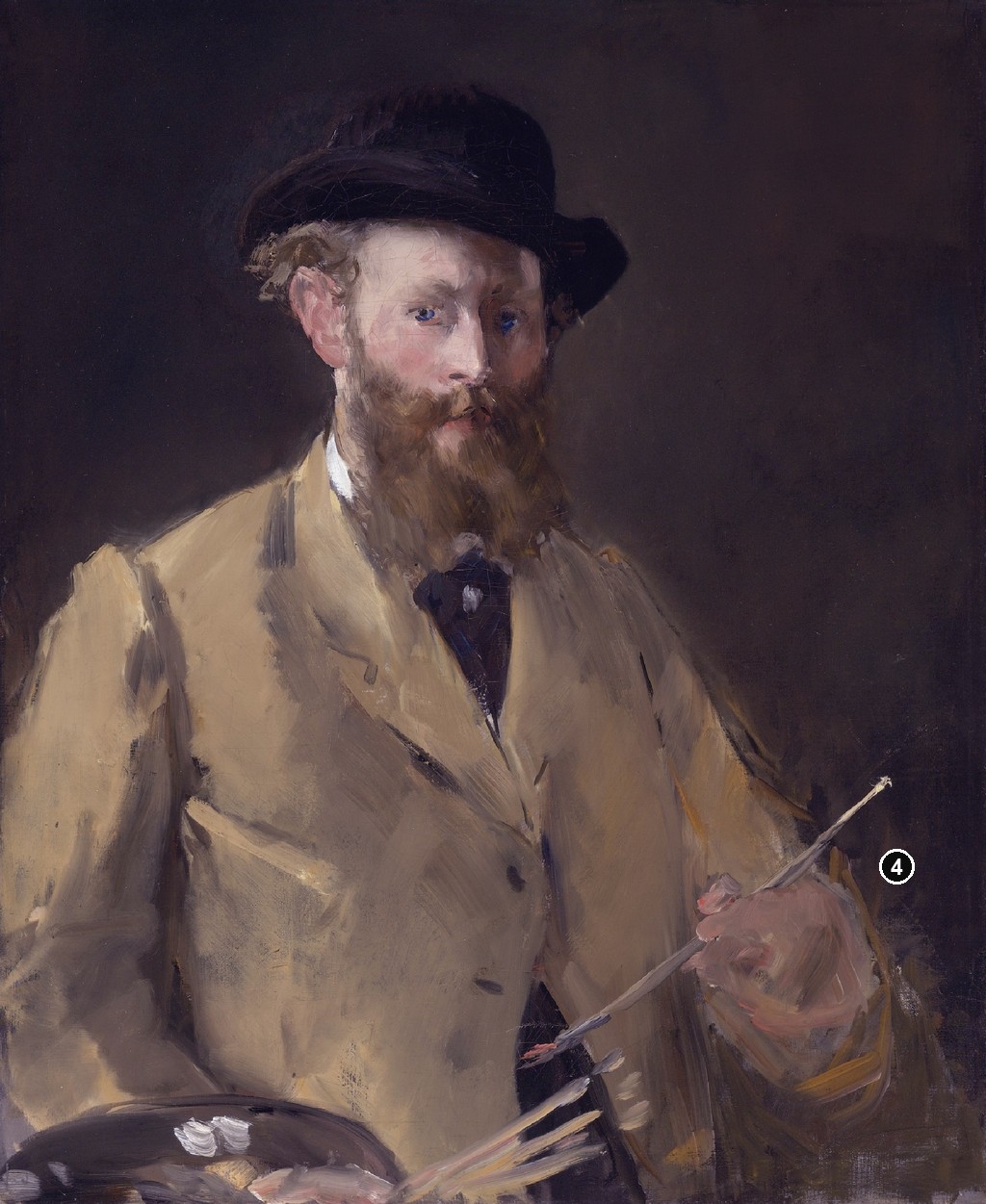
Édouard Manet, Self-Portrait with Palette. Oil on canvas. Private collection. The Yorck Project reproduction via Wikimedia Commons; Public Domain Mark 1.0. Image source. Public domain. Numbers added to a separate resized overview. Detail crops from the public-domain reproduction via Wikimedia Commons; no enlargement or retouching.
Details from SELF-PORTRAIT WITH SKULL CAP
Look at the cap and face, the pocketed hands and the shoes against the ground, then compare the painting tools in Self-Portrait with Palette.
Self-Portrait with Skull Cap
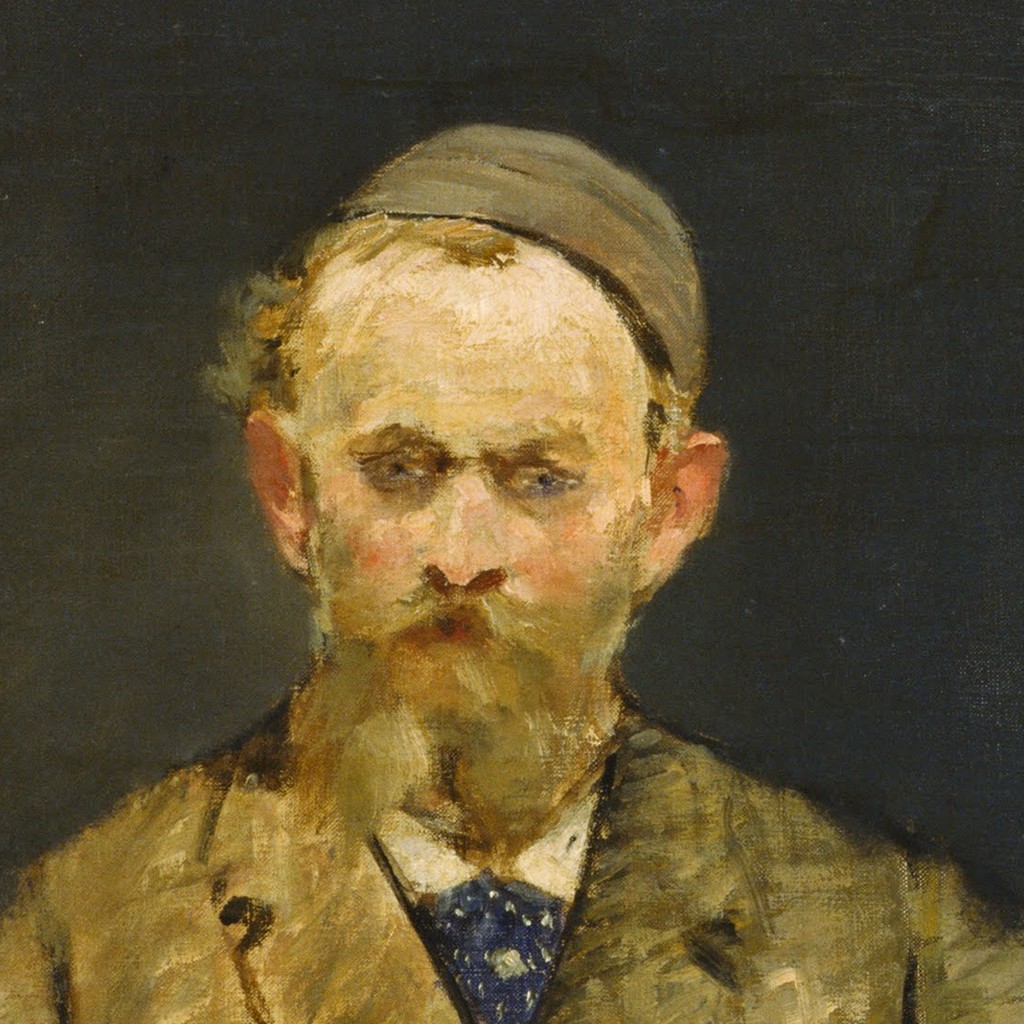
Face and Small Cap
The close-fitting cap leaves the forehead exposed. Warm touches on the cheeks and ears and darker marks around the eyes concentrate attention on the nearly frontal face.
Arms and Pocket Openings
The elbows project outwards before the sleeves return towards the pockets. Pale hands and cuffs interrupt the warm brown fabric at the hips.
Shoes and the Brushed Ground
The two dark shoes point in different directions. Pale touches distinguish their surfaces, while broad marks spread across the lighter ground around them.
Self-Portrait with Palette
Brushes and Palette
In the other self-portrait, a slender brush crosses the coat and the palette enters along the bottom edge. These implements give the hands an activity absent from the standing portrait.
Looking and Judging
Writing about the two portraits, Victor I. Stoichita discusses Éric Darragon’s suggestion that the standing artist appears to have stepped back to judge a painting. Stoichita conditionally develops this into a contrast between making and critical reflection.[4] It is a reading of the poses, rather than a recorded explanation by Manet.
The pocketed hands and steady gaze make such a pause imaginable. Nothing held in the hands directs attention towards a particular task, and the space around the body allows us to consider its attitude as a whole. The painting does not show the canvas that might be under consideration. Its strongest visible relationship remains the one between the standing figure and whoever meets his gaze.
The Painting in Tokyo
The Rouart–Wildenstein catalogue records the standing self-portrait in Manet’s posthumous inventory and traces it through later collections to its acquisition by the Bridgestone Gallery in 1971.[3] The work now belongs to Artizon, within the Ishibashi Foundation collection.[1] The older collection name appears in earlier accounts of this same painting.
Its long format preserves an encounter that a closer crop would change. The small cap, projecting elbows and separated shoes work together, giving the body an outline we can follow from top to bottom. The bright face holds attention within that larger arrangement, while the broad marks around it keep the act of painting visible.
Artworks directory
Explore selected paintings, drawings and prints by Édouard Manet. Search by title or another recorded name.
Frequently Asked Questions
It belongs to the Artizon Museum, Ishibashi Foundation, in Tokyo.[1]
The skullcap portrait shows a standing figure with hands in pockets. The palette portrait brings the upper body closer and includes brushes and a palette.
Discussion
Look again at the images and ideas explored in Self-Portrait with Skull Cap by Édouard Manet. These editorial prompts invite your observations.
Reader Insights
Follow the small changes of light and colour that distinguish forehead, eyes, cheeks and beard.
Trace the elbows outwards, then follow the sleeves back towards the pale shapes at the pocket openings.
Compare the space around the feet here with the equipment gathered at the lower edge of Self-Portrait with Palette.
Join the Conversation
Share a detail, comparison or question about Self-Portrait with Skull Cap by Édouard Manet below.
References
- Artizon Museum, Ishibashi Foundation, Édouard Manet, Self-Portrait, collection record and commentary, 1878–79. View source.
- Artizon Museum, Ishibashi Foundation, Looking Human: list of works, 2024, no. 77, PDF p. 4. In Japanese and English. View source.
- Denis Rouart and Daniel Wildenstein, Édouard Manet: Catalogue raisonné, vol. I (1975), nos. 276–277, pp. 222–223. In French. View source.
- Victor I. Stoichita, translated by James Bugslag, Vaporization and/or Centralization: On the (Self-)Portraits of Manet and Degas, RACAR, 26(1–2), 1999, pp. 13–15 and note 8, p. 27, discussing Darragon’s interpretation. View source.
- Splash image, Édouard Manet, Self-Portrait with Skull Cap, 1878–79. Oil on canvas, 95.4 × 63.4 cm. Artizon Museum, Ishibashi Foundation, Tokyo. Google Art Project reproduction via Wikimedia Commons; Public Domain Mark 1.0. Image source. Public domain. Whole supplied reproduction resized for web display. No enlargement or retouching.


