 by Tom Gurney
Tom Gurney BSc (Hons) is an art history expert with over 20 years experience
Published on June 19, 2020 / Updated on October 14, 2026
Email: tomgurney1@gmail.com / Phone: +44 7429 011000
Two people beneath the vine
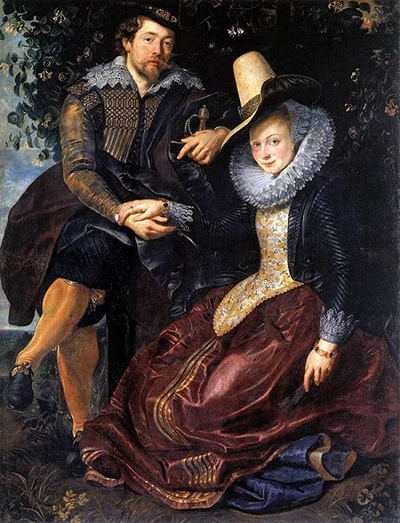
Peter Paul Rubens sits beside Isabella Brant under a leafy arch. He turns toward the viewer in a broad hat and richly worked clothing. Isabella sits lower and nearer the foreground, her patterned bodice and wide dark skirt spreading across the bottom of the picture. Their right hands meet at the centre. The gesture gives the elaborate setting a simple focus: a newly married couple presenting themselves together.
The Bayerische Staatsgemäldesammlungen[1] identifies the work as Rubens and Isabella Brant in the Honeysuckle Bower, by Peter Paul Rubens, about 1609–10, measuring 178 × 136.5 centimetres. It is painting 334 in the Alte Pinakothek, Munich. The current catalogue says the original canvas was transferred to wood. Calling it merely an oil painting on wood would conceal that change to the physical object. The inherited short title, Honeysuckle Bower, is useful, but it should not hide the names of the two people shown.
Rubens returned to Antwerp in 1608 after eight years in Italy. He married Isabella Brant the following year. The Munich museum considers it probable that the portrait was made for that occasion. A likely marriage context explains its setting and joined hands, but no surviving commission document is cited by the collection. It should be read as a picture associated with the marriage, not as proof of who requested it, where it first hung or what Rubens and Isabella said as they posed.
At a Glance
- ArtistPeter Paul Rubens [1]
- SittersPeter Paul Rubens and Isabella Brant [1]
- DateAbout 1609–10 [1]
- SupportCanvas transferred to wood [1]
- Dimensions178 × 136.5 cm [1]
- CollectionAlte Pinakothek, Munich, 334 [1]
Where this work sits in Rubens's career
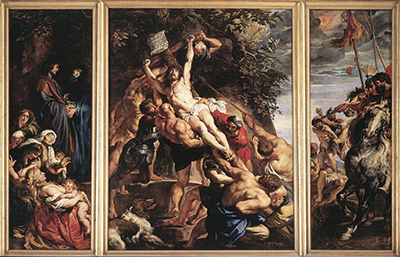
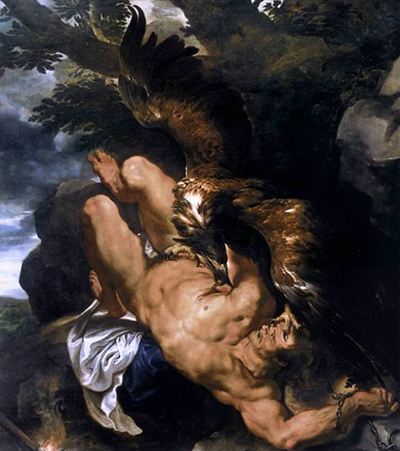
The Elevation of the Cross
1609–10The Honeysuckle Bower
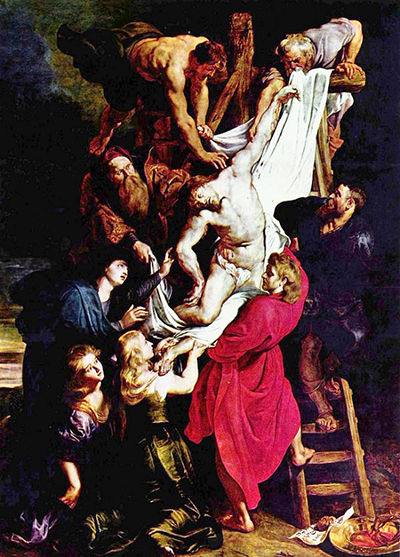
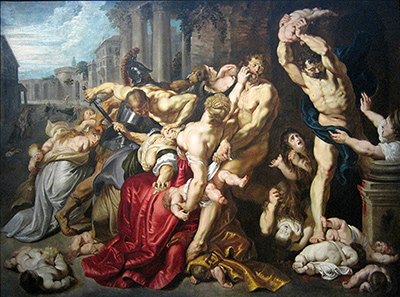
c. 1609–10The Descent from the Cross
1611–14The Garden of Love
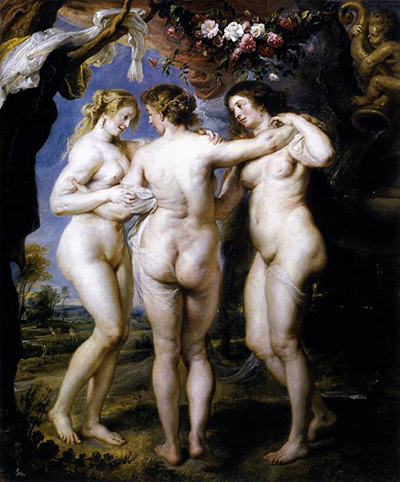
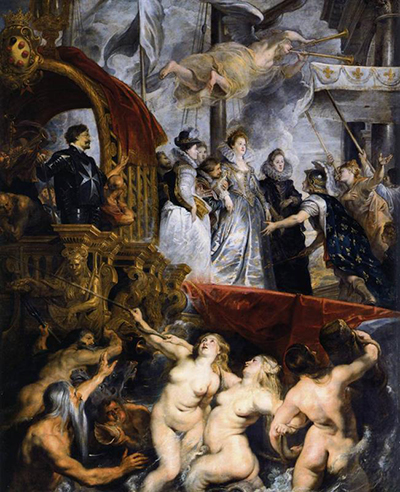
1630–35The Three Graces
1630–35Contents
- What do their hands say?
- Why honeysuckle?
- How do clothes and poses present the couple?
- A marriage portrait after Italy
- What happened to the painting itself?
- Is it the only portrait of Isabella?
What do their hands say?
The meeting of the hands is the picture's clearest action. It links two separately dressed and differently seated figures without making one disappear into the other's pose. Rubens's left hand points towards the joined right hands, drawing the viewer's attention to a small sign placed between two large bodies. The gesture is easy to miss amid lace, silk and foliage. Once seen, it becomes the organising centre of the portrait.
Michael John Partington's Smarthistory study[2] relates the joined right hands to the ancient gesture dextrarum iunctio. In Roman imagery it could signify fidelity, concord and an agreement between people; it also appeared in marriage and funerary contexts. This provides historical depth to the painted clasp. It does not mean that Rubens copied a particular surviving Roman monument or that every ancient use had the same significance. In this portrait, the gesture gains its meaning from the couple's marriage and the surrounding imagery.
The hands are neither a fleeting handshake nor a dramatic embrace. They rest together calmly while both sitters face outward. That combination makes the relationship public. Visitors can see a declaration of partnership without watching a private domestic scene. The clothes and large format likewise present Rubens and Isabella to the world beyond their garden. A double portrait can make intimacy and social position visible at the same time.
Partington also connects the composition to a woodcut in Andrea Alciato's emblem tradition concerning marital fidelity. That is a scholarly comparison of visual ideas rather than documentary evidence that a specific copy of an emblem book lay open in Rubens's studio. The comparison is useful because it shows how a seemingly natural pose could carry a learned, conventional meaning. Rubens joins that convention to identifiable faces and richly observed dress.
Why honeysuckle?
Dark leaves and pale blossoms arch around the couple. They are not a random hedge inserted to fill the background. The Munich catalogue[1] explains that honeysuckle was commonly associated with enduring love. Its German popular name, Jelängerjelieber, carries the thought of affection growing stronger with time. The plant therefore surrounds the joined hands with a second sign of lasting attachment.
The vine also creates a protected place for the sitters. Foliage closes much of the upper background while lighter patches open at the left. A viewer is close enough to examine faces and clothes, yet the couple seem set apart in a garden space. The setting is neither a fully described house nor an identifiable Antwerp street. Its function is to hold the two people together inside a living emblem. The specific plant matters because the museum's interpretation identifies honeysuckle, not just generic greenery.
It is possible to enjoy the scene without treating every leaf as a secret code. The symbolic reading does not cancel the painting's direct observation of bodies, fabric and light. The plant's twining growth, the joined hands and the couple's shared seated position reinforce one another. The portrait works visually before an observer knows the German name of the flower, and the name then adds a historical layer to what is already visible.
The image of permanence is especially poignant to later viewers aware that Isabella died years after the portrait was made. That later knowledge can shape a modern response, but it did not turn a newlywed portrait into a prediction of loss. Its primary setting is the couple's present and hoped-for future, as the Munich museum's marriage interpretation suggests. The honeysuckle promises duration; it does not guarantee that a life will be long.
How do clothes and poses present the couple?
Rubens gives himself a hat, a gold-toned doublet, fine hose and a sword. Isabella wears a high-crowned hat, a large lace ruff, a richly patterned bodice and a full skirt. The arrangement is carefully unequal in height but balanced in attention. Rubens sits raised at left, with his legs crossing forward. Isabella occupies more of the lower right and looks directly toward us. Their hands bridge the physical separation made by stools, clothing and the sloping ground.
The Munich museum interprets the picture's representative scale and costly clothes as forms of social elevation. It also sees allusions to antiquity and humanist learning in Rubens's image of himself as an artist. This is not a painting of an easel, palette or brush. He chooses to appear as a cultured gentleman, while the picture itself quietly demonstrates his skill. The sword and fashionable dress speak of standing; the hands and honeysuckle speak of marriage. Both messages belong to the same portrait.
Partington's closer study of the costumes[2] points to the clasp on Rubens's hat, the jewelled sword hilt, Isabella's fan and the textures of their fabrics. These details show how the sitters present prosperity without a throne or an official badge of office. Their clothing is specific enough to carry status but not a reliable inventory of their actual wardrobe. Rubens could select or heighten what appeared in the painting for the portrait's purpose.
At this scale, their bodies are neither tiny figures lost in an allegorical landscape nor detached heads against a blank ground. The sitter's public identity comes from the entire arrangement: dress, bodily bearing, joined hands and garden. Isabella's placement at the front prevents her from functioning merely as an accessory to an artist's self-portrait. The collection's title appropriately names both sitters.
A marriage portrait after Italy
The date about 1609–10 places the work shortly after Rubens returned from Italy. The Munich catalogue connects the large, formal portrait with his renewed life in Antwerp and the 1609 marriage. That chronology is more specific than saying this is simply an early Baroque picture. Rubens was bringing skills learned abroad into a new household and professional setting. A double portrait gave him a way to show both relationships at once: to Isabella and to the learned, affluent society in which he worked.
The painting's familiarity can hide how ambitious its format is. At nearly 1.8 metres high, it gives the couple space to present their full figures rather than just faces. The large picture would have had a physical presence in a room. The couple's direct looks invite a viewer into an encounter, while the bower defines the boundary of their shared space. This is part of why the Munich museum calls the format representative: its size and composition make a public statement.
A wedding interpretation should still retain its qualifier. The painting is close in date to the marriage, and its symbols suit that occasion. Those facts make the museum's suggestion persuasive. They do not document a wedding ceremony taking place under this particular vine, or demonstrate that the portrait was completed in October 1609. The date range is a curatorial estimate; the depicted setting is a crafted image.
What happened to the painting itself?
The Munich object record[1] describes a canvas transferred to wood. That phrase records a significant material change. The painted image began on a flexible textile support; at some later stage it was moved onto a rigid wooden one. The museum does not date the transfer or give its technical procedure in this short entry, so there is no basis here for naming a restorer or explaining an exact cause. The crucial point is that the work's current backing is not necessarily what Rubens prepared and painted.
The collection records a separate eighteenth-century frame by Joseph Effner. That frame is not a piece of furniture Rubens chose for the newlyweds. It is another stage in the object's life. The distinction between picture, transferred support and later frame matters because all three may appear together in a museum, inviting an observer to treat them as one unchanged creation. The canvas transfer and frame show that the work has been cared for and presented in new ways over centuries.
For collecting history, the museum gives a secure later point: acquisition in 1806 from the Düsseldorf Gallery. That does not identify the first owner after Rubens or prove that Isabella's family kept the portrait. A Smarthistory suggestion that it may have been a gift to her father is a possibility, not a documented fact in the Munich record. The path from the couple's Antwerp world to Düsseldorf and then Munich needs to be told at the level of evidence available.
Is it the only portrait of Isabella?
No. The British Museum[3] holds a later drawing of Isabella Brant by Rubens, usually placed in the early 1620s. It is a close study of her head and shoulders in chalk, with white heightening. The museum explicitly says that no painting directly corresponds to that sheet, although it relates to other portraits. It should not be described as a preparation for this Munich work, which was painted roughly a decade earlier.
The contrast is instructive. In the Munich portrait, Isabella participates in a large, formal image of marriage, with clothing, plant symbolism and joined hands. In the later drawing, a face occupies the viewer's attention more closely. The different materials and dates prevent them from being collapsed into one object or one moment in the marriage. Rubens returned to the likeness of people close to him, but each surviving work asks to be read on its own terms.
The joined hands remain the anchor of the Munich painting. They connect real named sitters to a long tradition of marriage imagery, and the honeysuckle reinforces the hope of fidelity over time. The painting also presents a successful artist and his wife in costly dress on a large scale. Those meanings coexist. Rubens did not need to choose between showing affection and presenting the couple's place in the world.
Rubens artworks directory
Frequently Asked Questions
Peter Paul Rubens and Isabella Brant, his first wife. The Alte Pinakothek's full title names both.
The museum says it was probably painted for the occasion of their 1609 marriage. A specific commission or first display place is not documented in its short record.
The Munich museum interprets it as a sign of enduring love. Its German popular name also suggests love becoming stronger with time.
It is a sign of marital union and fidelity. Smarthistory relates it to the older tradition of dextrarum iunctio, the joining of right hands.
The museum says it began as canvas and was later transferred to wood. Those two stages should not be reduced to a simple original “oil on wood” label.
It is painting 334 in the Bayerische Staatsgemäldesammlungen, Alte Pinakothek, Munich. Check the museum's current display information before visiting.
Discussion
Look at how the joined hands organise the double portrait.
Share a close observation or a reliable source about the sitters.
Reader Insights
How do honeysuckle and gesture convey the marriage theme?
What do the clothes and poses say about public presentation?
Why does the canvas-to-wood transfer matter for its object history?
Join the Conversation
Add your reading below, keeping evidence and interpretation distinct.
References
- Bayerische Staatsgemäldesammlungen, Rubens and Isabella Brant in the Honeysuckle Bower , inventory 334. View source
- Michael John Partington, “Rubens and Isabella Brant in the Honeysuckle Bower,” Smarthistory, 2022. View source
- British Museum, Rubens, Portrait of Isabella Brant , drawing 1893,0731.21. View source