 by Tom Gurney
Tom Gurney BSc (Hons) is an art history expert with over 20 years experience
Published on June 19, 2020 / Updated on October 14, 2026
Email: tomgurney1@gmail.com / Phone: +44 7429 011000
A festival that spreads across the landscape
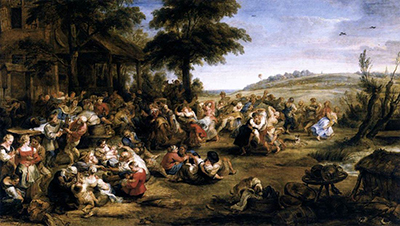
People dance, eat, drink and embrace under trees and beside a tavern. A broad opening in the countryside carries the crowd farther back, while a small gathering at the right gives the eye somewhere to rest before it returns to the central movement. Peter Paul Rubens's Flemish Kermis offers no single protagonist. Its subject is the energy of a group, continually changing from one little exchange to another.
The Musée du Louvre catalogues the panel[1] under the French title La Kermesse, with alternatives Fête de village and Noce de village. It attributes the painting to Rubens, dates it about 1635–38, and records oil on wood, 149 × 261 centimetres, with inventory numbers INV 1797 and MR 993. “Flemish Kermis” is the inherited English route title. The Louvre's object numbers identify this particular painting more securely than any of its shifting names.
The picture is unusually large for a scene of ordinary rural revelry. The Louvre itself stresses the exceptional size of a genre painting on this scale. That breadth lets Rubens set a lively crowd inside a landscape rather than crop the pleasure down to a handful of drinkers. The celebration feels both local and expansive: a set of individual acts joined into one great outdoor movement.
At a Glance
- ArtistPeter Paul Rubens [1]
- DateAbout 1635–38 [1]
- MediumOil on wood [1]
- Dimensions149 × 261 cm [1]
- CollectionMusée du Louvre, INV 1797; MR 993 [1]
- SubjectPeasant festival; wedding identification uncertain [1]
Where this work sits in Rubens's career
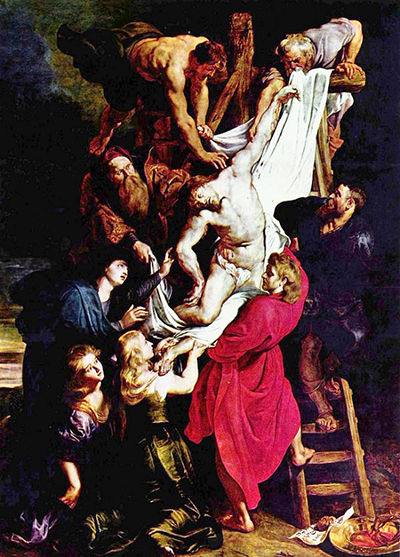
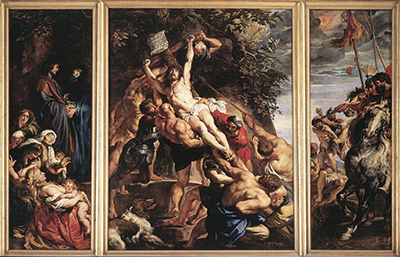
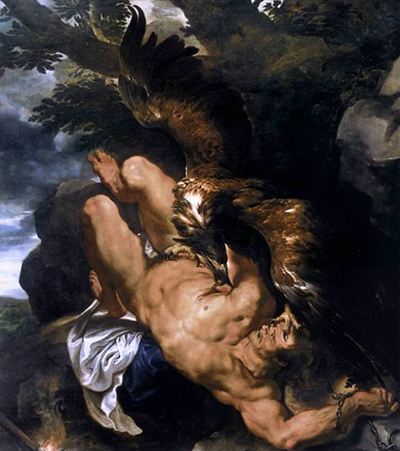
The Elevation of the Cross
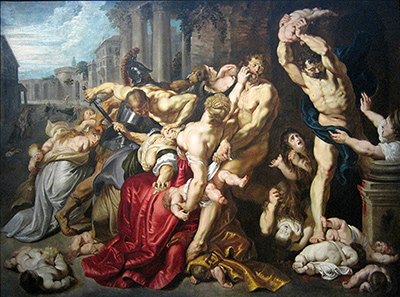
1609–10The Descent from the Cross
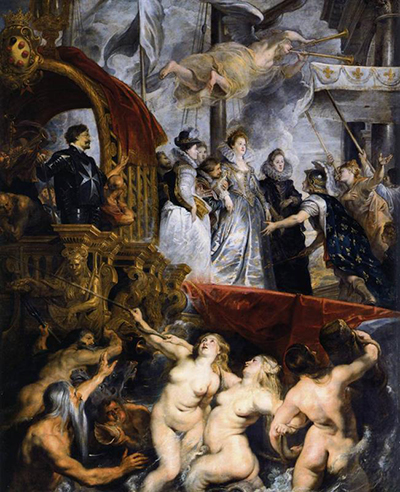
1611–14The Garden of Love
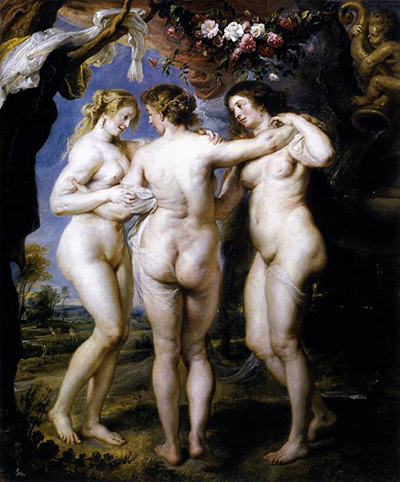
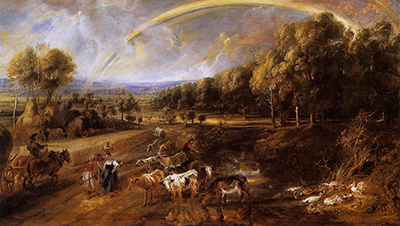
1630–35The Three Graces
1630–35Flemish Kermis
c. 1635–38Contents
- Reading a crowded scene
- Is it a kermis or a wedding?
- Rubens and a tradition of peasant scenes
- The pig at the lower right
- Drawings and the making of the picture
- The date and the landscape question
- From royal possession to the Louvre
- Looking again at the celebration
Reading a crowded scene
Start at the left. Figures gather near the dark building and beneath the trees. Some sit close to food and vessels, while others stand, talk or turn toward the open dance. The shelter and shadow create a starting point for the eye. From there the line of people moves into a brighter centre where bodies twist together. The group does not form a neat row; limbs and skirts overlap, suggesting that one step has already led into the next.
The middle is the composition's strongest rush of motion. Dancers lean, bend and swing through a rough circle, with spectators and other revellers just behind them. Their positions are varied enough that the viewer can imagine several beats of a dance at once. Rubens's broad format makes room for these changes. A narrow panel might have isolated a pair; this one lets the crowd produce the rhythm.
At the right, the festival thins into open ground and a distant horizon. People remain visible there, but the pressure of bodies eases. This transition gives the viewer a sense of how far the gathering extends beyond the closest group. The space is neither a stage with a fixed backdrop nor a pure landscape emptied of people. The landscape makes the party possible, and the party animates the landscape.
The foreground is another place to slow down. Food, drink and objects on the ground turn celebration into material activity. Not everyone is dancing; some rest or attend to bodily pleasures. A viewer moving from the main dance toward the lower edge discovers a different tempo. This mix of communal motion and small private moments is one reason the picture can sustain repeated looking.
Is it a kermis or a wedding?
The title has a history separate from the image. The Louvre notes[1] that the now common Kermesse title appears only with Villot in 1852. An older royal inventory used Noce de village, or “village wedding.” But the Louvre cautions that a wedding is not clear because no bridal couple stands out. Its preferred description is closer to a peasant festival. That reading fits the visible spread of pleasure without forcing one ceremony upon it.
Calling the painting a kermis can still be useful as a conventional name. Such a word points to a long tradition of festive village imagery in Netherlandish art. It does not prove the date or occasion of a specific event Rubens witnessed. Nor does the older wedding title prove that an identifiable bride and groom have merely been overlooked. The painting may be more general: a constructed scene of rural celebration rather than a record of one named marriage.
The uncertainty is instructive. A title can become familiar enough to feel original, even when the museum's documents show it appeared later. Here three labels—kermis, village festival and village wedding—direct the eye in different ways. A “wedding” makes us search for a couple; a “festival” asks us to watch the whole crowd; a “kermis” encourages comparisons with earlier genre pictures. The visual evidence supports the breadth of the gathering more firmly than a precise ceremony.
The Louvre also records the work in the 1793 opening catalogue of the Muséum as Fête de Village. That public label differs from both the royal inventory's wedding and the nineteenth-century Kermesse. These changes do not alter the panel, but they reveal how successive collections and audiences framed the scene. They are a reason to name the Louvre's current title and its alternatives openly rather than silently treating one as Rubens's own wording.
Rubens and a tradition of peasant scenes
The Louvre describes the painting as strongly indebted to the Bruegel tradition and compares its peasant festivity with Adriaen Brouwer. These are art-historical relationships in the museum's catalogue, not a claim that Rubens copied one specific lost painting. Bruegel had made crowded peasant activity an ambitious pictorial subject. Brouwer offered another model of vivid, bodily village life. Rubens joins this inheritance to his own broad, sweeping scale.
A National Gallery of Art study of Jan Steen's The Dancing Couple[3] helps place such pictures in a wider tradition. It notes kermis dances in Bruegel and later Flemish painting, where ages and activities gather in a festive setting. Steen's painting is a different Dutch work from 1663, and its details should not be imported into the Louvre panel. The comparison simply shows that dance, food, watching and social exchange formed a durable pictorial language.
Rubens makes that language unusually grand. The Louvre emphasizes the exceptional width of this genre scene and reads the pleasure as rising toward a lyrical bacchanal. That is the catalogue's interpretation of the painting's enlarged, exuberant effect. It helps explain why the scene feels more sweeping than an intimate tavern interior. Yet the people are still recognizably engaged in ordinary actions. The painting's richness comes from that meeting of bodily detail and large composition.
The tavern, trees and open land also keep the scene anchored in a place. Viewers may recognize a Flemish flavour in the setting and crowd, as the Louvre does. But no source here names a precise village, festival day or participant. The work can evoke local life without serving as a topographical or documentary record. Its setting is designed for pictorial rhythm as much as for description.
The pig at the lower right
The Louvre calls attention to a pig's snout[1] projecting from a shelter in the right foreground. The museum describes it as an old symbol of gula, or gluttony. It is a small detail in a scene crowded with food, drink and physical pleasure. Finding it can change a viewer's sense of the painting: celebration may carry a teasing moral edge, not only unqualified delight.
That symbolism is the Louvre's catalogue reading of one detail. It should not be turned into a rigid key that makes every dancer represent a separate sin. Rubens gives us a scene too varied for a single moral caption to account for it all. The pig may bring appetite into focus, while the dance, conversation and open landscape still invite enjoyment. The panel can be festive and alert to excess at the same time.
Scale matters here too. On a panel 2.61 metres wide, the pig's snout is easy to miss beside the dancers. Such a detail rewards looking across the whole painted field rather than stopping at the brightest figures. The Louvre's interpretation also shows why object-specific catalogues help: a small feature can carry a traditional association, but its significance should be tied to evidence rather than guessed from a tiny reproduction.
Drawings and the making of the picture
A Metropolitan Museum of Art exhibition account[2] says that two large compositional drawings for the Louvre's Flemish Kermesse were lent by the British Museum to its Rubens drawings exhibition. This provides a concrete reason to think about the design behind the apparent spontaneity. Rubens could plan the arrangement of a large moving crowd on paper before it took shape on the wooden panel.
The Met's short account does not give a step-by-step technical reconstruction of the painting. It identifies the drawings and their relationship in an exhibition context. That is enough to separate preparation from the final object: the drawings are works on paper, while the Louvre's painting is oil on wood. The page does not transfer the dimensions, date or ownership of one to the other.
A seemingly effortless dance still asks hard compositional questions. How can many bodies overlap without becoming one shapeless mass? How does the eye move from tavern to dancers to distant landscape? The large drawings signal that Rubens investigated the crowd's overall structure. In the finished panel, figures at different distances and speeds create a flow across the width. The result may look improvised, but the evidence of compositional studies argues for deliberate design.
The date and the landscape question
The Louvre dates the whole painting about 1635–38. Its catalogue records an older proposal that the landscape was painted in the 1620s and the figures later, but calls that division difficult to understand. It is therefore misleading to publish the two dates as a settled technical fact. The current object entry gives the later approximate range for the work as a whole, while acknowledging a debated earlier theory.
The distinction matters because the landscape and figures work closely together visually. Trees and building frame the left-hand gathering; open ground receives the moving dancers and leads to the horizon. That unity does not prove every inch was painted in one campaign. It does explain why a simple story of a much earlier background and later figures needs more evidence than the current catalogue supplies.
Rubens's last years are often associated with landscapes, domestic subjects and a freer touch, but this page does not need a general label to identify the object. The Louvre's own about 1635–38 range, medium and inventory number are firmer anchors. The painting can be viewed alongside other late works while retaining its particular history of title, subject and format.
From royal possession to the Louvre
The Louvre's provenance[1] records the painting with Charles de l'Aubespine, marquis d'Hauterive, and says it was transferred to Louis XIV in 1685. It then belonged to the French royal collection and appeared when the Muséum opened in the Louvre in 1793. These points explain how a Flemish village scene came to be a major work in the Paris museum.
Earlier ownership is less certain. The catalogue offers possible matches with seventeenth-century Antwerp estate inventories connected with the Wildens family. It also discusses different possible routes by which Hauterive could have acquired the panel. The wording remains conditional. None of those suggestions should be recast as a continuous, fully documented chain from Rubens's studio to France.
The royal inventory's Noce de village label also forms part of that provenance. It shows how the court collection described the painting, not necessarily what the event in the image definitively is. Later museum titles and catalogues continued to revise the wording. The secure collection path and the uncertain subject label are related histories, but they answer different questions.
The Louvre lists the painting as INV 1797; MR 993 and currently displays it in its Rubens room. Display locations can change; the live object record is the place to check a visit. For readers far from Paris, the inventory numbers are a stable way to locate the exact panel and distinguish it from many other painted village festivals.
Looking again at the celebration
Follow the picture from the tavern and seated figures at left into the central dance. Then let the eye move past the crowd to the lighter ground at right, and return along the foreground to the pig's small snout. Each path highlights something different: social company, bodily movement, open landscape or appetite. Rubens has made a broad stage in which none of these has to carry the whole meaning alone.
The title issue is part of the viewing experience. If we expect a wedding, we search for a bride and groom whom the Louvre cannot securely find. If we think more broadly of a village festival, we can notice the many overlapping acts of pleasure. The painting's large scale elevates those acts without making them ideal or orderly. It remains a vivid image of a crowd in motion, and its uncertainty about a precise occasion leaves that crowd open to close looking.
Rubens artworks directory
Frequently Asked Questions
Its current catalogue title is La Kermesse. The Louvre also lists Fête de village and the historical Noce de village. “Flemish Kermis” is the established English route title.
No. A royal inventory used a village-wedding title, but the Louvre says it is doubtful because no bridal couple is emphasized. “Peasant festival” is the more cautious description.
The Louvre dates the work about 1635–38 and catalogues it as oil on wood, measuring 149 × 261 centimetres.
The Louvre notes a pig's snout in the right foreground and reads it as a traditional sign of gula, or gluttony. It is a catalogue interpretation of a small detail, not proof that every figure represents a moral emblem.
The Metropolitan Museum of Art reported two large compositional drawings for the Louvre painting in a Rubens drawings exhibition. They are separate works on paper, not the Louvre panel itself.
It is INV 1797; MR 993 at the Musée du Louvre, Paris. The museum's live record gives current display information.
Discussion
Follow the gathering from the tavern at left through the dance toward the open landscape.
Share an observation about the painting or a reliable source that adds to its history.
Reader Insights
How does the broad panel change the effect of an everyday festival scene?
What changes when you view the picture as a general festival rather than a documented wedding?
Where does the small pig detail sit in relation to the central dancers?
Join the Conversation
Add your reading below, keeping observations specific and evidence clear.
References
- Musée du Louvre, La Kermesse , INV 1797; MR 993. View source
- The Metropolitan Museum of Art, Peter Paul Rubens (1577–1640): The Drawings , exhibition account. View source
- National Gallery of Art, The Dancing Couple , contextual discussion of the kermis tradition. View source