


 by Tom Gurney
Tom Gurney BSc (Hons) is an art history expert with over 20 years experience
Published on June 19, 2020 / Updated on September 27, 2026
Email: tomgurney1@gmail.com / Phone: +44 7429 011000
Paul Klee works T–Z
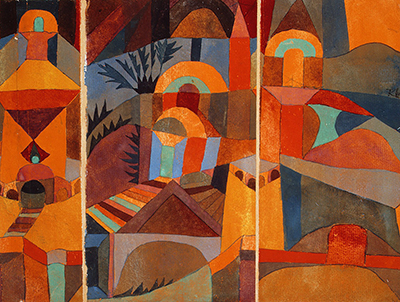
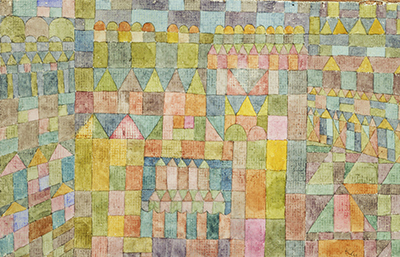
The last section of this alphabetical guide moves from gardens and theatrical figures to machines, bridges and late signs. Its 64 visible artwork tiles are a way to find a familiar title or image. They are not an edition of Klee’s own work register or a claim that every inherited English caption has been authenticated. A tile with a link opens an artwork page; a tile without one remains an image and name awaiting fuller object and source checks. The A–G and H–S sections complete the site’s alphabet, while the paintings guide follows material and chronology instead.[1]
The word “paintings” in the route is broad site navigation. The Zentrum Paul Klee estimates that about four fifths of Klee’s oeuvre is on paper. Its research pages distinguish the artist’s handwritten Œuvre-Katalog, the later nine-volume printed Catalogue raisonné Paul Klee and the continuing institutional database. This website’s grid is none of those registers. Materials in the T–Z group include a printed lithograph, watercolour and transferred ink, oil and watercolour on mounted paper, and oil on fabric over card. Medium and support matter because a small square of screen colour conceals how an object was made.[2][3]
Contents
- How to read this alphabet
- Fish and colour: a specific 1925 object
- Ways, machines and bridges
- Two tropical titles, two works
- What the remaining tiles can and cannot tell us
- Continue beyond T–Z
How to read this alphabet
The names are sorted by their displayed English wording, including the initial “The.” An original German title can therefore fall in another part of a German index. A familiar translation helps a reader find a picture; the year and Klee’s annual number, owner, medium and image help establish which object it is. Four tiles here link to the commissioned, source-led artwork pages: The Goldfish, The Way to the Citadel, Twittering Machine and Viaducts Break Ranks. Some other tiles link to older pages still being researched; the unlinked names have former site routes, but a redirect is not an artwork article.[1]
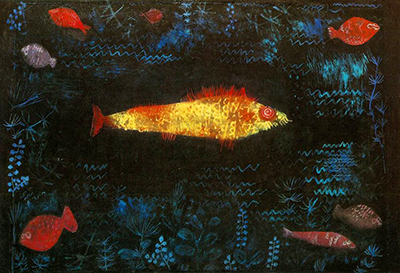
The old “Golden Fish” card in A–G illustrated the same central yellow fish, smaller red fish and underwater forms as the linked The Goldfish card here. The two cropped local reproductions had different colour casts. Image comparison and the Hamburger Kunsthalle object record support treating the English names as variants for one work, 1925,86, rather than two entries. The duplicate A–G tile has been removed; its old URL remains a separate route question. “Goldfish Wife,” also in A–G, depicts a different composition and was not merged.[1][4]
Fish and colour: a specific 1925 object
In The Goldfish, the large luminous fish presses forward from a dark, blue-black environment. Small red fish and curling forms make it feel less like a specimen illustration than an inhabited underwater scene. The Hamburger Kunsthalle catalogues the object as der Goldfisch, 1925,86, inventory HK-2982, with oil and watercolour on paper mounted on cardboard. Calling it simply “oil on canvas” would erase the support and the mixed technique. The number ties a translated caption to this work rather than any Klee fish motif.[4]
The owner’s provenance also makes this a historically situated object. The Kunsthalle’s record follows the picture through its confiscation from a German museum in 1937 and subsequent ownership. The individual article gives that sequence and its documentary limits. The glowing body can be described from the image; its symbolism should be argued from evidence rather than read as a fixed allegory from the word “goldfish.” An attractive thumbnail cannot carry the material history or explain why two English captions appeared in different parts of a web catalogue.[4]
The fish also illustrates a general danger of alphabetical lists. Variants such as “Goldfish,” “Golden Fish” and the German Goldfisch can look like distinct entries once sorted far apart. They are useful search terms, but the work number, composition and owner record provide the stronger crosswalk. Keeping one documented tile makes the directory clearer while the variant titles remain useful for finding the work.[1][4]
Ways, machines and bridges
The Way to the Citadel is a 1937 construction of coloured divisions, a route and a built destination. The Phillips Collection gives its support as oil on fabric mounted on cardboard. Looking at a screen image, a viewer can follow the directional signs and the relation between path and city; the title does not prove that the destination is one identifiable real fortress. The work page sets the owner’s record beside specialist discussions of the German wording. The precise original title still needs checking against Klee’s register, so this directory does not silently choose one translation as authoritative.[5]
Twittering Machine turns birds, a wire and a hand-cranked mechanism into a question about sound and captivity. MoMA describes its 1922 object as oil transfer and watercolour on paper. The dark linear image is not a mechanical blueprint; its visible contraption leaves open whether turning the handle releases song or imposes it. The dedicated article follows the drawing method, the Bauhaus context and later interpretations. In this grid it provides a reason to open the page, not a one-sentence verdict on what Klee intended.[6]
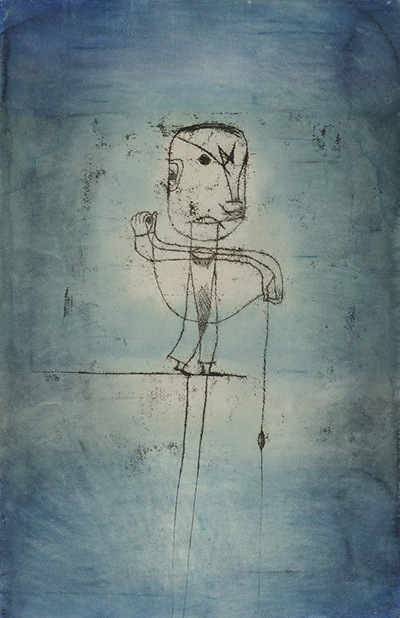
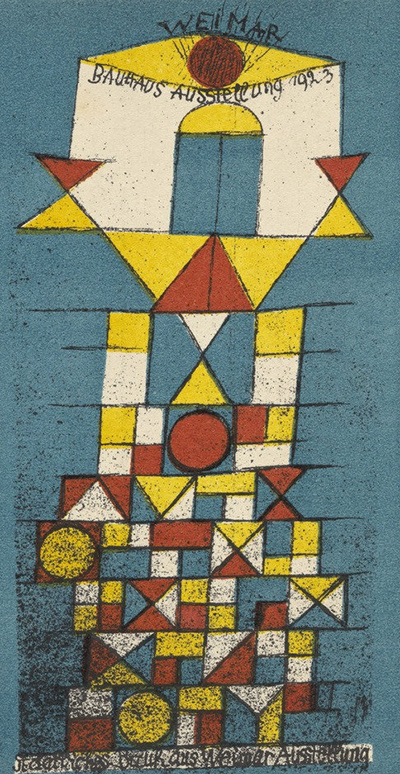
The inherited unlinked Tightrope Walker nearby shows why an exact object check matters even when a title is recognisable. MoMA owns a 1923 lithograph, printed at the Staatliches Bauhaus in Weimar and issued in an edition of 300. Its older German Expressionism record gives Seiltänzer and the print’s specific dimensions and publisher. A 1949–50 MoMA exhibition checklist also records a Tightrope Walker watercolour. The local small image was compared with the National Gallery of Art’s reproduction of its 1943.3.5184 lithograph impression: the figure, pink and pale vertical blocks, ink marks and crop agree. The NGA identifies its media as free and public domain. This identifies the pictured print impression visually, though the inherited 400-pixel file’s download provenance is unrecorded. MoMA’s separate 1949–50 checklist also names a Tightrope Walker watercolour; its physical record must not be transferred to this lithograph.[7][8]
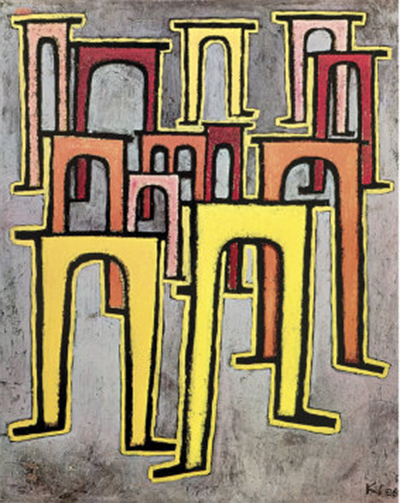
Viaducts Break Ranks repeats and then disrupts a sequence of arches. The Hamburger Kunsthalle’s own title for the 1937 work is Revolution des Viaductes, inventory HK-2899. The English title captures the visual movement, but it is a translation. Its political resonances are plausible in the year of Klee’s exile and the Nazi campaign against modern art, yet one deviating arch does not by itself document a coded statement. The work article distinguishes object evidence, chronology and attributed readings. Beside the citadel and machine, the viaduct makes three different uses of a path or constructed system visible without asserting that they share one settled meaning.[9]
Two tropical titles, two works
The adjacent Tree and Architecture - Rhythms I and II tiles also depict two different objects, although the Roman numerals are this site's finding labels rather than titles supplied by the owning museum. Both belong to the National Gallery of Art and share the German title Baum und Architektur-Rhythmen, the year 1920 and the Hertzberg gift. The pastel branching image in tile I matches NGA 2004.140.41.b, a watercolour on paper inscribed 1920/202. The darker image in tile II, with two gridded towerlike forms, matches NGA 2004.140.41.a, oil on paper, cited there as catalogue raisonné no. 2549.[13][14][1]
Two T–Z tiles sound almost identical: Tropical Dawn with the Owl and Tropische Dammerung. They must remain separate. The first local crop is a horizontal scene with an owl matching Tropische Dämmerung mit der Eule at Sprengel Museum Hannover. The second is a vertical, dark plant composition matching Fondation Beyeler’s Tropische Dämmerung, 1921,128, inventory 61.3. The Beyeler record specifies oil on white ground on paper mounted on cardboard, 33.5 × 23 cm, and transcribes the date and title written on the object. A shared “tropical twilight” phrase is weaker evidence than these different images, owners and object details.[1][10][11]
The Sprengel work’s exact annual number and the two small crops’ original file provenance remain unconfirmed in the site’s ledger. The owl picture should not inherit the Beyeler work number simply because the German titles start alike. Nor should the two images be joined to tidy the alphabet. This is the inverse of the fish case: title similarity raised a question, while visual and collection evidence answered it in favour of two objects. Their presence together gives the reader a useful glimpse of Klee’s recurring language without pretending that either caption alone settles identity.[1][10][11]
Another inherited tile, Ventriloquist and Crier in the Moor, has a strong object anchor in the Metropolitan Museum of Art. The Met describes a 1923 sheet of watercolour and transferred printing ink on paper, bordered with ink and mounted on paperboard, accession 1984.315.35. Its museum account interprets creatures visible inside the transparent figure and a small fish approaching a dangling net. That reading belongs to the owner’s curatorial description; the visual details are worth inspecting on the full record. The local crop has now been compared with the Met’s displayed image: the transparent figure, contained creatures, lower fish and gridded background agree. The medium shows again how much a “painting” grid hides.[12][1]
What the remaining tiles can and cannot tell us
The rest of the T–Z index includes architecture, plants, theatrical subjects and late pictures. Their old site titles are retained as finding terms, not promoted into fully documented catalogue entries. Some tile names may be translations, descriptive labels or inherited errors. Where a museum record identifies a work, the annual number and medium should be brought back into the ledger; where a local crop cannot yet be traced, a plausible title is insufficient. The former “The Seaside in the Rain” route presently redirects to the broader paintings guide, which is a navigation fact rather than a verified detail page.[1]
Klee’s art resists a simple subject taxonomy. A “machine” can be a drawn transfer; a “walker” can be a lithograph or a related watercolour; a fish may have multiple English names; two twilight titles may denote different works. The point of this directory is to help a visitor move from a small image to a better source. Follow a linked work page where one exists, and use the paintings guide or the watercolours, drawings and prints guides to pursue material questions beyond alphabetical order.[1][2][3]
The current 64-card count is a local display count after topic links and confirmed duplicates were moved or removed. The original 359-row audit across all three segments remains intact so editorial decisions are traceable. Many object identities, exact tile sources and old routes still await checks. That qualification is part of the guide’s usefulness: it shows where a title is a reliable doorway to researched work and where it is still only a clue.[1]
See all Paul Klee artworks
Explore the topics: Klee in Tunisia and Klee watercolours.
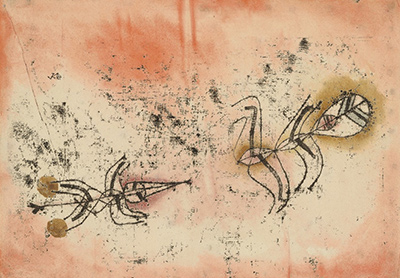
The Arrow before the Target
Original: Der Pfeil vor dem Ziel (1921); MoMA 376.1960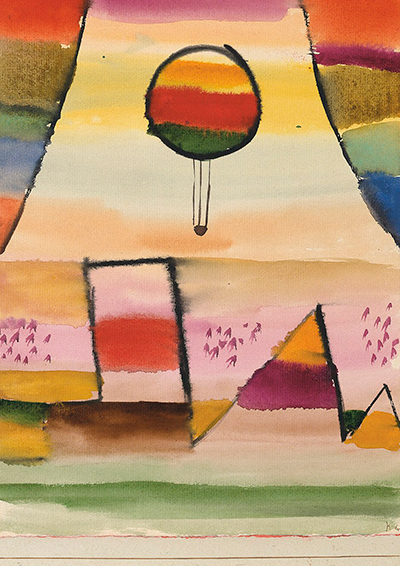
The Balloon in the Window
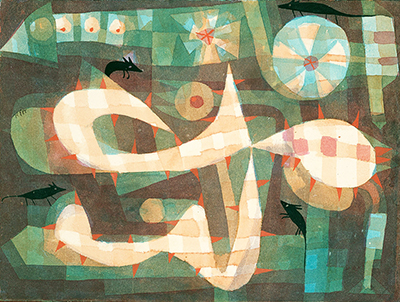
The Barbed Noose with the Mice
1923 · The Met 1987.455.13 · object record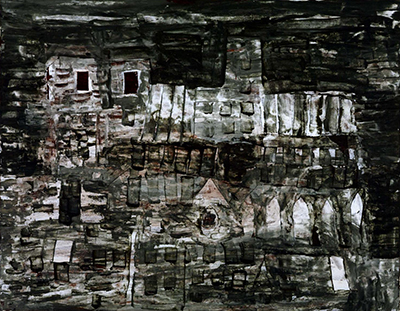
The Castle Mountain of S
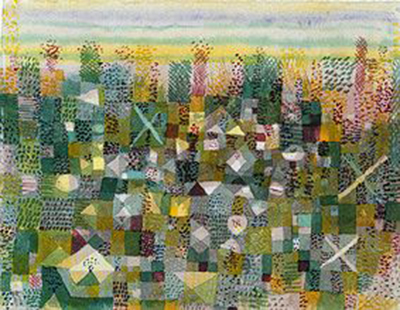
The Flora of the Heath
Original: Die Flora der Heide (1925); Bavarian State Painting Collections 13512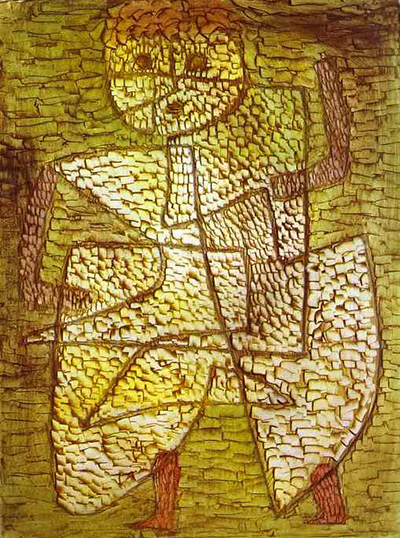
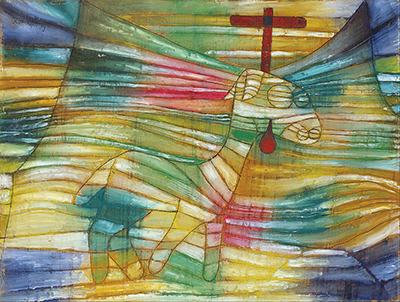
The Lamb
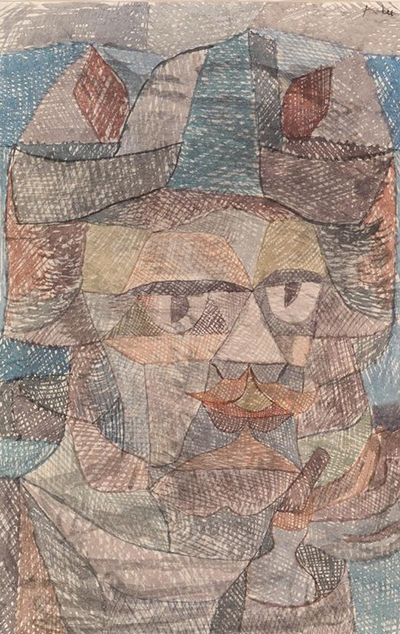
The Last Mercenary
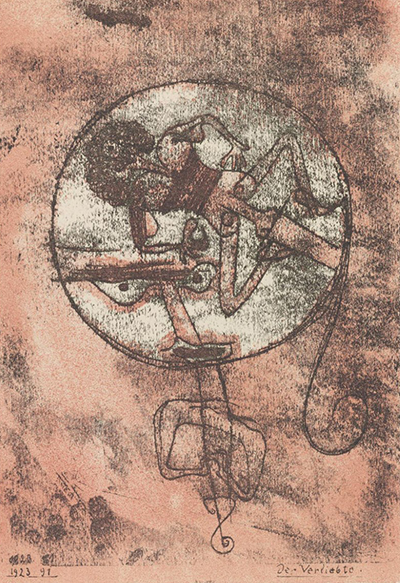
The Man in Love
1923 · Philadelphia Museum of Art 1971-237-2 · object record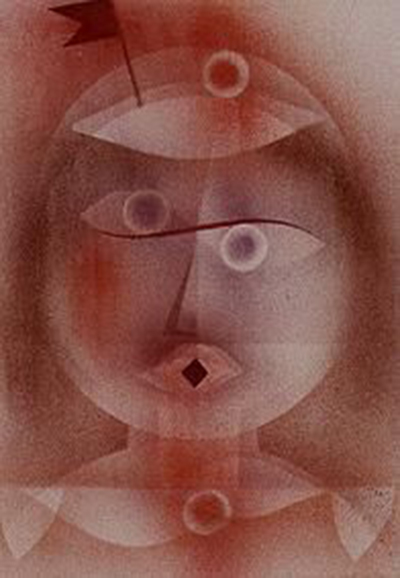
The Mask with the Flag
Original: Die Maske mit dem Fähnchen (1925); Bavarian State Painting Collections 11251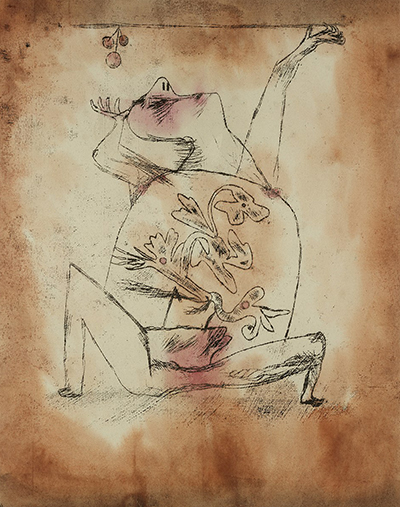
The Pathos of Fertility
1921 · The Met 1984.315.28 · object record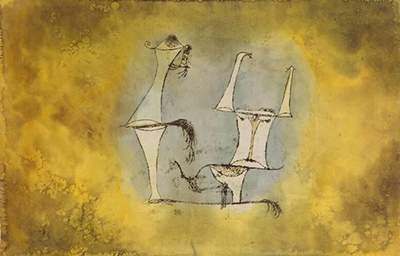
The Primeval Couple
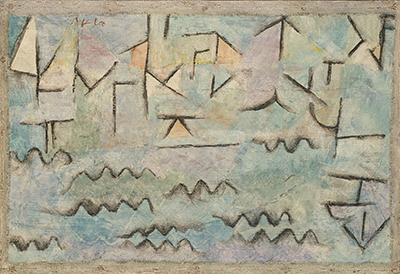
The Rhine at Duisburg
1937 · The Met 1984.315.56 · object record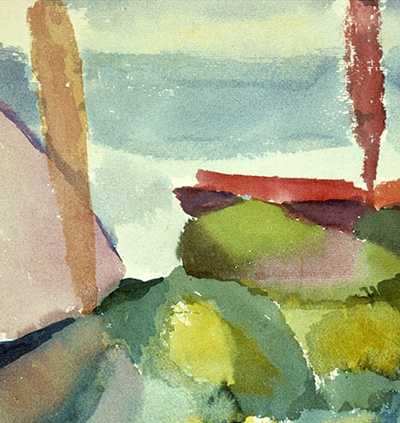
The Seaside in the Rain
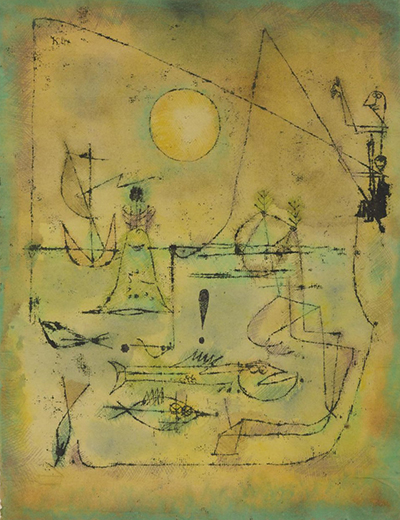
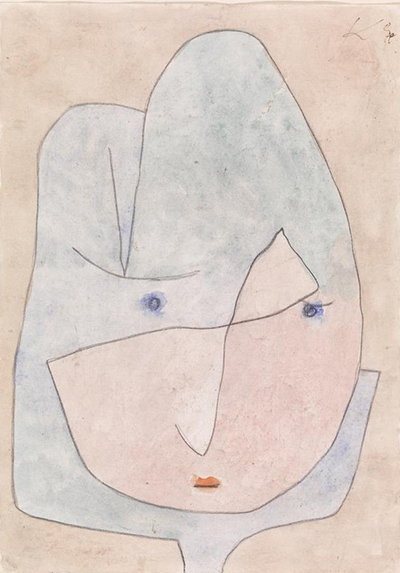
This Bloom is about to Wither
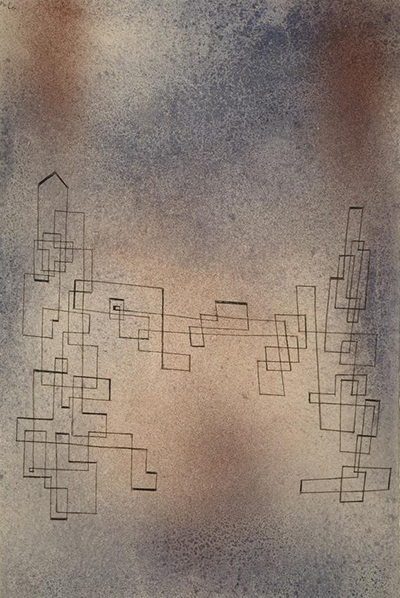
Threatening Snowstorm
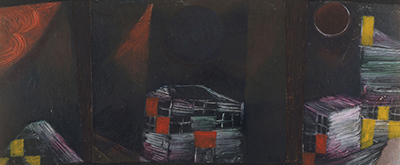
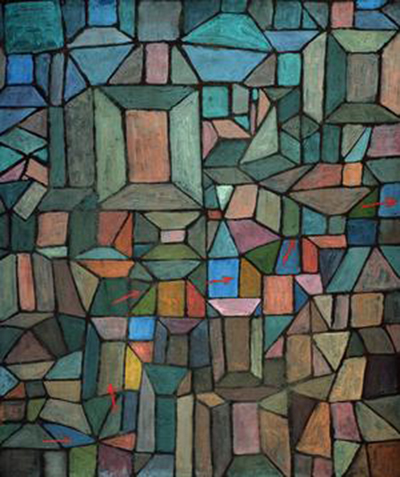
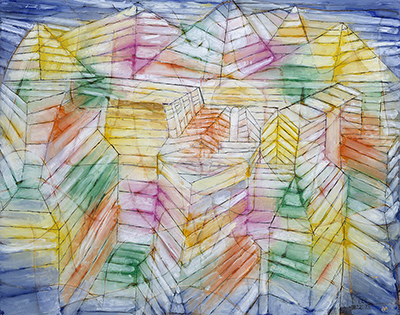
Three House Pictures
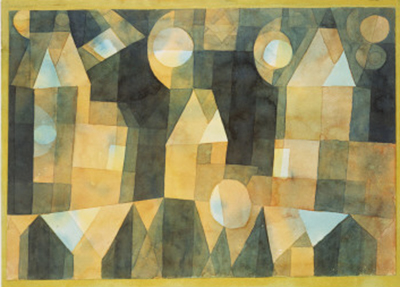
Three Houses by the Bridge
1922,147; Miyagi Museum of Art DF 42; Source record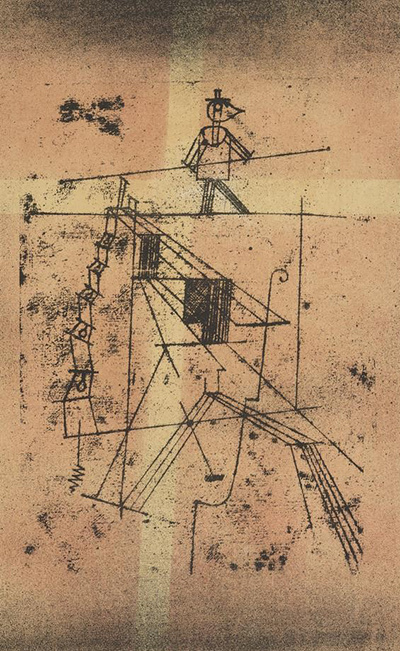
Tightrope Walker
1923 · Philadelphia Museum of Art 1950-134-886 · object record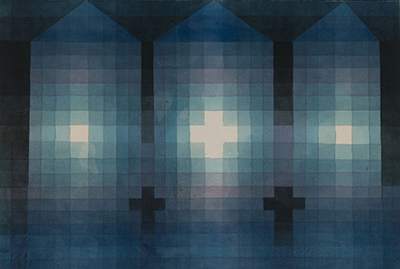
Tomb in Three Parts
1923 · Philadelphia Museum of Art 1963-181-35 · object record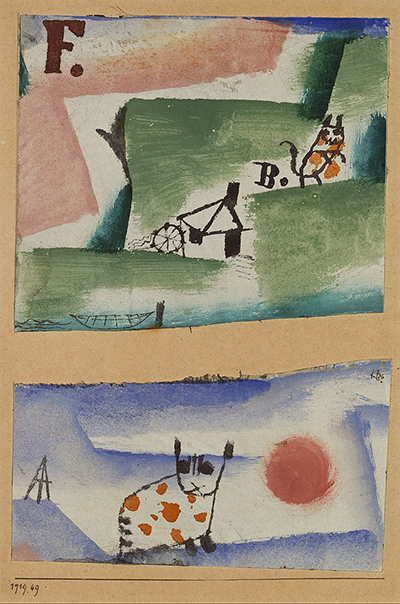
Tomcat's Turf
1919 · The Met 1984.315.15 · object record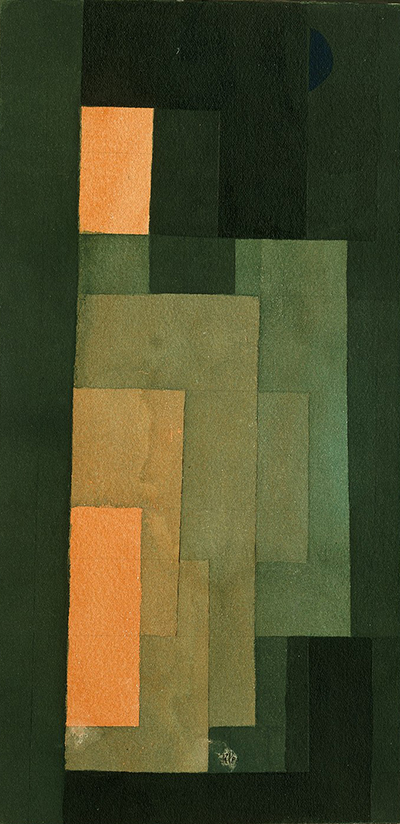
Tower in Orange and Green
1922 · The Met 1984.315.31 · object record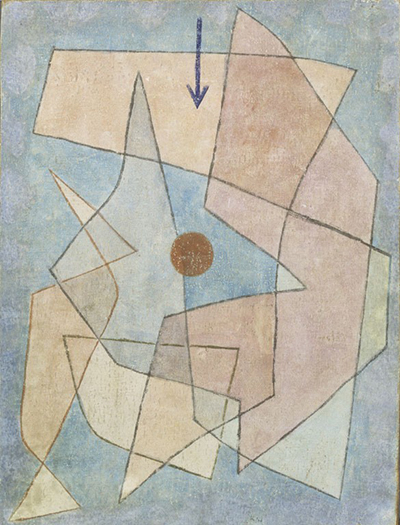
Tragedy
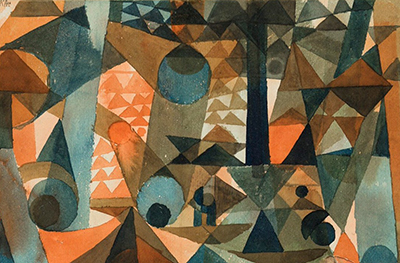
Translucencies, Orange Blue
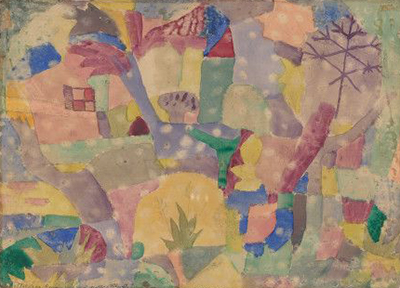
Tree and Architecture - Rhythms I
Original: Baum und Architektur-Rhythmen (1920,202); NGA 2004.140.41.b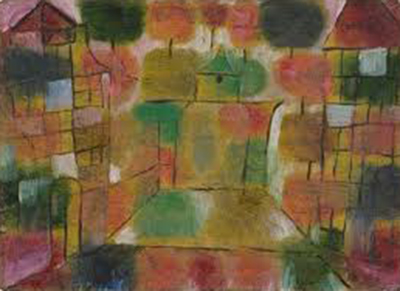
Tree and Architecture - Rhythms II
Original: Baum und Architektur--Rhythmen (1920); NGA 2004.140.41.a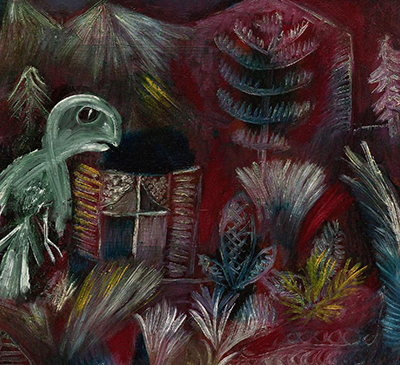
Tropical Dawn with the Owl
Original: Tropische Dämmerung mit der Eule (1921); Sprengel Museum D 114; Source record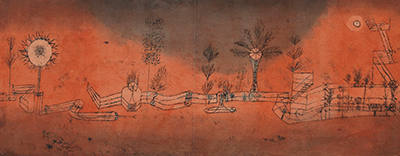
Tropical Gardening
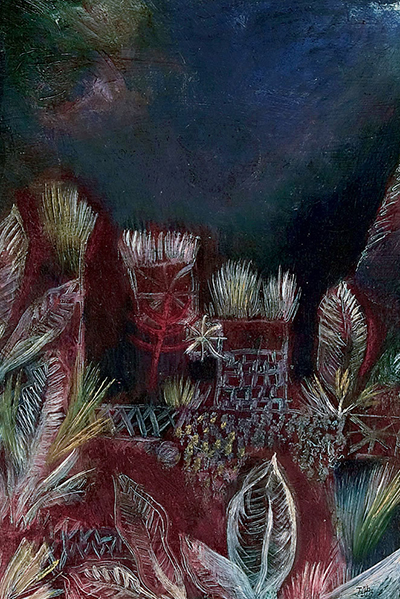
Tropische Dammerung
Original: Tropische Dämmerung (1921,128); Fondation Beyeler 61.3; Source record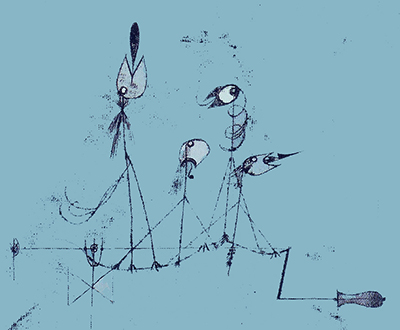
Two Red Flowers
Two Ways
 Paul Klee.jpg)
Untitled (1915)
 Paul Klee.jpg)
Untitled I (1914)
 Paul Klee.jpg)
Untitled II (1914)
 Paul Klee.jpg)
Variations (Progressive Motif)
1927 · The Met 1984.315.48 · object record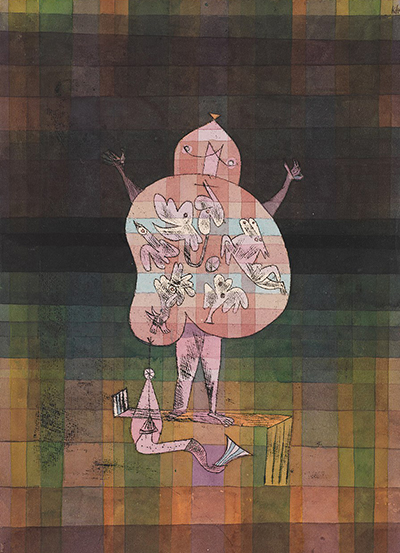
Ventriloquist and Crier in the Moor
1923 · The Met 1984.315.35 · object record
Villa R
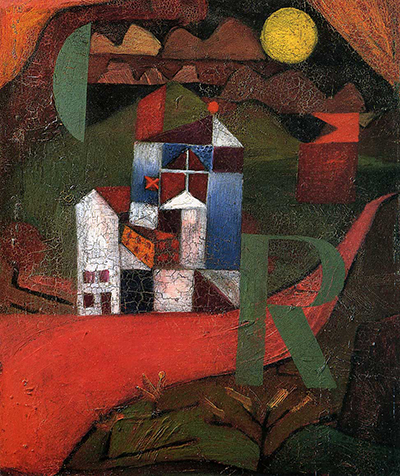
Paul Klee, Villa R (1919, 153); Kunstmuseum Basel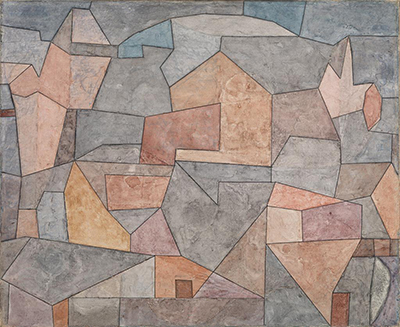
Village among Rocks
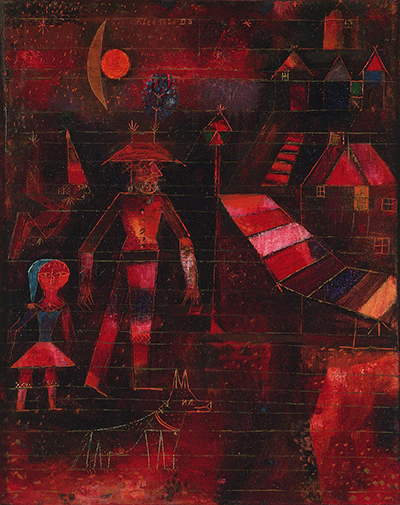
Village Carnival
1926 · Philadelphia Museum of Art 1950-134-115 · object record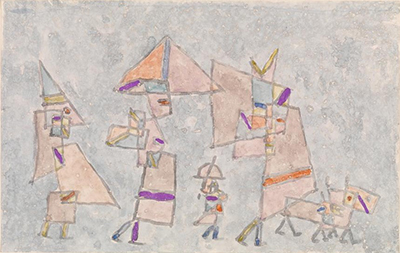
Walk in the Orient
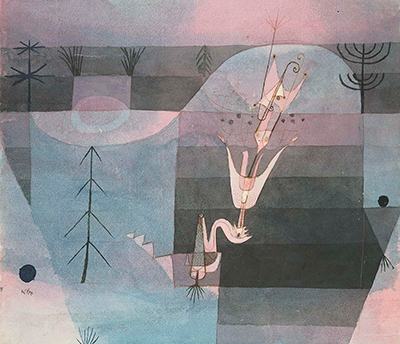
Wallflower
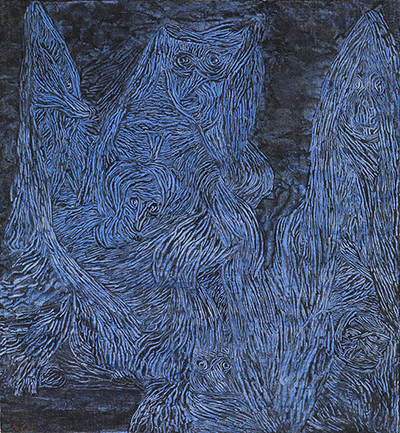
Walpurgis Night
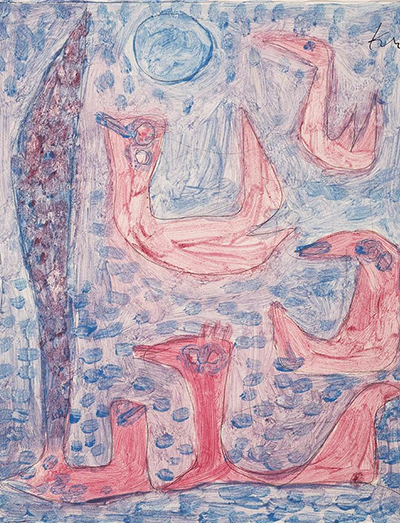
Waterbirds
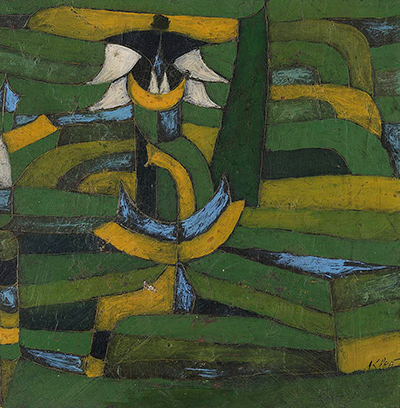
White Blossom in the Garden
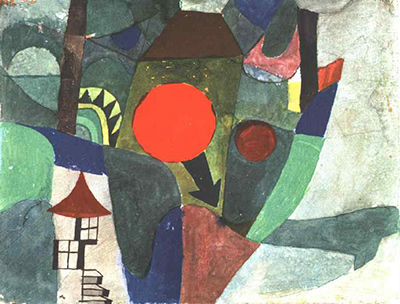

Young Woman in the Armchair
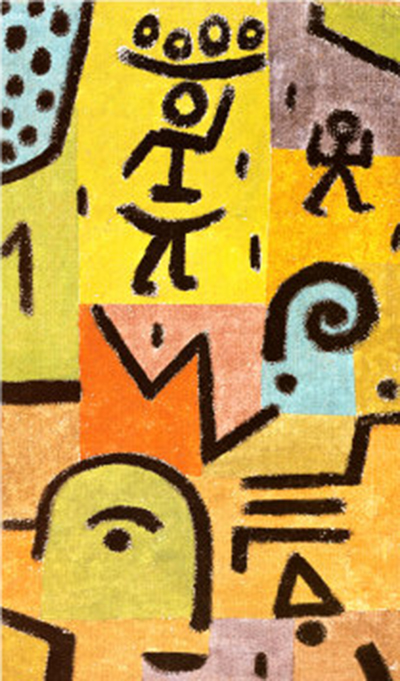
Zitronen
Continue beyond T–Z
The four linked essays offer different starting points: fish and colour, the built path, sound and mechanism, and repeating architecture. Move back through H–S and A–G to find a title, or return to the paintings guide for the 33 commissioned artwork pages. Names here are invitations to examine objects, not substitutes for those objects or their records.[1]
References
- The History of Art, internal 359-row object, image and route worklist, T–Z research dossier, fish duplicate record and two tropical works comparison, 26–27 September 2026. These are local editing evidence, not independent authentication.
- Zentrum Paul Klee, collection overview, English; the museum’s estimate of works on paper and account of materials, View source.
- Zentrum Paul Klee, archive and research, German; Klee’s handwritten register, the printed catalogue raisonné and the research database, View source.
- Hamburger Kunsthalle, der Goldfisch, HK-2982, owner object and provenance record; see the dedicated public work manuscript, View source.
- The Phillips Collection, The Way to the Citadel, owner record; see the work dossier for the provisional German-title crosswalk, View source.
- Museum of Modern Art, Twittering Machine, object record and material description; see the dedicated public work manuscript, View source.
- National Gallery of Art, The Tight Rope Walker (Seiltänzer), accession 1943.3.5184, open-access image and object record; Museum of Modern Art, Tightrope Walker, another 1923 lithograph impression and publication details. The local crop was visually compared with the NGA image, not obtained anew from it.
- Museum of Modern Art, 1949–50 Klee exhibition catalogue, checklist entry for a watercolour Tightrope Walker. This is evidence of a separately described object, not an identification of the local tile, View source.
- Hamburger Kunsthalle, Revolution des Viaductes, HK-2899, owner record; see the work dossier for interpretation limits, View source.
- Fondation Beyeler, Tropische Dämmerung, 1921,128, German owner record and indexed object transcription, inventory 61.3. The museum’s former item URL may redirect to a collection landing page, View source.
- Sprengel Museum Hannover, Tropische Dämmerung mit der Eule image and owner identification, documented through the museum-attributed Wikimedia Commons file and Hannover city cultural loan record. The current direct museum object page and annual number remain unverified.
- Metropolitan Museum of Art, Ventriloquist and Crier in the Moor, owner object record and curatorial description, accession 1984.315.35, View source.
- National Gallery of Art, Baum und Architektur-Rhythmen, watercolour, accession 2004.140.41.b, 1920/202 inscription, medium and media-use notice. Visually matches the inherited tile labelled I, View source.
- National Gallery of Art, Baum und Architektur--Rhythmen, oil, accession 2004.140.41.a, medium, catalogue raisonné no. 2549 and public-domain media statement. Visually matches the inherited tile labelled II, View source.
