 by Tom Gurney
Tom Gurney BSc (Hons) is an art history expert with over 20 years experience
Page Created on / Page Updated on
Email: tomgurney1@gmail.com / Phone: +44 7429 011000
Portrait of Fra Antonio Martelli? Caravaggio's Pitti Knight of Malta
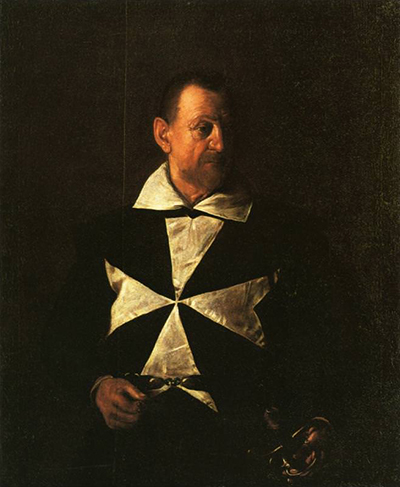
A knight in black grips a rosary and rests his other hand near a sword. A white eight-pointed cross spreads across his chest. The portrait at the Galleria Palatina, Palazzo Pitti, Florence, is commonly called Caravaggio's Portrait of Fra Antonio Martelli. Yet its sitter remains disputed: the man may instead be Alof de Wignacourt, Grand Master of the Order of Malta. The 2016 conservation catalogue calls the work Portrait of a Knight of Malta (Alof de Wignacourt?) and explicitly explains the disagreement.[1]
Its Caravaggio attribution is a different question. The same study says its place in the artist's 1607–08 Maltese period has been accepted by nearly all specialists since Mina Gregori's 1966 reassessment. A visitor can therefore be confident about the painting's artist and approximate context while treating the man's personal name as open.[1]
Caravaggio in context
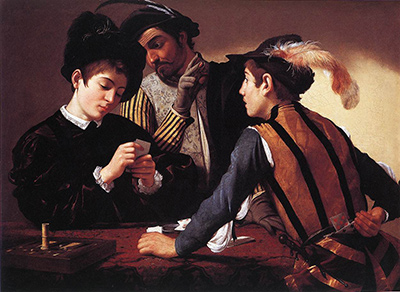
The Cardsharps
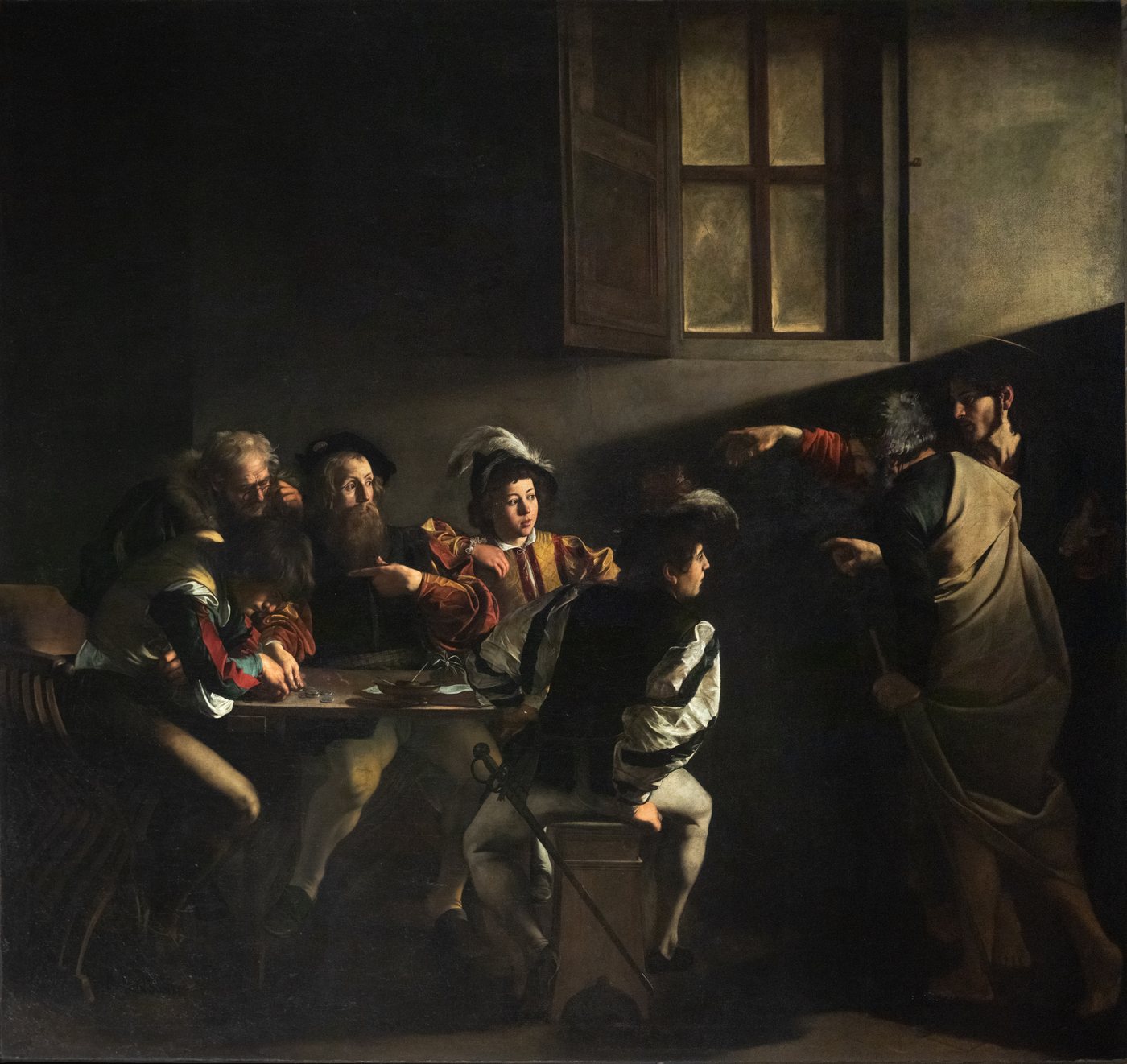
c.1595Calling of Saint Matthew
1599–1600Supper at Emmaus
1601At a Glance
- ArtistCaravaggio, widely accepted in the 2016 conservation study[1]
- Current source titlePortrait of a Knight of Malta (Alof de Wignacourt?)[1]
- Inherited page titlePortrait of Fra Antonio Martelli; sitter not settled[1]
- Date1608 in the Restituzioni object heading; within Caravaggio's Malta period[1]
- Medium and dimensionsoil on canvas, 118.8 × 95.6 cm[1]
- CollectionGalleria Palatina, Palazzo Pitti, Florence, 1911 inventory no. 717[1]
- Visual identifiersblack clothing, white eight-pointed cross, rosary, sword, no page[1]
- Technical evidence2016 conservation and infrared/radiographic examination found preparatory marks, an arm revision and intentionally abbreviated paint handling[1]
Contents
- A Knight between Duty and Introspection
- Cross, Rosary and Sword
- Martelli or Wignacourt?
- What Conservation Revealed
- Apparent Unfinishedness and Artistic Choice
- Comparison with the Louvre Portrait
- How to Label the Painting
- Frequently Asked Questions
A Knight between Duty and Introspection
The man is shown a little beyond half length against a dark background. His black garment carries the broad white cross of the Order of Saint John. The face is lit from one side and falls into shadow on the other. Fausta Navarro's conservation account draws attention to slack skin at the neck, the slightly open mouth and the thoughtful, inward expression of the eyes.[1]
It is a portrait of institutional office and individual age at once. The cross makes the man's membership visible; the ageing face resists turning him into a purely emblematic figure. His torso has a slight turning motion, linking the hand on the rosary to the other near the sword. These are physical actions rather than attributes scattered around him without connection.[1]
This intimate scale and mood differ from the Louvre Alof de Wignacourt and His Page. The Louvre's armour, child attendant and near-life-size format make a much more public statement. The Florence canvas brings the knight closer, with few objects and a strong division of light. If the sitter proves to be Alof, Caravaggio portrayed him in markedly different registers; if he is Martelli, the works still illuminate the different kinds of likeness produced in Malta.[1][2]
Cross, Rosary and Sword
The white eight-pointed cross is the painting's clearest institutional marker. It does not name the sitter, because many knights of the Order could wear it. The rosary and sword together bring religious and martial roles into the same image. Navarro's account describes the right hand gripping the rosary beads and the left hand resting on the sword hilt.[1]
Those details have sometimes been treated as clues to a particular man's career. They are safer as signs of the Order's combined duties. The portrait does not show a battle or a devotional vision. It shows an older knight who could be seen as a person of service, rank and prayer, without pretending to reveal an inner confession from his pose alone.
The black garment receives unusually careful painting in the conservation study. The technical findings identify multiple preparatory layers beneath the thin and irregular paint film in the clothing. That attention directs the eye to the visible white cross and the folds that carry it. It also complicates a quick claim that the portrait was simply dashed off or left unfinished.[1]
Martelli or Wignacourt?
Navarro describes two principal identifications. Mina Gregori argued for Alof de Wignacourt, whose likeness can be compared with the Louvre portrait. Others use documents in Florence and Malta to propose Fra Antonio Martelli, a Florentine nobleman and prior of the Order at Messina. The catalogue states plainly that the sitter is “much discussed.”[1][2]
The resemblance to the Louvre Grand Master is one argument for Alof. Navarro notes, however, that the portraits have quite different tones: Florence is intimate and reflective, Paris official and military. She also observes that the visible age seems closer to Alof in his sixties around 1608 than to Martelli, then in his seventies. This is a scholarly judgement based on the image, not proof from a signed sitter inscription.[1]
Martelli's possible role in the picture's entry into the Medici collections does not, by itself, prove he sat for it. An owner, donor or intermediary can differ from a portrait's subject. Conversely, resemblance to Alof cannot erase archival arguments for Martelli. The page title may preserve the Martelli tradition for incoming readers, but the first paragraph and facts card must make the open identification unmistakable.[1]
The simplest description is “Caravaggio's Portrait of a Knight of Malta, traditionally called Portrait of Fra Antonio Martelli; the sitter may be Alof de Wignacourt.” That formulation identifies the actual canvas without forcing a choice the object study does not make.
What Conservation Revealed
The Restituzioni project cleaned earlier varnishes and retouching and examined the picture with radiography and infrared reflectography. Navarro describes a granular brown preparation that contains sand, thin layers of paint, narrow reserved brown edges around flesh and a restricted palette enlivened by flesh tones. These findings are tied to Caravaggio's Maltese painting technique in the catalogue.[1]
The imaging found a change in the position of the knight's arm. Horizontal strokes in the upper sleeve record an earlier idea, and dark traces along the left arm indicate a first position closer to the body. A curved dark stroke in the background near the head and related outline marks were read as preliminary black painted guides. Such discoveries let us discuss how the image was made, not merely what it depicts.[1]
Technical evidence has limits. Marks seen under infrared do not name the sitter. A revised arm does not reveal the number of sittings or what the knight said to the artist. The catalogue uses these observations to understand Caravaggio's working process and to support attribution to the Maltese period, not to settle every historical question.[1]
Apparent Unfinishedness and Artistic Choice
Some passages, particularly the hands, can look sketchy. The 2016 study addressed this directly. Its stratigraphic analysis considers the portrait finished and interprets the abbreviated handling as intentional: rapid brushwork and a small amount of pigment in selected areas. The black garment, in contrast, has especially considered preparation and visible folds.[1]
That distinction matters for a reader who might infer that Caravaggio abandoned the portrait before leaving Malta. The conservation evidence points in another direction. It shows selective degrees of finish within a completed painting. It also cautions against reading an old, degraded reproduction as a reliable view of the cleaned surface.
Comparison with the Louvre Portrait
The Louvre work dates about 1608, measures 194 × 134 cm, shows an armoured Grand Master and his page, and has inventory INV 57. The Pitti picture measures 118.8 × 95.6 cm, depicts one black-clad knight, and has inventory 1911 no. 717. Those objective identifiers prevent the most common online confusion.[1][2]
The comparison is still valuable for thinking about portraiture. One canvas makes rank visible through armour and an attendant. The other uses a religious emblem, beads and a sword within a more private encounter. The contrast does not prove they portray different men. It shows that image type and sitter identity are separate questions.
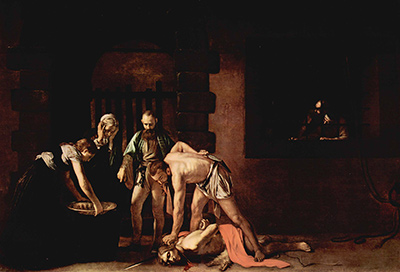
Caravaggio's Maltese Beheading of Saint John the Baptist belongs to the same brief period but serves a different function. A church narrative, an official Grand Master portrait and an intimate knight portrait reveal the range of commissions attached to the Order. Their technical details should remain attached to their own object records.[1][2][3]
How to Label the Painting
The Pitti object's secure identifiers matter more than its traditional sitter name, which is debated. It is Portrait of a Knight of Malta (traditionally Fra Antonio Martelli; possibly Alof de Wignacourt), Caravaggio, c.1608, Galleria Palatina, inventory 717.[1]
This is not excessive caution. It reflects the conservation catalogue's central distinction between widely accepted authorship and disputed sitter. The question invites close comparison and future research. A firm but unsupported name would close that inquiry falsely.
Explore the Caravaggio collection
| Name | Date | Type |
|---|---|---|
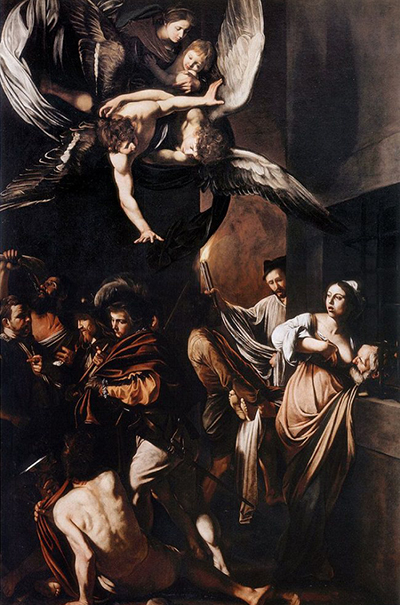
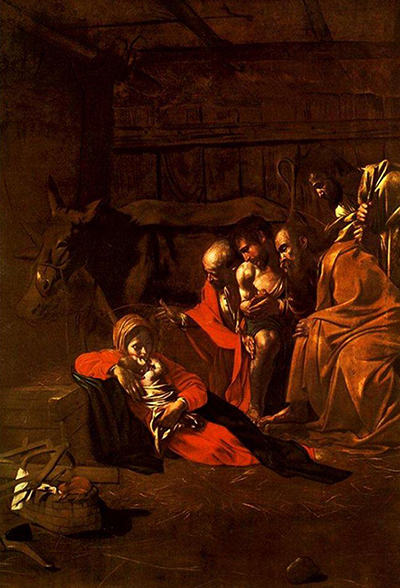
| Adoration of the Shepherds by Caravaggio: The Messina Nativity | 1608–09; precise order relative to Resurrection of Lazarus remains unresolved | Artwork |
| Amor Victorious by Caravaggio | 1601–02 in the Berlin owner record | Artwork |
| Bacchus by Caravaggio: The Uffizi Painting | about 1598, according to the Uffizi | Artwork |
| Basket of Fruit by Caravaggio | after 1597, probably around the turn of the seventeenth century, according to the Ambrosiana | Artwork |
| Boy Bitten by a Lizard: Caravaggio's London Painting | about 1594–95 in the National Gallery's current catalogue; URL suffix “1596” is inherited | Artwork |
| Boy Bitten by a Lizard: The Florence Version Attributed to Caravaggio | disputed; Longhi's catalogue record preserves historical 1592–93 and other proposed ranges, including c.1597 | Artwork |
| Boy Peeling Fruit by Caravaggio: The Royal Collection Painting | about 1592–93 in the owner's current exhibition record | Artwork |
| Boy Peeling Fruit in Florence: A Derivation from Caravaggio | — | Artwork |
| Boy with a Basket of Fruit by Caravaggio | about 1595 in the Galleria Borghese catalogue | Artwork |
| Caravaggio Paintings in Rome: Churches, Museums and a Practical Route | — | Guide |
| Caravaggio Quotes: What the Documents Actually Record | — | Guide |
| Caravaggio's Lute Player: The Del Monte Painting Once Shown at the Met | about 1596–97 in the Met catalogue | Artwork |
| Caravaggio's Painting Technique: Grounds, Incisions, Revisions and Light | — | Guide |
| Christ at the Column by Caravaggio: The Rouen Flagellation | c.1606 in the owner caption; owner prose gives 1606–07 | Artwork |
| Christ on the Mount of Olives by Caravaggio: The Lost Berlin Painting | — | Artwork |
| Conversion on the Way to Damascus by Caravaggio | about 1601 in the Roma Capitale church record | Artwork |
| Crowning with Thorns by Caravaggio: The Vienna Painting | about 1603 in the 2019 KHM record; “1607” is an inherited URL suffix | Artwork |
| Crowning with Thorns in Prato: Attributed to Caravaggio | about 1602–03 in the collection presentation | Artwork |
| David with the Head of Goliath by Caravaggio: The Borghese Painting | 1606–07 or 1609–10 in the Galleria Borghese catalogue; the later Naples period is favoured by many scholars, while the owner keeps the question open | Artwork |
| David with the Head of Goliath by Caravaggio: The Prado Painting | about 1600 in Prado material; “1599” survives only in the legacy URL | Artwork |
| David with the Head of Goliath by Caravaggio: The Vienna Painting | about 1600–01 in the KHM's 2019 exhibition record; “1607” is a legacy route label | Artwork |
| Did Caravaggio Make Drawings? What Survives and What Paintings Reveal | — | Guide |
| Ecce Homo: Caravaggio's Madrid Rediscovery and the Genoa Painting | — | Artwork |
| John the Baptist in Caravaggio's Paintings: A Guide to the Different Versions | — | Artwork |
| Judith Beheading Holofernes by Caravaggio | beginning of the seventeenth century in the owning museum's account; about 1599–1600 in the Kimbell's 2025 loan label; around 1602 in one specialist catalogue | Artwork |
| Jupiter, Neptune and Pluto: Caravaggio's Ludovisi Ceiling | about 1597; the archive connects the work with Cardinal del Monte's 1597 commission | Artwork |
| Madonna and Child with Saint Anne by Caravaggio: The Palafrenieri Altarpiece | 1605 in the Galleria Borghese object field; completed and delivered by 8 April 1606 | Artwork |
| Madonna of Loreto by Caravaggio: The Pilgrims at Sant'Agostino | broadly c.1604–06; institutional records differ slightly in their starting year | Artwork |
| Madonna of the Rosary by Caravaggio: The Vienna Altarpiece | around 1603 in the Kunsthistorisches Museum's object record | Artwork |
| Martha and Mary Magdalene by Caravaggio: The Detroit Painting | about 1598 in the Detroit Institute of Arts record | Artwork |
| Medusa by Caravaggio: The Uffizi Painted Shield | 1596–98 in the Uffizi's virtual exhibition; specialist research reports the shield delivered to the Medici wardrobe by 7 September 1598 | Artwork |
| Narcissus, Attributed to Caravaggio | dependent on attribution; the Zeri catalogue gives a broad 1610–50 range under Spadarino | Artwork |
| Nativity with Saint Francis and Saint Lawrence: Caravaggio's Missing Painting | somewhere in 1600–09 in the parliamentary report; a specific 1609 execution and place remain debated | Artwork |
| Penitent Mary Magdalene by Caravaggio | 1597 in the owner's catalogue, during Caravaggio's early Roman activity | Artwork |
| Portrait of a Courtesan: Caravaggio's Lost Berlin Portrait | Berlin's data field says c.1590, while its own text compares a Caravaggio work of c.1598; precise date unresolved | Artwork |
| Portrait of Alof de Wignacourt and His Page by Caravaggio | — | Artwork |
| Portrait of Fra Antonio Martelli? Caravaggio's Pitti Knight of Malta | 1608 in the Restituzioni object heading; within Caravaggio's Malta period | Artwork |
| Portrait of Maffeo Barberini: The Seated Corsini Painting | c.1596–97 in the national catalogue | Artwork |
| Portrait of Monsignor Maffeo Barberini: Caravaggio's Newly Acquired Painting | around the late 1590s / age thirty; “1598” in the inherited address is approximate, not an exact document date | Artwork |
| Portrait of Pope Paul V: A Caravaggio Attribution and a Borghese Copy | — | Artwork |
| Prints After Caravaggio: Who Made Them and What They Show | — | Guide |
| Reclining Saint John the Baptist: A Disputed Caravaggio Attribution | often proposed for the artist's final years; the later museum list does not give a precise year. | Artwork |
| Rest on the Flight into Egypt by Caravaggio | about 1597 in the owner's catalogue | Artwork |
| Saint Catherine of Alexandria by Caravaggio: The Thyssen Painting | about 1598–99 in the Museo Nacional Thyssen-Bornemisza catalogue | Artwork |
| Saint Francis in Meditation by Caravaggio: The Cremona Painting | 1603–06 in the owner account; c.1605–06 in a KHM exhibition caption | Artwork |
| Saint Francis in Prayer: Caravaggio's Carpineto Painting | 1606 in a 2016–17 exhibition work list | Artwork |
| Saint Francis of Assisi in Ecstasy by Caravaggio | c.1595–96 in the owner wall text | Artwork |
| Saint Jerome in Meditation: Caravaggio's Montserrat Painting | 1605 in the owner record; an owner publication reports scholarship placing it about 1605–06 | Artwork |
| Saint Jerome Writing by Caravaggio: The Borghese Painting | c.1606 in the owner catalogue; the “1605” URL suffix is inherited | Artwork |
| Saint Jerome Writing by Caravaggio: The Malta Painting | around 1607–08; foundation dates Malaspina's commission to 1608 | Artwork |
| Saint John in the Wilderness at Toledo Cathedral | exact 1598 not established by the cited cathedral account. | Artwork |
| Saint John the Baptist at Galleria Corsini, Rome | about 1606 in the national record; older proposals ranged from the late 1590s onward. | Artwork |
| Saint John the Baptist at the Capitoline Museums, Rome | 1602. | Artwork |
| Saint John the Baptist at the Galleria Borghese | 1609–10 in the current Borghese record. | Artwork |
| Saint John the Baptist at the Spring: The Bonello Painting in Malta | early seventeenth century in the institutional account; a precise 1608 is not established there. | Artwork |
| Saint Matthew and the Angel: Caravaggio's Lost First Altarpiece | — | Artwork |
| Salome Receives the Head of John the Baptist: Caravaggio's London Painting | about 1609–10, likely late Naples period in the Gallery's account | Artwork |
| Salome with the Head of John the Baptist: Caravaggio's Madrid Painting | — | Artwork |
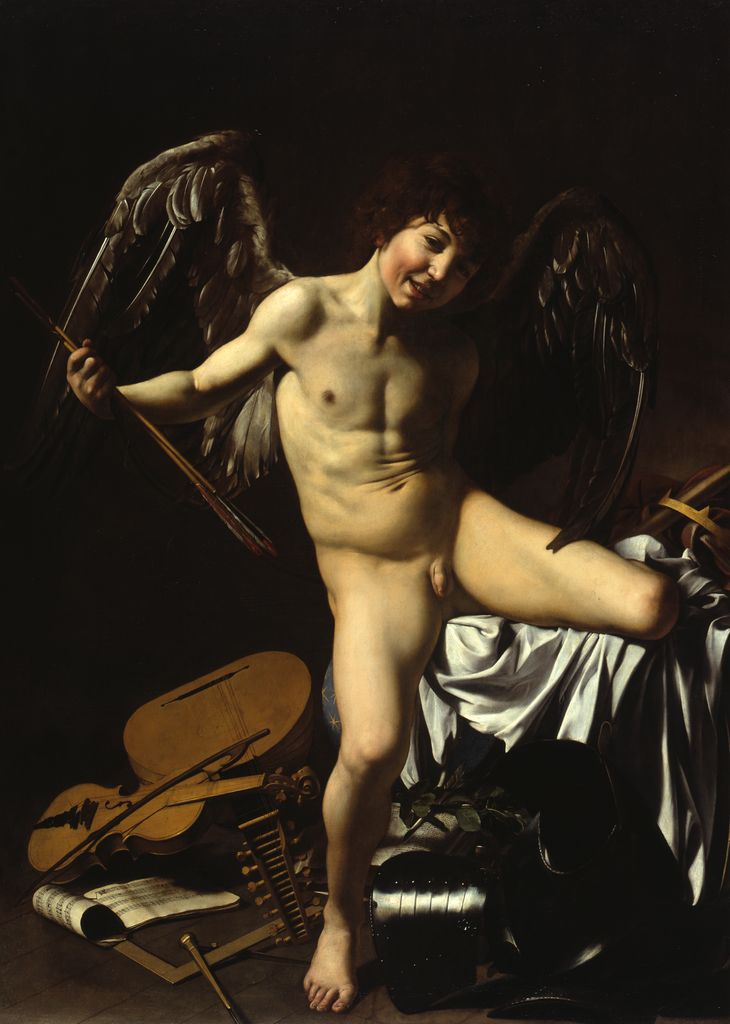
| Sleeping Cupid by Caravaggio: The Painting Made in Malta | about 1608, Malta period | Artwork |
| Still Life with Fruit on a Stone Ledge: Is It by Caravaggio? | — | Artwork |
| Supper at Emmaus (1606): Caravaggio's Brera Painting | — | Artwork |
| The Annunciation by Caravaggio in Nancy | c.1607–10 in the collection record; 1608–10 in the museum's restoration account | Artwork |
| The Basel Saint John the Baptist: Once Labelled Caravaggio, Now Maíno | about 1608–10 in that schedule, rather than the legacy URL's 1600. | Artwork |
| The Beheading of Saint John the Baptist by Caravaggio | about 1608; installed in the Oratory on 29 August 1608 | Artwork |
| The Burial of Saint Lucy by Caravaggio in Syracuse | 1608, during Caravaggio's Syracuse stay | Artwork |
| The Calling of Saint Matthew by Caravaggio | about 1599–1600 | Artwork |
| The Calling of Saints Peter and Andrew by Caravaggio | about 1602–04 in the Trust's object text | Artwork |
| The Cardsharps by Caravaggio | about 1596–97 in the Kimbell's current object record | Artwork |
| The Conversion of Saint Paul: Caravaggio's Odescalchi Panel | commissioned in 1600; painted around 1600–01 | Artwork |
| The Crucifixion of Saint Andrew by Caravaggio | 1606–07 | Artwork |
| The Crucifixion of Saint Peter by Caravaggio | about 1601 | Artwork |
| The Death of the Virgin by Caravaggio | commissioned 1601; completed late 1605 or early 1606, according to the Louvre | Artwork |
| The Denial of Saint Peter by Caravaggio | 1610 | Artwork |
| The Doria Pamphilj Saint John the Baptist: A Second Youth with a Ram | linked compositionally to the Capitoline 1602 picture; an exact production year for this canvas is not established by the owner pages used here. | Artwork |
| The Entombment of Christ by Caravaggio: The Vatican Deposition | about 1600–04 in Vatican Museums publication material | Artwork |
| The Flagellation of Christ by Caravaggio: The Capodimonte Altarpiece | around 1607, in the first Naples period | Artwork |
| The Fortune Teller by Caravaggio: The Louvre Version and Its Roman Counterpart | — | Artwork |
| The Holy Family with the Infant Saint John the Baptist by Caravaggio | early 1600s in the Met catalogue; no more exact owner date asserted here | Artwork |
| The Incredulity of Saint Thomas by Caravaggio | about 1601 in the SPSG presentation | Artwork |
| The Inspiration of Saint Matthew by Caravaggio | usually 1602; also catalogued 1602–03, for the installed final altarpiece | Artwork |
| The Lute Player by Caravaggio: The Hermitage Painting | about 1596 in the Hermitage collection publication; the Hermitage Friends restoration page gives about 1595–96 | Artwork |
| The Magdalen in Ecstasy: Caravaggio, Copies and a Disputed Original | — | Artwork |
| The Martyrdom of Saint Matthew by Caravaggio | 1599–1600; unveiled with The Calling in 1600 | Artwork |
| The Martyrdom of Saint Ursula by Caravaggio | — | Artwork |
| The Musicians by Caravaggio | 1597 | Artwork |
| The Resurrection of Lazarus by Caravaggio in Messina | 1609; delivered 10 June 1609 in the owner account | Artwork |
| The Sacrifice of Isaac by Bartolomeo Cavarozzi: A Former Caravaggio Attribution | about 1615–17 in the Nicholas Hall catalogue; “1598” is an inherited URL label, not the accepted date | Artwork |
| The Sacrifice of Isaac by Caravaggio: The Uffizi Painting | about 1603 in the Uffizi catalogue | Artwork |
| The Seven Works of Mercy by Caravaggio | 1606–07, according to the Pio Monte | Artwork |
| The Supper at Emmaus by Caravaggio: The London Painting | 1601 | Artwork |
| The Taking of Christ by Caravaggio | 1602 | Artwork |
| The Toulouse *Judith Beheading Holofernes*: A Caravaggio Attribution Debate | c.1606–07 if identified with the recorded Naples work; that identification is debated | Artwork |
| Young Sick Bacchus by Caravaggio | about 1595 in the Galleria Borghese catalogue | Artwork |
| Youth with a Ram: Why Caravaggio's Saint John Looks So Unusual | — | Artwork |
No matching pages found.
Discussion
Share a close observation about Portrait of Fra Antonio Martelli? Pitti Knight of Malta or a source that clarifies its history.
Which detail changes your reading?
Is there a collection record or document worth comparing?
What remains uncertain?
Join the Conversation
Frequently Asked Questions
Is the man definitely Fra Antonio Martelli?
No. The 2016 conservation catalogue says the sitter is disputed between Martelli and Alof de Wignacourt.[1]
Is the painting by Caravaggio?
The conservation study says its Caravaggio attribution and Maltese-period placement have been accepted by nearly all specialists since Mina Gregori's 1966 reassessment.[1]
How does it differ from the Louvre Alof portrait?
Where is it kept?
The catalogue places it in the Galleria Palatina, Palazzo Pitti, Florence, inventory 1911 no. 717. Check current display before visiting.[1]
Was it left unfinished?
The technical study concludes it is finished; some abbreviated brushwork was an intentional part of Caravaggio's handling.[1]
References
- Fausta Navarro, Restituzioni 2016, Ritratto di cavaliere di Malta (Alof de Wignacourt?), Galleria Palatina inv. 717, conservation catalogue and object record.
- Musée du Louvre, Alof de Wignacourt and his page, INV 57.
- St John's Co-Cathedral Foundation, Caravaggio at St John's Co-Cathedral.