 by Tom Gurney
Tom Gurney BSc (Hons) is an art history expert with over 20 years experience
Page Created on / Page Updated on
Email: tomgurney1@gmail.com / Phone: +44 7429 011000
Madonna and Child with Saint Anne by Caravaggio: The Palafrenieri Altarpiece
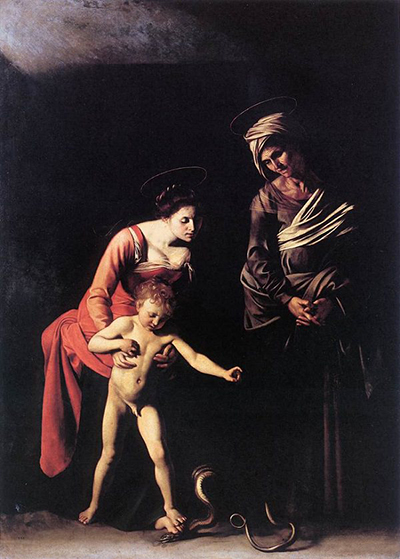
Mary steadies the Christ Child as the two press a serpent beneath their feet. Saint Anne, Mary's mother, stands nearby and watches. This large Caravaggio altarpiece was commissioned for the Palafrenieri confraternity's chapel in St Peter's, installed in April 1606 and taken down only days later. The Galleria Borghese now owns it as inventory 110. Why it was removed remains a subject of debate; the sequence of removal and sale is much firmer than any single explanation for it.[1]
Often called the Madonna dei Palafrenieri, the painting presents sacred figures with powerful bodily presence. It is not the Madonna of Loreto still in Sant'Agostino, nor the Madonna of the Rosary now in Vienna. Its commission, dramatic serpent and swift move into Scipione Borghese's collection make its own history unusually well documented.[1][2][3]
Caravaggio in context
The Cardsharps
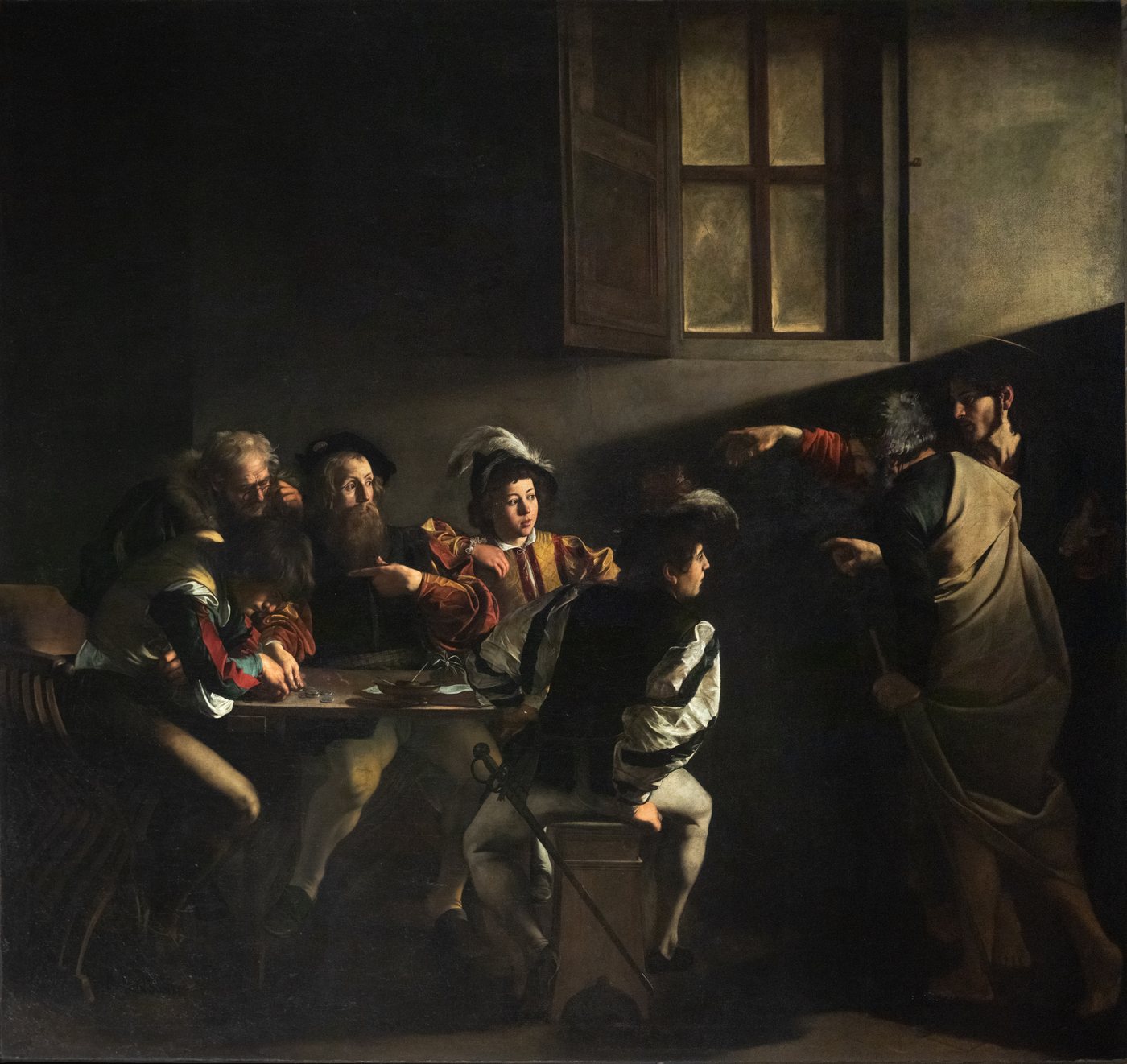
c.1595Calling of Saint Matthew
1599–1600Supper at Emmaus
1601At a Glance
- ArtistMichelangelo Merisi da Caravaggio[1]
- TitlesMadonna and Child with Saint Anne and Madonna dei Palafrenieri[1]
- Date1605 in the Galleria Borghese object field; completed and delivered by 8 April 1606[1]
- Mediumoil on canvas[1]
- Dimensions292 × 211 cm, height × width[1]
- CollectionGalleria Borghese, Rome, inventory 110[1]
- CommissionPalafrenieri archconfraternity for its chapel in St Peter's[1]
- Recorded movesdelivered 8 April 1606, taken down 16 April, purchased by Scipione Borghese later in 1606[1]
Contents
- Mary, Jesus, Anne and the Serpent
- A Confraternity Altarpiece
- Eight Days in St Peter's
- Why Was It Removed?
- Scipione Borghese's Purchase
- The Painting's Scale and Naturalism
- Other Marian Works in the Cluster
- Frequently Asked Questions
Mary, Jesus, Anne and the Serpent
The figures stand close together against a dark setting. Mary leans forward with the Christ Child, and their feet press on a serpent. Anne is present but set to the side, an older woman watching the action. The Galleria Borghese describes the serpent as an image of sin, making the shared action by mother and son central to the religious subject.[1]
The child is not a remote miniature symbol. His body has weight, and Mary's support helps him reach the snake. Their limbs make the act visible. Anne's hands and face carry a different role: she does not physically join the pressure on the serpent but observes it. This difference in participation has been important to theological discussions of the canvas.[1]
The serpent's position near the ground draws attention downward. A viewer must follow Mary's and Jesus's movement to see the cause of its defeat. The resulting diagonal action gives the tall altarpiece force even without a crowded narrative scene. The picture combines a devotional subject with the immediate physicality found in Caravaggio's other mature Roman works.
The owner catalogue discusses a longstanding dispute over Genesis 3:15 and whether Mary or Christ should be understood as crushing the serpent. That history of interpretation is relevant to the painting, but it is not proof that the confraternity removed it for one theological reason. The visible image shows mother and child acting together; textual and confessional readings have varied.[1][4]
A Confraternity Altarpiece
The Palafrenieri were the papal grooms' confraternity, with Saint Anne as patron. The Galleria Borghese says the group decided in October 1605 to commission a new altarpiece for its chapel in the renovated St Peter's Basilica. The replacement had to fit a changed setting and show Mary, the Infant Jesus and Anne. Caravaggio received an initial payment before 1 December 1605.[1]
The commission makes Anne's presence necessary rather than incidental. She connects the Marian image to the confraternity's own devotion. Yet her placement and ordinary aged appearance later became part of criticism of the work. A good account should hold these two facts together: she is the patrons' saint, and the painter gave her a less idealized role than some observers expected.[1]
The object field dates the work 1605, while the documented delivery was 8 April 1606. That is not a contradiction requiring an exact day of painting. The commission and likely execution began in 1605; the canvas was completed by the spring of 1606. In a facts box, “1605–06” can explain the period, with the museum's own date field and delivery record cited separately.[1]
The tall format, 292 × 211 cm, reflects its purpose above an altar. It is larger than a private collector's cabinet picture. Mary's and Anne's bodies were meant to be encountered from a worshipper's position in the chapel, although the work's stay there was brief.[1]
Eight Days in St Peter's
The Galleria Borghese's catalogue gives a precise sequence. Caravaggio delivered the canvas to Dean Antonio Tirollo on 8 April 1606, and it was placed above the altar. On 16 April, workers were ordered to take it down and move it to the nearby church of Sant'Anna dei Palafrenieri. Cardinal Scipione Borghese saw it there and acquired it later that year.[1]
Those records show a rapid change of destination, not a fictional scene in which an unnamed authority immediately destroyed or concealed the painting. It remained available to be seen, moved to another church and was then purchased. The transfer also changed its role: a commissioned altar image became a prized work in a cardinal's collection.
Some retellings say it hung at St Peter's for exactly one month or was refused before installation. The cited chronology is more precise: it was delivered and placed in April, then taken down on the sixteenth.
The Borghese catalogue notes it was in Scipione's collection in 1606 and appears in a 1613 description. Later inventories trace it through the family holdings. It became part of the Italian state's collection in 1902. That chain gives the object a stable identity even though the first chapel display was brief.[1]
Why Was It Removed?
There is no established single cause. The Galleria Borghese discusses several hypotheses. Some writers emphasized decorum: Mary's low neckline, the naked or unusually mature-looking Child, and Anne's unidealized old age. Others pointed to theological concerns about the figures' different roles in defeating the serpent. Still others examined whether the canvas fit the renovated chapel's recess and how strongly Scipione Borghese wished to acquire it.[1]
The owner catalogue explicitly says the motives are uncertain. It describes historical arguments that a dimensional problem rather than dogma caused the move, as well as scholarly disagreement about the importance of any physical mismatch. This means the convenient phrase “the Church rejected it because Mary was immodest” overstates the evidence and hides the other explanations.[1]
The painting's powerful naturalism certainly made it memorable. Anne appears as a wrinkled commoner rather than an idealized matron, and the Child's body has an immediacy that could be unsettling in a devotional setting. Those are qualities one can see and the museum discusses. Whether a particular official cited them as the decisive reason is a different historical claim.[1]
One proposed model identification for Mary, Lena or Maddalena Antognetti, has also been used to explain removal. The Borghese catalogue presents that as a scholar's theory, not a documented vote of the confraternity. Sitter identification and institutional motive must both remain qualified.[1]
Scipione Borghese's Purchase
Scipione Borghese bought the painting for 100 scudi after seeing it in Sant'Anna dei Palafrenieri. The Galleria Borghese notes that this was more than the 75 scudi the confraternity had paid Caravaggio. The transaction shows the canvas's rapid passage from commissioned church work to cardinal's collection.[1]
Scipione was a major collector of Caravaggio. The Gallery also owns David with the Head of Goliath and early genre paintings. Their arrival in his collection followed different paths, however. The Palafrenieri was a confraternity commission that he acquired after removal; it should not be presented as a work he initially ordered from Caravaggio.[1][5]
The painting's Borghese history helps explain how the public sees it today. It is studied as a museum work, while its dimensions and figures still speak of a chapel commission. Readers can understand both contexts: an altar image briefly installed in St Peter's and a painting preserved within one of Rome's major collections.
The Painting's Scale and Naturalism
The figures' size and close arrangement demand attention. Against the dark, Mary's red and blue clothing, the child's body and Anne's aged face become the picture's main materials. The serpent is smaller but necessary; it gives their action a reason. The viewer's gaze moves among faces, feet and the space in which the snake is crushed.[1]
The age difference between the women matters. Mary appears youthful, while Anne is visibly older and worn. The Galleria Borghese reads Anne as a humble commoner. Some scholars saw that ordinariness as unsuitable to an altarpiece, but it can also make her presence concrete: this is an elderly mother and grandmother witnessing the sacred action.[1]
Technical investigations listed in the owner record confirm that the canvas has been studied and conserved. Discussions of incisions elsewhere in Caravaggio's work do not establish the same features in the Palafrenieri; material claims require evidence tied to this painting.[1]
Other Marian Works in the Cluster
The Madonna of Loreto remains at the Cavalletti Chapel in Sant'Agostino. Mary receives two pilgrims there at a humble doorway. Its reception and current setting differ from the Palafrenieri canvas's swift removal and purchase.[2]
The Madonna of the Rosary is now in the Kunsthistorisches Museum. It surrounds Mary and Child with Saint Dominic, Saint Peter Martyr, a founder and a crowd. Its first patron and destination remain uncertain in the owner record. Comparing it to the Palafrenieri picture shows how a Marian subject can be shaped by quite different commissions and histories.[3]
The Borghese work should be viewed as its own object: a large, documented confraternity altarpiece whose exact removal motive has not survived as a settled fact. Its physical encounter between Mary, Jesus, Anne and serpent is strong enough without a simplified scandal story.
Explore the Caravaggio collection
| Name | Date | Type |
|---|---|---|
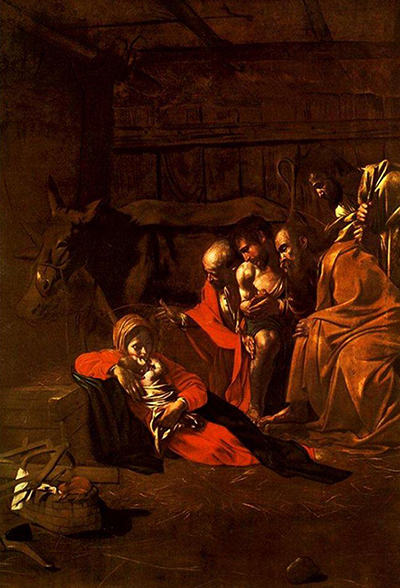
| Adoration of the Shepherds by Caravaggio: The Messina Nativity | 1608–09; precise order relative to Resurrection of Lazarus remains unresolved | Artwork |
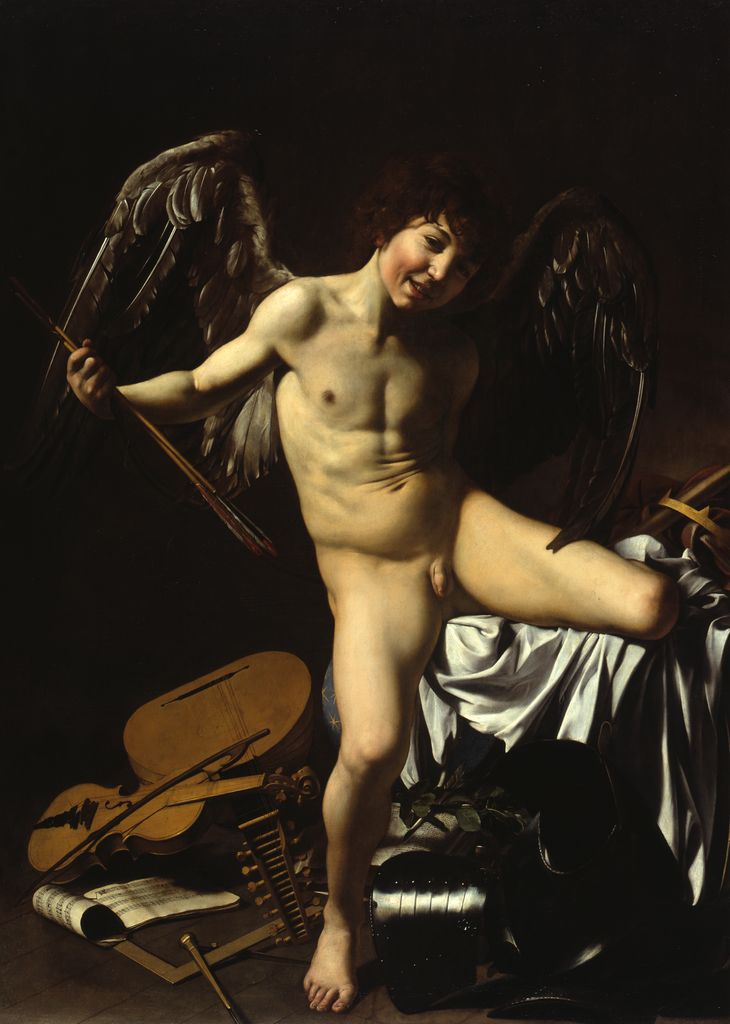
| Amor Victorious by Caravaggio | 1601–02 in the Berlin owner record | Artwork |
| Bacchus by Caravaggio: The Uffizi Painting | about 1598, according to the Uffizi | Artwork |
| Basket of Fruit by Caravaggio | after 1597, probably around the turn of the seventeenth century, according to the Ambrosiana | Artwork |
| Boy Bitten by a Lizard: Caravaggio's London Painting | about 1594–95 in the National Gallery's current catalogue; URL suffix “1596” is inherited | Artwork |
| Boy Bitten by a Lizard: The Florence Version Attributed to Caravaggio | disputed; Longhi's catalogue record preserves historical 1592–93 and other proposed ranges, including c.1597 | Artwork |
| Boy Peeling Fruit by Caravaggio: The Royal Collection Painting | about 1592–93 in the owner's current exhibition record | Artwork |
| Boy Peeling Fruit in Florence: A Derivation from Caravaggio | — | Artwork |
| Boy with a Basket of Fruit by Caravaggio | about 1595 in the Galleria Borghese catalogue | Artwork |
| Caravaggio Paintings in Rome: Churches, Museums and a Practical Route | — | Guide |
| Caravaggio Quotes: What the Documents Actually Record | — | Guide |
| Caravaggio's Lute Player: The Del Monte Painting Once Shown at the Met | about 1596–97 in the Met catalogue | Artwork |
| Caravaggio's Painting Technique: Grounds, Incisions, Revisions and Light | — | Guide |
| Christ at the Column by Caravaggio: The Rouen Flagellation | c.1606 in the owner caption; owner prose gives 1606–07 | Artwork |
| Christ on the Mount of Olives by Caravaggio: The Lost Berlin Painting | — | Artwork |
| Conversion on the Way to Damascus by Caravaggio | about 1601 in the Roma Capitale church record | Artwork |
| Crowning with Thorns by Caravaggio: The Vienna Painting | about 1603 in the 2019 KHM record; “1607” is an inherited URL suffix | Artwork |
| Crowning with Thorns in Prato: Attributed to Caravaggio | about 1602–03 in the collection presentation | Artwork |
| David with the Head of Goliath by Caravaggio: The Borghese Painting | 1606–07 or 1609–10 in the Galleria Borghese catalogue; the later Naples period is favoured by many scholars, while the owner keeps the question open | Artwork |
| David with the Head of Goliath by Caravaggio: The Prado Painting | about 1600 in Prado material; “1599” survives only in the legacy URL | Artwork |
| David with the Head of Goliath by Caravaggio: The Vienna Painting | about 1600–01 in the KHM's 2019 exhibition record; “1607” is a legacy route label | Artwork |
| Did Caravaggio Make Drawings? What Survives and What Paintings Reveal | — | Guide |
| Ecce Homo: Caravaggio's Madrid Rediscovery and the Genoa Painting | — | Artwork |
| John the Baptist in Caravaggio's Paintings: A Guide to the Different Versions | — | Artwork |
| Judith Beheading Holofernes by Caravaggio | beginning of the seventeenth century in the owning museum's account; about 1599–1600 in the Kimbell's 2025 loan label; around 1602 in one specialist catalogue | Artwork |
| Jupiter, Neptune and Pluto: Caravaggio's Ludovisi Ceiling | about 1597; the archive connects the work with Cardinal del Monte's 1597 commission | Artwork |
| Madonna and Child with Saint Anne by Caravaggio: The Palafrenieri Altarpiece | 1605 in the Galleria Borghese object field; completed and delivered by 8 April 1606 | Artwork |
| Madonna of Loreto by Caravaggio: The Pilgrims at Sant'Agostino | broadly c.1604–06; institutional records differ slightly in their starting year | Artwork |
| Madonna of the Rosary by Caravaggio: The Vienna Altarpiece | around 1603 in the Kunsthistorisches Museum's object record | Artwork |
| Martha and Mary Magdalene by Caravaggio: The Detroit Painting | about 1598 in the Detroit Institute of Arts record | Artwork |
| Medusa by Caravaggio: The Uffizi Painted Shield | 1596–98 in the Uffizi's virtual exhibition; specialist research reports the shield delivered to the Medici wardrobe by 7 September 1598 | Artwork |
| Narcissus, Attributed to Caravaggio | dependent on attribution; the Zeri catalogue gives a broad 1610–50 range under Spadarino | Artwork |
| Nativity with Saint Francis and Saint Lawrence: Caravaggio's Missing Painting | somewhere in 1600–09 in the parliamentary report; a specific 1609 execution and place remain debated | Artwork |
| Penitent Mary Magdalene by Caravaggio | 1597 in the owner's catalogue, during Caravaggio's early Roman activity | Artwork |
| Portrait of a Courtesan: Caravaggio's Lost Berlin Portrait | Berlin's data field says c.1590, while its own text compares a Caravaggio work of c.1598; precise date unresolved | Artwork |
| Portrait of Alof de Wignacourt and His Page by Caravaggio | — | Artwork |
| Portrait of Fra Antonio Martelli? Caravaggio's Pitti Knight of Malta | 1608 in the Restituzioni object heading; within Caravaggio's Malta period | Artwork |
| Portrait of Maffeo Barberini: The Seated Corsini Painting | c.1596–97 in the national catalogue | Artwork |
| Portrait of Monsignor Maffeo Barberini: Caravaggio's Newly Acquired Painting | around the late 1590s / age thirty; “1598” in the inherited address is approximate, not an exact document date | Artwork |
| Portrait of Pope Paul V: A Caravaggio Attribution and a Borghese Copy | — | Artwork |
| Prints After Caravaggio: Who Made Them and What They Show | — | Guide |
| Reclining Saint John the Baptist: A Disputed Caravaggio Attribution | often proposed for the artist's final years; the later museum list does not give a precise year. | Artwork |
| Rest on the Flight into Egypt by Caravaggio | about 1597 in the owner's catalogue | Artwork |
| Saint Catherine of Alexandria by Caravaggio: The Thyssen Painting | about 1598–99 in the Museo Nacional Thyssen-Bornemisza catalogue | Artwork |
| Saint Francis in Meditation by Caravaggio: The Cremona Painting | 1603–06 in the owner account; c.1605–06 in a KHM exhibition caption | Artwork |
| Saint Francis in Prayer: Caravaggio's Carpineto Painting | 1606 in a 2016–17 exhibition work list | Artwork |
| Saint Francis of Assisi in Ecstasy by Caravaggio | c.1595–96 in the owner wall text | Artwork |
| Saint Jerome in Meditation: Caravaggio's Montserrat Painting | 1605 in the owner record; an owner publication reports scholarship placing it about 1605–06 | Artwork |
| Saint Jerome Writing by Caravaggio: The Borghese Painting | c.1606 in the owner catalogue; the “1605” URL suffix is inherited | Artwork |
| Saint Jerome Writing by Caravaggio: The Malta Painting | around 1607–08; foundation dates Malaspina's commission to 1608 | Artwork |
| Saint John in the Wilderness at Toledo Cathedral | exact 1598 not established by the cited cathedral account. | Artwork |
| Saint John the Baptist at Galleria Corsini, Rome | about 1606 in the national record; older proposals ranged from the late 1590s onward. | Artwork |
| Saint John the Baptist at the Capitoline Museums, Rome | 1602. | Artwork |
| Saint John the Baptist at the Galleria Borghese | 1609–10 in the current Borghese record. | Artwork |
| Saint John the Baptist at the Spring: The Bonello Painting in Malta | early seventeenth century in the institutional account; a precise 1608 is not established there. | Artwork |
| Saint Matthew and the Angel: Caravaggio's Lost First Altarpiece | — | Artwork |
| Salome Receives the Head of John the Baptist: Caravaggio's London Painting | about 1609–10, likely late Naples period in the Gallery's account | Artwork |
| Salome with the Head of John the Baptist: Caravaggio's Madrid Painting | — | Artwork |
| Sleeping Cupid by Caravaggio: The Painting Made in Malta | about 1608, Malta period | Artwork |
| Still Life with Fruit on a Stone Ledge: Is It by Caravaggio? | — | Artwork |
| Supper at Emmaus (1606): Caravaggio's Brera Painting | — | Artwork |
| The Annunciation by Caravaggio in Nancy | c.1607–10 in the collection record; 1608–10 in the museum's restoration account | Artwork |
| The Basel Saint John the Baptist: Once Labelled Caravaggio, Now Maíno | about 1608–10 in that schedule, rather than the legacy URL's 1600. | Artwork |
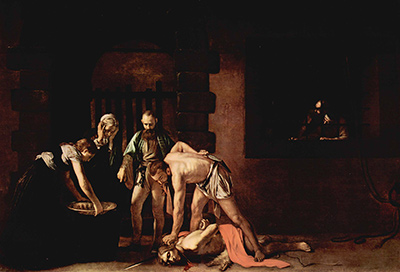
| The Beheading of Saint John the Baptist by Caravaggio | about 1608; installed in the Oratory on 29 August 1608 | Artwork |
| The Burial of Saint Lucy by Caravaggio in Syracuse | 1608, during Caravaggio's Syracuse stay | Artwork |
| The Calling of Saint Matthew by Caravaggio | about 1599–1600 | Artwork |
| The Calling of Saints Peter and Andrew by Caravaggio | about 1602–04 in the Trust's object text | Artwork |
| The Cardsharps by Caravaggio | about 1596–97 in the Kimbell's current object record | Artwork |
| The Conversion of Saint Paul: Caravaggio's Odescalchi Panel | commissioned in 1600; painted around 1600–01 | Artwork |
| The Crucifixion of Saint Andrew by Caravaggio | 1606–07 | Artwork |
| The Crucifixion of Saint Peter by Caravaggio | about 1601 | Artwork |
| The Death of the Virgin by Caravaggio | commissioned 1601; completed late 1605 or early 1606, according to the Louvre | Artwork |
| The Denial of Saint Peter by Caravaggio | 1610 | Artwork |
| The Doria Pamphilj Saint John the Baptist: A Second Youth with a Ram | linked compositionally to the Capitoline 1602 picture; an exact production year for this canvas is not established by the owner pages used here. | Artwork |
| The Entombment of Christ by Caravaggio: The Vatican Deposition | about 1600–04 in Vatican Museums publication material | Artwork |
| The Flagellation of Christ by Caravaggio: The Capodimonte Altarpiece | around 1607, in the first Naples period | Artwork |
| The Fortune Teller by Caravaggio: The Louvre Version and Its Roman Counterpart | — | Artwork |
| The Holy Family with the Infant Saint John the Baptist by Caravaggio | early 1600s in the Met catalogue; no more exact owner date asserted here | Artwork |
| The Incredulity of Saint Thomas by Caravaggio | about 1601 in the SPSG presentation | Artwork |
| The Inspiration of Saint Matthew by Caravaggio | usually 1602; also catalogued 1602–03, for the installed final altarpiece | Artwork |
| The Lute Player by Caravaggio: The Hermitage Painting | about 1596 in the Hermitage collection publication; the Hermitage Friends restoration page gives about 1595–96 | Artwork |
| The Magdalen in Ecstasy: Caravaggio, Copies and a Disputed Original | — | Artwork |
| The Martyrdom of Saint Matthew by Caravaggio | 1599–1600; unveiled with The Calling in 1600 | Artwork |
| The Martyrdom of Saint Ursula by Caravaggio | — | Artwork |
| The Musicians by Caravaggio | 1597 | Artwork |
| The Resurrection of Lazarus by Caravaggio in Messina | 1609; delivered 10 June 1609 in the owner account | Artwork |
| The Sacrifice of Isaac by Bartolomeo Cavarozzi: A Former Caravaggio Attribution | about 1615–17 in the Nicholas Hall catalogue; “1598” is an inherited URL label, not the accepted date | Artwork |
| The Sacrifice of Isaac by Caravaggio: The Uffizi Painting | about 1603 in the Uffizi catalogue | Artwork |
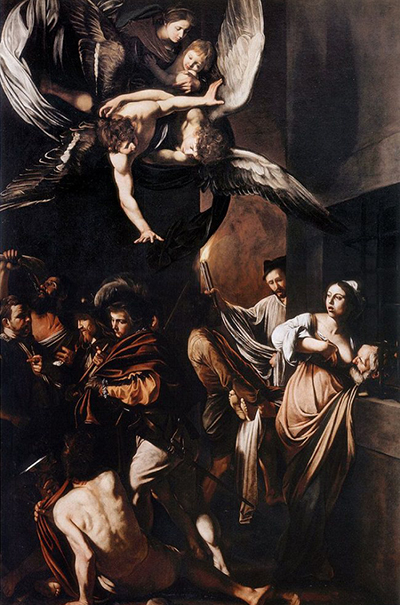
| The Seven Works of Mercy by Caravaggio | 1606–07, according to the Pio Monte | Artwork |
| The Supper at Emmaus by Caravaggio: The London Painting | 1601 | Artwork |
| The Taking of Christ by Caravaggio | 1602 | Artwork |
| The Toulouse *Judith Beheading Holofernes*: A Caravaggio Attribution Debate | c.1606–07 if identified with the recorded Naples work; that identification is debated | Artwork |
| Young Sick Bacchus by Caravaggio | about 1595 in the Galleria Borghese catalogue | Artwork |
| Youth with a Ram: Why Caravaggio's Saint John Looks So Unusual | — | Artwork |
No matching pages found.
Discussion
Share a close observation about Madonna and Child with Saint Anne by Caravaggio or a source that clarifies its history.
Which detail changes your reading?
Is there a collection record or document worth comparing?
What remains uncertain?
Join the Conversation
Frequently Asked Questions
Where is Caravaggio's Madonna and Child with Saint Anne?
It is in the Galleria Borghese, Rome, inventory 110. The museum lists it as oil on canvas, 292 × 211 cm.[1]
Was it made for St Peter's Basilica?
Yes. The Palafrenieri confraternity commissioned it for its chapel there in late 1605. It was delivered and installed in April 1606.[1]
Why was it removed?
The exact reason is uncertain. The owner catalogue discusses decorum, theology, size and collecting-interest explanations. None should be stated as the sole documented cause.[1]
How long was it in St Peter's?
The museum records delivery on 8 April 1606 and an order to take it down on 16 April. It was moved to Sant'Anna dei Palafrenieri before Scipione Borghese bought it.[1]
What does the serpent mean?
The Borghese describes it as a symbol of sin. Mary and Jesus press it underfoot while Anne observes. The division of their roles has also invited theological debate.[1]
References
- Galleria Borghese, Madonna and Child with Saint Anne (Madonna dei Palafrenieri), inventory 110, catalogue by Antonio Iommelli, May 2023.
- Basilica of Sant'Agostino, Madonna dei Pellegrini di Caravaggio.
- Kunsthistorisches Museum, Madonna of the Rosary object record.
- Vatican, Genesis 3:15 and the serpent.
- Galleria Borghese, David with the Head of Goliath, inventory 455.