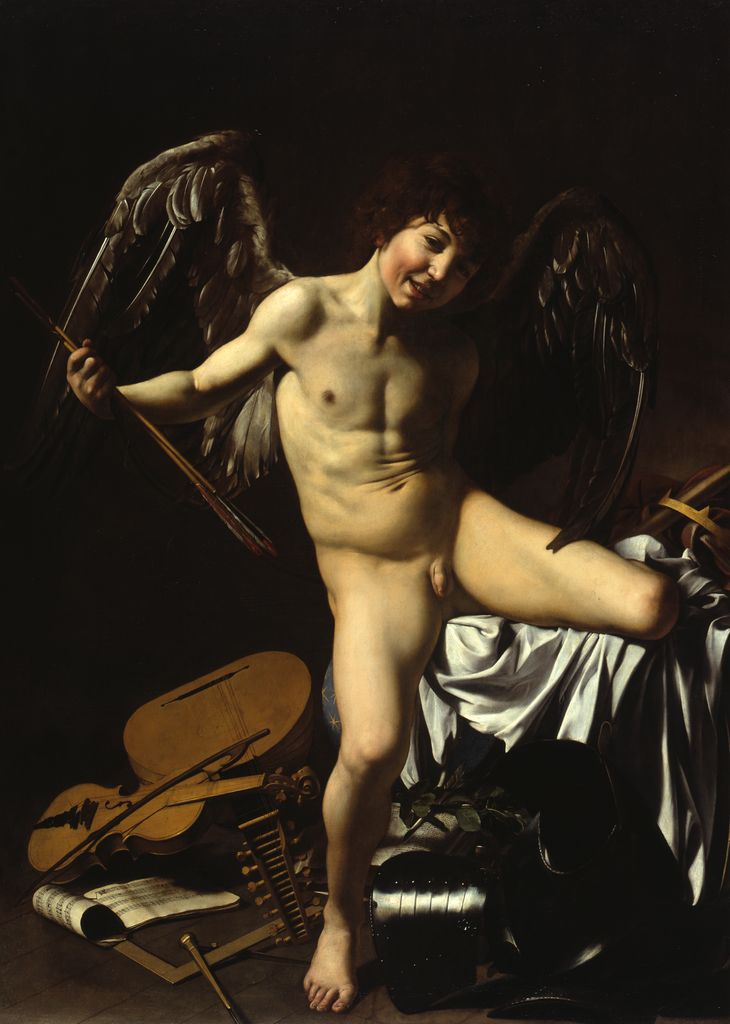
Look closer: three details in this image
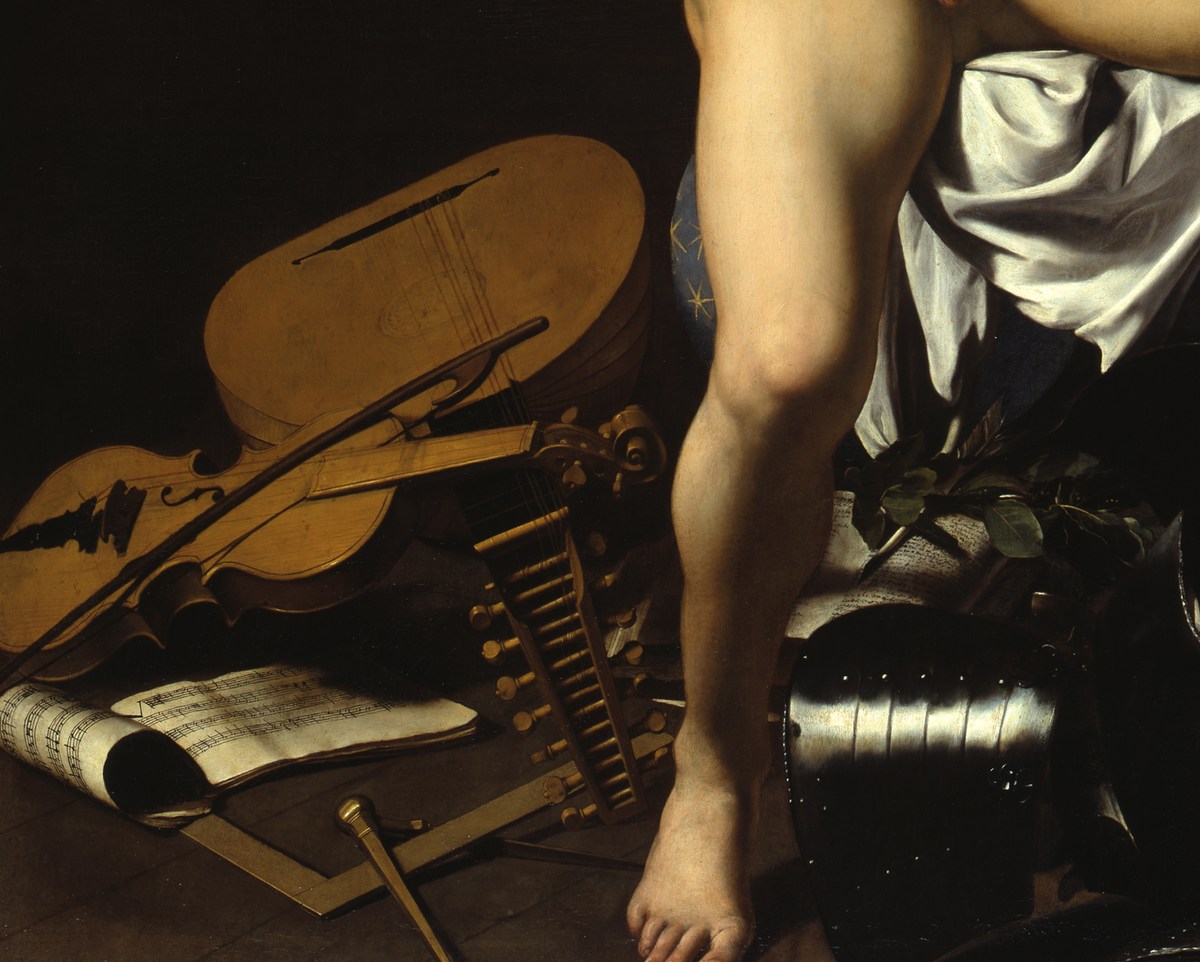
- Music and geometry A lute, violin, music sheet, angle and compass lie at the boy’s feet.
- Power and fame Armour, crown, sceptre and laurel share the ground with the arts.
- The globe Berlin’s catalogue reads the starry globe as an image of the world and astronomy.
from Amazon
* As an Amazon Associate I earn from qualifying purchases.
 by Tom Gurney
Tom Gurney BSc (Hons) is an art history expert with over 20 years experience
Page Created on / Page Updated on
Email: tomgurney1@gmail.com / Phone: +44 7429 011000
Amor Victorious by Caravaggio
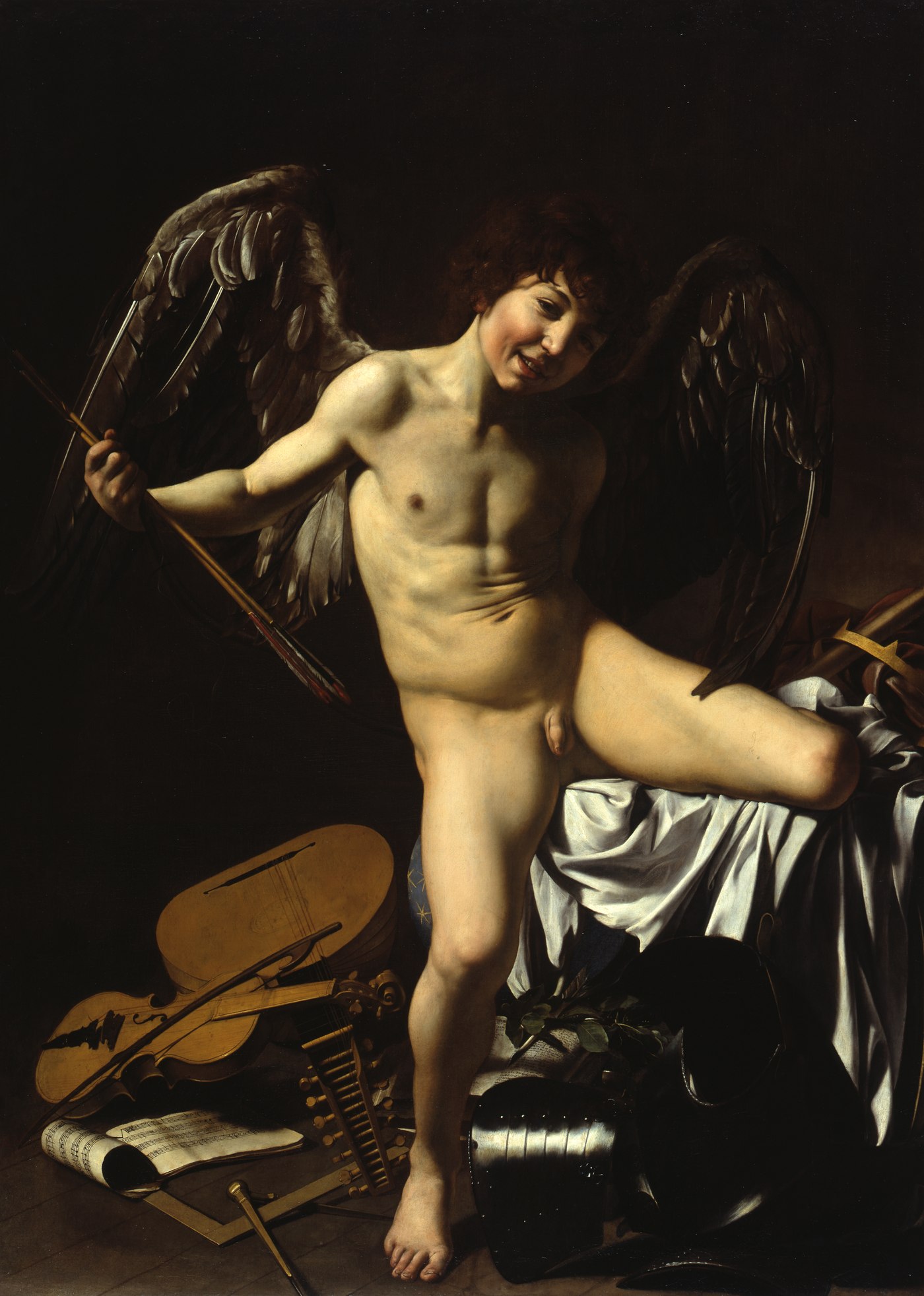
A winged boy grins directly at us while music, geometry, writing, military power and rank lie scattered around him. Caravaggio's Amor Victorious makes the old claim that love conquers everything into a provocative encounter with a living body. The Berlin Gemäldegalerie identifies this Amor als Sieger as its painting no. 369, made in Rome in 1601–02 and acquired with the Giustiniani collection in 1815.[1]
The objects at Cupid's feet are neither random clutter nor a code that must be solved one item at a time. They form a field of arts, learning, ambition and authority over which the youthful god appears to triumph. The museum links the idea to Virgil's “Omnia vincit amor,” but it also draws attention to the boy's teasing pose and to a significant revision beneath the visible paint.[1]
Caravaggio in context
The Cardsharps
c.1595Calling of Saint Matthew
1599–1600Supper at Emmaus
1601At a Glance
- ArtistMichelangelo Merisi, called Caravaggio (1571–1610)
- TitleAmor Victorious, also Love Triumphant, Cupid as Victor or Amor als Sieger[1]
- Date1601–02 in the Berlin owner record[1]
- Mediumpainting on canvas[1]
- Dimensions156.5 × 113.3 cm[1]
- CollectionGemäldegalerie, Staatliche Museen zu Berlin, no. 369; object 862322[1]
- Patron and early collectionpainted for Marchese Vincenzo Giustiniani; acquired from the Giustiniani collection in 1815[1][4][6]
Contents
- What Is Cupid Celebrating?
- The Objects Beneath Amor
- The Pose and the Viewer
- The Globe and the Hidden Revision
- The 1603 Testimony and the Painting's Date
- Giustiniani Ownership and Berlin History
- The 1638 Inventory and Sandrart's Account
- Baglione's Answer for Vincenzo's Brother
- An Older Copy in Dijon
- A Copy in Nineteenth-Century Berlin
- An Allegory with an Unsettling Smile
- Frequently Asked Questions
Look closer: Amor Victorious
The winged Cupid dominates a scatter of human accomplishments. Three details move from the expressive figure to the objects at his feet.
 123
Details from Amor Victorious
Select a detail image to open the full-size gallery, then use the arrows to compare views.
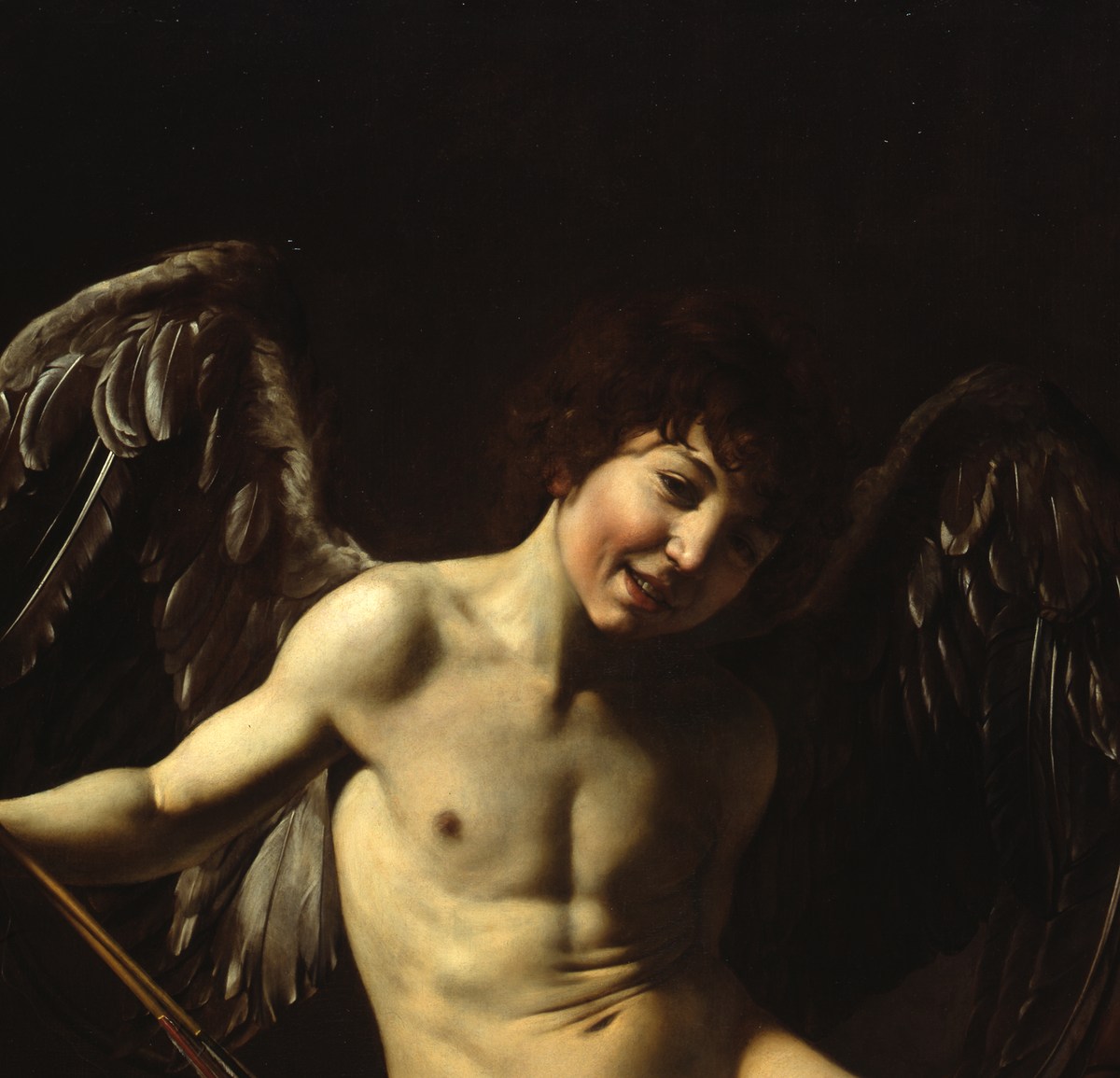
Cupid's smile and wings
Cupid turns his smiling face down toward the viewer while his dark wings spread behind the brightly lit torso.
Music and instruments
A violin, lute and loose music lie under the figure, turning the arts into part of Cupid's disorderly stage.
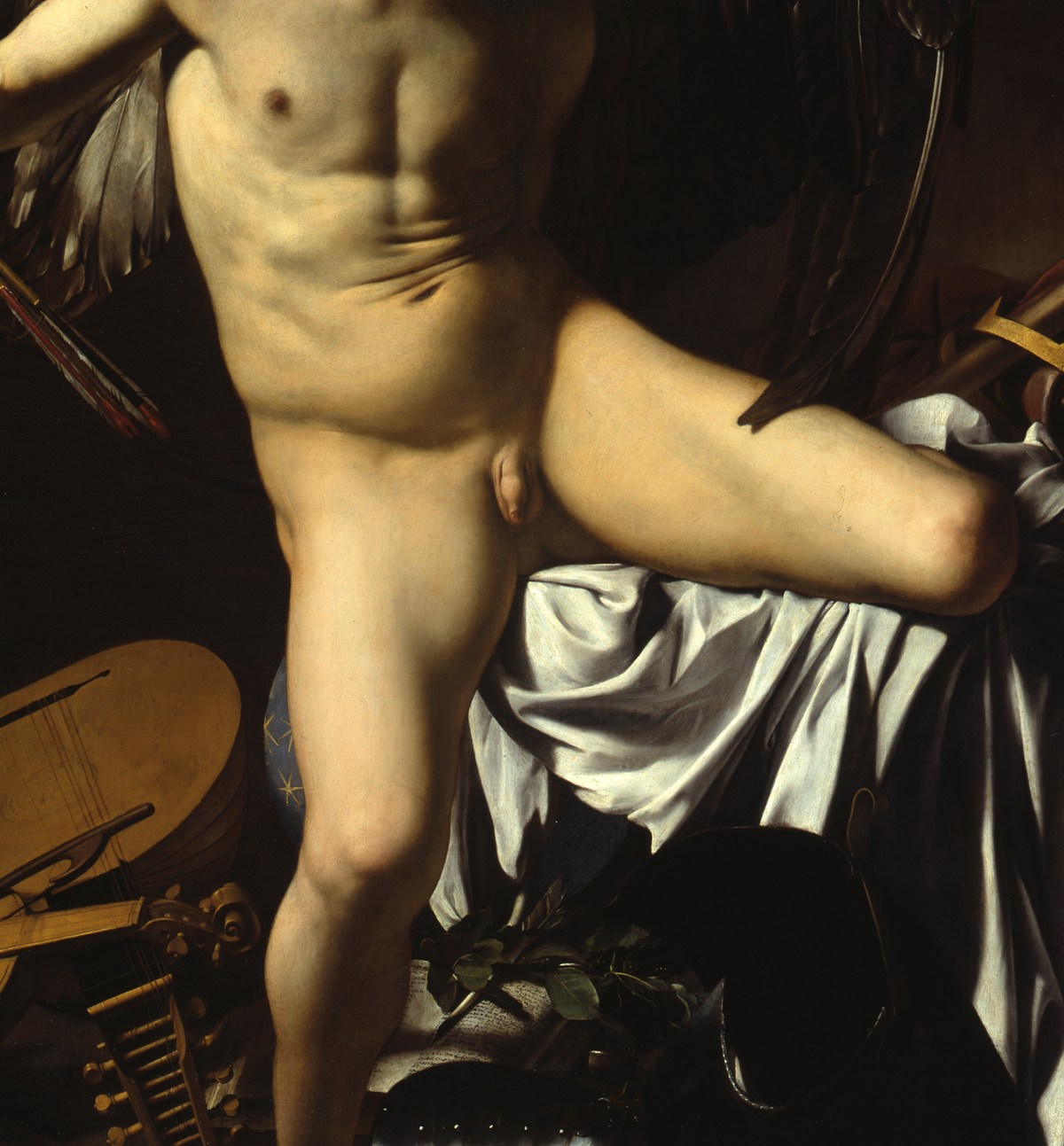
The extended leg
Cupid steps outward over the objects, giving the body a strong diagonal movement across the vertical canvas.
What Is Cupid Celebrating?
Amor is the Roman god of love, commonly represented as a winged child or youth. Here he is unmistakably bodily and near. He smiles at the spectator, tilts across the field and spreads his limbs among the objects below. The picture's title translates the idea of love as victor, while the disordered emblems show what has lost. The Berlin museum connects this to Virgil's line about love conquering all things.[1]
That classical motto offers an entry, not a complete explanation. The triumph might be playful, erotic, mocking or all three. Cupid does not appear as a remote moral emblem above a neatly ordered set of symbols. He occupies the picture with a direct look and unstable pose. The viewer is drawn into a contest between an idea—love's power—and a face that seems to enjoy its effect.[1]
Berlin's catalogue interprets this as earthly love mocking the highest human values and ambitions. That is a scholarly reading with roots in the Giustiniani inventory and later writing, rather than a document in which Caravaggio explained every choice. The painting sustains the reading because so many tokens of accomplishment are literally at the youth's feet.[1]
The Objects Beneath Amor
Music is prominent on the left: a score, a violin and a lute. Nearby lie an angle and compass, implements of geometry. An open manuscript and pen appear farther back. Laurel evokes literary fame; armour brings war and martial glory into the field. A crown and sceptre refer to rule and worldly authority. The Berlin object essay identifies each group and calls the emblems Cupid's trophies.[1]
The objects need not all represent identical kinds of defeat. Music, writing and geometry are activities of the mind and hand; armour and the regalia stand for power and public status. Their shared disorder means Cupid has overturned more than one social order. A learned spectator could recognise the objects, while a viewer who misses one symbol still sees the hierarchy: boy above, achievements below.
The lute creates a useful link to Caravaggio's musical pictures, including the Musicians and Lute Player. In those works music is a human practice, involving instruments and bodies at close range. In Amor Victorious, a musical instrument becomes one of several cultural prizes pushed aside. Repetition of an object across paintings does not give it the same meaning every time.[1]
The armour is particularly forceful because Cupid's own body is so exposed. Metal protection and the insignia of authority have been lowered, while an unarmoured youth occupies the centre. The contrast reinforces the triumph over war and power in the museum's reading. It also keeps the scene visually restless: hard surfaces and props surround a moving, light-struck figure.[1]
There may be a more personal point among these emblems. The Wallace Collection draws attention to a large V in the margin of the music manuscript and reports a scholarly suggestion that it refers to Vincenzo Giustiniani, the picture's patron. Vincenzo was himself interested in music and architecture, two activities represented among Cupid's trophies. If the letter was meant for him, the painting could play with the cultivated collector's own accomplishments as well as with general ideas of art and authority. The mark is visible evidence; its identification as Vincenzo's initial is an interpretation, not an inscription naming the commissioner.[10]
The Pose and the Viewer
Amor looks out instead of becoming absorbed in an inward mythological event. He seems to address the person standing before the painting. His wings identify him as a god, but his face and body read as those of a particular young model. Berlin's essay emphasises this combination: a model taken from ordinary life in a deliberately provocative pose.[1]
The body is not arranged in a calm classical balance. A leg pushes out, another bends back, and the smile invites a response that may not be entirely comfortable. The museum compares the pose with Michelangelo's Victory, calling it a playful inversion. This comparison helps explain why the work can feel like a parody of a triumphal figure, but the Berlin painting stands on its own as a more direct encounter.[1]
Light isolates the boy against a darker setting and catches the surrounding objects selectively. It gives his skin immediacy without making the emblems vanish. The viewer's attention moves from the grin to the trophies and back. His face seems to ask whether the ideals represented below can really withstand the force he claims. This is the painterly effect of the picture, not a claim to know the model's identity or the artist's private joke.
The Globe and the Hidden Revision
Amor appears to sit on a blue starry globe. The museum reads it as both a world over which love triumphs and a reference to astronomy among the arts. Yet the sitting position is visually odd: the body seems supported by a ledge rather than by the globe's curved surface. This is not simply a modern viewer's mistake. Berlin's account reports X-ray evidence that the original ledge extended farther left and that Caravaggio later painted it out, adding the globe as the apparent support.[1]
That revision is unusually valuable. It joins an observed visual awkwardness to physical examination of the object. The globe can carry allegorical meaning and still be a later compositional decision. It also warns against describing Caravaggio as someone who could never revise a canvas once begun. In this case, a change to one support motif reshaped the relationship between body and emblems.[1]
An infrared research abstract by specialists from the Opificio delle Pietre Dure and Berlin adds a different type of evidence. Their high-resolution examination found traces of preparatory drawing in selected Caravaggio works, including Amor Victorious. The authors suggest that the marks may combine transferred and freehand work, while stressing that this is a research question. The X-rayed change from ledge to globe and the infrared traces answer different questions: the first identifies a revised object within the design; the second concerns how parts of the design were initially placed.[3]
The painting technique guide surveys similar questions in other works. Infrared and X-ray findings are object-specific; a hidden change in Amor Victorious does not establish the construction history of the Medusa or any chapel canvas.
The 1603 Testimony and the Painting's Date
The Berlin museum's date of 1601–02 is supported by evidence from the dispute between Caravaggio and Giovanni Baglione, though no surviving contract fixes a day of completion. Art historian Luigi Agus discusses Orazio Gentileschi's testimony of 14 September 1603 in Baglione's defamation case. Gentileschi said Baglione had shown a divine love painting in competition with an earthly love by Caravaggio. That establishes that the two works were being compared by 1603; it does not show that Vincenzo and Benedetto Giustiniani arranged a formal contest between their painters.[7][8]
Agus considers a 1602 showing of Baglione's picture and therefore favours the first half of that year for Caravaggio's. He also notes Gentileschi's remark about a pair of wings he had lent Caravaggio, sometimes linked to the Berlin Cupid. The loan is recorded testimony; its use in this particular painting is an inference that scholars have disputed. It would be unsafe to turn the borrowed wings into proof of an exact painting date.[8]
Four madrigals by Gaspare Murtola, written by the first half of 1603 and published in 1604, have likewise been used to date Amor Victorious. Agus objects that the verses do not describe the Berlin image precisely enough to prove it had already been completed when they were composed. The poems show how readily Caravaggio and the subject of Love attracted literary attention, but their relationship to this particular canvas is a scholarly question. The museum's broader dating remains the clearest short answer.[1][8]
Giustiniani Ownership and Berlin History
The Giustiniani brothers, Vincenzo and Cardinal Benedetto, were among Caravaggio's important Roman patrons and collectors. Berlin's catalogue places Amor Victorious within that milieu. It records the Prussian king's 1815 purchase of a group of five Caravaggios from the Giustiniani collection. Only two of those original works survived the immediate consequences of the Second World War: Amor Victorious in Berlin and The Incredulity of Saint Thomas in Potsdam-Sanssouci.[1]
The sale has an intermediate step often lost in a compressed “Giustiniani to Berlin” provenance. A Wallace Collection loan record gives Vincenzo and his descendants, Féréol Bonnemaison in 1812, and then Friedrich Wilhelm III of Prussia in 1815. Its dimensions and Berlin inventory number identify the same canvas. This documents an ownership passage through the Paris art market before Prussian acquisition; it does not mean Caravaggio painted a Paris version or that the work was continuously on public display there.[11]
The distinction between the brothers matters for this painting. Berlin identifies Marchese Vincenzo as the patron of Caravaggio's Cupid; Cardinal Benedetto commissioned Giovanni Baglione's answering image of heavenly and earthly love.[5][6] The Berlin owner record says the interpretation of Caravaggio's picture as earthly love mocking learning and rank was already suggested by Vincenzo's 1638 inventory. An inventory helps establish how a collection described the work decades after it was made. It does not give us Caravaggio's own explanation of the allegory.[1]
This history matters because the present Berlin painting is a specific survivor, not merely a familiar image reproduced under several English titles. The museum's number 369, dimensions and owner record anchor it. A page using an old 1592–94 date from a secondary catalogue would place the work almost a decade earlier than the Berlin owner does. The owner date of 1601–02 is used here.[1]
Berlin's English description also connects the picture with Caravaggio's success after his Roman public chapel commissions. By that point he could produce a conspicuous mythological image for an ambitious collector while also working on religious subjects. Amor Victorious should not be forced into a simple divide between “secular” and “sacred” styles: its close figure, light and bodily immediacy belong to the same Roman career.
The 1638 Inventory and Sandrart's Account
Vincenzo's posthumous inventory of 1638 is more specific than a later title alone. As transcribed by Agus, it places a laughing Cupid in the large room of old paintings and describes him as scorning the world beneath him, surrounded by instruments, crowns, sceptres and armour. It gives the canvas as about seven by five Roman palmi and records an ornamented walnut frame. The entry names a work already famous as Caravaggio's Cupid; it is evidence of a collector's description and setting, not a statement written by the painter.[8]
That wording makes the alleged triumph unusually pointed. It identifies a laughing figure and a world treated with disdain, while a modern title such as Amor Victorious can sound more purely celebratory. The recorded frame and location also remind us that the picture was encountered as a large, furnished object among other paintings, not as a borderless image on a screen. The inventory does not tell us exactly where every visitor stood or how the room was lit.[8]
Joachim von Sandrart, who had seen the painting in Vincenzo Giustiniani's collection, described it in his Teutsche Academie of 1675. He remembered a life-sized Cupid sitting on a globe, with the bow raised and instruments, books and laurel nearby. His recollection is useful as an early response to the object, although it was written many years after Caravaggio painted it.[4]
Sandrart also said the picture hung in a room with more than a hundred other works and, on his advice, was covered by a dark green silk curtain. In his telling, visitors saw it last because it made the other paintings seem less impressive. He recounts an offer to buy it that Vincenzo rejected.[4] This is Sandrart's later memory of the collection, not a contemporary installation record or an actual sale price for the canvas. The curtain story is valuable because it describes a way a seventeenth-century viewer might encounter the picture: revealed after a tour, its grin and disorderly trophies suddenly competing with the collector's other treasures.
The Wallace Collection briefly brought the Berlin original into a setting designed to test that collection context. Its 26 November 2025–12 April 2026 London exhibition placed the canvas with two ancient Roman sculptures that had also belonged to Vincenzo. This was the painting's first public showing in the United Kingdom, according to the borrowing museum. The display invited a comparison between painting and sculpture, a subject debated in Giustiniani's circle. It was a modern interpretation of that milieu, not a reconstruction proving the original room's exact arrangement. The loan did not change the Berlin museum's ownership.[12]
Baglione's Answer for Vincenzo's Brother
Berlin preserves Giovanni Baglione's Heavenly Love Conquering Earthly Love as a separate painting, inventory no. 381. Its catalogue calls it a response to Caravaggio's Cupid and dates it to 1601–02. Baglione's armoured heavenly figure overcomes an earthly Cupid, reversing the apparent victory of sensual love in Vincenzo's picture. The two brothers' patronage made the disagreement visible within the same collecting family.[5]
The contrast is more informative than calling Baglione's canvas a copy. Caravaggio put the smiling earthly Cupid above signs of art, knowledge and power; Baglione subordinated earthly love to a heavenly champion and included a demon. Berlin reads the latter as a moral answer to Caravaggio's provocation.[5] The Rome State Archive documents that Baglione sued Caravaggio and others over insulting verses in 1603. That later quarrel establishes conflict between the painters, but it does not prove that the Giustiniani brothers planned a formal contest when they ordered the two pictures.[7]
An Older Copy in Dijon
A closer repetition of Caravaggio's image survives in the Musée des Beaux-Arts de Dijon. France's national collections record calls it an anonymous copy after Caravaggio, measures its painted surface at 134.4 × 96.2 cm, and records its arrival through Anatole Devosge's bequest in 1850. The Berlin original measures 156.5 × 113.3 cm. Different dimensions and a separate ownership history make these two physical paintings, even though they depict the same laughing Cupid and trophies.[1][13]
The Dijon catalogue argues that its canvas texture is consistent with an Italian copy, but says little else is securely known of its origin. An earlier Dijon catalogue noticed differences in layout, modelling and lighting: the copy gives less room above Cupid's head and handles the still-life objects differently. Those are useful reasons to consult the Berlin original for Caravaggio's composition and its X-rayed revision. The museum's label does not identify the copyist or establish that this copy was made during Caravaggio's lifetime. Unlike Baglione's opposing allegory, the Dijon canvas actually repeats the subject.[13]
A Copy in Nineteenth-Century Berlin
The painting's life after the Giustiniani sale was not one continuous story of acclaim. Berlin art historian Helmut Börsch-Supan notes that the 157 Giustiniani pictures bought by the Prussian king in 1815 initially attracted limited attention in Berlin. At an Academy showing in 1826, however, the catalogue devoted an unusually full description to Caravaggio's Amor. Its morally charged language treated the winged youth's smile and the disordered objects as unsettling rather than simply charming. The catalogue's reaction belongs to nineteenth-century reception, not to the artist's intention.[9]
Carl Blechen made a careful small copy of the Cupid, about 24.8 × 17.8 cm, which Börsch-Supan dates tentatively to around 1826, before Blechen's 1828–29 trip to Italy. The copy was shown among Blechen's works in 1855 and was acquired for Berlin's Schinkel Pavilion in 1981. Its reduced size makes it a distinct later object, not another Caravaggio version. The copy documents one painter's close attention to an original that wider Berlin taste did not yet consistently prize.[9]
An Allegory with an Unsettling Smile
An allegory invites translation from objects into ideas. It does not require the picture to become an illustrated list. The instruments, manuscript, armour and crown collectively put disciplines and ambitions at Cupid's feet. The globe widens the scope of the claim. The smile and pose then make the claim more difficult to take as a solemn maxim. The victor seems to revel in overturning values that the cultivated Giustiniani household itself would have understood.[1]
That tension keeps the work open. One may see love as a liberating force that relativises rank and scholarship, or as a mocking power that exposes human pretensions. Berlin's owner essay favours the second emphasis while acknowledging the painting's ambiguity. A careful page can name the museum's argument and let readers examine the objects and expression that make it persuasive.[1]
Explore the Caravaggio collection
| Name | Date | Type |
|---|---|---|
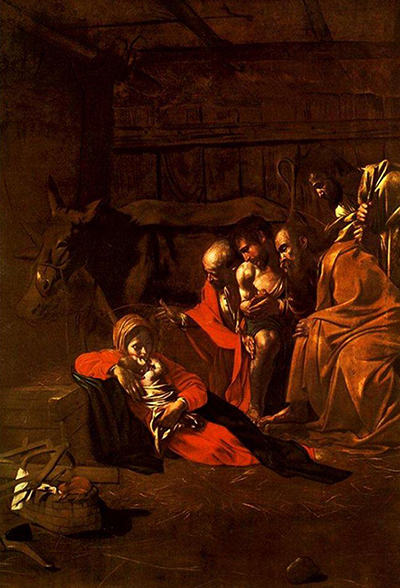
| Adoration of the Shepherds by Caravaggio: The Messina Nativity | 1608–09; precise order relative to Resurrection of Lazarus remains unresolved | Artwork |
| Amor Victorious by Caravaggio | 1601–02 in the Berlin owner record | Artwork |
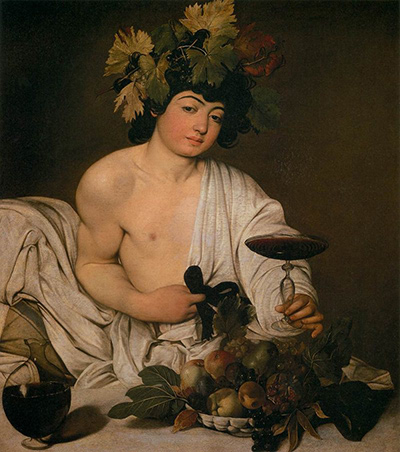
| Bacchus by Caravaggio: The Uffizi Painting | about 1598, according to the Uffizi | Artwork |
| Basket of Fruit by Caravaggio | after 1597, probably around the turn of the seventeenth century, according to the Ambrosiana | Artwork |
| Boy Bitten by a Lizard: Caravaggio's London Painting | about 1594–95 in the National Gallery's current catalogue; URL suffix “1596” is inherited | Artwork |
| Boy Bitten by a Lizard: The Florence Version Attributed to Caravaggio | disputed; Longhi's catalogue record preserves historical 1592–93 and other proposed ranges, including c.1597 | Artwork |
| Boy Peeling Fruit by Caravaggio: The Royal Collection Painting | about 1592–93 in the owner's current exhibition record | Artwork |
| Boy Peeling Fruit in Florence: A Derivation from Caravaggio | — | Artwork |
| Boy with a Basket of Fruit by Caravaggio | about 1595 in the Galleria Borghese catalogue | Artwork |
| Caravaggio Paintings in Rome: Churches, Museums and a Practical Route | — | Guide |
| Caravaggio Quotes: What the Documents Actually Record | — | Guide |
| Caravaggio's Lute Player: The Del Monte Painting Once Shown at the Met | about 1596–97 in the Met catalogue | Artwork |
| Caravaggio's Painting Technique: Grounds, Incisions, Revisions and Light | — | Guide |
| Christ at the Column by Caravaggio: The Rouen Flagellation | c.1606 in the owner caption; owner prose gives 1606–07 | Artwork |
| Christ on the Mount of Olives by Caravaggio: The Lost Berlin Painting | — | Artwork |
| Conversion on the Way to Damascus by Caravaggio | about 1601 in the Roma Capitale church record | Artwork |
| Crowning with Thorns by Caravaggio: The Vienna Painting | about 1603 in the 2019 KHM record; “1607” is an inherited URL suffix | Artwork |
| Crowning with Thorns in Prato: Attributed to Caravaggio | about 1602–03 in the collection presentation | Artwork |
| David with the Head of Goliath by Caravaggio: The Borghese Painting | 1606–07 or 1609–10 in the Galleria Borghese catalogue; the later Naples period is favoured by many scholars, while the owner keeps the question open | Artwork |
| David with the Head of Goliath by Caravaggio: The Prado Painting | about 1600 in Prado material; “1599” survives only in the legacy URL | Artwork |
| David with the Head of Goliath by Caravaggio: The Vienna Painting | about 1600–01 in the KHM's 2019 exhibition record; “1607” is a legacy route label | Artwork |
| Did Caravaggio Make Drawings? What Survives and What Paintings Reveal | — | Guide |
| Ecce Homo: Caravaggio's Madrid Rediscovery and the Genoa Painting | — | Artwork |
| John the Baptist in Caravaggio's Paintings: A Guide to the Different Versions | — | Artwork |
| Judith Beheading Holofernes by Caravaggio | beginning of the seventeenth century in the owning museum's account; about 1599–1600 in the Kimbell's 2025 loan label; around 1602 in one specialist catalogue | Artwork |
| Jupiter, Neptune and Pluto: Caravaggio's Ludovisi Ceiling | about 1597; the archive connects the work with Cardinal del Monte's 1597 commission | Artwork |
| Madonna and Child with Saint Anne by Caravaggio: The Palafrenieri Altarpiece | 1605 in the Galleria Borghese object field; completed and delivered by 8 April 1606 | Artwork |
| Madonna of Loreto by Caravaggio: The Pilgrims at Sant'Agostino | broadly c.1604–06; institutional records differ slightly in their starting year | Artwork |
| Madonna of the Rosary by Caravaggio: The Vienna Altarpiece | around 1603 in the Kunsthistorisches Museum's object record | Artwork |
| Martha and Mary Magdalene by Caravaggio: The Detroit Painting | about 1598 in the Detroit Institute of Arts record | Artwork |
| Medusa by Caravaggio: The Uffizi Painted Shield | 1596–98 in the Uffizi's virtual exhibition; specialist research reports the shield delivered to the Medici wardrobe by 7 September 1598 | Artwork |
| Narcissus, Attributed to Caravaggio | dependent on attribution; the Zeri catalogue gives a broad 1610–50 range under Spadarino | Artwork |
| Nativity with Saint Francis and Saint Lawrence: Caravaggio's Missing Painting | somewhere in 1600–09 in the parliamentary report; a specific 1609 execution and place remain debated | Artwork |
| Penitent Mary Magdalene by Caravaggio | 1597 in the owner's catalogue, during Caravaggio's early Roman activity | Artwork |
| Portrait of a Courtesan: Caravaggio's Lost Berlin Portrait | Berlin's data field says c.1590, while its own text compares a Caravaggio work of c.1598; precise date unresolved | Artwork |
| Portrait of Alof de Wignacourt and His Page by Caravaggio | — | Artwork |
| Portrait of Fra Antonio Martelli? Caravaggio's Pitti Knight of Malta | 1608 in the Restituzioni object heading; within Caravaggio's Malta period | Artwork |
| Portrait of Maffeo Barberini: The Seated Corsini Painting | c.1596–97 in the national catalogue | Artwork |
| Portrait of Monsignor Maffeo Barberini: Caravaggio's Newly Acquired Painting | around the late 1590s / age thirty; “1598” in the inherited address is approximate, not an exact document date | Artwork |
| Portrait of Pope Paul V: A Caravaggio Attribution and a Borghese Copy | — | Artwork |
| Prints After Caravaggio: Who Made Them and What They Show | — | Guide |
| Reclining Saint John the Baptist: A Disputed Caravaggio Attribution | often proposed for the artist's final years; the later museum list does not give a precise year. | Artwork |
| Rest on the Flight into Egypt by Caravaggio | about 1597 in the owner's catalogue | Artwork |
| Saint Catherine of Alexandria by Caravaggio: The Thyssen Painting | about 1598–99 in the Museo Nacional Thyssen-Bornemisza catalogue | Artwork |
| Saint Francis in Meditation by Caravaggio: The Cremona Painting | 1603–06 in the owner account; c.1605–06 in a KHM exhibition caption | Artwork |
| Saint Francis in Prayer: Caravaggio's Carpineto Painting | 1606 in a 2016–17 exhibition work list | Artwork |
| Saint Francis of Assisi in Ecstasy by Caravaggio | c.1595–96 in the owner wall text | Artwork |
| Saint Jerome in Meditation: Caravaggio's Montserrat Painting | 1605 in the owner record; an owner publication reports scholarship placing it about 1605–06 | Artwork |
| Saint Jerome Writing by Caravaggio: The Borghese Painting | c.1606 in the owner catalogue; the “1605” URL suffix is inherited | Artwork |
| Saint Jerome Writing by Caravaggio: The Malta Painting | around 1607–08; foundation dates Malaspina's commission to 1608 | Artwork |
| Saint John in the Wilderness at Toledo Cathedral | exact 1598 not established by the cited cathedral account. | Artwork |
| Saint John the Baptist at Galleria Corsini, Rome | about 1606 in the national record; older proposals ranged from the late 1590s onward. | Artwork |
| Saint John the Baptist at the Capitoline Museums, Rome | 1602. | Artwork |
| Saint John the Baptist at the Galleria Borghese | 1609–10 in the current Borghese record. | Artwork |
| Saint John the Baptist at the Spring: The Bonello Painting in Malta | early seventeenth century in the institutional account; a precise 1608 is not established there. | Artwork |
| Saint Matthew and the Angel: Caravaggio's Lost First Altarpiece | — | Artwork |
| Salome Receives the Head of John the Baptist: Caravaggio's London Painting | about 1609–10, likely late Naples period in the Gallery's account | Artwork |
| Salome with the Head of John the Baptist: Caravaggio's Madrid Painting | — | Artwork |
| Sleeping Cupid by Caravaggio: The Painting Made in Malta | about 1608, Malta period | Artwork |
| Still Life with Fruit on a Stone Ledge: Is It by Caravaggio? | — | Artwork |
| Supper at Emmaus (1606): Caravaggio's Brera Painting | — | Artwork |
| The Annunciation by Caravaggio in Nancy | c.1607–10 in the collection record; 1608–10 in the museum's restoration account | Artwork |
| The Basel Saint John the Baptist: Once Labelled Caravaggio, Now Maíno | about 1608–10 in that schedule, rather than the legacy URL's 1600. | Artwork |
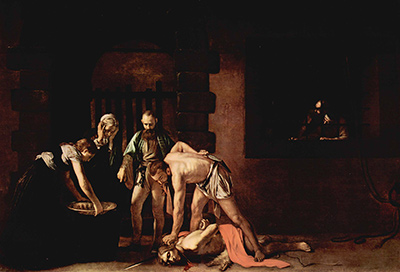
| The Beheading of Saint John the Baptist by Caravaggio | about 1608; installed in the Oratory on 29 August 1608 | Artwork |
| The Burial of Saint Lucy by Caravaggio in Syracuse | 1608, during Caravaggio's Syracuse stay | Artwork |
| The Calling of Saint Matthew by Caravaggio | about 1599–1600 | Artwork |
| The Calling of Saints Peter and Andrew by Caravaggio | about 1602–04 in the Trust's object text | Artwork |
| The Cardsharps by Caravaggio | about 1596–97 in the Kimbell's current object record | Artwork |
| The Conversion of Saint Paul: Caravaggio's Odescalchi Panel | commissioned in 1600; painted around 1600–01 | Artwork |
| The Crucifixion of Saint Andrew by Caravaggio | 1606–07 | Artwork |
| The Crucifixion of Saint Peter by Caravaggio | about 1601 | Artwork |
| The Death of the Virgin by Caravaggio | commissioned 1601; completed late 1605 or early 1606, according to the Louvre | Artwork |
| The Denial of Saint Peter by Caravaggio | 1610 | Artwork |
| The Doria Pamphilj Saint John the Baptist: A Second Youth with a Ram | linked compositionally to the Capitoline 1602 picture; an exact production year for this canvas is not established by the owner pages used here. | Artwork |
| The Entombment of Christ by Caravaggio: The Vatican Deposition | about 1600–04 in Vatican Museums publication material | Artwork |
| The Flagellation of Christ by Caravaggio: The Capodimonte Altarpiece | around 1607, in the first Naples period | Artwork |
| The Fortune Teller by Caravaggio: The Louvre Version and Its Roman Counterpart | — | Artwork |
| The Holy Family with the Infant Saint John the Baptist by Caravaggio | early 1600s in the Met catalogue; no more exact owner date asserted here | Artwork |
| The Incredulity of Saint Thomas by Caravaggio | about 1601 in the SPSG presentation | Artwork |
| The Inspiration of Saint Matthew by Caravaggio | usually 1602; also catalogued 1602–03, for the installed final altarpiece | Artwork |
| The Lute Player by Caravaggio: The Hermitage Painting | about 1596 in the Hermitage collection publication; the Hermitage Friends restoration page gives about 1595–96 | Artwork |
| The Magdalen in Ecstasy: Caravaggio, Copies and a Disputed Original | — | Artwork |
| The Martyrdom of Saint Matthew by Caravaggio | 1599–1600; unveiled with The Calling in 1600 | Artwork |
| The Martyrdom of Saint Ursula by Caravaggio | — | Artwork |
| The Musicians by Caravaggio | 1597 | Artwork |
| The Resurrection of Lazarus by Caravaggio in Messina | 1609; delivered 10 June 1609 in the owner account | Artwork |
| The Sacrifice of Isaac by Bartolomeo Cavarozzi: A Former Caravaggio Attribution | about 1615–17 in the Nicholas Hall catalogue; “1598” is an inherited URL label, not the accepted date | Artwork |
| The Sacrifice of Isaac by Caravaggio: The Uffizi Painting | about 1603 in the Uffizi catalogue | Artwork |
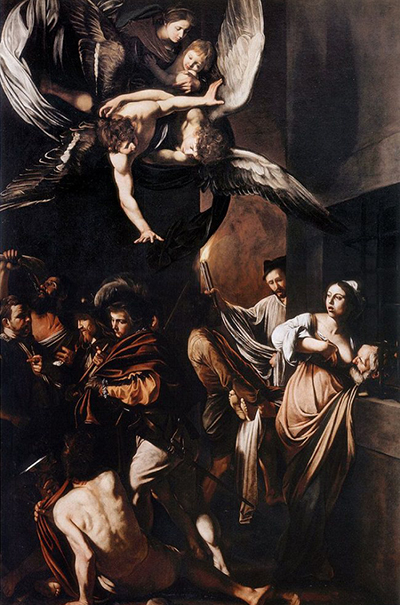
| The Seven Works of Mercy by Caravaggio | 1606–07, according to the Pio Monte | Artwork |
| The Supper at Emmaus by Caravaggio: The London Painting | 1601 | Artwork |
| The Taking of Christ by Caravaggio | 1602 | Artwork |
| The Toulouse *Judith Beheading Holofernes*: A Caravaggio Attribution Debate | c.1606–07 if identified with the recorded Naples work; that identification is debated | Artwork |
| Young Sick Bacchus by Caravaggio | about 1595 in the Galleria Borghese catalogue | Artwork |
| Youth with a Ram: Why Caravaggio's Saint John Looks So Unusual | — | Artwork |
No matching pages found.
Discussion
Share a close observation about Amor Victorious by Caravaggio or a source that clarifies its history.
Which detail changes your reading?
Is there a collection record or document worth comparing?
What remains uncertain?
Join the Conversation
Frequently Asked Questions
Where is Amor Victorious?
It belongs to the Gemäldegalerie of the Staatliche Museen zu Berlin, inventory no. 369. Check the museum's current display information before visiting.[1]
When was it painted?
The Berlin museum dates the work to 1601–02. This page uses the owner date rather than an older provisional date from a separate catalogue.[1]
What does “Omnia vincit amor” mean here?
It means “love conquers all.” The music, learning, armour, crown and other emblems appear as trophies beneath Cupid. Berlin links the painting's subject to Virgil's line while offering a more pointed reading of earthly love mocking human aspirations.[1]
Is the globe original to Caravaggio's first design?
It is part of the finished painting, but Berlin reports X-ray evidence that Caravaggio revised the seating motif: a longer ledge was painted out and the globe took its place.[1]
Are Amor Victorious and Sleeping Cupid the same work?
No. The Berlin picture shows a laughing, awake Cupid above trophies. Sleeping Cupid is a separate later painting in the Uffizi Galleries' Palazzo Pitti collection.[1][2]
Did Baglione paint a version of this picture?
He painted a separate, opposing allegory for Cardinal Benedetto Giustiniani. Berlin identifies his Heavenly Love Conquering Earthly Love as an answer to Caravaggio's painting for Benedetto's brother Vincenzo.[5]
References
- Staatliche Museen zu Berlin, Gemäldegalerie, Amor als Sieger, no. 369, object 862322.
- Gallerie degli Uffizi, inventory of immovable works, Amorino dormiente at Palazzo Pitti.
- Roberto Bellucci, Cecilia Frosinini et al., “Caravaggio's underdrawing: A 'Quest for the Grail'?” in National Gallery conference abstracts, 2009, pp. 38–39.
- Sandrart.net, scholarly edition of Joachim von Sandrart's Teutsche Academie (1675), vol. II, book 2, p. 190, account of the Cupid in Vincenzo Giustiniani's collection.
- Staatliche Museen zu Berlin, Gemäldegalerie, Giovanni Baglione, Der himmlische Amor besiegt den irdischen Amor, no. 381, collection record and comparison with Caravaggio.
- Staatliche Museen zu Berlin, Homage to Caravaggio 1610/2010, exhibition account of the Vincenzo Giustiniani commission and 1815 acquisition.
- Archivio di Stato di Roma, “Il processo del 1603”, account of Baglione's defamation complaint and the surviving trial papers.
- Luigi Agus, “Ut pictura poësis. L’iconografia del Cupido Giustiniani di Caravaggio e la poesia classica,” Papireto 1 (2022), pp. 10–31, analysis of the trial evidence, poems and 1638 inventory.
- Helmut Börsch-Supan, “Blechen und Caravaggio,” GIOVE Virtual Giustiniani Collection, lecture text on the Berlin reception and Blechen's copy.
- Wallace Collection, 2025–26 exhibition preview, on the music-manuscript V and Giustiniani's interests.
- Wallace Collection, loan and provenance disclosure for Cupid as Victor.
- Wallace Collection, Caravaggio's Cupid, past exhibition record.
- French Ministry of Culture, POP/Joconde record 01370006158, Dijon copy after Caravaggio.
- Annotated image source: Staatliche Museen zu Berlin, Amor Victorious, collection image, high-resolution reproduction used for the annotated details.