 by Tom Gurney
Tom Gurney BSc (Hons) is an art history expert with over 20 years experience
Page Created on / Page Updated on
Email: tomgurney1@gmail.com / Phone: +44 7429 011000
The Calling of Saint Matthew by Caravaggio
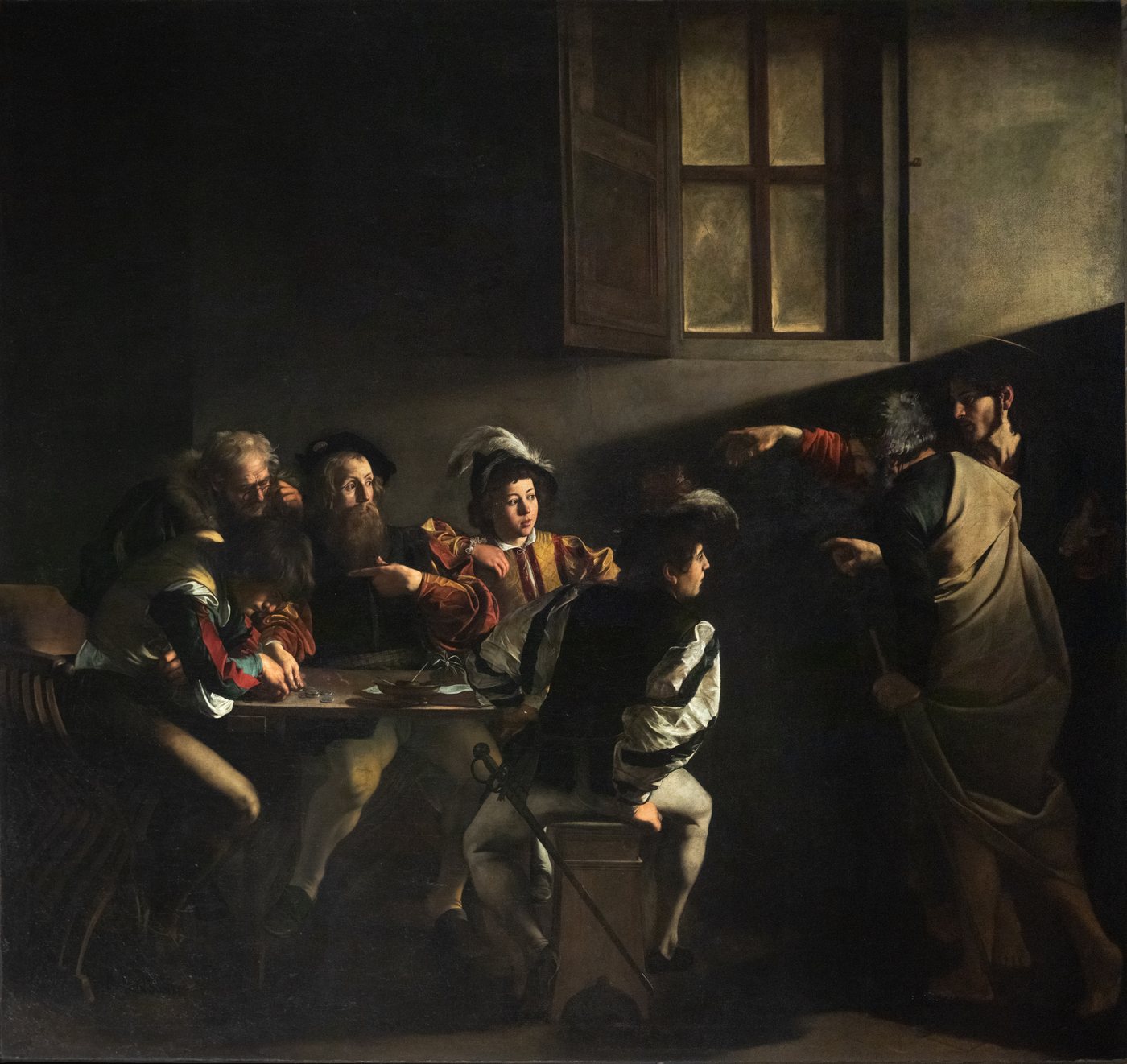
A hand extends from the right edge of a dim room. Around a table, five men handle money or turn towards the newcomers. Caravaggio's Calling of Saint Matthew makes a brief Gospel episode last long enough for the viewer to notice different responses: absorption, curiosity, surprise and possible refusal. The physical action is modest. The decision it announces is not.[1][2]
Painted about 1599–1600 for the Contarelli Chapel in San Luigi dei Francesi, Rome, the canvas remains where it was made to be seen. It faces the Martyrdom of Saint Matthew across the chapel; a later Saint Matthew and the Angel stands at the altar. The three pictures turn the saint's life into a sequence: a call, a vocation given written form and a death. Their arrangement matters as much as the fame of any one image.[1][3]
Caravaggio in context
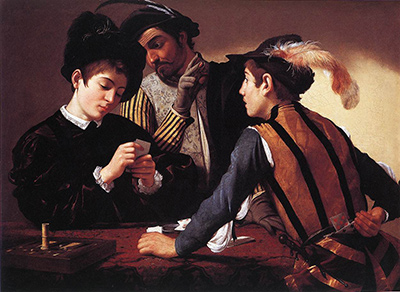
The Cardsharps
c.1595Calling of Saint Matthew
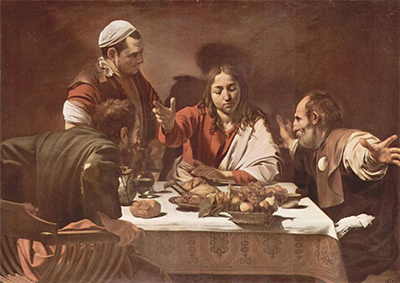
1599–1600Supper at Emmaus
1601At a Glance
- ArtistMichelangelo Merisi, called Caravaggio (1571–1610)
- TitleThe Calling of Saint Matthew (Vocazione di san Matteo)
- Dateabout 1599–1600[1][2]
- Mediumoil on canvas[2]
- Dimensionsapproximately 322 × 340 cm; sources sometimes reverse the order in which height and width are listed[2]
- Original and present settingContarelli Chapel, San Luigi dei Francesi, Rome[1][3]
- Companion paintingsMartyrdom of Saint Matthew and the final Saint Matthew and the Angel[1]
- SubjectChrist calls Matthew, a tax collector, to follow him, from Matthew 9:9[2]
Contents
- What Happens in the Painting?
- The Encounter Across the Room
- Light, Clothing and Ordinary Detail
- Which Figure Is Matthew?
- The Contarelli Chapel Commission
- Painting for a Viewer in the Chapel
- Technical Evidence and Limits of Certainty
- What Changed After the Calling ?
- Frequently Asked Questions
Look closer: The Calling of Saint Matthew
Caravaggio sets a decisive gesture inside a crowded room. The details connect Christ's hand, the slant of light and the response at the table.
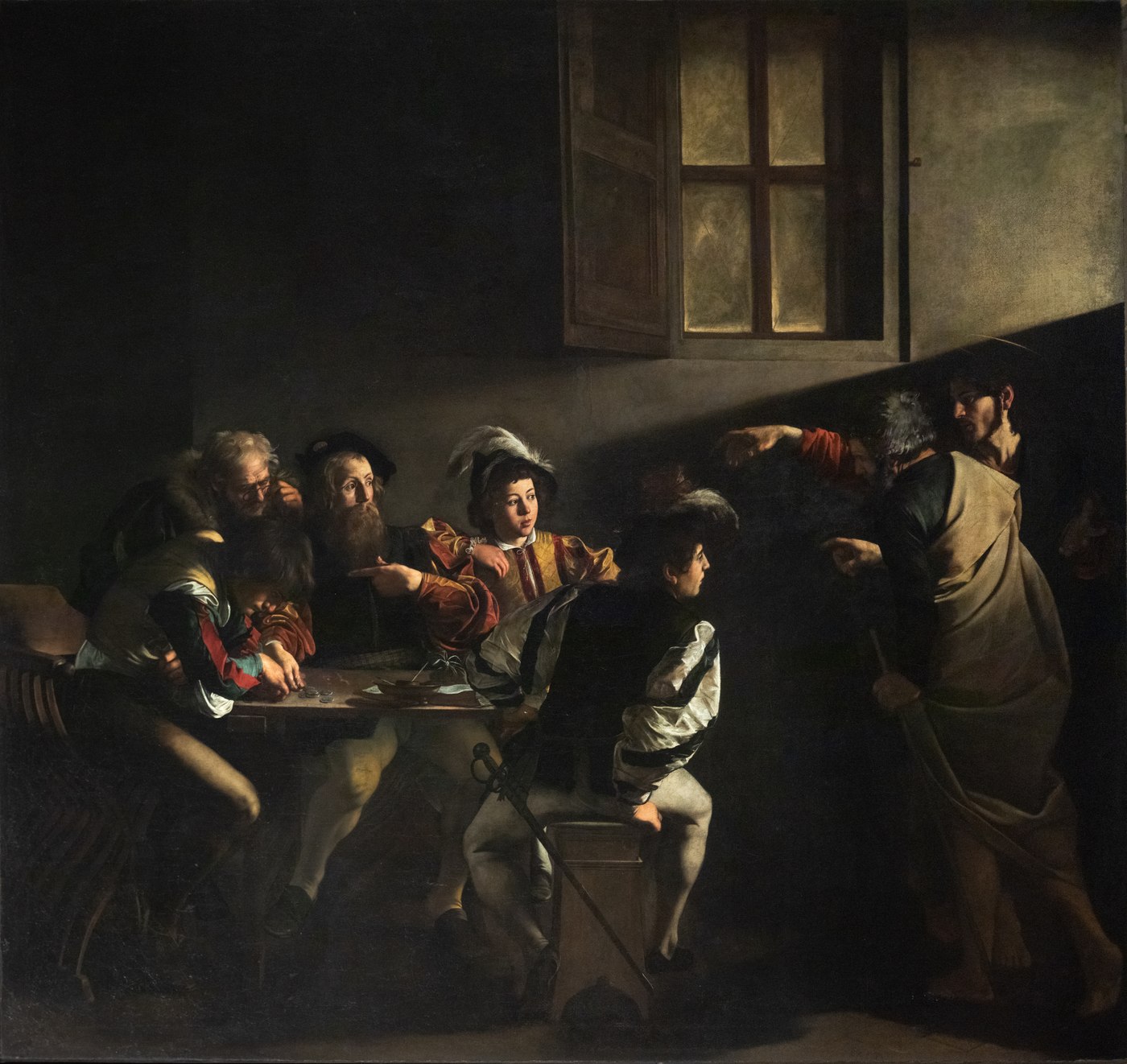 123
Details from The Calling of Saint Matthew
Select a detail image to open the full-size gallery, then use the arrows to compare views.
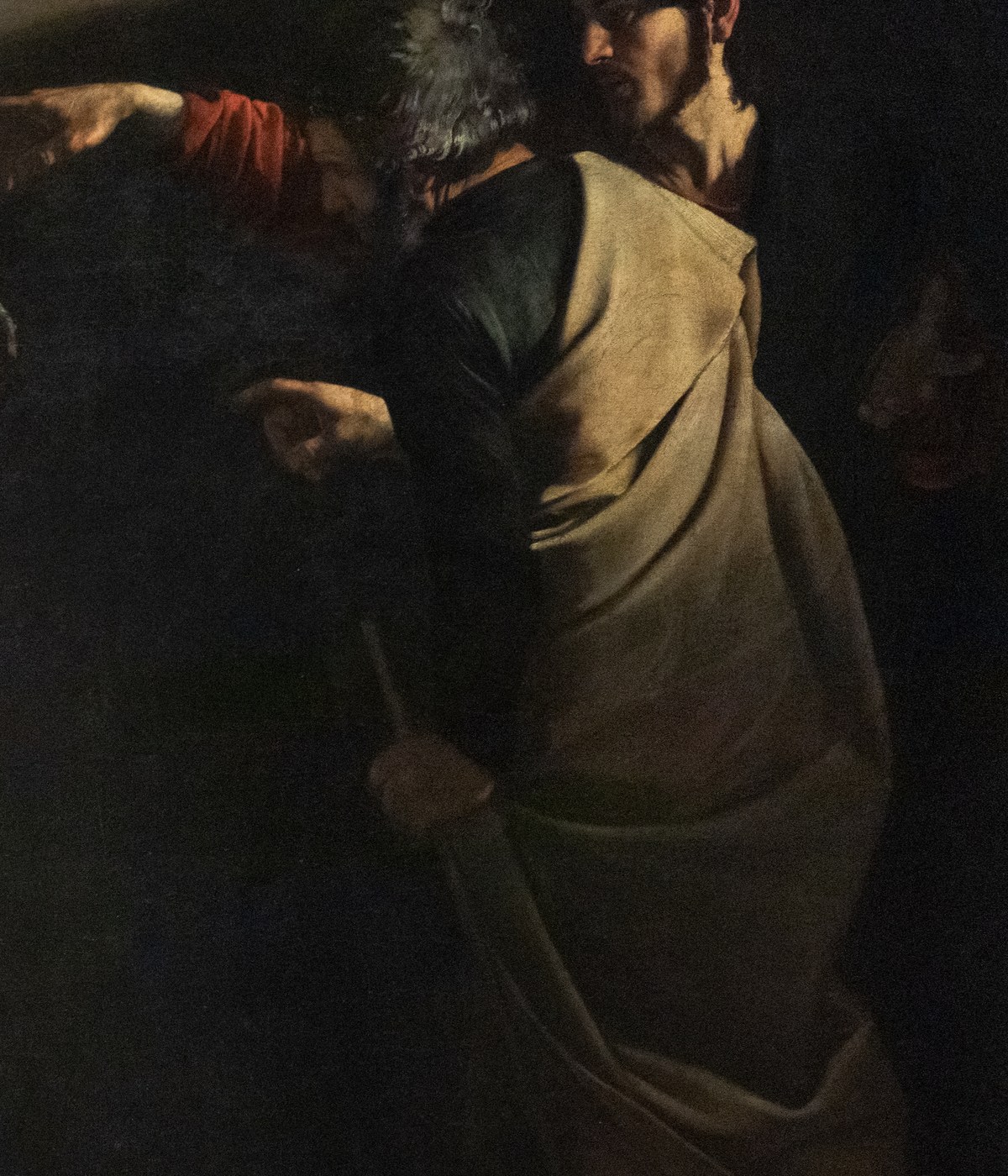
Christ's pointing hand
At the right, Christ's extended hand directs the narrative toward the men at the table, while Peter partly screens his body.
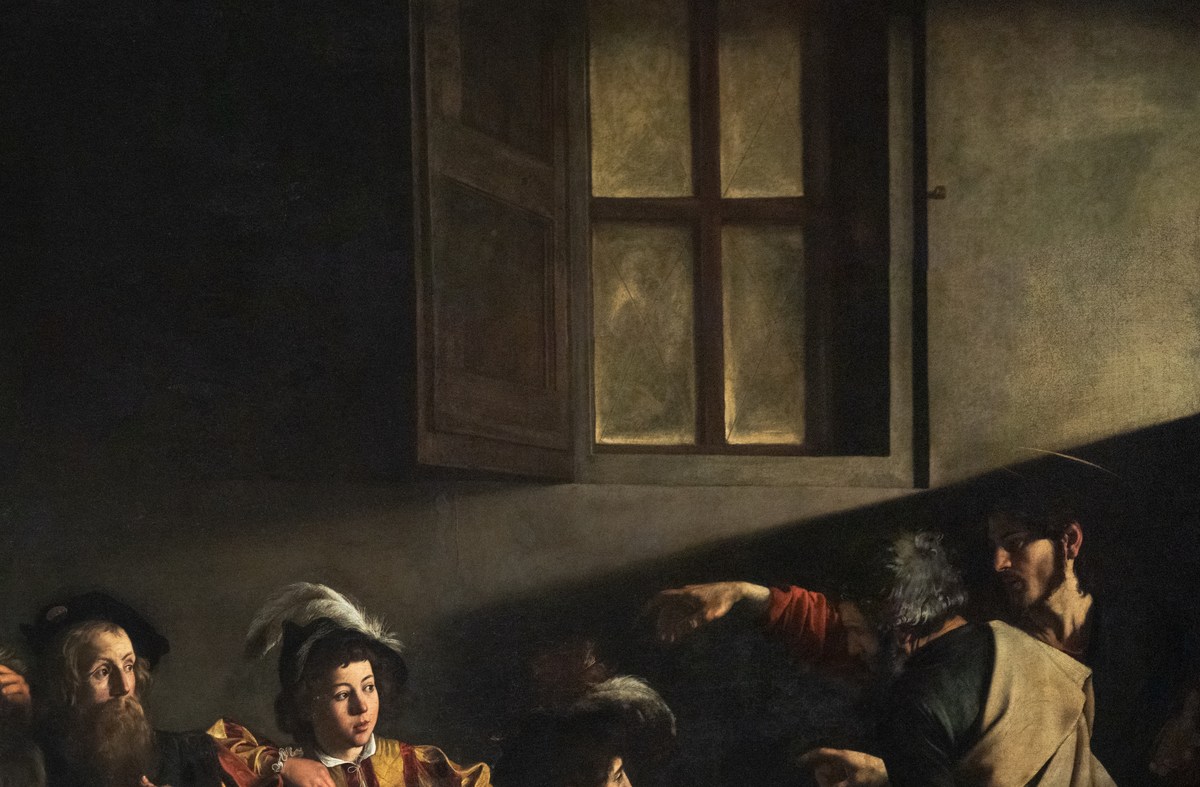
The band of light
Light enters from the upper right and crosses the wall above the group. It makes the direction of the call visible without showing a painted light source.
The response at the table
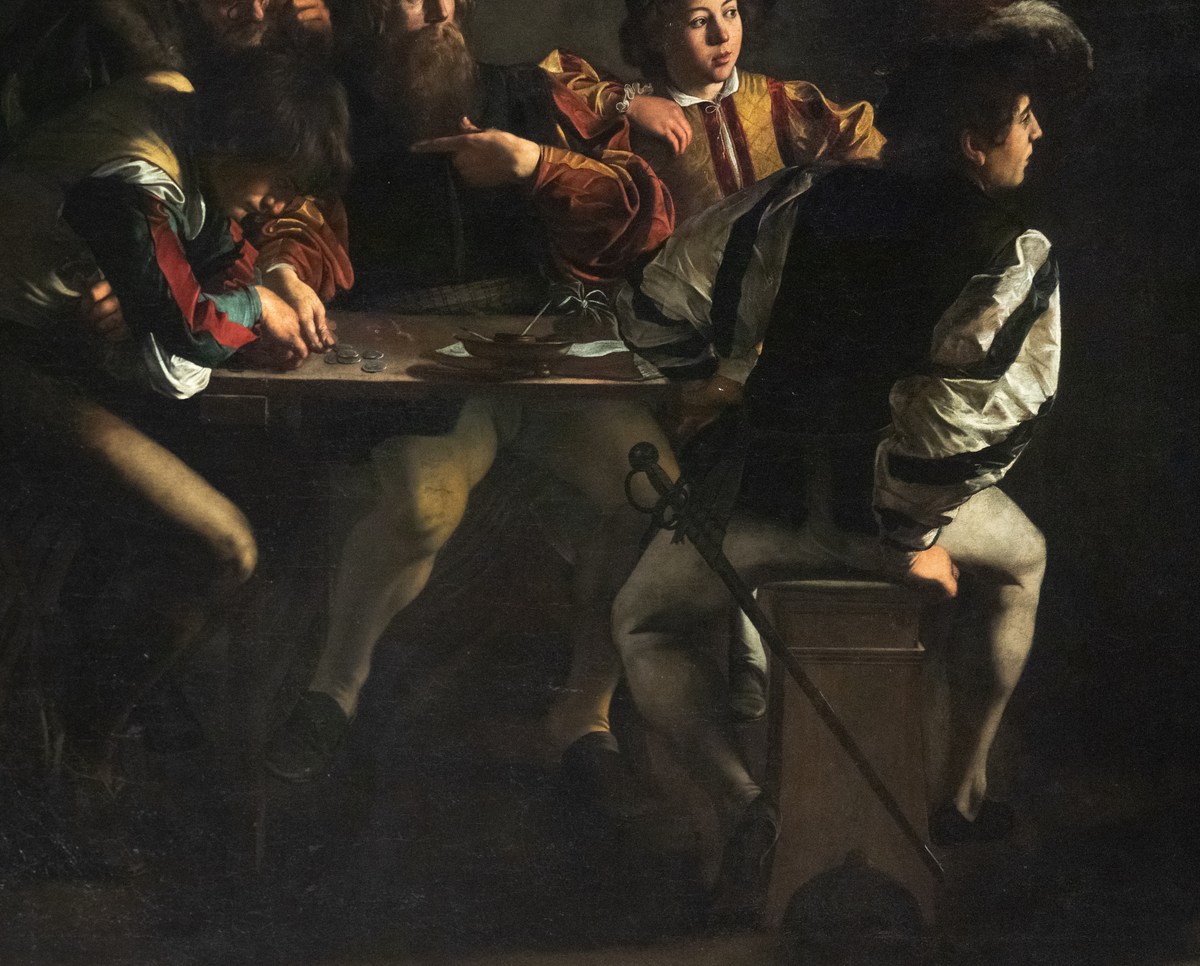
One seated man points toward himself as younger companions remain absorbed in the coins. The varied reactions keep the moment unresolved.
What Happens in the Painting?
The Gospel account is spare. Jesus sees Matthew at a tax-collection place and calls him to follow. Caravaggio expands this into an encounter among several people. The room has a table, coins and account-taking hands. At the right, Christ arrives with Peter. Their entrance is quiet enough that the men at the table do not react together. The delay between hearing and understanding becomes the subject of the picture.[2]
Christ is partly screened by Peter and by darkness, but his outstretched arm carries the invitation across the composition. The figure nearest him does not dominate the canvas through size or brilliant clothing. Instead, the gesture and the long sweep of light organise where the viewer looks. Most of the figures remain rooted in the business that occupied them before the interruption.
The leftmost young man bends over the money. Another figure turns. Near the centre, a bearded man points with an expression that can be read as astonishment. The scene allows a viewer to move from one reaction to the next. It makes the call seem open, in progress, rather than a completed conversion already sealed by a halo and a pose.
This is why the contemporary-seeming room matters. Caravaggio does not set the encounter among ancient ruins or fill it with decorative signs of distant time. The men wear clothing recognisable to a seventeenth-century audience; the money and table would have been familiar. The sacred event is brought into a social space that feels usable and present.[2]
The Encounter Across the Room
There is a strong division between the two groups. The seated men and their table occupy much of the left side; Christ and Peter press into a narrow space at the right. The empty band between them is not wasted. It lets the gesture travel, making the call visible as an act that crosses the room before anyone rises.
The large dark wall above the figures also contributes to the delay. It gives the composition room to breathe while keeping the lower half crowded with bodies. The window high on the wall does not simply explain the strong beam of light. The beam's direction and the gestures together become the picture's route for the eye. As it moves from Christ towards the table, the viewer is asked to connect sight, hearing and decision.[1][2]
Peter's presence complicates an otherwise direct encounter. He stands in front of Christ, with a bent arm that echoes or answers the initiating gesture. A viewer can see the call as passing through the apostolic community as well as coming from Christ. That is a visual reading of the arrangement, not a documentary account of what Caravaggio said he intended. The figure helps give the encounter a rhythm: one arm begins it, another repeats it, and the seated group responds.
Close attention to the hands reveals how many actions coexist. Some hands count or touch money; a finger points back; Christ points across. The painting asks viewers to read hands before they can settle every face. In a chapel devoted to the evangelist, a turning hand can stand for a turning life without becoming an abstract emblem.
Light, Clothing and Ordinary Detail
Caravaggio's light is dramatic because it is selective. It does not illuminate the whole room evenly or dissolve the setting into a golden miracle. Faces, sleeves and the table emerge against broad darkness. The contrast makes the event legible from a distance in the chapel and gives the direction of attention an almost physical force.[1][2]
It is tempting to say that the light “is” divine grace. The religious setting and the direction of the call invite that interpretation, but the painted beam also functions as a compositional device. It reveals a cluster of people, cuts across the room and joins Christ's gesture to the table. Its literal and symbolic work can be held together without pretending that one explanation exhausts the painting.
The figures' clothing makes the Gospel event contemporary to Caravaggio's first viewers. Fabric and posture do much of the work that an elaborate architectural setting might otherwise have done. The bowed men look busy with a recognisable task. The turned heads register different levels of alertness. The painting therefore does more than illustrate a Bible sentence: it imagines how that sentence might unfold among people who had not expected it.[2]
No single detail proves the identity of a model. Claims that a named acquaintance posed for a particular man need documentary or technical evidence, not resemblance alone. The strong individuality of the faces is part of the painting's effect, but it is not a census of Caravaggio's circle.
Which Figure Is Matthew?
The bearded man near the centre is often identified as Matthew. He points in a way that can be read as “Me?” while Christ's arm directs the call towards him. That reading fits the narrative of a tax collector suddenly asked to leave his work, and it makes the table group a sequence of differing reactions.[2]
The composition has also prompted other readings of whom the gesture reaches. Could the bearded man be pointing towards the younger man still absorbed in the coins? Does the direction of Christ's hand settle the question, or does the arrangement deliberately leave the transition open? Those are interpretive questions. The Gospel names Matthew, but it does not prescribe how Caravaggio must single him out inside a group of five.
The alternative has a traceable scholarly history. Andreas Prater argued in 1985 that the young man counting money is Matthew; Jürgen Müller revisited that position in a 2021 peer-reviewed study and proposed a print source and a connection with a motif from Michelangelo. Müller develops a wider political reading from those comparisons. They are arguments about how the image works, not newly discovered labels on the figures. The Rome State Archive organised a public discussion in 2025 that explicitly treated the saint's identification as unresolved and brought iconography, theology, documents and technical study into the conversation. A reader can therefore compare the pointing man's gesture with the younger man's continued concentration without being told that one face has been conclusively named.[8][9]
The debate also predates the most recent proposal. In a 1998 Art History study, Thomas Puttfarken argued that the usual identifications in both the Calling and the companion Martyrdom are challenged by details of the paintings and by written traditions about Matthew, including the Golden Legend and the Roman Breviary. His published abstract presents the resulting difficulty as part of a narrative that requires the viewer to sort out a misleading first impression. That is a specialist interpretation of the image and its religious sources, not an inscription or conservation result naming the painted man. It helps explain why the debate cannot be settled simply by drawing a straight line from Christ's fingertip.[12]
The uncertainty is productive. A viewer who searches for Matthew has to look repeatedly at the room and its gestures. The saint is not announced by a label. The call becomes something to discover, just as the people in the painting must recognise what has entered their ordinary setting. A responsible description can state the widely held identification while acknowledging why the image continues to be discussed.
The Contarelli Chapel Commission
The chapel is dedicated to Saint Matthew, and the two large side paintings were the major public commission that established Caravaggio's reputation in Rome. Roma Capitale dates the Calling and Martyrdom to 1599–1600 and the altar painting to 1602. The Met's account describes Cardinal del Monte as helping Caravaggio secure the commission. The public nature of the programme brought his methods from collectors' rooms into a church where many more people could see them.[1][4]
The Martyrdom faces the Calling, so a visitor can hold vocation and death in view together. The altar image presents Matthew writing with an angel's presence. The current altar painting is the second version. The first passed into the Giustiniani collection, then Berlin, and is missing since the Second World War, probably destroyed. It should not be confused with the picture still visible in Rome.[1][5]
The chapel programme developed through earlier work and changed plans. The church's own account describes the Contarelli cycle as begun by the Cavalier d'Arpino and completed with Caravaggio's final altar painting after a proposed sculpture by Jacob Cobaert was rejected. That is more precise than the loose story that “Caravaggio's first painting was rejected” as though it explained every change in the chapel. The first Matthew and the Angel has its own history and visual character.[3][5]
The earlier Calling plan has a surviving object. Vienna's Albertina catalogues a chalk and red-chalk drawing by Giuseppe Cesari, the Cavalier d'Arpino, as a design for a fresco on the chapel's left wall. Its record connects that plan to a 27 May 1591 contract and labels the drawing's own date around 1599, with a question mark. The distinction matters: the contract dates the earlier commission, while the museum does not claim a certain day or year for this sheet. The drawing belongs to Cesari's unfinished decorative project, not to the missing body of preparatory drawings by Caravaggio. It shows that a Calling on this wall was envisaged before the canvas now seen there.[10]
The intended subject was more specific than the title alone. In a published study of the chapel programme, Andrea Dall'Asta describes Contarelli's earlier instruction for a tax-collection room with books and money and for Matthew to rise eagerly from his counter when Christ calls from the street. Caravaggio kept the money-handling setting and the encounter with Christ, but painted the action before a clear rising and departure. The interval between invitation and response is visible, while the outcome belongs to the Gospel and the wider chapel cycle. This comparison identifies a choice in narrative timing; it does not establish that the patron's heirs objected to the finished canvas, or tell us which of the seated men Contarelli would have called Matthew. The programme and the painted solution are related evidence, not interchangeable descriptions.[13]
An Italian Senate exhibition gives 23 July 1599 for Caravaggio's contract and relates the two side canvases to the approaching Jubilee of 1600. Its record identifies the Calling and Martyrdom as the works delivered for that moment; the altar picture followed in 1602. The dates make the chapel's phases easier to keep apart: a 1591 fresco project under Cesari, Caravaggio's 1599 commission for two canvases, and a later altar solution. The Jubilee context helps explain the schedule and public audience; it does not prove a detailed instruction for every gesture or light effect in the Calling.[11][1]
The people who commissioned and saw the pictures were not looking at an isolated museum masterpiece. They encountered paintings fitted to walls, an altar, a patron saint and the chapel's devotional use. The Calling addresses the viewer across that space; its sideways movement gains force because it is one part of a larger room.
Painting for a Viewer in the Chapel
The format is almost square and large enough for a chapel wall. Caravaggio places the principal encounter low in the composition, close to a standing person's line of sight, and lets the dark upper wall preserve a sense of interior space. His figures do not pose in an orderly procession. They gather around a shared object, the table, and are interrupted from the side.
The setting makes a visitor a witness to the call. We are not placed at Christ's shoulder, but neither are we safely above the action. The table projects towards us, and the men at it are roughly human scale. We can imagine standing near them when their routine changes.
The adjacent works alter the experience. Move from the Calling to the Martyrdom and a calm invitation becomes a public assault. Look towards the altar and Matthew is no longer a man deciding whether to follow but the evangelist at work. The cycle does not show every episode in his life; it selects scenes that connect vocation, testimony and death. Reading all three in the chapel is the strongest way to see why this was a turning point for Caravaggio.[1][3]
Technical Evidence and Limits of Certainty
The painting's visible effects are clear: directed light, sharply grouped figures, foreground hands and large dark areas. Its exact method of preparation is harder to reconstruct from a reproduction alone. Statements that Caravaggio “never drew” or made every decision directly and spontaneously on the canvas go further than the evidence permits. The National Gallery notes that no drawing is securely attributed to him and describes brush outlining and changes in its technical account of another Caravaggio painting, the London Supper at Emmaus. Such findings show how an individual canvas can reveal working choices; they should not be transferred mechanically to the Calling.[6]
The date also has a useful limit. “About 1599–1600” places the picture within the chapel commission; it does not fix the exact day of every brushstroke. If a source gives a much earlier or later year, check whether it refers to a different version, an old catalogue convention or a mistaken catalogue field. The chapel chronology and the painting's setting provide the stronger basis for the date used here.[1][2]
In June 2026, Factum Foundation and the Pious Establishments of France recorded the whole Contarelli Chapel in high resolution. Their non-contact campaign documented the three Caravaggio canvases together with the vault frescoes, coloured marbles and architecture. Surface recording, colour photography and a three-dimensional survey create evidence for future condition checks and for studying how each canvas sits within the room. The project has also begun digitising archival material relating to the chapel, including documents around Contarelli's bequest and disputes with his heirs.[7]
Factum specifies the scale and method of this new record: LiDAR and photogrammetry captured the room and its architecture; panoramic photography recorded colour; and its Selene photometric-stereo system captured the paintings' surface relief at 25-micron spatial resolution and 1:1 scale. Factum had already made a high-resolution colour recording of the three canvases in 2009. The 2026 advance is a combined, whole-chapel record of geometry, colour and surface texture, including the Calling in its setting. Surface relief may support future comparisons of condition or brushwork, but it is not an X-ray of underlying paint and the project report does not identify an underdrawing, a newly added Peter or a revised figure of Matthew. The distinction keeps a powerful recording method from becoming a claim it has not yet yielded.[7]
That work is important for interpretation as well as conservation. A cropped reproduction can show the faces and pointing hands clearly, but it removes the painting's scale, position and relationship to the other two Matthew scenes. The new record does not announce a fresh attribution or a technical discovery inside the Calling. It gives researchers a more precise way to test claims about the chapel as a designed setting and to compare its present condition with future observations.[7]
What Changed After the Calling?
The Calling gave a large religious commission the immediacy that Caravaggio had developed in smaller Roman pictures. Ordinary-looking people, strong light and a charged instant appear on a chapel wall, where their apparent nearness could speak to a broad audience. The companion Martyrdom showed that he could organise a much more crowded, violent scene at the same scale. The two canvases were unveiled in 1600 and helped establish his public reputation.[4]
It would be too simple to say he invented realism or chiaroscuro here. He made an existing religious story newly difficult to ignore. A viewer must follow the light, read the hands and decide who is called. That active task remains at the centre of the painting's power.
For the next steps in the Roman story, see the artist guide, the paintings directory, the Martyrdom of Saint Matthew and the final Inspiration of Saint Matthew. The Rome guide places the chapel among the other public Caravaggio sites.
Explore the Caravaggio collection
| Name | Date | Type |
|---|---|---|
| Adoration of the Shepherds by Caravaggio: The Messina Nativity | 1608–09; precise order relative to Resurrection of Lazarus remains unresolved | Artwork |
| Amor Victorious by Caravaggio | 1601–02 in the Berlin owner record | Artwork |
| Bacchus by Caravaggio: The Uffizi Painting | about 1598, according to the Uffizi | Artwork |
| Basket of Fruit by Caravaggio | after 1597, probably around the turn of the seventeenth century, according to the Ambrosiana | Artwork |
| Boy Bitten by a Lizard: Caravaggio's London Painting | about 1594–95 in the National Gallery's current catalogue; URL suffix “1596” is inherited | Artwork |
| Boy Bitten by a Lizard: The Florence Version Attributed to Caravaggio | disputed; Longhi's catalogue record preserves historical 1592–93 and other proposed ranges, including c.1597 | Artwork |
| Boy Peeling Fruit by Caravaggio: The Royal Collection Painting | about 1592–93 in the owner's current exhibition record | Artwork |
| Boy Peeling Fruit in Florence: A Derivation from Caravaggio | — | Artwork |
| Boy with a Basket of Fruit by Caravaggio | about 1595 in the Galleria Borghese catalogue | Artwork |
| Caravaggio Paintings in Rome: Churches, Museums and a Practical Route | — | Guide |
| Caravaggio Quotes: What the Documents Actually Record | — | Guide |
| Caravaggio's Lute Player: The Del Monte Painting Once Shown at the Met | about 1596–97 in the Met catalogue | Artwork |
| Caravaggio's Painting Technique: Grounds, Incisions, Revisions and Light | — | Guide |
| Christ at the Column by Caravaggio: The Rouen Flagellation | c.1606 in the owner caption; owner prose gives 1606–07 | Artwork |
| Christ on the Mount of Olives by Caravaggio: The Lost Berlin Painting | — | Artwork |
| Conversion on the Way to Damascus by Caravaggio | about 1601 in the Roma Capitale church record | Artwork |
| Crowning with Thorns by Caravaggio: The Vienna Painting | about 1603 in the 2019 KHM record; “1607” is an inherited URL suffix | Artwork |
| Crowning with Thorns in Prato: Attributed to Caravaggio | about 1602–03 in the collection presentation | Artwork |
| David with the Head of Goliath by Caravaggio: The Borghese Painting | 1606–07 or 1609–10 in the Galleria Borghese catalogue; the later Naples period is favoured by many scholars, while the owner keeps the question open | Artwork |
| David with the Head of Goliath by Caravaggio: The Prado Painting | about 1600 in Prado material; “1599” survives only in the legacy URL | Artwork |
| David with the Head of Goliath by Caravaggio: The Vienna Painting | about 1600–01 in the KHM's 2019 exhibition record; “1607” is a legacy route label | Artwork |
| Did Caravaggio Make Drawings? What Survives and What Paintings Reveal | — | Guide |
| Ecce Homo: Caravaggio's Madrid Rediscovery and the Genoa Painting | — | Artwork |
| John the Baptist in Caravaggio's Paintings: A Guide to the Different Versions | — | Artwork |
| Judith Beheading Holofernes by Caravaggio | beginning of the seventeenth century in the owning museum's account; about 1599–1600 in the Kimbell's 2025 loan label; around 1602 in one specialist catalogue | Artwork |
| Jupiter, Neptune and Pluto: Caravaggio's Ludovisi Ceiling | about 1597; the archive connects the work with Cardinal del Monte's 1597 commission | Artwork |
| Madonna and Child with Saint Anne by Caravaggio: The Palafrenieri Altarpiece | 1605 in the Galleria Borghese object field; completed and delivered by 8 April 1606 | Artwork |
| Madonna of Loreto by Caravaggio: The Pilgrims at Sant'Agostino | broadly c.1604–06; institutional records differ slightly in their starting year | Artwork |
| Madonna of the Rosary by Caravaggio: The Vienna Altarpiece | around 1603 in the Kunsthistorisches Museum's object record | Artwork |
| Martha and Mary Magdalene by Caravaggio: The Detroit Painting | about 1598 in the Detroit Institute of Arts record | Artwork |
| Medusa by Caravaggio: The Uffizi Painted Shield | 1596–98 in the Uffizi's virtual exhibition; specialist research reports the shield delivered to the Medici wardrobe by 7 September 1598 | Artwork |
| Narcissus, Attributed to Caravaggio | dependent on attribution; the Zeri catalogue gives a broad 1610–50 range under Spadarino | Artwork |
| Nativity with Saint Francis and Saint Lawrence: Caravaggio's Missing Painting | somewhere in 1600–09 in the parliamentary report; a specific 1609 execution and place remain debated | Artwork |
| Penitent Mary Magdalene by Caravaggio | 1597 in the owner's catalogue, during Caravaggio's early Roman activity | Artwork |
| Portrait of a Courtesan: Caravaggio's Lost Berlin Portrait | Berlin's data field says c.1590, while its own text compares a Caravaggio work of c.1598; precise date unresolved | Artwork |
| Portrait of Alof de Wignacourt and His Page by Caravaggio | — | Artwork |
| Portrait of Fra Antonio Martelli? Caravaggio's Pitti Knight of Malta | 1608 in the Restituzioni object heading; within Caravaggio's Malta period | Artwork |
| Portrait of Maffeo Barberini: The Seated Corsini Painting | c.1596–97 in the national catalogue | Artwork |
| Portrait of Monsignor Maffeo Barberini: Caravaggio's Newly Acquired Painting | around the late 1590s / age thirty; “1598” in the inherited address is approximate, not an exact document date | Artwork |
| Portrait of Pope Paul V: A Caravaggio Attribution and a Borghese Copy | — | Artwork |
| Prints After Caravaggio: Who Made Them and What They Show | — | Guide |
| Reclining Saint John the Baptist: A Disputed Caravaggio Attribution | often proposed for the artist's final years; the later museum list does not give a precise year. | Artwork |
| Rest on the Flight into Egypt by Caravaggio | about 1597 in the owner's catalogue | Artwork |
| Saint Catherine of Alexandria by Caravaggio: The Thyssen Painting | about 1598–99 in the Museo Nacional Thyssen-Bornemisza catalogue | Artwork |
| Saint Francis in Meditation by Caravaggio: The Cremona Painting | 1603–06 in the owner account; c.1605–06 in a KHM exhibition caption | Artwork |
| Saint Francis in Prayer: Caravaggio's Carpineto Painting | 1606 in a 2016–17 exhibition work list | Artwork |
| Saint Francis of Assisi in Ecstasy by Caravaggio | c.1595–96 in the owner wall text | Artwork |
| Saint Jerome in Meditation: Caravaggio's Montserrat Painting | 1605 in the owner record; an owner publication reports scholarship placing it about 1605–06 | Artwork |
| Saint Jerome Writing by Caravaggio: The Borghese Painting | c.1606 in the owner catalogue; the “1605” URL suffix is inherited | Artwork |
| Saint Jerome Writing by Caravaggio: The Malta Painting | around 1607–08; foundation dates Malaspina's commission to 1608 | Artwork |
| Saint John in the Wilderness at Toledo Cathedral | exact 1598 not established by the cited cathedral account. | Artwork |
| Saint John the Baptist at Galleria Corsini, Rome | about 1606 in the national record; older proposals ranged from the late 1590s onward. | Artwork |
| Saint John the Baptist at the Capitoline Museums, Rome | 1602. | Artwork |
| Saint John the Baptist at the Galleria Borghese | 1609–10 in the current Borghese record. | Artwork |
| Saint John the Baptist at the Spring: The Bonello Painting in Malta | early seventeenth century in the institutional account; a precise 1608 is not established there. | Artwork |
| Saint Matthew and the Angel: Caravaggio's Lost First Altarpiece | — | Artwork |
| Salome Receives the Head of John the Baptist: Caravaggio's London Painting | about 1609–10, likely late Naples period in the Gallery's account | Artwork |
| Salome with the Head of John the Baptist: Caravaggio's Madrid Painting | — | Artwork |
| Sleeping Cupid by Caravaggio: The Painting Made in Malta | about 1608, Malta period | Artwork |
| Still Life with Fruit on a Stone Ledge: Is It by Caravaggio? | — | Artwork |
| Supper at Emmaus (1606): Caravaggio's Brera Painting | — | Artwork |
| The Annunciation by Caravaggio in Nancy | c.1607–10 in the collection record; 1608–10 in the museum's restoration account | Artwork |
| The Basel Saint John the Baptist: Once Labelled Caravaggio, Now Maíno | about 1608–10 in that schedule, rather than the legacy URL's 1600. | Artwork |
| The Beheading of Saint John the Baptist by Caravaggio | about 1608; installed in the Oratory on 29 August 1608 | Artwork |
| The Burial of Saint Lucy by Caravaggio in Syracuse | 1608, during Caravaggio's Syracuse stay | Artwork |
| The Calling of Saint Matthew by Caravaggio | about 1599–1600 | Artwork |
| The Calling of Saints Peter and Andrew by Caravaggio | about 1602–04 in the Trust's object text | Artwork |
| The Cardsharps by Caravaggio | about 1596–97 in the Kimbell's current object record | Artwork |
| The Conversion of Saint Paul: Caravaggio's Odescalchi Panel | commissioned in 1600; painted around 1600–01 | Artwork |
| The Crucifixion of Saint Andrew by Caravaggio | 1606–07 | Artwork |
| The Crucifixion of Saint Peter by Caravaggio | about 1601 | Artwork |
| The Death of the Virgin by Caravaggio | commissioned 1601; completed late 1605 or early 1606, according to the Louvre | Artwork |
| The Denial of Saint Peter by Caravaggio | 1610 | Artwork |
| The Doria Pamphilj Saint John the Baptist: A Second Youth with a Ram | linked compositionally to the Capitoline 1602 picture; an exact production year for this canvas is not established by the owner pages used here. | Artwork |
| The Entombment of Christ by Caravaggio: The Vatican Deposition | about 1600–04 in Vatican Museums publication material | Artwork |
| The Flagellation of Christ by Caravaggio: The Capodimonte Altarpiece | around 1607, in the first Naples period | Artwork |
| The Fortune Teller by Caravaggio: The Louvre Version and Its Roman Counterpart | — | Artwork |
| The Holy Family with the Infant Saint John the Baptist by Caravaggio | early 1600s in the Met catalogue; no more exact owner date asserted here | Artwork |
| The Incredulity of Saint Thomas by Caravaggio | about 1601 in the SPSG presentation | Artwork |
| The Inspiration of Saint Matthew by Caravaggio | usually 1602; also catalogued 1602–03, for the installed final altarpiece | Artwork |
| The Lute Player by Caravaggio: The Hermitage Painting | about 1596 in the Hermitage collection publication; the Hermitage Friends restoration page gives about 1595–96 | Artwork |
| The Magdalen in Ecstasy: Caravaggio, Copies and a Disputed Original | — | Artwork |
| The Martyrdom of Saint Matthew by Caravaggio | 1599–1600; unveiled with The Calling in 1600 | Artwork |
| The Martyrdom of Saint Ursula by Caravaggio | — | Artwork |
| The Musicians by Caravaggio | 1597 | Artwork |
| The Resurrection of Lazarus by Caravaggio in Messina | 1609; delivered 10 June 1609 in the owner account | Artwork |
| The Sacrifice of Isaac by Bartolomeo Cavarozzi: A Former Caravaggio Attribution | about 1615–17 in the Nicholas Hall catalogue; “1598” is an inherited URL label, not the accepted date | Artwork |
| The Sacrifice of Isaac by Caravaggio: The Uffizi Painting | about 1603 in the Uffizi catalogue | Artwork |
| The Seven Works of Mercy by Caravaggio | 1606–07, according to the Pio Monte | Artwork |
| The Supper at Emmaus by Caravaggio: The London Painting | 1601 | Artwork |
| The Taking of Christ by Caravaggio | 1602 | Artwork |
| The Toulouse *Judith Beheading Holofernes*: A Caravaggio Attribution Debate | c.1606–07 if identified with the recorded Naples work; that identification is debated | Artwork |
| Young Sick Bacchus by Caravaggio | about 1595 in the Galleria Borghese catalogue | Artwork |
| Youth with a Ram: Why Caravaggio's Saint John Looks So Unusual | — | Artwork |
No matching pages found.
Discussion
Share a close observation about The Calling of Saint Matthew by Caravaggio or a source that clarifies its history.
Which detail changes your reading?
Is there a collection record or document worth comparing?
What remains uncertain?
Join the Conversation
Frequently Asked Questions
Where is The Calling of Saint Matthew?
It remains in the Contarelli Chapel of San Luigi dei Francesi in Rome, where it was painted for the chapel programme. The church's current visit page should be checked for opening arrangements before travel.[3]
When did Caravaggio paint it?
Is the man pointing to himself Matthew?
That is the common interpretation. Other readings ask whether he points towards a younger man at the table. The painting's gestures support close debate, while the Gospel text alone cannot identify a particular painted face.[2]
What is the beam of light meant to show?
References
- Roma Capitale, San Luigi dei Francesi and the Contarelli Chapel.
- Smarthistory, Beth Harris and Steven Zucker, Caravaggio, Calling of Saint Matthew.
- Saint Louis des Français, the Caravaggio chapel and visitor information.
- The Metropolitan Museum of Art, Caravaggio and his followers.
- Staatliche Museen zu Berlin, first Saint Matthew record.
- National Gallery, London, technical account of The Supper at Emmaus.
- Factum Foundation, comprehensive recording of the Contarelli Chapel, 2026.
- Jürgen Müller, “Wer ist Matthäus? Eine neue Deutung von Caravaggios ‘Berufung des heiligen Matthäus’,” Kunstgeschichte. Open Peer Reviewed Journal, 2021.
- Archivio di Stato di Roma, public debate on the Calling and Matthew's identification, 2025.
- Albertina, Giuseppe Cesari, drawing for The Calling of Matthew, inventory 612.
- Italian Senate, Antiquorum Habet, the 1599 Contarelli contract and Jubilee setting.
- Thomas Puttfarken, “Caravaggio's ‘Story of St Matthew’: A Challenge to the Conventions of Painting,” Art History 21 (1998), pp. 163–181, abstract and argument summary.
- Andrea Dall'Asta, “Caravaggio. Una lettura ‘spirituale’,” La Civiltà Cattolica 3698 (2004), the chapel programme and the painting's narrative timing.
- Annotated image source: Wikimedia Commons, The Calling of Saint Matthew, digital photograph, high-resolution reproduction used for the annotated details.