 by Tom Gurney
Tom Gurney BSc (Hons) is an art history expert with over 20 years experience
Page Created on / Page Updated on
Email: tomgurney1@gmail.com / Phone: +44 7429 011000
Madonna of Loreto by Caravaggio: The Pilgrims at Sant'Agostino
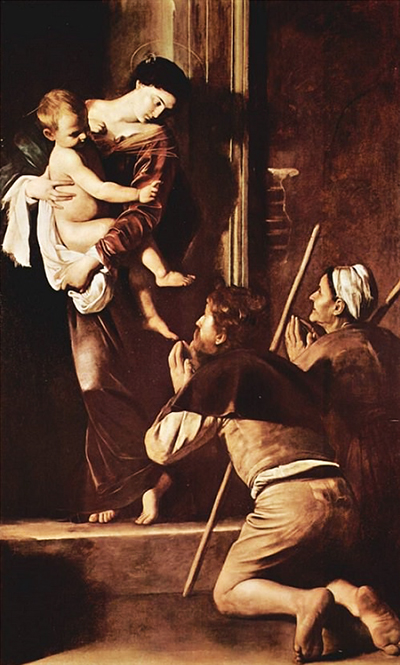
In Caravaggio's Madonna of Loreto, also called Madonna of the Pilgrims, two travellers kneel at a worn doorway. Mary stands there holding the Christ Child. The painting remains in the Cavalletti Chapel of the Basilica of Sant'Agostino in Rome, the setting for which it was made. Its ordinary threshold and the pilgrims' tired feet make a devotional encounter feel immediate and human.[1][2]
The altarpiece is usually dated within 1604–06, though official records give slightly different ranges. The Italian Ministry of Culture's object record measures it 260 × 150 cm and places its making in the early years of the Cavalletti chapel project. The dates describe an approximate creation window, not a day Caravaggio signed into the painting.[2][3]
Caravaggio in context
The Cardsharps
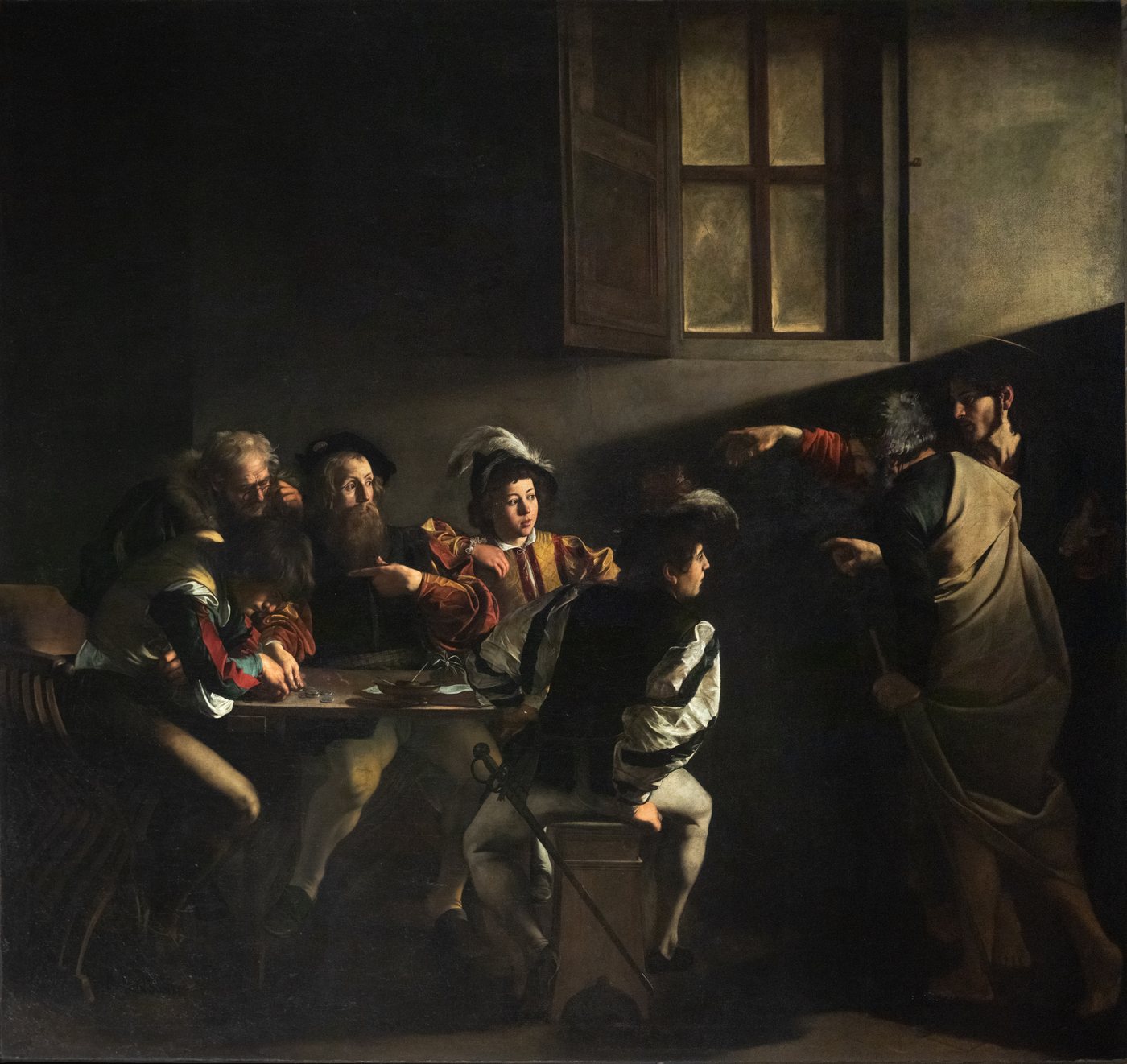
c.1595Calling of Saint Matthew
1599–1600Supper at Emmaus
1601At a Glance
- ArtistMichelangelo Merisi da Caravaggio[2][3]
- TitlesMadonna of Loreto and Madonna of the Pilgrims (Madonna dei Pellegrini)[1][2]
- Datebroadly c.1604–06; institutional records differ slightly in their starting year[2][3]
- Mediumoil on canvas[3]
- Dimensions260 × 150 cm, height × width[3]
- LocationCavalletti Chapel, first chapel on the left, Basilica of Sant'Agostino, Rome[1]
- Patronagethe Cavalletti chapel project associated with Ermete Cavalletti's will and carried out after his death[1][4]
- SubjectMary and Child receiving two kneeling pilgrims at a doorway[1][2]
Contents
- A Meeting at the Threshold
- The Pilgrims and Their Feet
- Why It Is Called the Madonna of Loreto
- The Cavalletti Chapel Commission
- Date, Size and Location
- Model and Reception Questions
- Looking Alongside Other Madonnas
- Frequently Asked Questions
A Meeting at the Threshold
Mary and Jesus appear at the entrance to a simple house. Its wall is worn and the threshold has no architectural grandeur. Two pilgrims, a man and a woman, kneel before them. Their bodies take up the foreground while Mary and Child occupy the illuminated doorway. The scene is easy to enter visually: the travellers have reached someone they hoped to meet.[1][2]
The design gives sacred figures a physical place. The child rests on Mary's arms, and her feet touch the threshold. Nothing in the painting requires a floating house or an airborne Madonna. Roma Capitale's Caravaggio itinerary notes that Caravaggio replaced the more traditional imagery of Mary's house miraculously flying to Loreto with a modest doorway and human visitors.[2]
The doorway is more than background. It marks a boundary between the pilgrims' road and the shelter in which Mary stands. They kneel outside it, yet Mary turns toward them and presents the Child. The scene makes access to the sacred look like an encounter at an ordinary entrance. That reading follows the visible arrangement without claiming that Caravaggio left a written statement defining every brick.
Light falls on Mary's face and Child and reaches the kneeling figures. It ties the two groups together across the threshold. The dark wall concentrates attention on people rather than on a richly furnished setting. The picture's emotional force comes from their nearness, not from a long procession or many explanatory symbols.
The Pilgrims and Their Feet
The older pilgrim nearest us presents a foot marked by travel. The sight of dirty or calloused feet became one of the work's most discussed features. Roma Capitale says they caused a sensation among Caravaggio's contemporaries. They also make the pilgrimage concrete: these people reached the chapel's devotional subject by bodily effort.[2]
The travellers are not anonymous dots in a landscape. Their kneeling poses and scale bring them close to Mary and the Child. They are visibly ordinary, while the sacred pair remains warmly lit and composed. The contrast does not keep the pilgrims at a distance. The Child is presented toward them, and the scene is a meeting rather than a lesson about unworthiness.
Some accounts identify the pilgrims' faces with the Cavalletti patrons, a view repeated by Roma Capitale. That identification remains an interpretation: a figure's apparent likeness alone does not establish a name.[2]
The older man's foot has sometimes overshadowed the rest of the composition in popular summaries. The woman pilgrim and Mary's response matter equally. Both travellers kneel, and both look toward the Child. The painting's distinctive devotion is shared, even if one foot became a shorthand for its realism.
Why It Is Called the Madonna of Loreto
Loreto is a major Marian pilgrimage destination associated with the Holy House. The Cavalletti chapel was dedicated to the Madonna of Loreto. The alternate title, Madonna of the Pilgrims, describes what Caravaggio actually shows: travellers kneeling before Mary and the Child. The two titles therefore point to the devotional setting and the painted action respectively.[1][4]
The basilica's own page identifies the painting as Madonna dei Pellegrini in the Chapel of the Madonna of Loreto. An Augustinian account of the commission connects Ermete Cavalletti's instructions with a representation of the Holy House tradition. Caravaggio's solution uses an ordinary Roman-looking entrance rather than explicitly depicting the house's miraculous transport.[1][4]
That choice can make the sacred story present to viewers at Sant'Agostino. A person standing in the church sees kneeling figures at a painted doorway while standing near a real chapel entrance. The image invites identification with the pilgrims' act of approaching. This is a visual interpretation of the composition, not an assertion that every early viewer reacted identically.
The Madonna and Child are not generic figures detached from a context. Their title, chapel and visitors tell readers what devotional encounter is being represented. Explaining Loreto helps avoid the mistake of calling the work merely a Madonna portrait with two incidental bystanders.
The Cavalletti Chapel Commission
Ermete Cavalletti made arrangements for the chapel and its decoration before his death in 1602. The basilica says the chapel was completed according to his wishes and the altarpiece entrusted to Caravaggio. Another Augustinian account gives further detail about the chapel patronage acquired in 1603. His widow and heirs were involved in realizing the project after his death.[1][4]
This sequence is important. Ermete's wishes shaped the commission, but it would be misleading to describe him as watching a painting finished several years after he died. The painting belongs to a family devotional project whose plans outlasted him.
The work remains in the Cavalletti Chapel in the church for which it was intended. That is a stronger location claim than a modern temporary exhibition caption. It also counters an easy but false narrative that Caravaggio's realism caused the church to reject this altarpiece. There was comment about the pilgrims' appearance, but the painting's lasting place in the chapel is itself evidence of its reception.[1][2]
The church setting matters to how it is viewed. A canvas about access and pilgrimage faces worshippers and visitors in a real sacred space. Unlike a painting moved long ago to a museum, this work can still be read in relation to its architectural setting. Current opening arrangements should nonetheless be checked with the basilica before a visit.
Date, Size and Location
The Italian Ministry of Culture's object catalogue gives 260 × 150 cm, oil on canvas, and a broad early-seventeenth-century creation window tied to the Cavalletti chapel. L'Osservatore Romano gives 1604–06. The evidence supports a date in the first decade of the seventeenth century, with 1603 associated with chapel patronage and the possible start of work; no single exact year is established.[3][5]
At 2.6 metres high, the painting is a substantial altarpiece. Its scale lets kneeling figures approach nearly life size while retaining room for Mary, Jesus and the doorway above them. The tall format suits a chapel altar, where visitors would see it from below and in the presence of the actual floor on which they stand.
The Italian national record and the basilica page together give an object and location anchor: the work is a Caravaggio oil canvas in Sant'Agostino's Cavalletti Chapel. The exact photograph used by a website is a separate matter. The old site JPEG identifies the subject but does not prove rights to publish a new high-resolution image or cropped details.
Model and Reception Questions
Roma Capitale identifies Mary with Lena, or Maddalena Antognetti, a woman known in records connected with Caravaggio. This is a scholarly and local interpretation; the canvas itself does not name its model.[2]
The travellers have also been read as Cavalletti family figures. Their popular appearance and dirty feet were noticed in earlier responses to the painting, but the degree and meaning of any “scandal” are easy to exaggerate. The work stayed in its chapel. The durable facts are its physical setting, subject and the documented family commission; precise reactions of every early observer remain beyond the evidence.[1][2]
The child's posture and Mary's stance can prompt devotional readings of welcome, compassion and protection. These are sensible responses to the painted encounter. They should not become a claim that Caravaggio used an invisible fixed code in which each crease and stone has one historical meaning.
Looking Alongside Other Madonnas
Caravaggio's Madonna and Child with Saint Anne was commissioned for a St Peter's chapel but removed soon after installation. Its figures act around a serpent and its subsequent Borghese collection history differs markedly from the Loreto altarpiece that remains in Sant'Agostino.[6]
The Madonna of the Rosary is a large painting now in Vienna, with a more numerous group and an open question about its first patron and destination. Comparing the three makes Caravaggio's responses to different Marian subjects visible without assuming the same commission or reception for each.[7]
The Loreto picture's strength lies in its concentrated encounter. A familiar devotional title becomes a scene of two people arriving on foot and meeting a mother with a child at a threshold. The realism of their bodies supports the sacred relationship rather than replacing it.
Explore the Caravaggio collection
| Name | Date | Type |
|---|---|---|
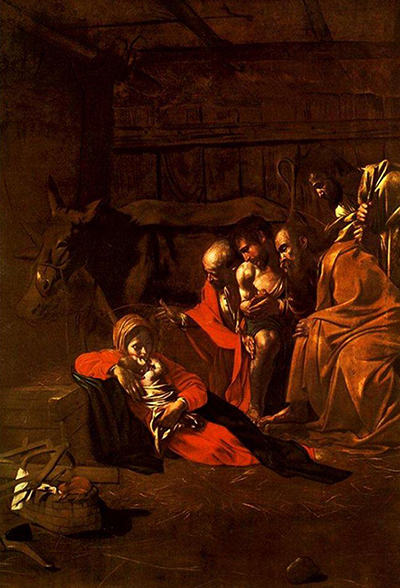
| Adoration of the Shepherds by Caravaggio: The Messina Nativity | 1608–09; precise order relative to Resurrection of Lazarus remains unresolved | Artwork |
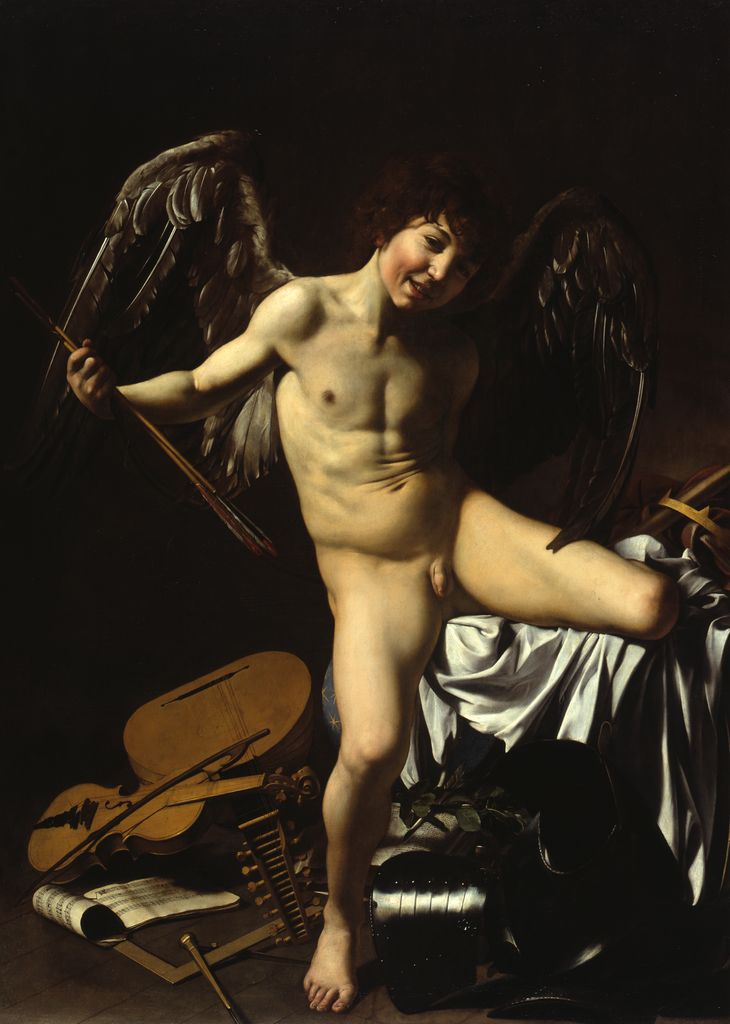
| Amor Victorious by Caravaggio | 1601–02 in the Berlin owner record | Artwork |
| Bacchus by Caravaggio: The Uffizi Painting | about 1598, according to the Uffizi | Artwork |
| Basket of Fruit by Caravaggio | after 1597, probably around the turn of the seventeenth century, according to the Ambrosiana | Artwork |
| Boy Bitten by a Lizard: Caravaggio's London Painting | about 1594–95 in the National Gallery's current catalogue; URL suffix “1596” is inherited | Artwork |
| Boy Bitten by a Lizard: The Florence Version Attributed to Caravaggio | disputed; Longhi's catalogue record preserves historical 1592–93 and other proposed ranges, including c.1597 | Artwork |
| Boy Peeling Fruit by Caravaggio: The Royal Collection Painting | about 1592–93 in the owner's current exhibition record | Artwork |
| Boy Peeling Fruit in Florence: A Derivation from Caravaggio | — | Artwork |
| Boy with a Basket of Fruit by Caravaggio | about 1595 in the Galleria Borghese catalogue | Artwork |
| Caravaggio Paintings in Rome: Churches, Museums and a Practical Route | — | Guide |
| Caravaggio Quotes: What the Documents Actually Record | — | Guide |
| Caravaggio's Lute Player: The Del Monte Painting Once Shown at the Met | about 1596–97 in the Met catalogue | Artwork |
| Caravaggio's Painting Technique: Grounds, Incisions, Revisions and Light | — | Guide |
| Christ at the Column by Caravaggio: The Rouen Flagellation | c.1606 in the owner caption; owner prose gives 1606–07 | Artwork |
| Christ on the Mount of Olives by Caravaggio: The Lost Berlin Painting | — | Artwork |
| Conversion on the Way to Damascus by Caravaggio | about 1601 in the Roma Capitale church record | Artwork |
| Crowning with Thorns by Caravaggio: The Vienna Painting | about 1603 in the 2019 KHM record; “1607” is an inherited URL suffix | Artwork |
| Crowning with Thorns in Prato: Attributed to Caravaggio | about 1602–03 in the collection presentation | Artwork |
| David with the Head of Goliath by Caravaggio: The Borghese Painting | 1606–07 or 1609–10 in the Galleria Borghese catalogue; the later Naples period is favoured by many scholars, while the owner keeps the question open | Artwork |
| David with the Head of Goliath by Caravaggio: The Prado Painting | about 1600 in Prado material; “1599” survives only in the legacy URL | Artwork |
| David with the Head of Goliath by Caravaggio: The Vienna Painting | about 1600–01 in the KHM's 2019 exhibition record; “1607” is a legacy route label | Artwork |
| Did Caravaggio Make Drawings? What Survives and What Paintings Reveal | — | Guide |
| Ecce Homo: Caravaggio's Madrid Rediscovery and the Genoa Painting | — | Artwork |
| John the Baptist in Caravaggio's Paintings: A Guide to the Different Versions | — | Artwork |
| Judith Beheading Holofernes by Caravaggio | beginning of the seventeenth century in the owning museum's account; about 1599–1600 in the Kimbell's 2025 loan label; around 1602 in one specialist catalogue | Artwork |
| Jupiter, Neptune and Pluto: Caravaggio's Ludovisi Ceiling | about 1597; the archive connects the work with Cardinal del Monte's 1597 commission | Artwork |
| Madonna and Child with Saint Anne by Caravaggio: The Palafrenieri Altarpiece | 1605 in the Galleria Borghese object field; completed and delivered by 8 April 1606 | Artwork |
| Madonna of Loreto by Caravaggio: The Pilgrims at Sant'Agostino | broadly c.1604–06; institutional records differ slightly in their starting year | Artwork |
| Madonna of the Rosary by Caravaggio: The Vienna Altarpiece | around 1603 in the Kunsthistorisches Museum's object record | Artwork |
| Martha and Mary Magdalene by Caravaggio: The Detroit Painting | about 1598 in the Detroit Institute of Arts record | Artwork |
| Medusa by Caravaggio: The Uffizi Painted Shield | 1596–98 in the Uffizi's virtual exhibition; specialist research reports the shield delivered to the Medici wardrobe by 7 September 1598 | Artwork |
| Narcissus, Attributed to Caravaggio | dependent on attribution; the Zeri catalogue gives a broad 1610–50 range under Spadarino | Artwork |
| Nativity with Saint Francis and Saint Lawrence: Caravaggio's Missing Painting | somewhere in 1600–09 in the parliamentary report; a specific 1609 execution and place remain debated | Artwork |
| Penitent Mary Magdalene by Caravaggio | 1597 in the owner's catalogue, during Caravaggio's early Roman activity | Artwork |
| Portrait of a Courtesan: Caravaggio's Lost Berlin Portrait | Berlin's data field says c.1590, while its own text compares a Caravaggio work of c.1598; precise date unresolved | Artwork |
| Portrait of Alof de Wignacourt and His Page by Caravaggio | — | Artwork |
| Portrait of Fra Antonio Martelli? Caravaggio's Pitti Knight of Malta | 1608 in the Restituzioni object heading; within Caravaggio's Malta period | Artwork |
| Portrait of Maffeo Barberini: The Seated Corsini Painting | c.1596–97 in the national catalogue | Artwork |
| Portrait of Monsignor Maffeo Barberini: Caravaggio's Newly Acquired Painting | around the late 1590s / age thirty; “1598” in the inherited address is approximate, not an exact document date | Artwork |
| Portrait of Pope Paul V: A Caravaggio Attribution and a Borghese Copy | — | Artwork |
| Prints After Caravaggio: Who Made Them and What They Show | — | Guide |
| Reclining Saint John the Baptist: A Disputed Caravaggio Attribution | often proposed for the artist's final years; the later museum list does not give a precise year. | Artwork |
| Rest on the Flight into Egypt by Caravaggio | about 1597 in the owner's catalogue | Artwork |
| Saint Catherine of Alexandria by Caravaggio: The Thyssen Painting | about 1598–99 in the Museo Nacional Thyssen-Bornemisza catalogue | Artwork |
| Saint Francis in Meditation by Caravaggio: The Cremona Painting | 1603–06 in the owner account; c.1605–06 in a KHM exhibition caption | Artwork |
| Saint Francis in Prayer: Caravaggio's Carpineto Painting | 1606 in a 2016–17 exhibition work list | Artwork |
| Saint Francis of Assisi in Ecstasy by Caravaggio | c.1595–96 in the owner wall text | Artwork |
| Saint Jerome in Meditation: Caravaggio's Montserrat Painting | 1605 in the owner record; an owner publication reports scholarship placing it about 1605–06 | Artwork |
| Saint Jerome Writing by Caravaggio: The Borghese Painting | c.1606 in the owner catalogue; the “1605” URL suffix is inherited | Artwork |
| Saint Jerome Writing by Caravaggio: The Malta Painting | around 1607–08; foundation dates Malaspina's commission to 1608 | Artwork |
| Saint John in the Wilderness at Toledo Cathedral | exact 1598 not established by the cited cathedral account. | Artwork |
| Saint John the Baptist at Galleria Corsini, Rome | about 1606 in the national record; older proposals ranged from the late 1590s onward. | Artwork |
| Saint John the Baptist at the Capitoline Museums, Rome | 1602. | Artwork |
| Saint John the Baptist at the Galleria Borghese | 1609–10 in the current Borghese record. | Artwork |
| Saint John the Baptist at the Spring: The Bonello Painting in Malta | early seventeenth century in the institutional account; a precise 1608 is not established there. | Artwork |
| Saint Matthew and the Angel: Caravaggio's Lost First Altarpiece | — | Artwork |
| Salome Receives the Head of John the Baptist: Caravaggio's London Painting | about 1609–10, likely late Naples period in the Gallery's account | Artwork |
| Salome with the Head of John the Baptist: Caravaggio's Madrid Painting | — | Artwork |
| Sleeping Cupid by Caravaggio: The Painting Made in Malta | about 1608, Malta period | Artwork |
| Still Life with Fruit on a Stone Ledge: Is It by Caravaggio? | — | Artwork |
| Supper at Emmaus (1606): Caravaggio's Brera Painting | — | Artwork |
| The Annunciation by Caravaggio in Nancy | c.1607–10 in the collection record; 1608–10 in the museum's restoration account | Artwork |
| The Basel Saint John the Baptist: Once Labelled Caravaggio, Now Maíno | about 1608–10 in that schedule, rather than the legacy URL's 1600. | Artwork |
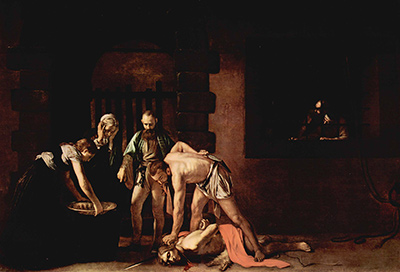
| The Beheading of Saint John the Baptist by Caravaggio | about 1608; installed in the Oratory on 29 August 1608 | Artwork |
| The Burial of Saint Lucy by Caravaggio in Syracuse | 1608, during Caravaggio's Syracuse stay | Artwork |
| The Calling of Saint Matthew by Caravaggio | about 1599–1600 | Artwork |
| The Calling of Saints Peter and Andrew by Caravaggio | about 1602–04 in the Trust's object text | Artwork |
| The Cardsharps by Caravaggio | about 1596–97 in the Kimbell's current object record | Artwork |
| The Conversion of Saint Paul: Caravaggio's Odescalchi Panel | commissioned in 1600; painted around 1600–01 | Artwork |
| The Crucifixion of Saint Andrew by Caravaggio | 1606–07 | Artwork |
| The Crucifixion of Saint Peter by Caravaggio | about 1601 | Artwork |
| The Death of the Virgin by Caravaggio | commissioned 1601; completed late 1605 or early 1606, according to the Louvre | Artwork |
| The Denial of Saint Peter by Caravaggio | 1610 | Artwork |
| The Doria Pamphilj Saint John the Baptist: A Second Youth with a Ram | linked compositionally to the Capitoline 1602 picture; an exact production year for this canvas is not established by the owner pages used here. | Artwork |
| The Entombment of Christ by Caravaggio: The Vatican Deposition | about 1600–04 in Vatican Museums publication material | Artwork |
| The Flagellation of Christ by Caravaggio: The Capodimonte Altarpiece | around 1607, in the first Naples period | Artwork |
| The Fortune Teller by Caravaggio: The Louvre Version and Its Roman Counterpart | — | Artwork |
| The Holy Family with the Infant Saint John the Baptist by Caravaggio | early 1600s in the Met catalogue; no more exact owner date asserted here | Artwork |
| The Incredulity of Saint Thomas by Caravaggio | about 1601 in the SPSG presentation | Artwork |
| The Inspiration of Saint Matthew by Caravaggio | usually 1602; also catalogued 1602–03, for the installed final altarpiece | Artwork |
| The Lute Player by Caravaggio: The Hermitage Painting | about 1596 in the Hermitage collection publication; the Hermitage Friends restoration page gives about 1595–96 | Artwork |
| The Magdalen in Ecstasy: Caravaggio, Copies and a Disputed Original | — | Artwork |
| The Martyrdom of Saint Matthew by Caravaggio | 1599–1600; unveiled with The Calling in 1600 | Artwork |
| The Martyrdom of Saint Ursula by Caravaggio | — | Artwork |
| The Musicians by Caravaggio | 1597 | Artwork |
| The Resurrection of Lazarus by Caravaggio in Messina | 1609; delivered 10 June 1609 in the owner account | Artwork |
| The Sacrifice of Isaac by Bartolomeo Cavarozzi: A Former Caravaggio Attribution | about 1615–17 in the Nicholas Hall catalogue; “1598” is an inherited URL label, not the accepted date | Artwork |
| The Sacrifice of Isaac by Caravaggio: The Uffizi Painting | about 1603 in the Uffizi catalogue | Artwork |
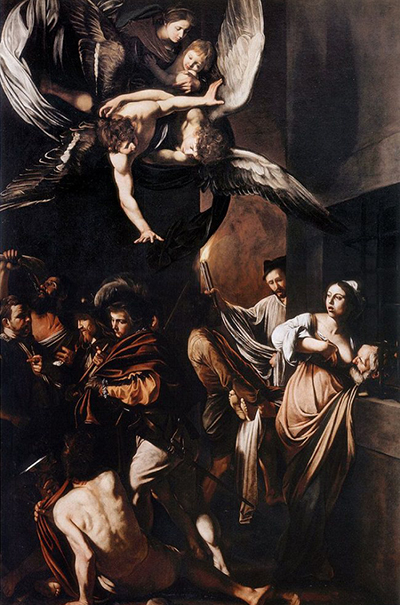
| The Seven Works of Mercy by Caravaggio | 1606–07, according to the Pio Monte | Artwork |
| The Supper at Emmaus by Caravaggio: The London Painting | 1601 | Artwork |
| The Taking of Christ by Caravaggio | 1602 | Artwork |
| The Toulouse *Judith Beheading Holofernes*: A Caravaggio Attribution Debate | c.1606–07 if identified with the recorded Naples work; that identification is debated | Artwork |
| Young Sick Bacchus by Caravaggio | about 1595 in the Galleria Borghese catalogue | Artwork |
| Youth with a Ram: Why Caravaggio's Saint John Looks So Unusual | — | Artwork |
No matching pages found.
Discussion
Share a close observation about Madonna of Loreto by Caravaggio or a source that clarifies its history.
Which detail changes your reading?
Is there a collection record or document worth comparing?
What remains uncertain?
Join the Conversation
Frequently Asked Questions
Where is Caravaggio's Madonna of Loreto?
It is in the Cavalletti Chapel, the first chapel on the left in the Basilica of Sant'Agostino, Rome.[1]
Is it also called Madonna of the Pilgrims?
When was it painted?
Why are the pilgrims' feet so prominent?
Their travelled, dirty feet make their journey bodily and immediate. Roma Capitale notes that the detail drew attention among contemporary viewers.[2]
References
- Basilica of Sant'Agostino, Madonna dei Pellegrini di Caravaggio.
- Roma Capitale, I luoghi di Caravaggio, section on Sant'Agostino.
- Italian Ministry of Culture, national catalogue record for Madonna dei Pellegrini / Madonna di Loreto.
- Augustinians in Italy, history of the Sant'Agostino Madonna di Loreto.
- L'Osservatore Romano, Believing Without Seeing.
- Galleria Borghese, Madonna and Child with Saint Anne owner record.
- Kunsthistorisches Museum, Madonna of the Rosary object record.