

 Buy Art Prints Now
from Amazon
* As an Amazon Associate I earn from qualifying purchases.
Image reference [image]
 by Tom Gurney
Tom Gurney BSc (Hons) is an art history expert with over 20 years experience
Published on August 14, 2026 / Updated on August 14, 2026
Email: tomgurney1@gmail.com / Phone: +44 7429 011000
Psyche Opening the Golden Box: Introduction
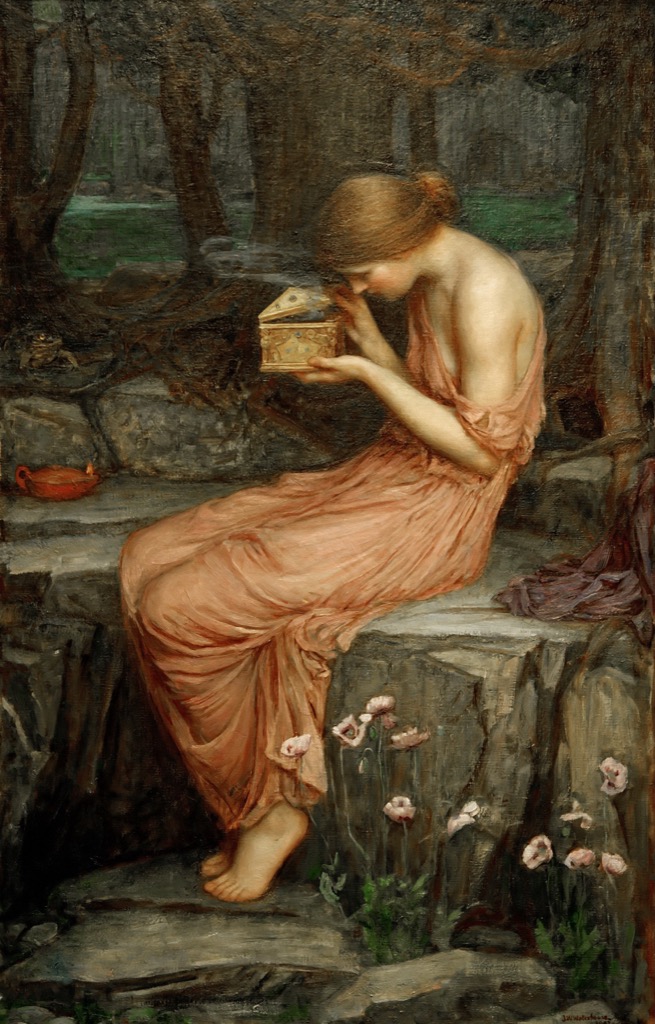
Psyche kneels at the edge of a shadowed pool with the forbidden casket open before her. Her journey to the underworld is already over; the object she was ordered to carry unopened is almost safely home. Waterhouse chooses the instant when exhaustion, curiosity and the desire for beauty overcome obedience.
Painted in 1903, Psyche Opening the Golden Box is the darker companion to Waterhouse's Psyche Opening the Door into Cupid's Garden. One picture approaches a threshold of love; the other shows a transgression that resembles death. Together they reveal how decisively Waterhouse could reshape the same heroine through posture, setting and the meaning of an opened boundary. [1]
At a Glance
- ArtistJohn William Waterhouse (1849–1917)
- TitlePsyche Opening the Golden Box
- Date1903 [1] [2]
- MediumOil on canvas [2]
- Dimensions117 × 74 cm [2]
- CollectionPrivate collection [1] [2]
- ExhibitedRoyal Academy, London, 1903 [1]
- Principal literary sourceApuleius, Metamorphoses or The Golden Ass, Book VI [3] [4]
- SubjectPsyche disobeying Venus by opening the casket she has brought from Proserpine
- Essential distinctionThe container releases an infernal sleep, not destructive spirits; that is the separate story of Pandora
Contents
- Introduction
- The Dangerous Moment after the Journey
- Psyche's Final Task in Apuleius
- What Waterhouse Changes
- Body, Casket and Landscape
- Sleep, Death and Revival
- Waterhouse's Two Psyche Paintings
- Exhibition, Ownership and Preparatory Evidence
The Dangerous Moment after the Journey
Waterhouse places Psyche low in the vertical composition. She bends on the earth beside water and rock, her back turned substantially towards the viewer. The opened casket attracts her gaze so completely that the surrounding landscape seems to withdraw from her attention.
The pose is neither ceremonial nor triumphant. Psyche has accomplished an impossible descent and return, yet Waterhouse suppresses the signs of a heroic arrival. There is no welcoming crowd, no visible Venus and no Cupid rushing into the scene. The last danger lies in the heroine's own hand.
Her partly uncovered body increases the impression of vulnerability. Cloth gathers around rather than armours her. The long pale back, lowered head and folded limbs make the figure appear exposed to whatever the small golden container has released.
The casket is visually modest in size but narratively immense. It contains the completion of Venus's command, Psyche's temptation and the sleep that will overwhelm her. Waterhouse relies on contrast between the precious, bounded object and the large bodily consequence of opening it.
The setting does not resemble an underworld palace. It is a rocky, wooded or waterside place through which Psyche is returning. That choice keeps the scene between destinations: she has left Proserpine, but she has not delivered the casket to Venus. The landscape becomes the territory of a failed final restraint.
Water also matters compositionally without needing to be assigned a secret symbolic code. Its dark reflective surface extends the atmosphere of descent into an outdoor setting. Solid rock surrounds a body that is about to lose muscular control. The picture balances hard endurance against sudden collapse.
An informed viewer knows what comes next, but Waterhouse does not show the full effect. Psyche is still upright enough to look. The image occupies the short interval between decision and consequence.
That concentration gives the painting its particular tension. The task has not defeated Psyche through monsters, geography or divine force. It nearly defeats her through an understandable thought: if she carries divine beauty, might she take a little for herself?
Psyche's Final Task in Apuleius
The fullest surviving ancient account of Cupid and Psyche appears within Apuleius's Latin novel, commonly known as The Golden Ass or Metamorphoses. After Psyche loses Cupid and undergoes a series of trials imposed by Venus, the goddess assigns a final journey to the world of the dead. [3] [4]
Psyche must take a container to Proserpine, queen of the underworld, and request a portion of her beauty for Venus. The stated reason is that Venus has exhausted her own beauty while tending her wounded son. The task is designed to appear impossible and, at several points, fatal. [3]
In despair, Psyche prepares to throw herself from a tower because suicide seems the most direct road to the dead. The tower speaks and gives exact instructions. She must travel to Taenarus, carry two cakes and two coins, resist appeals for assistance, pay Charon, placate Cerberus and refuse the luxurious seat and food offered below. Above all, she must not open or inspect the container entrusted to her. [3]
The instructions test disciplined refusal. Psyche succeeds by declining diversions that would consume her limited resources or trap her among the dead. She enters Proserpine's presence, asks for the gift and retraces the route to daylight. [3] [4]
Only after escaping the underworld does she fail. Apuleius gives her temptation a specific logic. Psyche decides that it would be foolish not to take a small portion of divine beauty so that she may appear more pleasing to Cupid. Love, insecurity and curiosity converge. [3]
When she raises the lid, she finds no cosmetic substance. An infernal or Stygian sleep rises from the container and spreads through her body. She falls on the path and lies motionless like a sleeping corpse. [3] [4]
Cupid then escapes the confinement imposed by his mother. He reaches Psyche, removes the sleep from her body, returns it to the container and awakens her with the touch of his arrow. He tells her to finish the errand while he seeks Jupiter's help. [3]
Jupiter summons the gods, approves the marriage and gives Psyche ambrosia so that she becomes immortal. The tale ends not with the opened casket but with a transformation in status and a wedding that Venus can no longer prevent. [3] [4]
Waterhouse's title calls the object a “golden box.” Translations vary among box, casket, vessel and jar-like container, but its narrative function is consistent: it must remain closed. The title makes the precious lure immediately legible to a modern audience.
What Waterhouse Changes
Waterhouse does not attempt to illustrate every instruction or adventure. Charon, Cerberus, the tower, Proserpine and the underworld remain outside the canvas. Their absence transfers the burden of the journey into Psyche's solitary body.
The omission is important because the literary episode is crowded with speech and sequential tests. A single painting cannot narrate that sequence without becoming an accumulation of episodes. Waterhouse selects the decision upon which the return depends.
He also chooses the last private moment before rescue. If Cupid were visible, viewers would read the danger through an approaching solution. Without him, Psyche's isolation feels complete. The promise of revival belongs to literary knowledge rather than visual reassurance.
The scene is often casually described as curiosity punished, but Apuleius's motive is more complicated. Psyche wants beauty for Cupid. Her error grows from the same attachment that has carried her through Venus's demands. Waterhouse's absorbed, almost tender handling of the figure permits that mixture of vanity, fatigue and longing.
Nothing visible establishes that Psyche believes herself ugly. The source supplies her reasoning; the canvas supplies a woman bent over a forbidden object. A careful interpretation keeps those forms of evidence distinct.
The small scale of the casket also changes the balance of the story. Proserpine's beauty cannot be seen or measured. The box looks made, decorated and finite, while its actual content is invisible sleep. Material splendour hides an immaterial threat.
Waterhouse stops before the body becomes fully inert. Apuleius compares Psyche to a corpse; the painting lets the viewer anticipate that resemblance without reducing the figure to a horizontal body. Her curved pose contains both living agency and the beginning of surrender.
The outdoor setting helps Waterhouse avoid an illustrative underworld architecture. Psyche has crossed back into the living world, which makes the threat especially poignant. Deathlike sleep follows her into daylight because she opens what should have remained sealed.
The artist's changes are therefore acts of compression rather than departures from the story's central logic. Journey becomes exhaustion, warning becomes casket, temptation becomes gaze and supernatural sleep becomes bodily vulnerability.
Body, Casket and Landscape
The figure's back is one of the painting's principal expressive surfaces. Because Waterhouse turns Psyche away, viewers cannot depend upon a fully readable face. Attention shifts to the line of neck, shoulders and spine and to the way the torso bends towards the object.
This restricted facial access echoes the story's restriction. We know that she looks into the casket, but we cannot share her view. The container remains visually and conceptually difficult to penetrate even after its lid has opened.
Psyche's posture builds a descending rhythm. Head, arms and upper body lower towards the ground; folded legs anchor her beside the water. The movement is inward and downward rather than forward. It anticipates the fall described by Apuleius.
The gold of the box creates a concentrated note of value and colour amid flesh, textile, stone, vegetation and dark water. Gold does not prove that beauty itself is inside. It represents the temptation as a precious object and justifies the title's modern vocabulary.
Rock frames the scene with material weight. The story has asked Psyche to move between the living earth and the world below it; Waterhouse makes the return landscape feel close, enclosed and difficult. Her pale body is soft against those irregular surfaces.
The water can recall dangerous passage, reflection or the boundary between states, but these remain interpretive possibilities rather than documented emblems chosen by the artist. Its secure visual function is to deepen the setting and to provide a dark horizontal counterforce to the kneeling figure.
The vertical canvas leaves considerable space above or around the compressed body. Psyche seems small within a world she has crossed alone. That relationship prevents the nude or semi-nude figure from becoming simply an academic display: scale and posture keep her subject to the narrative.
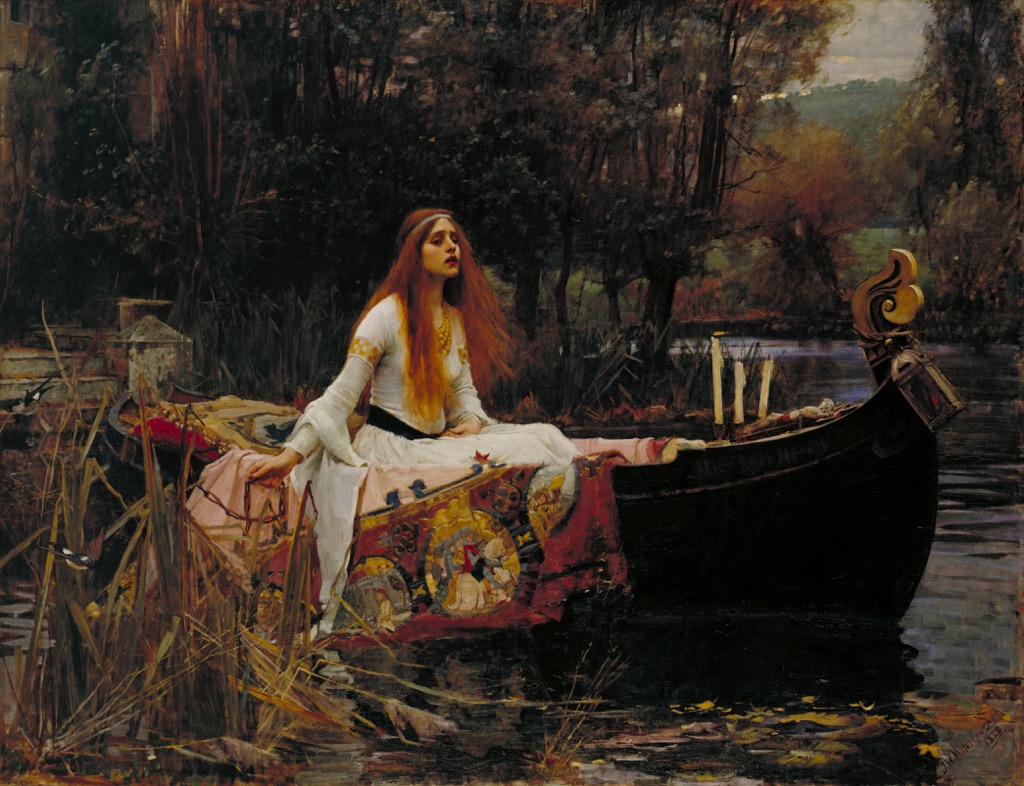
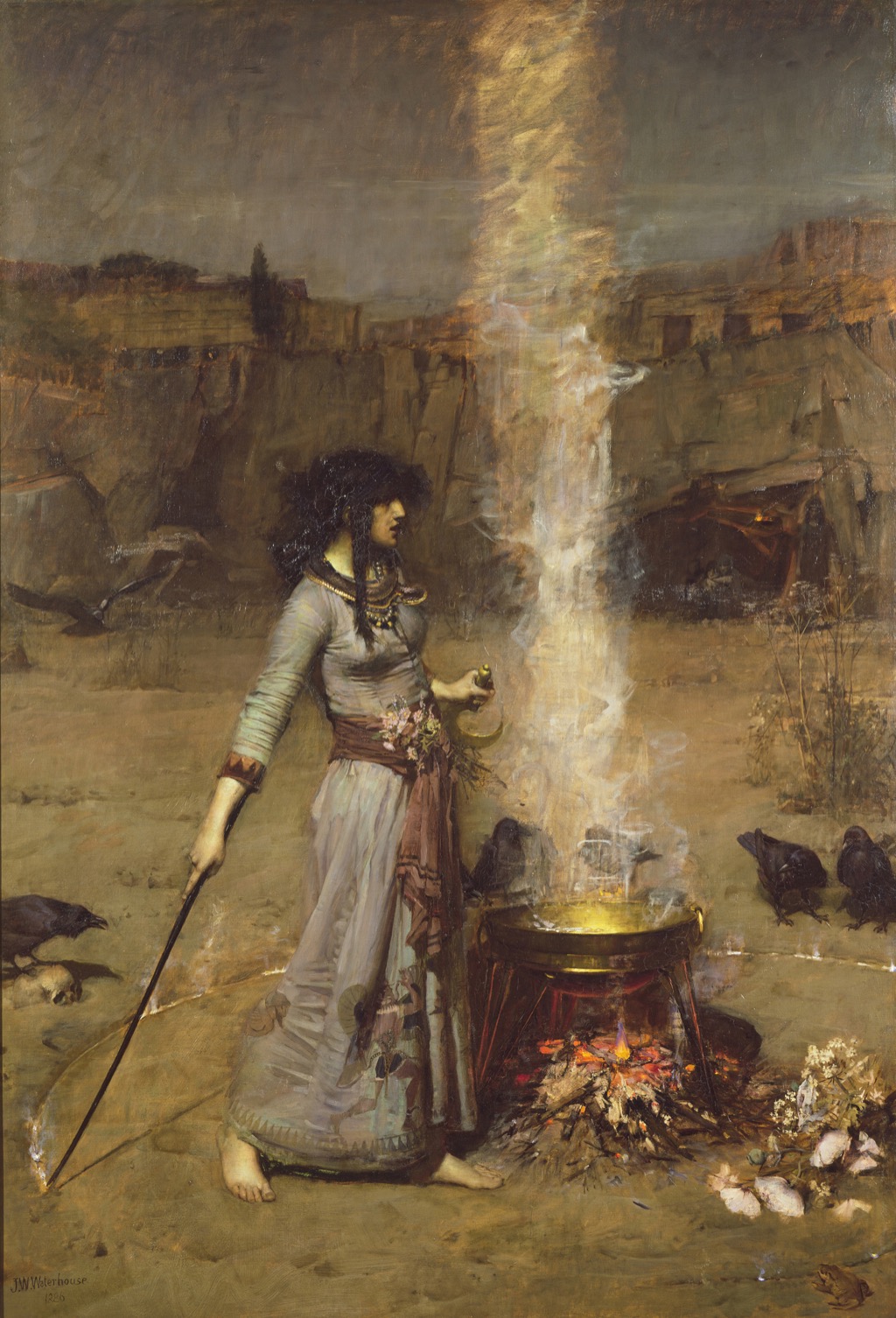
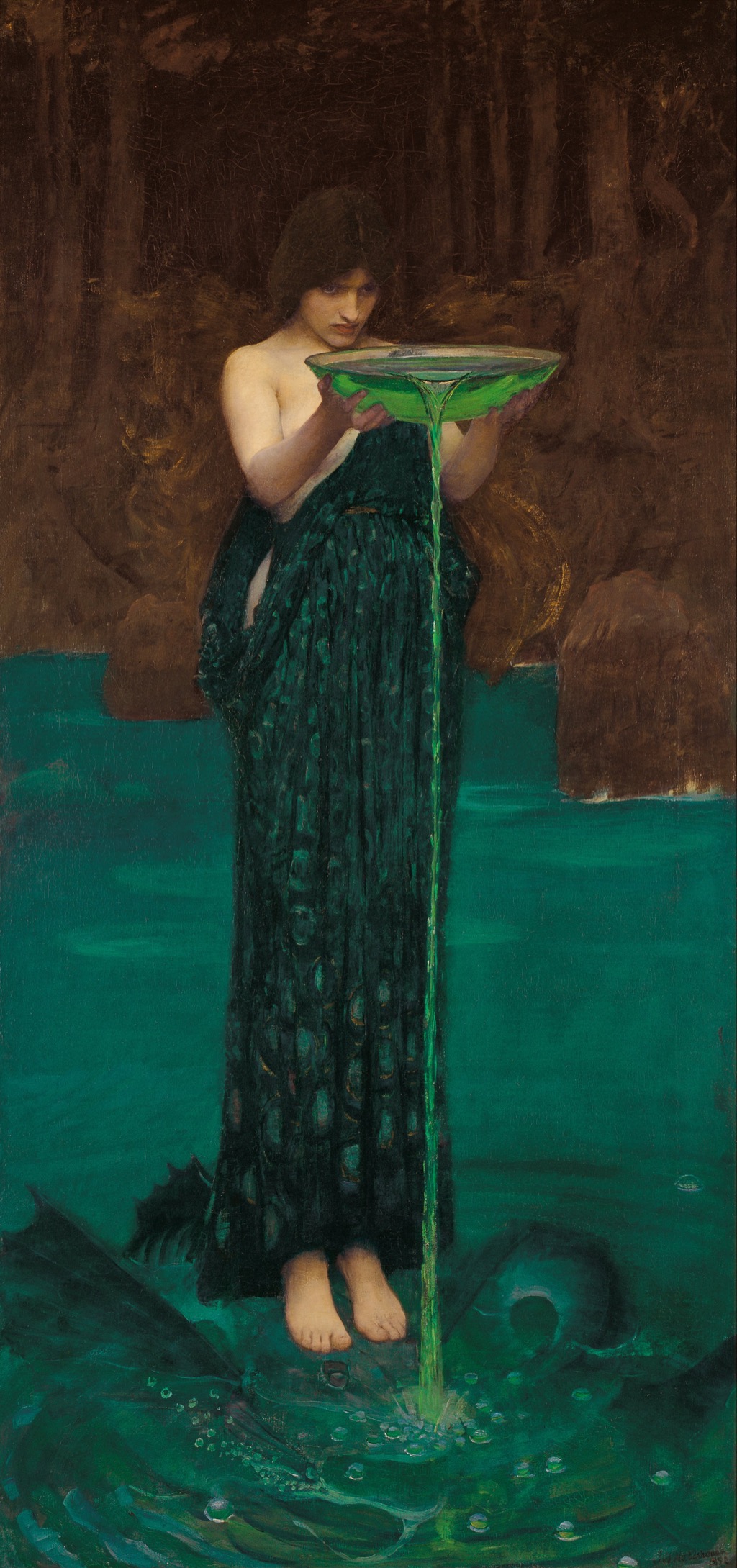
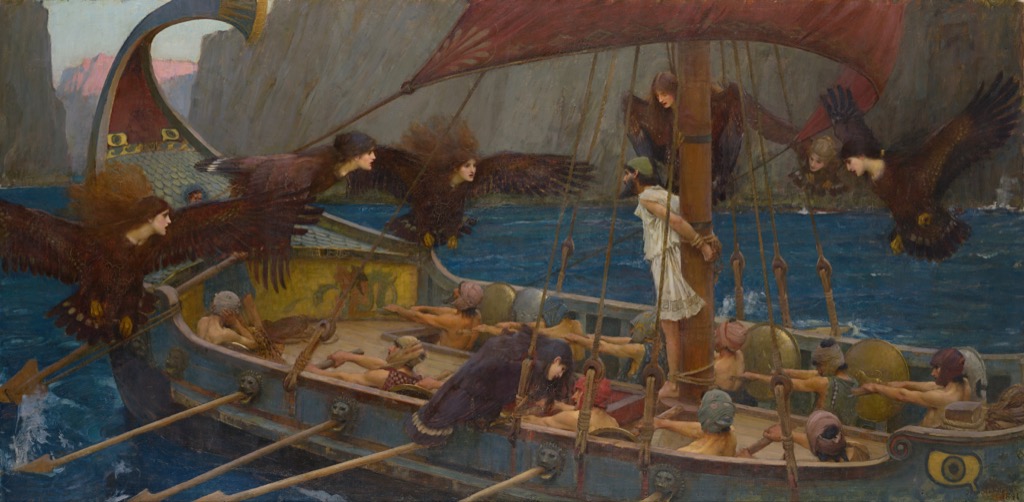
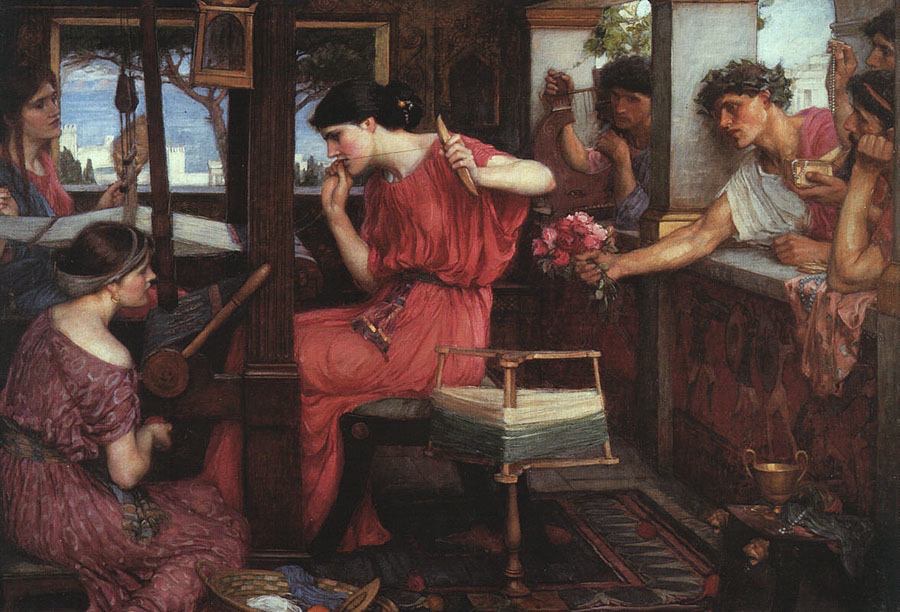
Waterhouse was adept at making a woman's relation to one object carry an entire literary episode. Penelope has her loom, Circe her cup, Pandora her casket and the Lady of Shalott her mirror or boat. Psyche's box belongs to this language of concentrated props, but its effect depends upon an invisible content.
The object's openness is irreversible only for a moment. Cupid will put the sleep back. Yet Psyche cannot rescue herself, and Waterhouse makes that loss of self-command the emotional centre.
The result is sensuous without being carefree. Flesh, fabric, metal, water and stone invite close looking while the story warns that looking itself has crossed a boundary.
Sleep, Death and Revival
Apuleius distinguishes Psyche's condition from final death. She falls under a sleep from the world of the dead and resembles a corpse, but Cupid can collect the sleep and restore it to its container. [3] [4]
That distinction gives the scene a suspended quality. The underworld has marked Psyche without permanently claiming her. She lies at the edge between error and correction, mortality and the immortality Jupiter will soon grant.
Sleep is particularly suitable for painting because stillness can signify several states. A viewer encountering the image without its title might see weariness, concentration or impending unconsciousness. Literary recognition narrows the possibilities while preserving visual ambiguity.
The episode also reverses a familiar fairy-tale structure. Psyche is not passively cursed before any action of her own. She completes a difficult mission, disobeys at its end and is revived by the lover from whom she has been separated. Rescue does not erase her sustained courage.
Victorian and Edwardian audiences met Psyche through classical texts, translations, painting, sculpture and adaptations. The name carried associations with the human soul as well as the heroine's individual adventures. Waterhouse does not need to inscribe an abstract doctrine on the image; the story itself moves Psyche through suffering towards immortal union.
It is tempting to interpret every darkness in the picture as death and every brightness as salvation. The more persuasive effect is less schematic. Waterhouse holds several states together: the living landscape after an underworld journey, the beautiful body about to resemble a corpse and the precious box filled with sleep rather than beauty.
Cupid's absence is crucial. His later intervention belongs to the narrative horizon, but the painting grants Psyche's failure its own duration. Viewers cannot rush directly from transgression to happy ending.
The same is true of Venus. Her hostility has created the task, yet she is not shown controlling the scene. Authority survives as an instruction attached to the object. Psyche is visually alone with the command she breaks.
The eventual apotheosis makes this near-death a passage rather than an ending. Psyche's mortality has repeatedly exposed her to loss; after Jupiter's ambrosia, divine marriage resolves the imbalance between human woman and god. Waterhouse paints the last severe interruption before that resolution.
Waterhouse's Two Psyche Paintings
Waterhouse exhibited Psyche Opening the Golden Box at the Royal Academy in 1903. [1] In 1904 he exhibited Psyche Opening the Door into Cupid's Garden, a separate vertical canvas now in the Harris Museum collection. [1]
The titles make an inviting pair because each begins with Psyche opening something. Their narrative status, however, is different. The golden casket comes directly from Apuleius's final trial. The garden door is Waterhouse's imaginative condensation of Psyche's entry into Cupid's hidden world rather than a precisely described prohibition in the ancient text.
In the garden picture, the upright figure presses close to a door and looks through the opening into colour, light and flowers. The composition is organized around approach and visual access. Curiosity appears as the beginning of discovery.
In the golden-box picture, Psyche bends down outdoors, and the opening has already occurred. Curiosity brings not knowledge or sensual abundance but invisible sleep. Her posture moves towards the earth instead of through an architectural threshold.
The two canvases therefore convert “opening” into opposite phases of experience. Door suggests passage into love's mystery; casket suggests failure at the end of testing. One opens space, while the other releases a force into the body.
They also demonstrate that Waterhouse did not need to paint Cupid to create a love story. Psyche's orientation towards door or box makes the absent god psychologically present. In the first work she approaches his garden; in the second she seeks beauty for him and will require his rescue.
Neither painting should be used as a literal illustration of every part of Apuleius. Seen together, they are selective meditations on desire, boundaries and vision. The ancient narrative supplies identity; Waterhouse supplies two highly economical situations.
The comparison also guards against a common cataloguing mistake. Psyche Opening the Golden Box is dated and exhibited in 1903 and remains privately owned. Psyche Opening the Door into Cupid's Garden is associated with the following Royal Academy exhibition and a public British collection. Similar titles do not make them versions of one object.
Waterhouse returned repeatedly to women at thresholds: Thisbe at the wall, the woman of The Soul of the Rose against a garden boundary and Psyche at a door or casket. Each surface permits a different sense—hearing, scent, sight or dangerous inspection—to carry the drama.
Exhibition, Ownership and Preparatory Evidence
The finished Psyche Opening the Golden Box was exhibited at the Royal Academy in 1903 and is now in a private collection. [1] Published object metadata describes it as an oil on canvas measuring 117 by 74 centimetres. [2]
A surviving red-chalk study helps document Waterhouse's preparation. Sotheby's catalogues the sheet as Study for Psyche Opening the Golden Box, executed in red chalk over pencil and measuring 25 by 32.5 centimetres. [1]
The drawing belonged to Waterhouse at his death and appeared in the sale of his studio collection at Christie's on 23 July 1926. Dr James Nicoll bought it; it later passed by gift and descent before returning to the market in the twenty-first century. [1]
Such a study does not reveal a complete sequence of invention, but it does show that Waterhouse worked through the figure separately from the finished colour arrangement. Drawing allowed him to test the difficult compression of a bending, kneeling body.
The sheet is especially valuable because the finished painting is privately held. Auction and catalogue records often preserve information about works whose public display is intermittent. They should still be read as records with particular purposes, not as substitutes for direct technical examination of the canvas.
The painting's exhibition date places it within Waterhouse's mature return to literary women after his election as a Royal Academician. It appeared between major treatments of classical enchantment and the later sequence of Keatsian, Shakespearean and Tennysonian heroines.
No source used here securely identifies the model. Facial or bodily resemblance to other Waterhouse works can support comparison, but it cannot turn an unnamed sitter into a documented individual.
The privately owned status also matters when considering colour. Reproductions vary in darkness, cropping and warmth. Interpretations should depend first on stable compositional relationships—the bent figure, open box, water and rock—rather than on small colour effects that may change between photographs.
The picture's continuing familiarity arises partly from its clear narrative economy. Even before a viewer reads Apuleius, a vulnerable figure and a forbidden golden container establish a situation of dangerous looking. The ancient text then restores the extraordinary journey before and after that instant.
Related Pages
- Paintings: Return to the protected Waterhouse paintings hub.
- Literary and Mythological Sources: Read the classical source frame for Waterhouse's Psyche Opening the Golden Box.
- Technique and Style: Connect Psyche Opening the Golden Box with Waterhouse's late colour, surface and figure handling.
Frequently Asked Questions
Apuleius says that when Psyche opens the container, an infernal or Stygian sleep emerges and overwhelms her. It does not contain the beauty she expects to borrow. [3] [4]
She decides to take a little divine beauty for herself so that she may please Cupid. Her disobedience combines curiosity, insecurity and love. [3]
Venus orders her to take the container to Proserpine in the underworld and bring it back filled with a portion of Proserpine's beauty. [3] [4]
No. She falls into a deathlike sleep. Cupid removes the sleep, returns it to the container and awakens her. Jupiter later makes her immortal. [3]
No. Pandora opens a container from which human afflictions escape in the Hesiodic tradition. Psyche opens a casket associated with Proserpine's beauty and is personally overcome by sleep.
Yes. A red-chalk-over-pencil figure study descended from Waterhouse's studio and was sold with his studio collection in 1926. [1]
They are separate paintings. The garden-door composition presents entry and discovery; the golden-box composition presents forbidden inspection and its deathlike consequence.
Discussion
1. How does Waterhouse make an invisible force—sleep—the subject of a painting? 2. What does Psyche's turned back withhold from the viewer? 3. Does knowledge of Cupid's coming rescue lessen the scene's danger or intensify its suspension? 4. How do the scale and material richness of the box contrast with its effect? 5. Why might Waterhouse have omitted the underworld and painted the return journey instead? 6. Compare the two Psyche paintings. How does each make “opening” mean something different? 7. Is Psyche's act best understood as vanity, curiosity, love, exhaustion or a combination? 8. How does the landscape keep the underworld present without depicting it directly?
Reader Insights
Which visible detail most changes the way you read this page?
Which source or comparison helps the work feel less familiar and more specific?
What question would you bring back to the painting after reading?
Join the Conversation
Share your reading of this page below.
References
- Main image: John William Waterhouse, Psyche Opening the Golden Box, public-domain faithful reproduction via Wikimedia Commons.
- Sotheby's, “John William Waterhouse, R.A., R.I., Study for Psyche Opening the Golden Box,” catalogue entry, including the finished painting's 1903 Royal Academy exhibition and private ownership, the literary episode, study medium, dimensions and provenance, View source.
- Wikimedia Commons, “John William Waterhouse, Psyche Opening the Golden Box,” object metadata for date, medium, dimensions and ownership status, View source.
- Apuleius, The Golden Ass, translated by William Adlington, Project Gutenberg, Book VI, Psyche's descent, forbidden casket, deathlike sleep and rescue by Cupid, View source.
- Apuleius, Metamorphoses, Book VI, Latin text, Perseus Digital Library, Tufts University, View source.