

 Buy Art Prints Now
from Amazon
* As an Amazon Associate I earn from qualifying purchases.
Image reference [image]
 by Tom Gurney
Tom Gurney BSc (Hons) is an art history expert with over 20 years experience
Published on August 14, 2026 / Updated on August 14, 2026
Email: tomgurney1@gmail.com / Phone: +44 7429 011000
The Magic Circle: Introduction
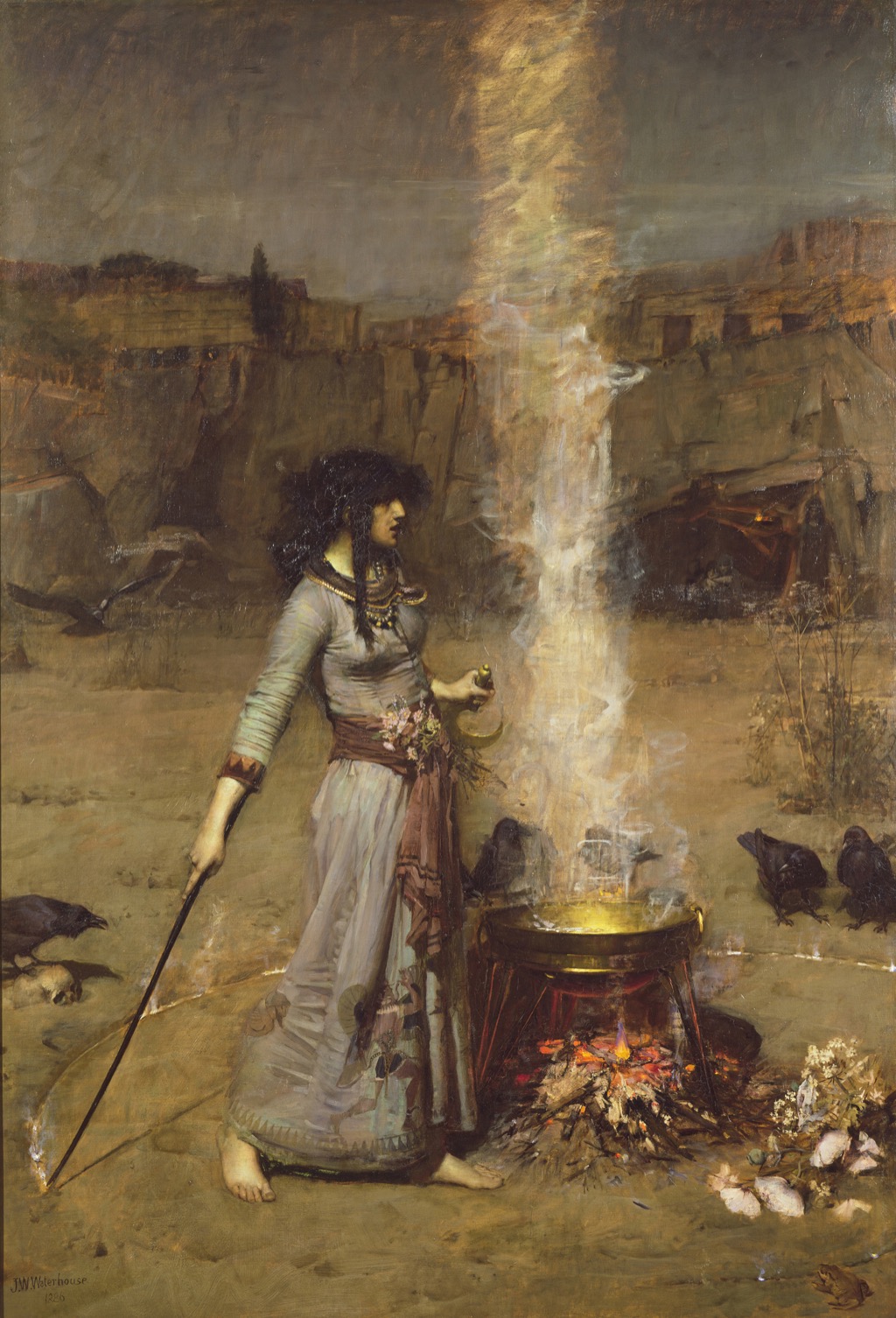
John William Waterhouse’s The Magic Circle presents magic as work. A barefoot woman stands beside a heated cauldron, her body extended through the wand with which she marks a burning boundary on the ground. Smoke rises in a pale, almost vertical column. Ravens, a skull and a small amphibian remain outside the circle, while flowers, fire and the concentrated figure occupy its interior. Nothing in the painting tells us whether the ritual will heal, summon, protect or destroy.
That refusal to specify the spell is central to the picture’s fascination. Waterhouse gives the sorceress authority without giving the viewer mastery over her intentions. She is not startled in the act, rescued from danger or defeated by a hero. She controls the space, the implements and the timing. The painting consequently brings together several strands of the artist’s developing career: his knowledge of antiquity, his taste for dramatic narrative, his interest in women associated with prophecy or enchantment, and his increasingly flexible handling of paint.
Recent research has complicated the longstanding description of the scene as an unidentified ritual. An 1881 review connected an earlier version of The Magic Circle with Theocritus, and modern scholars have argued that Waterhouse may have been visualising the love spell performed by Simaetha in the poet’s second Idyll. Another recent study identifies the image on the sorceress’s gown as Medusa rather than the warriors previously seen there. [6] [7] These proposals make the painting more historically specific, but they do not turn it into a puzzle with every answer fixed. Its power still depends upon what remains outside our knowledge.
At a Glance
- ArtistJohn William Waterhouse (1849–1917)
- TitleThe Magic Circle
- Date1886
- MediumOil paint on canvas
- Dimensions182.9 × 127 cm
- CollectionTate, London
- Accession numberN01572
- AcquisitionPresented by the Trustees of the Chantrey Bequest, 1886 [1]
- First exhibitedRoyal Academy, London, 1886, catalogue no. 450 [3]
- SubjectA sorceress carrying out a fire ritual; a connection with Theocritus’s second Idyll is strongly proposed but not documented in a surviving statement by Waterhouse [5] [6]
- Career contextWaterhouse’s first Royal Academy exhibit after his election as an Associate in 1885 [2] [4]
Contents
- Introduction
- A Sorceress Who Will Not Explain Herself
- The Possible Source in Theocritus
- A Composition of Circle, Triangle and Vertical Smoke
- Wand, Sickle and the Work of Ritual
- Fire, Cauldron and Smoke
- Ravens, Skull and Toad Beyond the Boundary
- Flowers, Herbs, Serpent and Dress
- Medusa on the Gown: A Recent Interpretation
- An Imagined Landscape Assembled from Many Pasts
A Sorceress Who Will Not Explain Herself
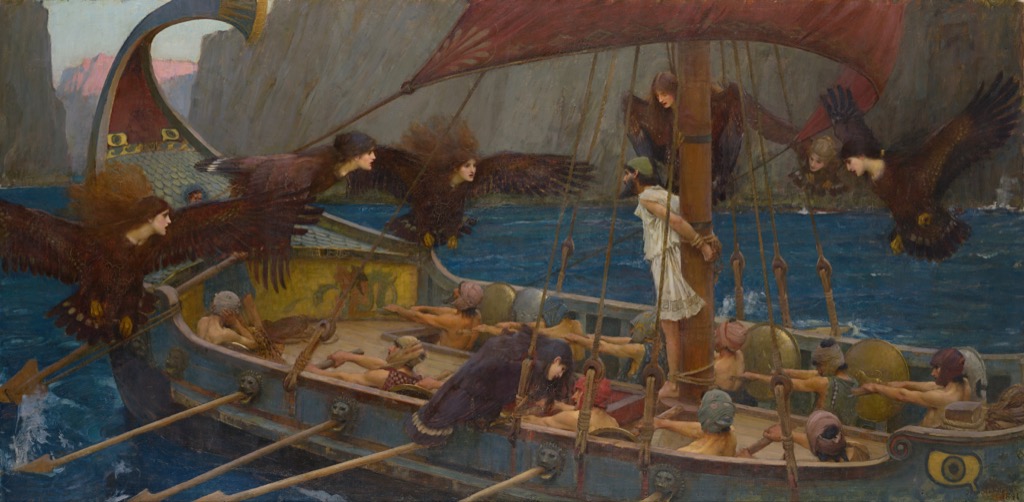
The painting places one figure at its centre and withholds her name. She is commonly called a witch or sorceress because of the cauldron, wand, curved blade, burning circle and attendant animals. Yet Waterhouse does not supply the kind of narrative identifier that makes The Lady of Shalott or Ulysses and the Sirens immediately dependent upon a recognised title. The Royal Academy catalogue listed only The Magic Circle. It gave no literary quotation beneath the title. [3]
This matters because the figure’s moral character cannot safely be inferred from her activity. She directs a ritual, but the painting does not show its result. The ravens and skull can produce an ominous atmosphere, while the flowers and gathered plants can suggest healing, fertility or sacrificial offering. The circle may confine a force within its boundary or protect its maker from what waits outside. Fire can destroy, purify, transform or communicate. Each object contributes to the scene without settling it.
Waterhouse also avoids several familiar visual shortcuts. The woman is not a grotesque hag, and her beauty is not converted into an invitation to the viewer. She turns in profile, concentrating on the ground before her rather than returning our gaze. Her mouth is open as if speaking or chanting, but whatever she says is withheld. Her body is visible, physical and carefully modelled, yet its movement serves the rite. The long extension from shoulder to hand to wand carries attention towards the circle rather than towards display for its own sake.
The result is a figure who is both observable and inaccessible. We can follow the mechanics of what she does more readily than we can judge why she does it. That imbalance places the viewer outside her knowledge, much like the birds beyond the circle. We look into an organised space whose rules she understands and we do not.
The Possible Source in Theocritus
For much of the painting’s modern history, its protagonist was treated as an unnamed or composite sorceress. That remains a responsible starting point because the finished canvas carries no quotation and no surviving letter has been found in which Waterhouse identifies its story. A significant piece of evidence nevertheless points towards a classical text.
Waterhouse had worked on the subject before 1886. In 1881 he exhibited a sepia version of The Magic Circle at the Dudley Gallery. A contemporary notice in the Pall Mall Gazette described it as an illustration of a brilliant scene in Theocritus. Modern researchers Mark and Jennifer Williams have connected that notice with the second Idyll, often titled The Sorceress or The Spell. In the poem, Simaetha performs a nocturnal love ritual intended to draw the faithless Delphis back to her. [6]
Theocritus’s poem supplies several elements that help explain Waterhouse’s image. Simaetha works with fire, herbs and ritual implements; she invokes the moon and Hecate; she repeats an incantatory refrain; and the magic arises from desire, abandonment and attempted control rather than from an abstract contest between good and evil. The poem is both a spell and a dramatic monologue. Once the ritual sequence ends, Simaetha recounts her relationship and distress to the moon. [5]
Waterhouse does not illustrate the text mechanically. The poem includes Simaetha’s attendant Thestylis, whereas the painted woman appears commandingly alone. Its ritual objects and actions cannot all be matched line by line. The monumental figure, fiery circle, skull, ravens and constructed landscape belong to Waterhouse’s visual argument. Even if Simaetha is accepted as the source, the painting is an interpretation rather than a diagram of ancient magic.
The evidence should therefore be described in degrees. The 1881 review establishes that an early Magic Circle was understood in relation to Theocritus close to the time of its making. The second Idyll provides a persuasive specific source. What remains unproved is whether every feature of the 1886 canvas refers to that poem, whether Waterhouse expected Academy visitors to identify Simaetha, or whether he deliberately expanded the scene into a more general image of female magical power. [5] [6]
A Composition of Circle, Triangle and Vertical Smoke
The picture is a tall rectangle, but its principal action is circular. Waterhouse sets the figure almost upright and lets her occupy much of the canvas’s height. Her wand extends diagonally from her raised right arm to the earth, creating one side of a broad triangular form. Her body supplies another. The round cauldron, the ring of fire and the curved blade answer those straight and diagonal lines.
This combination prevents the composition from becoming static. The woman’s feet are planted, yet her torso bends and twists. Her head turns towards the smoke while her arm reaches towards the ground. The wand seems to continue the body beyond itself. Because its tip meets the circle at the lower edge, the viewer can imagine the arc being traced rather than merely recognise a completed geometric sign.
The smoke provides a second kind of movement. It rises with unusual steadiness from the cauldron, becoming a pale shaft that divides and veils the dark distance. Unlike the energetic diagonal of the wand, this column is vertical and almost weightless. Fire, body and smoke therefore move in different directions: around, across and upward. Waterhouse gives a single ritual several spatial rhythms.
The circle is not seen as a perfect diagram. Perspective compresses it into an ellipse, and parts disappear behind the dress, figure and fire. That incompleteness is visually productive. The viewer mentally completes the boundary and thereby participates in recognising its power. At the same time, the body crosses in front of its far edge and the wand touches its near edge, so the sorceress cannot be separated from the act of making it.
The surrounding landscape presses loosely around this strong central geometry. Rocky walls and dark earth offer irregular masses against the circle, triangle and column. Waterhouse makes order something created within an unstable environment. The painting is not simply a woman standing in a mysterious landscape; it is the visible construction of a controlled space inside one.
Wand, Sickle and the Work of Ritual
The wand in the sorceress’s right hand is the painting’s clearest instrument. It lengthens her reach and translates intention into a visible mark. Waterhouse positions it so that the circle appears to burn where the tip has passed. Whether the fire is literal, supernatural or pictorially symbolic cannot be decided, but its direction makes the woman the source of the action.
Her other implement is more difficult to read. She holds a curved metallic blade behind her, often described as a sickle or ritual knife. Its crescent profile has encouraged associations with the moon, Hecate and the gathering of sacred plants. The plants tucked into or hanging from her clothing make cutting and collecting plausible activities. Theocritus’s Simaetha also works with vegetal and combustible substances, strengthening the connection between blade, herbs and spell. [5] [6]
Yet a named ritual should not be reconstructed from shape alone. Nineteenth-century artists and writers mixed archaeological knowledge, literary description, antiquarian speculation and contemporary occult imagery. Christie’s catalogue essay for a preparatory study calls the blade a boline and associates it with Celtic lore, while the rest of the scene draws heavily upon classical and vaguely Egyptian or eastern-looking material. [4] That eclecticism is evidence about Victorian image-making, not proof that the woman performs an accurately documented Celtic ceremony.
Her bare feet add to the physical immediacy of the act. They meet the earth within the boundary, one planted more firmly and the other responding to her turn. Their modelling makes the supernatural scene bodily credible. Magic here does not occur through an effortless gesture. It requires stance, balance, tools, heat and concentrated attention.
The curved blade is held back while the wand reaches forward. One instrument belongs to gathering or preparation; the other to inscription or command. Together they imply that the ritual has a before as well as a present moment. Materials have been collected, the fire prepared and the cauldron set upon its tripod. The painting shows the culminating action of a process whose earlier labour remains visible in its tools.
Fire, Cauldron and Smoke
The cauldron occupies less space than the figure but drives the picture’s transformation. It rests on a tripod above a compact fire. Its dark rounded body anchors the lower left of the composition, while the flames and smoke connect earth to sky. The woman’s profile faces this rising column, aligning breath, speech and vapour.
Waterhouse differentiates kinds of fire. The blaze beneath the vessel is dense and hot, built from concentrated reds, oranges and lighter accents. The circle is thinner and stranger, a low line of yellow and blue-white touches that seems to travel over the ground. Christie’s catalogue description of the study distinguishes the hot central fire from the colder ring and notes that Waterhouse reconsidered their effect while developing the composition. [4]
Smoke is the least solid and most dominant product of the rite. It widens as it rises and partially obscures the landscape. Shapes appear possible within it without becoming definite. Earlier interpretations have compared the vapour to the materialisations claimed in Victorian séances, particularly ectoplasm. That comparison places the work within the visual culture of nineteenth-century spiritualism, but it does not demonstrate that Waterhouse painted a séance or personally endorsed spiritualist belief. [4]
The ambiguity is more important than any single identification. Smoke makes unseen change visible while hiding its cause. It is a physical consequence of burning and a perfect carrier for the suggestion of apparition. The viewer expects something to emerge, yet the painting arrests the instant before emergence can be confirmed.
Waterhouse therefore makes atmosphere part of narrative. The darkened air is not a neutral background placed behind the figure. Fire alters it. Smoke occupies it. Light from the cauldron catches the woman’s flesh and dress, but the upper setting remains uncertain. The ceremony reorganises the landscape as we look.
Ravens, Skull and Toad Beyond the Boundary
Several dark birds gather outside the circle. Some stand on the ground, one occupies the skull, and others approach through the air. Their black bodies repeat the cauldron’s mass in smaller units while also making the boundary legible: they congregate around it without entering. Christie’s catalogue essay counts seven birds, although smoke, dress and dark ground make the total difficult to register immediately. [4]
Ravens or crows carry long associations with carrion, prophecy, death and supernatural knowledge. A skull intensifies those associations. But the painting does not label the species precisely or attach a written symbolic key. What can be observed securely is their function within the composition. They watch, wait and mark the uncultivated ground beyond the ring.
A small toad or frog occupies the right foreground. Its scale makes it easy to miss, but its isolation echoes that of the birds. Early modern European witchcraft imagery often used small animals as familiars, and later viewers readily bring that association to the painting. The creature may contribute to an ominous vocabulary, yet nothing proves that it serves or threatens the sorceress.
The relationship between woman and animals is consequently more interesting than a list of fixed meanings. If the circle is protective, the creatures represent what it excludes. If it is a space of conjuration, they may be witnesses, ingredients or possible transformed beings. If the rite is Theocritus’s love spell, they expand the ancient poem’s atmosphere rather than illustrate it literally.
Waterhouse keeps all these possibilities alive through distance. The birds do not attack. The toad does not move. The skull cannot speak. The sorceress does not acknowledge them. Her authority appears in the fact that the threatening emblems remain peripheral while she controls the centre.
Flowers, Herbs, Serpent and Dress
Inside the circle, the material world changes character. Pale flowers and gathered plants cluster near the fire and at the woman’s waist. Their softness and colour oppose the bare ground, black birds and bone outside. This contrast has often encouraged a reading in which the circle encloses life and fertility while excluding death. [1] [4]
That reading is attractive but incomplete. Plants used in ritual can heal, poison, intoxicate, perfume or sacrifice. Poppies, which have been identified among the flowers, bring associations with sleep and altered consciousness. Angelica has been read as a medicinal or protective herb. The same still-life detail can therefore support several different moral accounts of the ceremony. [4]
A serpent appears around the woman’s neck or clothing. Earlier commentary has connected it with the ouroboros, the serpent that bites its own tail and signifies cyclical renewal. In the painting, however, the form is not clearly shown completing that emblem. It is safer to describe a snake-like ornament or living serpent and recognise the wider associations of transformation, danger and ancient wisdom without claiming an exact symbol. [4]
The gown binds these elements together. Its muted blue-grey tone catches the firelight without becoming brilliant. A red or crimson band crosses the waist, where flowers and herbs gather. Decorated borders and the large figural motif near the lower skirt make the costume look ancient and ceremonial while resisting assignment to one historical culture.
Waterhouse uses clothing to balance bodily presence with distance. The garment follows the woman’s turn and gives weight to her stance, but its complex ornament prevents her from appearing contemporary. She occupies an imagined antiquity. That imagined past is not archaeologically uniform; it is assembled from materials that a Victorian painter and audience could recognise as classical, exotic or occult.
Medusa on the Gown: A Recent Interpretation
The figure decorating the sorceress’s skirt has generated unusually specific recent research. It was previously described as a warrior, a group of Persian or Greek warriors, or Jason encountering the serpent that guards the Golden Fleece. In a peer-reviewed study published online in 2025, Guy Tal argues that the motif is instead Medusa, copied from an Archaic Greek vase in the British Museum. [7]
Tal’s proposal changes the iconographic stakes. Medusa in nineteenth-century art could join attraction and horror, beauty and destructive power. If Waterhouse placed her image on the gown, the sorceress does not merely wear generic classical decoration. Her costume aligns her with a female figure whose gaze, hybridity and lethal force had been repeatedly reimagined from antiquity through Romantic and Victorian culture. [7]
This is a scholarly interpretation supported by visual comparison, not a newly discovered statement by Waterhouse. Readers should therefore be able to hold it alongside earlier identifications rather than being told that all uncertainty has vanished. The motif’s small scale within a very large painting also matters. It rewards close inspection after the central drama has already taken effect.
The debate illustrates how the painting operates at two distances. From across a gallery, the sorceress, circle, fire and smoke create an immediate theatrical event. At close range, embroidery, herbs, animals and facial expression invite iconographic study. Waterhouse could command attention before a crowded Academy wall and then sustain it through detail.
The proposed Medusa connection also links The Magic Circle with later Waterhouse subjects without making them identical. Circe, Medea, sirens and nymphs all join beauty with forms of knowledge or danger. Medusa on the gown would make 1886 a particularly clear moment at which the artist began turning the empowered magical woman into a central vehicle for his mature art. [7]
An Imagined Landscape Assembled from Many Pasts
The ritual takes place in a location that feels specific without being geographically secure. Dark cliffs rise behind the figure. Architectural forms occupy the heights, while shadowed openings and distant watchers suggest caves, tombs or settlements. The ground is dry and rough, yet flowers lie within the circle. Twilight or moonlight suppresses clear colour in the distance.
This setting should not be assigned to a named country. Waterhouse built a pictorial elsewhere from several historical languages. Classical dress and vase-derived ornament meet structures that can look Egyptian or Near Eastern; a possibly Celtic blade meets Theocritus; Victorian occult associations gather around an imagined ancient rite. [4] [7]
Such eclecticism was common within nineteenth-century historical painting, but it is not neutral. British and European artists often presented eastern Mediterranean, North African and western Asian material as a timeless realm of mystery. The resulting images could collapse distinct cultures into an exotic backdrop for European fantasy. Recognising that construction does not remove the painting’s formal achievement. It explains part of how its strangeness was manufactured.
Waterhouse’s early career had included Italianate and classical domestic scenes shaped by artists such as Lawrence Alma-Tadema. By the middle 1880s he was moving away from the evenly described architecture and anecdotal incident of those works. The landscape of The Magic Circle is less a reconstruction than a psychic arena. Rock, fire, smoke and darkness create conditions in which the figure’s action becomes plausible.
The ambiguity of place also supports the ambiguity of time. The painting is ancient enough to escape ordinary Victorian life but modern enough to address Victorian interests in archaeology, spiritualism, female agency and the theatre. Its past is a constructed distance from which contemporary questions could return in altered form.
Magic and the Victorian Present
Victorian Britain did not confine magic to an obsolete medieval or ancient world. Spiritualist séances, psychical investigation, occult organisations, archaeological discoveries and new editions of classical texts all helped make the supernatural intellectually and socially visible. Respectable participation in spiritualist practice could coexist with Christian belief, scientific curiosity or sceptical entertainment.
The Magic Circle entered that culture without documenting one modern practice. Its cauldron and classical costume remove the rite from a London drawing room, but the expectation that vapour might reveal a presence could resonate with contemporary reports of séances. Its female officiant could also speak to the prominence women achieved as mediums, whose claimed access to invisible knowledge created a public authority unavailable in many established institutions. [4]
This context has sometimes encouraged claims about Waterhouse’s own occult commitments. The surviving evidence does not justify certainty. The National Portrait Gallery notes the broader scarcity of personal anecdote and documentation, despite the artist’s professional success. [2] Paintings of magic prove that the subject interested him. They do not by themselves establish membership of a particular organisation, a settled theology or belief in every ritual he represented.
The picture is more revealing when approached as an encounter between cultural systems. Academic history painting supplied the monumental canvas and exhibition platform. Classical literature offered a possible narrative. archaeology supplied objects and costume motifs. French-influenced naturalism affected the handling of figure and setting. Modern occult culture gave ancient sorcery renewed relevance.
Waterhouse did not have to choose between these systems. Their combination is precisely what made the work contemporary in 1886. It could appear mysterious and archaic while engaging a public accustomed to modern theatre, popular satire, scientific debate and the spectacle of the annual Royal Academy exhibition.
Waterhouse’s Paint Handling
The painting’s subject attracts iconographic explanation, but its atmosphere also depends upon changes in paint handling. Waterhouse does not describe every surface with equal sharpness. The face, forearm, feet and important costume passages receive concentrated modelling. The ground, cliffs and smoke are broader and less stable. Edges dissolve as the eye moves away from the figure.
Christie’s catalogue essay for the preparatory study relates this variation to Waterhouse’s engagement with French painting, particularly the example of Jules Bastien-Lepage. It notes the grey and umber landscape, thinner application and square-brush handling behind the figure, contrasted with denser accents in the foreground and body. [4] The interpretation helps explain why the painting can feel academically designed but atmospherically modern.
The effect is directional. The figure holds because flesh and fabric are made more tangible than the uncertain space around her. Smoke can merge with landscape, and dark animals can emerge slowly from the ground. The viewer experiences recognition in stages rather than receiving a uniformly crisp inventory.
This should not be turned into a technical account unsupported by conservation analysis. The accessible evidence consulted here does not provide a full pigment map, X-radiograph or documented layer structure for the Tate canvas. Close looking and the comparison with preparatory versions can establish differences in finish and revision; they cannot reveal every material decision.
Even within those limits, the handling is integral to meaning. A sharply bounded, evenly lit setting would make the ceremony illustrative. Waterhouse instead lets paint itself move between material and apparition. The smoke is both substance and brushwork. The circle is both fire and a broken line of colour. The world appears to be changing because the surface never becomes equally solid everywhere.
From the 1881 Drawing to the Finished Canvas
The 1886 Tate painting emerged through sustained reconsideration. The sepia work exhibited at the Dudley Gallery in 1881 already established a sorceress, a staff or wand, a brazier and a rocky setting. Its contemporary association with Theocritus indicates that the subject was legible as more than a generic witch scene at this earlier date. [6]
Waterhouse returned to the idea with oil studies and smaller versions. A detailed preparatory painting sold at Christie’s measures 61.5 × 41.2 cm. Its duskier palette, watching figures, two kinds of fire and developed costume show that the artist tested the total atmosphere rather than only the woman’s pose. [4]
The Christie’s comparison proposes a practical reason for lightening the final canvas: a picture shown among many works in an unevenly lit Academy exhibition had to remain legible at a distance. [4] Whether or not that was Waterhouse’s conscious motive, the difference demonstrates how exhibition conditions can shape pictorial decisions. Mystery had to survive visibility.
The existence of smaller treatments also warns against calling every related work merely a sketch. Waterhouse could produce a preparatory study, revisit a successful design at reduced scale and refine individual details through drawings. Each object requires its own provenance and dimensions before its function is assigned.
What remains consistent is the long gestation. The Magic Circle was not a sudden invention created solely for the 1886 exhibition. Waterhouse carried the subject for at least five years, preserving its commanding female figure and ritual core while intensifying the circle, animals, costume and atmospheric drama. The finished work records both continuity and revision.
The Royal Academy Exhibition of 1886
Waterhouse exhibited The Magic Circle at the Royal Academy’s 118th annual exhibition in 1886. The official illustrated catalogue lists it as no. 450 and reproduced it as plate 65. [3] The institutional moment was important: it was his first Academy exhibit after election as an Associate in 1885. [2] [4]
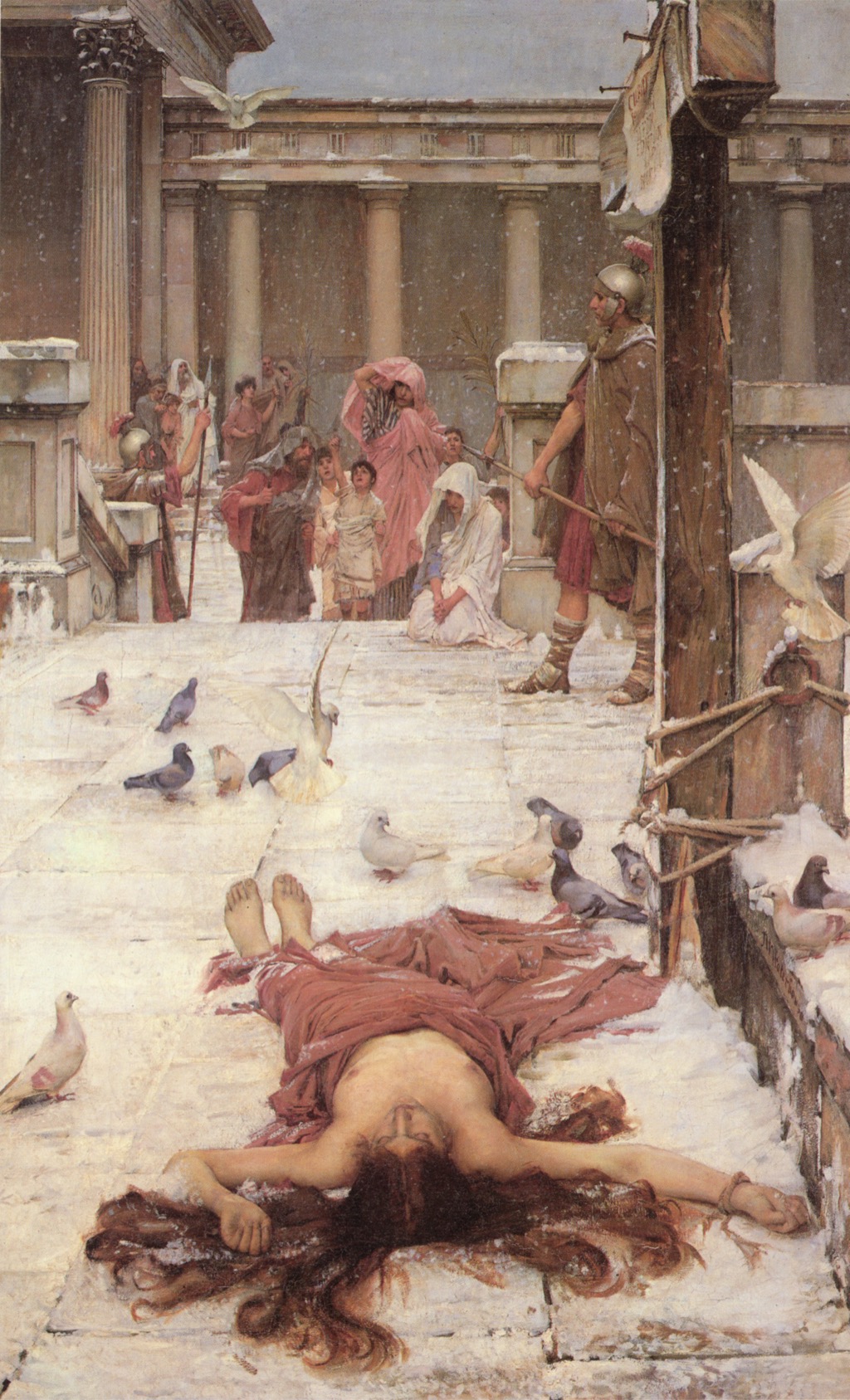
The picture followed Consulting the Oracle in 1884 and Saint Eulalia in 1885, giving Academy visitors three consecutive years of large, unsettling subjects centred on prophecy, martyrdom or supernatural force. Rather than leaving classical history behind in one abrupt conversion to Pre-Raphaelitism, Waterhouse was changing the emotional and pictorial terms through which he presented it.
Contemporary reception recognised the painting’s ambition. The Magazine of Art praised Waterhouse as “original in conception and pictorial in his results”. [8] Other responses were less reverent. Harry Furniss parodied the work in Punch, turning its theatrical sorceress into a comic version of the actress Sarah Bernhardt stirring a cauldron with an oversized spoon. [9]
Praise and parody point to the same quality: the painting was memorable as performance. Its large scale, profile figure, raised voice, flaming apparatus and vertical smoke could be read from across a busy gallery. The Academy did not encounter a quiet archaeological reconstruction but an event staged for public spectatorship.
The parody also confirms that solemn symbolism was not the only possible Victorian response. Academy paintings entered a crowded media culture of reviews, cartoons and jokes. Furniss’s transformation did not necessarily prove failure. It showed that Waterhouse had created an image distinctive enough to be recognised when its objects and gestures were exaggerated.
The Chantrey Bequest and the National Collection
The Magic Circle entered public ownership in the year of its first exhibition. The Royal Academy catalogue records its purchase by the Academy’s President and Council under the terms of the Chantrey Bequest, and Tate’s collection record gives the credit line “Presented by the Trustees of the Chantrey Bequest 1886”. [1] [3]
The bequest, established from the estate of sculptor Sir Francis Chantrey, enabled the acquisition of contemporary British art for the nation. Waterhouse’s selection therefore did more than reward an individual success. It placed a recently exhibited work of imaginative history painting within an evolving national collection.
The accession number N01572 preserves part of that institutional history. The work belonged to the national collection before Tate Britain existed in its present form. Its later home within Tate changed the setting through which audiences encountered it—from an annual exhibition surrounded by new art to a museum narrative about British painting.
A letter preserved in the National Gallery archive records Waterhouse contacting Agnew about the Royal Academy’s response to a request concerning the loan of The Magic Circle to a Jubilee Exhibition. [10] The document is concise, but it demonstrates the continuing practical life of the painting after acquisition: exhibitions, permissions and institutional correspondence shaped where it could be seen.
The picture has continued to travel within major surveys. It was included in the National Gallery of Australia’s Love & Desire: Pre-Raphaelite Masterpieces from the Tate, where it appeared among works that framed mysterious and disruptive female figures as a recurring Victorian theme. [11] Each display places the sorceress inside a new interpretive circle—Academy painting, national art, Pre-Raphaelite legacy, occult image or debate about gender and power.
From Consulting the Oracle to Circe
The Magic Circle belongs to a sequence rather than an isolated fascination. In Consulting the Oracle of 1884, women gather around a severed or disembodied head whose speech is interpreted by a female intermediary. In Saint Eulalia of 1885, supernatural signs accompany a young martyr’s body. Across these pictures Waterhouse tested how large compositions could make invisible forces present through objects, gesture and atmosphere. [4]
The 1886 sorceress differs because she commands rather than receives the event. She is not one listener among a group and not the passive centre of a miracle. Her will organises the scene. That active authority anticipates Waterhouse’s later treatment of Circe.
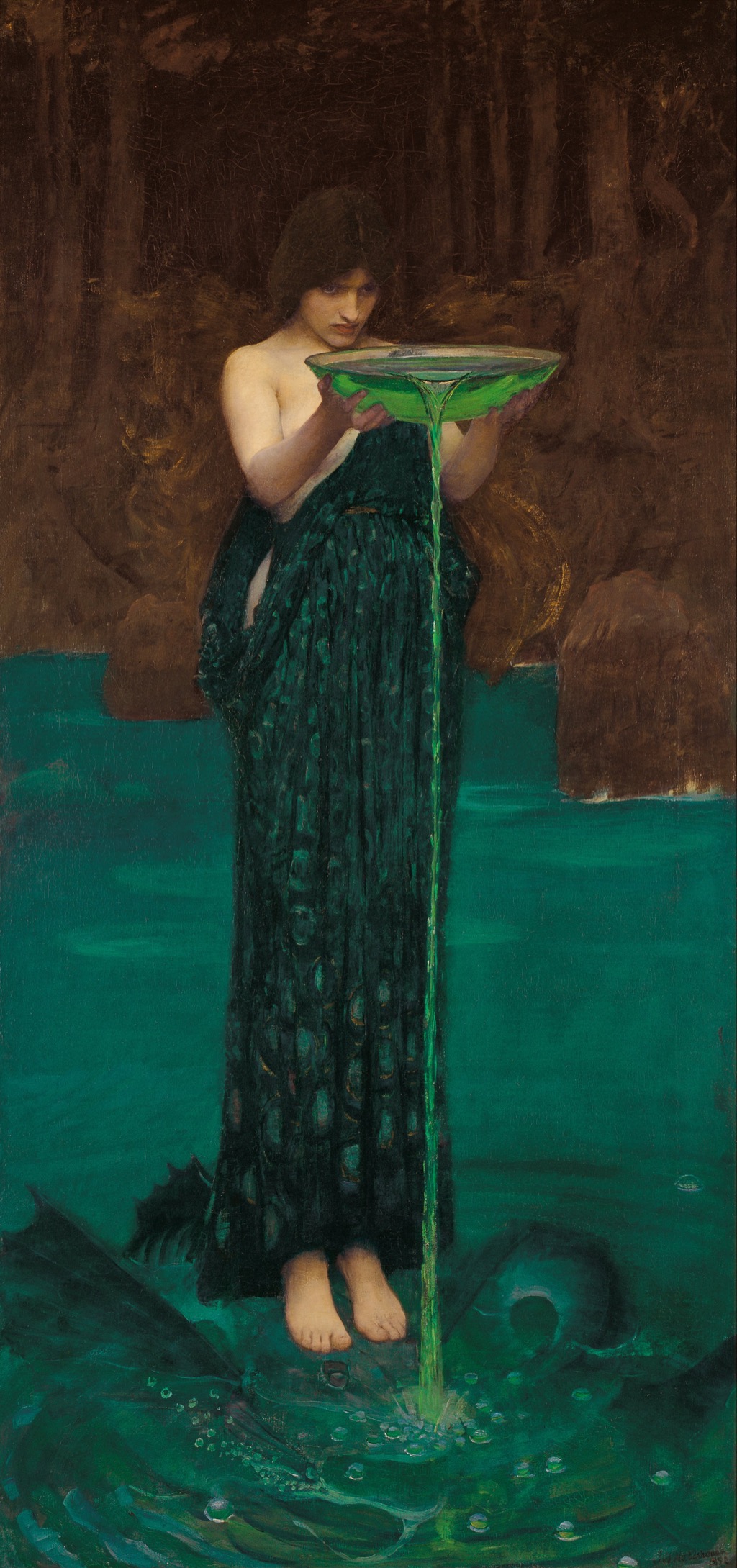
In Circe Offering the Cup to Ulysses of 1891, the enchantress confronts the viewer from her throne, with Ulysses registered in reflection. In Circe Invidiosa of 1892, she pours poison into the water that will transform Scylla. These paintings name their literary protagonist and clarify the direction of her action, but they preserve the combination of beauty, ritual knowledge and threat developed in The Magic Circle. [12]
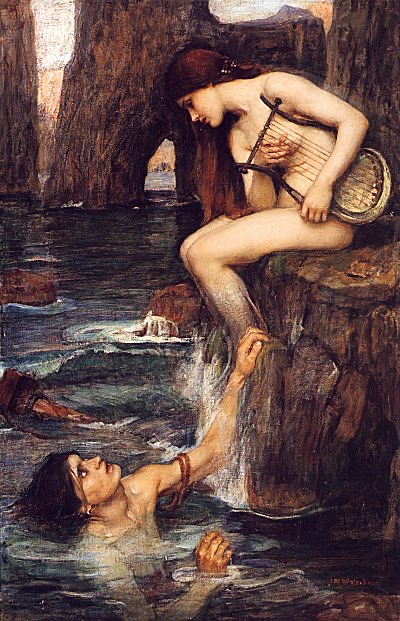
Waterhouse also continued to explore women whose power operates through song, attraction or control of a natural setting. Sirens, nymphs and Medea extend the theme without becoming interchangeable witches. The important continuity lies in agency and suspended consequence: viewers meet the woman at the moment when her knowledge is being exercised, before its full effect is visible.
This continuity helps place Waterhouse historically. He was not a member of the original Pre-Raphaelite Brotherhood, founded before his birth, but his mature work renewed its conjunction of literary subject, saturated emotional atmosphere and close natural detail. He joined those qualities to Royal Academy training, classical culture and a more varied, French-responsive surface. [2] [13]
Power, Danger and the “Femme Fatale” Question
The sorceress has often been absorbed into the late nineteenth-century category of the femme fatale: the beautiful woman whose attraction conceals danger to men. There are reasons for the association. She is beautiful, secretive and potentially destructive; recent research on the Medusa motif strengthens the link with Victorian images that join seduction and horror. [7]
Yet the category can also narrow what the painting permits. No threatened man appears in the foreground. The viewer is not placed in the role of an enchanted lover, and the woman does not offer herself through direct eye contact. If the source is Theocritus, her ritual arises from abandonment and a desire to regain control, not from uncomplicated predation. [5] [6]
The painting may reveal Victorian anxiety about female knowledge, but it also grants that knowledge visual authority. The sorceress occupies the largest form, controls the decisive gesture and creates the only ordered space. The men or figures in the distance, if read as such, remain spectators. Nothing within the image defeats or disciplines her.
It is therefore more useful to ask how danger and agency coexist than to decide whether Waterhouse celebrates or condemns the woman. Her ritual could be protective or coercive. Her beauty may make her power more culturally legible, but it does not make her available. The circle separates her from the world and from us.
Modern readings also need to account for the painting’s constructed antiquity. The empowered woman is imagined through a Victorian mixture of classical text, exotic costume, occult symbolism and theatrical display. She is not a transparent portrait of ancient religious practice or of contemporary womanhood. Her agency is real within the composition while remaining shaped by the fantasies of the culture that produced her.
Why The Magic Circle Still Matters
The painting endures because its clarity and uncertainty reinforce one another. The viewer immediately understands that a ritual is taking place. Figure, wand, circle, fire and smoke make the action unmistakable. What the ritual means remains open.
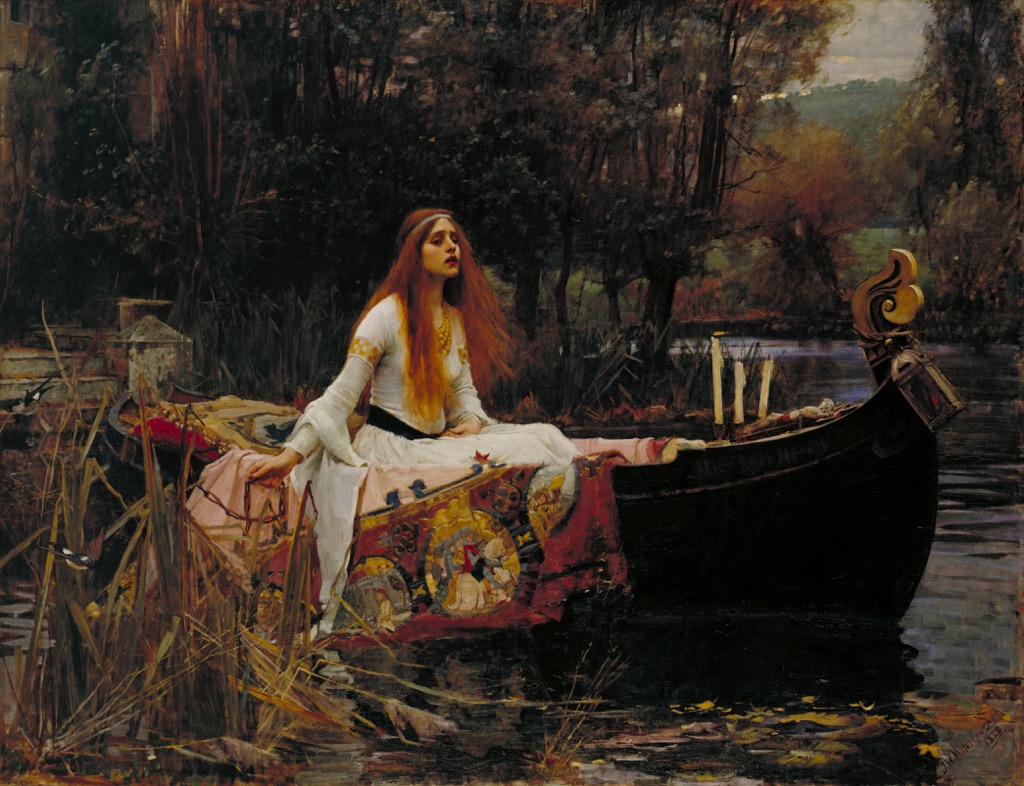
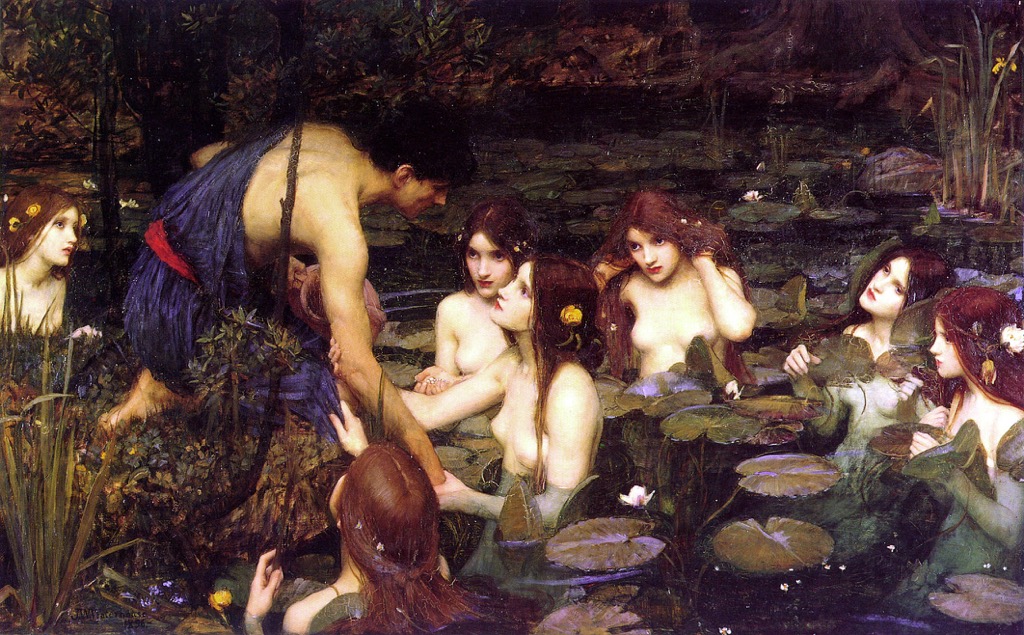
Waterhouse’s most effective narrative paintings often occupy this structure. They present a precise physical moment surrounded by incomplete knowledge. The Lady of Shalott has released her chain but has not reached Camelot. Hylas has encountered the nymphs but has not disappeared. Circe tips her poison, and its transformation is still to come. The sorceress draws her circle, and the spell has not yet declared itself.
The work is also pivotal within the artist’s career. It converts the classical and supernatural interests of his early Academy pictures into a commanding single-figure image. It demonstrates the importance of preparatory development, public exhibition and modern paint handling. It introduces the magical woman as an active centre rather than an accessory to a male hero’s story.
New scholarship has not exhausted the picture. The Theocritus connection returns a possible narrative to the scene, while the Medusa identification changes the gown from decoration into argument. [6] [7] Both discoveries make the painting richer precisely because they remain propositions that must be tested against the object, contemporary evidence and alternative readings.
Most of all, The Magic Circle makes looking resemble its subject. The viewer moves around a boundary of evidence: approaching the figure through objects, texts and comparisons while never fully entering her knowledge. Waterhouse allows us to see the spell being made and denies us the confidence to say exactly what it will do.
A Closer-Looking Guide
Begin with the wand rather than the face. Follow its diagonal from the woman’s hand to the burning mark at the lower edge. Notice how the body and instrument become one extended line, then compare that line with the vertical smoke.
Next, reconstruct the circle. Parts disappear behind dress, feet and fire, but the mind completes it. Ask what lies inside—woman, flowers, cauldron, implements—and what remains outside—birds, skull, toad and barren ground.
Look at the two fires separately. The blaze beneath the cauldron is concentrated and hot. The circle is lower, broken and cooler in colour. Waterhouse uses different marks to distinguish combustion from enchantment.
Move upward through the smoke. It is solid enough to command the composition and transparent enough to reveal the landscape. Search for forms, but notice how the paint refuses to confirm an apparition.
Study the costume at close range. The red sash, gathered plants, borders and figural motif make the gown a store of information. Compare the traditional warrior or Jason reading with the recent proposal that the motif represents Medusa. [4] [7]
Finally, return to the face. The mouth appears active, the gaze directed and the expression concentrated. Decide whether the figure seems angry, fearful, ecstatic or professionally absorbed—and then ask which visible evidence supports that response.
Related Pages
- John William Waterhouse: Return to the artist overview and career context.
- Paintings: Place the Tate painting within the broader Waterhouse corpus.
- Hylas and the Nymphs: Compare another mythological scene built around attraction and danger.
Frequently Asked Questions
A sorceress is performing a ritual beside a cauldron. She uses a wand to mark a fiery circle around herself, while smoke rises and birds and other ominous objects remain beyond the boundary. The painting does not reveal the spell’s result. [1]
Waterhouse did not identify a model in the accessible evidence. Modern research argues that the subject may be Simaetha, the abandoned woman who performs a love spell in Theocritus’s second Idyll. The connection is persuasive because an 1881 review linked Waterhouse’s earlier version with Theocritus, but it remains safer to describe Simaetha as a strongly proposed identification rather than an undisputed fact. [5] [6]
The painting does not settle her moral character. Ravens, skull, toad and fire can appear threatening, while flowers, herbs and the protective circle can suggest healing or defence. Her action may be coercive if understood as Simaetha’s love spell, but Waterhouse gives no visible outcome.
It creates a boundary between the ritual space and the surrounding ground. It may protect the sorceress, contain the ceremony or mark the reach of her power. Compositionally, it gives a geometric order to the landscape and makes her act of control visible.
She holds a wand in her right hand and a curved blade, usually called a sickle or ritual knife, in her left. The wand traces the circle. The blade may relate to the cutting of ritual plants, but its exact historical or religious identity is uncertain. [4]
They have been described in several ways, including warriors and Jason confronting the serpent that guards the Golden Fleece. Guy Tal’s 2025 study argues that the principal motif is Medusa copied from an Archaic Greek vase in the British Museum. [7]
They help define the boundary and contribute associations with death, prophecy, witchcraft and danger. Because the sorceress excludes or controls them, they can also strengthen the impression of her authority. The painting does not provide a fixed symbolic key.
Probably, though the connection was long overlooked. An 1881 review associated Waterhouse’s earlier treatment with Theocritus. Researchers have identified the most likely source as Idyll II, in which Simaetha performs a night-time spell to recover her lover Delphis. [5] [6]
The principal 1886 canvas is in Tate’s collection in London, accession N01572. It entered the national collection through the Chantrey Bequest in the year it was exhibited. [1] [3]
Discussion
The Magic Circle offers unusually rich ground for disagreement because its central action is clear and its purpose uncertain. Literary recovery, object research and close looking can narrow possibilities without eliminating interpretation.
Reader Insights
Does the circle protect the sorceress from the surrounding world, imprison what she has summoned, or announce her control over both spaces?
How does the painting change if the woman is understood as Simaetha attempting to recover Delphis rather than as an unnamed practitioner of magic?
Does Waterhouse invite admiration, anxiety or moral judgement, and how does the woman’s refusal to meet our gaze affect that response?
Join the Conversation
Share the object, gesture or recent interpretation that most changed how you understand the ritual.
References
- Main image: John William Waterhouse, The Magic Circle, 1886, Tate, public-domain photographic reproduction via Wikimedia Commons.
- Tate, The Magic Circle, 1886, John William Waterhouse (N01572), official collection record. View source
- National Portrait Gallery, London, “John William Waterhouse (1849–1917), Figure Painter,” Later Victorian Portraits Catalogue, biography and Royal Academy chronology. View source
- Royal Academy of Arts, The Royal Academy of Arts: Official Illustrated Catalogue of the Exhibition 1886, the One Hundred and Eighteenth, catalogue no. 450, plate 65; catalogue record at the Yale Center for British Art. View source
- Christie’s, “John William Waterhouse, R.A., Study for The Magic Circle,” lot essay prepared with the assistance of Peter Trippi, 2009. View source
- Theocritus, Theocritus, Translated into English Verse, translated by C. S. Calverley, including Idyll II, Project Gutenberg edition. View source
- Mark Williams and Jennifer Williams, “The Inspiration behind The Magic Circle,” summary of their 2023 Pre-Raphaelite Society Review study connecting the painting with Theocritus’s second Idyll and the 1881 Pall Mall Gazette notice. View source
- Guy Tal, “An Overlooked Femme Fatale in Victorian Art: The Medusan Sorceress in John William Waterhouse’s The Magic Circle,” Konsthistorisk tidskrift/Journal of Art History, vol. 93, no. 4, pp. 256–283, published online 2025. View source
- The Magazine of Art, vol. 9, 1886, “Current Art,” p. 346, contemporary Royal Academy response; public-domain scan from the Getty Research Institute/Internet Archive. View source.pdf)
- Harry Furniss, parody of The Magic Circle, Punch, vol. 90, 15 May 1886, p. 232, public-domain Heidelberg University digitisation. View source
- The National Gallery Archive, “Letter from J. W. Waterhouse to Agnew,” concerning the possible loan of The Magic Circle to the Jubilee Exhibition, NGA27/32/2/126. View source
- National Gallery of Australia, Love & Desire: Pre-Raphaelite Masterpieces from the Tate, thematic exhibition archive including The Magic Circle. View source
- Michelle Bonollo and the National Gallery of Victoria, “J. W. Waterhouse’s Ulysses and the Sirens: Breaking Tradition and Revealing Fears,” study of Waterhouse’s classical sources, sorceress subjects and contemporary reception. View source
- Elizabeth Prettejohn, Peter Trippi, Robert Upstone and Patty Wageman, J. W. Waterhouse, 1849–1917: The Modern Pre-Raphaelite, exhibition-catalogue record, University of Bristol Research Portal, 2008. View source