

 Buy Art Prints Now
from Amazon
* As an Amazon Associate I earn from qualifying purchases.
Image reference [image]
 by Tom Gurney
Tom Gurney BSc (Hons) is an art history expert with over 20 years experience
Published on August 14, 2026 / Updated on August 14, 2026
Email: tomgurney1@gmail.com / Phone: +44 7429 011000
Saint Eulalia: Introduction
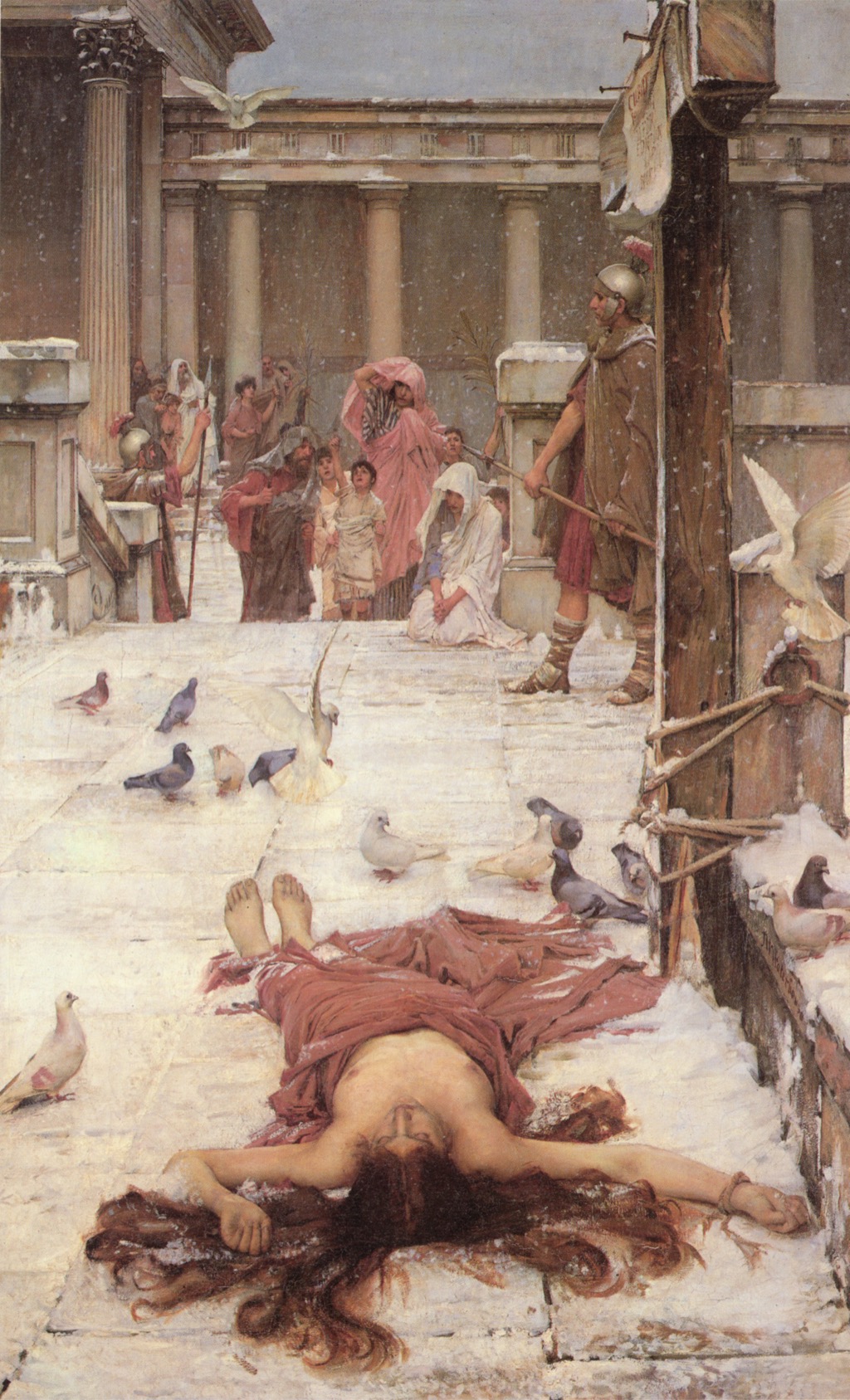
John William Waterhouse makes a martyrdom painting out of what comes after violence. Saint Eulalia lies on a snow-covered pavement in the lower part of the canvas, her body thrust towards the viewer by extreme foreshortening. The men responsible for her death have receded. A small white dove rises into the pale air. Snow descends across a Roman city that seems at once public, indifferent and miraculously transformed.
Exhibited at the Royal Academy in 1885, Saint Eulalia belongs to the decisive early phase in which Waterhouse established himself through ambitious subjects from antiquity. Yet the picture is unlike a conventional history painting crowded around a climactic action. The execution is over, the central space is largely empty, and the principal figure cannot return our gaze. Waterhouse turns stillness, distance and exposed ground into the sources of drama.
At a Glance
- ArtistJohn William Waterhouse (1849–1917)
- TitleSaint Eulalia
- Date1885
- MediumOil paint on canvas
- Dimensions188.6 × 117.5 cm
- CollectionTate, London
- Accession numberN01542
- First exhibitedRoyal Academy, London, 1885
- AcquisitionPresented by Sir Henry Tate in 1894 [1]
- SubjectThe aftermath of the martyrdom of Eulalia of Mérida, traditionally dated to the persecution of Christians under the Roman emperors Diocletian and Maximian
- Principal literary sourcePrudentius, Peristephanon or Crowns of Martyrdom, Hymn 3
- Career significanceThe painting appeared in the year Waterhouse was elected an Associate of the Royal Academy [2]
Contents
- Introduction
- A Martyrdom Shown After the Event
- Eulalia of Mérida: History, Legend and Devotion
- Prudentius and the Miraculous Snow
- The White Dove and the Departure of the Soul
- The Body at the Edge of the Picture
- Rome, the Forum and the Distant Witnesses
- Composition, Colour and the Discipline of Restraint
- The Royal Academy of 1885 and a Career at a Turning Point
- A Martyrdom Without the Instruments of Martyrdom
A Martyrdom Shown After the Event
The title names a saint, but the picture first confronts us with a body. Eulalia lies low across the foreground, one arm extending towards the bottom edge. Because Waterhouse has foreshortened the figure so sharply, her head, torso and legs do not unfold in a comfortable profile. They project and recede along the imagined ground. The viewer is made conscious of standing close to someone who has just died.
Most martyrdom images organise suffering around an action: a weapon is raised, a fire burns, an executioner strikes, or a saint looks upward at the moment of revelation. Waterhouse suppresses that climax. Whatever the executioners did has already happened. He asks what remains when spectacle is over.
That decision shifts attention from physical action to moral response. The distant figures may continue with their roles, but they no longer command the picture. The dead girl, the falling snow and the ascending dove establish another order of significance. Political violence occupies the past tense; the miracle occupies the present.
The foreground is disturbingly quiet. No mourner kneels beside Eulalia. No hand covers her body. The space around her is open, and that exposure becomes part of the image's emotional force. Waterhouse does not allow a crowd to mediate between spectator and victim.
At the same time, the painting avoids graphic injury. Tate's account of the legend describes an exceptionally brutal execution, but Waterhouse does not inventory wounds or blood. [1] He represents death clearly while withholding the bodily damage that would make the canvas a scene of horror. This is restraint, although not reassurance: the absence of visible violence makes the abandoned body more, not less, accusatory.
The result depends upon a difficult balance. Eulalia is at once a Christian martyr, a historical or legendary girl, and a painted nude exposed to a nineteenth-century audience. Waterhouse gives her physical vulnerability great pictorial importance, yet the snow and dove insist that she is not merely an object of sight. The picture asks viewers to look while questioning what kind of looking such a subject permits.
Eulalia of Mérida: History, Legend and Devotion
Eulalia was venerated as a young Christian martyr associated with Augusta Emerita, now Mérida in Spain. Tradition places her death around 304, during the persecution connected with Diocletian and Maximian. Later accounts describe a girl of about twelve who refused to participate in Roman sacrifice and openly challenged the authorities. [1]
The surviving tradition is devotional rather than a modern court record. Its fullest influential early literary form is Hymn 3 of Prudentius's Peristephanon, written later in the fourth or early fifth century. Prudentius was born in Roman Spain and shaped stories of Iberian martyrs into highly literary Christian poems. His Eulalia is therefore both a remembered local saint and a deliberately constructed exemplar of courage. [3]
That distinction matters when reading Waterhouse. The painting should not be treated as documentary evidence for an event in 304. It visualises a tradition that had been retold for centuries, through poetry, liturgy and art.
In Prudentius's account, Eulalia leaves home, confronts the Roman judge and rejects the gods and ceremonies demanded of her. Torture tests the integrity of her confession. At death, her spirit appears in the form of a white dove, and snow covers the body like a garment or shroud. [3]
Those final marvels gave Waterhouse his subject. He does not need to show every episode because dove and snow identify the moment for viewers who know the legend. For those who do not, the natural impossibility of the scene—a snowfall that seems to honour rather than simply chill the dead—still establishes that the body has entered a sacred narrative.
Eulalia's youth intensifies the ethical contrast. Roman civic and judicial power is represented by adult men, uniforms and architecture; resistance is embodied in a girl who has no material force. The legend reverses their apparent hierarchy. The state can kill her, but it cannot control the meaning of her death.
A present-day account should acknowledge the problems of hagiographic violence. The story was designed to inspire devotion through endurance, and its repeated tortures can turn a young girl's pain into spectacle. Waterhouse reduces that spectacle by choosing aftermath. Whether that choice fully escapes the sexualisation of vulnerability remains open to discussion.
Prudentius and the Miraculous Snow
When Waterhouse exhibited the picture, the Royal Academy catalogue included a note drawn from Prudentius: the saint's body was shrouded by a miraculous fall of snow while it lay in the forum after martyrdom. [2] The note did more than explain unusual weather. It directed viewers to understand the white ground as an active part of the legend.
Snow performs several functions at once. Within the story, it covers Eulalia when human beings have left her exposed. It acts like a funerary cloth without a mourner having to place one. It also changes the Roman forum from a site of punishment into a field marked by divine response.
Visually, snow reduces detail. Paving, steps and distance are drawn together by a pale surface. Eulalia's body does not disappear into that surface; subtle differences of warmth and contour keep it present. Yet flesh and shroud approach one another tonally, so that covering is imagined even before accumulation is complete.
The snowfall also suspends time. Individual flakes are too small to produce the emphatic action of rain or storm. They create a slow veil. The murder belongs to an immediately preceding moment, but the picture seems to hold the city between event and burial.
Waterhouse's Academy note is important evidence of intention. It confirms that the snow was not merely atmospheric invention and that Prudentius was being offered as the interpretive key. It does not prove that every visual detail derives from the poem. The architecture, arrangement of witnesses and radical placement of the body are the painter's own means of translating text into a single image.
The miraculous covering creates a paradox. Eulalia remains visibly exposed because a painting must show what the snow is said to conceal. Waterhouse depicts the beginning or process of the shroud rather than its completed effect. The viewer sees both vulnerability and promised protection.
That temporal choice is central to the painting. If the body were entirely covered, Eulalia would become an outline or absence. If no snow had fallen, the subject would be only abandonment. Waterhouse selects the interval in which grace is visible as change.
The White Dove and the Departure of the Soul
Above Eulalia, a white dove rises through the open centre of the composition. Prudentius describes the martyr's spirit leaving her mouth in avian form, and the bird gives upward motion to a painting otherwise dominated by a body pressed against the ground. [3]
The dove is small. It does not arrive with a host of angels or a burst of supernatural light. Its scale makes discovery part of looking. Once noticed, it links the dead figure below with the empty air above.
This vertical relation reorganises the canvas. Eulalia's body is foreshortened along the pavement; the dove ascends. The authorities remain at the edges or in the distance. Earthly and spiritual directions separate without turning the image into a diagram.
The bird can carry familiar Christian associations with peace and the Holy Spirit, but its most secure meaning here comes directly from the Eulalia tradition: it is the visible sign of her departing soul. A broad symbolic reading should not replace that narrative function.
Its whiteness also joins bird and snow. One descends while the other rises. Snow falls to cover the body; the dove leaves it. Opposing motions meet in the central air, turning emptiness into the place where transformation occurs.
Waterhouse avoids painting the soul as a second human figure. The small bird preserves the mystery of departure and prevents Eulalia from appearing simultaneously dead and bodily resurrected. Her triumph is implied rather than staged.
The contrast with the men is acute. They are larger, materially armed and tied to the architecture. The dove is slight and vulnerable, yet it moves beyond their jurisdiction. The legend's claim that imperial force cannot extinguish Christian identity is made through scale and direction rather than through combat.
For viewers without religious belief, the dove can still be read as the image through which a culture refuses to let a victim's meaning be determined by her killers. The painting does not require agreement with the miracle to make that reversal intelligible.
The Body at the Edge of the Picture
Eulalia's placement is Waterhouse's boldest decision. She does not occupy the geometric centre. Her body lies across the lower zone, close to the viewer and partly governed by the frame. Above her opens a large expanse of pavement and air.
This is not emptiness caused by lack of invention. It is structured absence. The gap tells us that the crowd has withdrawn and that no human protection has arrived. It also prevents background anecdote from competing with the foreground.
Foreshortening makes the body difficult to possess as a graceful silhouette. Many of Waterhouse's later women are organised in long, readable profiles against landscape. Here the body comes towards us, creating compression and awkwardness. The pose refuses the easy elegance one might expect from a reclining figure.
The low viewpoint strengthens the confrontation. We are not looking down from a safe architectural balcony. The ground rises through the image, and Eulalia lies at roughly the threshold of our own space. Her nearness makes the spectators and officials seem more remote.
Her hair spreads over the snow and helps locate the head without reducing its stillness. Drapery gathers around parts of the body but does not become a fully protective garment. The relation between cloth, flesh and snow makes exposure a process rather than a fixed condition.
Because Eulalia is dead, she cannot perform sainthood through an expressive gaze or gesture. Waterhouse transfers expression into composition. The stretched arm, turned head, open ground and falling flakes do the emotional work that a living face might otherwise carry.
The body can still be beautiful, and that fact is ethically uneasy. Nineteenth-century academic painting often made female suffering visually refined. Saint Eulalia participates in that tradition even as its severe placement resists simple sensual pleasure. Recognising both aspects is more honest than declaring the picture either wholly reverent or wholly exploitative.
The scale of the canvas matters. At nearly 1.9 metres high, Eulalia is not a small devotional figure. [1] The work confronts a public audience with a life-sized or near-life-sized presence and a city large enough to abandon her.
Rome, the Forum and the Distant Witnesses
Prudentius locates the exposed body in a public civic space. Waterhouse converts that setting into monumental architecture, steps, walls and a broad paved area. The city communicates order, but its order has produced or accommodated injustice.
The painting's Rome is imaginative history painting, not an archaeological survey of Mérida. Classical forms establish the authority and remoteness of empire. Exact identification of buildings would go beyond the evidence supplied by the image.
Figures stand or move in the background. Some appear to be soldiers or officials; others may be onlookers. Their reduced scale makes emotional distance visible. They are near enough to have witnessed the event and far enough to leave Eulalia alone.
Waterhouse does not give every observer an unambiguous moral role. A turned body might indicate departure, indifference, unease or duty. The group should be read as a social field rather than as a set of individually documented characters.
The main upright male figure provides a hard counterpoint to the saint. Military or civic verticals express the state that remains standing. Eulalia's horizontal body appears defeated by that measure, while the dove's ascent quietly overturns it.
Architecture also controls sight. Walls and steps channel the eye into depth, then the open upper area releases it. The city surrounds the martyr without containing the meaning attached to her.
The lack of intimate mourners is significant. Waterhouse could have provided grief through women bending over the body. By refusing them, he prevents sympathy from being safely delegated. The viewer must supply the act of witness.
The forum finally becomes two places at once: a stage on which Roman authority displayed punishment, and a sacred site remade by snow. The same ground supports political exposure and miraculous shrouding. Waterhouse's drama lies in that change of ownership.
Composition, Colour and the Discipline of Restraint
The canvas is vertical, but much of its principal action lies horizontally across the bottom. This tension prevents the format from simply elevating its saint. Eulalia must first be encountered as fallen.
The largest interval is not between figures but between body and dove. Pale pavement and air occupy that passage. The eye climbs slowly rather than following a procession of gestures.
Colour is held to a restricted, cold range. Snow, stone and sky create silvery or grey-white fields. Warmer flesh and hair distinguish Eulalia without making her blaze theatrically against the setting. Dark clothing and architectural accents anchor the more distant figures.
Red is not allowed to dominate. In a martyrdom subject, abundant blood could provide immediate explanation. Waterhouse instead makes viewers rely on title, stillness and legend. The violence is known by consequence.
The falling flakes soften boundaries at the same time that architectural lines maintain structure. Nature or miracle veils the rigid city without dissolving it. This is a visual equivalent of the story's moral reversal: Roman order remains present, but another order descends across it.
The paint handling visible in reproductions alternates between defined figure and broader atmosphere. Precise claims about pigments, underdrawing or changes beneath the surface would require a published technical examination. The accessible collection record identifies oil on canvas but does not support a detailed reconstruction of Waterhouse's process. [1]
What can be seen is his control of emphasis. The face and hand do not need miniature finish everywhere around them. Large quiet areas make the smallest white bird and the faint snowfall carry unusual weight.
This restraint distinguishes the painting from melodrama. The subject is extreme, but the visual language is measured. Waterhouse trusts posture, interval and weather to communicate what an execution scene might have declared through movement.
The Royal Academy of 1885 and a Career at a Turning Point
Waterhouse exhibited Saint Eulalia at the Royal Academy in 1885. The Academy's historical catalogues list the work, and the painting appeared in the year he was elected an Associate of the institution. [2] [4]
Election was not an award automatically attached to one canvas, so it is safer to say that Saint Eulalia formed part of the reputation on which his advancement rested than that it single-handedly caused it. Contemporary and later accounts nevertheless treat the picture as a major statement in his early career. [2]
Waterhouse had already attracted attention with The Favourites of the Emperor Honorius in 1883 and Consulting the Oracle in 1884. Those works established his ability to stage antiquity through large groups, interiors and archaeological detail. Saint Eulalia keeps the Roman world while stripping away much of its decorative density.
The change is important. The earlier paintings often distribute interest across costumes, vessels, birds and architecture. Here a few motifs—body, snow, dove, witnesses—carry the whole argument. Historical setting supports a psychological and spiritual image.
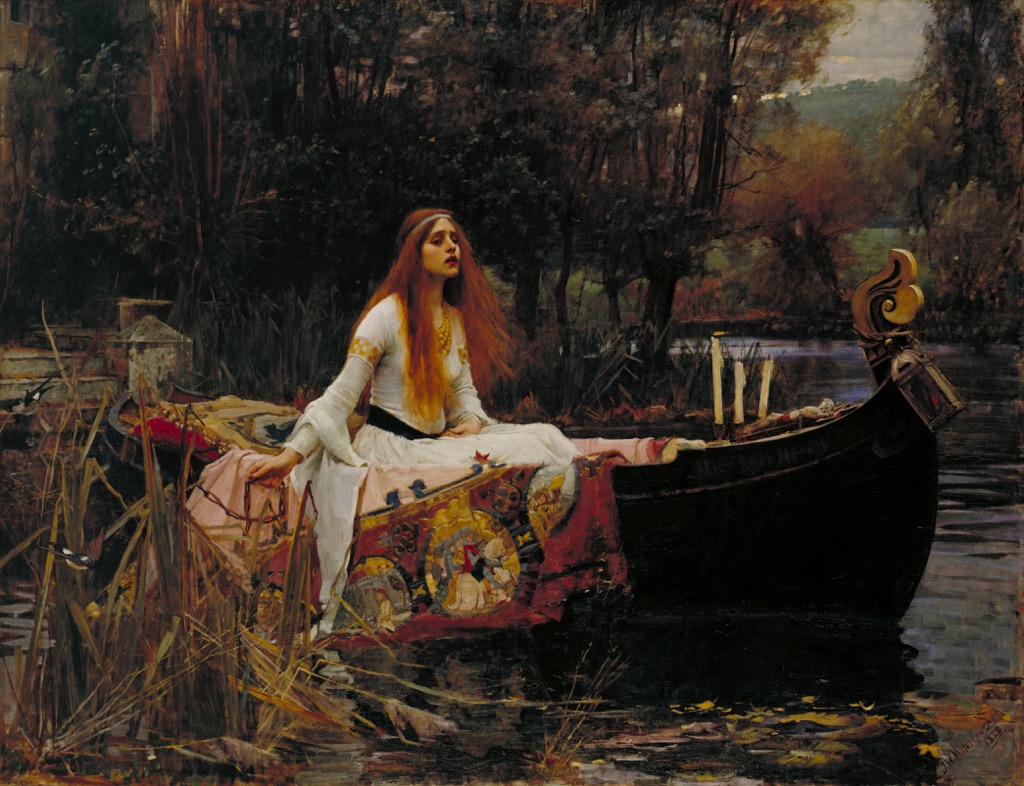
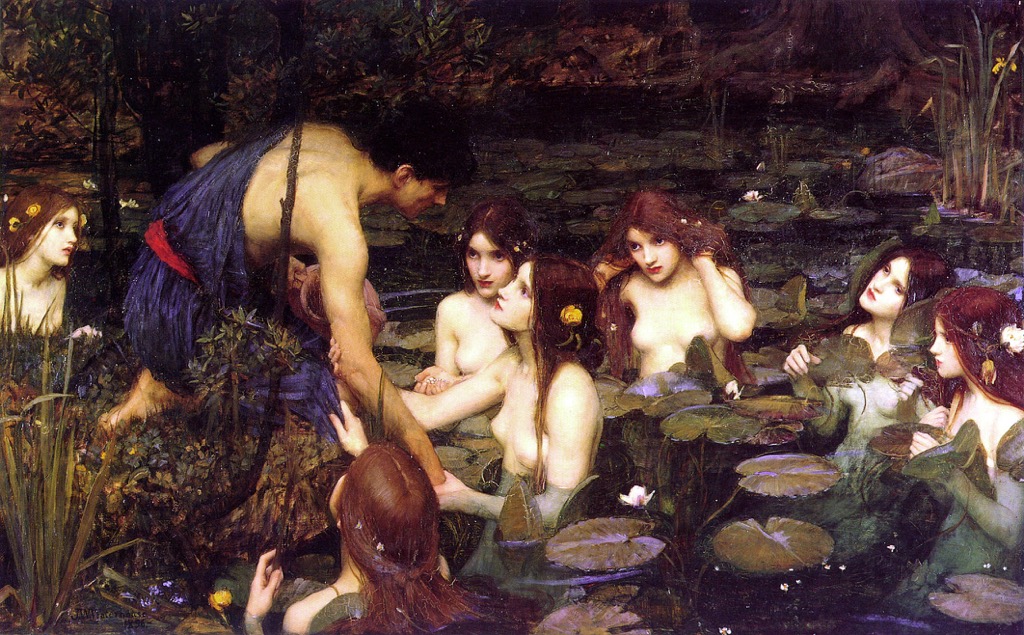
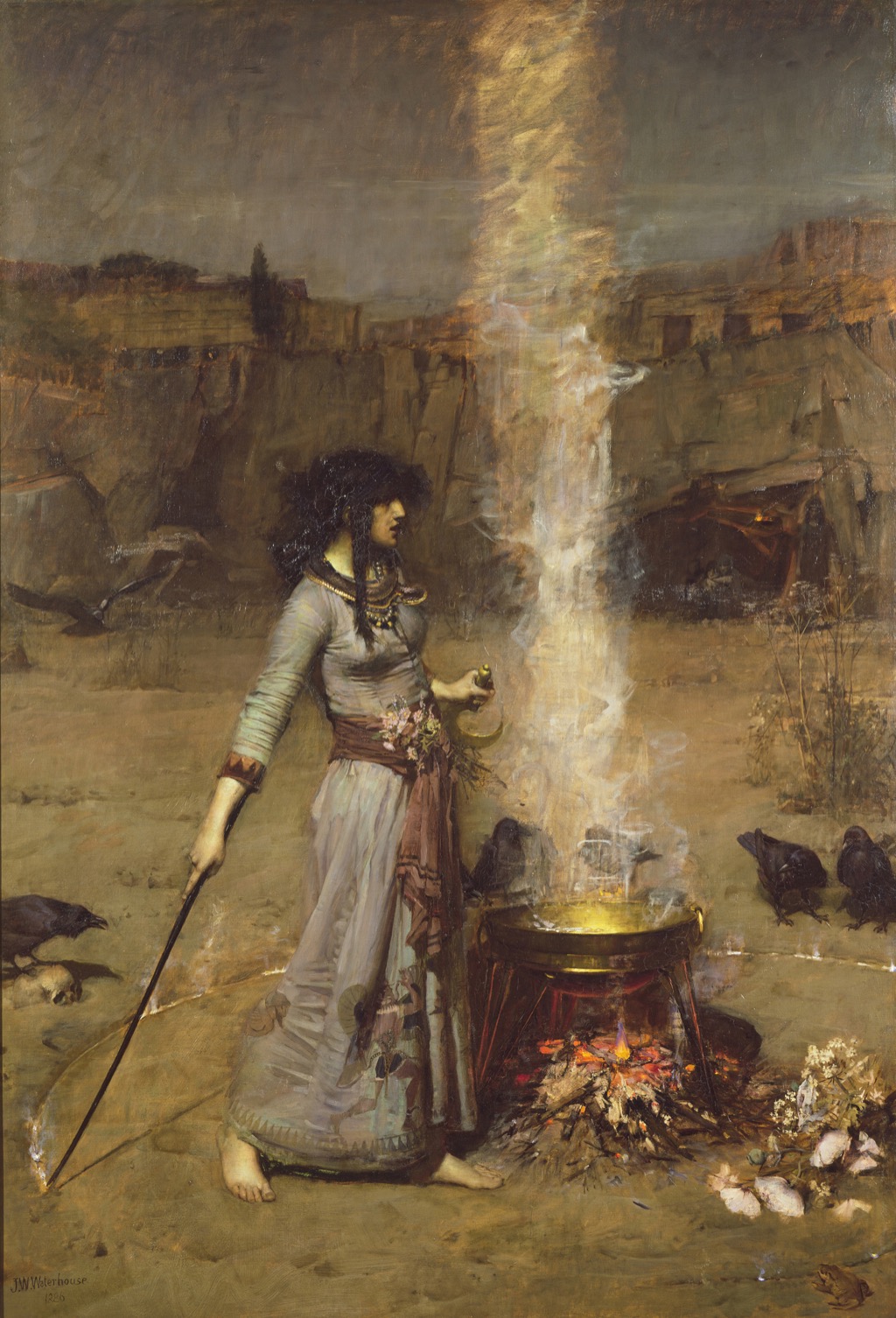
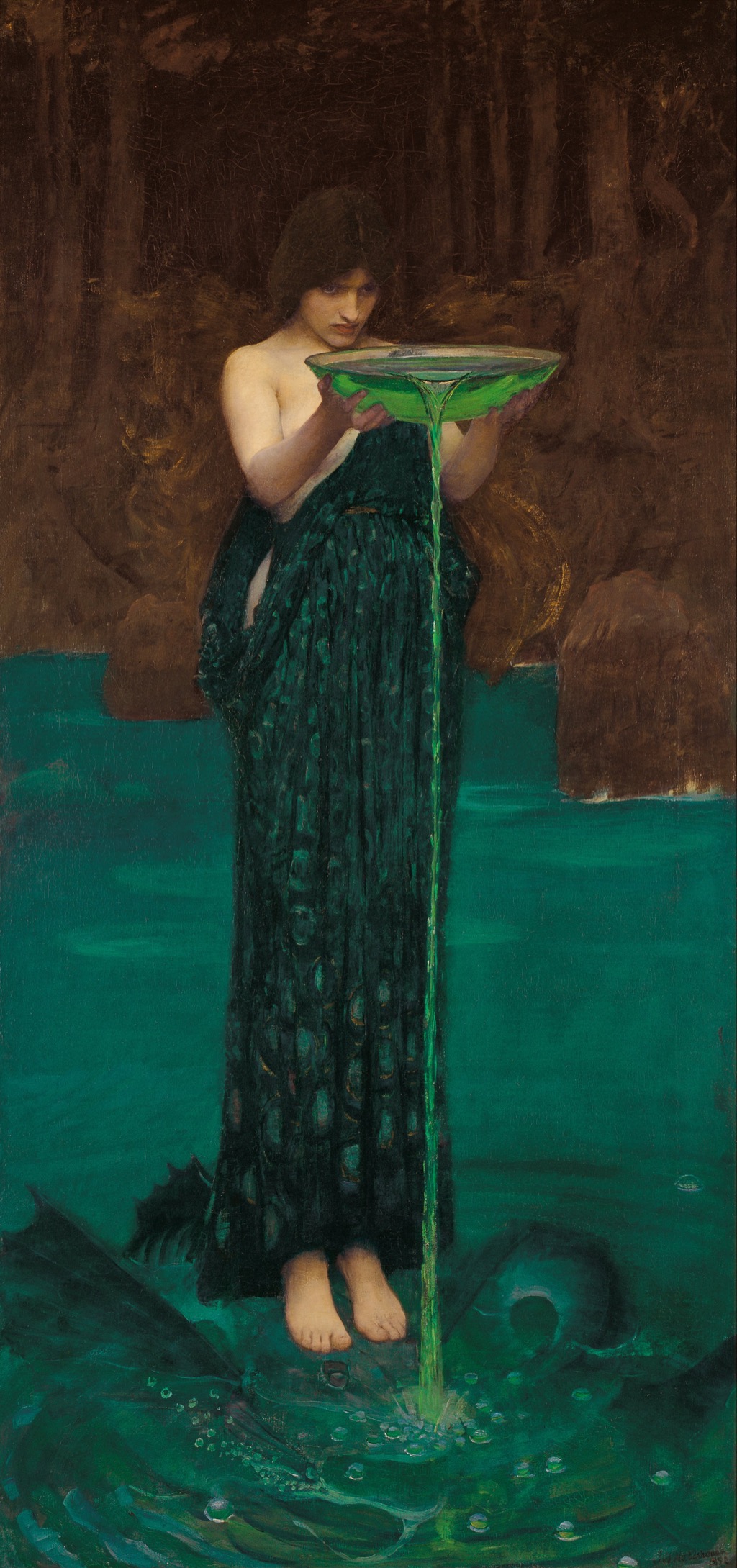
Later Waterhouse would become closely associated with poetry, myth and solitary women: the Lady of Shalott, Circe, Ophelia, Psyche and many others. Eulalia anticipates that concentration on a female figure at a threshold between worlds. Yet she is not a dreaming heroine or enchantress. She is a child martyr whose agency belongs to a completed refusal.
The painting entered Sir Henry Tate's collection and was presented with his founding gift in 1894. [1] Its place in Tate means that Waterhouse's early Roman and religious phase remains visible beside the later works for which he is more popularly known.
Seen within that career, Saint Eulalia is neither a detour nor a fully formed version of the later formula. It shows the artist discovering that a literary or historical subject could be intensified by reducing action and isolating one figure.
Its ambition is public, but its effect is intimate. A large Academy painting confronts the viewer with the distance between a crowd and one abandoned person. That combination helps explain why it remains among Waterhouse's most unsettling works.
A Martyrdom Without the Instruments of Martyrdom
Waterhouse's exclusions deserve as much attention as his motifs. No rack, hook, torch or blade provides an immediate instrument of suffering. No executioner occupies the foreground. No judge points, and no pagan statue visibly demands sacrifice. The story's machinery has been removed after doing its work.
This choice changes moral emphasis. Instruments can absorb attention through their ingenuity or horror; executioners can become dramatic antagonists. By leaving both distant or absent, Waterhouse denies violence the privilege of being the most visually interesting thing in the picture.
The saint is also denied the conventional gestures through which martyrdom becomes performance. She cannot raise a cross, direct her eyes to heaven or demonstrate fearless endurance. Her refusal belongs to the narrative past. What remains is the value others assign to a silent body.
Snow and dove replace instruments as the painting's active agents. Neither belongs to Roman judicial power. One touches the ground and one crosses the air, occupying exactly the spaces from which human mercy is absent.
The shift creates a visual theology of aftermath. Sacred meaning does not prevent death, and it does not erase the city's responsibility. It answers exposure with covering and confinement with release. Viewers may find that answer consoling, insufficient or both.
Waterhouse's restraint should not be confused with realism. A recent corpse without wounds, surrounded by a beautiful atmospheric fall of snow, transforms pain into an idealised image. The painting refuses graphic spectacle but still asks beauty to make suffering bearable to behold.
That tension belongs to much nineteenth-century religious and historical art. Decorum could protect audiences and uphold the dignity of a subject, yet it could also distance them from material cruelty. Saint Eulalia makes the tension unusually visible because the absent violence is so essential to the title.
The body is therefore evidence without an illustrated cause. Its presence accuses the distant civic world, while the lack of injury prevents the accusation from becoming anatomically specific. Waterhouse moves from fact to emblem without allowing the fact of death to disappear.
Eulalia Among Waterhouse's Solitary Women
Later Waterhouse paintings repeatedly isolate a woman at a decisive threshold. The Lady of Shalott loosens the boat's chain; Circe offers the cup; Ophelia sits among flowers before the end known from Shakespeare; Psyche approaches a forbidden or desired space. Eulalia belongs to this larger pattern but also exposes its limits.
She is not paused before choosing. Her choice has already been made, and imperial violence has ended her capacity for action. The narrative threshold lies between bodily death and the departing soul rather than between possible human futures.
That difference changes the viewer's relation to beauty. A living Waterhouse heroine may meet our look, avert it or remain absorbed in thought. Eulalia cannot regulate the encounter. Ethical responsibility shifts towards the spectator.
There are formal continuities. Waterhouse often uses water, mist, foliage, textile or reflective surface to surround a figure with a changing natural medium. Here snow performs that enclosing role. It separates Eulalia from the hard city while joining every part of the canvas in one slow event.
Hair is another continuity. Spread around the head, it gives sensuous physical presence and establishes a line between face and ground. In later pictures, flowing hair may signal erotic attraction or natural identification. Here it intensifies exposure and stillness.
The painting also anticipates Waterhouse's skill at selecting an interval rather than a climax. The boat has just been released but has not reached Camelot; the potion is offered but has not failed; the snow begins but has not completed its shroud. Such intervals give viewers narrative knowledge and visual uncertainty at once.
Yet Eulalia should not be absorbed into a generic category of “Waterhouse woman.” Her youth, Christian identity and martyrdom distinguish her from the adult lovers and enchantresses of later mythological art. Reducing all of them to one feminine ideal would erase the subject that makes this canvas morally particular.
Seen within the career, Saint Eulalia demonstrates that Waterhouse's later concentration on solitary women did not begin only with romance. It emerged through experiments in historical and religious vulnerability, where a single body could reorganise an entire public world.
How to Look at Saint Eulalia Today
Begin at the lower edge. Notice how little distance Waterhouse allows between the spectator and Eulalia. Her body is not tucked safely into the historical world.
Then follow the pavement upward. The open space may initially seem empty, but it measures abandonment. Ask how the picture would change if mourners filled it.
Find the dove and trace its relation to the head and mouth. Its smallness is essential. A more spectacular apparition would turn the scene into triumph; this bird makes transcendence quiet.
Look at the snow as an action rather than a backdrop. It is still falling. The promised shroud is not complete, so the picture holds exposure and protection together.
Compare the foreground with the officials in the distance. Their upright bodies and dark accents belong to worldly order. The fallen girl seems powerless by their measure, but the picture's light and space do not finally belong to them.
Finally, consider your own position. The absent mourners leave the viewer close to the role of witness. The image does not tell us whether that position is compassionate, devotional, aesthetic or intrusive. Its lasting unease comes from refusing to settle the question.
Related Pages
- Biography: Place the early Royal Academy painting within Waterhouse's career.
- Paintings: Return to the Waterhouse paintings hub.
- Exhibitions and International Reception: Follow the exhibition history around Waterhouse's public reputation.
Frequently Asked Questions
Eulalia of Mérida was a young Christian martyr venerated in Spain. Tradition places her death around 304 during Roman persecution and describes her refusal to sacrifice to the Roman gods. Prudentius's Hymn 3 is a major early literary source for the legend. [1] [3]
He shows the aftermath of martyrdom. Eulalia lies dead in a public space while miraculous snow begins to cover her and a white dove, representing her soul, rises above.
Prudentius describes Eulalia's spirit leaving her in the form of a dove. Waterhouse uses the bird to create an upward movement opposed to the body lying on the ground. [3]
The legend says that snow fell and covered Eulalia's exposed body like a shroud. Waterhouse cited this detail in the note accompanying the painting at the Royal Academy. [2]
It belongs to Tate in London, accession number N01542. Sir Henry Tate presented it in 1894. [1]
Waterhouse was elected an Associate of the Royal Academy in 1885, the year the painting was exhibited. The work contributed to his growing reputation, but institutional election should not be reduced to a documented prize for one picture. [2] [4]
It is a nineteenth-century visual interpretation of a late-antique saint's legend, not a documentary reconstruction. Snow and dove derive from the literary tradition; the staging and architecture are Waterhouse's imaginative choices.
Discussion
Saint Eulalia poses difficult questions that its beauty does not resolve. Does showing violence through aftermath protect the victim from spectacle, or does the idealised body make suffering easier to consume? Does the snow truly cover Eulalia, or must a painter keep her exposed so that viewers can recognise the miracle? Are the distant spectators more troubling because they do nothing, and does our own act of looking place us among them?
The picture's religious meaning is clear enough to describe: martyrdom is answered by the release of the soul and by a miraculous shroud. Its ethical experience remains more unsettled. Waterhouse gives the dead girl the largest emotional claim in a world that has physically cast her aside. The work endures because that claim is made without a final gesture, speech or expression—only through body, weather and space.
Reader Insights
Which visible detail most changes the way you read this page?
Which source or comparison helps the work feel less familiar and more specific?
What question would you bring back to the painting after reading?
Join the Conversation
Share your reading of this page below.
References
- Main image: John William Waterhouse, Saint Eulalia, 1885, Tate Britain, public-domain photographic reproduction via Wikimedia Commons / Art UK.
- Tate. “Saint Eulalia, 1885, John William Waterhouse.” Collection record, accession N01542. View source
- The Victorian Web. “John William Waterhouse's St. Eulalia,” reproducing Tate's historical catalogue information and the Royal Academy note derived from Prudentius. View source
- Paula Hershkowitz. “The Portrait of St Eulalia of Mérida in Prudentius, Peristephanon 3,” Arctos: Acta Philologica Fennica 38 (2004), discussion of the poem and its imagery. View source
- Algernon Graves. The Royal Academy of Arts: A Complete Dictionary of Contributors and Their Work from Its Foundation in 1769 to 1904, Waterhouse exhibition entries. View source