

 Buy Art Prints Now
from Amazon
* As an Amazon Associate I earn from qualifying purchases.
Image reference [image]
 by Tom Gurney
Tom Gurney BSc (Hons) is an art history expert with over 20 years experience
Published on August 14, 2026 / Updated on August 14, 2026
Email: tomgurney1@gmail.com / Phone: +44 7429 011000
Gather Ye Rosebuds While Ye May (1909): Introduction
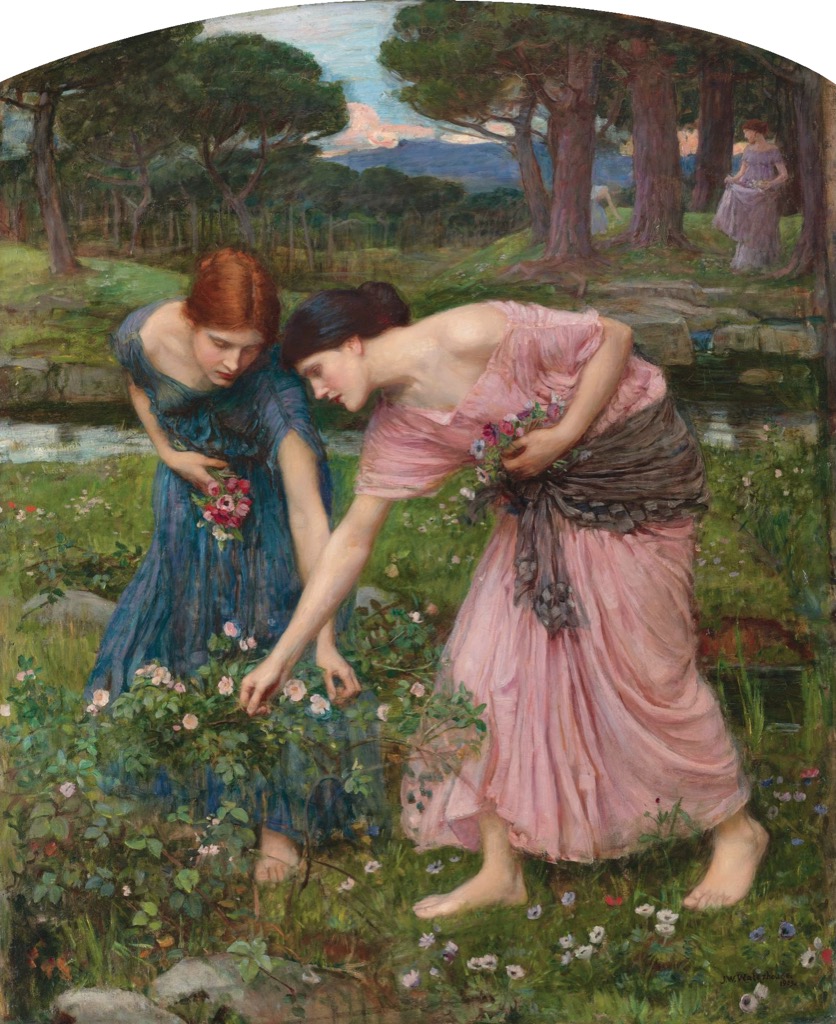
Two women bend among flowers under a bright sky. Their bodies follow the curve of an unusual arched canvas, and nothing visible disturbs the act of gathering. John William Waterhouse's 1909 Gather Ye Rosebuds While Ye May borrows its title from Robert Herrick but has also been read as the beginning of a late Persephone sequence: beauty is most vulnerable at the moment it seems freest. [1] [2] [3]
This is the large outdoor version signed in 1909, not the smaller half-length interior exhibited at the Royal Academy in 1908. Waterhouse reused the title while changing nearly everything else—format, setting, number of figures, original owner and public history. [1] [4]
At a Glance
- ArtistJohn William Waterhouse (1849–1917)
- TitleGather Ye Rosebuds While Ye May [1]
- DateSigned and dated 1909 [1]
- MediumOil on canvas [1]
- Dimensions101 × 82.5 cm [1]
- FormatCurved or arched top with painted gold surrounding ground [1]
- CollectionPrivate collection [1]
- Original ownerSir Brodie Haldane Henderson [1]
- Lifetime exhibitionNo public exhibition is documented during Waterhouse's lifetime [1] [4]
- First documented publicationIllustrated in A. L. Baldry's 1911 article on Waterhouse [1]
- Title sourceRobert Herrick, “To the Virgins, to Make Much of Time” [2]
- Interpretive sourceThe Persephone myth, in which the goddess is taken while gathering flowers [1] [3]
Contents
- Introduction
- An Idyll at the Edge of Interruption
- Herrick's Flowers and Passing Time
- Persephone Gathering Before Abduction
- Two Women, One Curved Field
- Flowers, Colour and Landscape
- A Painting Without an Explicit Heroine
- Henderson Ownership and Disappearance
- The 1909 and 1908 Versions Compared
An Idyll at the Edge of Interruption
The visible action is simple. Two women move through a flowered landscape, bending to pluck blossoms and holding what they have gathered close to their bodies. [1]
Waterhouse gives no attacker, messenger or supernatural sign. The scene can be enjoyed as an Edwardian pastoral image without knowing a literary source.
The title prevents complete innocence. Herrick's instruction exists because time is already taking away the beauty it tells young people to enjoy. [2] Gathering is an answer to loss, not an escape from it.
The possible Persephone association adds a second unseen future. In the myth, flower picking precedes abduction into the underworld. [1] [3] If that story is active here, the quiet field is the last moment before irreversible change.
Waterhouse suspends the instant before knowledge. The women do not look frightened because no visible event has warned them. A viewer who recognises the myths may feel apprehension that the figures cannot share.
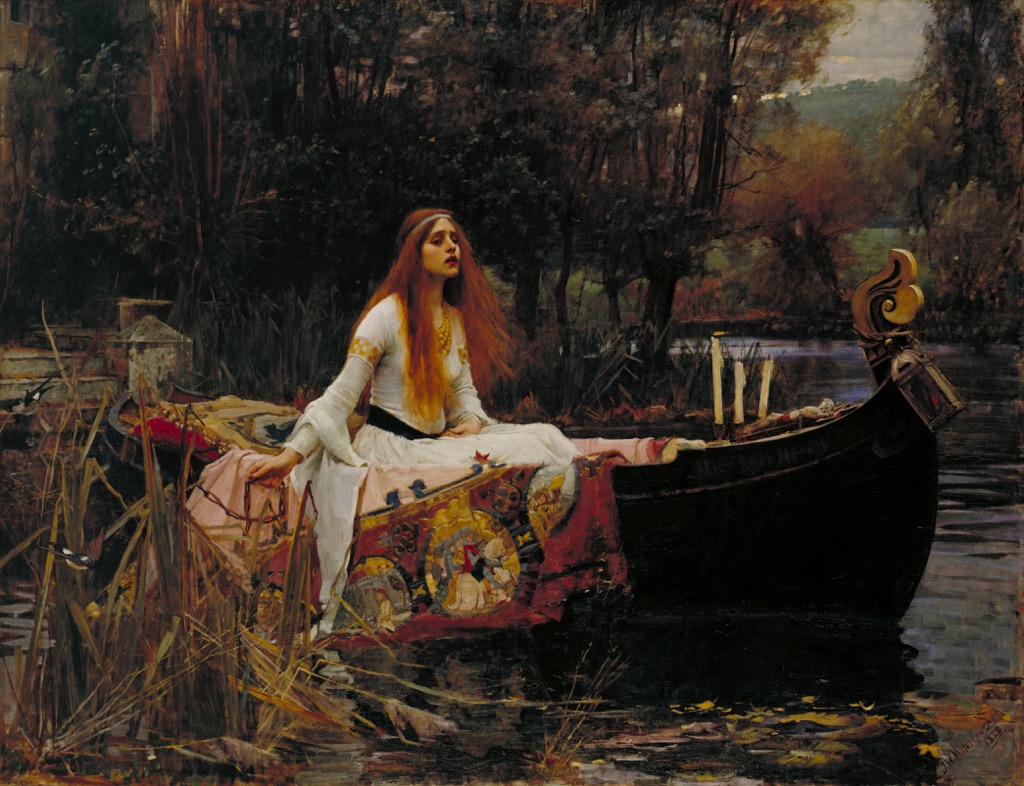
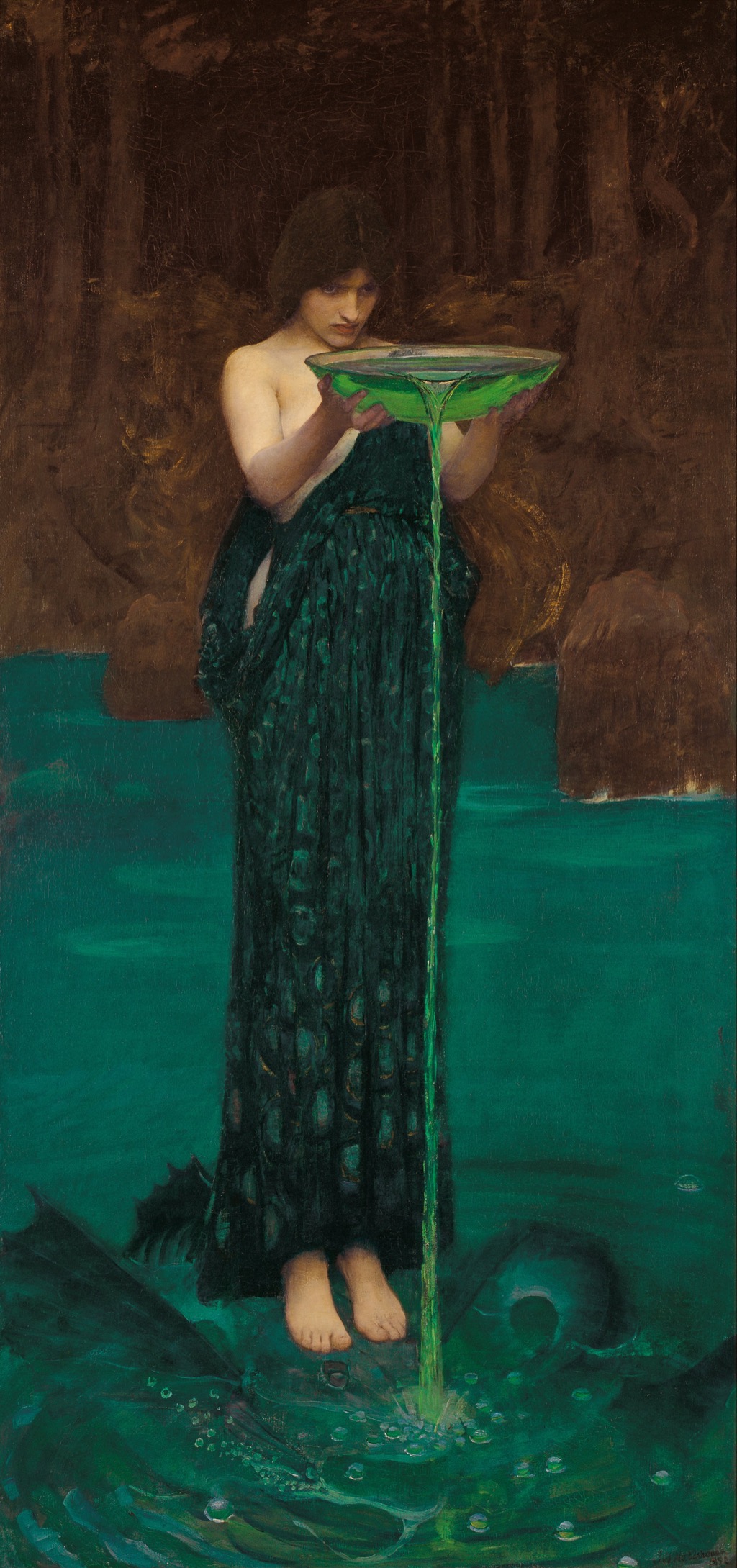
This dramatic irony resembles other Waterhouse paintings in which literary knowledge extends beyond the frame. We know the Lady of Shalott's boat will not reach Camelot alive; we know Circe's potion will fail against Ulysses; we may know Persephone's gathering will end in seizure.
Yet the painting never names Persephone. Sotheby's describes the association as a significant interpretive route and situates the work at the beginning of a series, but also calls the late flower-women narrative-less. [1]
That productive tension should be preserved. It is stronger to say that the image evokes Persephone than to claim it illustrates one securely identified line.
The work's beauty is therefore not a disguise placed over a clearly painted assault. It is the subject's temporal condition. The world is beautiful because interruption has not happened yet.
Suspense here is retrospective: it is created by what an informed viewer brings to a scene whose figures still possess an undivided present.
Herrick's Flowers and Passing Time
Robert Herrick's “To the Virgins, to Make Much of Time” supplies the title. Published in Hesperides in 1648, the poem opens by urging young women to gather rosebuds while they can. [2]
Flowers, sun and human youth all follow the same pattern. The blossom alive today will die tomorrow; the rising sun moves closer to setting; warm youth gives way to age. [2]
The final stanza tells its addressees not to be coy but to marry before their “prime” is lost. Carpe diem is joined to a specific social expectation, not left as a general invitation to personal fulfilment. [2]
Waterhouse literalises the opening action while withholding the speaker. His women gather flowers, but no man instructs them, no suitor waits and no wedding is represented.
Their bending bodies can be read as compliance with the title, yet they are absorbed in an activity that belongs to them. The image removes the argumentative voice that makes Herrick's lyric so direct.
It also changes roses into a more varied field. Sotheby's identifies apparent narcissi and anemones among the flowers. [1] The title works poetically rather than botanically.
That variation opens mythic routes. Narcissus and Adonis are both linked with flowers and death in classical tradition, while anemones and narcissi appear within Waterhouse's late network of transformed or vulnerable figures. [1]
Specific Victorian flower meanings should not be applied mechanically. The catalogue's identifications are useful; a fixed coded message from Waterhouse is not documented.
Herrick compresses time verbally. Waterhouse spreads it across space: blossoms at different stages, figures moving through the field, and distant mountains that seem older than the human event.
The painting does not rebuke the poem. It makes its command less certain. Gathering may seize beauty, but the women cannot carry away the landscape or stop the processes that make flowers possible.
The plural figures also alter the social situation. Herrick's lyric is spoken towards a group, but it usually reaches readers as a single male voice urging female action. Waterhouse removes the visible adviser and gives the field to women working together. Their companionship is not described by the title, yet it changes the emotional balance.
They do not appear to perform beauty for an approaching suitor. Their lowered gazes and shared task produce a temporary female space. If Persephone is among them, companionship makes the coming separation more painful; if she is not, the collective scene still resists reducing carpe diem to one woman's marital decision.
The poem insists that youth must be converted into marriage before value expires. The painting turns the present into activity, colour and mutual presence. This is an interpretive effect of composition, not evidence that Waterhouse consciously argued against Herrick.
Persephone Gathering Before Abduction
The Homeric Hymn to Demeter tells how Persephone gathers flowers with the daughters of Ocean before Hades takes her. A marvellous narcissus is made to grow as a lure; when she reaches for it, the earth opens and the underworld ruler carries her away. [3]
Persephone's cry reaches Demeter, whose search and grief produce catastrophic barrenness. The eventual arrangement allows the daughter to return for part of the year, binding her movement to seasonal growth and withdrawal. [3]
Waterhouse does not show the chariot, opening earth or grieving mother. He selects—or can be interpreted as selecting—the moment before the myth declares itself.
Sotheby's connects the painting to Persephone and to later Waterhouse canvases of flower-gathering women. [1] The curved field and classical drapery support a mythic atmosphere without isolating one protagonist.
Which woman would be Persephone is not stated. The two figures could represent heroine and companion, successive movements of one type, or simply anonymous gatherers.
This uncertainty matters because the title comes from Herrick rather than the hymn. Waterhouse layers an English carpe diem lyric over a classical pattern of seasonal abduction.
Both sources turn flowers into thresholds. Herrick's rosebuds stand between youth and age; Persephone's narcissus stands between earth and underworld. To pick is to cross time.
The ethical weight of the myth must remain clear. Hades abducts Persephone. Describing the event merely as romance or seasonal marriage removes the violence that gives Demeter's grief its force. [3]
The painting avoids depicting that violence, and its silence can be read in two ways. It preserves Persephone's final freedom without making her seizure a spectacle, but it can also make the underlying story easy to sentimentalise.
A responsible reading holds both the serene visible moment and the coercive narrative that may follow it.
Two Women, One Curved Field
The composition is unique among Waterhouse's known major canvases for its curved top. Sotheby's notes that unframing revealed a painted gold ground and suggests the shape may reflect a particular commission. [1]
The arch turns landscape into an enclosed field. Although the women are outdoors, the contour makes the image resemble a decorative panel, doorway or altarpiece.
Their bending bodies answer that curve. One figure in blue-violet and another in pink creates a paired movement across green ground. [1]
Neither stands upright to dominate the other. Their shared posture makes gathering collective rather than portrait-like.
The repetition also slows action. A viewer reads the first bend, then the second, as if seeing stages in a continuous motion.
Faces receive softer treatment than limbs and drapery. Sotheby's describes the combination of academically defined arms and shoulders with looser hair, skin and landscape. [1]
This varied handling helps figures occupy the field without appearing cut out from it. Strong bodily contours give weight; broken colour and softer passages join them to air.
The women hold flowers close. The gesture can protect fragile blossoms, register possession or simply stabilise bouquets during work.
No gaze connects them directly to us. Unlike the commanding half-length figure in the 1908 version, these women belong to an activity and environment that continue without the viewer's recognition.
Their apparent absorption is central to the painting's mood. Vulnerability arises not from weakness of pose but from the fact that attention is directed towards flowers while a myth-informed viewer anticipates danger elsewhere.
Flowers, Colour and Landscape
Warm green, violet, pink and hazy blue organise the painting. [1] The palette lets the women's garments emerge distinctly while still belonging to the natural field.
Sotheby's notes thicker brushwork in the distant mountains and more intricate description of petals. [1] Detail is therefore distributed by narrative importance rather than equal finish.
Flowers nearest the hands need enough specificity to make gathering tangible. Distance can dissolve into colour because its function is atmospheric.
This relationship reverses academic expectations that every part of a major painting should be equally polished. Waterhouse uses finish selectively within an otherwise carefully constructed work.
The open sky makes the 1909 canvas brighter than the dark 1908 interior. Light belongs to the whole environment rather than striking one face through windows.
That brightness can make the picture appear purely celebratory at first. Its unease is supplied by title and possible narrative, not ominous weather.
Narcissi and anemones have been identified in the scene. [1] The identification supports comparison with Waterhouse's recurring transformed flowers, but an exact botanical catalogue would require direct examination of the painting.
Anemone is commonly called windflower. [5] The connection links the canvas loosely with Waterhouse's Windflowers, where weather threatens gathered blossoms, though the two pictures are independent works.
The landscape has no securely identified real location. Classical dress and distant forms create an imagined Mediterranean or timeless pastoral world.
Such indeterminacy lets Herrick and Persephone coexist. A specifically English garden might bind the title to the Cavalier poem; an archaeological Greek site might bind it to myth. Waterhouse chooses neither.
A Painting Without an Explicit Heroine
Sotheby's describes the late flower-women as narrative-less images while making a sustained Persephone argument for this one. [1] The apparent contradiction identifies how Waterhouse's late work operates.
The canvas contains no attribute that forces a name. No crown, pomegranate, chariot or god proves that one woman is Persephone.
Narrative enters from recurring motifs, title, chronology and comparison with adjacent paintings. Meaning is networked rather than encoded in one unmistakable emblem.
This approach creates accessibility. A viewer can respond to colour, movement and transience without possessing classical knowledge.
It also creates risk. Popular retellings may assert certainty because a named story is easier to summarise than an open image.
The best reading uses levels of confidence. Object facts—signature, date, medium, size and early owner—are secure. Herrick is secure as the title source. Persephone is a well-supported scholarly interpretation, not a label painted onto the canvas. [1] [2]
Nor should the two women be identified as Waterhouse's wife, relatives or known professional models without documentation. Repeated facial types cannot supply names.
The absence of fixed identity gives the women a shared condition. They are young, occupied with temporary flowers and unaware of whatever lies beyond the frame.
That condition is enough to sustain the work. Waterhouse does not need to identify the moment when he can make time itself the implied antagonist.
Henderson Ownership and Disappearance
The painting first belonged to Sir Brodie Haldane Henderson, a member of a family that collected Waterhouse extensively. [1]
Sotheby's suggests Henderson may have commissioned it, partly because of its unique curved format, but notes that this remains theory rather than documented fact. [1]
The canvas was not publicly exhibited during Waterhouse's lifetime. It was known through a black-and-white reproduction in A. L. Baldry's 1911 article. [1]
That history sharply contrasts with the 1908 painting, which entered Fry's collection from the Royal Academy exhibition. The later work's first audience may have been private and controlled.
Its movement from Henderson ownership is not fully documented. Sotheby's records its later presence in Canada and notes that the family did not have one organised estate sale that explains the transfer. [1]
By 1973 the painting was in a Canadian private collection. The popular farmhouse story should be treated cautiously unless supported by the sale record; the secure provenance is broader than the anecdote. [1]
It emerged publicly in the twenty-first century and was included in an Oklahoma City exhibition in 2005. [1] Sotheby's offered it in 2007, when it did not sell.
An unsold auction result does not diminish the work's historical importance. It records one market event with a particular estimate, reserve and moment.
The painting's long private life explains why colour reproductions and precise observation were limited. Baldry's monochrome image preserved composition but not the relationship between violet, pink, green and blue that Sotheby's later emphasised. [1]
Provenance therefore shapes art history. A work absent from public collections and exhibitions can appear marginal even when its scale and ambition are considerable.
The 1909 and 1908 Versions Compared
The 1908 and 1909 paintings share a title and Waterhouse's interest in women with flowers, but should never exchange object facts. [1] [4]
The 1908 work measures 62 × 46.4 centimetres. It shows one red-haired woman holding a metal bowl in a dark historic interior and was exhibited at the Royal Academy, no. 669. [4]
The 1909 work measures 101 × 82.5 centimetres. It shows two women bending outdoors, has a curved top, went to Brodie Henderson and was not publicly exhibited in Waterhouse's lifetime. [1]
The earlier figure confronts or meets the viewer. The later figures remain absorbed in gathering.
Reflections, jewellery, bottle glass and metal dominate the first. Sunlight, cloth, flowers and distant landscape dominate the second.
Herrick's carpe diem title anchors both. Persephone belongs much more strongly to interpretation of the 1909 scene because flower gathering in an open mythic landscape recalls the moment before her abduction. [1] [3]
The two canvases are not preparatory and final versions. Each is a resolved independent conception signed in a different year.
Together they show Waterhouse testing the same words against possession and process. In 1908, flowers have been arranged and presented; in 1909, they are still being taken from the earth.
The shared title also exposes the instability of illustration. A poem does not dictate one image. Waterhouse finds in Herrick both a proud aesthetic portrait and a vulnerable pastoral threshold.
The comparison reveals a change in the viewer's position. In 1908, the half-length woman seems close enough to hand us the bowl; the picture creates an exchange across its surface. In 1909, we watch from outside an activity that does not need us. The gatherers' world extends into distance while their bodies turn towards the ground.
The larger canvas does not simply provide “more story.” Its openness distributes meaning so widely that identity becomes harder to fix. The 1908 figure can seem like an emblem of youth because she dominates every object. The 1909 women share prominence with terrain, season and light. Time belongs to a whole environment, not only to a face.
That difference is one reason the Persephone reading remains compelling but incomplete. Myth gives the landscape a future; the painting's anonymity prevents that future from entirely possessing what we see.
Related Pages
- The Lady Clare: Compare another Waterhouse painting whose title depends on a literary source.
- Literary and Mythological Sources: Follow the Ovidian and classical source framework behind Waterhouse's myth paintings.
- Paintings: Return to the protected Waterhouse paintings hub.
Frequently Asked Questions
Two women in coloured draperies bend to gather flowers in a sunny landscape. [1]
Robert Herrick's “To the Virgins, to Make Much of Time.” [2]
Persephone is a substantial catalogue interpretation because she was abducted while gathering flowers, but the canvas does not explicitly name either woman. [1] [3]
It is signed and dated 1909. [1]
It measures 101 × 82.5 centimetres. [1]
The reason is undocumented. The unique shape and painted gold ground may indicate a special commission or setting. [1]
Sir Brodie Haldane Henderson. [1]
No lifetime public exhibition is documented. It was reproduced in print in 1911. [1]
No. The 1908 canvas is a smaller single-figure interior with separate provenance and exhibition history. [4]
It remains privately owned. [1]
Discussion
1. How does knowledge of Persephone change an apparently peaceful landscape? 2. Does the curved top make the open field feel enclosed? 3. What does Waterhouse gain by showing two gatherers rather than one heroine? 4. How does the painting alter the gendered instruction in Herrick's poem? 5. Are the women seizing the present, or are they unaware that it is disappearing? 6. Why might Waterhouse use varied degrees of finish across figures, flowers and distance? 7. What is lost when a privately held painting is known only from black-and-white reproduction? 8. Compare the acts of gathering in the 1909 picture and presenting in the 1908 version.
Reader Insights
Which visible detail most changes the way you read this page?
Which source or comparison helps the work feel less familiar and more specific?
What question would you bring back to the painting after reading?
Join the Conversation
Share your reading of this page below.
References
- Image reference
- Sotheby's, “John William Waterhouse, R.A., R.I., Gather Ye Rosebuds While Ye May,” lot 182, 2007, object record and catalogue note documenting the 1909 canvas, Henderson provenance, flower-women sequence, Persephone interpretation and technical appearance, View source.
- Robert Herrick, “To the Virgins, to Make Much of Time,” Poetry Foundation, View source.
- Homeric Hymn to Demeter, Theoi Classical Texts Library, account of Persephone gathering flowers, her abduction and Demeter's response, View source.
- Christie's, “John William Waterhouse, R.A., R.I., Gather Ye Rosebuds While Ye May,” record and essay for the 1908 single-figure painting, View source.
- Royal Horticultural Society, “Anemone,” plant profile recording “windflower” as a common name, View source.