

 Buy Art Prints Now
from Amazon
* As an Amazon Associate I earn from qualifying purchases.
Image reference [image]
 by Tom Gurney
Tom Gurney BSc (Hons) is an art history expert with over 20 years experience
Published on August 14, 2026 / Updated on August 14, 2026
Email: tomgurney1@gmail.com / Phone: +44 7429 011000
The Lady Clare: Introduction
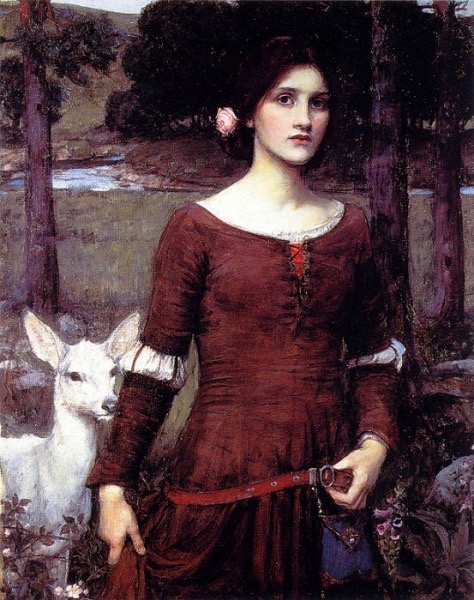
A young woman in a russet-red gown walks through a wooded landscape with a white doe beside her and a single rose in her hair. John William Waterhouse's The Lady Clare of 1900 selects the moral turning point in Alfred Tennyson's ballad: Clare has removed the jewels of rank and is going to tell her betrothed that she is not the heiress he believes her to be. [1] [2]
Waterhouse omits Lord Ronald, the nurse Alice and the revelation itself. He turns a rapidly told narrative into an independent image of decision. The painting is less about whether love will reward Clare than about the composure with which she risks title, fortune and marriage before she knows the outcome.
At a Glance
- ArtistJohn William Waterhouse (1849–1917)
- TitleThe Lady Clare [2]
- Date1900 [2] [3]
- MediumOil on canvas [2]
- Dimensions76.2 × 61 cm (approximately 30 × 24 in.) [2] [3]
- CollectionPrivate collection [2]
- Literary sourceAlfred Tennyson, “Lady Clare,” first published in 1842 [1]
- SubjectClare in a russet gown, with a single rose and the lily-white doe given by Lord Ronald
- Narrative momentAfter learning that she was substituted for the dead earl's daughter and before or during her journey to confess the truth to Ronald
- Preparatory evidenceA red-chalk study for the figure survives in a private collection [4]
- Essential distinction“Lady Clare” is the identity by which the heroine has lived, but at this moment she believes she has no right to the title
Contents
- Introduction
- The Walk after the Revelation
- Tennyson's Story of Clare and Ronald
- A Choice between Truth and Possession
- Russet Gown, Rose and Discarded Jewels
- The Lily-White Doe
- Face, Body and Landscape
- What Waterhouse Leaves Outside the Frame
- Date, Study and Contemporary Notice
The Walk after the Revelation
Clare stands or walks close to the foreground. Her dark red or russet dress is fitted but comparatively sober, with a pale underlayer at neck and sleeves. One hand gathers fabric; the other rests near a narrow belt. A pink rose appears in her dark hair.
The white doe emerges at her side, slightly behind her. Its head is close to her arm and its pale body is partly concealed by vegetation and the edge of the canvas. Human and animal travel together.
Waterhouse gives Clare a direct, steady gaze. She does not look down at the doe or back towards the home she has left. Her expression is serious without visible panic.
The background opens into a stream or pale strip of water and distant land between trees. It establishes a journey through dale and down rather than a room in which Clare and Alice argue. The moral decision has become movement.
Tennyson's ballad supplies the exact group of signs: the russet gown, single rose and lily-white doe all appear after Clare resolves to speak truthfully. [1] Their conjunction identifies a particular phase of the story even though no other character is present.
The painting stops before Ronald's response. Viewers familiar with the poem know that he will laugh at the deception, kiss Clare and insist that they marry. Clare within the painting does not yet possess that reassurance.
This separation between viewer and heroine creates dramatic tenderness. We know that the story will reward her honesty, but the value of her act depends on her willingness to proceed without knowing.
The title preserves a paradox. The picture calls her The Lady Clare precisely when she has put on clothes declaring that she is “no longer Lady Clare.” [1] Social identity, personal worth and poetic name cease to coincide.
Tennyson's Story of Clare and Ronald
The poem begins in the season when lilies flower and clouds stand high. Lord Ronald brings his cousin Clare a lily-white doe. The two have long been betrothed and expect to marry the next morning. [1]
Clare confidently says that Ronald loves her for her own worth rather than for birth or broad lands. The statement sounds conventional until Alice the nurse enters and reveals a concealed history. [1]
According to Alice, the old earl's daughter died while in her care. Alice buried that child as though she were her own and put her own daughter in the dead infant's place. The woman raised as Lady Clare is therefore Alice's biological child, not the earl's heiress. [1]
Alice frames the revelation as a just arrangement because Ronald is the next heir to the estate. If Clare keeps the secret and marries him, the lands will belong to Ronald in any case. Material succession can be preserved if the false identity remains unspoken. [1]
Clare rejects that reasoning. She condemns Alice's substitution for keeping Ronald from his rightful inheritance. When Alice urges silence, Clare orders the gold brooch removed and the diamond necklace thrown aside. [1]
She wants to discover whether there is faith in a man, but her decision is not a manipulative test designed only to confirm Ronald's love. When Alice predicts that he will hold to his right, Clare answers that he shall have it even if she dies that night. [1]
Before leaving, she gives Alice a kiss and asks her true mother for a blessing. This moment keeps moral judgement from becoming simple rejection. Alice has committed a grave deception, but Clare recognises a maternal relation suddenly made strange. [1]
Clare puts on a russet gown, places one rose in her hair and walks across the countryside. The doe follows. When Ronald asks why she comes dressed like a village maid, she tells him that she was born a beggar and is not Lady Clare. [1]
Ronald initially thinks she is presenting a riddle. Clare stands proudly and tells the whole story. He laughs, kisses her and declares that if he is lawful heir and she is not heiress by birth, they will still marry the next morning and she will remain Lady Clare. [1]
The ballad's conclusion is rapid and satisfying. Waterhouse slows the journey before it. He gives the ethical action more visual duration than the romantic reward.
A Choice between Truth and Possession
The revelation threatens three forms of possession at once: Clare's title, her land and her expected husband. Alice advises a lie because marriage would place the estate with Ronald regardless. The proposed result appears materially harmless while its means remain false. [1]
Clare refuses to treat outcome as justification. Ronald's inheritance is his right even if asserting it destroys her security. The poem therefore makes integrity visible through voluntary dispossession.
This is more complex than a modern fantasy of choosing love over money. Clare does not know that love will remain available after she yields the money. She chooses truth before Ronald proves himself.
Her statement that he loves her for her “own true worth” establishes the ballad's test. Birth and acreage are external goods; worth is personal and moral. The revelation forces both lovers to demonstrate whether they believe the distinction. [1]
Clare demonstrates it first by acting according to conscience. Ronald demonstrates it later by affirming the marriage after the class relation appears reversed. The happy ending is credible within the ballad because their responses mirror one another.
Class nevertheless remains central. Clare can put on a russet gown, but she has been educated and formed as an aristocratic daughter. Clothing does not erase that history or turn social inequality into harmless theatre.
Tennyson's story resolves the legal and romantic conflict with exceptional neatness: Ronald is heir, loves Clare and can restore her title through marriage. The real harms created by infant substitution and entrenched class hierarchy disappear quickly from view.
Waterhouse avoids illustrating the convenient ending. By painting the walk, he preserves the severity of the choice. Clare has stripped away the objects that certify rank but still bears the posture and assurance formed by her earlier life.
Her moral authority becomes more visible as her legal authority is surrendered. The picture asks whether “Lady” can describe character even when it no longer describes birth.
Russet Gown, Rose and Discarded Jewels
Tennyson tells Clare to pull off a gold brooch and fling away a diamond necklace. He then clothes her in russet and gives her a single rose. [1] Waterhouse builds the figure around this exchange between jewellery and living flower.
The finished painting does not make the discarded jewels prominent. Their absence matters. Unlike Waterhouse's Juliet, in which a blue necklace is grasped anxiously, Clare has relinquished the expensive ornament that could proclaim status.
Russet historically suggests a coarse or brownish-red cloth associated with ordinary dress. Waterhouse's gown is sober in colour but still beautifully cut and painted. It does not turn Clare into a picturesque caricature of poverty.
This discrepancy can be understood as part of the painting's challenge. Clare can change costume immediately, but she cannot cease to look like the person she has been raised to be. Waterhouse's refined model and dress preserve continuity beneath declared demotion.
The single rose is more than decoration copied from the poem. Against dark hair, it replaces gold and diamonds with a fragile natural sign. Jewellery certifies wealth through durability and price; the flower has value without ownership lasting beyond its brief life.
Its warm pink also softens the dark mass of hair and dress. A small point of colour draws attention to the face without becoming a crown.
The gown's close fit and narrow belt give Clare an upright vertical presence. She has dressed down in narrative terms, yet the silhouette remains dignified. Waterhouse avoids making integrity look abject.
One hand gathering the skirt suggests travel over uneven ground. The other remains near the belt and may hold part of its fastening or strap. It is safest not to identify an object that cannot be consistently resolved across reproductions.
The contrast with Alice's advice is material. Alice tells Clare to keep everything through concealment; the painted figure carries almost nothing. Truth has lightened her of possessions but increased the weight of the coming conversation.
The Lily-White Doe
Lord Ronald's first action is to give Clare a lily-white doe. The animal appears before Alice's revelation and returns after Clare changes clothes, following her all the way to Ronald. [1]
The doe is therefore both gift and companion. As a gift, it embodies the existing bond between the betrothed lovers. As a follower, it seems to recognise Clare independently of title and dress.
Tennyson describes the doe leaping up, lowering its head into the maiden's hand and joining her journey. [1] Waterhouse places its head close to Clare's side, translating attachment into physical proximity.
The animal's whiteness separates it strongly from dark foliage and russet fabric. It is easier to see as a coherent narrative attribute than the distant architecture. A viewer who knows the poem can identify Clare through the doe even before noticing the rose.
It is tempting to call the animal a simple emblem of purity or innocence. Those associations are available in Western visual culture, but the poem gives the doe a more precise role. Ronald brought it, and it chooses to follow.
That action quietly anticipates Ronald's response. The creature associated with him remains loyal when Clare abandons the appearance of rank. Yet the doe is not a literal messenger who knows the secret; the parallel is poetic.
The animal also reduces the heroine's isolation without removing it. Clare has company on the road, but not a human interlocutor who can answer her fear. The doe offers trust rather than advice.
Waterhouse painted animals as narrative partners elsewhere: leopards watch over the sleeping Ariadne, swallows accompany The Danaides, and birds can carry atmosphere or omen. Here the doe is neither threat nor exotic display. Its gentleness belongs to the ballad's moral clarity.
The cropped body makes it seem to enter the viewer's space alongside Clare. This closeness is different from a distant heraldic deer. Waterhouse treats it as an individual presence.
Face, Body and Landscape
Clare's face receives concentrated light. Dark hair and foliage surround it, while the direct gaze keeps viewers from reading her solely through the doe and costume.
Her expression is contained. Waterhouse does not paint tears even though loss is possible. The ballad says that her heart does not fail when she finally stands before Ronald. [1] The painting projects that courage backwards into the journey.
Direct gaze makes the viewer an ethical witness. Juliet looks sideways as though she has detected surveillance; Clare looks with steadier openness. The difference corresponds to their narrative situations: Juliet must maintain secrets, while Clare has chosen disclosure.
The body occupies most of the canvas height. Landscape remains subordinate, but its paths, water and vegetation establish that she has left an interior social space. Truth requires travel towards the person affected by it.
Trees create a dark enclosure around the upper figure without imprisoning her. Gaps reveal water and distant terrain. The route is passable.
Colour is notably restrained. A contemporary Art Journal notice said the painting was marked by “sobriety of colour” and by the poetry informing it. [5] The description suits Waterhouse's refusal of glitter at the moment Clare discards jewels.
The red-brown dress does not flare against a lavish decorative background. Its muted warmth binds figure to earth and tree trunks, while the doe and face provide pale accents.
Waterhouse's surface is not uniformly minute. The face and essential attributes are resolved more clearly than parts of the landscape. This hierarchy keeps literary recognition from requiring botanical inventory.
The portrait-like scale creates intimacy, but The Lady Clare is not a documented likeness of a named sitter. It is a subject painting in which individual psychology borrows the concentrated format of portraiture.
What Waterhouse Leaves Outside the Frame
Alice is absent. As a result, the painting does not stage conflict between biological mother and daughter or show Clare hearing the revelation. That crisis has already been absorbed into action.
Ronald is absent too. His removal keeps the image from depending on male approval. Clare's dignity is complete before he responds.
The old earl and dead infant never appear in Tennyson's present action, and Waterhouse adds no flashback. Their invisibility reflects the disturbing nature of the substitution: an entire identity depends on an unpictured death and secret burial. [1]
The gold brooch and diamond necklace are missing or visually suppressed. Viewers see the state produced by renunciation rather than a theatrical gesture of throwing riches down.
No castle dominates the landscape. The property at stake is conceptually large but visually irrelevant to Clare's worth. Waterhouse refuses to make the estate the reward visible behind Ronald.
The happy ending is likewise withheld. This is essential. If Ronald were already embracing Clare, the picture would celebrate love's confirmation. Without him, it celebrates the decision that makes confirmation possible.
Waterhouse regularly selected thresholds rather than conclusions. Psyche opens a forbidden box before rescue; the Lady of Shalott launches towards Camelot before death; Lamia confronts a knight before enchantment fully declares its cost. Clare's threshold is moral rather than supernatural.
The ballad's clarity might seem less suited to Waterhouse than myths of dangerous desire, but the same method applies. One figure, a few attributes and a stopped moment hold an entire sequence outside the frame.
Date, Study and Contemporary Notice
Published object records date The Lady Clare to 1900, identify it as oil on canvas measuring about 76.2 by 61 centimetres and place it in a private collection. [2] [3]
A red-chalk study for the figure survives in private ownership. Secondary catalogue information gives its dimensions as approximately 19 by 14.5 centimetres. [4] The sheet concentrates attention on pose and costume before the addition of colour, landscape and doe.
Preparatory drawing is especially relevant to this picture because the finished effect depends on a controlled upright stance. Small changes to head angle, shoulder line or hands could alter Clare from hesitant to resolved.
The study should not be used to identify a model unless documentary evidence accompanies that claim. A drawn face records Waterhouse's preparation, not necessarily the sitter's recoverable name.
The Art Journal reproduced the painting in 1900 and praised its restrained colour and poetic character. [5] That brief response is valuable because it shows a contemporary critic recognising sobriety rather than treating the picture as a spectacle of decorative luxury.
The exact first exhibition venue is not securely established by the sources used here and should not be invented. Date, medium, dimensions and contemporary reproduction can be stated without attaching the work to a Royal Academy or New Gallery exhibition unsupported by a catalogue entry.
Private ownership has limited routine access and full provenance remains less publicly documented than for major Waterhouse canvases that have passed through detailed auction catalogues. This uneven evidence requires restraint.
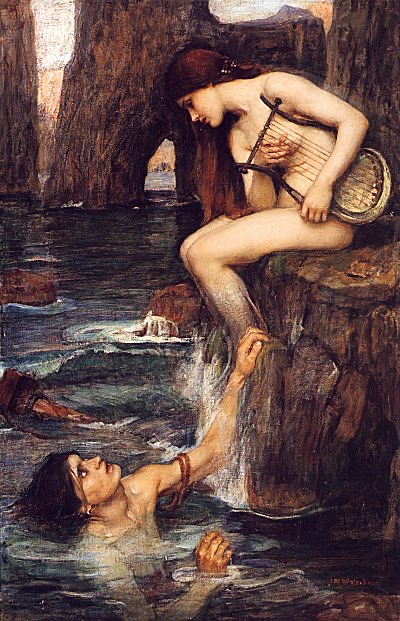
The painting nevertheless occupies a clear place within Waterhouse's literary work around 1900. It follows his Tennysonian Saint Cecilia and Mariana in the South and accompanies a period of single-figure heroines including Juliet, Destiny, The Siren and A Mermaid.
Clare is distinctive among them. She is not abandoned permanently, cursed, magical or predatory. Her danger comes from telling the truth, and the narrative promises that ethical courage will be met by faithful love.
Related Pages
- Juliet: Compare another compact literary heroine painted around the turn of the century.
- Literary and Mythological Sources: Follow Waterhouse's Tennysonian source material across the cluster.
- Paintings: Return to the protected Waterhouse paintings hub.
Frequently Asked Questions
She is the heroine of Tennyson's narrative poem “Lady Clare,” raised as an earl's daughter and betrothed to Lord Ronald. [1]
Alice the nurse says that the earl's infant daughter died and that Alice substituted her own child. Clare therefore believes she has no right to her title or lands. [1]
She removes the brooch and diamond necklace associated with rank, puts on a russet gown and goes to tell Ronald the truth. [1]
Tennyson explicitly says that Clare travels with a single rose in her hair. [1]
Ronald gives Clare the doe at the poem's beginning. It rises and follows her after she changes her dress, remaining a companion and sign of continuing attachment. [1]
Yes. After hearing the truth, he says that because he is lawful heir they will still marry and she will remain Lady Clare. [1]
It is in a private collection. [2]
Yes. A red-chalk figure study from about 1900 survives in a private collection. [4]
The sources used here do not establish a Royal Academy exhibition for this painting. It is better not to claim one without a catalogue record.
Discussion
1. Why might Waterhouse choose Clare's journey rather than Ronald's reassuring answer? 2. Does the direct gaze make Clare seem vulnerable, proud or resolved? 3. How do russet cloth and a living rose replace gold and diamonds? 4. What does the doe understand within the poem, and what can it signify within the painting? 5. Is Clare testing Ronald's love, restoring his rights or obeying her own conscience? 6. How does private moral worth differ from inherited social rank in the story? 7. What is gained by leaving Alice, Ronald and the castle outside the frame? 8. Compare Clare's openness with Juliet's secrecy in Waterhouse's 1898 painting.
Reader Insights
Which visible detail most changes the way you read this page?
Which source or comparison helps the work feel less familiar and more specific?
What question would you bring back to the painting after reading?
Join the Conversation
Share your reading of this page below.
References
- Image reference
- Alfred Tennyson, “Lady Clare,” Project Gutenberg edition, complete text; publication history is also documented in The Early Poems of Alfred, Lord Tennyson, View source.
- Wikimedia Commons, “John William Waterhouse, The Lady Clare,” object metadata for date, medium, dimensions, private ownership and Tennysonian source, View source.
- John William Waterhouse research catalogue, “1900,” summary record for The Lady Clare, including dimensions and companion works of the year, View source.
- Wikimedia Commons, “John William Waterhouse, The Lady Clare (study),” image and object record for the surviving preparatory drawing, View source.
- The Art Journal (1900), “English Art in Various Galleries,” p. 29, contemporary reproduction and brief notice of Waterhouse's The Lady Clare, View source.