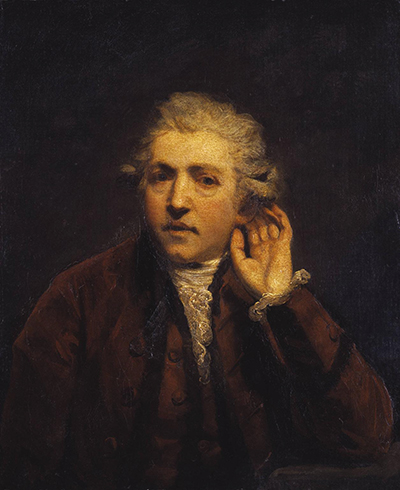
 by Tom Gurney
Tom Gurney BSc (Hons) is an art history expert with over 20 years experience
Published on June 19, 2020 / Page Updated on November 6, 2026
Email: tomgurney1@gmail.com / Phone: +44 7429 011000
Introduction
Joshua Reynolds is easy to quote badly. His Discourses on Art are full of memorable phrases about nature, imitation, genius, study, the Grand Manner, colour, drapery and artistic education. But those phrases were not written as loose aphorisms. They were spoken as Royal Academy lectures, usually to students, and they belong to particular moments between 1769 and 1790.[1]
That context changes everything. Reynolds was not tossing out decorative sayings for later anthologies. He was arguing about how artists should learn, how British painting might rise in status, how portraiture could become more ambitious, and how students should use the art of the past without becoming lifeless copyists. A reliable quotation should therefore do more than sound elegant. It should be traceable to a text, a date, a discourse and an argument.
The safest Reynolds quotations come from authenticated editions of the Discourses. Project Gutenberg provides a searchable public-domain text of Fifteen Discourses Delivered in the Royal Academy, while Yale University Press records Robert R. Wark's edition of Discourses on Art as a Paul Mellon Centre publication.[1][2] The Royal Academy describes that edition as a standard form of a fundamental text for eighteenth-century English painting.[3] Those anchors are more useful than anonymous quote collections, where lines often circulate without date, discourse or wording control.
At a Glance
- Primary sourceFifteen Discourses Delivered in the Royal Academy [1]
- Lecture span1769–1790
- SpeakerSir Joshua Reynolds, first Royal Academy President
- Best modern controlRobert R. Wark's Yale/Paul Mellon edition [2]
- Core topicsNature, imitation, general ideas, Grand Style, colour and education
- Safe short phrase“a mere copier of nature” [1]
- Context ruleIdentify the source, discourse and surrounding argument
- Private voiceLetters and authenticated biographical records [6]
- RiskAnonymous quote collections and detached paraphrases
- Responsible usePrefer fewer traceable quotations over attractive unsupported lines
Contents
- Introduction
- Why Reynolds quotations need context
- The Discourses as the main quotation source
- Nature, imitation and artistic judgement
- General ideas and the Grand Style
- Mechanical trade and liberal art
- Reynolds on colour and close looking
- Gainsborough, rivalry and generous criticism
- Popular Reynolds lines to treat cautiously
- How to use Reynolds quotations well
Why Reynolds quotations need context
Reynolds's writing is public, instructional and institutional. He speaks as the first President of the Royal Academy, not as a private diarist. The National Portrait Gallery identifies him as painter and first President of the Royal Academy, and links his public standing to the Grand Manner and the Discourses.[5] That means his most quoted phrases are usually part of a teaching performance.
This matters because Reynolds often works by balancing one claim against another. He praises enthusiasm, then restrains it with reason. He praises study of the Old Masters, but warns against mechanical imitation. He values rules, but admits that genius cannot be manufactured by rules alone. Detached from the surrounding argument, a phrase can appear simpler than Reynolds intended.
For example, when Reynolds writes about being "a mere copier of nature," he is not telling artists to ignore nature.[1] He is warning that unselected copying will not produce greatness. Nature remains essential, but the artist must compare, select, generalise and compose. The phrase is short enough to travel easily, but its meaning depends on the longer academic argument.
The same caution applies to quotations about genius. Reynolds's phrase "taste and genius" appears in a discussion of why rules cannot fully define greatness, yet he immediately returns to observation, comparison and practical principles.[1] He is not romanticising effortless inspiration. He is describing the tension between gifts that resist formula and habits that can still be trained.
The Discourses as the main quotation source
The Discourses are the central Reynolds quotation source because they preserve the mature public voice through which he shaped British academic art theory. The Royal Academy presents them as lectures to students in the late eighteenth century, concerned with the education of the artist, the purpose of art, the creative process and the artist's relation to tradition.[3] Yale's bibliographic record fixes the modern Wark edition as a substantial Paul Mellon Centre publication.[2]
Bibliographic control matters. The Open British National Bibliography corroborates the Wark edition's Yale and Paul Mellon Centre publication history, its basis in the 1797 text, and the presence of scholarly apparatus.[4] This helps keep Reynolds quotations from floating free of edition history. A phrase should be checked against a reliable text, not accepted because it is attractive.
The Discourses also have sequence. Discourse I belongs to the opening of the Royal Academy in 1769. Discourse III, delivered in 1770, develops the Great or Grand Style. Discourse IV, delivered in 1771, explores generalisation, invention, expression, colouring and drapery. Discourse XIV, delivered in 1788, addresses Gainsborough after his death.[1] The meaning of a line changes when we know where it falls in that sequence.
This is why a Reynolds quotation is usually best introduced with context rather than as a freestanding maxim. If he is speaking about students, imitation or the Academy, say so. If he is discussing Gainsborough, do not treat the sentence as general portrait theory. If he is warning against fashion, remember that his portraits often preserved fashionable surface with great sensitivity.
Nature, imitation and artistic judgement
Reynolds is often quoted on nature because he repeatedly argues that art must transform what it sees. His complaint against "a mere copier of nature" belongs to that larger idea.[1] The artist should not simply transcribe the first visible fact. He should learn how to choose from nature, compare one form with another, reject accident and move toward a more general truth.
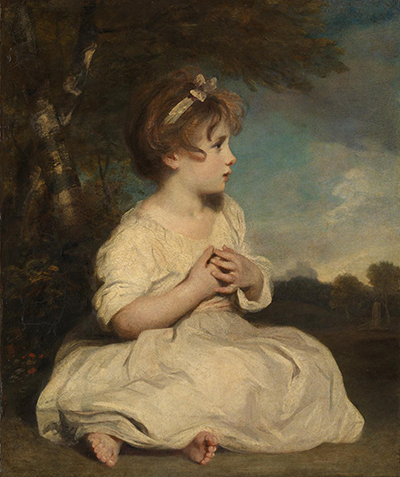
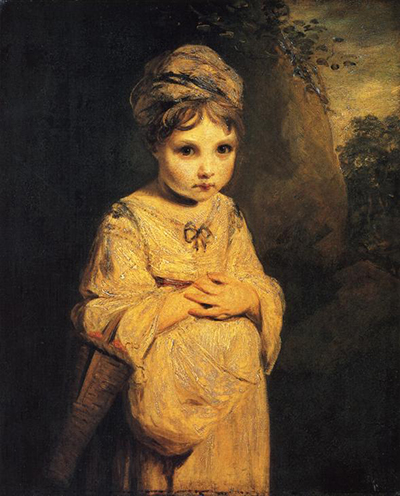
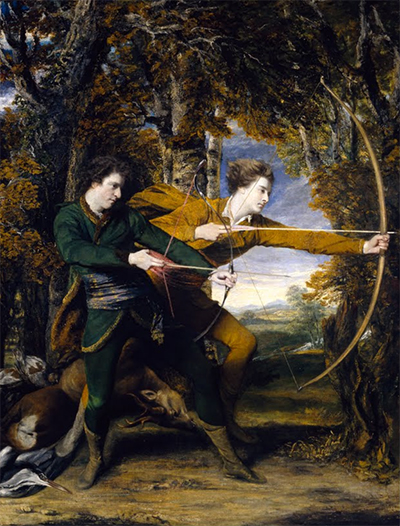
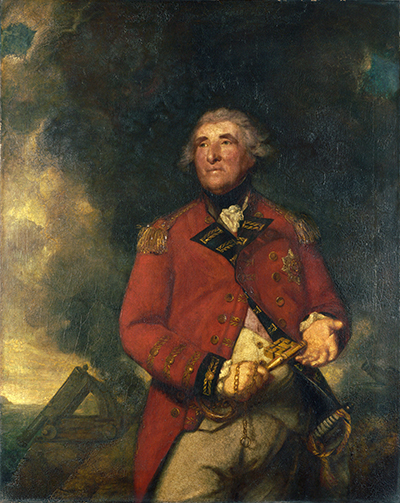
Mannings's catalogue of Reynolds's paintings is not a quotation authority, but it does remind readers that the painter's words and works need different kinds of evidence.[9] A line from a lecture must be checked in a text; a claim about a painting must be checked against catalogue and object evidence. Mixing those two kinds of authority is one of the quickest ways to make Reynolds sound more certain than the record allows.
This position can sound anti-natural, but it is not. Reynolds's portraits depend on observation. His sitters are socially specific, physically present and psychologically alert. What he resists is passive naturalism: the idea that fidelity to whatever appears before the eye is enough. For Reynolds, nature has to be studied actively. The painter's mind must organise sight.
The distinction between imitation and copying is crucial. Reynolds admired the old masters because they embodied principles that a student could study. He did not want painters to copy their surfaces without understanding their decisions. A borrowed pose, lighting arrangement or drapery effect mattered only if it helped a new work become more coherent and elevated.
This is where Reynolds can still feel unexpectedly modern. He treats artistic seeing as a form of judgement. The artist does not merely possess an eye; he develops a trained way of choosing. That is why many short Reynolds quotations should be read as part of an education in looking. They are not quick encouragements. They are compressed arguments about how art is made.
General ideas and the Grand Style
One of Reynolds's most important short phrases is "general ideas."[1] It names the intellectual centre of his academic theory. The artist should not remain trapped in accidental particulars. He should rise toward forms, characters and arrangements that express a more durable idea of beauty, dignity or action.
This is closely connected to the "Grand Style," another compact Reynolds phrase that often appears in discussions of the Grand Manner.[1] The Grand Style is not simply large scale or expensive portraiture. It is a way of selecting, simplifying and elevating. A painting should avoid petty detail when such detail weakens the larger effect.
The danger is that Reynolds can sound as if he dislikes particularity altogether. His paintings prove otherwise. The best portraits preserve faces, costume, gesture, fashionable textures and social nuance. The theory points upward toward general form; the practice pulls back toward living specificity. That tension is one of the reasons Reynolds remains interesting.
Quoting Reynolds on general ideas therefore requires balance. If the phrase is used as a slogan, it can make him seem colder than he was. In context, it shows his attempt to give art a disciplined mental structure. He wanted painting to be more than resemblance, but he did not want it to become empty abstraction. The sitter had to remain visible inside the elevation.
Mechanical trade and liberal art
Reynolds repeatedly worries that painting might be treated as a "mechanical trade" rather than a liberal art.[1] The phrase reveals the social ambition behind his theory. He wanted artists to be recognised as intellectual professionals, not merely skilled artisans. The Royal Academy itself was part of that effort: an institution that could train, exhibit and dignify British artists.
This ambition helps explain the force of the Discourses. Reynolds is not only advising students how to handle brushes. He is trying to alter the cultural rank of painting. To paint well is to think well: to compare, judge, remember, invent and select. Technical skill matters, but it is not enough if it remains detached from mind.
At the same time, the phrase can mislead if it is used to belittle craft. Reynolds's own paintings depended on craft intensely. His technique involved supports, pigments, layers, glazes, studio systems, drapery painters, assistants and conservation problems. The point is not that manual work was beneath him. The point is that manual work needed intellectual direction.
This is where quotation and painting meet. Reynolds's effort to raise painting above trade did not remove it from materials. It made materials serve ambition. A portrait had to be planned, touched, glazed, adjusted and finished, but those physical acts were supposed to carry a higher purpose. His best short statements about art usually point toward that union of thought and handling.
Reynolds on colour and close looking
Reynolds is sometimes remembered as a theorist of form more than colour, but his writing on colour is more subtle than that caricature. The Discourses ask students to look closely at good colourists and to understand how effects are produced.[1] He does not treat colour as a mere ornament; he treats it as something that must be studied through attention.
This matters because Reynolds's paintings were materially experimental. Technical studies show how deeply he cared about glow, glaze, warmth and tonal richness.[8] His written caution about colour should not be confused with indifference. He distrusted colour when it became detached from design or judgement, but he pursued colouristic effects intensely in practice.
The quotation problem here is familiar. A short line about warm colour, cool colour or close looking can be pulled into a simple story, especially when paired with Gainsborough and The Blue Boy. But Reynolds's colour thinking belongs to a broader academic system. He admired harmony, order and the old masters; he also enjoyed surface, richness and experiment. Any quotation about colour should preserve that complexity.
This is why direct extracts are less useful than contextual reading. Reynolds's colour passages are arguments, not captions. They tell us how he wanted students to train their eyes, and they also expose the gap between his theoretical caution and his own risky material practice.
Gainsborough, rivalry and generous criticism
Discourse XIV, delivered on 10 December 1788, is one of the most important places to quote Reynolds because it addresses Thomas Gainsborough after his death.[1] It is not merely a tribute. It is Reynolds's attempt to turn Gainsborough's art into instruction for Academy students.
The comparison must be handled carefully. Reynolds admired Gainsborough's portraits, landscapes, children, colour and lightness of effect, but he also framed those gifts through academic caution. He could praise what he did not want students to imitate uncritically. That mixture of admiration and containment is central to the Discourse.
For that reason, a short Reynolds quotation about Gainsborough should not be presented as simple friendship, simple rivalry or simple judgement. It is all three and more. The National Gallery and National Galleries of Scotland both treat Reynolds and Gainsborough as central rivals in later eighteenth-century British portraiture, but modern interpretation has to allow for respect as well as competition.[5][7]
Quoting Discourse XIV also requires restraint because it can overwhelm the larger subject. The essay is a rich source for Reynolds's response to another painter, but it is still Reynolds speaking as president, teacher and theorist. It tells us about Gainsborough, but also about Reynolds's need to interpret another artist through academic values.
Personal and contemporary quotations
Not all useful Reynolds quotations come from the Discourses. The National Portrait Gallery's extended Mid-Georgian Portraits entry includes short biographical quotations from Reynolds and from contemporaries.[6] These are useful because they show the man around the official voice.
One 1749 Reynolds letter, quoted by the NPG entry, describes an accident that damaged his face and includes the wry phrase "spoiled for kissing."[6] It is a tiny detail, but it gives Reynolds a human texture very different from the presidential voice of the Discourses. He could be self-aware, comic and bodily in private writing.
The same NPG entry quotes Edmund Malone describing Reynolds as "well read in mankind."[6] That phrase has obvious relevance to portraiture. Reynolds painted people, but he also understood social performance: how sitters wished to appear, how viewers judged character, and how conversation, ambition and reputation shaped identity.
Technical and reception evidence can also preserve memorable phrases about Reynolds rather than by him. The Reynolds Digital Research Resource cites a Farington diary comment describing a Reynolds portrait as "utterly gone by cracking."[8] Such a phrase should not become a cheap joke. It belongs to the long afterlife of Reynolds's material experiments and the conservation problems that later viewers had to confront.
Popular Reynolds lines to treat cautiously
Some attractive Reynolds lines circulate widely without reliable context. They may be authentic, misquoted, paraphrased, from another writer, or impossible to verify from the standard texts available to most readers. When a phrase cannot be traced to the Discourses, correspondence or a reliable edition, it should be treated cautiously.
This is especially important with short decorative sayings. The shorter a line is, the easier it is to detach, improve, simplify or misattribute. A saying may sound like Reynolds because it matches his themes: pictures, thought, nature, genius, imitation, observation. Sounding plausible is not evidence.
The responsible approach is simple. Keep the beautiful line only if the evidence supports it. If the wording cannot be found in a reliable text, do not build interpretation on it. If a passage comes from the Discourses, identify the discourse and explain the argument. If it comes from a letter or contemporary description, identify the record and speaker.
This method may produce fewer quotations, but better ones. Reynolds does not need embellishment. His real words are already strong enough when read in the setting that produced them.
How to use Reynolds quotations well
The best Reynolds quotations are small doors into large arguments. A phrase about copying opens onto his theory of selection. A phrase about general ideas opens onto the Grand Manner. A phrase about mechanical trade opens onto the professional status of artists. A phrase about taste and genius opens onto his attempt to balance rule and inspiration.
For readers, the practical rule is to ask three questions. Where does the line come from? What problem was Reynolds addressing? What changes when the line is read beside his paintings? Those questions prevent quotation from becoming decoration. They return Reynolds to the world of teaching, painting, ambition and judgement.
They also protect him from simplification. Reynolds was not merely a rule-maker, nor merely a portraitist, nor merely a collector of Old Master attitudes. His best statements reveal an artist trying to educate a national school while sustaining a vast portrait practice. His words and paintings do not always agree perfectly, and that is part of their value.
Used carefully, Reynolds quotations do not reduce him to maxims. They make him more complex: a painter thinking aloud from a position of authority, a teacher trying to shape taste, a social observer with a sharp eye, and an experimenter whose theories were tested in paint.
Frequently Asked Questions
Discussion
Which Reynolds phrase changes most when it is returned to its full lecture context?
Reader Insights
What does a discourse date or student audience add to a familiar line?
Where does Reynolds's portrait practice complicate his most compact theoretical claims?
What evidence would persuade you to keep or reject an attractive quotation?
Join the Conversation
Share your reading below.
References
- Joshua Reynolds, Fifteen Discourses Delivered in the Royal Academy, Project Gutenberg, https://www.gutenberg.org/files/52436/52436-h/52436-h.htm.
- Yale University Press London, Joshua Reynolds, Discourses on Art, edited by Robert R. Wark, https://yalebooks.co.uk/book/9780300073270/discourses-on-art/.
- Royal Academy, Discourses on Art, https://shop.royalacademy.org.uk/discourses-on-art.
- Open British National Bibliography, Discourses on Art, https://obnb.uk/p9392665-discourses-on-art.
- National Portrait Gallery, “Sir Joshua Reynolds,” https://www.npg.org.uk/collections/search/person/mp03755/sir-joshua-reynolds.
- National Portrait Gallery, “Sir Joshua Reynolds,” extended Mid-Georgian Portraits entry, https://www.npg.org.uk/collections/search/personExtended/mp03755/sir-joshua-reynolds?tab=biography.
- National Gallery, London, “Thomas Gainsborough 1727-1788,” https://www.nationalgallery.org.uk/artists/thomas-gainsborough.
- Reynolds Digital Research Resource, project overview, https://reynolds.nationalgallery.org.uk/project/.
- David Mannings, Sir Joshua Reynolds: A Complete Catalogue of His Paintings, with subject pictures catalogued by Martin Postle, Yale University Press / Paul Mellon Centre for Studies in British Art, 2000.