

 by Tom Gurney
Tom Gurney BSc (Hons) is an art history expert with over 20 years experience
/
Email: tomgurney1@gmail.com / Phone: +44 7429 011000
Evelyn and William De Morgan: Introduction
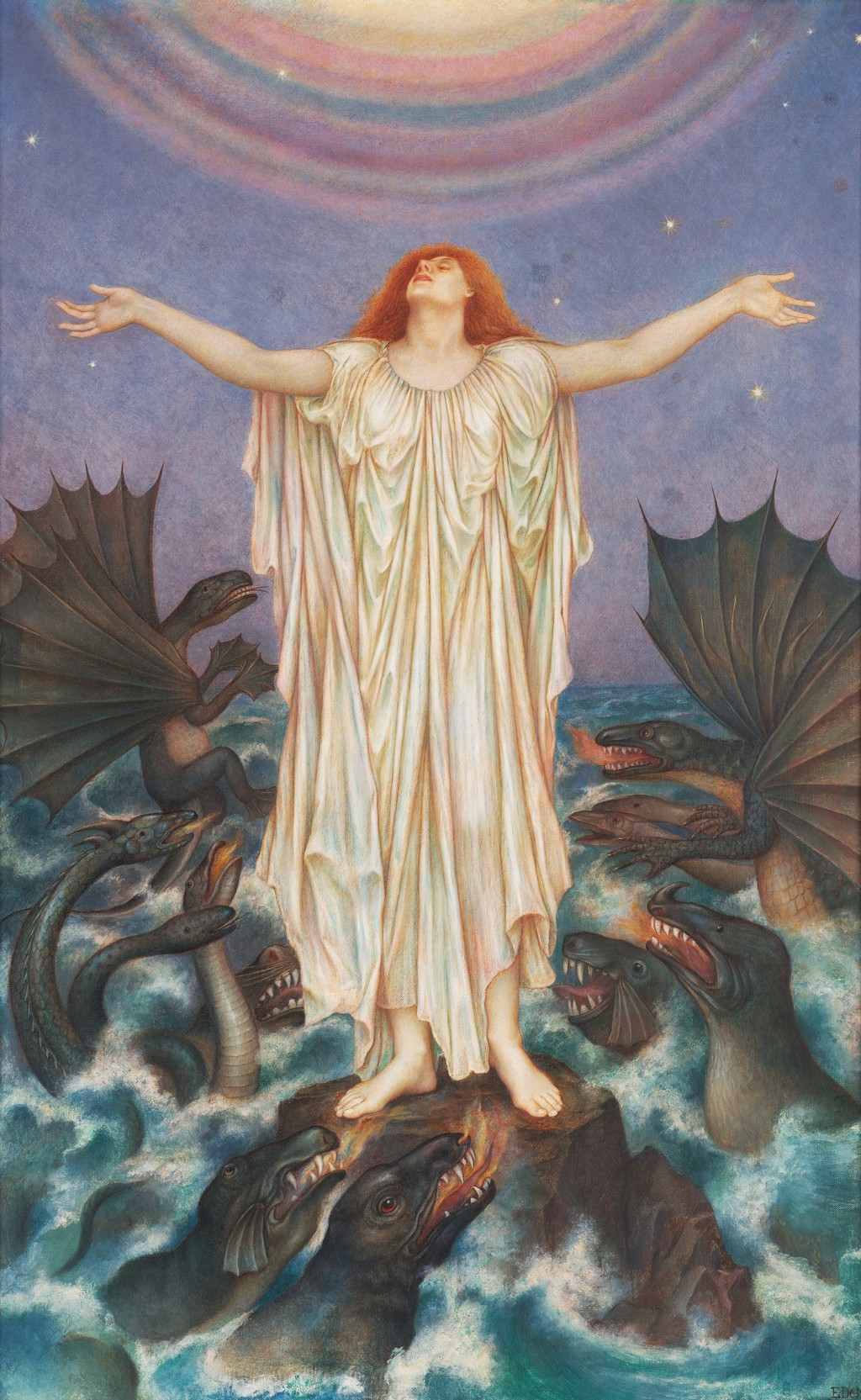
Evelyn and William De Morgan shared a marriage, homes, friendships and reform commitments, but they did not share one career. She was a professional painter whose carefully prepared oils turned myth and modern crisis into moral allegory. He was an inventive designer who moved from stained glass to technically ambitious ceramics and, late in life, popular novels.
Their partnership is most revealing when support and exchange remain visible without making either artist an assistant to the other. Money moved in both directions over time. Materials and ideas crossed the household. Yet a painting by Evelyn and a lustreware dish by William still belong to distinct practices, working rhythms and artistic decisions.
At a Glance
- DatesWilliam Frend De Morgan lived from 1839 to 1917; Evelyn De Morgan, born Mary Evelyn Pickering, from 1855 to 1919.
- MarriageThey met in the 1880s and married in 1887, when both already had established careers.
- MediaEvelyn worked principally as a painter and draughtswoman; William became renowned for ceramics before turning to fiction.
- Shared placesChelsea remained their English base, while regular winters in Florence connected domestic life with Italian art and craft.
- Shared causesSpiritualism, women’s suffrage, social reform and opposition to war.
- Collection legacyWilhelmina Stirling reunited and preserved major groups of both artists’ work for public benefit.
Contents
- Two Careers Before One Marriage
- Painter and Ceramicist
- Chelsea and Florence
- Exchange Without Erasing Authorship
- Money Moving in Both Directions
- Shared Convictions, Different Forms
- Writing, Loss and Reciprocal Legacy
- Wilhelmina Stirling and the Public Collection
Two Careers Before One Marriage
The relationship did not create either artist. William trained at the Royal Academy Schools, entered William Morris’s circle and pursued stained-glass design before establishing his pottery business. His experiments with kilns and lustre glazes helped make him a central Arts and Crafts ceramicist. Evelyn had studied at the Slade, exhibited at the Dudley Gallery and been invited to the inaugural Grosvenor Gallery exhibition while still in her early twenties.[4]
Accounts place their meeting in 1883 and their marriage in 1887. The De Morgan Foundation stresses that both were already established before marrying.[3][4] This chronology prevents a familiar distortion: Evelyn was not a talented wife drawn into art by a famous husband, and William was not merely the husband attached to her later reputation.
Their age difference—William was born sixteen years before Evelyn—also does not explain the partnership by itself. Professional experience existed on both sides. He brought long engagement with Morris, decorative design and materials science; she brought exhibition success, academic figure training and sustained study of Renaissance painting. Marriage joined mature ambitions rather than supplying them.
Painter and Ceramicist
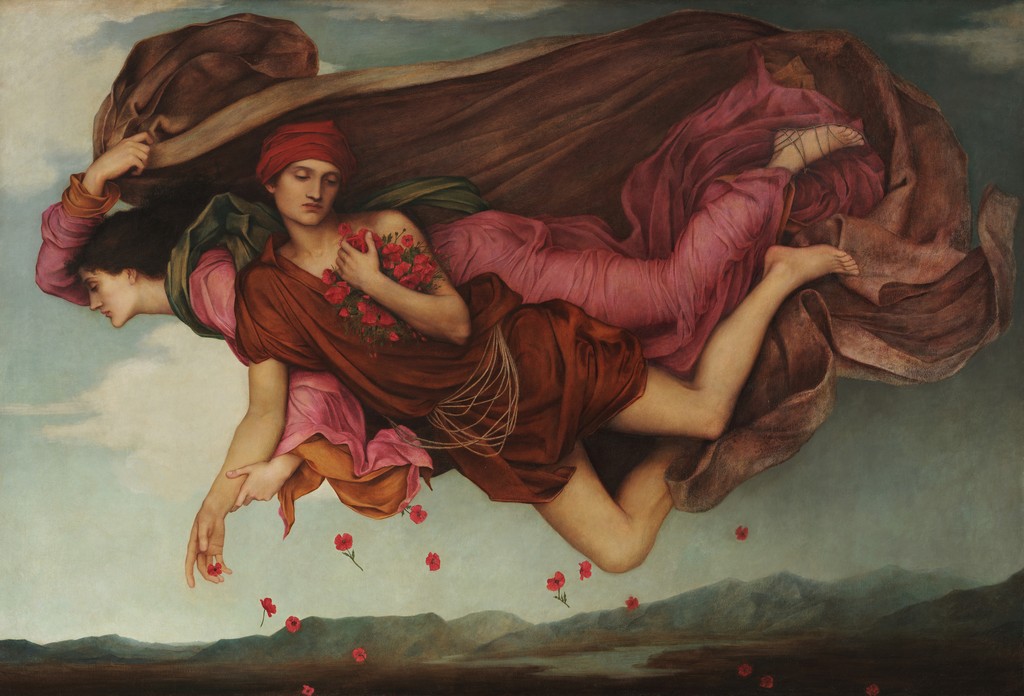
Evelyn’s paintings depend on observation, repeated figure studies and the long construction of oil surfaces. Her subjects range from classical mythology to spiritual allegory and wartime grief. The paintings span several visual languages, including Neo-Classicism, Aestheticism, late Pre-Raphaelite affinities and Symbolism.
William’s ceramic work begins with different physical conditions. A tile, vase or dish had to survive firing; colour emerged through glaze chemistry and heat; repeat patterns answered architecture and domestic use. His sources included medieval design, Renaissance maiolica and Middle Eastern lustreware, while fantastic animals and mathematically ordered motifs gave the objects a distinctive identity. The Delaware Art Museum emphasises his experimental firing work as a bridge from stained glass to pottery.[4]
Putting their works together reveals affinities—intense colour, patterned surfaces, medieval and Renaissance reference, invented creatures—without proving direct borrowing in every case. The Foundation’s exhibition Two of the Rarest Spirits of the Age deliberately juxtaposed William’s designs with Evelyn’s narrative pictures rather than treating the pair as a single maker.[3] Difference is part of the comparison.
Chelsea and Florence
The De Morgans’ shared geography encouraged exchange. Chelsea placed them among artists, designers and writers connected with Aesthetic and Arts and Crafts culture. Their homes were also working environments: painting, design, writing and the practical business of selling art entered daily life rather than occupying a remote professional sphere.
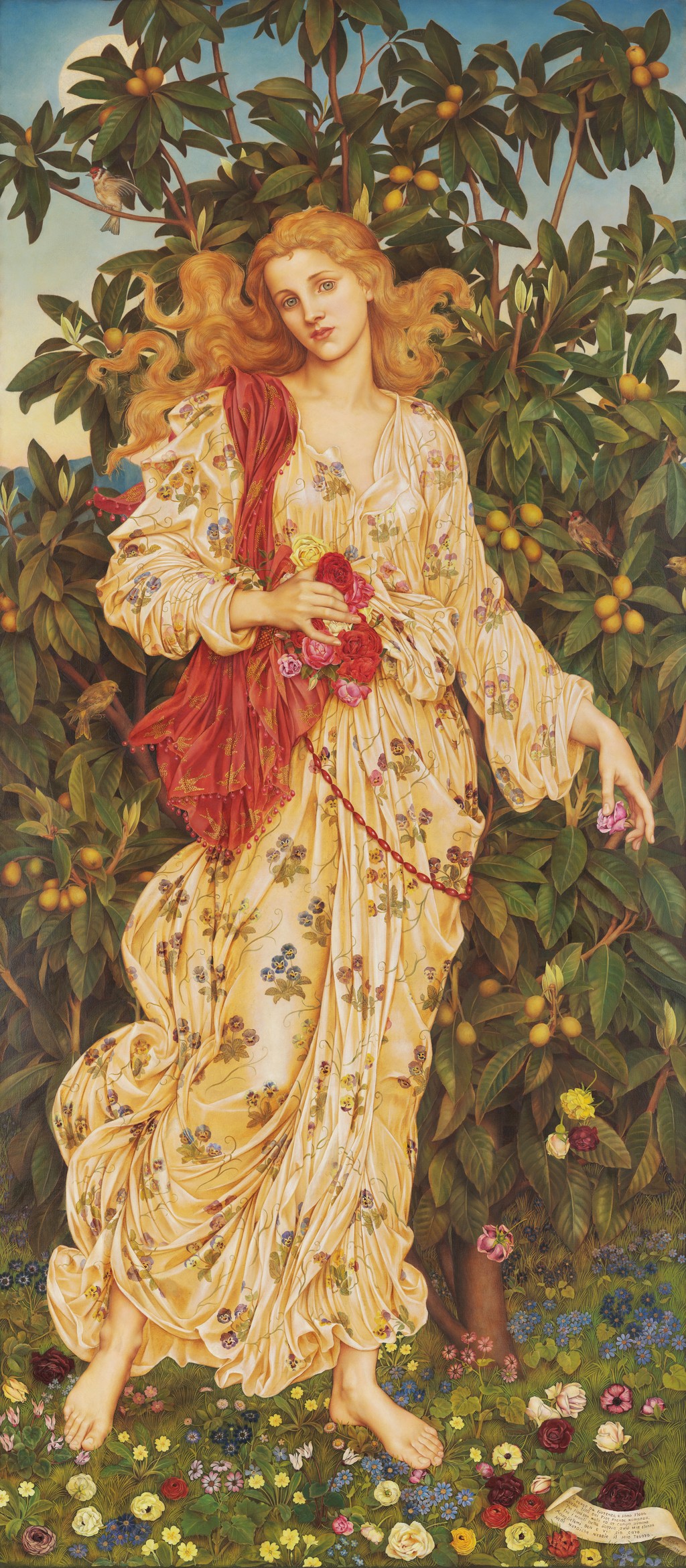
From the 1890s they spent winters in Florence, partly for William’s health. For Evelyn, Italy sustained direct engagement with Renaissance paintings and with the city that shaped works such as Flora. For William, it offered contact with Italian ceramic traditions and makers. Florence was not simply retreat or inspiration in the abstract; it connected looking, production and the movement of materials.
They retained their London ties and eventually lived permanently in Chelsea again as war closed the period of regular travel. The move between English and Italian settings helps explain why their art resists a narrowly national label. William’s pottery combined British Arts and Crafts aims with imported technical and visual histories. Evelyn’s compositions joined British exhibition culture to Italian study and an independent allegorical purpose.
Exchange Without Erasing Authorship
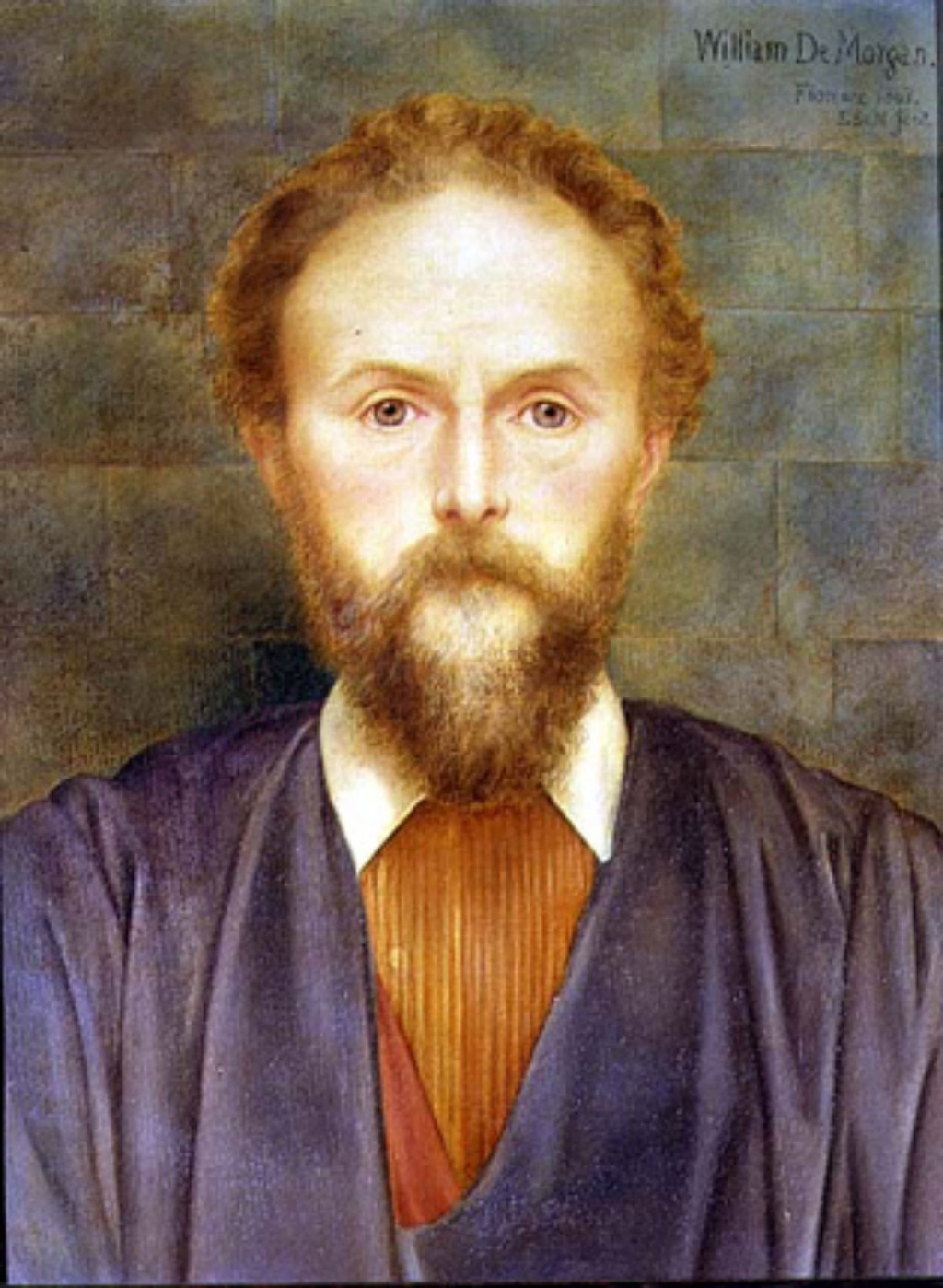
An equal partnership need not mean that every object was jointly made. Evidence of mutual attention appears in portraits, materials and shared experiments. At Wightwick Manor, Evelyn’s portrait of William is displayed beside the lustreware vase represented within it and William’s preparatory design for that vase.[2] The grouping makes their worlds intersect: his ceramic object becomes part of her painted account of him, while her portrait records the designer in relation to his work.
One technical experiment requires especially narrow wording. Evelyn and William worked on a glycerine-based painting method that she called “the process”, but its use is documented for only two of her works, Clytie and The Soul’s Prison House. It cannot explain her oil technique as a whole. The interest lies in a couple testing a material together while Evelyn retained authority over the resulting paintings.
Aesthetic exchange was broader than formal collaboration. Both valued saturated colour, craft knowledge and historic techniques, but their purposes diverged. William’s animals might animate a repeat design across a plate; Evelyn’s dragons could embody danger within a moral drama. Similar motifs do not cancel the difference between ornament, narrative and symbolism. Her colour, gold and technique developed through a painter’s preparatory sequence, whereas his colour depended upon ceramic bodies, glazes and firing.
Money Moving in Both Directions
The economics of the marriage changed. William’s pottery achieved artistic distinction but struggled commercially. The Delaware Art Museum notes that Evelyn may have helped keep the enterprise afloat during the earlier part of their marriage, and that the business closed in 1907.[4] Income from her paintings therefore belonged to the practical life of the household, not simply to private accomplishment.
It would be misleading to turn this into a permanent story of William depending upon Evelyn. After the pottery closed, he began a successful second career as a novelist; the National Trust describes it as an illustrious change of direction.[2] Writing created a new source of income and reduced the earlier pressure on ceramic sales. Evelyn consequently had greater room to paint subjects that did not need to satisfy a patron immediately.
Support also took non-financial forms: shared contacts, studio audiences, travel, discussion and confidence in one another’s work. These forms are difficult to measure, so they should not be converted into claims that one spouse secretly designed the other’s output. The evidence instead shows a household able to rebalance labour and earnings when circumstances changed.
Shared Convictions, Different Forms
Spiritualism, suffrage and pacifism linked the couple beyond aesthetics. The Foundation describes common commitments to social reform, spiritualism and opposition to war, while the Delaware exhibition places them within wider socialist, suffragist and pacifist circles.[3][4] These concerns entered their lives through family as well as friendship: William’s mother, Sophia, was a writer, activist and prominent Spiritualist.
Evelyn gave the shared values a sustained pictorial form. Her images of imprisoned women and rising souls connect with women, spiritualism and freedom. During the First World War, her paintings replaced military heroics with suffering, monsters, graves and threatened hope, explored in war and pacifism. William’s support for suffrage and their common pacifism belong to the political environment around those works; they do not make him their co-author.
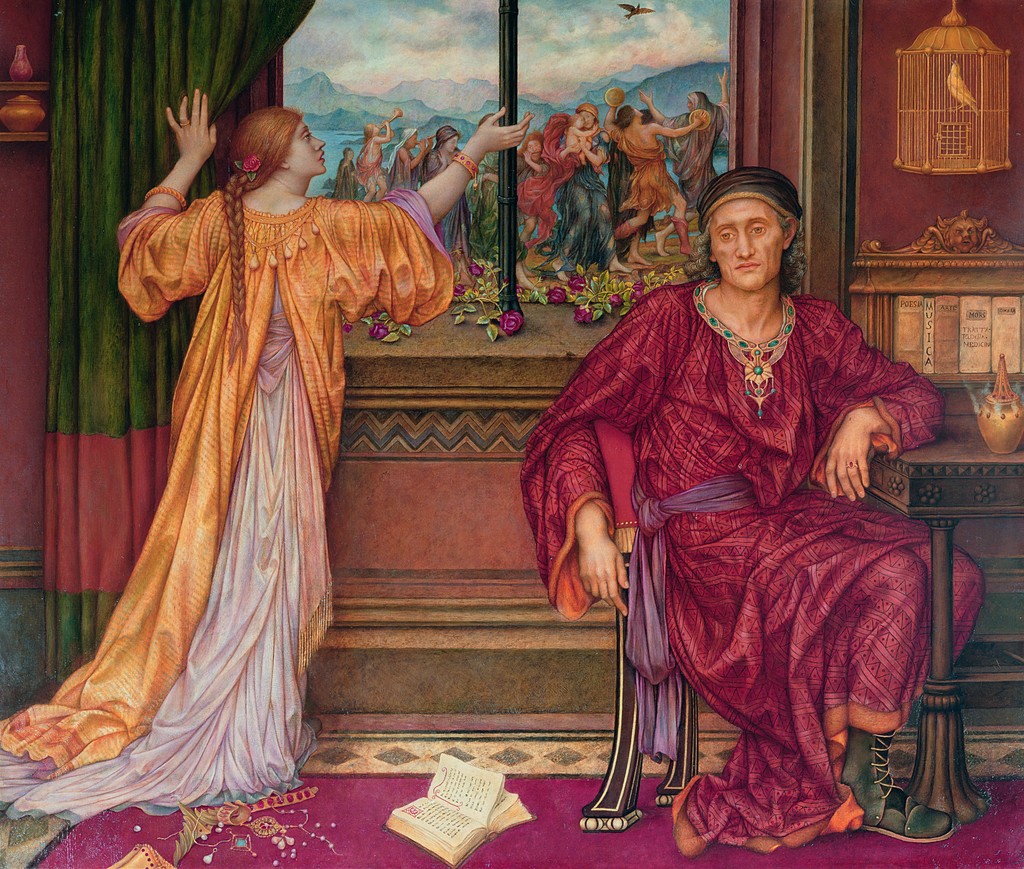
This distinction is important when reading The Gilded Cage. A critique of unequal marriage need not be autobiographical merely because its painter was married to an older man. Recent institutional treatments characterise the De Morgans’ own marriage as a working partnership and place the painting within their common concern about women’s restricted position.[4] The allegory addresses a social structure, not evidence of private confession.
Writing, Loss and Reciprocal Legacy
William’s novels extended his creative life after ceramics, but his death in 1917 interrupted that second career. Evelyn survived him by two years. Her actions after his death show the partnership continuing as stewardship: she gave a large body of his drawings and ceramics to the Victoria and Albert Museum and helped secure attention to his artistic legacy.[7]
Her own estate followed a different path. Evelyn directed the sale of paintings from her studio to raise money for St Dunstan’s, now Blind Veterans UK. Some works risked dismissal or dispersal. Her younger sister Wilhelmina Stirling intervened, sought to acquire pictures and eventually recovered important groups, including works other relatives had purchased.[7]
The contrast is striking but should not be read as Evelyn valuing William’s art and despising her own. Her will treated paintings as assets capable of supporting a charitable cause. Wilhelmina made another choice: she saw public and historical value in keeping the artists’ works together. Her collecting transformed two individual estates into a shared material legacy.
Wilhelmina Stirling and the Public Collection
Stirling displayed her collection at Old Battersea House, wrote William De Morgan and His Wife in 1922 and worked to preserve both reputations.[5] The Foundation’s collection history says she inherited some pieces and actively acquired others. After her death in 1965, her bequest placed the collection in trust; the Foundation traces its formal creation to 1967, while its charity history records registration in 1970.[1][6]
The holdings retain the balance of two practices. The Foundation records 56 framed oils and more than 800 drawings by Evelyn, alongside over 1,000 ceramics by William as well as works on paper, archival material and personal objects.[1] These numbers describe the institution’s holdings, not either artist’s total output.
Public access now takes several forms. The Foundation runs its own museum, lends works and maintains digital access, while partnerships place substantial displays at other institutions.[6] At Wightwick Manor, paintings, drawings, Evelyn’s sketchbooks and palette appear alongside William’s ceramics, designs and a tile library containing more than 400 examples.[2] Cannon Hall and Watts Gallery are also identified by the National Trust as places where parts of the collection can be encountered.[2]
Seeing the objects together completes the historical argument. The collection preserves a marriage without merging two authors. It lets a viewer compare painted light with ceramic lustre, narrative bodies with repeating animals, and separate careers that repeatedly met across a shared life.
About this directory: These 72 entries form a reproducible researched online works census assembled from current public records. It is not a catalogue raisonné and does not claim absolute completeness.
Artworks directory
| Name | Date | Medium |
|---|---|---|
| A Soul in Hell | Date unknown | Painting |
| Ariadne in Naxos | 1877 | Painting |
| Aurora Triumphans | 1877 | Painting |
| Blindness and Cupidity Chasing Joy from the City | 1897 | Painting |
| Boreas and Oreithyia | 1896 | Painting |
| Boreas and the Fallen Leaves | 1910 | Painting |
| By the Waters of Babylon | 1882 | Painting |
| Cadmus and Harmonia | 1877 | Painting |
| Cassandra | 1898 | Painting |
| Clytie | 1886 | Painting |
| Daughters of the Mist | 1909 | Painting |
| Death of a Butterfly | 1910 | Painting |
| Death of the Dragon | 1916 | Painting |
| Deianira | 1878 | Painting |
| Demeter Mourning for Persephone | 1906 | Painting |
| Drapery study | 1890 | Drawing |
| Earthbound | 1897 | Painting |
| Eos | 1895 | Painting |
| Evening Star over the Sea | 1910 | Painting |
| Flora | 1894 | Painting |
| Helen of Troy | 1898 | Painting |
| In Memoriam | 1904 | Painting |
| Life and Thought Emerging from the Tomb | 1893 | Painting |
| Love's Passing | 1883 | Painting |
| Luna (Moon) | 1885 | Painting |
| Lux in Tenebris | 1895 | Painting |
| Medea | 1889 | Painting |
| Medusa | 1879 | Painting |
| Mercury | Date unknown | Painting |
| Moonbeams dipping into the Sea | 1918 | Painting |
| 'Music Sweet Music' (Saint Cecilia) | 1884 | Painting |
| Night and Dawn | 1910 | Painting |
| Night and Sleep | 1878 | Painting |
| Our Lady of Peace | 1907 | Painting |
| Phosphorus and Hesperus | 1881 | Painting |
| Port after Stormy Seas | 1905 | Painting |
| Portrait John Roddam Spencer Stanhope | 1880 | Painting |
| Queen Eleanor and the Fair Rosamund | Date unknown | Painting |
| S.O.S. | 1914–1916 | Painting |
| Sleep and Death: the Children of Night | 1883 | Painting |
| Study for 'Saint Christina' | 1904 | Painting |
| Study from the life | 1890 | Drawing |
| Study of Arms for "The Cadence of Autumn | 1905 | Drawing |
| Sunbeam and Summer Shower | 1910 | Painting |
| The Angel of Death I | 1880 | Painting |
| The Barred Gate | 1910 | Painting |
| The Cadence of Autumn | 1905 | Painting |
| The Captives | Date unknown | Painting |
| The Dryad | 1884 | Painting |
| The Garden of Opportunity | 1892 | Painting |
| The Gilded Cage | probably 1901–1902 | Painting |
| The Grey Sisters | 1880 | Painting |
| The Hourglass | 1904 | Painting |
| The Kingdom of Heaven Suffereth Violence and the Violent Take It by Force | 1878 | Painting |
| The Light Shineth in Darkness and the Darkness Comprehendeth It Not | 1906 | Painting |
| The Little Sea Maid | 1880 | Painting |
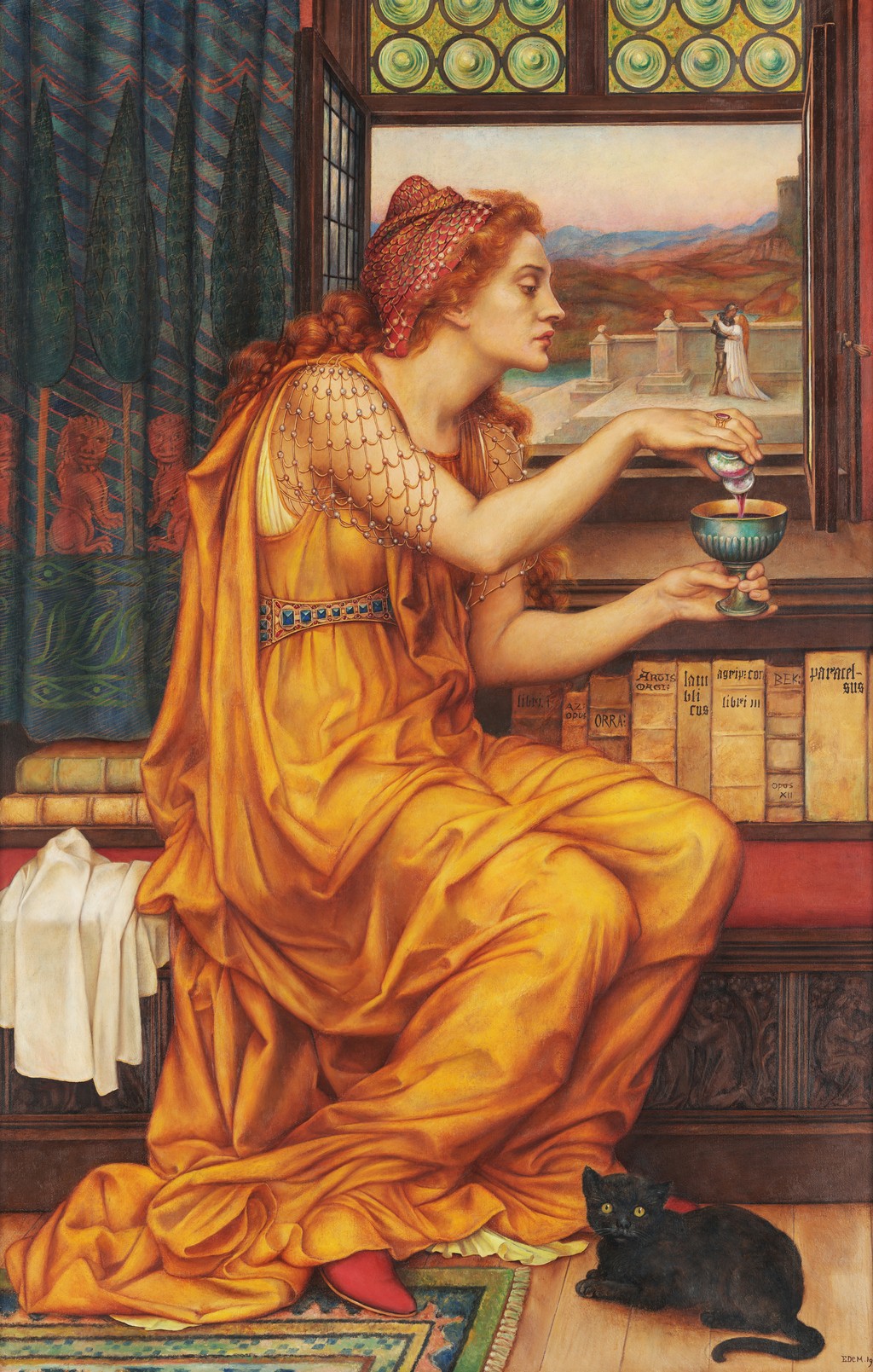
| The Love Potion | 1903 | Painting |
| The Martyr (Nazuraea) | 1880 | Painting |
| The Mourners | 1915 | Painting |
| The Passing of the Soul at Death | 1910 | Painting |
| The Poor Man Who Saved the City | 1901 | Painting |
| The Prisoner | 1907 | Painting |
| The Red Cross | 1915 | Painting |
| The Salutation | 1883 | Painting |
| The Sea Maidens | 1885 | Painting |
| The Soul's Prison House | 1880 | Painting |
| The Storm Spirits | 1900 | Painting |
| The Worship of Mammon | 1909 | Painting |
| Twilight | 1910 | Painting |
| Venus and Cupid | 1878 | Painting |
| William De Morgan | 1909 | Painting |
| William De Morgan (1839–1917) | 1893 | Painting |
Frequently Asked Questions
They exchanged ideas, supported one another and jointly tested the limited glycerine “process”. Most surviving works retain clear authorship: Evelyn made paintings and drawings, while William designed ceramics and earlier stained glass. Partnership does not mean that all objects were co-produced.
No children are recorded for the couple. Their household nevertheless supported a wide creative and social network, and their shared legacy was ultimately preserved through Evelyn’s sister Wilhelmina rather than through descendants.
The De Morgan Foundation cares for the core collection and provides access through its museum, online resources, loans and partner exhibitions.[6] Significant displays can be visited at Wightwick Manor, Cannon Hall and Watts Gallery; arrangements and individual objects may change, so visitors should check each institution before travelling.[2]
Discussion
What should readers notice when looking closely at Evelyn and William De Morgan?
Reader Insights
Look for exchange between painter and ceramicist without assuming one medium simply illustrates the other.
Place Wilhelmina Stirling’s collecting work within the partnership’s afterlife and present-day visibility.
How can an artistic marriage be discussed without making either artist the supporting character?
Join the Conversation
Share your reading below, keeping observations specific and evidence clear.
References
- De Morgan Foundation, The Collection, View source
- National Trust, The De Morgan Gallery at Wightwick, View source
- De Morgan Foundation, The De Morgans: Two of the Rarest Spirits of the Age, View source
- Delaware Art Museum, A Marriage of Arts and Crafts: William and Evelyn De Morgan, View source
- De Morgan Foundation, Wilhelmina Stirling, View source
- De Morgan Foundation, About Us, View source
- De Morgan Foundation, A Passion to Preserve Evelyn’s Paintings, View source