by Tom Gurney
Tom Gurney BSc (Hons) is an art history expert with over 20 years experience
Email: tomgurney1@gmail.com / Phone: +44 7429 011000
The Lions at the Base of Nelson's Column: Introduction
Four bronze lions lie at the foot of Nelson's Column, one at each corner of its pedestal. Their bodies are at rest, but their heads rise above broad chests and extended paws. From a distance they make a dark, low platform beneath the pale vertical monument; at close range each becomes an enormous animal whose back can be touched, climbed and photographed. That double existence—as monumental design and accessible body—has shaped their place in London since January 1867.[1][2]
Sir Edwin Landseer designed and modelled the lions. Baron Carlo Marochetti cast them in bronze. Those verbs matter. Landseer did not design the column, carve the statue of Nelson or pour the metal; Marochetti did not invent the animal form now associated with Landseer. The ensemble emerged from a long public process involving an animal painter, a sculptor-founder, the Office of Works and a Parliament that repeatedly asked why the monument remained unfinished.[1][3][4]
The commission lasted almost nine years. In 1858 the material was still undecided. In 1860 Landseer's defenders invoked his knowledge of animals and the national emblem of the British Lion. In 1862 the Government said he was studying living lions at the Zoological Gardens. In 1863 members debated his altered ideas, the scale of a projected model and the contract that would later be made with a founder. By 1865 the first model was in the casters' hands. The four bronzes were finally installed in January 1867.[2][5][6][7][3][8]
That chronology corrects several popular stories. Bronze was not chosen simply because a painter could not manage a chisel. The lions are not documented as metal from captured French cannon; official records attach captured guns to other parts of the Nelson memorial. A dead lion studied by Landseer in 1848 predates this commission by a decade and cannot be treated as the straightforward corpse-model for the installed works. Nor do the four Trafalgar Square lions have the individual names sometimes borrowed from a different group at Saltaire.[2][5][9]
Their public meaning is more complicated than their familiar outline. Nineteenth-century speakers used them to embody national power and the “British Lion”, while current civic descriptions stress dignity, strength and guardianship. Yet the square around them has repeatedly altered the terms. The animals received mourning wreaths after Landseer's death, were incorporated into patriotic ceremonies, became platforms for climbers and family photographs, accumulated physical wear, and inspired a temporary fluorescent-red fifth lion that turned public words into poetry in 2018. Today they occupy a space used for tourism, protest, celebration and assembly.[2][10][11][12]
To understand why the lions endure, it is therefore necessary to look in several directions at once: upward to the naval hero they support, backward to the contested commission, around the corners at the repeated animal form, down at surfaces changed by weather and touch, and outward into the crowd. They are Landseer sculptures, components of a larger memorial and working participants in London's civic life.
At a Glance
- ArtistEdwin Landseer [1]
- Date1867 [1]
- Collection or siteTrafalgar Square / Greater London Authority [1]
- ObjectNelson's Column lions [1]
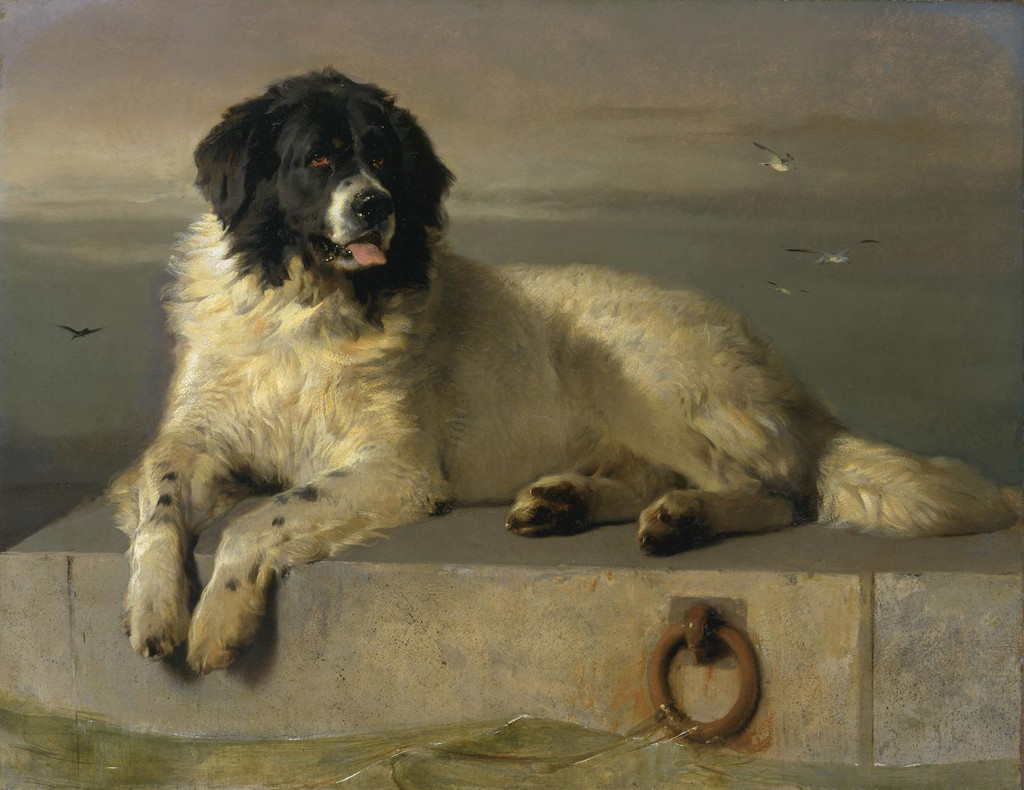
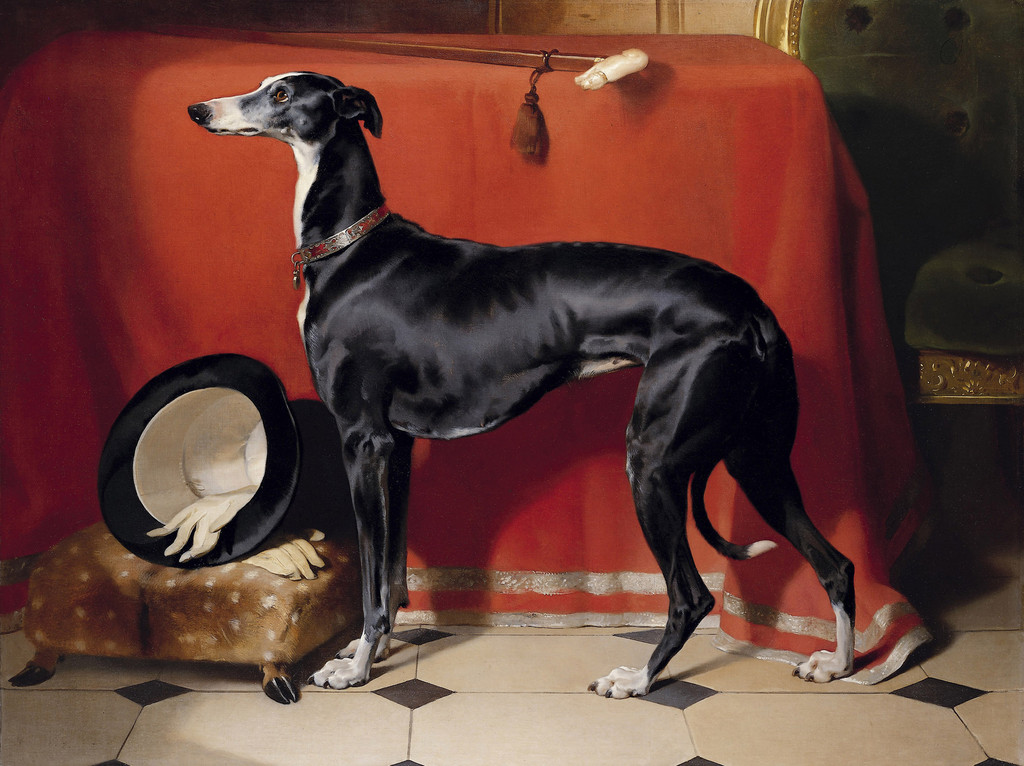
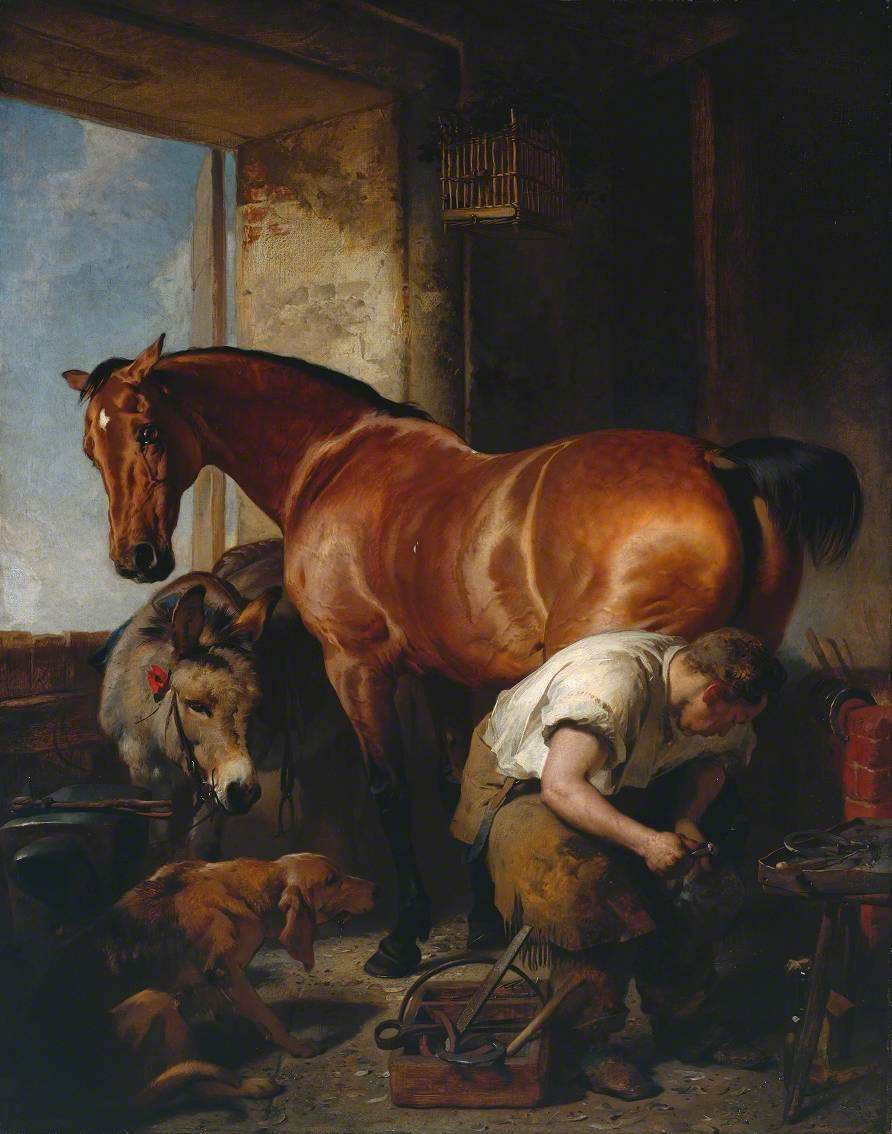
This work across Edwin Landseer’s career
The Cat's Paw
c. 1824 [14]The Hunting of Chevy Chase
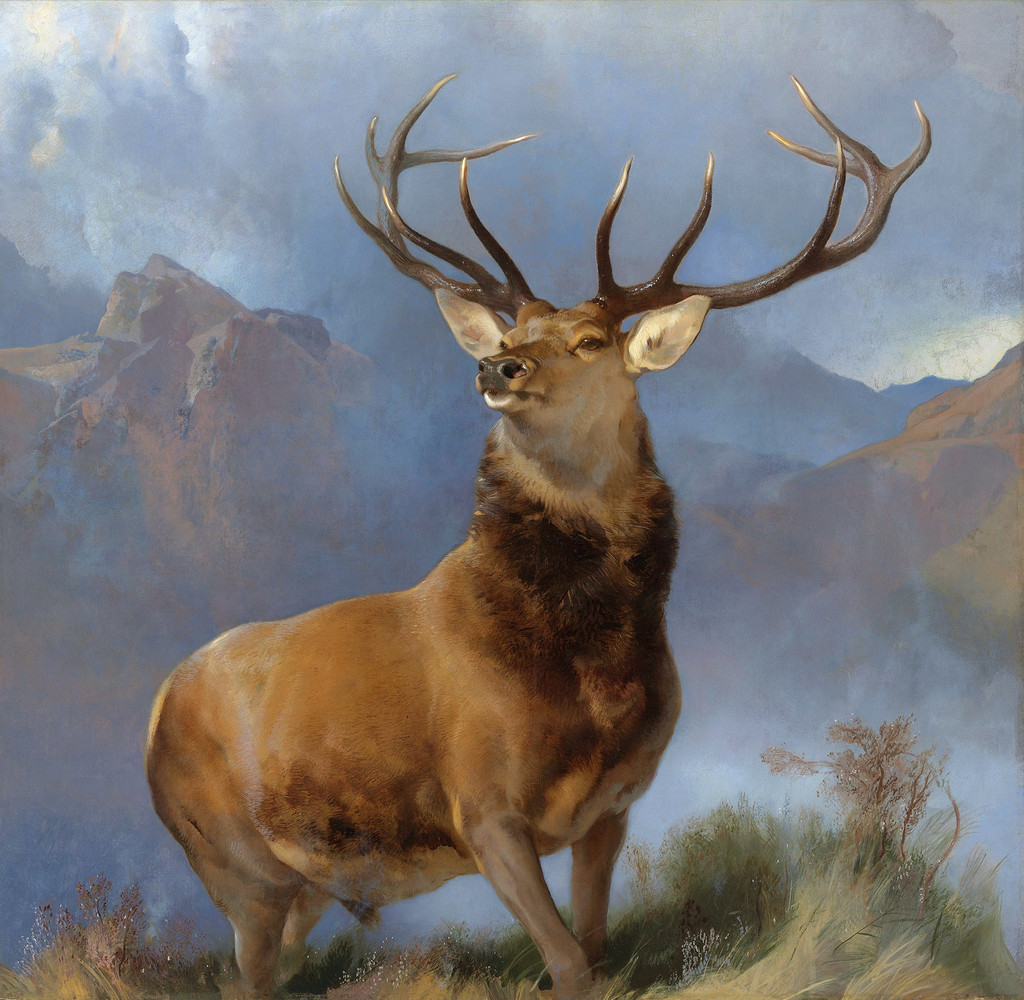
1825–26 [15]The Monarch of the Glen
about 1851 [19]Contents
- Four bronzes within one larger monument
- The unfinished base before Landseer
- The 1858 commission and an unsettled material
- Why an animal painter was chosen
- Studying lions without inventing a corpse-model
- From changing ideas to a colossal model
- Ballantyne's portrait and the politics of showing unfinished work
- Landseer, Marochetti and the passage into bronze
- Parliament, delay and the problem of cost
- January 1867 and the first public verdicts
Four bronzes within one larger monument
The lions belong to the Nelson Monument in Trafalgar Square, Westminster. Historic England lists the whole structure at Grade I. Its account distinguishes the principal contributors: William Railton designed the memorial; Edward Hodges Baily made the statue of Admiral Horatio Nelson; John Edward Carew, John Ternouth, Musgrave Lewthwaite Watson and William Frederick Woodington made the four reliefs; and Landseer's lions were added in 1867. Stone, bronze, architecture and sculpture therefore form a composite work developed over decades rather than a single artist's creation.[1]
Railton's scheme rises through steps, pedestal, column and capital to Nelson high above street level. The lions occupy the angles of the lower platform. Their placement gives them a different relation to the public from the elevated admiral. Nelson is recognised largely by silhouette, uniform and position against the sky. The animals are encountered near the pavement, where a visitor can circle their flanks, stand beside their paws or look back towards the column through the space between them.
The group consists of four bronze casts made from one final Landseer model, according to Westminster's conservation-area record. Each is a colossal recumbent male lion, with a mane around the head and neck, forelegs extended and hindquarters folded beneath or beside the long torso. A historical London County Council inventory recorded each animal as approximately twenty feet long and eleven feet high. The 1863 Commons debate had already discussed a proposed model about twenty feet in length, showing that colossal scale was part of the design problem before casting began.[2][3][22]
“One model” does not make the four encounters visually identical. Each cast occupies a different corner, faces a different stream of movement and receives light, rain, dirt and touch differently. The visitor's approach also changes. A lion seen axially across the square reads as one dark stop in a symmetrical arrangement; the same form seen from the side becomes an extended back, a rising shoulder and an abrupt head. Repetition belongs to the design, while orientation produces variation.
The familiar phrase “Landseer lions” is therefore useful but incomplete. It identifies the designer whose animal reputation secured the commission, yet it can hide the founder, the earlier monument and the administrative system that produced the bronzes. “Four lions by Landseer” should be understood as shorthand for four bronze casts from Landseer's monumental model, made by Marochetti for the base of Railton's Nelson memorial.[1][2][4]
The distinction also prevents a common metal error. Westminster states that the four relief panels were cast from guns captured in Nelson's battles and at Trafalgar. Other official descriptions connect reused guns with architectural metal on the monument. Neither establishes that the lion bodies were made from captured cannon. The dramatic story that defeated weapons became British lions fits the memorial's symbolism so neatly that it is often repeated, but symbolic neatness is not material evidence.[2][10]
Current language adds another layer. The Greater London Authority, which manages Trafalgar Square, describes the animals as being on guard or as said to protect the square. That is an effective metaphor for their corner positions and raised heads. It is not proof that Landseer supplied a literal guardianship programme, nor does it convert bronze animals into functional defences. The language tells us how the ensemble is presented now.[10]
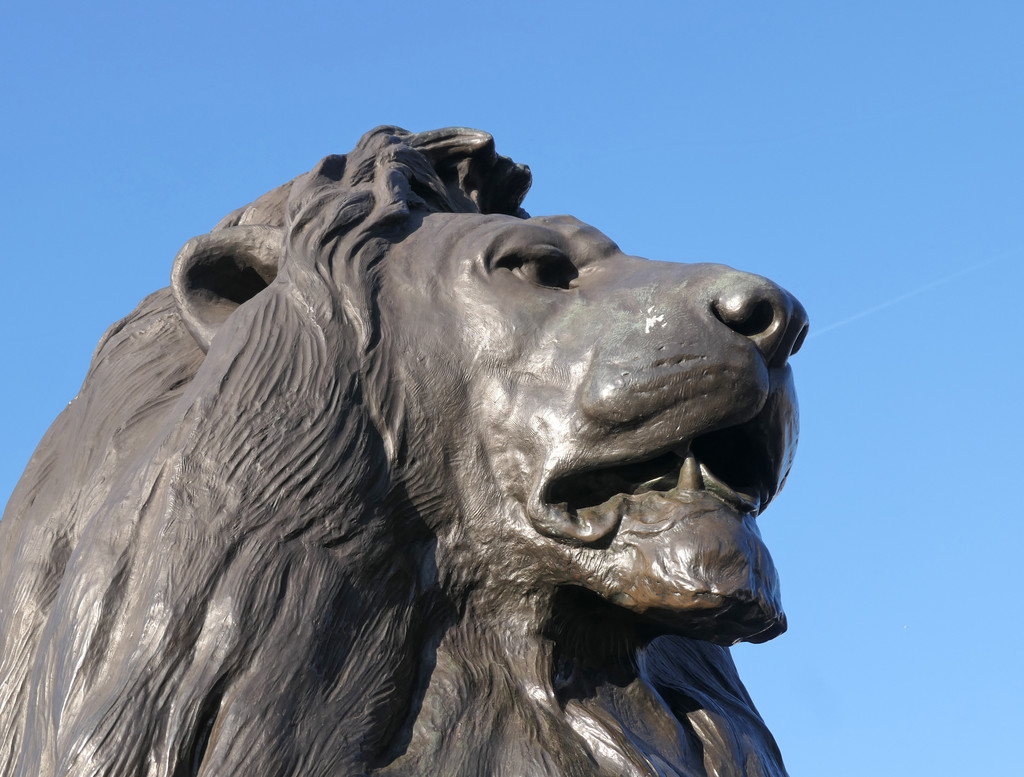
One of the bronze lions at Nelson’s Column: modelled by Edwin Landseer and cast by Carlo Marochetti. Photograph by Amanda Slater. CC BY-SA 2.0. Image source. CC BY-SA 2.0. Resized.
The unfinished base before Landseer
The lions were late arrivals. Trafalgar Square acquired its name in 1830, and Charles Barry's plan for the space followed in the later 1830s. Nelson's Column was erected in the early 1840s, with the statue placed above by 1843. Fountains, reliefs and other elements appeared in stages. When Landseer entered the project in 1858, Londoners had lived for roughly fifteen years with Nelson overhead and an unresolved base below.[1][10]
That gap is more than background chronology. It explains why parliamentary debate so often treated the animals as the completion of a national embarrassment. Speakers did not discuss a new independent sculpture in an empty square. They confronted a conspicuous absence in one of the capital's principal monuments. Every additional delay could be framed as failure to finish an obligation already owed to Nelson and to the country.[7][3]
Lions had long been associated with sovereignty, courage and Britain. They were also familiar supports and guardians in architecture and funerary sculpture. But the base posed a special problem of scale. Four small heraldic emblems would disappear under the column. Four vigorously moving predators might compete with the vertical order or turn the pedestal into narrative spectacle. The eventual recumbent forms answer by being massive without seeming to leap away from their assigned corners.
The monument's sequence also clarifies how meaning accumulated. Nelson commemorates victory and death at Trafalgar. Reliefs narrate episodes connected with his naval career. Lions do not add another event from the battle; they generalise power, national identity and vigilance around the base. Their symbolic work is broad precisely because their animal bodies are not engaged in a specific story.
By 1858 the lower structure could still be called a stylobate in parliamentary estimates. The architectural word matters because the vote concerned completion of a base, not merely purchase of four freestanding bronzes. Landseer's animals had to answer existing dimensions, stairs, reliefs, sightlines and the enormous vertical above. The commission joined animal observation to an urban and architectural task.[5]
The late addition altered the finished monument retrospectively. Photographs taken after 1867 make the lions seem inevitable, as though Railton's column had always required those exact bodies. Historical sequence resists that illusion. The memorial existed first; different sculptural possibilities were debated; material remained open; Landseer changed his ideas; and the installed solution arrived only after prolonged criticism. Their eventual familiarity has concealed how contingent they once were.
The unfinished base further shaped public judgement of Landseer. A private patron can tolerate delay without reporting annually to the Commons. This commission made development visible through estimates and questions. Critics could connect the absent lions with government inefficiency, Landseer's professional identity, expenditure and national taste. The base thus became a stage on which arguments about public art were conducted before the sculpture itself appeared.[23][3][24]
The 1858 commission and an unsettled material
On 13 July 1858 the House of Commons considered a vote of £6,000 for “Completing the Stylobate” and related work at Nelson's Column. A member referred to a proposed group in granite or rose-coloured granite and argued that bronze would be preferable. The Chancellor of the Exchequer answered that the material had not yet been determined and said Lord John Manners was communicating with Landseer.[5]
This exchange fixes three important facts. Landseer was already connected with the project. Parliament was asked to fund completion at the base. Bronze was being advocated, not reported as an original immutable instruction. It also shows why the inherited story about Landseer's supposed chisel anxiety fails. If the material was a live public question, it cannot responsibly be reduced to an artist privately choosing the medium that would best disguise inexperience.
Bronze and granite would have produced different relationships to the column. Granite could visually bind animals to the masonry and architectural platform. Bronze could distinguish them as dark sculptural masses, carry more projecting detail and be made through modelling followed by foundry work. Those are consequences visible in the completed monument. Without a surviving decision memorandum, they should not be rewritten as the sole reasons officials chose bronze.
The £6,000 also requires care. It was a vote for public works around the stylobate, not a clearly identified cheque to Landseer. Later debates mention re-votes, expenditure and larger estimates. Combining those numbers into one final price would mix categories and may count the same projected work more than once. Parliamentary money is most useful here as evidence of scrutiny and changing expectation, not as an auction label for four objects.[5][3][24][8]
Landseer's appointment nevertheless carried exceptional symbolic weight. He was one of Britain's most celebrated painters, knighted and strongly associated with animals, Highland subjects and royal patronage. Giving him the lions linked the monument to a recognisable national artist. It also created the central vulnerability that opponents repeatedly exploited: why entrust monumental sculpture to someone famous for painting?[6][3]
That question should not be answered by pretending media are interchangeable. A painter can imagine volume, gesture and surface, but a colossal model introduces gravity, physical access, support and reproduction problems different from those of canvas. Landseer's learning curve was real enough to feature in political defence. At the same time, nineteenth-century sculpture was often collaborative. Designers, modellers, assistants, enlargers and founders did not cease to matter because public authorship attached to one name.
The project was therefore both unusual and structurally normal. It was unusual because the chosen designer was publicly identified as an animal painter taking on his first monumental commission at this scale. It was normal in requiring specialist collaboration before clay could become bronze. The mistake is to treat collaboration as proof of fraud or, conversely, to erase it in order to protect Landseer's reputation.
Why an animal painter was chosen
In July 1860, when asked about the missing lions, the Government defended delay by stressing that the works ought to be worthy of the monument and should represent the British Lion. Landseer's knowledge of animal form was used as the decisive qualification. The answer joined artistic expertise to patriotic symbolism: the artist knew lions, and the lion was being asked to stand for Britain.[6]
That was advocacy, not a neutral assessment. The phrase “British Lion” carried a rich political life in caricature, heraldry and public speech. It could mean courage, national character, military strength or imperial authority. By connecting Landseer's zoological credibility to that emblem, ministers made anatomical observation serve a national abstraction.
Landseer's career made the defence plausible. Long before 1858 he had built compositions around animal posture, coat, weight, expression and human-animal encounter. He had represented captive lions in paintings connected with the American animal performer Isaac van Amburgh. His supporters could claim that the sculptural medium was new while the central subject was not.[9][25]
Yet knowledge derived from pictures does not automatically solve a monumental design. A painted lion can be made convincing through colour, selective focus, background and a single fixed viewpoint. A bronze in a public square must work from every direction, survive enlargement and hold its form against architecture. Landseer's task was not simply to reproduce a successful painted animal in three dimensions. He had to convert accumulated looking into a body that remained legible at urban scale.
Parliamentary objections repeatedly used professional category as a weapon. In 1863 critics asked why a painter rather than an established sculptor had received such an important national work. In 1864 some argued for distinct lions or for a more boldly monumental treatment, fearing that painterly finish could become weakness at scale. These objections belong to a period when sculpture's status, public commissions and the division of artistic labour were openly contested.[3][24]
Supporters replied in two ways. First, they treated species knowledge as more valuable than medium specialism: few artists, they implied, understood the living lion so well. Second, they pointed to the model as it developed, claiming that quality would justify the decision. Neither reply eliminates the risk. Together they show the standard by which Landseer was being judged—credible animal life translated into national monument.
The selection also complicates the word “naturalism”. Landseer did not merely have to make a lion look zoologically possible. He had to reconcile a living predator with repose, symmetry and symbolism. Too much motion could destabilise the base; too little animation could make the body inert. Too much individual variation could disturb the four-corner order; strict repetition could feel mechanical. The eventual pose is a compromise between observed animal and architectural emblem.
Calling the result “entirely fitting” or “obviously miscast” would repeat the opposing parliamentary positions as verdicts. A more useful question is how the work converts Landseer's particular authority into bronze. Its answer lies in study, modelling, repetition and the specialised labour of the foundry.
Studying lions without inventing a corpse-model
The Government's reply of April 1862 provides the clearest direct evidence for living study. It said Landseer was not yet satisfied with his work and was carefully examining the habits of living lions at the Zoological Gardens. Lord John Manners invoked the same zoological attention during the 1864 debate. These statements were made to defend delay, but they anchor the project in repeated observation rather than one sensational studio event.[7][24]
Surviving studies broaden that record. Tate holds large oil studies of lions dated around the commission years, including a pacing animal whose long profile allows close attention to shoulder, spine and weight shift. A National Gallery exhibition brought together sketches and a large pacing-lion painting made in preparation for the sculptures. Drawings of reclining lions survive in collections including the British Museum, while a small sheet sold at Christie's has been catalogued as a monument study.[26][27][28]
These objects should not be arranged as a complete linear storyboard unless their exact sequence is documented. A sketch may explore contour; an oil may investigate colour and anatomy; a drawing of repose may test the relation between head, forelegs and torso. Some studies can be associated with the project through collection records, but none by itself proves the exact route to the final model.
Living lions offered movement and changing posture. Drawings and photographs fixed moments for later comparison. Anatomical remains could reveal bone and muscle beneath mane and skin. Plaster casts and sculptural precedents supplied further three-dimensional reference. The inherited composite quotation lists several such channels, but its ellipses and inserted wording cannot be authenticated as a reliable verbatim statement by Landseer. The methods can be discussed only where independent sources support them.
The most persistent story concerns a dead lion. Prince Albert sent Landseer a lion that died in 1848, and early biographical accounts describe the artist studying the carcass. That episode is historically relevant to his animal practice, but it took place ten years before the Trafalgar commission. A modern study of the story shows how later retellings fused separate moments until the corpse seemed to have arrived expressly for Nelson's Column.[9]
Once those dates are restored, several dramatic details lose their footing. The 1848 lion cannot be described as dying soon after arrival for an 1858 project. Frederick Keyl cannot be assigned the task of propping it into the final pose without a direct witness. Decay anecdotes, stories of reversed paws and comparisons with domestic cats may illuminate the folklore surrounding the sculptures, but folklore is not a modelling record.
The final bronzes do not need the corpse tale to explain their persuasiveness. Their effect comes from the organised relation of head, mane, shoulder, chest, paws, back and folded hindquarters. Living observation was publicly reported during the commission. Surviving works show sustained graphic and painted enquiry. The monumental model then required Landseer to select from that knowledge rather than reproduce one specimen.
This distinction changes how we see the pose. A corpse story encourages viewers to search for anatomical mistakes or signs of lifelessness. The documented project asks a more interesting question: how did an artist turn observed states—walking, lying, raising the head—into a recumbent body that suggests both rest and readiness? The lions are inventions constructed from study, not casts taken directly from life or death.
From changing ideas to a colossal model
Progress reports reveal that the design did not emerge fully settled. An April 1861 answer described concentrated work on the model without claiming completion. Twelve months afterwards, officials could still give no finishing date because Landseer remained dissatisfied. In June 1863 ministers discussed his sketches and revisions, while asserting that the design was now complete and the clay stage would proceed.[23][7][3]
The 1863 debate is particularly valuable because it records a plan in motion. A model around twenty feet long was discussed. Ministers expected two models with alterations, after which a founder would be contracted. Landseer reportedly did not understand his undertaking as personal completion of the bronze. The casting would take place under his direction.[3]
None of those statements should be made timeless. The expectation of two models belongs to June 1863. By May 1864 the first model was said to be nearly finished and one cast anticipated. In May 1865 the first model was complete and with the casters. Westminster's later conservation record states that all four installed bronzes were made from the same model. Final physical evidence therefore controls the completed set, while the earlier report preserves an abandoned or altered production plan.[2][24][8]
This is why simple formulas mislead. Saying “Landseer made four unique lions” contradicts the installed record. Saying “nothing changed after one first sketch” contradicts years of revision. The secure sequence is plural exploration followed by one governing final model and four bronze instances.
Repetition solved architectural problems. One recumbent form could stabilise four corners without introducing competing narratives. It also reduced the need to develop four independent monumental bodies after a long design period. But casting the same model did not make the ensemble an industrial multiple in an ordinary sense. Each bronze had to occupy a massive public base, receive finishing and survive as an individual object in weather.
A contemporary Art Journal reviewer offered a more specific account, saying that the body had been cast four times and that two head designs appeared twice each. That claim belongs to first reception and may record differences the writer thought visible. It does not licence a modern assertion about mould sections or negate Westminster's description of one model. The apparent tension is best preserved: official later inventory gives a shared model, while a contemporary critic perceived limited variation within repetition.[29]
At every stage, scale changed the visual problem. A mane that looked richly worked in a study could become confused in bronze from below. A paw that seemed adequately large in a drawing had to carry the animal's monumental weight beside human visitors. The long spine had to remain coherent across changing viewpoints. Details had to survive distance without turning the lion into a diagram.
Modelling also allowed Landseer to work in an additive medium. Clay could be built, pressed, cut and revised. That fact does not prove that bronze was selected to rescue him from stone carving. It does explain why modelling placed his observational strengths at the centre while leaving casting to a founder. The commission was not a painter pretending to pour bronze; it was a designed passage from studies through monumental clay into foundry production.
Ballantyne's portrait and the politics of showing unfinished work
John Ballantyne's c.1865 portrait of Landseer makes that passage visible, but not transparently. The painting, now NPG 835, shows the artist in Marochetti's studio among clay lions, tools, steps, a pail, a lion skin and smaller visual references. It measures 800 by 1,130 millimetres and belonged to Ballantyne's series depicting contemporary artists in their workspaces.[30]
The studio setting seems to promise privileged access. Landseer stands beside the national commission, apparently joining celebrated mind, hand and emerging animal form in one image. Yet the National Portrait Gallery records that the sitter was based on a photograph. The portrait is a constructed account of authorship, not a snapshot of Landseer interrupted during modelling.[30]
Its exhibition history exposes the sensitivity of that construction. Ballantyne showed the work in November 1865 while the lions were unfinished and not yet installed. Landseer objected to the premature revelation and demanded that the portrait be withdrawn. The dispute contributed to the early closure of Ballantyne's exhibition. After the bronzes appeared, Ballantyne altered the lions in the picture so that they conformed more closely to the completed casts.[30]
The episode shows that an unfinished public design was not merely private studio material. Advance visibility could influence judgement before Landseer controlled the final encounter. After years of parliamentary impatience, a portrait displaying incomplete lions risked becoming another report on progress. His objection can be understood as concern about authorship and timing without being turned into a diagnosis of vanity or mental state.
Ballantyne's later alteration further complicates the image as evidence. What now looks like a single moment contains at least two historical states: the portrait conceived around the studio project and the animal forms revised after installation. We can use it to understand the publicity surrounding modelling, but not to recover every shape visible in November 1865.
The lion skin in the studio similarly demands caution. It indicates anatomical and surface reference within Ballantyne's representation. It does not identify a particular animal, prove how Landseer positioned a carcass or connect the skin with the 1848 lion. Objects in an artist portrait have pictorial roles as well as documentary ones.
Most importantly, the portrait makes collaboration visible through place. This is Marochetti's studio, not an abstract solitary chamber. The eventual bronzes depended on a sculptural and foundry environment larger than the famous sitter. Ballantyne centred Landseer because his series celebrated named artists, but the location quietly preserves the presence of another maker whose role public shorthand often loses.
The picture therefore belongs beside the parliamentary record rather than above it. Both construct Landseer as responsible author: ministers insisted on his design and personal direction; Ballantyne placed him among the models. Neither tells us the name and task of every workshop participant. A responsible account acknowledges the designed public authorship while refusing to turn a staged portrait into a complete labour ledger.
Landseer, Marochetti and the passage into bronze
Carlo Marochetti was not simply a landlord who lent Landseer studio space. He was an internationally experienced sculptor and bronze founder. The National Portrait Gallery's register of British bronze founders places his operation at Sydney Mews, off Fulham Road, from 1849 until 1867 and records the casting of Landseer's lions between 1864 and 1866.[4]
This evidence gives the cleanest division of labour. Landseer supplied the animal design and monumental model. Marochetti's foundry translated the approved form into bronze. The finished objects unite those contributions so completely that ordinary language tends to credit only Landseer, but production history requires both names.[1][2][4]
Founding is not a secondary act of mechanical copying. A colossal clay model cannot simply be dipped in metal. It must be made reproducible, translated through moulds or intermediate forms, structurally planned, cast, assembled and finished. Those general demands explain why a specialist founder was essential. The specific method, alloy, number of sections, internal supports and finishing sequence for these lions have not been resolved by the present evidence, so they should not be supplied from generic bronze practice.
Parliament anticipated that separation in 1863. Ministers said a contract with a founder would follow the model and that casting would take place under Landseer's direction. They also said Landseer did not consider himself obliged personally to complete the work in bronze. The exchange rebuts two opposite myths: that he single-handedly fabricated every stage, and that the founder's involvement invalidated his authorship.[3]
The phrase “under his direction” is useful because it describes relation rather than solitary labour. Landseer remained answerable for the animal's final appearance; Marochetti was responsible for the bronze operation. Direction could include inspecting, correcting or approving, but the debates do not give a daily log. Likewise, a minister's insistence that the models were Landseer's own work was made during a hostile debate and should be heard as defence, not independently audited workshop evidence.
Marochetti's own professional identity further dissolves the idea of artist versus technician. He was a sculptor who ran a foundry, not an anonymous industrial supplier. His experience joined aesthetic and material judgement. Collaboration between him and Landseer allowed the commission to cross a disciplinary boundary that Parliament had made controversial.
The foundry dates also sharpen the long chronology. Work was not cast continuously from 1858. The recorded 1864–66 period followed years of studies, sketches and model development. In 1865 the Commons heard that the first model was in the casters' hands. January 1867 installation then followed a substantial foundry phase rather than a last-minute conversion.[8][4]
Bronze gave the lions the dark visual mass they retain, but their present surfaces are not unchanged records of 1867. Casting produced the objects; weather, pollution, cleaning, wax, handling and repair produced their current appearance. Foundry history and conservation history meet on the same skin.
Parliament, delay and the problem of cost
The Commons record makes the commission unusually visible year by year. In 1858 members discussed money and material. In 1860 they asked why the lions had not appeared. In 1861 the answer was continuing modelling. In 1862 dissatisfaction and living-animal study were reported. In 1863 a long debate examined authorship, changing design, model size, projected foundry arrangements and uncertain cost. In 1864 members returned to expenditure and the first model. In 1865 they heard that casting had begun.[5][6][23][7][3][24][8]
This sequence is often told as comic procrastination, and contemporary satire eventually made that joke. Yet “delay” contained several distinct things: a late and symbolically exposed addition to an older monument; unresolved material; an artist learning a new monumental medium; repeated animal study; changed design; work at twenty-foot scale; specialist casting; Landseer's health; and a public administration required to seek votes. Not every explanation excuses every year, but one caricature cannot account for the process.
Health entered the 1863 defence alongside the novelty of the undertaking. It is legitimate to report that ministers cited poor health as one factor. It is not legitimate to diagnose Landseer from delay, make illness the only cause or turn Ballantyne's painted face into medical evidence. The debates reveal how health was publicly used to explain progress, not a complete clinical history.[3]
Money is equally easy to mishandle. The 1858 £6,000 covered completion of the stylobate and related work. A £6,000 sum returned in 1863, when speakers doubted it would be sufficient. In 1864 a £4,000 vote was discussed and £3,816 was said to have been spent. In 1865 the relevant public-works class contained a £9,500 Nelson Column vote. These are not four simple invoices for the lions.[5][3][24][8]
Votes may repeat or revise authority. Expenditure reports describe what had been spent by a date. Estimates anticipate future work. A founder's contract and an artist's fee are separate again. Without a final audited account allocating each item, adding the parliamentary figures would manufacture certainty. The sound conclusion is that cost rose beyond early assumptions and remained part of public scrutiny.
Professional criticism sharpened that scrutiny. Some members argued that an established sculptor should have received the work. Others objected to using one repeated form or feared an over-finished, insufficiently monumental surface. A competing set of four lions already in government possession was mentioned in 1864. Those interventions show that alternatives existed, but they do not establish that every proposal was practical for Trafalgar Square.[24]
Defenders answered through Landseer's animal expertise and the quality they believed visible in the model. Lord John Manners carried particular responsibility because he had selected the artist. The debate therefore mixed aesthetics with administrative self-defence. Praise of the model and attacks on the choice were both interested statements.
The public nature of the argument affected reception before installation. Londoners did not meet the lions as unknown sculptures. They had heard for years that the animals were coming, late, costly and made by a painter. When cartoons celebrated “the lions at last”, the joke depended on that accumulated expectation.[31]
Parliamentary records should therefore be read as part of the artwork's history, not merely a mine for dates. They reveal what Victorian government thought public sculpture owed the nation: recognisable symbolism, professional accountability, reasonable progress, control of cost and a result worthy of the site. The lions were judged before they existed because the commission already represented those obligations.
January 1867 and the first public verdicts
Westminster's conservation-area study records that the four bronzes were placed in January 1867. Their arrival completed the long-empty corner scheme and changed the visual weight of the monument almost instantly. Nelson still dominated the skyline, but the lower platform acquired four bodies large enough to confront the crowd at human level.[2]
Satirical periodicals marked the resolution. John Tenniel's Punch cartoon The Lions at last!, published on 9 February, imagines Nelson responding to Landseer's completed contribution. Fun used the same week's arrival for its own John Bull joke. Both are evidence of familiarity with the delay. Their comedy does not show that viewers despised the result; it shows that completion itself had become news.[31]
The Art Journal offered a more sustained and mixed assessment. Its reviewer recognised extraordinary qualities but questioned parts of the sculptural treatment, including mane, head and the relation between the animals' scale and their architectural setting. The writer also scrutinised repetition, describing four bodies and two repeated head forms. Admiration and reservation occupied the same review.[29]
This divided response matters because later familiarity can be mistaken for immediate consensus. The lions now seem inseparable from Trafalgar Square, but first viewers approached them through debates about painterly modelling, monumental style and long public delay. Some valued Landseer's animal character; others saw precisely that kind of detailed naturalism as a problem when transferred to civic bronze.
Comparison with earlier sculpted lions formed part of the critical language. Canova's tomb lions and Thorvaldsen's Lucerne lion offered models of repose, mourning and architectural integration. Such comparisons did not mean Landseer copied one prototype. They provided standards against which a new national group could be judged. The existing incoming links from pages about Canova appropriately witness this longer history of reclining monumental lions.[29]
Landseer's solution differs from a dying or sleeping lion isolated within a narrative setting. His heads are upright, their frontal power reinforced by broad manes and chests. The bodies lie down without surrendering alertness. Repetition converts a plausible individual pose into an architectural system. That conversion was the work's central achievement for admirers and one source of artificiality for critics.
Contemporary viewers also faced unusually new surfaces. Bronze that now appears dark, worn and historically settled entered the square as recently cast metal. Colour, reflectivity and sharpness would have changed through exposure. We should not project the present patina backwards as the exact first appearance, just as we should not imagine that the 1867 crowd possessed our century and a half of photographs and public ritual.
The installation closed one production story and opened another. Once the lions left the foundry, their forms could no longer be controlled only through Landseer, Marochetti, officials and critics. Movement, touch, ceremony and weather began to make meanings that no 1858 brief could contain.
Looking closely at a repeated lion
The first structural contrast is vertical against horizontal. Nelson's Column draws the eye upward through a narrow shaft. The lions spread their mass along the ground, extending across the corners with backs and forelegs parallel to the base. They make the tall monument appear supported by animal weight without pretending to carry it physically.[1]
Each lion combines two temporal signals. The folded hindquarters and settled belly suggest rest. The raised head, open eyes and forward chest suggest attention. The animal neither attacks nor sleeps. This suspended state allows current descriptions of guardianship to feel plausible while keeping violent action out of the square.[2][10]
The forepaws are critical. Their scale offers an immediate measure against hands, shoes and faces. Extended in front of the chest, they lengthen the silhouette and create a threshold between visitor and head. Seen obliquely, one paw may project while the other recedes, preventing the body from reading as a flat heraldic badge.
The mane mediates between head and architecture. Its ridges enlarge the profile and frame the face, but they also break the smooth transition into the shoulders. Contemporary criticism of the mane can be understood as a disagreement about how surface detail should behave at monumental scale. Close texture may animate bronze nearby while becoming a dark knot from across the square.[29]
The head is not simply placed on top of a long body. It rises from a deep chest whose volume gives the neck its authority. From near the front, the forelegs, chest and mane form stacked bands, drawing the eye upwards in miniature repetition of the column. From the side, that vertical concentration at the front meets the extended line of back and flank.
No single lion is the complete work. A frontal photograph emphasises face, symmetry and paws. A side view reveals how long the model is and how the folded hindquarters resolve the torso. A distant ensemble view shows the four-point anchoring of the pedestal. Looking responsibly means moving between those scales instead of asking one image to carry every relation.
Repetition becomes clearer through walking. The same turn of head and arrangement of limbs returns, but the surrounding city changes: National Gallery, fountains, traffic, steps, column, crowd and sky. The four casts act like a recurring visual phrase whose context varies at each corner. Historic England's archived side and detail photographs help isolate these relations from the busier square; their sameness makes the setting's differences easier to notice.[32]
Wear introduces another kind of variation. Surfaces repeatedly reached by visitors can become smoother or differently coloured. Hollows retain dirt and water; projecting forms catch light. Bird deposits, atmospheric pollution, conservation cleaning and wax alter lustre. It would be unsafe to diagnose a specific patch from an undated photograph, but the general principle is visible: public bronze has a material biography.
Scale changes animal identity. A real lion is already formidable beside a person. Landseer's twenty-foot body expands that encounter until paws and muzzle approach architectural elements. Colossal enlargement can make small anatomical decisions unusually conspicuous. It also turns the back into a tempting platform, helping explain why the work crossed from sculpture to physical landmark.
The pose avoids overt narrative. There is no prey, hunter, chain, cage or human handler. That absence allows the animal to absorb the monument's meanings without being subordinated to a depicted episode. At the same time, Nelson above supplies a human and historical hierarchy. The lions are free of narrative action but not free of memorial service.
Their apparent calm should not be mistaken for zoological reportage. Monumental repose is selected and organised. Landseer's living studies informed the form, but the repeated corner arrangement converts an animal posture into civic order. The work's power lies precisely in that passage between credible body and abstract role.
British Lion, empire and animal presence
The most securely documented symbolic phrase comes from Parliament in 1860. The Government said the works should represent the British Lion and defended Landseer as the artist capable of doing so worthily. This does not prove a private iconographic programme in the artist's words, but it establishes national allegory within official expectation.[6]
The emblem had a double advantage. It could condense strength and courage into a familiar animal while appearing older and more natural than any current policy. Placed under Nelson, four lions extended naval commemoration into a broader image of national power. In the high Victorian capital, that power inevitably included empire, even when speakers used the warmer language of patriotism.
The inherited page makes imperial strength the sculptures' settled meaning. That is too narrow. “Empire” names an essential historical context, not a label attached to every paw. Viewers could encounter the animals as national emblems, zoological achievements, guardians, urban landmarks or impressive bronzes. Later uses would add mourning, play and protest. Interpretations overlap rather than cancel one another.
Westminster's current conservation study describes the lions as representing dignity and strength. The words fit their repose, scale and upright heads. They also show how official meaning shifts from the Victorian “British Lion” towards less explicitly imperial virtues. The GLA's guardianship language shifts again, turning corner placement into a story of protection.[2][10]
Animal presence complicates all three abstractions. A lion is not intrinsically British. The species entered British knowledge through distant habitats, imperial travel, menageries, zoos, skins, pictures and performance. Landseer's official study of living animals at the Zoological Gardens depended on captivity. The nation represented itself through a creature whose physical reference reached London through global systems.[7]
That history need not make the bronzes hypocritical. It makes their symbolism historically specific. The “British Lion” was a cultural appropriation of animal qualities, not a zoological identity. Landseer's skill made the appropriation persuasive by giving the emblem weight, paws, mane and bodily tension.
The fourfold arrangement further changes the emblem. Political cartoons often use one lion as a character who acts for Britain. Trafalgar Square supplies four silent, repeated bodies. They do not roar, fight or address Nelson. Their force is positional and cumulative. Strength has been placed at every corner, made stable enough to underwrite the monument's vertical claim.
There is also an ambiguity between submission and guardianship. The animals lie below the admiral and are incorporated into his memorial hierarchy. Yet at pavement level they command more immediate physical attention than the distant human figure. A child may know the lions before learning who stands above them. Over time, the supporting emblems acquired a public identity partly independent of the person they were installed to honour.
This inversion helps explain why the lions can be both national symbols and democratic objects. Their original setting commemorates military command and imperial Britain. Their present environment is a square where crowds gather to challenge governments, celebrate communities and occupy public space. The same recumbent forms can frame ceremonial authority and serve as platforms from which the crowd photographs itself.
A full interpretation should preserve that friction. The lions do not cease to belong to a Victorian national monument because people climb them. Nor does present affection require uncritical acceptance of the political world that produced them. Monument, emblem, animal and public object remain visible together.
Wreaths, photographs, climbing and a fifth lion
The lions' civic afterlife began almost immediately. When Landseer died in 1873, accounts of the funeral and public mourning describe wreaths placed on or in the animals. The gesture made four works stand in for their absent maker. Bronze mouths and bodies became recipients of mourning rather than merely symbols beneath Nelson.[33]
Later Trafalgar Day ceremonies used the ensemble differently. Research on interwar public militarism describes laurel and festoons wound around the lions' heads as the square was decorated for naval commemoration. Plant material softened bronze while reinforcing the animals' patriotic role. These were temporary transformations, renewed by ritual rather than fixed in the original sculpture.[11]
An early National Gallery Archive sketch, dated broadly between about 1867 and 1890, shows one Landseer lion within ordinary circulation across the east side of the square. People move nearby rather than assembling for a formal unveiling. The slight image records an important change: an object that took years of national debate became part of the route through town.[34]
Photography multiplied that familiarity. An Australian War Memorial image from 1919 shows Australian service personnel resting by Trafalgar Square's fountains with two lions visible. The photograph is not principally about sculpture; that is why it matters. The animals had become stable coordinates in images of leave, travel and metropolitan encounter.[35]
John Gay's 1962 photograph makes physical participation unmistakable. A boy has climbed onto a lion while a policeman looks up. The image, preserved by Historic England, does not tell us the outcome of the encounter, but it shows that the now-familiar climbing ritual is not a recent invention. Authority, play, scale and public ownership meet in one street photograph.[36]
Climbing changes how sculpture is known. From the pavement, the lion is an immense representation. From its back, it becomes surface, route and vantage point. Hands learn texture; knees locate seams and curves; family photographs convert risk into memory. This bodily knowledge helps produce affection that conventional “do not touch” monuments rarely achieve.
The same action causes damage. A 2011 report on a condition assessment warned that repeated climbing had produced serious scuffing and raised the possibility of restricting access. The article records a conservation concern at that moment, not a permanent universal ban. It reveals the conflict between a beloved public custom and the duty to preserve listed bronze.[37]
Public participation took a deliberately artistic form in September 2018. Es Devlin's Please Feed the Lions placed a temporary fluorescent-red fifth lion in the square. Visitors supplied words; an algorithm helped turn them into poetry displayed through the lion and projected onto Nelson's Column. The project did not repair or imitate Landseer's bronze. It used the expectation of four silent guardians to make a fifth voice for the crowd.[12]
The contrast was carefully staged. Landseer's recumbent animals are dark, heavy and repeated; Devlin's intervention was bright, singular and temporary. The bronzes carry nineteenth-century monumentality; the red lion solicited twenty-first-century input. Yet the new work depended on the older group's accessibility and fame. A public already accustomed to approaching lions could be invited to “feed” one with language.[12]
Trafalgar Square itself now supports demonstrations, rallies, festivals and civic events under GLA management. The lions witness these uses without endorsing them. Their historical British-Lion symbolism can be activated, ignored, criticised or repurposed by each crowd. They are unusually effective public sculpture partly because they remain physically stable while the assembly around them changes.[10]
The phrase “civic furniture” captures this ordinary intimacy but needs qualification. Furniture invites use; a Grade I monument requires care. The lions are sat upon in cultural memory even when conservation policy seeks restraint. Their afterlife is governed by that unresolved double status.
Conservation and a better way to look
Bronze encourages an illusion of permanence. The animals appear able to withstand weather, touch and crowds more easily than marble or painted wood. In reality, outdoor metal is an active surface. Moisture, pollutants, bird deposits and abrasion affect it; dirt settles into modelling; protruding areas receive repeated contact; earlier coatings and repairs become part of future treatment.
The Greater London Authority says the Nelson Monument is inspected every two years. Its current account of restoration includes stone repair, removal of corrosion, cleaning of guano, application of wax to bronze and measures against pigeons. These tasks place the lions within care of the entire monument rather than treating them as detachable attractions.[10]
The conservation contractor DBR describes non-abrasive cleaning and detailed repair across the column, Nelson statue and four lions. “Non-abrasive” is important because cleaning is not a return to imaginary newness. Treatment must remove damaging material without erasing historic surface or sharpening details according to modern taste.[38]
Wax forms part of preventive care, but the available public record does not support an exact recipe, colour or universal coating interval. Nor can a visitor identify corrosion chemistry by sight alone. Responsible explanation should make maintenance visible without turning a general description into a technical report for every cast.
Climbing brings the conservation question close to the body. A shoe sole can abrade where thousands of hands seem harmless. Repeated pressure concentrates on accessible edges and curves. The action lasts seconds for each person but accumulates across years. Public love is therefore not automatically protective; sometimes the most cherished use creates the greatest wear.[37]
Photography can offer a less damaging form of close attention if it changes pace. Begin at a distance where all four lions and the vertical column fit into one field. Notice how the low dark bodies widen the base. Then approach one animal obliquely and follow the line from folded rear mass along the back to shoulder and head. Move to the front to compare the paired paws, chest and mane. Finally cross to another corner and test what repetition changes.
Look also at negative spaces. Gaps between paws, under the chest and around the pedestal keep the animal from becoming an undifferentiated block. From some positions, visitors and traffic appear between bronze limbs; from others, stone closes the openings. The city continually edits the silhouette.
Surface should be read as time rather than as a single colour. Dark and lighter zones may reflect modelling, exposure, moisture, accumulated dirt, touch or treatment. An undated image cannot securely assign one cause, but comparison across sheltered and accessible areas reveals that public sculpture records contact. The lion seen today is the 1860s form mediated by more than 150 years outdoors.
The local website image makes the need for broader looking especially clear. Its 400-by-452 crop presents one lion from near the front against pale stone. It is useful for identifying the raised head, mane, chest and paws, but it removes the other three animals, the column's vertical rise and most of the square. It should never be mistaken for a complete visual account of the commission.
A future image set should therefore include at least an ensemble view, a side view and a detail with reliable date, maker and rights information. Historical images can show how surfaces and crowd behaviour changed. Current views can document setting and conservation. Captions must distinguish the individual cast shown from the four-part ensemble.
The best final question is not whether the lions are perfectly natural or perfectly symbolic. It is how one repeated animal design has held together so many scales of experience. At the level of the monument, four bodies anchor Nelson's column. At the level of production, studies and clay became bronze through Landseer and Marochetti. At the level of politics, delay and expenditure became parliamentary argument. At the level of the square, paws, backs and heads became meeting points.
That layered answer explains why the lions can seem older than their actual place in the memorial. They arrived late, after years of uncertainty, yet they now make the base look complete. Their stillness absorbs movement around them. Their repetition gives order while each corner accumulates different encounters. Their strength is neither only imperial nor only zoological, neither wholly untouchable monument nor ordinary seat. They endure because those conditions remain visibly unresolved.
Artworks directory
This directory gathers works discussed in the articles, including drawings, original etchings and prints after Landseer. It is not a complete catalogue of every drawing, version, plate or impression. Distinct media are kept separate; uncertain dates are left blank. Linked titles open individual articles.
| Name | Date | Medium |
|---|---|---|
| A Bellowing Stag | Drawing | |
| A Deerhound | 1826 | Painting |
| A Distinguished Member of the Humane Society | 1838 | Painting |
| A Highland Breakfast | 1834 | Painting |
| A Highland Landscape | c. 1830 | Painting |
| A Highland Shepherd's Home | Painting | |
| A Horse, Goat and Bull | 1811 | |
| A Hunting Horse | Drawing | |
| A Jack in Office | Painting | |
| A Lion Disturbed at His Repast | Painting | |
| A Random Shot | Painting | |
| A Scene at Abbotsford | Painting | |
| Adversity | Painting | |
| Alexander and Diogenes | exhibited 1848 | Painting |
| Alpine Mastiffs Reanimating a Distressed Traveler | 1820 | Painting |
| Contending Group after Nature | Drawing | |
| Copy after Rubens's Wolf and Fox Hunt | c. 1824–26 | Painting |
| Dash | Painting | |
| Deer and Deer Hounds in a Mountain Torrent ('The Hunted Stag') | c. 1832 / exhibited 1833 | Painting |
| Deer Family | ||
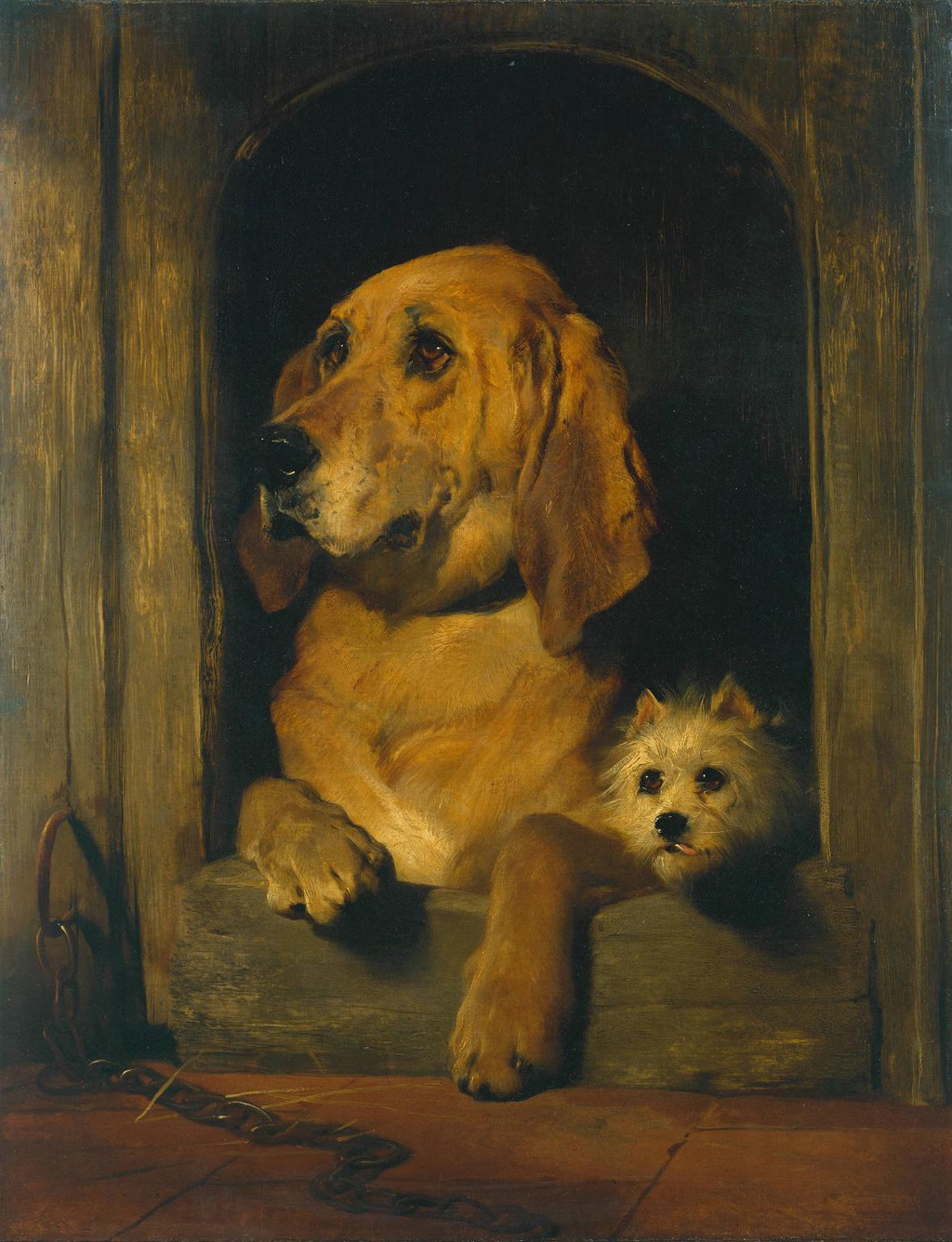
| Dignity and Impudence | 1839 | Painting |
| Dog Resting Upon a Couch | Drawing | |
| Eos | 1841 | Painting |
| Favourites, the Property of H.R.H. Prince George of Cambridge | 1834–35 | Painting |
| Her Majesty Sketching at Loch Laggan | ||
| High Life | 1829 / exhibited 1831 | Painting |
| Highland Lassie | Drawing | |
| Isaac van Amburgh and his Animals | 1839 | Painting |
| Lady Godiva's Prayer | Painting | |
| Laying Down the Law | 1840 | Painting |
| Lion Defending Its Prey | c. 1840 | Painting |
| Lioness | Drawing | |
| Little Strollers | ||
| Low Life | 1829 / exhibited 1831 | Painting |
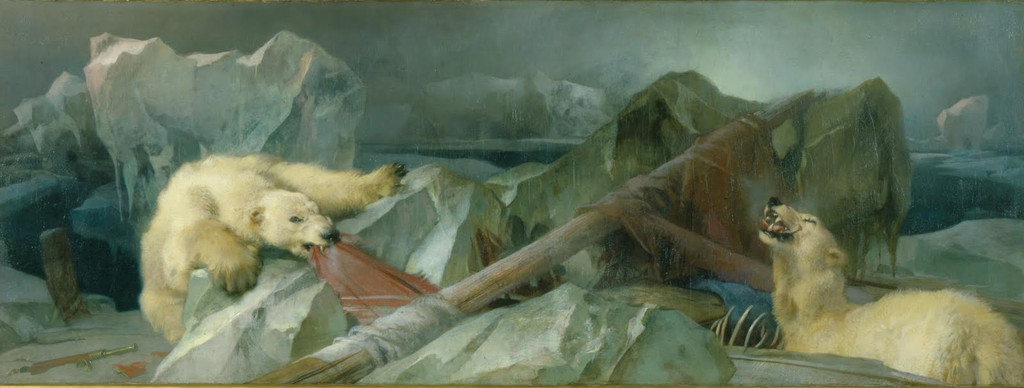
| Man Proposes, God Disposes | 1864 | Painting |
| Nell Gwynne / Diana Vernon | Painting | |
| Neptune | ||
| No Hunting Till the Weather Breaks | Painting | |
| Otterhounds | Drawing | |
| Peace | Painting | |
| Pensioners | Painting | |
| Portrait of a Mule | Painting | |
| Portrait of Mr Van Amburgh, as He Appeared with His Animals at the London Theatres | 1846–47 | Painting |
| Portraits of a Pointer Bitch and Puppy | Painting | |
| Pray Let Me Out | ||
| Prosperity | Painting | |
| Ptarmigan in a Landscape | by 1833 | Painting |
| Queen Victoria and Prince Albert at the Bal Costumé of 12 May 1842 | 1842–46 | Painting |
| Queen Victoria at Loch Laggan | Painting | |
| Queen Victoria at Osborne | 1865–67 | Painting |
| Queen Victoria landing at Loch Muick | Painting | |
| Rat-catching | 1823 | |
| Reclining Lion | Drawing | |
| Reclining Lion, From Back | Drawing | |
| Rent-day in the Wilderness | 1855–68 | Painting |
| Return from Deer Stalking | 1839 | |
| Royal Sports on Hill and Loch | Painting | |
| Sam Lovill, Porter at the Royal Academy | Drawing | |
| Scene from A Midsummer Night's Dream | 1848–51 | Painting |
| Scene in the Highlands, with portraits of the Duchess of Bedford, the Duke of Gordon and Lord Alexander Russell | Painting | |
| Scottish Highlands, Lochs and Figures | Drawing | |
| Shoeing | exhibited 1844 | Painting |
| Sleeping Bloodhound | exhibited 1835 | Painting |
| Spaniel and Rabbit | Painting | |
| Stag at Bay | 1866 | Sculpture |
| Stag at Bay | 1846 | Painting |
| Studies of a staghound and the head of a stag for painting ‘The Hunting of Chevy Chase’ | Drawing | |
| Study for Alpine Mastiffs Reanimating a Distressed Traveler | Drawing | |
| Study for the Monkey in The Cat's Paw | Drawing | |
| Study of a Dog | Drawing | |
| Study of a herding dog facing right | Drawing | |
| Study of the horse of Selene, from the East pediment of the Parthenon | Drawing | |
| Suspense | Painting | |
| Taking a Buck | ||
| The Arab Tent | c. 1865–66 | Painting |
| The Barn | Drawing | |
| The Best Run of the Season | ||
| The Cat's Paw | c. 1824 | Painting |
| The Cavalier’s Pets | ||
| The Challenge | Painting | |
| The Chase | Drawing | |
| The Connoisseurs: Portrait of the Artist with Two Dogs | 1865 | Painting |
| The Death of a Stag in Glen Tilt | Painting | |
| The Drive—Shooting Deer in the Pass | Painting | |
| The Drover's Departure | Painting | |
| The Highland Shepherd’s Dog | 1824; portfolio issue 1848 | |
| The Honourable Mrs Norton | Painting | |
| The Hunting of Chevy Chase | 1825–26 | Painting |
| The Illicit Highland Whisky Still | Painting | |
| The Keeper John Crerar with his Pony | Painting | |
| The Larder Invaded | ||
| The Lion-Dog of Malta | ||
| The Lions at the Base of Nelson's Column | 1867 | Sculpture |
| The Monarch of the Glen | about 1851 | Painting |
| The Mountain Torrent | ||
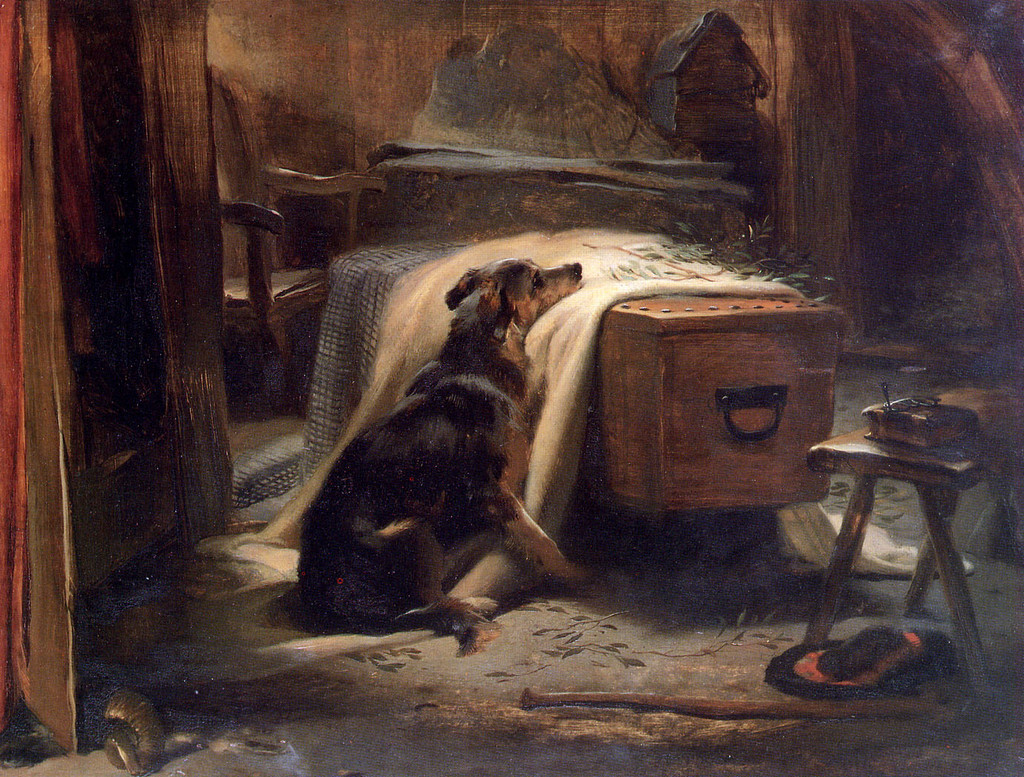
| The Old Shepherd's Chief Mourner | 1837 | Painting |
| The Sanctuary | 1842 | Painting |
| The Stricken Deer | Painting | |
| The Twa Dogs | Painting | |
| Time of Peace | ||
| Two stags running | Drawing | |
| Victoria, Princess Royal, with Eos | Painting | |
| View of Glenfeshie | Painting | |
| War | Painting | |
| White Horse in a Stable | Painting | |
| Windsor Castle in Modern Times | 1841–43 | Painting |
| Woburn Abbey Game Card | 1825; portfolio issue 1848 |
Discussion
Use the article’s images and evidence to develop your own reading of The Lions at the Base of Nelson's Column.
Reader Insights
Which detail is most revealing when you consider “Four bronzes within one larger monument”?
How does the evidence in “The unfinished base before Landseer” affect your reading of The Lions at the Base of Nelson's Column?
What further question would you bring to “Conservation and a better way to look”?
Join the Conversation
Share a detail, comparison or question about The Lions at the Base of Nelson's Column below.
References
- Historic England, “Nelson Monument”, National Heritage List for England, list entry 1276052: View source.
- Westminster City Council, Trafalgar Square Conservation Area Audit, adopted 19 February 2004: View source.
- Hansard, House of Commons, “Supply—Civil Service Estimates”, 8 June 1863: View source.
- National Portrait Gallery, “British Sculpture Makers: M”, British Bronze Founders and Plaster Figure Makers, entry for Baron Carlo Marochetti: View source.
- Hansard, House of Commons, “Supply—Civil Service Estimates”, 13 July 1858, vote 39: View source.
- Hansard, House of Commons, “Question”, 12 July 1860: View source.
- Hansard, House of Commons, “The Nelson Monument—Observations” and “Reply”, 4 April 1862: and View source 1. View source 2.
- Hansard, House of Commons, “Class I—Public Works and Buildings”, 12 May 1865: View source.
- Katie Hornstein, “Edwin Landseer and the Dead Lion”, in Animals and Art in the Long Nineteenth Century, 2025, DOI 10.4324/9781003459293-15: View source.
- Greater London Authority, “Trafalgar Square”, current history, management, public-use and conservation account: View source.
- University of London Press, Organised Militarism in Interwar Britain, section on Trafalgar Day decorations: View source.
- Es Devlin and Google Arts & Culture, Please Feed the Lions, Trafalgar Square, 17–23 September 2018: View source.
- National Gallery of Art, Alpine Mastiffs Reanimating a Distressed Traveler. View source.
- Minneapolis Institute of Art, The Cat's Paw. View source.
- Birmingham Museums Trust, The Hunting of Chevy Chase. View source.
- Victoria and Albert Museum, The Old Shepherd's Chief Mourner. View source.
- Tate, Dignity and Impudence. View source.
- Royal Collection, Eos. View source.
- National Galleries of Scotland, The Monarch of the Glen. View source.
- Royal Holloway, University of London, Man Proposes, God Disposes. View source.
- Trafalgar Square / Greater London Authority, The Lions at the Base of Nelson's Column. View source.
- London County Council, Return of Outdoor Memorials in London, historical inventory entry for Nelson's Column and the four lions: View source.
- Hansard, House of Commons, “The Nelson Monument”, 12 April 1861: View source.
- Hansard, House of Commons, “Public Works and Buildings”, 30 May 1864: View source.
- Frederic George Stephens, Sir Edwin Landseer, revised edition, 1880; and James A. Manson, Sir Edwin Landseer, R.A., 1902: and View source 1. View source 2.
- National Gallery, Annual Review 2018–19, exhibition account of Landseer's lion studies: and Tate, Study of a Lion, 1862, N01350: View source 1. View source 2.
- British Museum, Edwin Landseer, drawing of a reclining lion, registration 1872,0210.3: View source.
- Christie's, Edwin Landseer, Study of a lion (recto); Study of a bull (verso), lot catalogue: View source.
- The Art Journal, 1867, contemporary review of Landseer's newly installed lions: View source.
- National Portrait Gallery, John Ballantyne, Sir Edwin Landseer, c.1865, NPG 835, extended catalogue record: View source.
- The Victorian Web, John Tenniel, The Lions at last!, Punch, 9 February 1867; and Fun, 9 February 1867: and View source 1. View source 2.
- Historic England Archive, side view and detail of a Landseer lion, AA001123 and AA98/05641: and View source 1. View source 2.
- Emma Robson, doctoral thesis, University of Plymouth, 2017, account of Landseer's funeral mourning; and A Picture of Britain: Teachers' Pack: and View source 1. View source 2.
- National Gallery Archive, sketch of the east side of Trafalgar Square with a Landseer lion, c.1867–90, NGA27/32/2/111: View source.
- Australian War Memorial, “Australian soldiers on leave in Trafalgar Square”, 1919, D00710: View source.
- Historic England Archive, John Gay, “A policeman looks up at a boy climbing on a lion statue in Trafalgar Square”, 1962, AA076846: View source.
- Camden New Journal, “Trafalgar Square lion climbers face ban”, 2011: View source.
- DBR Limited, “Trafalgar and Parliament Squares Restoration & Maintenance Works”, project record: View source.
- Splash image, One of the bronze lions at Nelson’s Column: modelled by Edwin Landseer and cast by Carlo Marochetti. Photograph by Amanda Slater. CC BY-SA 2.0. Image source. CC BY-SA 2.0. Resized.