by Tom Gurney
Tom Gurney BSc (Hons) is an art history expert with over 20 years experience
Email: tomgurney1@gmail.com / Phone: +44 7429 011000
What is Dignity and Impudence?
The title Dignity and Impudence appears to settle the picture before anyone has looked at it. One dog must embody solemn authority; the other must supply irreverence. Yet Edwin Landseer's painting is more interesting when that conclusion is delayed. At first there are simply two dogs crowded into the same dark opening: one large, warm-brown and heavily built, the other small, pale and rough-coated. Their unequal sizes, divergent gazes and very different claims on the available space make the title persuasive. They do not prove that either animal possessed a human temperament.
Landseer painted the work in 1839. It is oil paint on canvas, measuring 889 × 692 millimetres, or 88.9 × 69.2 centimetres, and Tate records it as N00604. Its current acquisition credit is “Bequeathed by Jacob Bell 1859”. Tate identifies the great bloodhound as Grafton and the little terrier as Scratch, says that both belonged to Bell, and records that Bell commissioned the picture.[1] Those facts distinguish the oil from the many engravings, photographs and printed reproductions that later carried the composition into other collections.
The painting's first public identity was plainer than its familiar one. When it appeared at the British Institution in 1839, two reviews identified catalogue number 119 simply as Dogs.[2][3] The paired abstract qualities were attached no later than February 1841, when Thomas Landseer's engraving was published as Dignity and Impudence.[4] The shift matters. It reveals that character was not merely found in the dogs; it was progressively organised around them through exhibition, title, criticism and reproduction.
That history makes close looking especially important. Before asking which dog is dignified, it is worth asking what can actually be seen: how much of each body Landseer withholds, how the kennel aperture behaves like an inner frame, why the large paws press towards the viewer, and how a very small head alters the scale of everything beside it.
At a Glance
This work across Edwin Landseer’s career
The Cat's Paw
c. 1824 [6]The Hunting of Chevy Chase
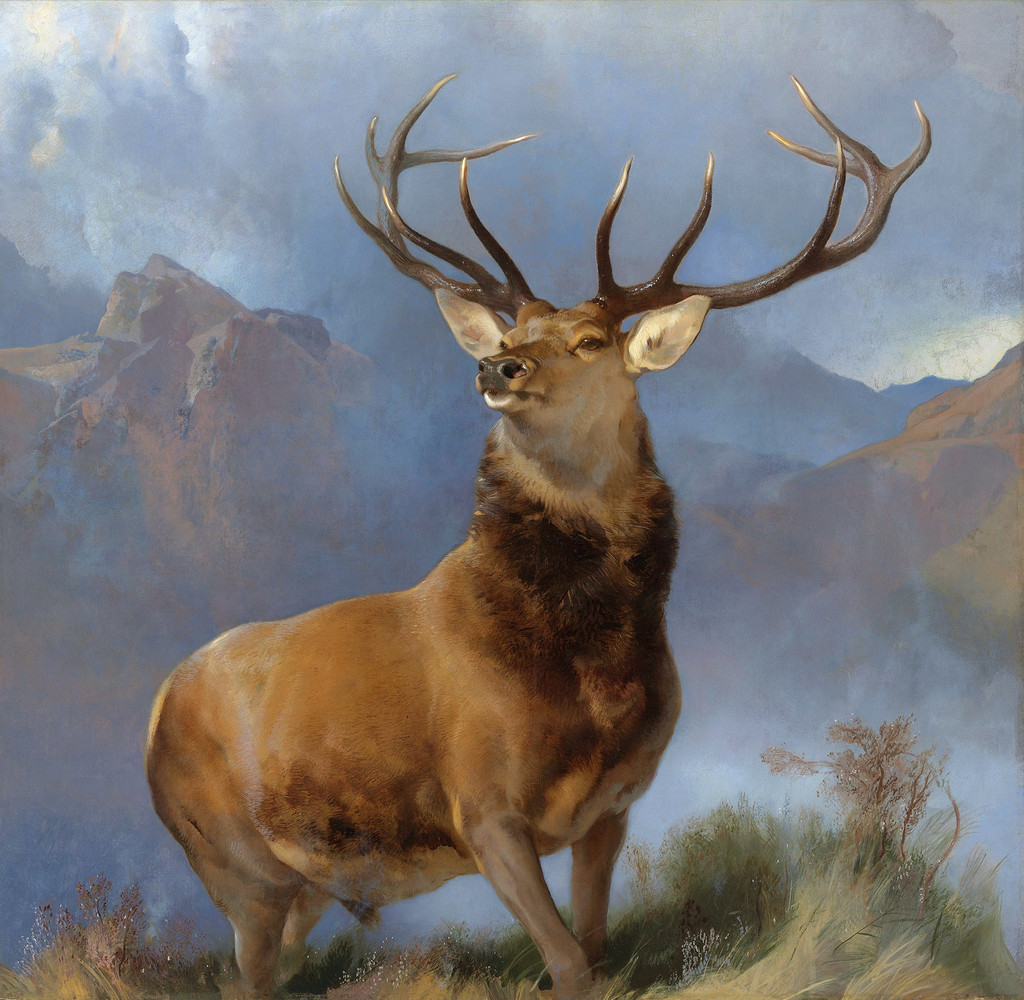
1825–26 [7]The Monarch of the Glen
about 1851 [11]Contents
- What is Dignity and Impudence?
- Two dogs in one opening
- The bloodhound and the projecting paws
- How the terrier changes the picture
- A kennel that behaves like a portrait window
- Grafton, Scratch and changing breed names
- Jacob Bell's commission and bequest
- First exhibited simply as Dogs
- When the later title took hold
- Character without breed caricature
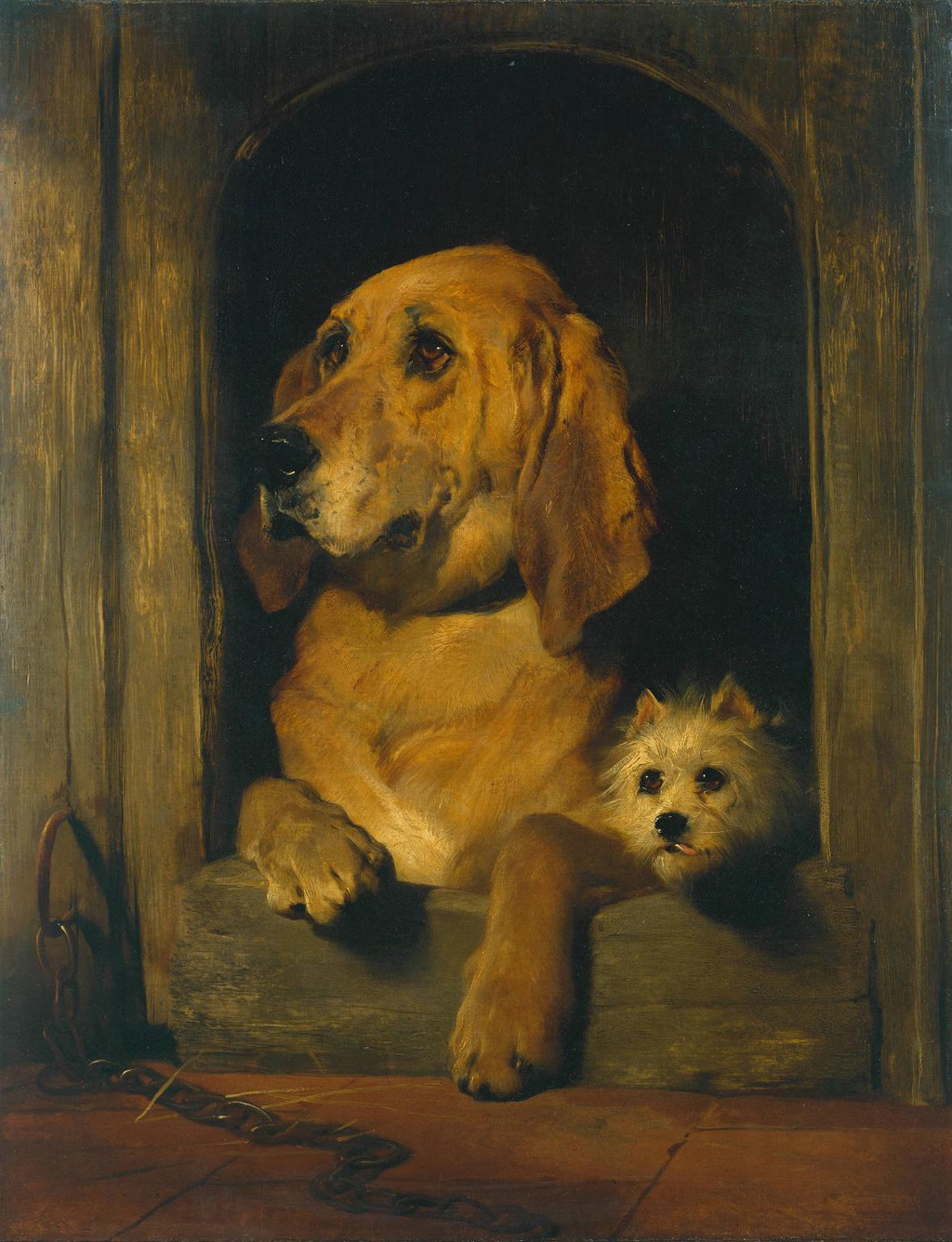
Dignity and Impudence. Tate. Image source. Public domain.
Two dogs in one opening
The canvas is substantially taller than it is wide. Within its outer rectangle, warm-brown timbers enclose a second, darker shape. The upper part of this inner opening curves into an arch; a strong horizontal ledge closes it below. Most of the area behind the dogs is nearly black. The setting is best understood as a kennel opening, but the painting never supplies enough architecture to identify a complete building, a particular estate or even the arrangement of the space behind its threshold.[1]
The bloodhound occupies almost all the upper and central opening. Its head rises into the curved space and its forequarters advance towards the ledge, while its torso, hind legs and tail disappear into darkness. Scratch enters the composition at lower right as a compact cluster of pale fur, pointed ears and alert features. The terrier's legs and tail are no more available than the bloodhound's. Landseer gives each animal enough anatomy to establish type, posture and relation, then lets the black interior complete the bodies in the viewer's imagination.
This severe cropping makes the two dogs seem to inhabit one aperture without inhabiting it equally. Grafton's height and mass define the opening. Scratch occupies a corner of it. The little dog's presence therefore enlarges the bloodhound by comparison, while the bloodhound makes the terrier look more compressed and insistent. Neither effect requires a story about an intruder, a resident or an argument. It is generated by relative scale and placement.
The shared darkness also prevents the pair from splitting into separate portraits. Their coats remain distinct—the larger dog's ochres, tans and browns against the terrier's pale roughness—but both emerge from the same interior. The kennel joins them spatially before the title separates them morally. Landseer has built a compact double portrait from unequal access to a single frame.
Below the opening, the ledge projects across the canvas. A metal chain or lead lies in the narrow foreground, curling from the lower-left area. Its endpoint is not securely visible, so it cannot establish that either particular dog is tethered. Terracotta or brick-like colour beneath the ledge and a few pale, straw- or twig-like marks give the foreground a material roughness without identifying a precise floor surface. These minor things keep the scene attached to kennelling and ownership, even as the dogs are presented with the visual gravity of portrait sitters.[1]
The bloodhound and the projecting paws
Grafton's head is turned towards the viewer's left. The distinction is important: this is not a frontal stare and not direct eye contact. Light catches the eyes, the large dark nose and the planes of the deep muzzle, but the dog's attention seems to continue beyond the painted field. Long ears drop beside the head. Lighter colour around the lower face separates muzzle from shadow, while a collar appears at the base of the neck.[1]
That sideways turn contributes to what a viewer may experience as reserve. The bloodhound does not lunge out of the opening or twist towards the terrier. Its broad head remains comparatively still, and the surrounding dark gives it room to register as a sustained mass. Yet reserve is an interpretation of visible posture, not knowledge of the dog's thoughts. The image cannot tell us whether Grafton is patient, bored, suspicious or listening to something outside the frame.
The forepaws make the animal's physical scale harder to ignore. One rests or folds across the threshold towards the left. The other belongs to a long central foreleg that descends over the ledge and projects towards the viewer. Because these limbs occupy different planes, they convert a flat lower boundary into a deep threshold. One paw accepts the ledge as support; the other crosses it. The huge body remains hidden, but its weight is made present through the portion that reaches furthest into our space.
Tate's catalogue interpretation connects this arrangement with a Dutch convention in which a portrait sitter appears at a window or opening, sometimes resting an arm over its lower edge. On that reading, Landseer turns the convention into a canine parody: the hanging foreleg takes the compositional place of a human arm.[1] The comparison explains why the kennel feels at once practical and ceremonious. It does not identify a single Dutch painting as Landseer's source, and it does not mean the bloodhound is dressed up as a person. Human portrait structure has been transferred to an animal body.
The title then draws an inference from that structure. Mass, stillness, the oblique gaze and the leisurely claim on the threshold can all be read as dignity. But the word is an assigned social value. Without it, the same posture might look merely heavy, comfortable or watchful. The bloodhound supplies the physical conditions under which the title works; the title supplies the hierarchy through which those conditions are interpreted.
How the terrier changes the picture
Scratch occupies far less paint and performs a disproportionate amount of visual work. The small dog's pale, shaggy coat presses against the dark at the lower right. Pointed ears rise sharply, the eyes and nose form dark accents, and a little pink tongue is visible. The head turns more openly towards the viewer than Grafton's does, although it is still unwise to convert that orientation into a direct challenge.[1]
The tongue is a particularly tempting narrative cue. It might lead a viewer to imagine panting, yapping or a sound about to be made. A still image proves none of those events. The first Literary Gazette reviewer did imagine how the terrier might bark, but that was the critic animating the painted encounter, not an audible fact preserved in the oil.[2] Keeping those levels separate lets the detail remain lively without pretending that it records a specific second of canine behaviour.
Scratch changes the picture because almost every formal quality now has an opposite. Erect ears answer dropped ears. A rough pale surface answers a smoother, variegated brown one. The compact head meets the broad muzzle; outward alertness meets the great dog's leftward turn. Tate's Frances Fowle similarly contrasts softer handling in the bloodhound with more jabbing, animated marks around the terrier.[1] This is an analysis of pictorial effect, not a scientific claim that one breed is inherently calm and the other inherently unruly.
The small dog's position matters as much as its features. Scratch appears in the one corner from which a head can enter beside Grafton and still face substantially outwards. Apparent boldness is therefore partly designed by geometry. The terrier has little space, yet makes immediate contact with the viewer's attention. Its “impudence” is not an observed offence. It is the name given to a compact visual interruption that refuses to remain secondary.
A kennel that behaves like a portrait window
Landseer's wooden opening performs several tasks at once. It is a believable structure from which kept dogs might look out. It is also an internal frame that isolates their heads and paws from the unseen kennel. The projecting ledge establishes a boundary, then the central foreleg crosses it. The result is a picture within a picture whose lower edge can be occupied, leaned upon and breached.[1]
That threshold turns concealment into a source of presence. Landseer does not need to describe the bloodhound's full body in order to imply its bulk; the limited opening makes the missing body feel larger. He does not need to show the terrier's stance; its head is enough to create a second centre of attention. Darkness removes incidental anatomy while the timbers concentrate the exchange between faces, ears, paws and ledge.
The portrait-window analogy clarifies why viewers so readily move from animal appearance to social character. A window portrait traditionally marks a sitter as a subject worthy of sustained attention. Here the kennel gives dogs comparable compositional privilege. The bloodhound's paw seems almost to claim the sill, while Scratch takes up the lesser but more conspicuous position at its side. Tate's use of the word parody need not imply mockery. The wit lies in adapting a human pictorial convention so precisely that a kennel threshold can bear the etiquette of portraiture.[1]
At the same time, the scene never loses its animal and material particulars. Grafton has a collar. A loose chain or lead remains on the foreground surface. Fur meets rough timber, and paws possess weight. No human figure appears to mediate the encounter. The dogs are owned animals, but their owner is absent from the represented scene. That absence allows the title to operate as an invisible human voice: it categorises the two occupants even though no person inside the image does so.
The opening also limits what narrative can responsibly be added. We cannot tell which dog arrived first, whether Scratch belongs in this part of the kennel, or whether Grafton would react. Later writers enjoyed imagining intimacy, annoyance or intrusion, but the composition holds all such stories at the threshold. It offers proximity without a before or after.
Grafton, Scratch and changing breed names
Tate now identifies the dogs as Grafton, a bloodhound, and Scratch, a West Highland terrier.[1] Those names are useful, but they do not survive evenly across the nineteenth-century record. Neither of the checked reviews from February 1839 names either animal. The Literary Gazette calls the large dog a “Spanish bloodhound” and the smaller one a “Scotch wire-haired terrier”.[2] These are the terms of an immediate critic, not certificates of pedigree.
Later writers used other formulations. In 1873 James Dafforne described a bloodhound of the Duke of Grafton's breed and a small white Scotch terrier.[14] In 1880 Frederic George Stephens called the larger dog Grafton and again connected it with the Duke's breed, but said the smaller animal's name was “unknown to fame”.[15] Tate's current name Scratch therefore belongs to the modern catalogue record, while the checked early sources preserve uncertainty rather than unanimous confirmation.
That difference is not best handled by declaring one vocabulary correct for all periods. Dog classification changed, and broad nineteenth-century labels do not always map cleanly onto later registered breeds. “West Highland terrier” can be reported as Tate's present identification; “Scotch wire-haired terrier” tells us what a critic wrote in 1839. Each statement answers a different historical question.
The name Grafton may also encourage a neat association between the bloodhound and the Duke of Grafton's breed. The sources support the later wording, but not a complete pedigree, breeder history or biological genealogy for the individual dog. Likewise, they do not establish ages, sexes, birth dates or a schedule of sittings for either animal. A catalogue identification should not be inflated into a biography.
Most importantly, breed does not explain character. The Literary Gazette assigned grave power to the bloodhound and impertinence to the terrier, but those are the critic's responses to this composition.[2] Scale, pose, cropping, gaze, texture and title do the interpretive work. To make all bloodhounds dignified and all small terriers impudent would replace Landseer's particular image with a stereotype.
Jacob Bell's commission and bequest
Jacob Bell provides the secure human context for the picture without appearing in it. Tate describes Bell as Landseer's friend, says that he owned Grafton and Scratch, and records that he commissioned the painting.[1] Dafforne's later account likewise says that it was painted for Bell.[14] The evidence does not preserve a checked contract, price, payment schedule or exact date of commission, so those details should not be supplied simply because patron and artist are known.
The picture can be followed through Bell's ownership at several documented points. The inscription on Thomas Landseer's engraving, published on 10 February 1841, states that the original was then in Bell's possession.[4] In 1857 Bell lent the oil to the Art Treasures Exhibition in Manchester, where it appeared as catalogue number 337.[16] Tate's credit then records Bell's bequest in 1859.[1] Stephens later wrote that the picture had been bequeathed to the National Gallery.[15] Tate is its present holder.
Together, those records establish commissioner, owner, lender and bequeather. They also show that the oil remained associated with Bell across the period when its later title became fixed. What they do not reveal is who devised that title. It may have been Landseer, Bell, Thomas Landseer, a publisher or another participant in the work's early circulation; the checked documents do not decide.
Bell's relationship to the dogs gives the painting the specificity of commissioned portraiture. Grafton and Scratch were not invented representatives assembled from generic breed traits according to Tate's account. Yet the oil also exceeds a private record. Its British Institution exhibition, rapidly published engraving, Manchester loan and national bequest moved two individually owned dogs into public systems of looking.[1][2][3][4][16]
That movement helps explain why ownership and anthropomorphism can coexist without becoming the same subject. Collar, chain and kennel indicate human management, while framing and title grant the dogs a social presence usually associated with human sitters. Bell's absence is productive: the painting records his animals but does not reduce them to accessories in his portrait.
First exhibited simply as Dogs
The contemporary record corrects a long-lived uncertainty about the painting's debut. On 9 February 1839, The Literary Gazette headed its notice “119. Dogs. E. Landseer, R.A.”[2] The same day's Athenaeum referred to Landseer's “splendid group” of Dogs, number 119.[3] Two independent notices agree on artist, title and catalogue number. The original exhibition title was therefore Dogs, not Two Dogs and not yet Dignity and Impudence.
Dafforne wrote in 1873 that the first title had been Two Dogs.[14] His account remains useful for Bell's commission, later breed language and the way Victorian readers interpreted the contrast, but its title memory cannot outweigh sources printed during the exhibition. Stephens returned to Dogs in 1880.[15] The discrepancy is a reminder that even an apparently minor article can drift when a work's more memorable later name has dominated for decades.
The two early reviews also prevent an easy story of universal triumph. The Literary Gazette found the picture striking, praised the relief of the animals at the kennel door, admired their contrast and judged it worthy of Landseer's established reputation.[2] The Athenaeum called the group splendid but preferred another Landseer picture in the same exhibition, Dairy Maid.[3] Both are positive; they are not identical and neither measures the reaction of the entire audience.
The Literary Gazette already saw much of the drama that the later title would consolidate. Its writer opposed the bloodhound's gravity and power to the terrier's waspish forwardness, transforming spatial inequality into a miniature encounter.[2] That response proves that viewers did not require the words Dignity and Impudence to notice contrast. The later title did something more precise: it selected two qualities and made their allocation hard to avoid.
When the later title took hold
The earliest securely checked appearance of the familiar title comes from a print rather than the oil's first exhibition. The National Trust catalogues an engraving by Thomas Landseer after his brother, published by Thomas McLean in the Haymarket on 10 February 1841. Its inscription names Dignity and Impudence and states that the original picture was in Jacob Bell's possession.[4] The title was therefore in place within two years of the British Institution display.
Publication date does not equal invention date. The words might have circulated before the engraving, but no earlier checked witness establishes that possibility. Nor does the plate prove whether Edwin, Thomas, Bell or McLean coined them. The careful historical claim is simply that the painting appeared as Dogs in February 1839 and that Dignity and Impudence was publicly attached to the composition by February 1841.[2][3][4]
By the Manchester Art Treasures Exhibition of 1857, the later title had become the standard key to the picture. The companion catalogue listed number 337 as Dignity and Impudence, named Sir E. Landseer and Jacob Bell as lender, and remarked that the animals were characteristic of their “assumed names”.[16] The phrase is revealing. Dignity and Impudence were not being recorded as the dogs' literal names; they were roles assigned through the title.
That assignment changes the experience of looking. Once the words are known, the bloodhound's physical gravity reads as dignity and the terrier's compact interruption as impudence. The title seems descriptive because it fits the arrangement so well, but it is also directive. It tells viewers which differences to moralise and which social relation to imagine.
Character without breed caricature
Landseer's double portrait operates between particularity and type. Grafton and Scratch are identified animals connected with a named owner. At the same time, critics and cataloguers made them carriers of recognisable human qualities. The painting sustains that move through formal opposition rather than costume, speech or an elaborate anecdotal setting.
The bloodhound claims most of the aperture, stretches a foreleg over the ledge and looks away. The terrier appears from a cramped corner, turns more directly outwards and punctuates the dark with pale fur and pointed features. The title organises those observable differences into rank and temperament. Dignity attaches to amplitude, stillness and reserve; impudence attaches to smallness, animation and conspicuous self-assertion.
Historical viewers elaborated the same structure in different ways. The 1839 Literary Gazette imagined power conscious of itself beside a much smaller irritant.[2] Dafforne emphasised the larger dog's repose and the terrier's audacity, even imagining the smaller animal venturing into the other's domain.[14] Stephens described a relation combining intimacy with irritation.[15] These are records of reception. They do not establish who owned the kennel, what happened before the depicted moment or how either dog actually felt.
The painting's anthropomorphism is therefore neither a simple trick nor a licence to ignore animal bodies. It depends on the bodies being observed closely. The dropped and erect ears are not interchangeable symbols. The paws have weight and different positions. Coats catch light in distinct ways. One head turns aside; the other occupies the picture's most outward-facing corner. Human character is built from those animal particulars through a framing convention and a title.
This is also why breed caricature weakens the work. If dignity were treated as a natural property of bloodhounds and impudence as an inborn fact about terriers, composition would become redundant. Landseer instead engineers an encounter in which size and placement acquire social force. Another title could direct the same visual evidence differently. The present one succeeds because it makes a persuasive argument, not because it names an objective essence.
The small dog is especially important to that argument. Impudence normally presumes a relation: someone or something is being treated with insufficient deference. Scratch's proximity to Grafton supplies such a relation without displaying an action. The terrier need not trespass, bark or provoke. Simply occupying the edge of the bloodhound's monumental frame is enough for viewers to complete the social drama.
Conversely, Grafton's dignity is not isolation. It emerges because the larger animal absorbs the disturbance without any visible lunge or recoil. The bloodhound's oblique attention may even make Scratch's performance seem one-sided. Landseer leaves open whether the apparent superior notices the apparent subordinate at all. That uncertainty keeps the painting from collapsing into a cartoon with one fixed punchline.
From engraving to photograph
Thomas Landseer's 1841 engraving is the first securely dated reproductive object in the checked sequence. It carried the composition, Bell's ownership and the later title into print under Thomas McLean's imprint.[4] This was not the oil changing location. It was a new paper object through which the arrangement of kennel, paws and contrasting dogs could travel independently.
Further versions show continued reproductive attention without supplying a complete market history. The British Museum records a print made by William Turner Davey after Edwin Landseer in 1851. It also records Georg Zobel's 1871 print, published in London by Henry Graves & Co.[17] Dafforne's 1873 list names Thomas Landseer and Zobel, while Stephens later includes Thomas, Zobel and Davey.[14][15] These records identify representative makers and dates; they do not establish edition totals, sales or the number of households that encountered the image.
An albumen print at Princeton University Art Museum makes the change of medium especially clear. Made by an unidentified British photographer around the 1850s or 1860s, it measures 13 × 10.5 centimetres on a 22.4 × 19 centimetre mount. The page bears the title Dignity & Impudence and Landseer's name.[18] It is a photograph of a reproduced image, not a photograph of Grafton and Scratch, and not evidence for the oil's colour.
Oil, engraving and albumen print offered different material encounters with the same design. The painting provides colour, surface and bodily scale on an 88.9-centimetre-high canvas. An engraving translates tonal relations into cut lines and printed ink. A small photograph turns an already circulating composition into a mounted photographic object. Each can preserve the contrast between the immense dog and the compact terrier while changing texture, size and the circumstances of viewing.
The title helps bind these versions together. Dogs was sufficient for the British Institution catalogue, but Dignity and Impudence gave publishers and later viewers a portable interpretive hook. It made the image memorable as a relation between qualities, not merely a record of two owned animals. Reproduction then repeated both the composition and the act of character assignment.
How to look at Dignity and Impudence now
A useful way to approach the painting is to postpone its title for a minute. Start with the inner frame. Follow the arch down to the ledge, notice where the bloodhound's paws meet and cross it, and then compare the amount of space allowed to each head. Track the large dog's gaze towards the left and the terrier's more outward orientation. Only then restore the words dignity and impudence.
The exercise shows how much the title explains and how much it creates. The physical contrast is unmistakable. The moral contrast is a reading, reinforced by nearly two centuries of criticism and reproduction. A collar and chain suggest ownership and restraint, but do not tell us which animal is attached. A tongue can enliven a face without making a sound. An oblique gaze can appear reserved without revealing a thought.[1]
What finally makes the work durable is not that two breeds perfectly embody two fixed personalities. It is that Landseer gives viewers enough material evidence to perform the assignment themselves. The kennel becomes a portrait window; the hanging paw becomes a gesture of possession; the small pale head becomes an interruption. Yet Grafton and Scratch remain particular dogs whose bodies exceed the labels placed upon them.
The title is therefore best understood as an act of viewing. It turns difference in scale, texture, posture and position into a social encounter. Look closely enough, and the painting also exposes that transformation. Dignity and impudence are not simply waiting inside the animals. They arise where dogs, composition, words and spectators meet.
Artworks directory
This directory gathers works discussed in the articles, including drawings, original etchings and prints after Landseer. It is not a complete catalogue of every drawing, version, plate or impression. Distinct media are kept separate; uncertain dates are left blank. Linked titles open individual articles.
| Name | Date | Medium |
|---|---|---|
| A Bellowing Stag | Drawing | |
| A Deerhound | 1826 | Painting |
| A Distinguished Member of the Humane Society | 1838 | Painting |
| A Highland Breakfast | 1834 | Painting |
| A Highland Landscape | c. 1830 | Painting |
| A Highland Shepherd's Home | Painting | |
| A Horse, Goat and Bull | 1811 | |
| A Hunting Horse | Drawing | |
| A Jack in Office | Painting | |
| A Lion Disturbed at His Repast | Painting | |
| A Random Shot | Painting | |
| A Scene at Abbotsford | Painting | |
| Adversity | Painting | |
| Alexander and Diogenes | exhibited 1848 | Painting |
| Alpine Mastiffs Reanimating a Distressed Traveler | 1820 | Painting |
| Contending Group after Nature | Drawing | |
| Copy after Rubens's Wolf and Fox Hunt | c. 1824–26 | Painting |
| Dash | Painting | |
| Deer and Deer Hounds in a Mountain Torrent ('The Hunted Stag') | c. 1832 / exhibited 1833 | Painting |
| Deer Family | ||
| Dignity and Impudence | 1839 | Painting |
| Dog Resting Upon a Couch | Drawing | |
| Eos | 1841 | Painting |
| Favourites, the Property of H.R.H. Prince George of Cambridge | 1834–35 | Painting |
| Her Majesty Sketching at Loch Laggan | ||
| High Life | 1829 / exhibited 1831 | Painting |
| Highland Lassie | Drawing | |
| Isaac van Amburgh and his Animals | 1839 | Painting |
| Lady Godiva's Prayer | Painting | |
| Laying Down the Law | 1840 | Painting |
| Lion Defending Its Prey | c. 1840 | Painting |
| Lioness | Drawing | |
| Little Strollers | ||
| Low Life | 1829 / exhibited 1831 | Painting |
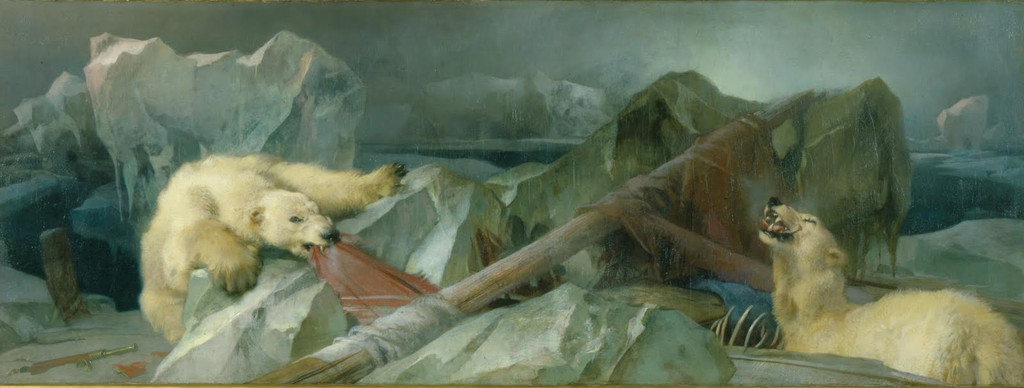
| Man Proposes, God Disposes | 1864 | Painting |
| Nell Gwynne / Diana Vernon | Painting | |
| Neptune | ||
| No Hunting Till the Weather Breaks | Painting | |
| Otterhounds | Drawing | |
| Peace | Painting | |
| Pensioners | Painting | |
| Portrait of a Mule | Painting | |
| Portrait of Mr Van Amburgh, as He Appeared with His Animals at the London Theatres | 1846–47 | Painting |
| Portraits of a Pointer Bitch and Puppy | Painting | |
| Pray Let Me Out | ||
| Prosperity | Painting | |
| Ptarmigan in a Landscape | by 1833 | Painting |
| Queen Victoria and Prince Albert at the Bal Costumé of 12 May 1842 | 1842–46 | Painting |
| Queen Victoria at Loch Laggan | Painting | |
| Queen Victoria at Osborne | 1865–67 | Painting |
| Queen Victoria landing at Loch Muick | Painting | |
| Rat-catching | 1823 | |
| Reclining Lion | Drawing | |
| Reclining Lion, From Back | Drawing | |
| Rent-day in the Wilderness | 1855–68 | Painting |
| Return from Deer Stalking | 1839 | |
| Royal Sports on Hill and Loch | Painting | |
| Sam Lovill, Porter at the Royal Academy | Drawing | |
| Scene from A Midsummer Night's Dream | 1848–51 | Painting |
| Scene in the Highlands, with portraits of the Duchess of Bedford, the Duke of Gordon and Lord Alexander Russell | Painting | |
| Scottish Highlands, Lochs and Figures | Drawing | |
| Shoeing | exhibited 1844 | Painting |
| Sleeping Bloodhound | exhibited 1835 | Painting |
| Spaniel and Rabbit | Painting | |
| Stag at Bay | 1866 | Sculpture |
| Stag at Bay | 1846 | Painting |
| Studies of a staghound and the head of a stag for painting ‘The Hunting of Chevy Chase’ | Drawing | |
| Study for Alpine Mastiffs Reanimating a Distressed Traveler | Drawing | |
| Study for the Monkey in The Cat's Paw | Drawing | |
| Study of a Dog | Drawing | |
| Study of a herding dog facing right | Drawing | |
| Study of the horse of Selene, from the East pediment of the Parthenon | Drawing | |
| Suspense | Painting | |
| Taking a Buck | ||
| The Arab Tent | c. 1865–66 | Painting |
| The Barn | Drawing | |
| The Best Run of the Season | ||
| The Cat's Paw | c. 1824 | Painting |
| The Cavalier’s Pets | ||
| The Challenge | Painting | |
| The Chase | Drawing | |
| The Connoisseurs: Portrait of the Artist with Two Dogs | 1865 | Painting |
| The Death of a Stag in Glen Tilt | Painting | |
| The Drive—Shooting Deer in the Pass | Painting | |
| The Drover's Departure | Painting | |
| The Highland Shepherd’s Dog | 1824; portfolio issue 1848 | |
| The Honourable Mrs Norton | Painting | |
| The Hunting of Chevy Chase | 1825–26 | Painting |
| The Illicit Highland Whisky Still | Painting | |
| The Keeper John Crerar with his Pony | Painting | |
| The Larder Invaded | ||
| The Lion-Dog of Malta | ||
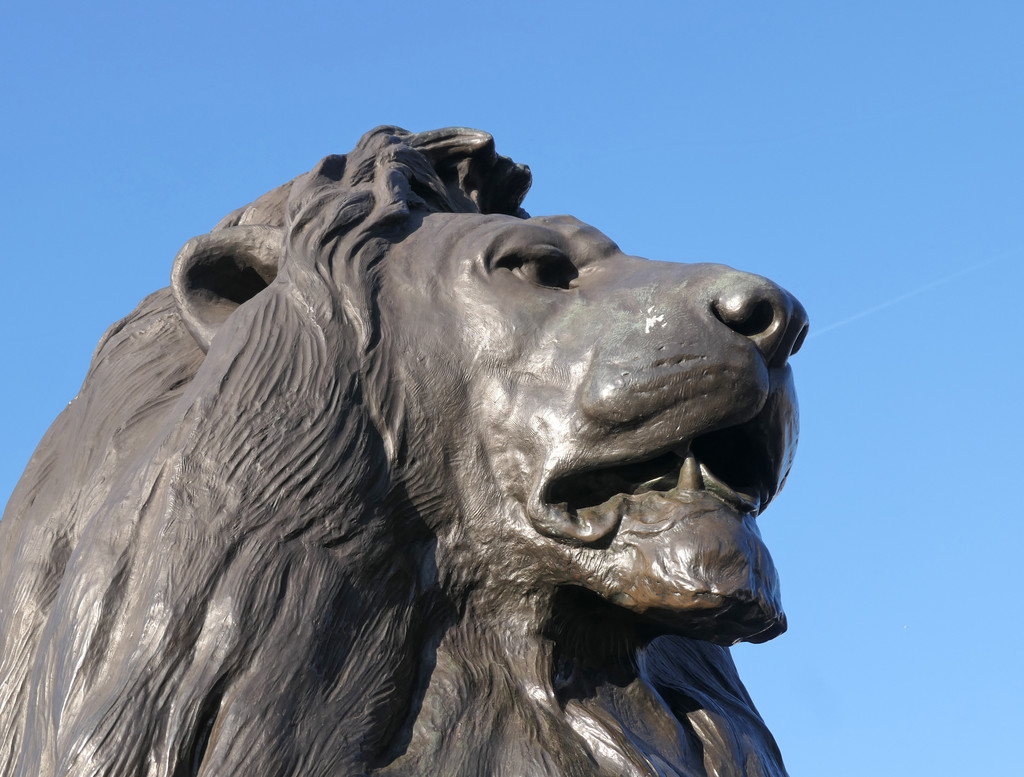
| The Lions at the Base of Nelson's Column | 1867 | Sculpture |
| The Monarch of the Glen | about 1851 | Painting |
| The Mountain Torrent | ||
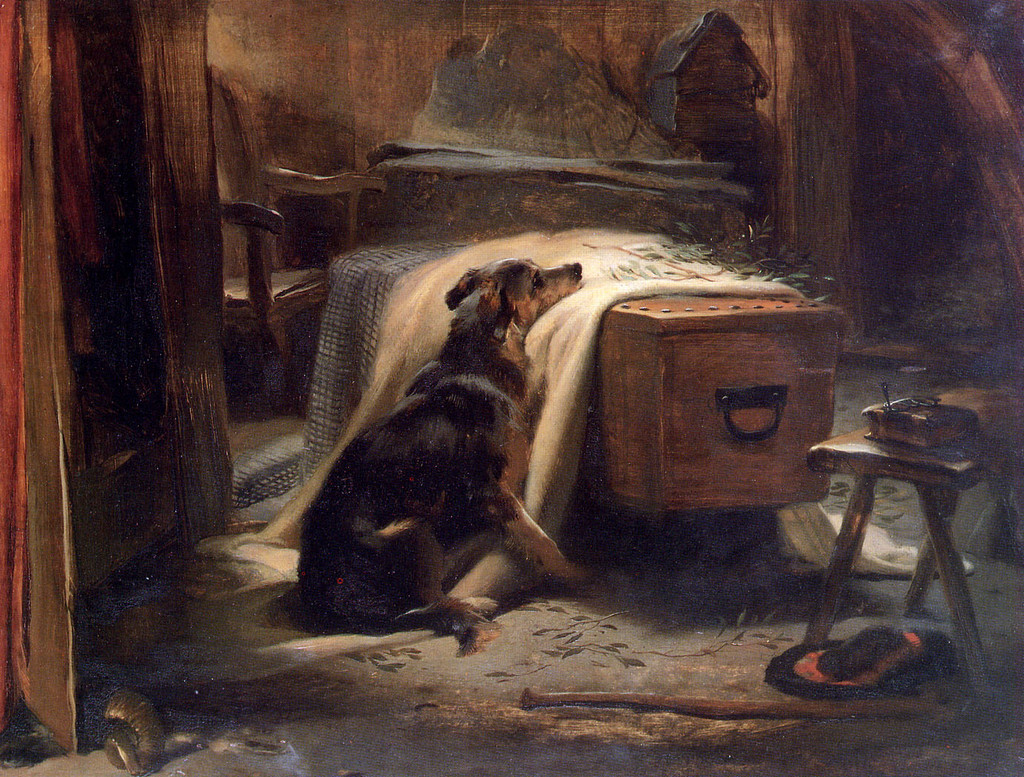
| The Old Shepherd's Chief Mourner | 1837 | Painting |
| The Sanctuary | 1842 | Painting |
| The Stricken Deer | Painting | |
| The Twa Dogs | Painting | |
| Time of Peace | ||
| Two stags running | Drawing | |
| Victoria, Princess Royal, with Eos | Painting | |
| View of Glenfeshie | Painting | |
| War | Painting | |
| White Horse in a Stable | Painting | |
| Windsor Castle in Modern Times | 1841–43 | Painting |
| Woburn Abbey Game Card | 1825; portfolio issue 1848 |
Discussion
Use the article’s images and evidence to develop your own reading of Dignity and Impudence.
Reader Insights
Which detail is most revealing when you consider “What is Dignity and Impudence?”?
How does the evidence in “Two dogs in one opening” affect your reading of Dignity and Impudence?
What further question would you bring to “How to look at Dignity and Impudence now”?
Join the Conversation
Share a detail, comparison or question about Dignity and Impudence below.
References
- Tate, Sir Edwin Henry Landseer, Dignity and Impudence, 1839, oil paint on canvas, N00604, current object record, API data, Frances Fowle's November 2000 catalogue text and principal digital image: and and View source 1. View source 2. View source 3.
- The Literary Gazette, no. 1151, 9 February 1839, p. 91, “British Institution”: View source.
- The Athenaeum, no. 589, 9 February 1839, p. 117, review of the British Institution: View source.
- National Trust Collections, Thomas Landseer after Sir Edwin Henry Landseer, Dignity and Impudence, engraving published by Thomas McLean, 10 February 1841, NT 354062: View source.
- National Gallery of Art, Alpine Mastiffs Reanimating a Distressed Traveler. View source.
- Minneapolis Institute of Art, The Cat's Paw. View source.
- Birmingham Museums Trust, The Hunting of Chevy Chase. View source.
- Victoria and Albert Museum, The Old Shepherd's Chief Mourner. View source.
- Tate, Dignity and Impudence. View source.
- Royal Collection, Eos. View source.
- National Galleries of Scotland, The Monarch of the Glen. View source.
- Royal Holloway, University of London, Man Proposes, God Disposes. View source.
- Trafalgar Square / Greater London Authority, The Lions at the Base of Nelson's Column. View source.
- James Dafforne, Pictures by Sir Edwin Landseer, Royal Academician, with Descriptions and a Biographical Sketch of the Painter, 1873, pp. 19 and 86: View source.
- Frederic George Stephens, Sir Edwin Landseer, 1880, pp. 79–80: View source.
- The Companion to a Walk through the Art Treasures Exhibition of Paintings and Engravings at Old Trafford Palace, Manchester, 1857, no. 337, p. 88: View source.
- British Museum, William Turner Davey after Edwin Landseer, Dignity and Impudence, 1851, 1854,1111.54; and Georg Zobel after Edwin Landseer, Dignity and Impudence, published by Henry Graves & Co., 1871, 2010,7081.6247: and View source 1. View source 2.
- Princeton University Art Museum, British photographer, Dignity and Impudence, circa 1850s–60s, albumen print, x1993-12: View source.
- Splash image, Dignity and Impudence. Tate. Image source. Public domain.
- Navigation image, One of the bronze lions at Nelson’s Column: modelled by Edwin Landseer and cast by Carlo Marochetti. Photograph by Amanda Slater. CC BY-SA 2.0. Image source. CC BY-SA 2.0. Resized.