

 by Tom Gurney
Tom Gurney BSc (Hons) is an art history expert with over 20 years experience
Published on August 14, 2026 / Updated on August 14, 2026
Email: tomgurney1@gmail.com / Phone: +44 7429 011000
Gather Ye Rosebuds While Ye May II: Study: Introduction
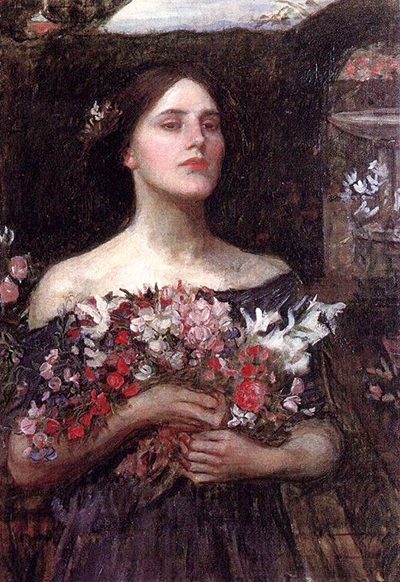
John William Waterhouse’s Gather Ye Rosebuds While Ye May II is a preparatory oil of about 1908 centred on a young woman who faces the viewer while holding gathered flowers. It is neither the dark interior painting dated 1908 nor the large, arched outdoor composition dated 1909. The study preserves an abandoned or transformed stage between those better-known works. [1] [2]
Its value lies in difference. The final outdoor picture distributes flower gathering across two prominent women in a landscape; the study concentrates the idea in one frontal bearer. By comparing them, viewers can see Waterhouse change not only pose and setting but the relationship between woman, flowers, spectator and Robert Herrick’s command to seize youth before it passes. [2] [3]
At a Glance
- ArtistJohn William Waterhouse (1849–1917)
- Route titleGather Ye Rosebuds While Ye May II
- Descriptive titleStudy for Gather Ye Rosebuds While Ye May
- DateAbout 1908
- MediumOil study
- Support and dimensionsNot securely established in the accessible public record
- CollectionPrivate collection or present location unconfirmed
- SubjectA single young woman facing outward and holding gathered flowers
- Related paintingsThe 1908 half-length interior Gather Ye Rosebuds While Ye May and the 1909 arched outdoor version [1] [2]
- Literary sourceRobert Herrick’s “To the Virgins, to Make Much of Time” (1648) [3]
- Essential distinctionA preparatory single-figure image, not a third fully exhibited version
Contents
- Introduction
- The Single Flower Gatherer
- What “Study” Means Here
- Herrick’s Command and the Frontal Gaze
- From One Figure to an Outdoor Group
- The 1908 Interior Version Compared
- Flowers, Hands and Temporary Possession
- Model, Costume and Invented Antiquity
- Evidence, Uncertainty and Page Identity
- Why the Abandoned Pose Matters
The Single Flower Gatherer
The figure faces us directly or nearly directly. She holds a group of flowers that she has already picked.
This arrangement changes the action from gathering to presentation. The field or plant from which the blossoms came is less important than the meeting between bearer and viewer.
Her upright position gives the body stability. Flowers collect around the hands and lower torso, producing a concentrated area of colour and texture.
The face becomes the second centre. A frontal gaze—or simply frontal head—makes the image resemble a portrait study even though the sitter represents no securely named person.
Waterhouse does not need to specify whether she offers the flowers, displays them or carries them past us. Each possibility creates a different relationship.
An offering turns the viewer into a recipient. Display makes us an audience. Carrying preserves her independence from our presence.
The study’s relative simplicity helps such ambiguity. No second figure explains her social role, and no detailed garden fixes a narrative sequence.
Her flowers are both subject and evidence. They prove that an earlier action has happened outside the image’s present.
That hidden action is crucial to Herrick’s title. The poem commands gathering; Waterhouse shows the result being held. [3]
The single figure may represent an early compositional idea rather than a finished narrative in miniature. Comparison with the multi-figure outdoor work shows a clear change of direction.
“May” in the title expresses permission and limited opportunity. The woman has acted within that opportunity, but nothing tells us whether the act fulfils another person’s instruction or her own desire.
What “Study” Means Here
A study is made to solve problems. It may test a figure, pose, colour relationship, costume, light effect or entire composition.
The term does not mean that every visible element necessarily transfers into one finished canvas. Waterhouse frequently revised scale, orientation and figure relationships between studies and exhibition works.
Oil gives this study particular force. Paint allows him to test flesh against flowers and cloth, something a pencil outline cannot fully answer.
The head and hands may receive more attention because expression and grip determine the figure’s credibility. Background can remain comparatively open.
Selective finish is therefore evidence of priority. It should not be mistaken for accidental neglect.
Nor should the oil be described as a “draft” in the modern textual sense. A visual study can hold alternatives simultaneously through unresolved edges and colour masses.
The surviving work appears complete enough to be appreciated independently. That later autonomy does not prove Waterhouse intended to exhibit or sell it as a separate public painting.
As a studio study, the image is best read as process evidence rather than as a finished public narrative.
That broad history fits his known posthumous studio sale, but a specific provenance for this object requires a catalogue link before lot numbers or owners are assigned.
The title Gather Ye Rosebuds While Ye May II may be retrospective. The Roman numeral keeps digital reproductions distinct while risking the impression of an official pair.
Calling it “Study” in the H1 corrects that risk. It tells readers what type of object they are seeing before interpretation begins.
The study is not valuable merely because it leads elsewhere. It records a fully meaningful encounter that the later group composition abandons.
Herrick’s Command and the Frontal Gaze
Robert Herrick’s “To the Virgins, to Make Much of Time” appeared in Hesperides in 1648. Its opening flower image has become a compact statement of carpe diem. [3]
Rosebuds live today and die tomorrow. The sun rises towards its height, then moves closer to setting. Youth is warm and brief.
The poem’s final advice is socially specific: the addressed young women should not be coy but marry before their prime is lost. [3]
This gendered speech matters. A male poetic voice tells women how to convert youth into an approved future.
Waterhouse removes the speaker. The study’s woman faces outward, and the flowers are already in her possession.
If she meets our gaze, the direction of address reverses. Instead of silently receiving advice, she presents its symbol back to the audience.
That effect does not prove Waterhouse intended a feminist rebuttal to Herrick. It follows from composition and can be discussed without inventing a programme.
The study also compresses time differently. Herrick moves through flower, sun, youth and age in quick stanzas. The painted figure holds one moment open.
Oil fixes perishable blossoms. A warning about inevitable loss becomes an object capable of surviving its maker.
Yet the preservation is illusory at the represented level. These are painted flowers, but the flowers within the image remain cut and temporary.
The frontal pose intensifies the paradox. Her apparent presence is direct while her historical model, studio circumstances and eventual life remain mostly unknown.
We see a person held permanently at the age Herrick says will pass.
This can make the work pleasurable and uneasy at once. Beauty is offered to sustained inspection because painting suspends the time the poem insists cannot be suspended.
From One Figure to an Outdoor Group
The large 1909 Gather Ye Rosebuds While Ye May uses an unusual curved or arched top. Two prominent women bend among flowers in an open landscape. [2]
Waterhouse changes almost every relation established in the study. Frontal becomes downward; upright becomes bending; singular becomes paired; presentation becomes active gathering.
The viewer’s role also changes. In the study, flowers and face address the picture plane. In the final outdoor painting, the women are absorbed in their own task.
That absorption creates privacy. We watch an activity that does not require us as recipient.
The group introduces companionship and repetition. One bending body answers another across the field.
Published images show two prominent foreground women and another figure in the background. Published images should be checked at high resolution before treating every distant form as a distinct person, but the central move from one figure to a group is clear.
The curved format may have required compositional adaptation. Upright frontal presentation would resist the arch, while bending figures echo it.
Colour now spreads across dresses, grasses, flowers and sky. The study’s bouquet-like concentration becomes an environment.
The 1909 painting has also been connected with Persephone gathering flowers before Hades abducts her. [2] [4]
That association gives the group narrative danger. Companions and field belong to the Homeric Hymn to Demeter, where Persephone reaches for a marvellous narcissus before the earth opens. [4]
The study does not provide enough evidence to identify its isolated figure as Persephone. Its importance lies partly in showing that the mythic possibility developed through compositional change.
If Waterhouse moved from one frontal bearer to bent gatherers, he moved closer to the ancient action. The study preserves the path not taken.
The 1908 Interior Version Compared
Waterhouse’s other 1908 painting with this title presents a single red-haired woman in a dark historic interior holding a shallow metal bowl of flowers. [1]
It measures 62 × 46.4 cm, is signed and dated 1908, and appeared at the Royal Academy that year as no. 669. [1]
The finished interior and the present study both concentrate on one woman with gathered flowers, but their emotional structures differ.
In the exhibited canvas, bottle glass, pearls, jewels and reflective metal create a highly finished world of preserved luxury. The woman raises her chin and carries the bowl ceremonially. [1]
The study appears more direct and less environmentally defined. Flowers gather around hands rather than within a display vessel.
These similarities raise a version question. Was the study made for the 1908 interior, the 1909 landscape, or a broader sequence that fed both?
The single-figure study invites comparison with the later complex outdoor painting. The broad date of 1908 and the shared single figure also invite comparison with the interior work.
Without a documented inscription or catalogue entry, the manuscript should not force a one-to-one preparatory relationship stronger than evidence allows.
Waterhouse could reuse a model or pose idea across more than one work. Studio practice is often a network rather than a straight line from sketch A to painting B.
The three images can instead be read as permutations. One figure holds flowers directly; one presents them in a metal bowl inside; two figures gather them outside.
Each permutation changes Herrick. The study turns command into encounter, the interior turns it into ceremonial possession, and the landscape turns it into shared action.
This differentiation makes separate pages worthwhile. Repeating the same literary summary would miss the evidence of Waterhouse’s choices.
Flowers, Hands and Temporary Possession
Hands are where title becomes visible. To gather requires contact, selection and removal.
The figure’s grasp must look gentle enough not to crush petals and firm enough to keep the group together.
That tension between care and possession is central. Picking preserves flowers for immediate enjoyment by shortening their life as growing plants.
Herrick uses the act figuratively: take opportunity before it disappears. [3] Waterhouse returns the metaphor to bodies and material.
The bouquet is irregular rather than perfectly arranged. It still carries the field’s variety.
Exact species should not be declared from a modest reproduction. The title privileges rosebuds, but Waterhouse’s related pictures include mixed flowers.
Botanical looseness is not a failure to illustrate. Herrick’s rosebud functions as a poetic vehicle, and the painter can translate its temporal meaning through a broader abundance.
Flowers also mediate between face and costume. Their small colour accents draw the eye downward from expression to action.
The woman’s clothing contains longer folds and larger colour areas. Petals interrupt those masses with points of light.
If the background remains unfinished or neutral, the held cluster becomes even more detached from season and place. It is less a garden record than a concentrated sign.
Possession is visibly temporary. The figure can hold flowers but cannot stop them fading.
Painting creates a second form of possession for the viewer: the image can be collected, reproduced and revisited. The studio study’s survival proves how objects outlive the practical moment that produced them.
This dual temporality—perishable subject, durable representation—is why flower painting can carry philosophical weight without symbolic overstatement.
Model, Costume and Invented Antiquity
Waterhouse’s figure is not a documented portrait. No secure public evidence identifies the model, and resemblance to his recurring female types should not be converted into a name.
The costume likely helps place her outside ordinary Edwardian life. Loose or historicising dress detaches the act of flower gathering from contemporary labour.
That detachment allows Herrick’s seventeenth-century poem, classical Persephone associations and an early twentieth-century model to coexist.
It is an invented antiquity rather than reconstruction. No one historical date governs every element.
The model’s directness prevents costume from turning her entirely into decorative atmosphere. Body and gaze remain contemporary in their observed specificity.
Waterhouse’s late work often balances carefully modelled flesh with freer cloth, hair and landscape. A study lets that balance remain visible as method.
The figure should not be described automatically as “innocent.” Youth, flowers and soft dress produce that conventional response, but posture may communicate assurance rather than naivety.
Nor does beauty prove passivity. She has gathered and carries; the image records action.
If the study preceded the bent figures of 1909, Waterhouse eventually exchanged this self-contained presence for absorption within landscape. Neither solution is inherently superior.
The abandoned frontal version gives the page its independent emotional character. It asks what happens when the person addressed by carpe diem looks back.
Evidence, Uncertainty and Page Identity
The featured image shows a single flower-bearing woman in a study associated with the 1908 phase of the theme.
The study’s visual relation to Waterhouse’s two Gather Ye Rosebuds paintings supports comparison, but exact provenance and dimensions remain unverified.
No unsupported number should be copied from print sellers or image-aggregation sites. Such pages frequently merge dates and versions.
The distinguishing title retains II while immediately clarifying that the object is a study.
The manuscript should link to both finished versions. Readers arriving through an image search may otherwise assume the single figure is the Royal Academy canvas or the arched landscape.
Image selection will be decisive at the HTML stage. Captions must state “study,” date it cautiously and avoid using the better-known 1908 or 1909 composition as the hero image.
Metadata should also resist promising a museum location. “Private collection” or “location unconfirmed” is more accurate than inventing institutional ownership.
Limited documentation does not require padding. The page earns its length through comparative close looking, process and source interpretation.
It must nevertheless preserve uncertainty at every factual boundary. Interpretation can be rich while cataloguing remains cautious.
This combination is the standard for the obscure late pages: say less where object data are thin and look more carefully at what survives.
Why the Abandoned Pose Matters
Preparatory works are sometimes treated as if they contain only an imperfect forecast of a famous picture. This study does something more useful: it preserves a relationship that later revisions remove.
The frontal woman establishes a vertical axis. Head, torso, hands and flowers accumulate from top to bottom, and the viewer meets that axis directly.
In the arched 1909 painting, bending bodies create diagonals. Attention travels across the field instead of stopping before one face. [2]
Those geometries produce different meanings. A vertical figure appears self-contained and present; a diagonal figure appears involved in continuing action.
Waterhouse’s change may have arisen from format, narrative ambition or simple dissatisfaction. Whatever the cause, its effect can be analysed securely.
The abandoned pose also helps us understand the title’s grammar. “Gather ye” is an imperative addressed to people. A frontal figure can seem to receive or answer that address.
Once the figures bend and look away, they seem to inhabit the command rather than respond to a speaker. Language becomes scene.
The study thus occupies a productive threshold between portrait and illustration. It has enough literary association to escape being a generic flower girl, but too little narrative setting to become a complete mythological episode.
Waterhouse repeatedly valued this threshold. Works such as The Soul of the Rose or Vanity give a model, object and suggestive title without supplying a closed plot.
Here the threshold remains partly accidental because the work is preparatory. That does not make the viewer’s experience accidental.
Survival converts private process into public evidence. An image made to help the painter decide can later help audiences see that finished compositions are choices among alternatives.
This understanding guards against inevitability. The 1909 painting did not have to contain exactly its known poses; Waterhouse arrived there by leaving other viable images behind.
The study’s flowers therefore symbolise more than passing youth. They also mark a temporary artistic solution, gathered and held before the composition itself moved on.
Related Pages
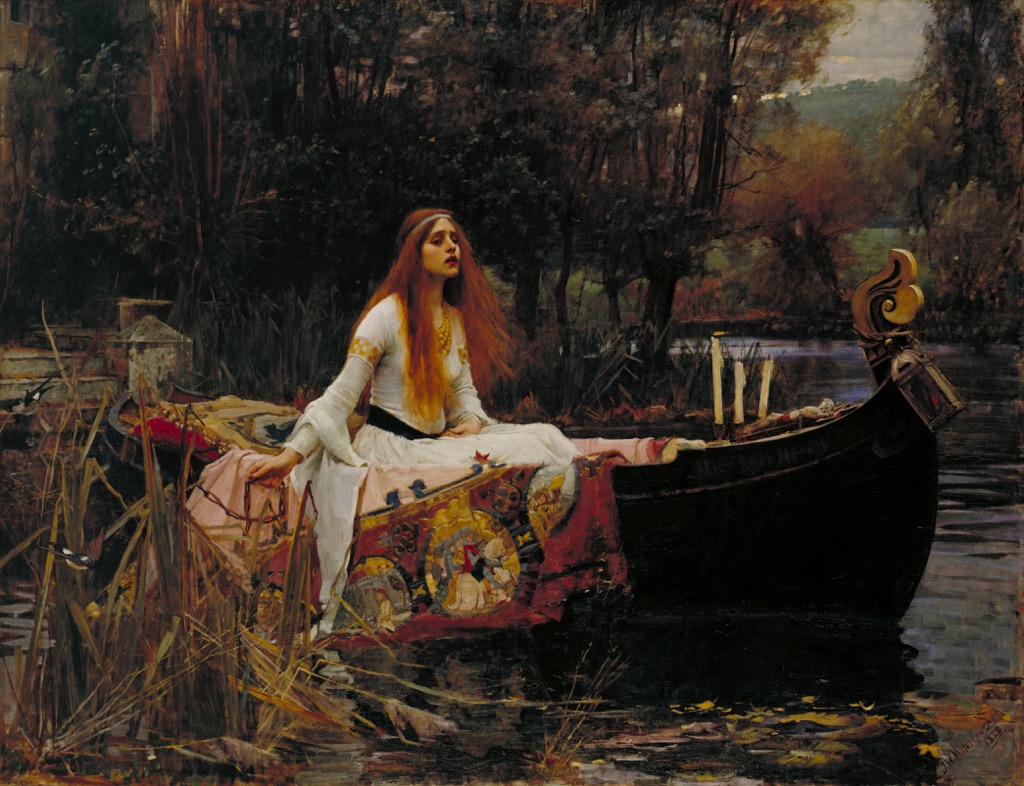
- The Lady of Shalott: Compare Waterhouse's best-known literary composition.
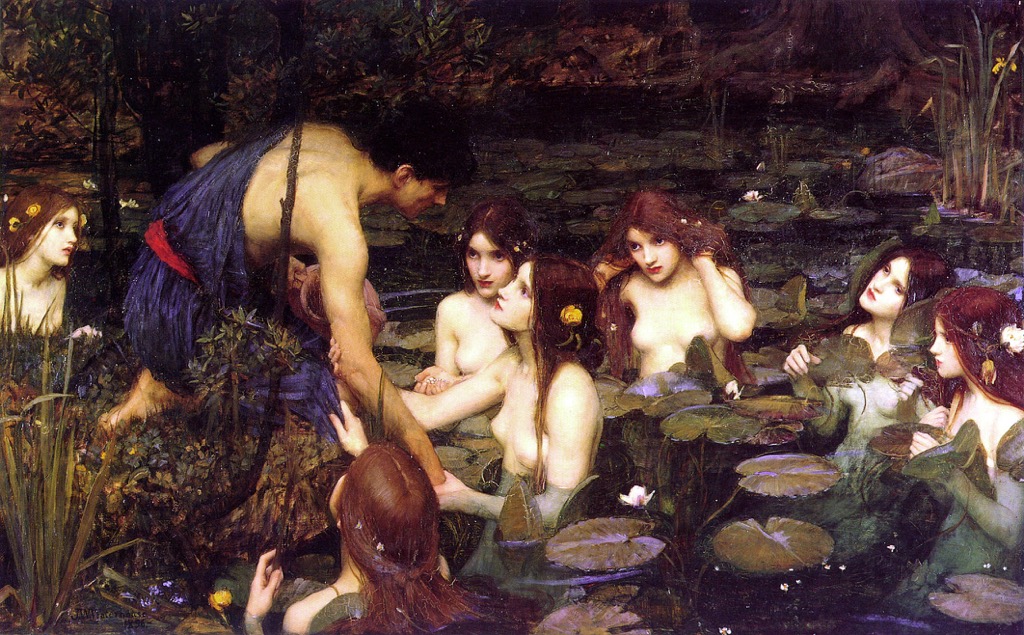
- Hylas and the Nymphs: Compare another major mythological scene.
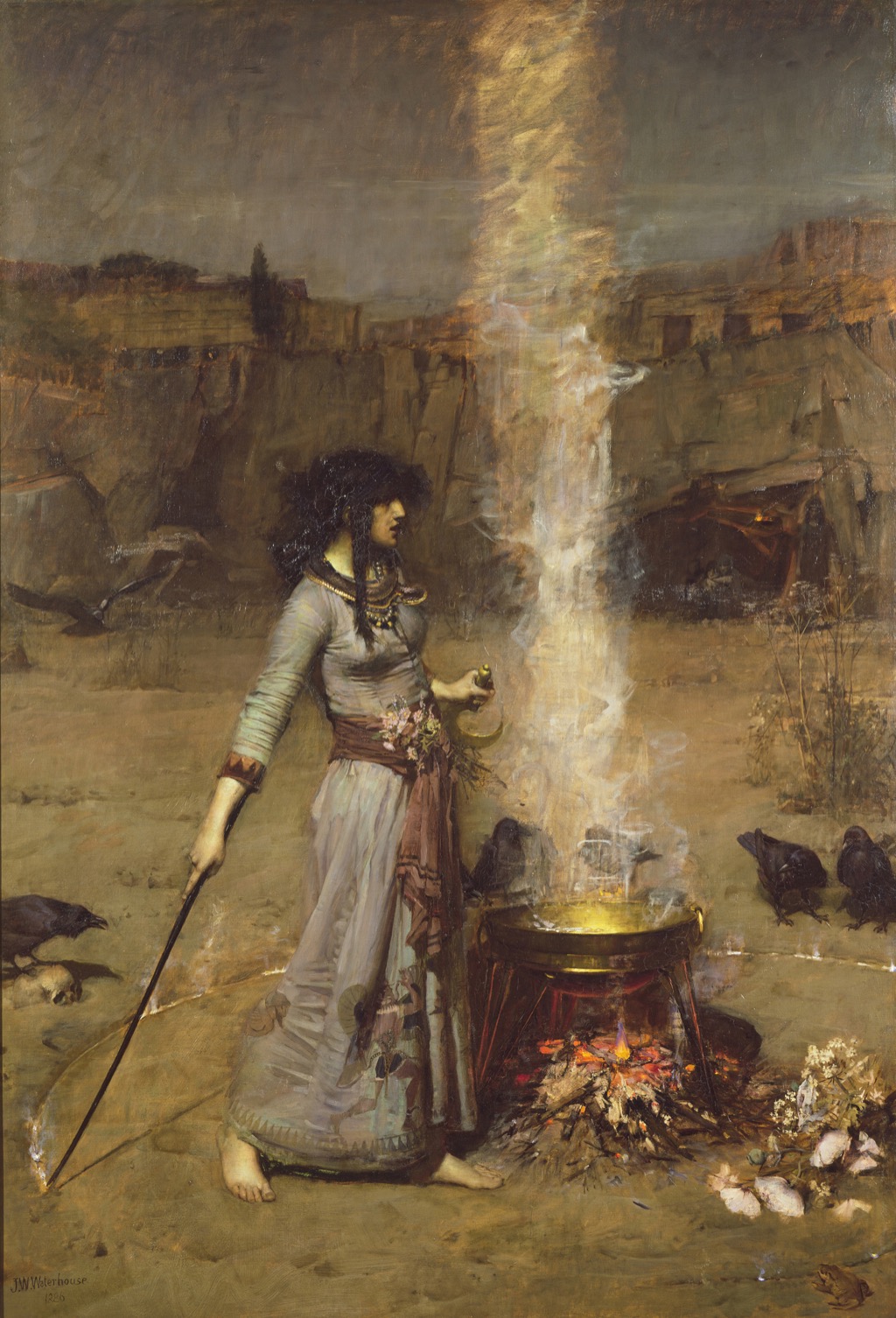
- The Magic Circle: Compare Waterhouse's treatment of ritual and symbolism.
Frequently Asked Questions
It is best described as a preparatory oil study, although some passages appear substantially worked.
The study is associated with the 1908 phase of Waterhouse’s Gather Ye Rosebuds theme.
No. The Royal Academy work shows a red-haired woman in a dark interior holding flowers in a metal bowl. [1]
No. The 1909 version is a large arched canvas with multiple women gathering in an outdoor field. [2]
Her identity is not securely documented. She should not be named as a model or Persephone without stronger evidence.
Its present location is not securely established in accessible authoritative records.
Discussion
The study records an idea Waterhouse chose not to carry unchanged into either finished version. One woman, upright and nearly frontal, holds the result of gathering at the boundary between her body and the viewer.
That arrangement gives Herrick’s old command a new power relation. The addressee no longer exists only within a male speaker’s warning. She acts, possesses and may look back.
Reader Insights
Which visible detail most changes the way you read this page?
Which source or comparison helps the work feel less familiar and more specific?
What question would you bring back to the painting after reading?
Join the Conversation
Share your reading of this page below.
References
- Christie's, “John William Waterhouse: Gather Ye Rosebuds While Ye May,” 1908 interior version, lot record and catalogue essay, 14 July 2022. View source.
- Sotheby's, “John William Waterhouse: Gather Ye Rosebuds While Ye May,” 1909 arched version, catalogue record and essay. View source.
- Poetry Foundation, Robert Herrick, “To the Virgins, to Make Much of Time.” View source.
- Homeric Hymn to Demeter, translated by Hugh G. Evelyn-White, Perseus Digital Library. View source.