


 by Tom Gurney
Tom Gurney BSc (Hons) is an art history expert with over 20 years experience
Published on June 19, 2020 / Updated on October 21, 2026
Email: tomgurney1@gmail.com / Phone: +44 7429 011000
William Holman Hunt paintings
William Holman Hunt's paintings move between literary drama, close observed landscape, modern life, portraiture and biblical history. He founded the Pre-Raphaelite Brotherhood with Millais and Rossetti in 1848, but his working life extended six decades beyond those first experiments. The guide follows the paintings by subject and period, while the linked pages distinguish physical versions of a work. [1] [2]
Hunt was drawn to the Brotherhood's call for exact looking. The National Gallery describes a shared practice of meticulous detail, clear colour, studies outside the studio and, in some works, brilliant paint over a wet white ground. This is useful context, but a painting's actual materials and sequence still need object-specific evidence. A small oil sketch on panel, a large religious canvas and a late tempera-and-oil panel need not have been made in the same way. Look for where observation meets invention: what is convincingly seen, what is staged, and what part of the story the objects or setting carry. [3] [4]
Watch: William Holman Hunt Paintings
At a Glance
- ArtistWilliam Holman Hunt (1827–1910)
- TraditionBritish Pre-Raphaelite art
- PageWilliam Holman Hunt Paintings
- ExplorePaintings · Drawings · Watercolours · Prints
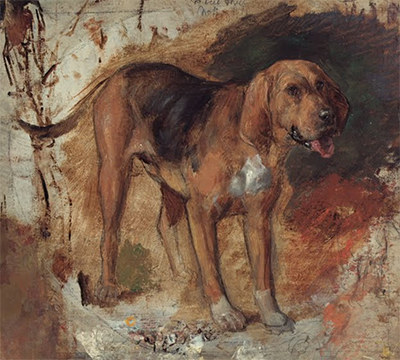
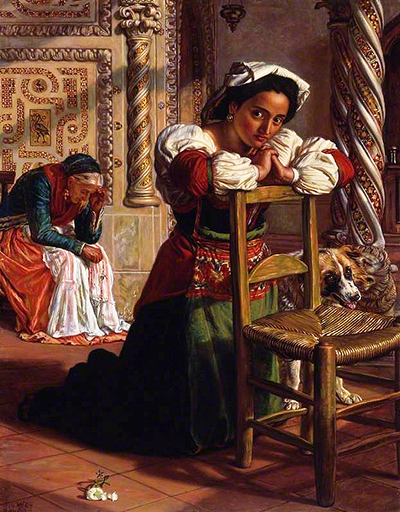
This range also changes what counts as a “painting by Hunt” in the directory. Study of a Bloodhound is an oil study related to The Eve of St Agnes, not a second finished version of its escape scene. The Woman Taken in Adultery is identified as a work after Rembrandt: Hunt copied or responded to another artist rather than originating Rembrandt's composition. Some sheets on the watercolours page combine wash, gouache, pencil or other materials and are distinct from oil paintings. Keeping the medium and relationship clear lets a visitor move from a preparatory object to the final painting without losing what each object actually is. [5] [6]
Beginnings: Keats, Shakespeare and a new landscape
Hunt's The Flight of Madeline and Porphyro turns the escape in Keats's Eve of St Agnes into a crowded interior scene. Two paintings of the subject survive: the Guildhall's larger work was exhibited in 1848; a smaller Walker version was begun as a study and completed later. They have separate making histories, despite showing the same episode. Hunt's Rienzi followed in 1849. The National Gallery explains that he painted much of its landscape outdoors on Hampstead Heath and used drawings of the Rossetti brothers for figures. A literary picture could therefore join book, model and real terrain in one construction. [7] [8] [4]
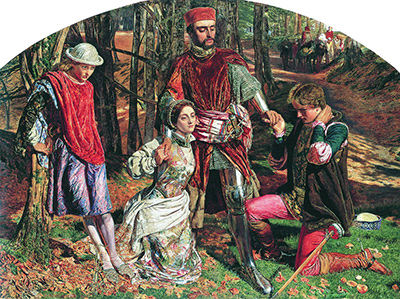
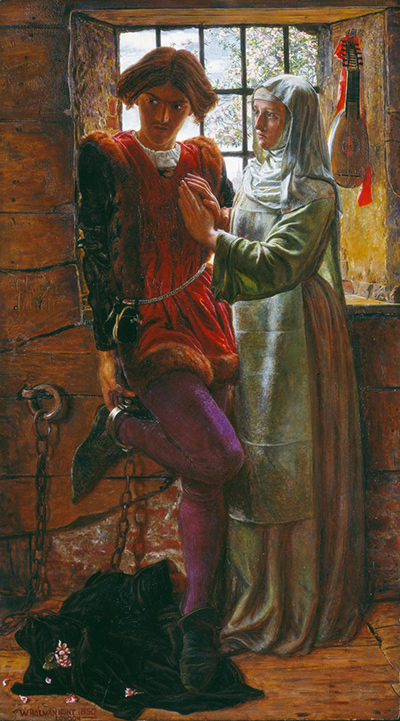
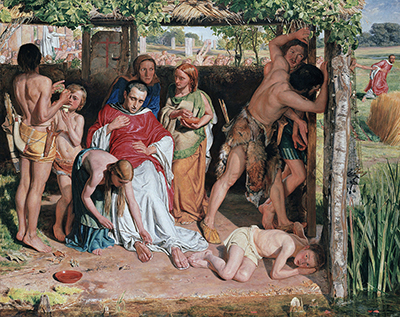
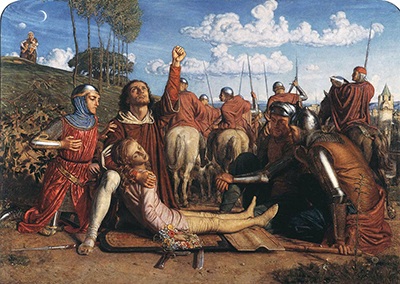
Other early subjects widened the range. Claudio and Isabella takes its moral standoff from Shakespeare's Measure for Measure. Valentine Rescuing Sylvia from Proteus also uses Shakespeare, with Elizabeth Siddal as the model for Sylvia according to a period catalogue. A Converted British Family Sheltering a Christian Missionary imagines an early British religious conflict. Their theatrical arrangements do not cancel the careful study of dress, bodies and natural surfaces. They show how Hunt's early practice held narrative invention and physical observation together. [9] [10]
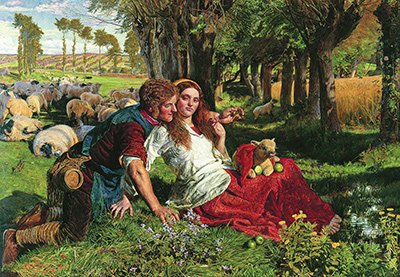
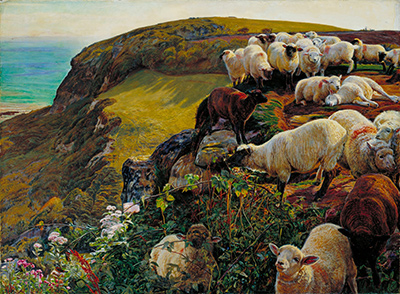
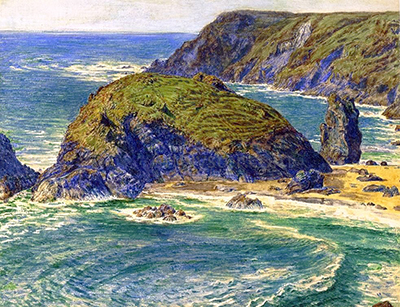
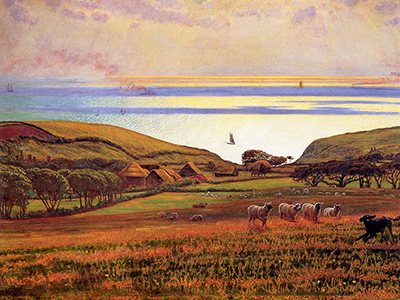
The Hireling Shepherd and Our English Coasts, 1852 offer a valuable comparison. Both include sheep in highly observed English settings, yet one stages two figures in a pastoral story while the other gives the animals and coast most of the picture. Art UK's Tate object record explains that Our English Coasts was initially proposed as a copy of the sheep in The Hireling Shepherd before Hunt made an independent work. Its later name Strayed Sheep reflects a possible moral reading. The coastal painting can be seen as landscape first, then considered through its possible moral meanings; every blade of grass need not bear a fixed symbol. [11] [12]
Modern life and the two lights of 1854
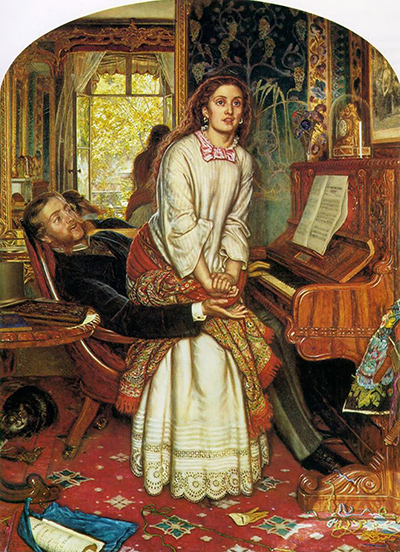
Two paintings shown at the Royal Academy in 1854 demonstrate different ways Hunt connected detail to conscience. The Awakening Conscience places a couple at a piano in a fashionable domestic room. A woman rises from the man's lap, while the mirror opens the cramped interior toward a sunlit garden. Furnishings, music and the cat with a bird all invite interpretation; they also belong to a credible contemporary setting. Tate identifies the woman as a mistress and the moment as a possible turn away from that life. The woman's face was later changed, complicating the relationship between the surface visible today and the first audience's response. [13] [14]
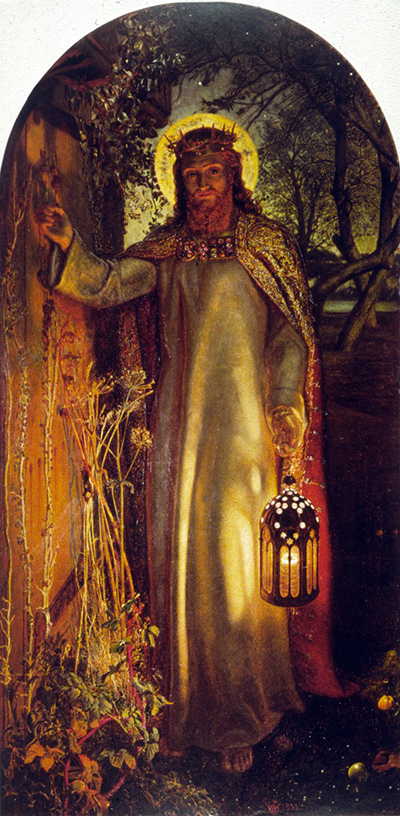
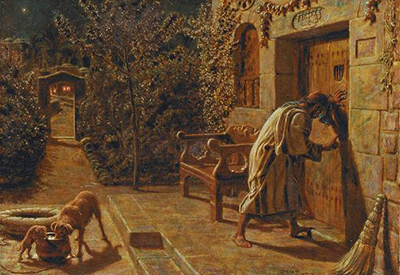
The Light of the World sets Christ before an overgrown door at night. The lantern and radiant figure create two sources of light, and the closed door makes an inward decision visible. Hunt's memoir describes his orchard setting, tests of the lantern with Millais and painting outdoors after dark. John Ruskin's 1854 letter offered a contemporary interpretation, but Ruskin explicitly said Hunt had not explained every detail to him. That distinction matters: Ruskin's persuasive nineteenth-century reading is his own, rather than necessarily Hunt's intention. Later reproduction gave the picture a far larger public than the Royal Academy visitors Ruskin observed. [15] [16] [17]
The familiar image is not one canvas. The original is at Keble College; Manchester Art Gallery holds a much smaller version developed during the 1850s; St Paul's Cathedral received a later large version in 1908, painted with Edward Robert Hughes's assistance. The Light of the World page shows the Keble original in its lead image and the Manchester version in larger and detail views. These images represent separate objects and need separate captions. [18] [12] [19]
Egypt and the Holy Land: study, travel and completion
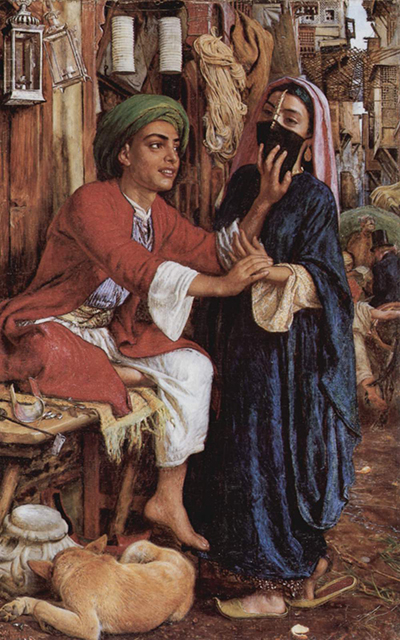
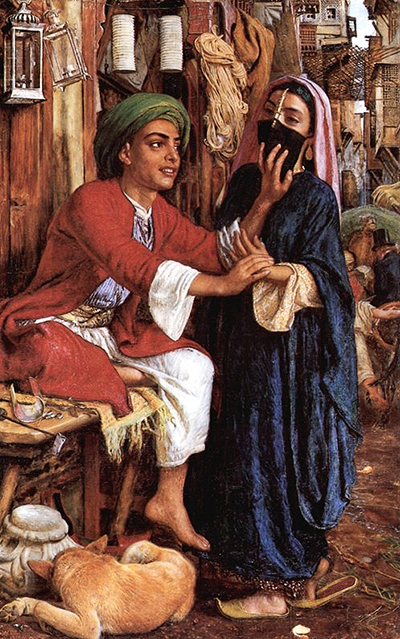
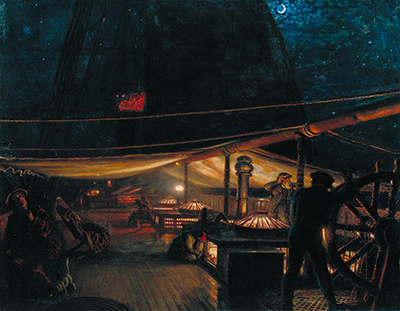
Hunt's 1854–56 journey changed his stock of places, people and light, but the resulting pictures were not made in one uninterrupted campaign. The two Afterglow in Egypt versions have different dates and collections; an Ashmolean guide directly warns readers to distinguish them. The Lantern Maker's Courtship also survives as separate Manchester and Birmingham objects. Each image therefore needs its own institutional match; a shared or similar title is insufficient. [20] [21] [22]
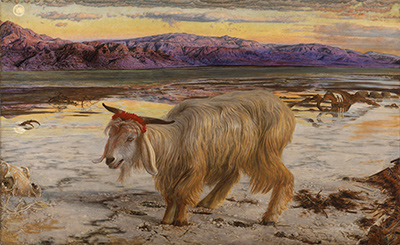
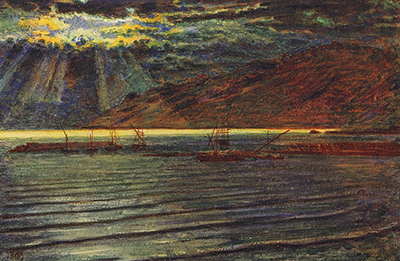
The Scapegoat puts a living animal into a harsh Dead Sea landscape. The large Lady Lever picture and smaller Manchester canvas differ in scale, date and details. The larger work is recorded by Art UK as 1854; Manchester's version spans 1854–55. The two paintings need separate image labels alongside the Leviticus source and Hunt's experience at the site. The subject's biblical reading and the actual conditions of painting can be discussed together without pretending that on-location work alone explains the final image. [12] [1]
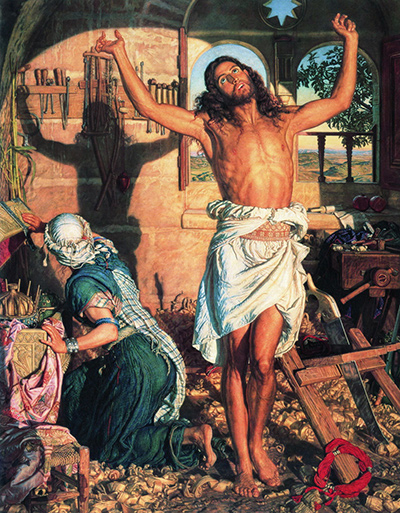
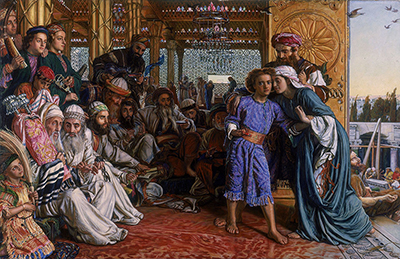
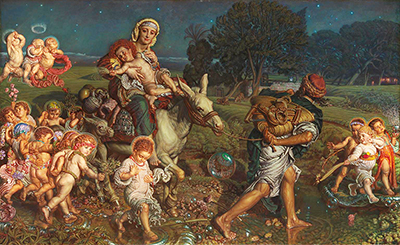
The Finding of the Saviour in the Temple began in Jerusalem and was finished years later. Its 1860 single-picture exhibition and engravings were part of its life as a public image. The Shadow of Death belongs to a later Jerusalem stay and is now at Manchester, whose exhibition record dates it 1870–73. Side by side, these works make the relation between first-hand study and long studio development visible. They also show how Hunt's imagined scriptural episodes depend on people, buildings and objects he selected and arranged, not on a claim that the historical scene itself could be witnessed. [23] [24]
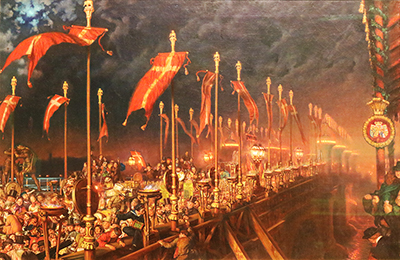
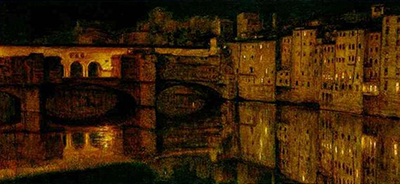
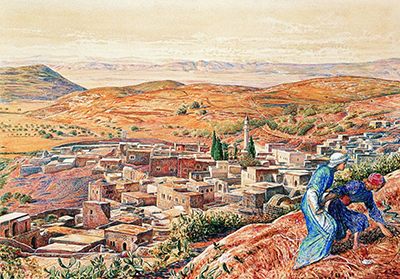
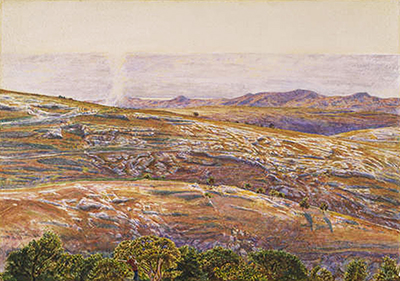
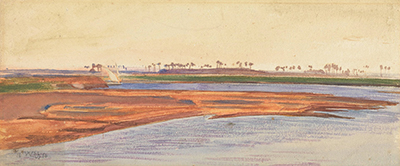
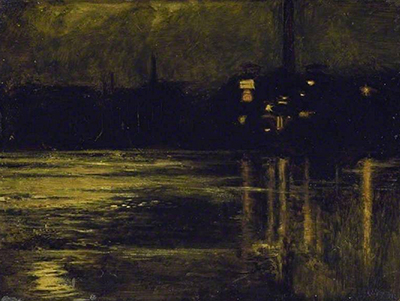
Hunt also studied places without turning each view into a Bible scene. The Nile is a small watercolour, whose scale and medium invite a very different pace of looking from the theatrical Finding. The Dead Sea from Siloam is another landscape sheet whose recorded date still needs reconciliation against competing captions. At home, London Bridge on the Night of the Marriage of the Prince and Princess of Wales filled a public crossing with revellers, lights and flags. The night depicted was 10 March 1863; the painting was worked on afterward. Hunt placed himself among the crowd, according to the National Portrait Gallery's iconography. These works make travel, urban spectacle and personal witness part of the catalogue alongside the famous religious paintings. These examples differ: a place studied from life, a dated public event and a finished object made across several years. [25] [26] [27]
Portraits, domestic subjects and late experiments
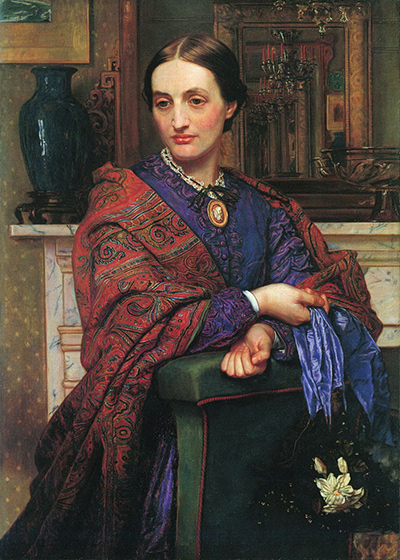
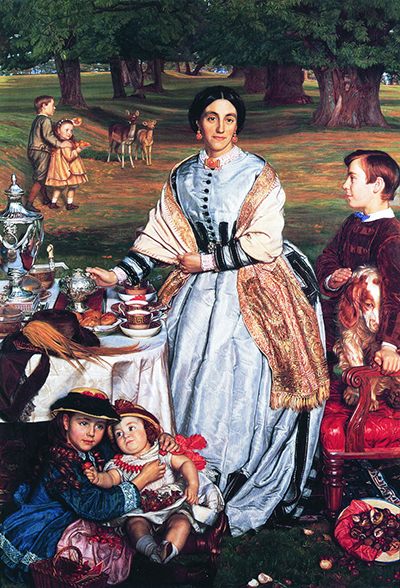
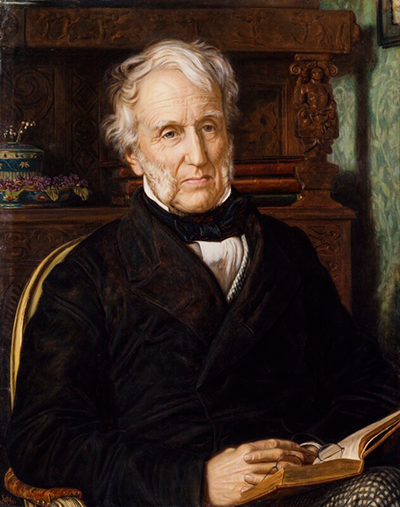
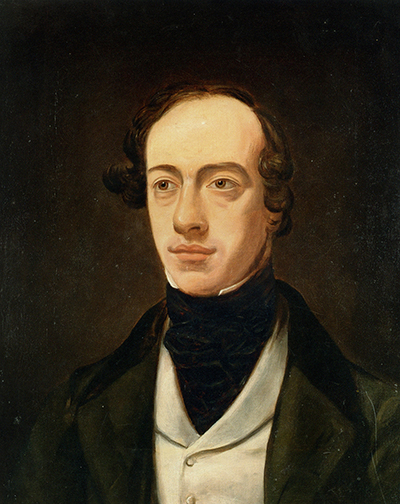
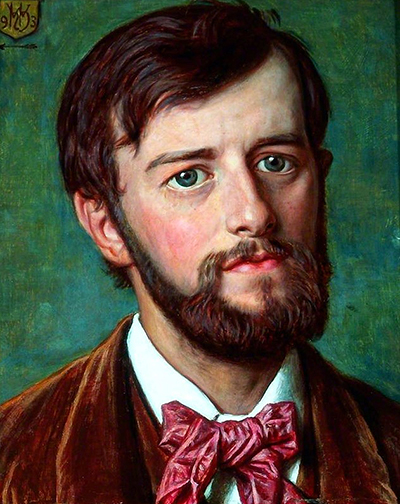
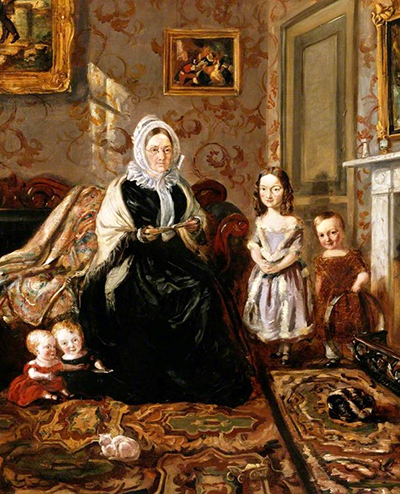
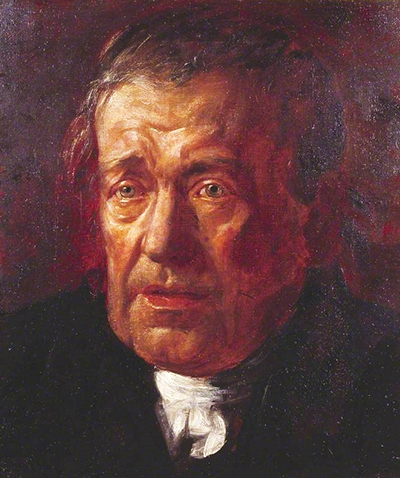
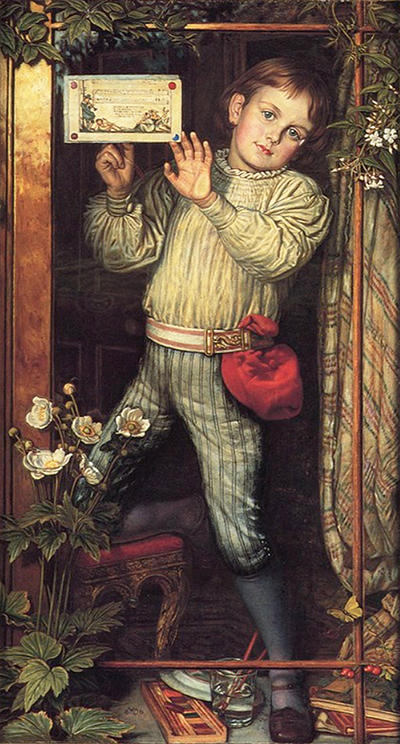
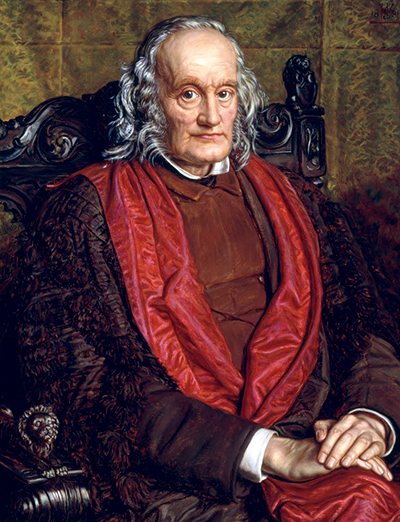
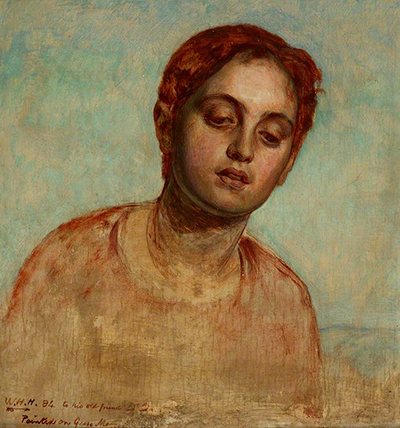
Hunt painted patrons and colleagues as well as members of his family. The Stephen Lushington portrait was commissioned by the sitter's son Vernon, a friend of Hunt's; the National Portrait Gallery gives the painting's date as 1862. The Birthday depicts Edith Waugh before she married Hunt, despite later titles calling her his wife. The Children's Holiday identifies the Fairbairn family rather than an anonymous Victorian mother and children. Such portraits are records of named relationships and commissions, not incidental breaks from “serious” painting. [28] [29]
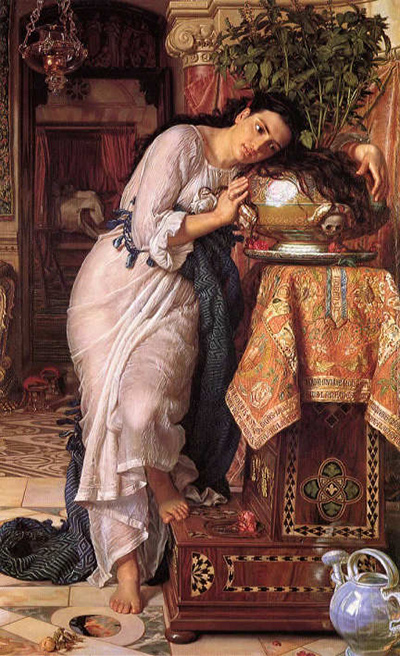
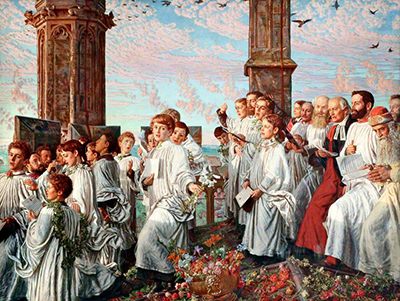
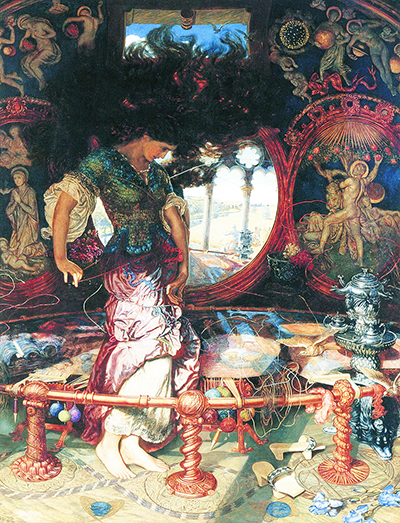
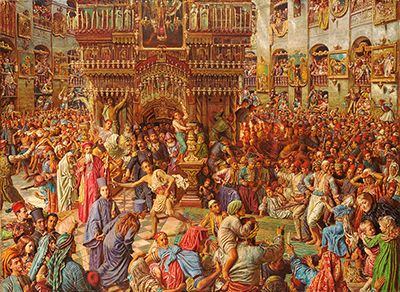
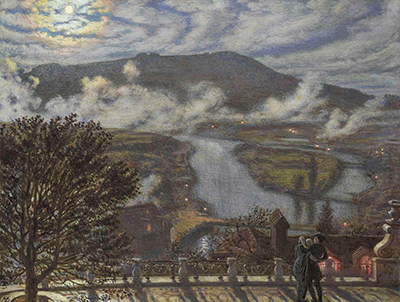
Literary pictures continued. Isabella and the Pot of Basil exists in a large Laing Art Gallery canvas and a smaller version with its own complicated completion and ownership history. The Lady of Shalott reaches from an 1850 drawing and 1857 engraving to two painted versions. The existing image on this site is the large Wadsworth canvas; Manchester holds a smaller late panel. They are separate pictures rather than interchangeable images. Hunt's late May Morning on Magdalen Tower and The Miracle of the Sacred Fire turn Oxford ritual and a Jerusalem ceremony into very different crowded scenes. [30] [6] [31]
Supports, scale and working time
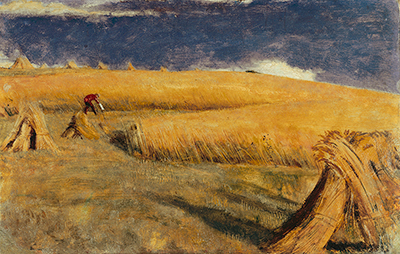
The support beneath the paint is one way to see that Hunt's works were not made to a single formula. Tate's object data identifies the 1849 Cornfield at Ewell as oil on millboard, just 20.2 × 31.8 cm. It identifies Claudio and Isabella as oil on mahogany, 75.8 × 42.6 cm. Both belong to the early career, yet one is a compact landscape and the other a much taller staged encounter. “Pre-Raphaelite technique” is useful as a starting phrase, but the actual support, scale and subject have to be read from each object's record. Neither Tate entry alone proves exactly how many sessions Hunt spent on the painted surface or which individual passage was made outdoors. [32] [33]
The making time can also be very different from the date attached to a subject. Claudio and Isabella is dated 1850 by Tate but appeared at the Royal Academy in 1853 and was altered later; the painting's chronology cannot be reduced to its exhibition year. The large Finding of the Saviour in the Temple began during Hunt's first Holy Land journey and reached its own London exhibition in 1860. A visitor moving between their pages is therefore comparing physical objects with different supports and different histories of revision and display, not merely moving forward through a list of dates. [33] [23]
When a painting becomes a print
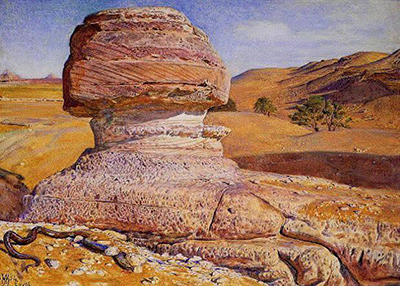
Some Hunt subjects travelled further through prints than through their original painted surfaces. The Metropolitan Museum of Art holds the Etching Club's 1857 album containing Hunt's own The Abundance of Egypt and The Desolation of Egypt. They are etching and drypoint compositions related to his Egyptian imagery, not photographs or duplicate oil paintings. In The Abundance of Egypt, grain carried on a woman's head recalls the larger Southampton Afterglow; The Desolation of Egypt turns instead to a moonlit Sphinx landscape. Looking at the prints beside the paintings shows how Hunt could reuse a place or motif in a different medium without making the same object twice. [34] [35]
Other prints were made after Hunt's paintings by specialist engravers. The Met's large 1861 Scapegoat sheet names Charles Henry Mottram as engraver, Hunt as the maker of the source painting, and Henry Graves & Co. as publisher. The museum links that engraving to the picture seen at the Royal Academy in 1856 and describes its circulation in larger editions. The print therefore belongs to the painting's public history but is not a third painted Scapegoat version. That distinction also guides the prints page: Hunt's own etched plate, an impression from it, and another artist's reproductive engraving need separate maker and medium labels even when they share a familiar Hunt subject. [36]
How to use the paintings directory
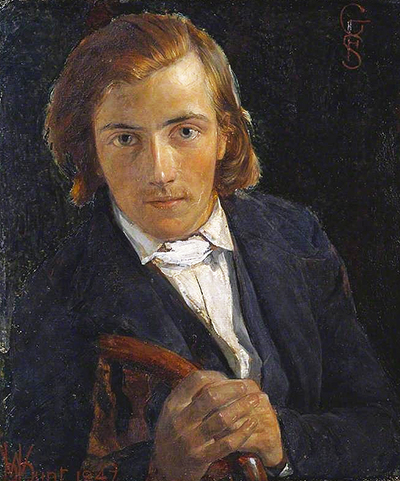
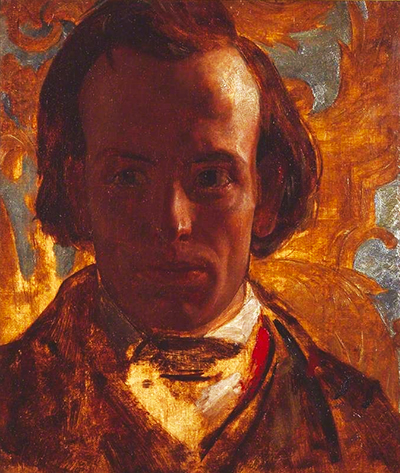
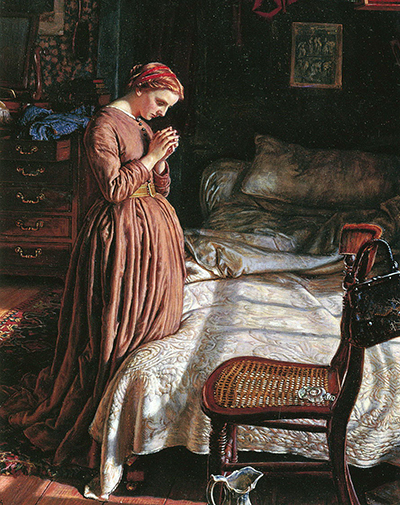
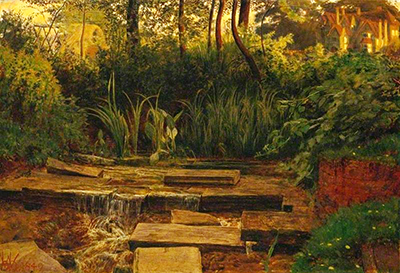
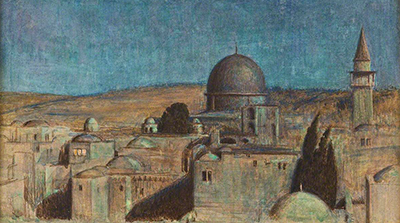
The illustrated directory below links to 71 image-led pages. It retains their existing routes and thumbnails, with qualifiers for objects that might otherwise be confused. A directory card is a way into a researched page, not proof that a title, date, sitter or collection in an old filename is correct. For example, the legacy “Morning Hunt” image matches Hunt's own illustrated Morning Prayer; the URL stays, while the visible title changes. The “Self Portrait (1877)” image is William Blake Richmond's portrait of Hunt, according to the National Portrait Gallery. It belongs in a labelled contextual group, not among Hunt's self portraits. [37] [38]
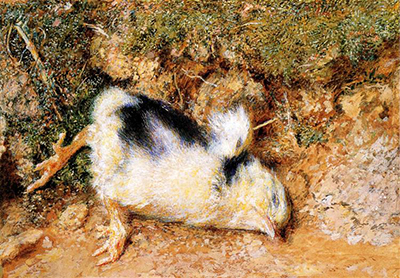
Some entries have alternative titles or multiple painted versions. Our English Coasts is also called Strayed Sheep, while the Light of the World page distinguishes paintings at Keble, Manchester and St Paul's. The item inherited as John Ruskin's Dead Chick remains listed with its identity under review; the title alone does not establish its attribution. The drawings and watercolours guides can help readers examine media beyond oil painting; the biography gives the wider life chronology.
 William Holman Hunt.jpg)
 William Holman Hunt.jpg)
 William Holman Hunt.jpg)
 William Holman Hunt.jpg)
 at the Age of 14 William Holman Hunt.jpg)
 William Holman Hunt.jpg)
 William Holman Hunt.jpg)
 William Holman Hunt.jpg)
 William Holman Hunt.jpg)
 William Holman Hunt.jpg)
 William Holman Hunt.jpg)
Discussion
What stands out when you compare the works and sources in William Holman Hunt Paintings?
Reader Insights
Which work or period changes how you understand Hunt’s career?
How do the cited collection records support or complicate that reading?
What further source would help answer a question left open here?
Join the Conversation
Share a close observation or a source-backed question about William Holman Hunt Paintings. The prompts above are starting points for discussion.
References
- National Portrait Gallery biography. View source.
- National Gallery of Art exhibition introduction. View source.
- National Gallery glossary. View source.
- National Gallery, Rienzi. View source.
- Art Gallery of New South Wales, Study of a Bloodhound. View source.
- National Gallery of Victoria on drawing, engraving and painted Shalott versions. View source.
- Guildhall Art Gallery collection feed. View source.
- Walker Art Gallery collection feed. View source.
- Art UK on the Brotherhood. View source.
- 1894 loan catalogue. View source.
- Art UK, Our English Coasts. View source.
- Art UK, naturalism curation. View source.
- Tate reproduction and object information. View source.
- Rebecca Jeffrey Easby, Smarthistory. View source.
- Hunt's revised memoir. View source.
- Ruskin's letter. View source.
- Elena Cooper's Keble research. View source.
- Keble College. View source.
- St Paul's Cathedral. View source.
- Ashmolean, two Afterglow versions. View source.
- Manchester Art Gallery, Lantern Maker. View source.
- Birmingham Museum and Art Gallery's 1962P68 image record. View source.
- University of Birmingham on the Finding. View source.
- National Gallery of Australia checklist, Shadow. View source.
- Yale Center for British Art, The Nile catalogue lead. View source.
- National Portrait Gallery Hunt iconography. View source.
- Ashmolean London Bridge object. View source.
- National Portrait Gallery, Lushington. View source.
- Fine Arts Museums of San Francisco, The Birthday. View source.
- Christie's specialist Isabella catalogue. View source.
- Harvard Art Museums. View source.
- Tate collection data, Cornfield T05468. View source.
- Tate collection data, Claudio N03447. View source.
- Metropolitan Museum of Art, Etching Club album 21.36.132. View source.
- British Museum, The Abundance of Egypt. View source.
- Metropolitan Museum of Art, Mottram's Scapegoat 2021.15.19. View source.
- Hunt's illustrated memoir, vol. 2. View source.
- National Portrait Gallery, Richmond portrait. View source.