


 by Tom Gurney
Tom Gurney BSc (Hons) is an art history expert with over 20 years experience
Published on June 19, 2020June 19, 2020 / Updated on July 6, 2026
Email: tomgurney1@gmail.com / Phone: +44 7429 011000
Rene Magritte Paintings: The Complete Cluster Guide
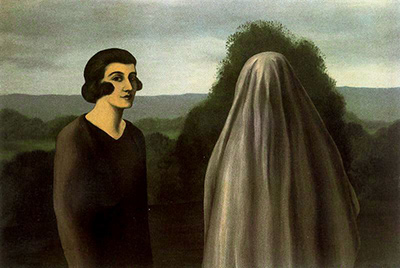
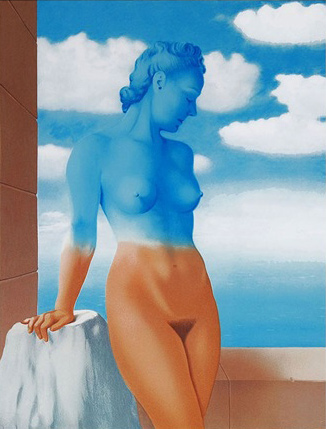
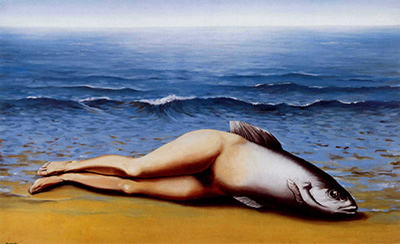
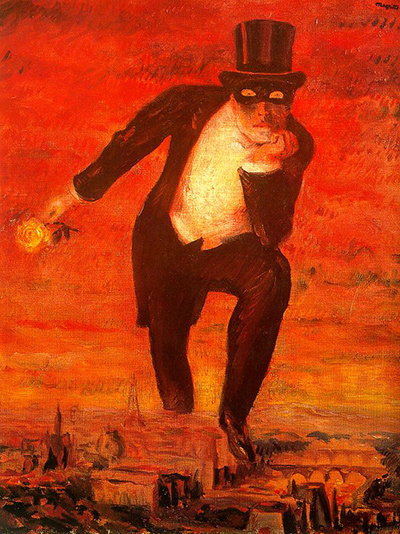
Rene Magritte's paintings are among the most recognisable images in modern art, but their clarity is deceptive. A pipe is labelled as not a pipe. A face disappears behind an apple. A daylight sky appears above a dark street. A train emerges from a fireplace. These images are easy to remember because Magritte paints them with calm precision, and difficult to exhaust because that precision keeps undermining what the viewer thinks they know. [1]
This page is the main guide to Magritte's paintings on TheHistoryOfArt.org. It brings together the major works, themes and internal reading paths across the Rene Magritte cluster, from early Surrealist paintings such as The Menaced Assassin and Les Amants to later icons such as Golconde, The Empire of Light, The Son of Man and The Blank Signature. [2]
The best way into Magritte is not to treat each apple, pipe, curtain or bowler hat as a fixed symbol. His paintings are more exact than that. They ask what happens when an ordinary thing is placed under impossible visual conditions: a word contradicts an image, a mirror refuses to reflect, a window becomes a painting, or a familiar object changes scale until the room around it feels newly strange. [3]
At a Glance
- Artist: Rene Magritte
- Nationality: Belgian
- Movement: Surrealism
- Main period: 1920s to 1960s
- Known for: Clear images that make recognition uncertain
- Best starting points: The Treachery of Images, The Human Condition, The Son of Man
Contents
- Why Magritte's Paintings Matter
- Major Magritte Paintings
- Early Surrealist Paintings
- Objects, Words and Images
- Interiors, Windows and Mirrors
- Sky, Light and Scale
- Late Paintings
- Looking Carefully
- Where to Start
Why Magritte's Paintings Matter
Magritte did not simply invent memorable Surrealist scenes. He made paintings that test the conditions of looking. Most of his mature works begin with things we already know how to name: pipe, apple, eye, window, mirror, curtain, train, stone, room, man. The problem is that naming does not settle the image. Instead, the object becomes more uncertain once it has been recognised. [4]
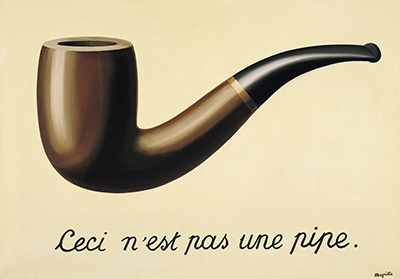
This is why The Treachery of Images remains such a useful doorway into his art. The painted pipe is unmistakable, but the inscription below it denies the viewer's first response. The point is not that the pipe has vanished. The point is that the viewer has confused an image with the thing it represents. [5]
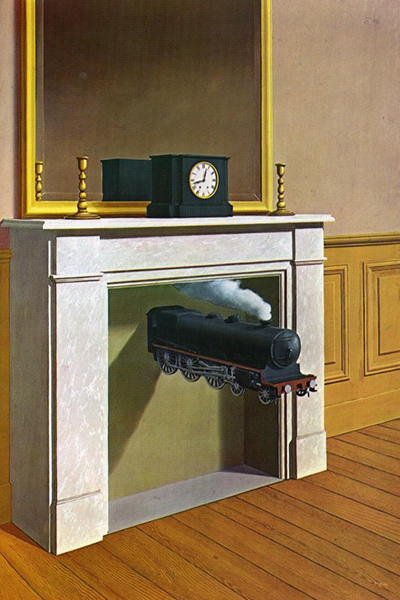
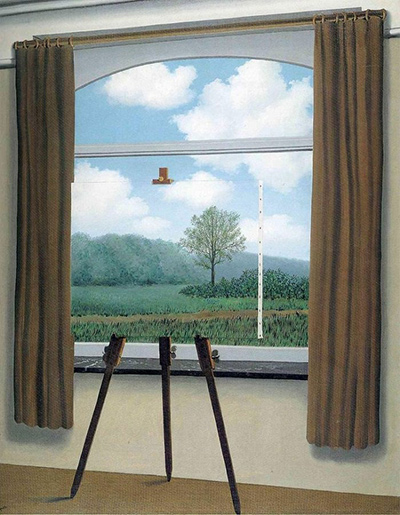
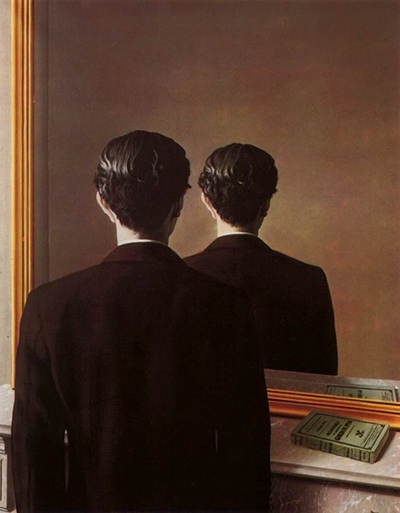
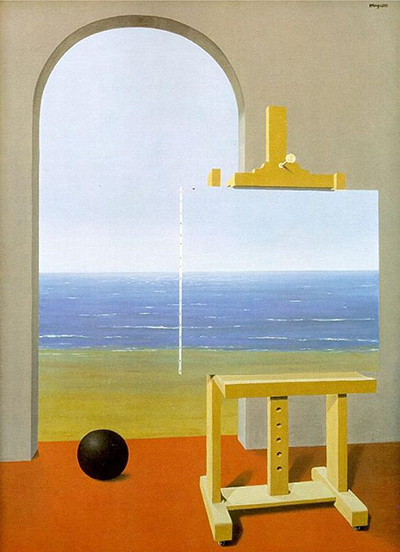
Many later paintings repeat that pressure in visual rather than verbal form. In The Human Condition, a painted canvas appears to continue the landscape behind it, confusing image, window and world. In Not to Be Reproduced, a mirror repeats the back of a man's head instead of showing his face. In Time Transfixed, a train appears inside a fireplace as if domestic order could calmly contain mechanical force. [6]
Magritte's restraint is crucial. His paintings rarely look chaotic. They are lucid, dry, frontal and exact. That calmness lets the impossible event arrive with more authority. If the whole world looked distorted, the contradiction would feel decorative. Instead, the world looks stable enough for one impossible relation to disturb everything. [7]
Video Guide
This selected video from Great Art Explained offers useful visual context before the detailed analysis continues.
Major Magritte Paintings
| Painting | Date | Why It Matters |
|---|---|---|
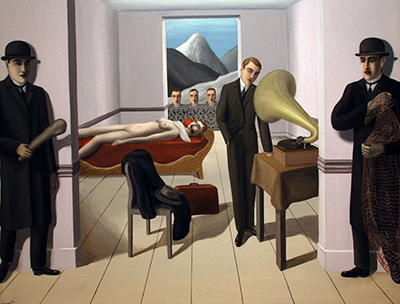
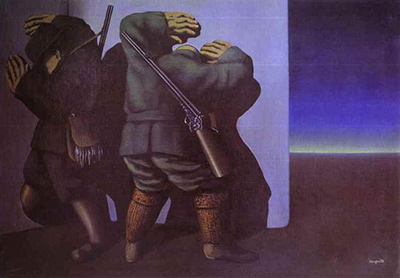
| The Menaced Assassin | 1927 | An early, large-scale Surrealist scene that uses theatrical stillness and unresolved narrative. [8] |
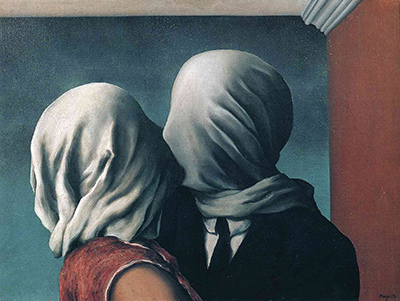
| Les Amants | 1928 | Turns intimacy into obstruction through the cloth-covered faces of two lovers. [2] |
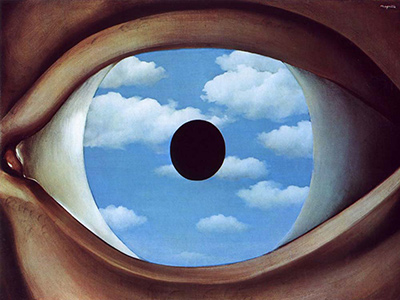
| The False Mirror | 1928 | Replaces the expected surface of an eye with a bright sky, making sight itself feel unstable. [2] |
| The Treachery of Images | 1929 | Magritte's classic word-image painting, built around the difference between a pipe and a picture of one. [5] |
| The Human Condition | 1933 | Confuses painting, window and landscape, making representation the subject of the scene. [6] |
| Time Transfixed | 1938 | Places a locomotive inside a domestic interior, one of Magritte's most precise impossible juxtapositions. [9] |
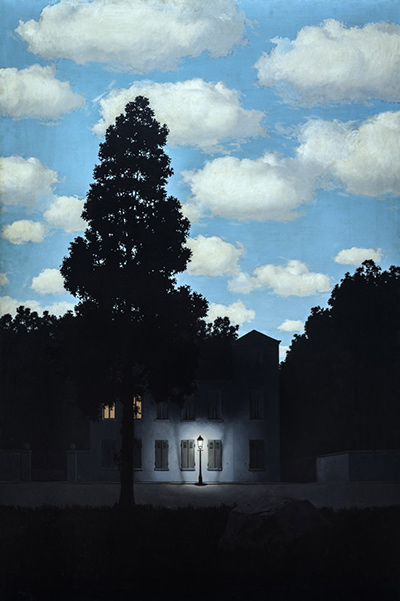
| The Empire of Light | 1940s-1960s | Joins a night-time street with a daylight sky in one of Magritte's great recurring images. [2] |
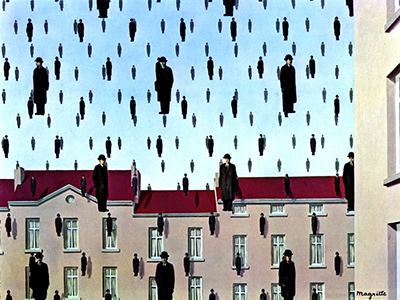
| Golconde | 1953 | Turns the bowler-hatted man into a repeated suspended pattern against an ordinary street. [2] |
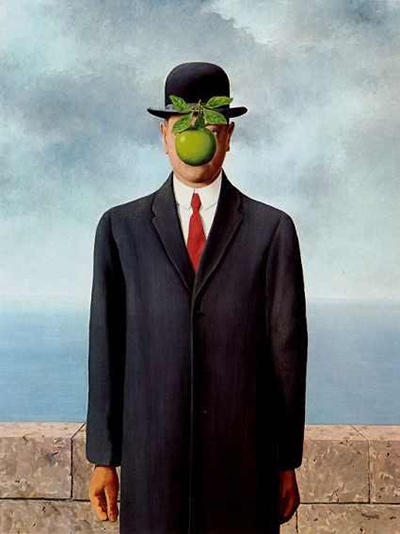
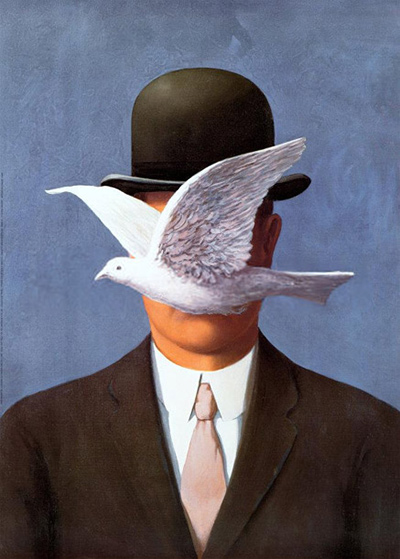
| The Son of Man | 1964 | Transforms the self-portrait into an image of concealment and frustrated recognition. [2] |
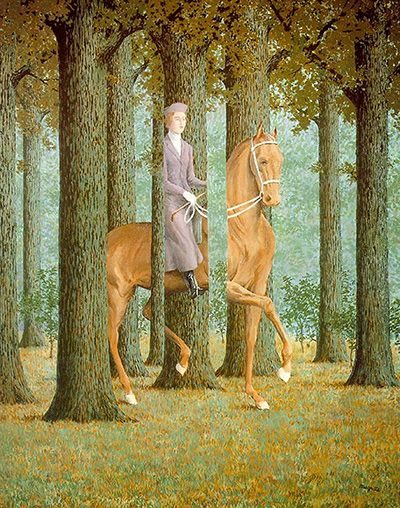
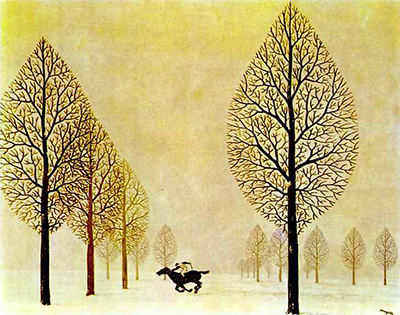
| The Blank Signature | 1965 | Makes foreground and background impossible to stabilise through the layering of horse, rider and trees. [10] |
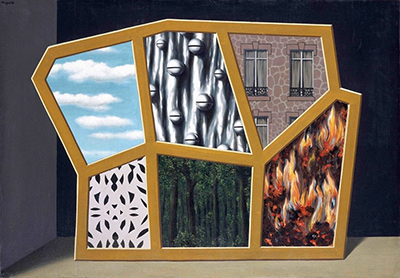
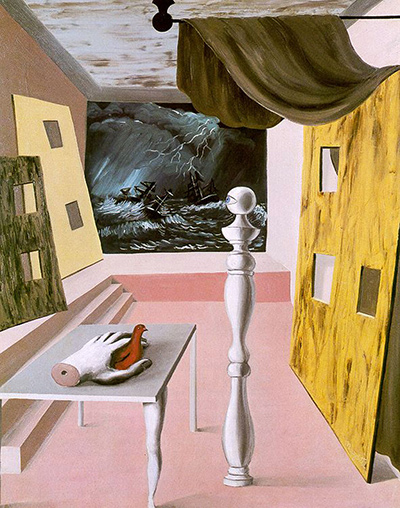
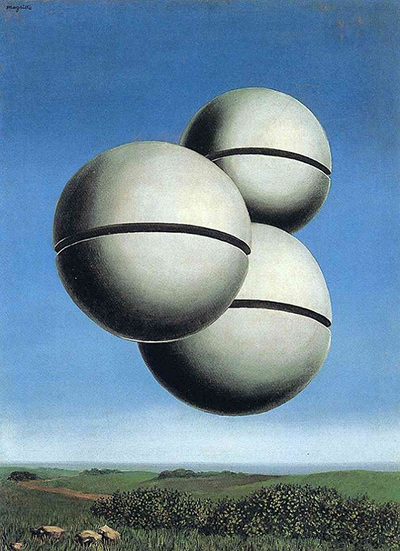
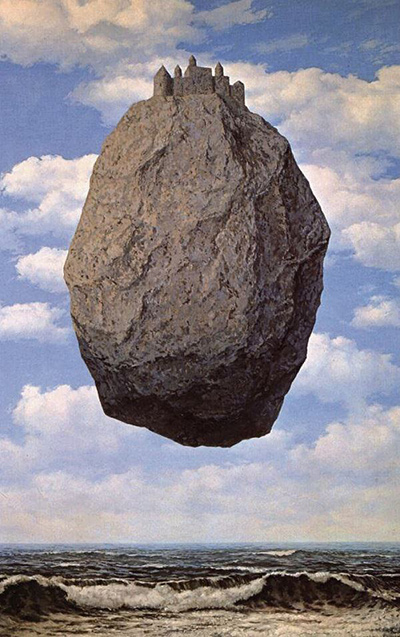
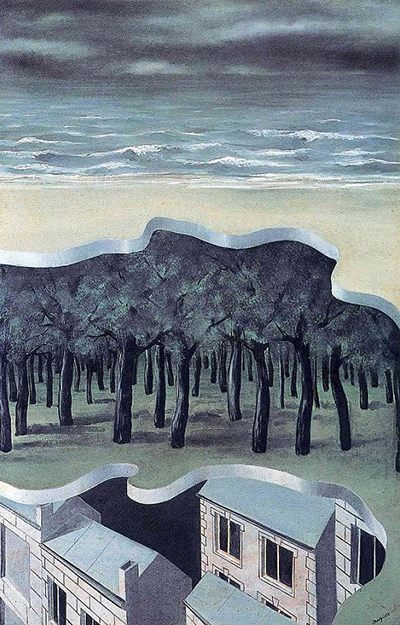
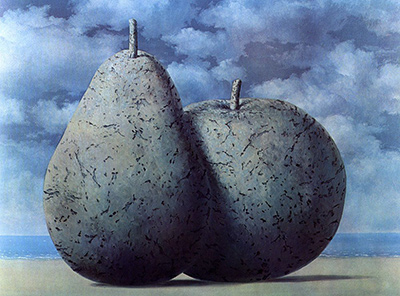
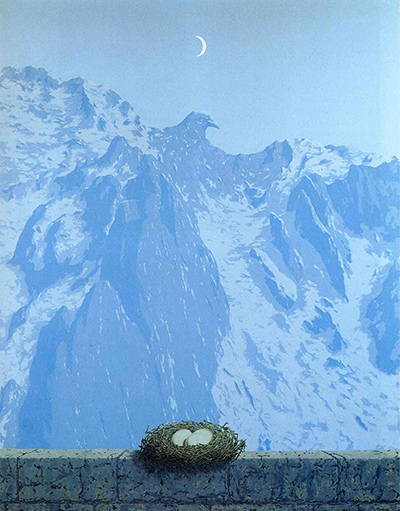
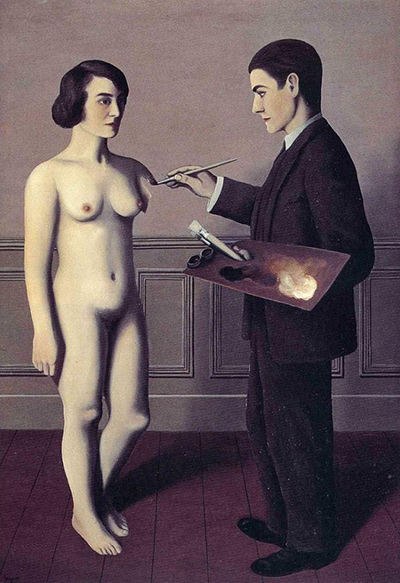
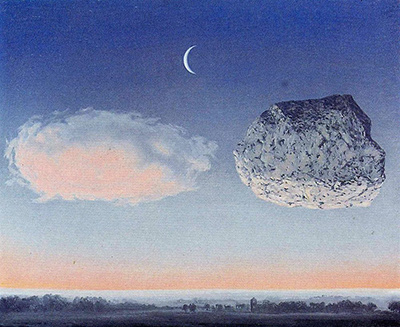
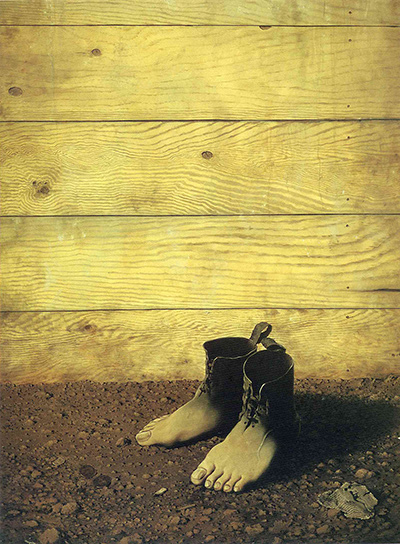
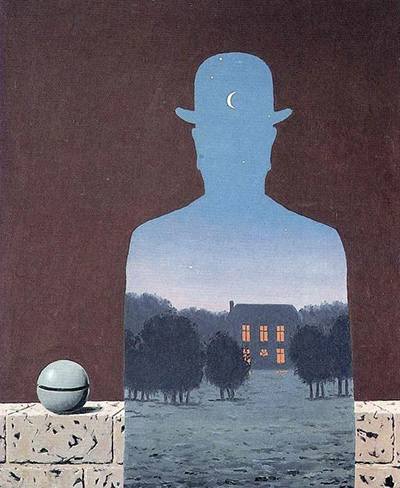
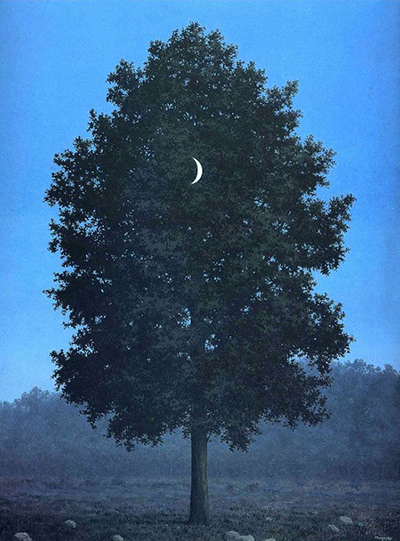
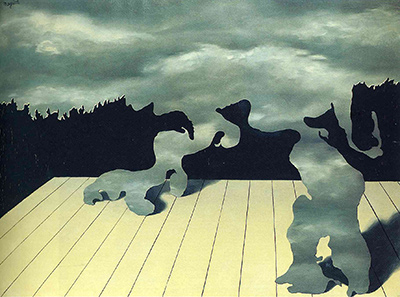
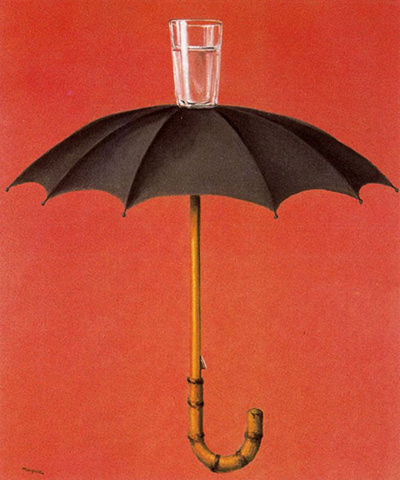
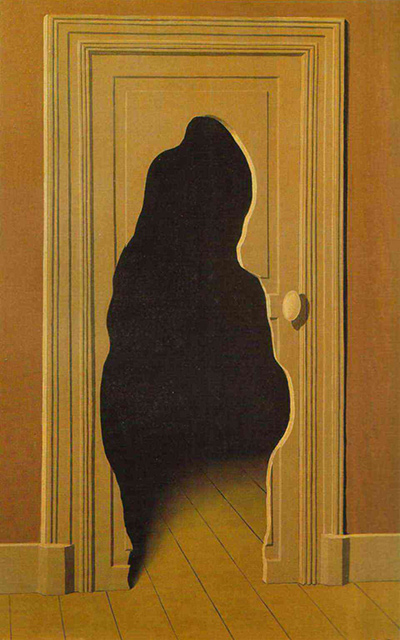
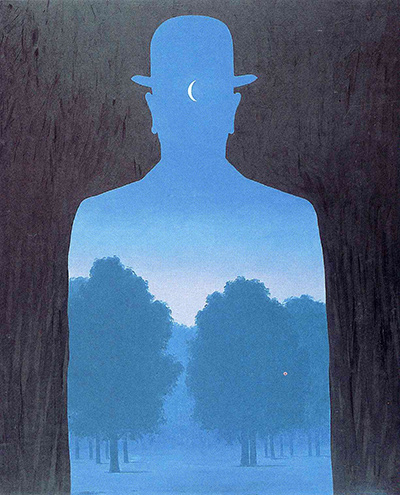
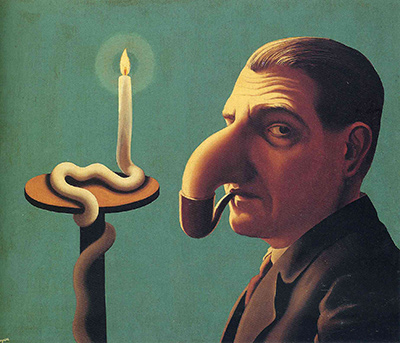
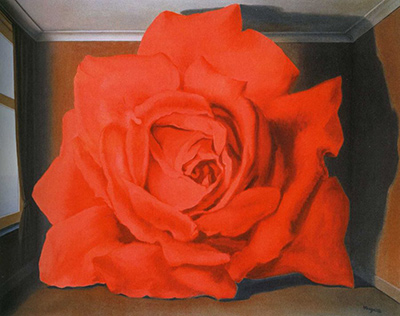
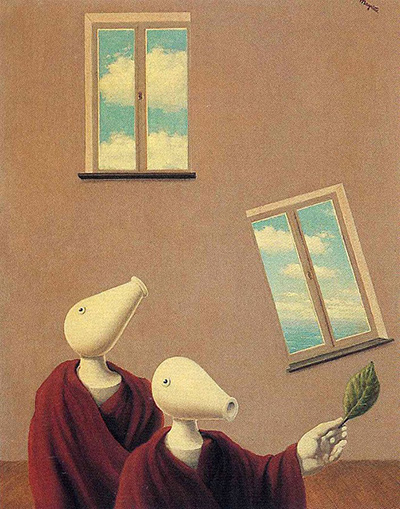
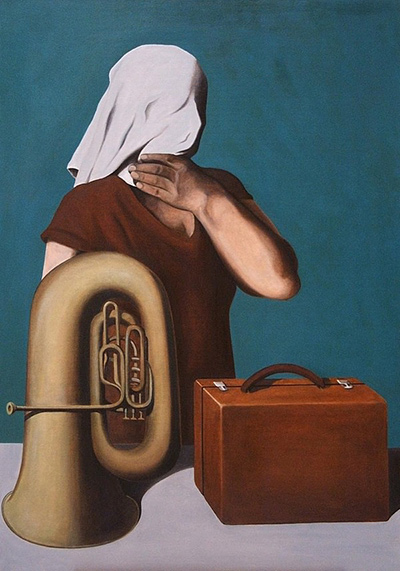
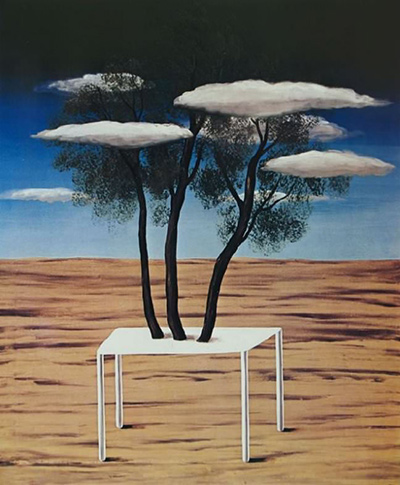
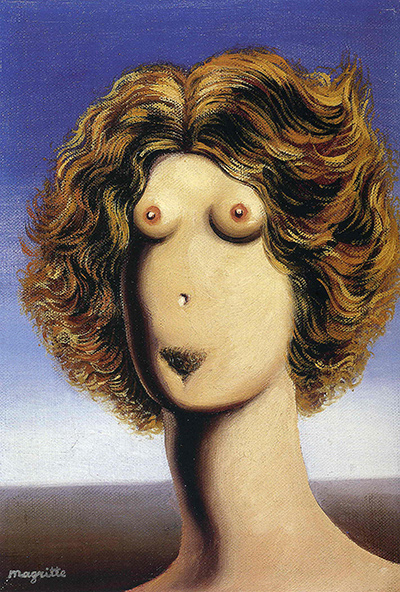
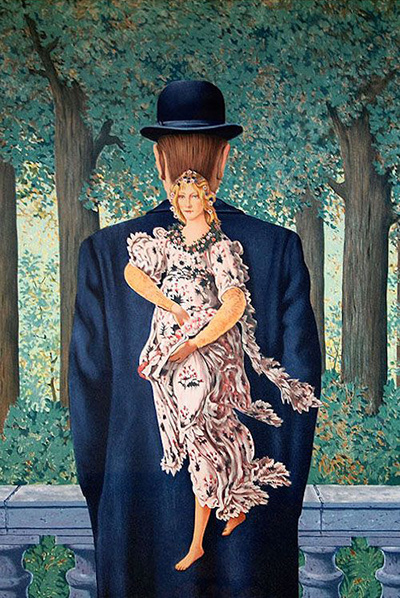
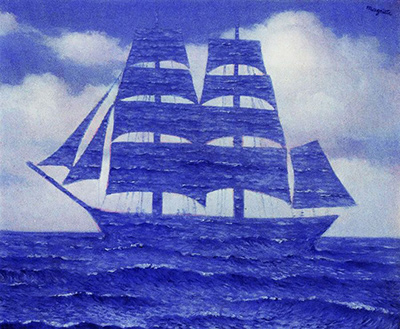
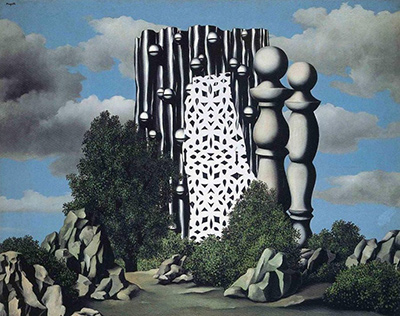
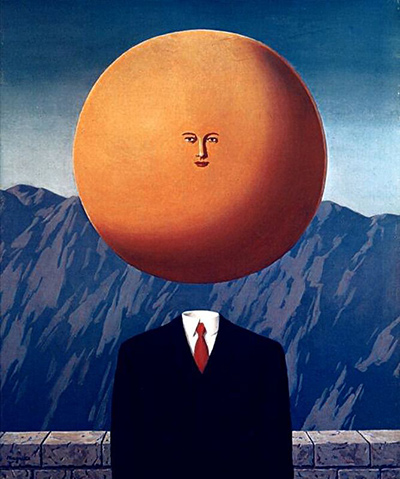
Other important paintings in this cluster include The Red Model, The Listening Room, Personal Values, The Castle of the Pyrenees and The Mysteries of the Horizon. Together they show how consistently Magritte returned to ordinary things under impossible conditions. [3]
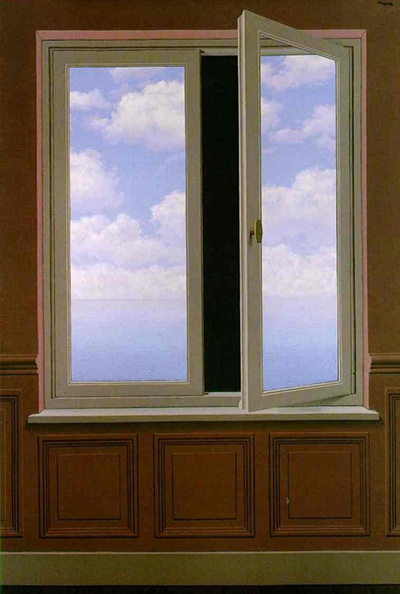
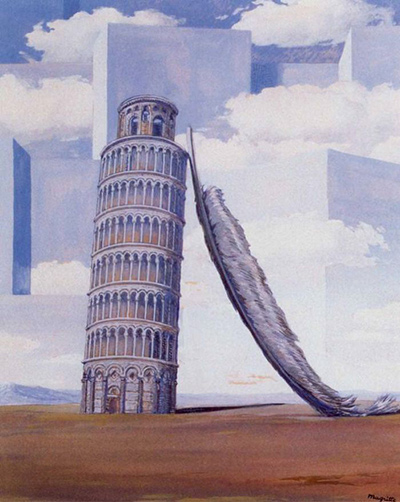
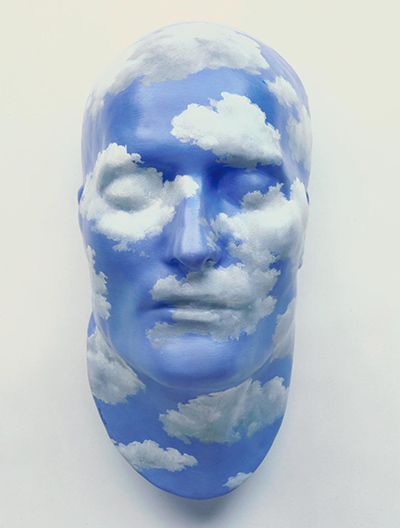
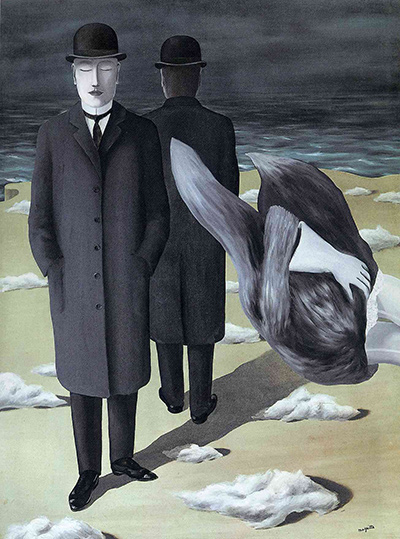
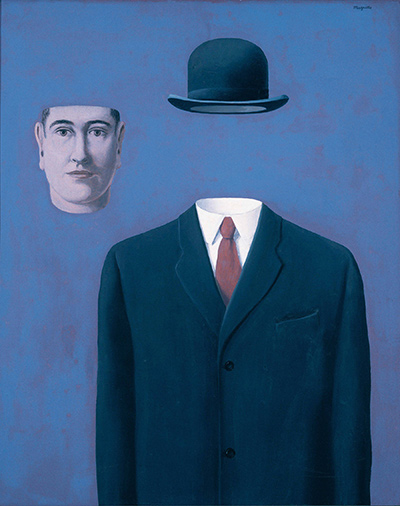
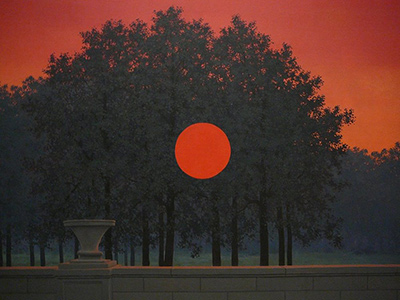
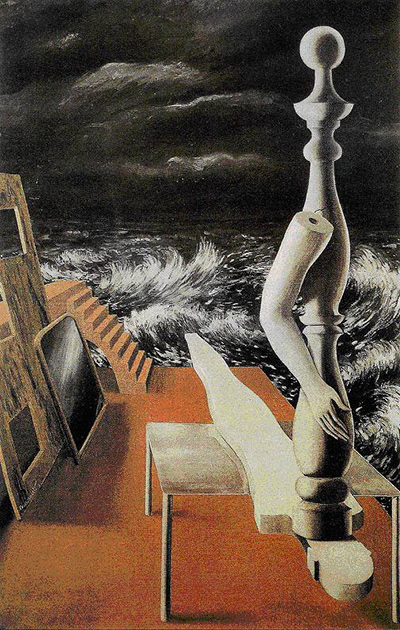
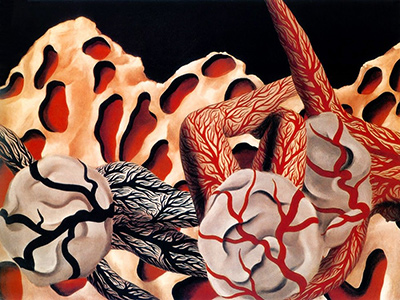
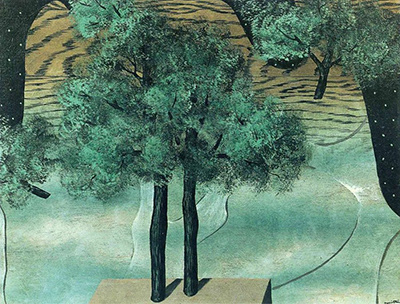
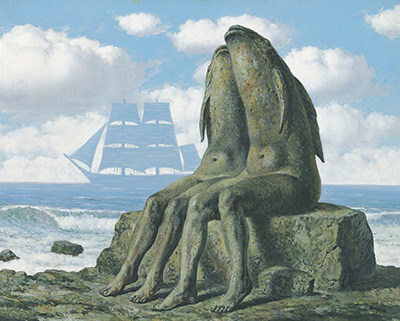
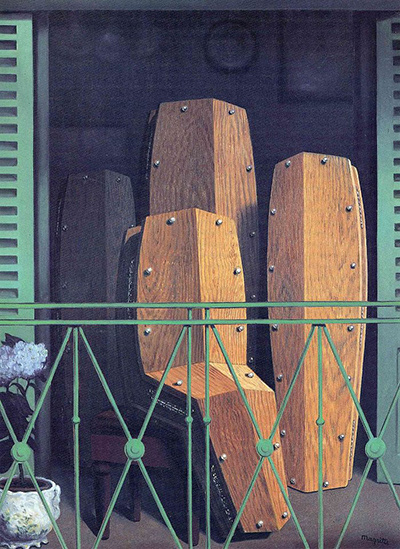
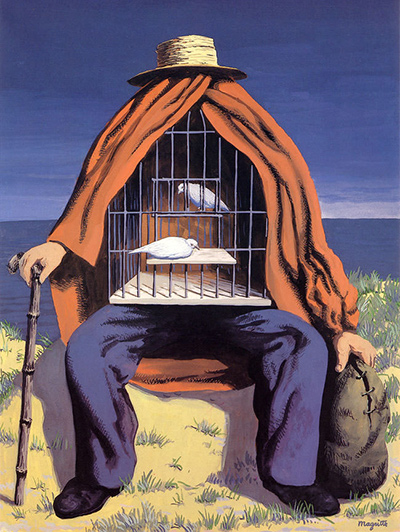
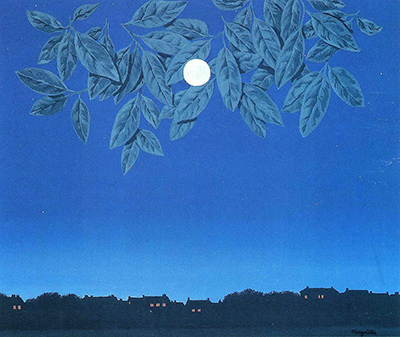
Large Selection of Major Rene Magritte Paintings
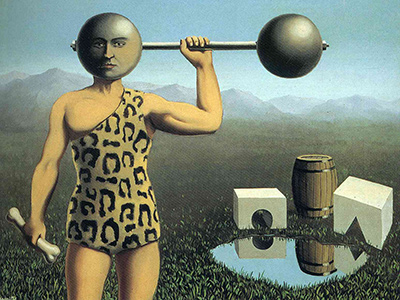
 Rene Magritte.jpg)
 Rene Magritte.jpg)
 Rene Magritte.jpg)
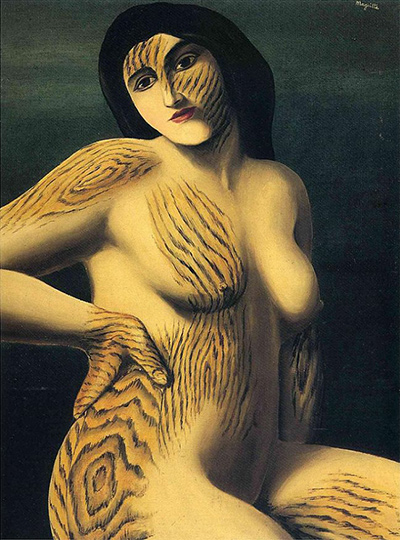
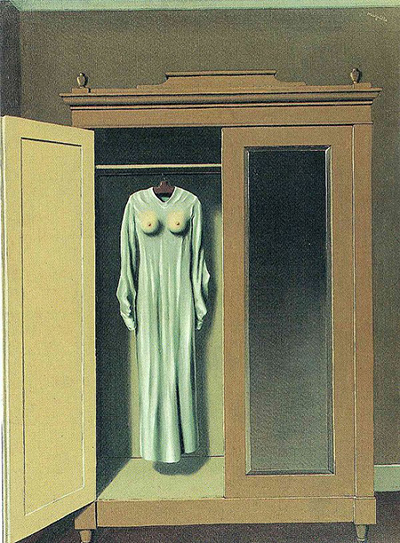
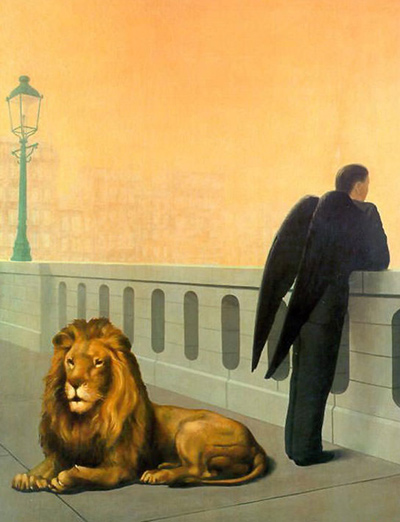
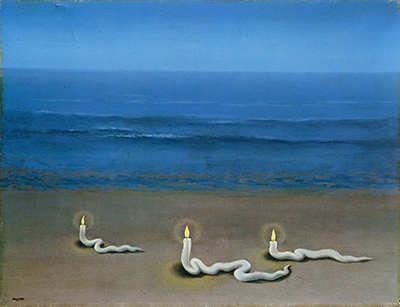
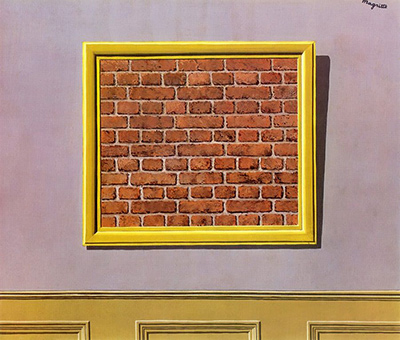
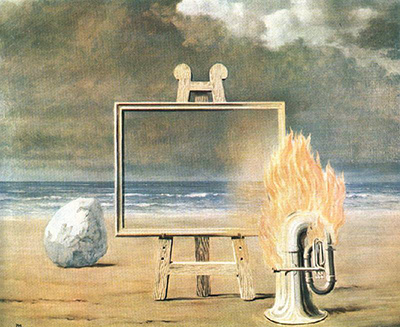
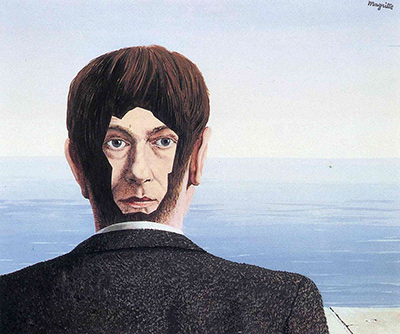
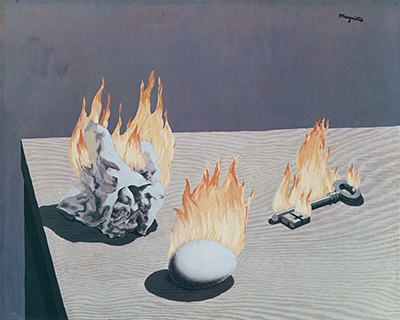
Early Surrealist Paintings
The late 1920s were decisive for Magritte. Works such as The Menaced Assassin, Les Amants, The False Mirror and The Treachery of Images established problems that would remain central for decades: theatrical stillness, covered or obstructed faces, the eye as a site of uncertainty, and the tension between language and image. [2]
The Menaced Assassin is especially revealing because it is both cinematic and frozen. The Museum of Modern Art identifies it as one of Magritte's largest and most theatrical compositions, and the work presents a body, a gramophone, two waiting men and detectives at a doorway without resolving the story. The viewer receives clues, but not a solution. [8]
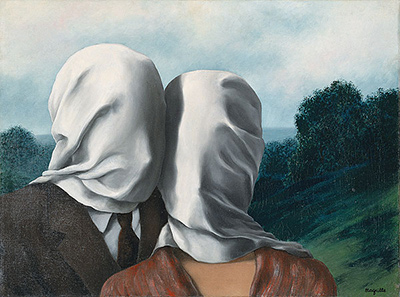
Les Amants takes a different route. The lovers are close enough to kiss, but cloth covers both heads. Magritte keeps the bodies legible and the gesture recognisable, then blocks the faces that would normally carry intimacy and expression. That obstruction makes the painting emotionally direct without requiring a fixed biographical explanation. [7]
The same decade produced The Treachery of Images, the work that most clearly states Magritte's interest in representation. The line beneath the pipe does not deny that the image looks like a pipe. It insists that likeness is not identity. For the rest of his career, Magritte would keep finding new ways to make that distinction visible. [5]
Objects, Words and Images
Magritte's best-known objects are memorable because they are ordinary. A pipe, apple, hat, glass, rock or shoe carries no automatic mystery by itself. The mystery begins when the object is displaced, renamed, enlarged, hidden or placed in a relation that ordinary experience cannot support. [4]
That is why the pipe in The Treachery of Images is so important. The painting exposes a habit of language: viewers often say "this is a pipe" when what they are looking at is an image. Magritte's inscription turns that habit into the subject of the work. [5]
The same logic helps explain The Red Model. The work fuses shoes and feet, making a practical object feel bodily and a body part feel manufactured. Its later technical story adds another layer: conservation research connected a version of The Red Model with a fragment of Magritte's lost The Enchanted Pose, showing how one image could literally cover another within his working practice. [11]
Magritte's objects should therefore be read by function, not by dictionary symbolism. Ask what the object does in the painting. Does it block a face? Replace a body part? Contradict a caption? Change scale? Hide a scene? Repeat until individuality disappears? The answer will be different from one painting to the next. [3]
Interiors, Windows and Mirrors
Windows, mirrors and rooms are among Magritte's most useful devices because they already involve looking. A window promises access to the world outside. A mirror promises reflection. A room promises domestic order. Magritte keeps those promises visible, then quietly breaks them. [6]
In The Human Condition, a canvas placed before a window appears to continue the landscape behind it. The viewer cannot easily separate painted image from external view. The work is not simply a trick picture. It asks whether seeing the world is already shaped by images. [6]
In Not to Be Reproduced, the mirror refuses one of its basic duties. Instead of showing Edward James's face, it repeats the back of his head. The room remains calm, the book on the mantelpiece is recognisable, and the mirror is mounted exactly where it should be. That normality makes the impossible reflection more severe. [3]
Time Transfixed belongs in the same family of interior disruptions. The Art Institute of Chicago records the painting as a 1938 oil on canvas, and the image places a locomotive inside a fireplace beneath a mantel clock. The event is absurd, but Magritte paints it with the stillness of furniture. [9]
Sky, Light and Scale
Sky is one of Magritte's most powerful recurring motifs. In The False Mirror, sky fills the eye. In The Empire of Light, a daylight sky hangs above a dark street. In Golconde, bowler-hatted men float or fall across the air in repeated rows. In The Castle of the Pyrenees, a vast stone and castle hover over the sea. [2]
These paintings do not use sky merely as background. Sky becomes a place where expectation fails. It can replace a body part, contradict the time of day, hold repeated figures or support a rock that should fall. Magritte's skies look clear and calm, which makes their impossibility feel more exact rather than more fanciful. [7]
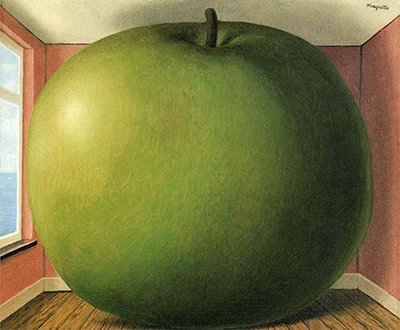
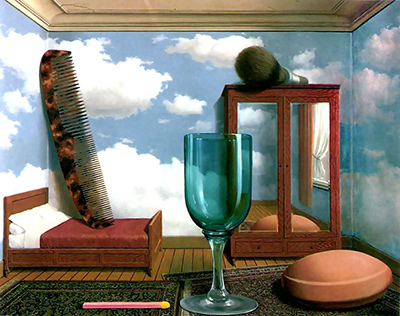
Scale works in a similar way. In The Listening Room, an apple grows until it nearly fills the room. In Personal Values, comb, glass, match and other objects become enormous inside a bedroom. San Francisco Museum of Modern Art records Personal Values as a 1952 oil on canvas in its collection, and the painting remains one of Magritte's sharpest tests of how ordinary objects change when size stops behaving. [12]
The effect is not just visual surprise. Magritte makes the viewer feel that normal scale is a rule we usually forget we are using. Once the rule breaks, even the familiar room becomes unstable. [4]
Late Paintings
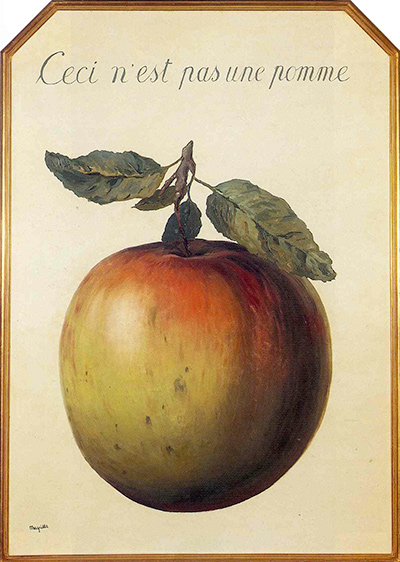
Magritte's late paintings often look simpler at first glance, but many of them are built from long-developed problems. The Son of Man, painted in 1964, uses the format of a formal portrait, then blocks the face with a green apple. The image is widely treated as one of Magritte's defining late works because it makes concealment feel immediate and permanent. [2]
The Blank Signature, painted in 1965, is quieter but equally rigorous. The National Gallery of Art records the work as oil on canvas in its collection, and its visual problem depends on contradictory overlap: horse, rider and trees pass in front of and behind one another in ways that cannot be reconciled into a stable space. [10]
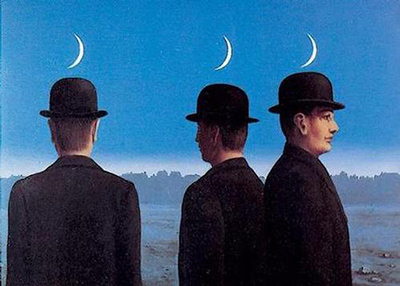
The Mysteries of the Horizon also belongs to the late vocabulary of repetition, moon, landscape and bowler-hatted figure. Its force comes from near-identity: three men appear in a shared landscape, yet each has his own crescent moon. The scene looks orderly, but the repeated figures do not resolve into one clear narrative. [3]
The late works matter because they show Magritte refining rather than abandoning his core method. A single obstruction, repetition or spatial contradiction can carry the painting. The image becomes more economical, but the uncertainty remains deep. [3]
Looking Carefully
- Look for the broken rule. Magritte's paintings often change one condition of ordinary seeing: reflection, scale, caption, depth, light or concealment. [4]
- Separate the object from the image. The Treachery of Images is the clearest case, but the same problem runs through windows, mirrors and painted interiors. [5]
- Notice what stays normal. The room, suit, landscape or sky often remains ordinary so that the impossible element can do more work. [7]
- Avoid one-word symbolism. Apples, hats, curtains and stones are not fixed codes. Their meaning depends on how they behave inside each painting. [3]
- Compare across the cluster. Read The Son of Man beside Les Amants for concealment, The Human Condition beside The Blank Signature for unstable space, and Personal Values beside The Listening Room for altered scale. [6]
Where to Start
If you are new to Magritte, begin with The Treachery of Images. It states the basic problem of representation with unusual economy. Then move to The Human Condition, where the same question shifts from words and objects to painting and landscape. [5] [6]
For the most familiar public images, read The Son of Man, Golconde and The Empire of Light. These works show how Magritte's late imagery became iconic without becoming simple. [2]
For a deeper route, follow the interiors and perception sequence: Time Transfixed, Not to Be Reproduced, Personal Values, The Listening Room and The Blank Signature. That path makes Magritte's method feel less like a set of isolated surprises and more like a sustained investigation of how pictures work. [3]
FAQs
The Son of Man and The Treachery of Images are usually the two best starting points for Magritte's public reputation. The Son of Man is the famous apple-faced figure, while The Treachery of Images is the pipe painting with the inscription denying that it is a pipe. [2] [5]
His major themes include representation, concealment, language, mirrors, windows, scale, repetition, ordinary objects and the instability of recognition. These themes appear across works such as The Treachery of Images, The Human Condition, The False Mirror, Golconde and The Blank Signature. [3]
The Son of Man is generally discussed as a self-portrait, but Magritte blocks the face with an apple, making the painting less a conventional likeness than an image about concealment and frustrated recognition. [2]
Major Magritte paintings are held by museums including the Museum of Modern Art, Los Angeles County Museum of Art, the Art Institute of Chicago, the National Gallery of Art, San Francisco Museum of Modern Art and other public and private collections. Individual pages in this cluster give collection details where reliable museum records are available. [1] [5] [9] [10] [12]
Magritte's Surrealism is unusually clear, restrained and idea-driven. Rather than filling the canvas with chaotic dream imagery, he often paints ordinary things precisely and changes one relation between them: word and image, object and scale, mirror and reflection, inside and outside. [7]
Start with The Treachery of Images for language and representation, The Human Condition for windows and pictures, The Son of Man for concealment, and The Empire of Light for Magritte's use of contradiction in light and atmosphere. [3]
References
- Museum of Modern Art, "Rene Magritte," artist record, accessed July 4, 2026, https://www.moma.org/artists/3692-rene-magritte.
- David Sylvester and Sarah Whitfield, eds., Rene Magritte: Catalogue Raisonne, Houston and London: Menil Foundation / Philip Wilson, 1993-1997.
- Harry Torczyner, Magritte: Ideas and Images, New York: Harry N. Abrams, 1977.
- Suzi Gablik, Magritte, London: Thames & Hudson, 1970.
- Los Angeles County Museum of Art, "The Treachery of Images (This is Not a Pipe)," object record, accessed July 4, 2026, https://collections.lacma.org/node/239578.
- Patricia Allmer, Rene Magritte, London: Reaktion Books, 2019.
- Sarah Whitfield, Magritte, London: Hayward Gallery / South Bank Centre, 1992.
- Museum of Modern Art, "Rene Magritte, The Menaced Assassin, 1927," object record, accessed July 4, 2026, https://www.moma.org/collection/works/79267.
- Art Institute of Chicago, "Time Transfixed," object record, accessed July 4, 2026, https://www.artic.edu/artworks/34181/time-transfixed.
- National Gallery of Art, "Rene Magritte, The Blank Signature, 1965," object record, accessed July 4, 2026, https://www.nga.gov/artworks/66422-blank-signature.
- Museum of Modern Art, "The Discovery of Magritte's The Enchanted Pose," Inside/Out, accessed July 4, 2026, https://www.moma.org/explore/inside_out/2013/10/31/the-discovery-of-magrittes-the-enchanted-pose/.
- San Francisco Museum of Modern Art, "Personal Values," object record, accessed July 4, 2026, https://www.sfmoma.org/artwork/98.562/.