

 by Tom Gurney
Tom Gurney BSc (Hons) is an art history expert with over 20 years experience
Published on August 14, 2026 / Updated on August 14, 2026
Email: tomgurney1@gmail.com / Phone: +44 7429 011000
Gathering Almond Blossoms: Introduction
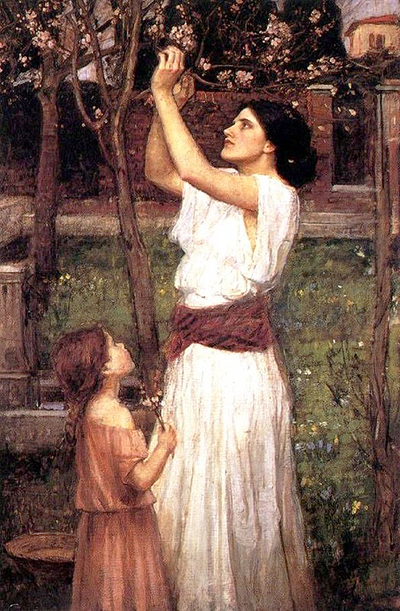
A woman reaches into a flowering tree while a young girl waits beside her with a sprig of blossom. John William Waterhouse’s late Gathering Almond Blossoms places two generations—or simply two figures of different ages—inside a cultivated garden. White dress, rose-coloured sash and pale bloom rise against brick, stone and spring grass. [1]
The painting is dated about 1916, measures approximately 94 × 61 cm and is privately owned. [1] It has appeared on the legacy website under the title Gathering Around Blossoms, but the established object title is Gathering Almond Blossoms. The relationship between the figures is not documented, so the frequently repeated “mother and daughter” reading should remain a possibility rather than a fact.
At a Glance
- ArtistJohn William Waterhouse (1849–1917)
- Established titleGathering Almond Blossoms [1]
- Legacy website titleGathering Around Blossoms
- Datec.1916 [1] [2]
- MediumOil on canvas [1] [2]
- DimensionsApproximately 94 × 61 cm [1]
- CollectionPrivate collection [1] [2]
- SubjectA woman and young girl gathering blossom in a walled garden
- RelationshipOften described as mother and child, but not securely documented [2]
- Career contextOne of Waterhouse’s final flower and garden subjects
Contents
- Introduction
- Correcting the Title
- The Action of Gathering
- Woman and Child: Relationship with Care
- Almond Blossom and Early Spring
- Dress, Sash and Upward Movement
- A Cultivated Domestic Garden
- Late Waterhouse in 1916
- Flower Gathering Across the Career
- The Vertical Composition
Correcting the Title
The image circulated here as Gathering Around Blossoms is more widely catalogued as Gathering Almond Blossoms. [1] [2]
The difference is not cosmetic. “Around” describes a spatial relation, whereas “almond” identifies the flowering tree and established title.
A search for the legacy wording returns little independent object documentation. The almond title connects the image to public-domain records, measurements and the 1916 date. [1]
The manuscript should therefore use Gathering Almond Blossoms as its H1 and preserve Gathering Around Blossoms as an alternate legacy label.
This approach keeps old links understandable without promoting a probable transcription or naming error.
Title correction also changes interpretation. Almond blossom has a particular seasonal character: it appears early, often before a tree is in leaf.
The painting’s pale flowering branches and sparse garden growth fit that identification, though the exact cultivar cannot be established from reproduction.
No signature or title inscription is visible at web scale. The title rests on cataloguing tradition rather than a phrase painted into the scene.
Maintaining both labels in metadata will help users who arrive through either name.
Within the prose, “blossom” is sufficient after the authoritative title has been explained.
The Action of Gathering
The taller woman stretches both arms upward towards a low branch. [2] Her lifted hands appear to pluck or collect blossom.
The girl stands below, looking up. She holds a small flowering sprig and may be waiting to receive more.
Their attention converges above them. Waterhouse creates unity through gaze and gesture rather than touch.
The woman’s raised arms form a narrow arch that echoes branching forms. Her body extends vertically through the already tall composition.
The girl supplies a lower counterpoint. Her head and hands repeat the upward direction at a smaller scale.
Gathering is visible as process. Some blossom remains rooted, some is being reached for and some has already entered the child’s hands.
This sequence gives the quiet garden scene an intelligible before and after.
The exact purpose is not shown. Blossoms could be carried indoors, arranged, studied or enjoyed, but no basket or finished display explains the next stage.
Nor should gathering be reduced to effortless leisure. Reaching, selecting and holding are modest forms of labour.
The girl’s presence makes the activity shared. She observes and participates rather than merely decorating the foreground.
Waterhouse turns a seasonal task into a lesson in coordinated attention.
Woman and Child: Relationship with Care
Secondary image records often describe the pair as mother and child, though the relationship is not securely documented. [2]
The visual age difference makes that reading plausible, but the painting’s title does not name a relationship.
They could be mother and daughter, older and younger sisters, relatives, household members or models posed as a family group.
Clothing and physical proximity cannot decide the question.
The safest language is “woman and young girl,” followed by a qualified note that they are often interpreted as mother and child.
This distinction prevents a familiar domestic narrative from becoming undocumented biography.
It also leaves the figures’ interaction available for close reading. The girl looks upward with attention; the woman carries out the harder reach.
Knowledge may be passing between them. The older figure demonstrates which branch to choose or how to gather without damaging it.
That interpretation arises from action rather than genetic relationship. Teaching and shared work do not require a mother-daughter identity.
The two models are unnamed. They should not be attached to Waterhouse’s family or regular sitters through resemblance.
Acknowledging the child as a participant matters. Victorian and Edwardian art often uses children as signs of innocence or sentiment; here the girl visibly holds blossom and contributes to the task.
The scene’s warmth survives responsible uncertainty. It does not need an invented family name.
Almond Blossom and Early Spring
Almond trees are known for flowering early, sometimes while winter conditions still feel near. Pale pink or white blossoms can cover otherwise bare branches.
That natural cycle makes them strong images of renewal and fragile beginnings.
The painting supports a spring reading through sparse tree structure, fresh grass and abundant blossom. [1] [2]
No document proves that Waterhouse intended a fixed symbolic programme. Renewal should remain interpretation grounded in the plant’s season.
Blossom differs from the full roses and summer flowers of his earlier late sequence. It belongs to promise rather than peak abundance.
The figures gather it at the moment of opening. Their action preserves some bloom only by separating it from the tree.
That paradox resembles Waterhouse’s broader flower imagery. Taking beauty makes it portable but shortens its living duration.
Paint provides another kind of preservation. The 1916 blossoms remain perpetually open on the canvas.
Almond also carries ancient Mediterranean and biblical associations, but none should be attached automatically to this apparently contemporary garden.
The tree may have interested Waterhouse through form and season rather than textual symbolism.
Its small pale touches allow him to distribute light across the upper field and connect white dress with skyward growth.
Botany and composition reinforce one another without requiring a hidden code.
Dress, Sash and Upward Movement
The woman wears a long white dress with a dark rose or red sash around the waist. [2] The child’s dress is warmer pink-brown.
White makes the taller body a clear vertical against trees, wall and grass.
The sash interrupts that vertical and marks the waist, preventing the garment from becoming an unmodulated column.
Its warmer colour also connects the woman to the child and to pink tones in the blossom.
Raised arms pull the white fabric upward. Drapery folds communicate reach through tension and fall.
The child’s shorter dress establishes age and scale. Her body remains close to the lower border while the woman’s hands approach the upper branches.
Neither costume is securely identified as historical. The simple draped white gown may appear timeless or classicising, but the enclosed garden has contemporary domestic features.
Waterhouse often used clothing that avoided precise modern fashion in order to create a poetic interval.
That choice should not turn the scene into ancient Greece. Brick walls, path and garden architecture resist a purely classical location.
The figures occupy a designed image of simple life rather than a documentary record of ordinary working dress.
Costume helps idealise the activity, while gesture keeps it physically credible.
A Cultivated Domestic Garden
The setting includes wall, path, stone or fountain-like garden feature and a distant house. These elements establish cultivation and residence.
This is not an untouched forest. The tree grows within a space shaped by human boundaries and maintenance.
A brick wall runs horizontally behind the figures, stabilising their vertical movement.
Beyond it, darker trees and a pale building suggest neighbouring or larger property.
The foreground grass contains scattered flowers or coloured marks. Its irregularity softens formal architecture.
On the left, a stone structure may be a fountain, basin or garden ornament. Reproduction does not justify a more exact label.
The path creates a band between immediate lawn and rear wall. It implies circulation through the garden beyond the depicted task.
Waterhouse’s late flower-women often inhabit idealised spaces whose planting looks abundant but controlled. Here cultivation is unusually explicit.
That domestic context supports the family reading while not proving it.
It also shifts flower gathering away from mythic abduction or fatal carpe diem. The scene is safe, shared and locally bounded.
Yet the wall does not make the garden claustrophobic. The figures’ arms and gaze lead upward into branches and open air.
Enclosure and aspiration balance one another.
Late Waterhouse in 1916
The probable date places the painting in Waterhouse’s final full year. He died in February 1917. [1]
In 1916 he was also working on major literary pictures including A Tale from the Decameron, Miranda – The Tempest and Tristram and Isolde.
Gathering Almond Blossoms demonstrates that quiet contemporary or timeless garden subjects continued beside those narratives.
It should not be treated automatically as a final farewell. The date is late, but no inscription declares a personal allegory of approaching death.
Knowledge of Waterhouse’s illness can make every blossom appear elegiac. That retrospective pressure should be controlled.
The painting’s visible action is active and upward. A woman reaches; a child participates; spring growth occupies the garden.
Mortality and renewal can be felt because viewers know both flowers and lives are temporary, but the scene does not collapse into mourning.
Its vertical energy may even counter the static reverie of The Rose Bower.
Late style here combines selective detail with clear storytelling. Figures and garden are sufficiently resolved to establish a shared task, while foliage remains painterly.
The work broadens the final-career narrative. Waterhouse did not abandon observed domestic motifs when he returned to Boccaccio, Shakespeare and medieval romance.
Flower Gathering Across the Career
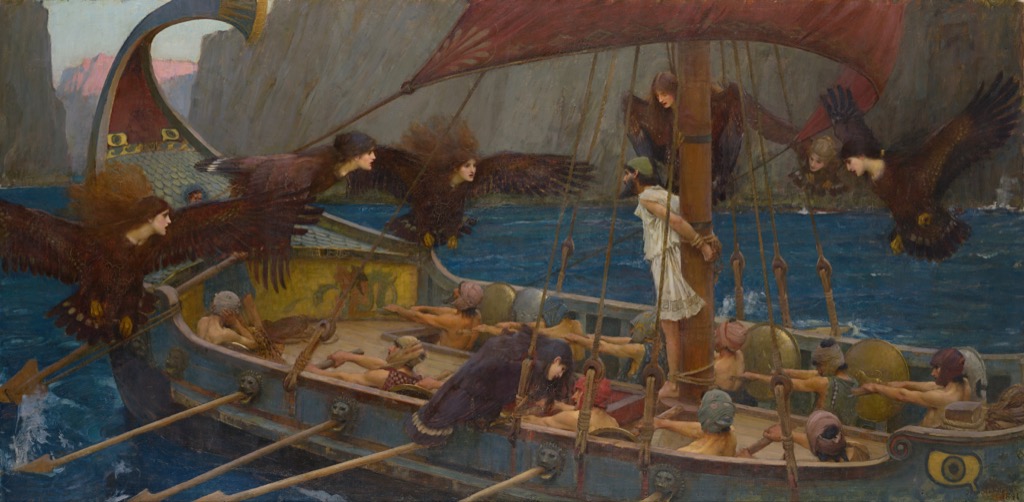
Waterhouse painted gathering in several contexts: fruit collection on Capri, flowers in a Devon garden, rosebuds beside water and late blossoms in an enclosed garden.
The repeated action links travel, domestic life and poetic invention.
In Gathering Summer Flowers in a Devonshire Garden, one possible family sitter bends towards cultivated plants with a basket.
In the 1909 Gather Ye Rosebuds While Ye May, two women gather beside a stream under the pressure of a title associated with passing time.
Here two ages share an upright reach and no quoted poem directs interpretation.
The change from full flower to blossom is important. Gathering now concerns the beginning of a seasonal cycle.
The child reinforces futurity. She stands at the beginning of life relative to the adult figure, just as blossom precedes fruit.
That analogy is compelling but should remain a reading, not a declared allegory.
Across the sequence, Waterhouse repeatedly aligns women with plant work. Modern analysis should avoid making them passive embodiments of nature.
These figures select, carry, reach and teach. Their action structures the paintings.
Gathering Almond Blossoms may be the clearest intergenerational form of that agency.
The Vertical Composition
At approximately ninety-four centimetres high and sixty-one wide, the canvas has an emphatic vertical format. [1]
The proportions accommodate a standing adult with raised arms. A squarer canvas would either cut the gesture or leave excessive lateral space.
Tree trunks echo the human upright. Branches then spread across the top and contain the hands.
The child fills the lower left, preventing the adult from becoming a solitary central column.
Wall and path provide horizontal counterforces. Without them, every element might climb and the garden would lose stability.
The adult’s sash is the strongest horizontal on her body. It visually meets the longer bands behind.
Waterhouse therefore builds movement from crossed directions: bodies and trunks rise; wall, path and sash hold.
Blossoms are distributed around the hands, making the destination of the reach immediately clear.
The distant house supplies another small vertical at upper right. Human habitation remains present beyond the intimate pair.
This compositional clarity helps the scene read at a glance while sustaining slower attention to garden detail.
Light, Weather and the Sense of Season
The garden does not appear under high summer glare. Its light is relatively even, allowing white dress and pale blossoms to stand out without sharp theatrical shadow. [2]
That moderation suits early spring. The lawn is green, but trees do not form the dense canopy found in Waterhouse’s summer and woodland pictures.
Weather remains implied rather than described. No rain, wind or dramatic cloud enters the frame.
The blossom itself is the strongest seasonal evidence. It changes a bare-looking branch into a temporary field of pale marks.
Waterhouse distributes those marks above and around the adult’s hands, creating the impression that light has collected at the point of action.
The woman’s white dress repeats that luminosity below. Body and tree are connected through colour rather than literal transformation.
The girl’s warmer dress keeps the lower area from becoming equally pale. She belongs visually to earth, brick and sash while looking towards the lightest zone.
This movement can support a reading of growth or instruction, but the colour structure comes first.
Garden weather also affects labour. Blossom can be damaged by frost or rain; gathering depends upon a brief suitable interval.
No meteorological story is documented, yet the activity’s seasonal specificity gives the moment urgency without a carpe diem poem.
Unlike Waterhouse’s wind-tossed Boreas, the painting makes atmosphere through stillness. The branches do not seem to resist the reaching hands.
The calm allows age, gesture and flower to become the whole drama.
Two Bodies, Two Scales of Knowledge
The adult and child do not simply duplicate one another. Their unequal height determines what each can do.
The woman reaches the branch directly. The girl receives or holds what has come within reach.
This division turns physical scale into social relation. Knowledge is shown through coordinated roles rather than spoken instruction.
The child’s upward gaze is essential. If she looked away, the pair would occupy the same garden without sharing attention.
Her held sprig proves that she has already entered the activity. She is not only watching an inaccessible adult task.
The woman’s body forms effort. Arms lift, torso lengthens and balance must be maintained while hands work overhead.
The long dress conceals the exact stance, but folds and vertical weight keep her grounded.
The girl stands close enough to assist without obstructing. Waterhouse arranges the two figures as a connected diagonal from her head through the woman’s torso to the raised hands.
Their anonymity makes universal family interpretation tempting. Yet keeping the relationship open can reveal other histories: apprenticeship, care work, friendship across age or models collaborating in a constructed scene.
No one reading is compelled. The secure point is that age difference organises action.
This is rarer in Waterhouse than the solitary flower-woman. A second figure transforms private reverie into shared practice.
The painting therefore deserves comparison not only with flower pictures but with images of teaching and transmission. The next generation literally looks up while holding the result.
The Garden as Work and Ideal
Cultivated gardens can appear effortless in art. Blossoms open, grass grows and paths remain clear without gardeners visible beyond the pictured figures.
In reality, walls, lawn, tree and planted beds require continuous labour. The painting selects a picturesque act from that larger maintenance cycle.
The two figures may be gathering for pleasure, but their action belongs to the garden’s management. Removing branches or blossom changes the plant and prepares material for another use.
Waterhouse idealises this work through graceful dress and clean setting. He does not show tools, mud or pruning waste.
That selection should be recognised without condemning the image for failing to be documentary horticulture.
Its subject is poetic domestic activity. Idealisation is part of how it creates calm.
At the same time, attending to implied labour prevents flowers from becoming freely available decoration. Trees must be cultivated, and a body must reach.
The girl may be learning not only appreciation but care: how to handle a branch and where to place a cut sprig.
This reading also connects the work with Esther Waterhouse’s flower painting and the broader household culture of botanical observation, though no evidence identifies Esther or her relatives as these figures.
Garden, domesticity and art overlap as practices of selection and arrangement.
Object History and What Remains Unknown
The public records used here identify a private collection but do not provide a continuous provenance, original exhibition or first owner. [1] [2]
That absence is significant for a work dated at the end of Waterhouse’s life. It is not clear from these sources whether he sold it, retained it in the studio or intended further work.
The 1916 date may derive from catalogue tradition rather than a visible dated signature. It should remain “about 1916” unless the physical object supplies firmer evidence.
Likewise, the measurements are approximate in metric conversion: 93.98 × 60.96 centimetres is conventionally rounded to 94 × 61. [1]
Private ownership can make reverse labels, frame history and conservation reports inaccessible. Online reproductions preserve appearance but not all object evidence.
The manuscript therefore avoids a first-exhibition claim and does not connect the canvas to Waterhouse’s posthumous 1917 Royal Academy works.
It may eventually be possible to trace the painting through auction catalogues or estate records. Until then, the gap should be a research question.
This restraint does not weaken the page. The established image, title, dimensions, medium and date support substantial interpretation without an invented chain of owners.
High-quality cataloguing often depends upon knowing when to stop. In this case the scene is visually clear while its market and exhibition history remain open.
Related Pages
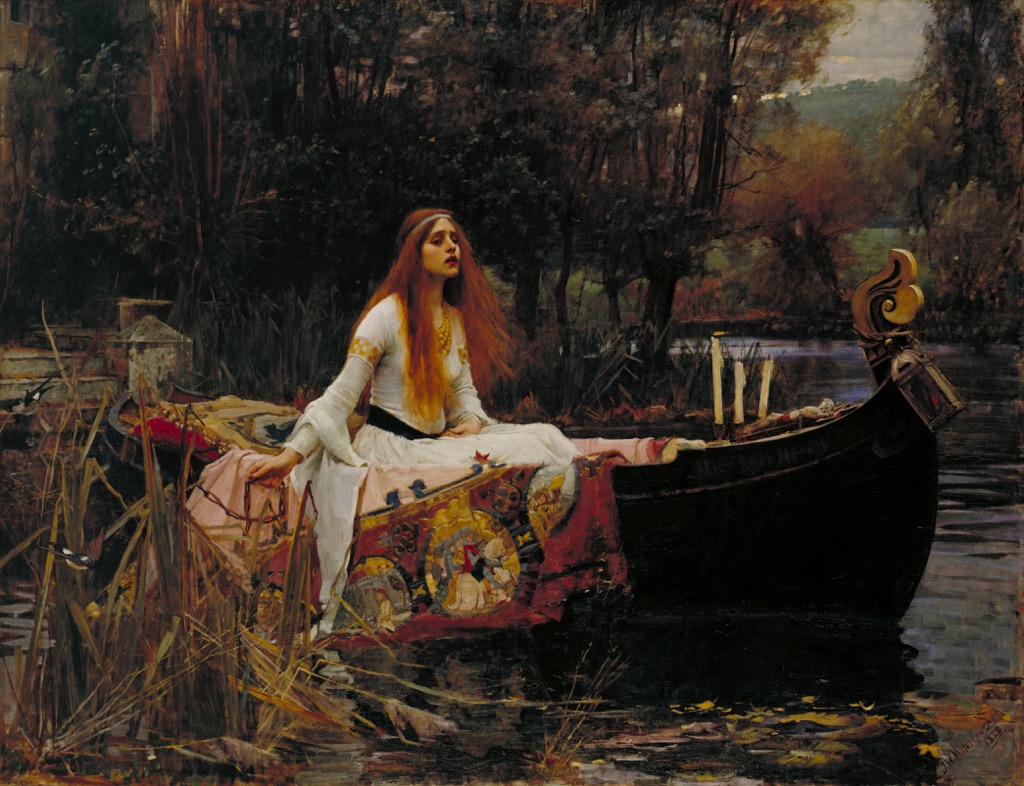
- The Lady of Shalott: Compare Waterhouse's best-known literary composition.
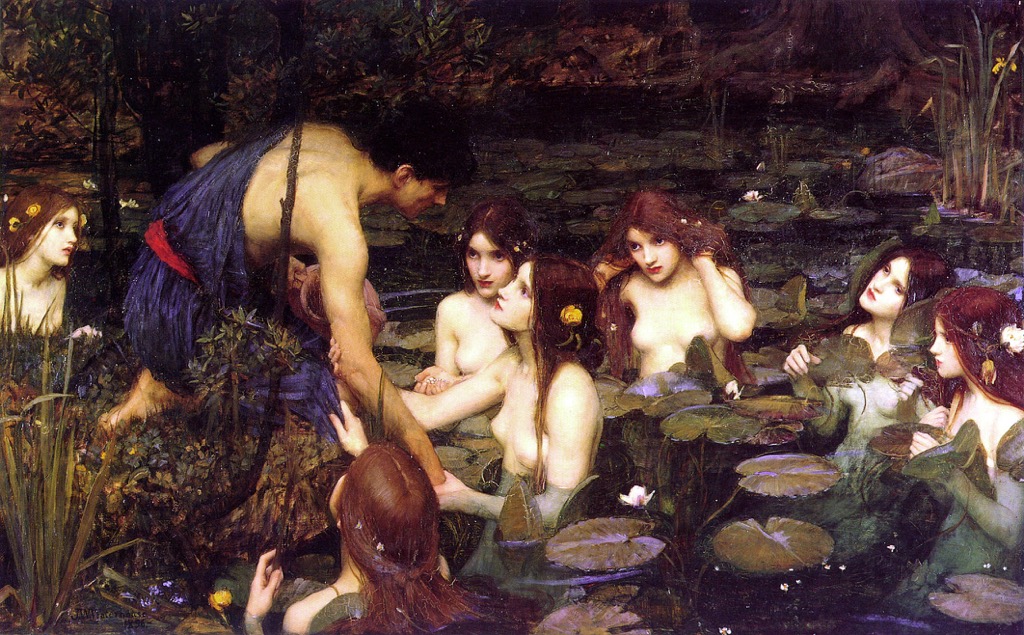
- Hylas and the Nymphs: Compare another major mythological scene.
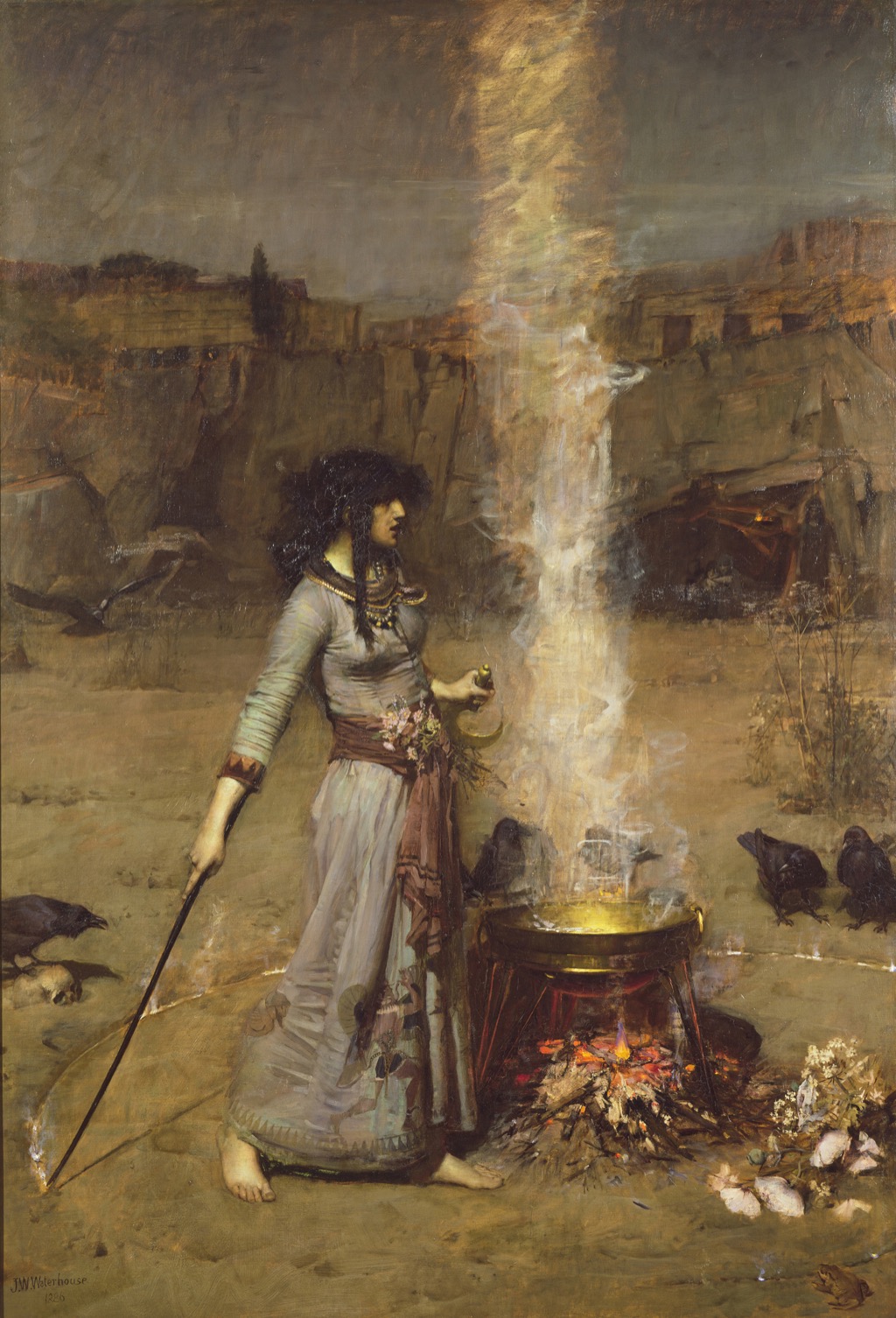
- The Magic Circle: Compare Waterhouse's treatment of ritual and symbolism.
Frequently Asked Questions
That wording belongs to the legacy image label, while the established title is Gathering Almond Blossoms. [1] [2]
Approximately 94 × 61 cm. [1]
They are often described that way, but their relationship is not securely documented. “Woman and young girl” is safer. [2]
No specific poem or myth is documented. The subject is a seasonal garden activity.
Discussion
Gathering Almond Blossoms is an image of shared attention. A woman reaches, a child watches and participates, and the entire vertical canvas leads towards pale bloom.
Its quality depends upon precise limits. The authoritative almond title should replace the legacy “around” wording, but both should remain findable. The figures may be mother and daughter, yet the image alone cannot prove their relationship or names.
Reader Insights
Which visible detail most changes the way you read this page?
Which source or comparison helps the work feel less familiar and more specific?
What question would you bring back to the painting after reading?
Join the Conversation
Share your reading of this page below.
References
- Wikimedia Commons, “John William Waterhouse: Gathering Almond Blossoms,” object summary recording c.1916 date, medium, dimensions and private ownership. View source.
- WikiArt, “John William Waterhouse, Gathering Almond Blossoms,” secondary object and subject summary. View source.