 by
Tom Gurney
Tom Gurney BSc (Hons) is an art history expert with over 20 years experience
Email:
tomgurney1@gmail.com
/ Phone:
+44 7429 011000
The Shepherd Paris: Introduction
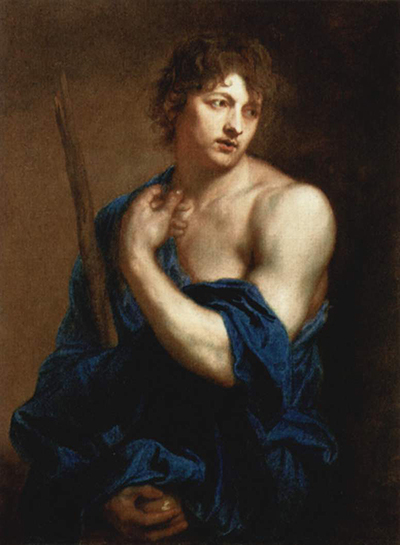
A young man in a deep blue mantle turns his face towards something outside the picture. One hand rises to his chest; the other holds an apple near the lower edge. In Anthony van Dyck’s The Shepherd Paris , these small actions carry a story whose other principal figures have been left out. The Wallace Collection calls the painting Paris : a mythological judge made as compelling to look at as the beauty he must judge. [1]
At a Glance
- Artist Anthony van Dyck
- Current museum title Paris
- Date About 1628
- Medium Oil on canvas
- Painting dimensions 96 × 84 cm
- Collection The Wallace Collection, London
- Inventory number P85
- Subject Paris and the judgement of the three goddesses. [1]
This work across Anthony van Dyck’s career
Entry of Christ into Jerusalem
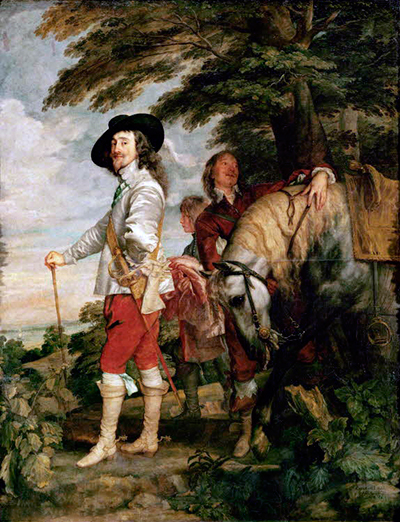
about 1617Frans Snyders
about 1620The Shepherd Paris (current article)
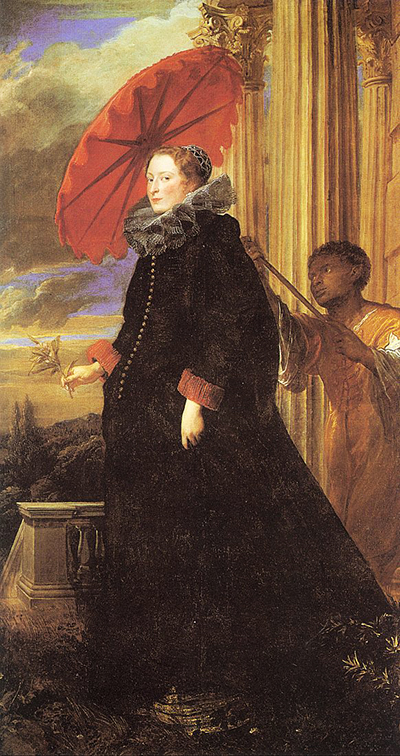
about 1628Rinaldo and Armida
1629–1632; Louvre commentary proposes late1631–spring1632Charles I in Three Positions
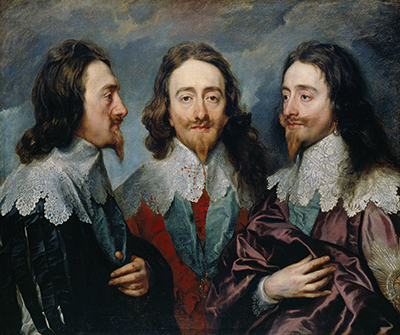
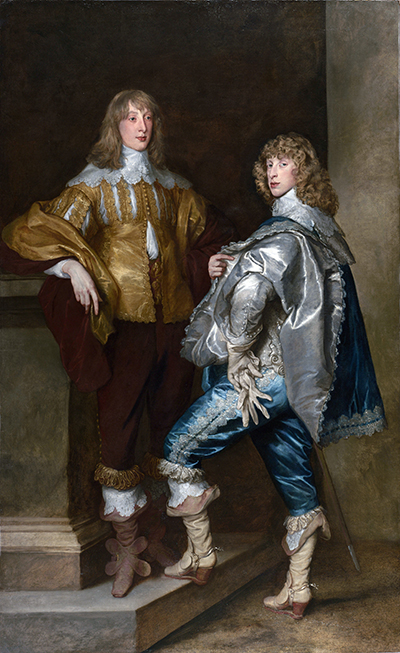
1635–before June 1636Lord John Stuart and his Brother
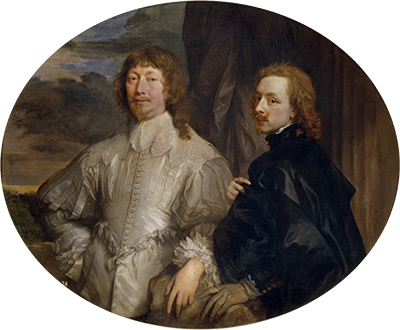
about 1638Cupid and Psyche
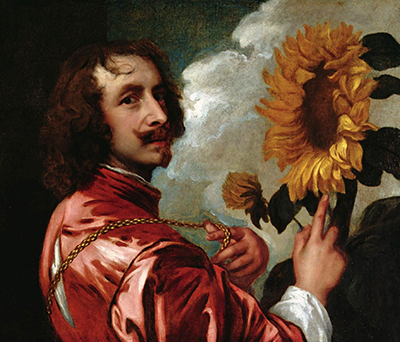
1639–40Self Portrait
c. 1640Contents
- A story concentrated in one figure
- What Paris has to decide
- Where are the goddesses?
- Blue cloth, warm skin and an Italian connection
- Why was it called a self-portrait?
A story concentrated in one figure
Begin with the face, then follow the bent arm down into the blue cloth. The head turns to our right while the forearm cuts across the body towards the opposite shoulder. This gives the figure two directions at once: an outward attention in the eyes and a movement back towards himself in the raised hand. The apple sits much lower, partly enclosed by the other hand. It takes a second look to connect the bright face with the small object on which the story depends.
The bare shoulder and upper arm form a broad, pale curve against the dark background. Beneath them, the mantle gathers into deep folds, its brighter blue ridges broken by almost black hollows. The cloth makes the body substantial, yet hides much of its position. We cannot follow the figure into a fully described seat, ground or surrounding landscape. The long staff at the left supplies another strong direction, rising beside him through an otherwise spare setting.
A painting can tell a story by distributing actions among several people. Here the viewer has to assemble it from a face, two hands and two objects. The staff supports Paris’s identity as a shepherd; the apple brings a particular decision into view. Their separation within the picture also matters: the staff is tall and conspicuous, while the apple is small and low. The myth’s most consequential object occupies very little space.
What Paris has to decide
In ancient myth, Paris must award an apple to the most beautiful of three goddesses. Hyginus’s Fabulae gives a concise account of the dispute. At the wedding feast of Peleus and Thetis, Eris, the goddess of discord, is excluded. She throws an apple into the gathering for the most beautiful to claim. Juno, Minerva and Venus each demand it, and Jupiter sends Mercury to take them to Paris on Mount Ida for judgement. [2]
The decision becomes more complicated than a comparison of appearances. Each goddess offers a reward. Juno promises rule and exceptional wealth; Minerva promises strength and mastery of every craft; Venus promises Helen, described in the story as the most beautiful woman, as his wife. Paris chooses Venus’s gift. Hyginus then relates how Venus prompts him to take Helen from Menelaus in Sparta to Troy, while Juno and Minerva become enemies of the Trojans. [2] These are events within the myth, explaining the enmities behind the Trojan War.
Knowing those promises changes the way we look at Van Dyck’s apple. It is an award, but it also brings three possible futures into a single object. The figure’s beauty need not make the judgement look easy. Paris is being asked to choose under the pressure of rewards offered by the very contestants he judges.
Hyginus helps explain the story; his account does not establish which text or edition Van Dyck used. Nor does it fix the exact instant shown. There is no exchange of the apple in the painting, and no visible goddess receiving it. The object remains in Paris’s hand, allowing us to dwell on the choice without watching its completion.
Watch: Van Dyck’s art and working methods
Choose a museum introduction, a specialist lecture or a conservation film to continue exploring Van Dyck’s work.
Van Dyck, The Anatomy of Portraiture
The Frick curators introduce Van Dyck’s portraits, drawings and prints.
Watch on YouTubeWhere are the goddesses?
Van Dyck omits all three goddesses. The Wallace Collection understands this concentration on Paris as a way of emphasising the weight of his decision. [1] Their absence has a striking visual result. We see the judge’s exposed body and richly coloured mantle, but cannot compare the contestants for ourselves. Our attention moves from the beauty being judged in the story to the beauty of the person doing the judging.
His sideways gaze gives the picture an unseen continuation. It draws attention beyond the canvas without supplying an exact location for Juno, Minerva or Venus. The direction of the eyes suggests that Paris’s attention belongs to a larger encounter, whose arrangement remains unseen.
The raised hand can seem to arrest that outward movement. Its fingers gather close to the neckline, where skin and blue cloth meet. One might read the gesture as a pause, a response or an inward turn. The slightly parted lips can add to a sense of suspended action. These are possibilities offered by the pose, rather than proof of a particular thought or emotion.
That openness is part of the pleasure of looking. With no visible rivals, argument or divine messenger, the scene has little outward bustle. Yet the head, arm and apple prevent it from becoming static. The eye keeps moving between what Paris attends to, what he holds and the hand drawn towards his chest.
Blue cloth, warm skin and an Italian connection
The Wallace Collection relates the single figure and shallow setting to Titian and seventeenth-century Italian painting, placing the work probably after Van Dyck’s return to Antwerp from Italy. [1] The comparison helps direct attention to the way colour and bodily presence sustain this sparse composition.
The mantle does much more than cover the lower body. It begins near the far shoulder, crosses beneath the bare chest and swells into a mass towards the bottom. Small bright edges allow folds to emerge from darkness. Against that broken, shifting surface, the skin reads as broad and continuous. At the elbow, pale flesh and blue fabric meet in a particularly clear turn; higher up, the shoulder receives a wide area of light.
The background is quieter. Its brown light at the left gives way to a deeper darkness behind the head and exposed shoulder on the right. There is no sharply defined horizon to carry the eye away. Even the staff remains close beside the body. These choices keep the figure near us, with little sense of a broad stage between Paris and the viewer.
The colour also binds distant parts of the image. Blue appears beside the raised hand and returns in the large folds around the lower hand. The apple is enclosed within that darker lower zone, while the face draws attention higher up. Looking down from one to the other is a gradual discovery. A general Italian affinity is useful here; the available evidence does not identify a single Titian painting as Van Dyck’s exact model.
Why was it called a self-portrait?
When the 3rd Marquess of Hertford acquired the painting, it was believed to represent Van Dyck himself. Hertford intended to leave it to George IV, but the king died before him. [1] This former identification belongs to the painting’s collecting history. It does not establish the artist as the figure’s model.
The old reading is understandable as a response to the picture’s form. A solitary young man fills the canvas, his face closely observed and his gesture held at a moment that feels personal. Without the apple and staff, a viewer would have fewer immediate clues to a narrative. Yet an engaging face is not enough to identify a sitter. The museum’s current subject is Paris, and the apple gives the figure a role within his myth.
The change in identification also changes our questions. A self-portrait encourages us to ask how an artist presents himself. A painting of Paris directs us towards judgement, beauty and the consequences of a reward. The same raised hand might seem a personal declaration under the first reading and a response to a difficult choice under the second. That difference shows how an identification can guide looking before we have examined the details.
Within Van Dyck’s religious and mythological painting , Paris offers an especially concentrated example of narrative carried by a single figure.
Artworks directory
A selected directory of paintings, drawings and prints, including works discussed in the articles and the Frick’s 2016 portraiture exhibition. It is not a complete catalogue of Van Dyck’s work. Print titles identify collaborators or later printmakers; disputed and workshop attributions are retained. The exhibition checklist supplies additional object records; current collection information governs the updated article entries. [3]
Frequently Asked Questions
It was formerly believed to be one, including when Hertford acquired it. The Wallace Collection now identifies the subject as Paris. [1] The former identification records how the picture was understood; the model’s identity remains unestablished.
The apple is the prize in the judgement of Juno, Minerva and Venus. In Hyginus’s account, Paris chooses Venus after she promises him Helen. [2] Van Dyck shows the object in his hand without depicting the act of awarding it.
Its clearest role is visual: it surrounds the pale body, links the hands and creates a large field of colour against the brown background. A fixed symbolic meaning for this particular blue cloth is not established by the evidence discussed here.
It belongs to the Wallace Collection in London. The canvas measures 96 × 84 cm; the museum dates it to about 1628. [1]
Discussion
Look again at the images and ideas explored in The Shepherd Paris. These editorial prompts invite your observations.
Reader Insights
Follow your eye from Paris’s face to the apple. Which features make you pause along the way?
How does the absence of the three goddesses change your sense of the judgement?
Compare the picture as a mythological scene with its former reading as a self-portrait. Which details carry the most weight in each interpretation?
Join the Conversation
Share a detail, comparison or question about The Shepherd Paris below.
References
- The Wallace Collection , Paris, P85. View source .
- Hyginus , Fabulae 92: Judgement of Paris / Paridis Iudicium , Brigham Young University; Latin text with English translation by Roger T. Macfarlane. View source .
- The Frick Collection, Van Dyck: The Anatomy of Portraiture, online exhibition checklist (2016). View source.