 by
Tom Gurney
Tom Gurney BSc (Hons) is an art history expert with over 20 years experience
Email:
tomgurney1@gmail.com
/ Phone:
+44 7429 011000
Hendrik van Balen: Introduction
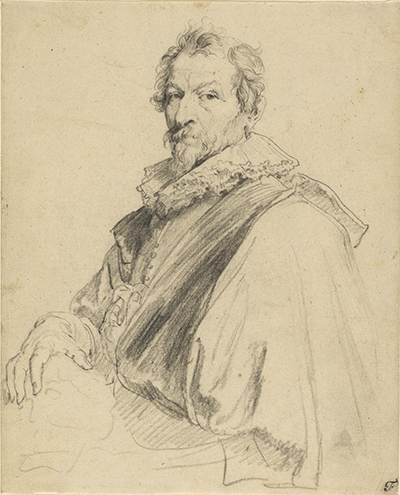
Anthony van Dyck gives his former teacher a sharply observed face and a body built from much freer strokes. In this small black-chalk portrait, Hendrik van Balen turns towards us above a broad ruff, with one hand resting on an antique head. The drawing belongs to the J. Paul Getty Museum and dates from about 1627–32. Its destination was the printed portrait series known as the Iconography . [1]
At a Glance
- Artist Anthony van Dyck
- Title in the Getty collection Portrait of Hendrick van Balen
- Date About 1627–1632
- Medium Black chalk
- Dimensions 24.4 × 19.7 cm, as recorded in the Getty's 1988 catalogue
- Collection J. Paul Getty Museum, Los Angeles
- Inventory number 84.GB.92
- Purpose Preparatory portrait for the Iconography . [1] [2]
This work across Anthony van Dyck’s career
Entry of Christ into Jerusalem
about 1617Frans Snyders
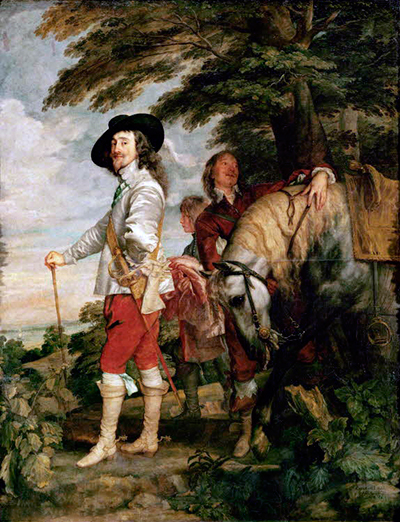
about 1620Hendrik van Balen (current article)
c. 1627–32Rinaldo and Armida
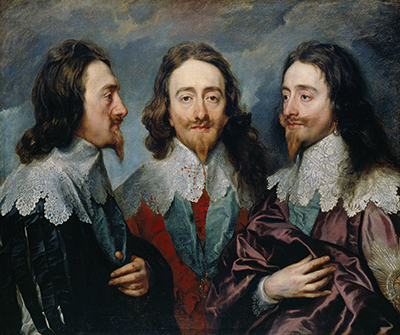
1629–1632; Louvre commentary proposes late1631–spring1632Charles I in Three Positions
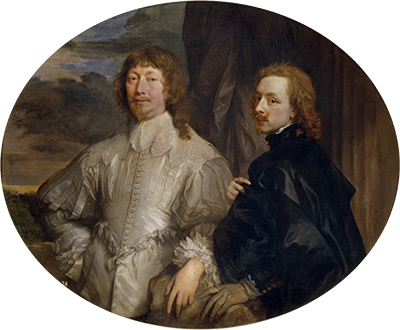
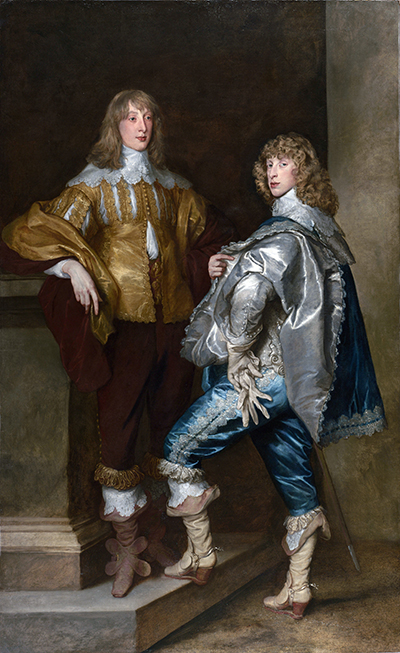
1635–before June 1636Lord John Stuart and his Brother
about 1638Cupid and Psyche
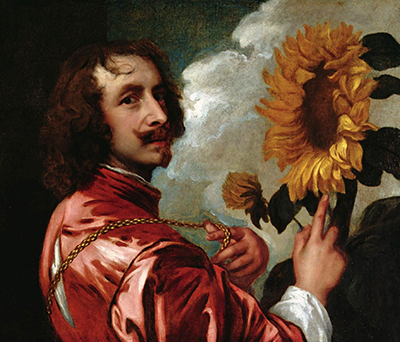
1639–40Self Portrait
c. 1640Contents
- A pupil portrays his former teacher
- Looking closely at the face and hair
- Ruff, cloth and the lightly drawn hands
- The antique head and the later grisaille
- From chalk portrait to Pontius's engraving
- A sheet preserved by collectors
A pupil portrays his former teacher
Van Balen was an Antwerp painter of religious and mythological subjects. The relationship behind this portrait reaches back to Van Dyck's apprenticeship: the Frick Collection cites the Antwerp guild rolls of 1610, which name the young Van Dyck as Van Balen's apprentice while his master served as dean. [1] [3]
A painter who had helped train Van Dyck now became the subject of his portraiture. Van Dyck differentiated the older artist's features with care, allowing himself considerable freedom elsewhere on the sheet.
The sitter's head is relatively small within the spreading outline of his clothes. His torso turns across the page, while his face comes back towards the viewer. This slight disagreement between body and head keeps the pose active. The ruff bridges them: its diagonal edge carries the turn of the shoulders upwards towards the chin. Even before the accompanying sculpture is recognised, the arrangement gives us a coherent figure, with weight, direction and a clear point of attention.
Looking closely at the face and hair
Begin with the eyes. Dark accents under the brows establish their position, while the bridge of the nose divides the illuminated forehead from the more shaded side of the face. The marks around the eyes are compact. Small shifts of direction suggest the folds beneath them without surrounding every feature with a continuous contour.
The forehead is comparatively open. Its pale surface has room to show between the short lines that describe wrinkles and the hairline. Against it, the hair becomes a series of irregular curls: a rising tuft near the crown, looping locks at the side, and a darker concentration beside the temple. These changes in density prevent the head from reading as a shape filled with an even grey. The line keeps finding a new task.
Below the nose, the moustache spreads sideways; the beard draws the face down to a narrow point. Individual dark strokes give the facial hair direction, but the outline also merges with softer shading. Follow the cheek towards the ear and the difference becomes especially clear. Some edges are firmly stated, while others depend on adjacent marks or remain lightly suggested. The face feels rounded because these different kinds of edge work together.
The close detail rewards looking at the drawing at its modest physical scale. A short stroke can stand for a fold beside an eye or a turn in a lock of hair. Enlarging the image makes those decisions easier to follow, but it also reveals how little material is needed to make the features legible. Van Dyck's drawings often invite this attention to the varying work performed by a line.
Watch: Van Dyck’s art and working methods
Choose a museum introduction, a specialist lecture or a conservation film to continue exploring Van Dyck’s work.
Stijn Alsteens: Drawing for Portraits
Stijn Alsteens explores how portrait drawings prepare and develop a likeness.
Watch on YouTubeRuff, cloth and the lightly drawn hands
The ruff presents another kind of complexity. Its projecting corners give it a firm overall shape, while small scalloped and broken marks suggest the ornament along its edge. Beneath the chin, a compressed band of dark chalk separates the pale collar from the clothing. This is a useful place to watch how the drawing handles white: much of the apparent brightness comes from the paper left between and around the marks.
The broad diagonal passage across the chest is drawn much more vigorously. Parallel strokes run with the fall of the cloth; deeper accents collect at folds and borders. The shading creates a dark wedge which anchors the upper body. Beside it, the large sleeve remains spacious and pale, enclosed by long curves and interrupted by only a few emphatic shadows. That contrast gives the costume breadth without requiring an equally dense description throughout.
The hands are lighter still. At the left of the image, fingers descend over a faintly indicated sculpted head. Their contours are readily visible, but the form beneath them almost dissolves into the paper. The other hand gathers cloth nearer the torso. [1] The difference in finish is conspicuous: the face holds together through many small adjustments, while the hands and the lower part of the composition remain more open.
It is tempting to read those differences as a record of the exact order in which Van Dyck worked. The sheet alone cannot establish that sequence. They do, however, organise our experience of it. We recognise the sitter first, then follow the broad sweep of his dress down towards the hands. The portrait supplies both a likeness and the larger arrangement in which that likeness will appear.
The antique head and the later grisaille
The sculpture becomes easier to understand through the related grisaille, a monochrome oil painting discussed by the Frick in 2016 as being at Boughton House. There the bust and a column are more fully developed. The Frick also notes plaster casts in Van Balen's widow's inventory as a possible inspiration for the sculptural motif. [3] That suggestion does not identify a particular surviving cast as the model.
On the chalk sheet, the sculpture's faintness makes an intriguing visual pairing. Van Balen's living face is strongly present above the ruff; the antique face is much harder to disentangle below his fingers. The contact between hand and head links the two, even though their degrees of definition differ. His touch brings the object into the portrait as something handled and known, rather than merely placed in the background.
The Getty associates this antique reference with the sitter's learning and refinement. [1] It also gives the hands a purpose within the composition. One rests on a solid form, while the other gathers flexible cloth. Their different actions join the figure to the surrounding objects and prevent the lower half of the portrait from becoming an inert support for the head.
From chalk portrait to Pontius's engraving
Paulus Pontius engraved the portrait for the Iconography . The Getty's 1988 catalogue identifies his print as approximately the same size as the drawing, with the composition reversed. It dates the sheet between the series' conception in 1627 and Van Balen's death in 1632, and records a fourth-state inscription praising his regard for antiquity. [2]
The passage between media is central to the drawing's purpose. Chalk can leave a broad, broken trail or a thin, searching contour within the same figure. An engraved portrait has to give those differences another visible form. The present sheet makes that problem easy to see: the compact face, the striped shading across the chest and the lightly outlined hands all ask for different treatment. Reversal also changes the direction in which the figure addresses the page, while preserving the relationships between the head, ruff and supporting arm.
The drawing, grisaille and engraving are distinct objects within that process. Their relationship helps explain why a preparatory sheet can combine a highly particular face with passages that remain comparatively spare. The broader history of the series belongs with Van Dyck's prints ; here, the rewarding comparison is the movement of this one likeness into another medium.
A sheet preserved by collectors
The Getty's 1988 catalogue traces the drawing through N. A. Flinck in Rotterdam and the second Duke of Devonshire at Chatsworth, then by descent to the 1984 Christie's sale. It records Flinck's collection mark in the lower right corner. [2] That small mark belongs to the drawing's later history, separate from the portrait Van Dyck made.
Artworks directory
A selected directory of paintings, drawings and prints, including works discussed in the articles and the Frick’s 2016 portraiture exhibition. It is not a complete catalogue of Van Dyck’s work. Print titles identify collaborators or later printmakers; disputed and workshop attributions are retained. The exhibition checklist supplies additional object records; current collection information governs the updated article entries. [4]
Frequently Asked Questions
He was an Antwerp painter and Van Dyck's former teacher. His subjects included religious stories and classical mythology. [1]
The engraving discussed here was executed by Paulus Pontius after Van Dyck's design. The Getty catalogue identifies the chalk sheet as preparatory to it. [2]
Discussion
Look again at the images and ideas explored in Hendrik van Balen. These editorial prompts invite your observations.
Reader Insights
How does your attention move between the detailed face and the much lighter hands?
What changes when you recognise the faint form beneath the fingers as an antique head?
Which qualities of the chalk marks would be hardest to carry into an engraving?
Join the Conversation
Share a detail, comparison or question about Hendrik van Balen below.
References
- J. Paul Getty Museum , Portrait of Hendrick van Balen , collection record and short commentary. English. View source .
- George R. Goldner , with Lee Hendrix and Gloria Williams, European Drawings 1: Catalogue of the Collections , J. Paul Getty Museum, 1988, entry 87, p. 196 (PDF p. 207). English. View source .
- The Frick Collection , Hendrick van Balen , Van Dyck: The Anatomy of Portraiture , 2016, object 37. English. View source .
- The Frick Collection, Van Dyck: The Anatomy of Portraiture, online exhibition checklist (2016). View source.