 by
Tom Gurney
Tom Gurney BSc (Hons) is an art history expert with over 20 years experience
Email:
tomgurney1@gmail.com
/ Phone:
+44 7429 011000
Portrait of Olivia Boteler Porter: Introduction
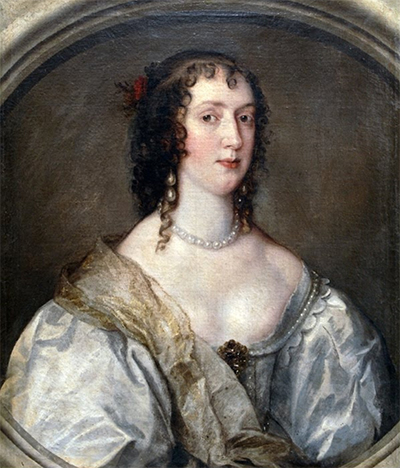
Olivia Boteler Porter looks out between dark curls and a sweep of gleaming satin. Her portrait at The Bowes Museum is now attributed to Anthony van Dyck and dated about 1637. [1]
At a Glance
- Artist Anthony van Dyck. [1]
- Title Portrait of Olivia Boteler Porter , also identified by the museum as Olivia, Mrs Endymion Porter . [1]
- Date About 1637. [1]
- Medium Oil on canvas. [2]
- Collection The Bowes Museum, Barnard Castle. [1]
- Subject Olivia Boteler Porter, who died in 1663. [1]
This work across Anthony van Dyck’s career
Entry of Christ into Jerusalem
about 1617Frans Snyders
about 1620Rinaldo and Armida
1629–1632; Louvre commentary proposes late1631–spring1632Charles I in Three Positions
1635–before June 1636Portrait of Olivia Boteler Porter (current article)
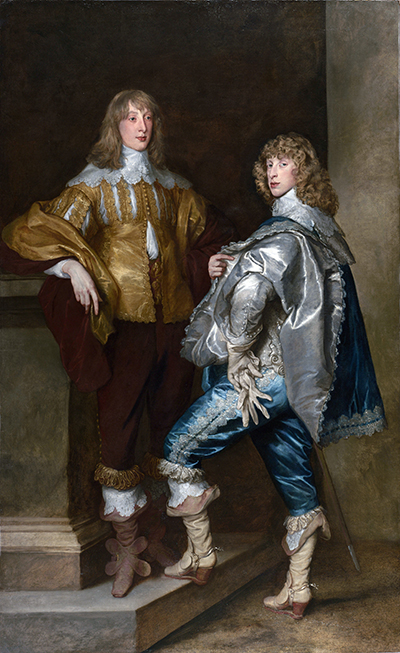
c. 1637 (current museum wording)Lord John Stuart and his Brother
about 1638Cupid and Psyche
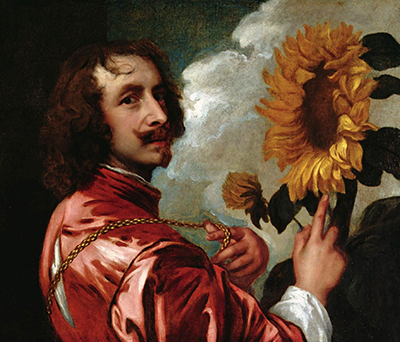
1639–40Self Portrait
c. 1640Contents
- Olivia and her court connections
- A face held between curls and pearls
- Satin, dark cloth and the red carnation
- The oval within the picture
- How the Bowes painting was recognised
- A new frame in 2018
Olivia and her court connections
Olivia was the daughter of Sir John Boteler and a niece of George Villiers, first Duke of Buckingham. [1] She served Queen Henrietta Maria as a lady-in-waiting; her husband Endymion Porter was Van Dyck’s friend and patron. [2] The image offers its own quieter introduction: a single woman, seen close enough for the small turns of her curls to matter.
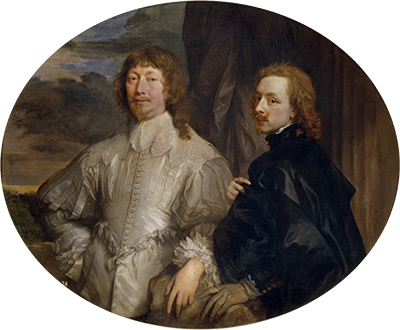
The Bowes portrait was formerly identified as Henrietta Maria. [2] That earlier identification is a reminder of how easily an elegant court likeness can become detached from the person it represents. Here the name Olivia restores a particular identity to the face. The related portrait of Endymion Porter with Van Dyck offers another route into this family connection, but Olivia’s portrait has a different visual purpose. Her likeness is organised around the meeting of face, jewellery and dress within a compact oval.
A face held between curls and pearls
The head turns slightly towards the picture’s right, while the eyes seem directed towards the viewer. That small difference keeps the pose from feeling fixed squarely in place. The nose and the shadow beside it make the turn legible; the far cheek narrows, while the nearer cheek receives a broader area of light. Pink touches on the cheeks and lips enliven a face otherwise built from restrained pale tones.
Look next at the hair. Small curls sit separately against the forehead, making dark hooks on the illuminated skin. At the sides they gather into a denser mass, with longer tendrils descending towards the shoulders. This changes the rhythm around the head: open loops above, darkness at the temples, then narrow falling strands beside the neck. The edge of the face remains easy to follow even where the individual curls become less distinct.
Pearls introduce a second kind of pattern. Their pale points stand out against the dark hair, and the necklace carries that brightness across the base of the throat. The necklace’s curve also marks a boundary within the broad expanse of exposed skin. Below it the chest opens towards the neckline; above it the long neck leads back to the chin. These simple relationships give the jewellery a compositional role as well as the appearance of an expensive adornment.
The eyes and mouth are comparatively small accents. Neither needs the broad white highlights that animate the sleeves. Dark marks at the eyes and the warmer line of the lips gather attention through their placement in the light face. The impression of a responsive presence comes from these painted relationships. It gives us no secure access to Olivia’s mood at the sitting or to the qualities of her personality.
Satin, dark cloth and the red carnation
The largest movements occur in the dress. The sleeves swell out on either side, filling much of the lower picture with white satin. Their shadows have a cool, grey cast, while the brightest ridges break into angular shapes. A fold can change direction sharply, moving from a broad light plane into a narrow dark crease. The fabric’s sheen becomes visible through those abrupt transitions.
Across the shoulder on the left of the picture lies a warmer, gold-brown fabric. It descends diagonally and gathers among the folds at the bottom. Its quieter highlights interrupt the cool brightness of the satin and lead the eye across the torso. The dark bodice forms a narrower area at the centre, with a small ornament near the neckline. Against the expansive sleeves it provides a point of concentration beneath the face.
The different materials also set different tempos. The sleeve folds are broad and irregular; the pearls form a measured sequence of small lights; the curls repeatedly tighten into loops. The eye can move among these patterns without losing the head as the principal focus. Much of the portrait’s elegance lies in this control of scale: a tiny bright bead, a curled strand and a large satin fold each have their own weight in the design.
A red carnation appears in the hair on the picture’s left. The museum has suggested a possible heraldic connection with the Villiers family, since carnations occur in portraits of other women in that family. [2] This remains a possibility. Visually, the small patch of red creates a warm accent among the curls, balancing the colour of the lips across the face. Its effectiveness as colour is evident even while its specific meaning remains open.
Watch: Van Dyck’s art and working methods
Choose a museum introduction, a specialist lecture or a conservation film to continue exploring Van Dyck’s work.
Adam Eaker: Sitting for Van Dyck
Adam Eaker considers portrait sittings, courtly identity and Van Dyck’s English reception.
Watch on YouTubeThe oval within the picture
The painted stone surround brings another texture into this encounter with skin, hair and cloth. Curving mouldings rise over the head and appear again beside the lower sleeves. Their repeated bands establish a firm boundary around the figure, with a dark inner edge helping to separate the stone from the space behind Olivia.
Within that opening, the background is subdued and largely unoccupied. There is little to pull the eye away into a room or landscape. The sleeves press close to the lower edges of the oval, so the bust occupies the opening generously. Above, the curve leaves just enough room around the hair to keep the head distinct. The result can suggest a likeness presented in a permanent architectural setting, although the stone itself is an illusion made in paint.
The curve is echoed more softly by the necklace and neckline. Against these enclosing arcs, the slanting drapery introduces movement. This interplay makes the compact format feel spacious enough for the shoulders and dress while retaining the intimacy of a head-and-bust portrait.
How the Bowes painting was recognised
John and Joséphine Bowes bought the painting in 1866; their museum opened in 1892. Poor condition contributed to its recording as School of Van Dyck. Bendor Grosvenor noticed it in the Public Catalogue Foundation’s photographic record, subsequently available through BBC Your Paintings. Conservation removed disfiguring varnish, making the skin, satin and drawing clearer. Van Dyck scholars then agreed on the attribution. The museum announced the result in March 2013, following a BBC Culture Show broadcast. [2] A later museum account names Christopher Brown in the verification of the painting. [3]
A coating that interferes with the relationship between light and dark can make carefully differentiated surfaces harder to judge. In this portrait, the viewer depends on distinctions between the softly shaded skin, the small bright pearls and the more abrupt lights of the satin.
Technical examination supplied a further perspective. A University College London case study identifies Libby Sheldon’s paint analysis as part of the collaborative attribution. It reports that the materials, including lead-tin yellow, supported an early seventeenth-century date and were consistent with Van Dyck’s known practice. The findings helped rule out a nineteenth-century origin. [4]
That result addresses an important question: whether the materials belong to the appropriate period. It cannot, by itself, name the painter or establish the exact year. Dating evidence and the assessment of authorship have related but distinct jobs. The current museum description, which gives Van Dyck and about 1637, expresses the resulting attribution. [1]
A new frame in 2018
The portrait’s later presentation has its own history. Borys Burrough made a new auricular frame for it in 2018, with advice from his tutor Gerry Alabone. The museum’s account describes a frame designed to suit the painting historically. [3] This was a modern commission, separate from the painted oval already surrounding Olivia.
Keeping those two borders in mind changes how one looks at the work. The stone moulding belongs to the represented space: its shadows and curves are painted alongside the figure. An external frame is a physical object through which the painting is presented to successive viewers. The 2018 commission adds a later act of interpretation to the portrait’s material history, without establishing what surrounded it when it first left the studio.
Artworks directory
A selected directory of paintings, drawings and prints, including works discussed in the articles and the Frick’s 2016 portraiture exhibition. It is not a complete catalogue of Van Dyck’s work. Print titles identify collaborators or later printmakers; disputed and workshop attributions are retained. The exhibition checklist supplies additional object records; current collection information governs the updated article entries. [5]
Frequently Asked Questions
No. Olivia was a separate person who served in the queen’s household. The portrait’s former identification as Henrietta Maria was revised. [2]
Its precise meaning is uncertain. A Villiers family connection has been proposed. [2] It also works as a small red accent beside the face; that visible effect does not settle its symbolism.
The museum commissioned a new auricular frame, completed in 2018. [3] The stone oval visible within the composition is painted, so it should be distinguished from the physical frame around the canvas.
Discussion
Look again at the images and ideas explored in Portrait of Olivia Boteler Porter. These editorial prompts invite your observations.
Reader Insights
How do the curls, pearls and satin use different patterns of light to direct attention towards Olivia’s face?
Does the painted oval make the portrait feel more intimate, more formal, or both? Which details shape your response?
How does knowing the history of the attribution affect the way you look at the painting’s surfaces?
Join the Conversation
Share a detail, comparison or question about Portrait of Olivia Boteler Porter below.
References
- The Bowes Museum , 125 Objects : Olivia, Mrs Endymion Porter. Current collection index, English. View source .
- CODART , Restored painting in the Bowes Museum recognized as an authentic portrait by Van Dyck, 12 March 2013. Museum announcement including Principal Keeper Jane Whittaker’s account, English. View source .
- The Bowes Museum , A Million Pound Commission, 2018. Account of Borys Burrough’s frame, English. View source .
- University College London , The benefits of Painting Analysis for conservation and our cultural heritage, REF2014 impact case study, p. 3. English. View source .
- The Frick Collection, Van Dyck: The Anatomy of Portraiture, online exhibition checklist (2016). View source.