 by
Tom Gurney
Tom Gurney BSc (Hons) is an art history expert with over 20 years experience
Email:
tomgurney1@gmail.com
/ Phone:
+44 7429 011000
Anthony van Dyck Quotes: Letters and Contemporary Accounts: Introduction
Anthony van Dyck’s surviving words bring us close to the practical business of an artist’s life: learning from another painter, arranging a journey and finding the right inscription for a portrait print. His letters and notebook offer a small, revealing documentary voice. Alongside them stand other people’s observations, ranging from an acquaintance’s account of his working priorities to a royal relative’s memory of his portraits. Each becomes more interesting when we know who is speaking, and why.
At a Glance
- Van Dyck’s own words a notebook inscription and letters, with translations identified below.
- Notebook encounter Sofonisba Anguissola, Palermo, 12 July 1624. [1]
- Dated letter to Francis Junius, 14 August 1636. [2]
- Undated letter to Sir Balthazar Gerbier, printed with Italian text and an English translation in 1844. [2]
- Other voices Edward Norgate, Giovan Pietro Bellori and Sophia of Hanover; their observations must be attributed to them. [3] [4]
- A useful distinction words written by Van Dyck, advice he recorded and comments about him carry different kinds of evidence.
Contents
- Sofonisba Anguissola’s advice on light
- A letter asking someone else for words
- An undated note to Sir Balthazar Gerbier
- Bellori on nobility and grace
- Edward Norgate on the purpose of drawing
- Sophia of Hanover remembers Henrietta Maria
- The will: a document with a particular purpose
- How to read an Anthony van Dyck quotation
Sofonisba Anguissola’s advice on light
Van Dyck’s Italian Sketchbook preserves his record of meeting Sofonisba Anguissola in Palermo on 12 July 1624. His inscription gives her age as ninety-six; that is the age he reported. He describes her alert memory and discusses her limited sight. While he was portraying her, she advised him about lighting:
“non devendo pigliar il lume troppo alto”
A short English translation here is: “one should not take the light from too high up.” The surrounding passage explains the practical concern: high light could make the shadows in wrinkles too large. These are Van Dyck’s written words recording Anguissola’s advice. The observation belongs to her within his account. [1]
The exchange offers a concrete question for looking at a portrait: how does the position of the light alter the face we see? It also preserves an older painter participating in the making of her image, offering professional judgement while she sat.
A letter asking someone else for words
On 14 August 1636, Van Dyck wrote to the scholar Francis Junius about his book De Pictura Veterum , which concerned ancient painting. The letter describes the favourable response of readers to whom Van Dyck had made the work available. He then turns to a particular request. A portrait of Sir Kenelm Digby had been engraved for publication, and he wanted Junius to:
“favour me with a little motto by way of inscription at the bottom of the plate”
This is the English translation printed in William Hookham Carpenter’s Pictorial Notices in 1844, on pages 55–56. Carpenter identifies the original letter as Dutch. The quoted English therefore gives us the wording of that nineteenth-century translation. [2]
It is an especially apt passage for anyone searching for Van Dyck quotations. Here the painter is asking a scholar to supply a phrase for one of his images. The letter makes the division of work visible: Van Dyck arranged for the portrait to be engraved and sought suitable words from Junius. It does not say that Van Dyck cut the plate himself. Carpenter’s accompanying note identifies an engraving by Robert van Voerst after Van Dyck, and proposes a connection between its motto and this request. His proposal should retain that degree of uncertainty. [2]
The sequence of the letter is revealing. Praise of a learned book leads into a practical commission for a short text. Art and scholarship meet through a specific task, with a picture intended to circulate beyond the painted original. A motto could help direct how a portrait was understood, giving the viewer a verbal point of entry into the sitter’s public image. The request is also courteous: Van Dyck presents Junius’s help as both a service and an honour. That phrasing belongs to a letter seeking a favour, and should be read with its occasion in view. [2]
For the distinction between an artist’s design and a printmaker’s work on a plate, see Van Dyck’s prints .
An undated note to Sir Balthazar Gerbier
Another brief letter concerns a journey to England. In the Italian note printed on page 62 of Carpenter’s book, Van Dyck asks Sir Balthazar Gerbier to suspend discussions with the Queen Mother of France and the Infanta until they can speak personally. Carpenter’s English translation gives the phrase:
“in my own person, and not through another.”
The note is undated in this printed presentation. Dates attached to neighbouring documents cannot safely be turned into an exact date for Van Dyck’s message. [2]
The immediate purpose is clear enough: he wants a pause in negotiations until he can take part directly. Read as a request to a particular intermediary, the sentence shows him trying to control the handling of his affairs. Turned into an isolated slogan, it would imply a general philosophy of independence that this short document cannot establish.
Carpenter also prints an annotation by Gerbier below the note. Gerbier complains that Van Dyck had not made himself available since writing it. This is a second voice on the page. It records Gerbier’s response to the situation; it does not disclose the artist’s reasons for failing to appear. A quotation collection that runs the two passages together would lose the exchange between them. [2]
Watch: Van Dyck’s art and working methods
Choose a museum introduction, a specialist lecture or a conservation film to continue exploring Van Dyck’s work.
Adam Eaker: Sitting for Van Dyck
Adam Eaker considers portrait sittings, courtly identity and Van Dyck’s English reception.
Watch on YouTubeBellori on nobility and grace
In his 1672 life of Van Dyck, Giovan Pietro Bellori praised “a certain nobility to the heads and grace to the poses”. This retrospective judgement is quoted here through Stijn Alsteens’s 2016 essay A Portraitist’s Progress . [3]
The pairing invites us to look from the head to the arrangement of the figure. What does the pose contribute to the person’s apparent authority or ease?
Edward Norgate on the purpose of drawing
Edward Norgate, who knew Van Dyck in Italy and London, described his preference for spending time on painting over elaborate drawing. His account includes “it is but a drawing”, quoted through Alsteens. These are Norgate’s words about the painter’s priorities. [3]
Van Dyck’s surviving drawings invite us to examine what those preparations actually did.
Sophia of Hanover remembers Henrietta Maria
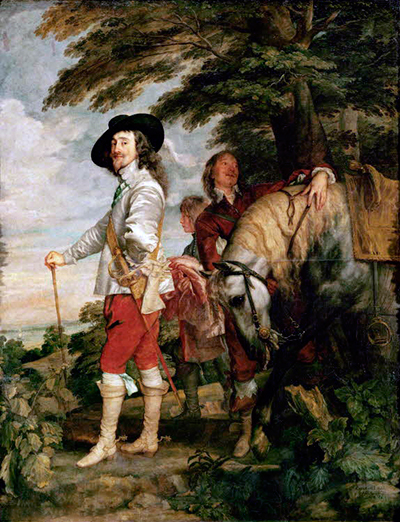
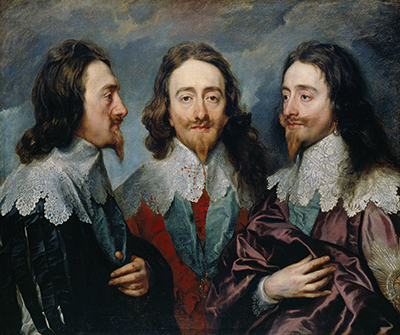
One frequently repeated passage about Van Dyck’s royal portraits comes from Sophia of Hanover, Charles I’s niece. As the National Portrait Gallery explains, she recalled being surprised when she first saw Henrietta Maria in 1641 after knowing the queen through beautiful portraits by Van Dyck. In the Gallery’s excerpt, she remembers finding a smaller and less imposing person than she had expected. Henrietta Maria is the subject of the recollection; Sophia is the speaker. [4]
This is a retrospective, subjective encounter. It tells us about the expectations a portrait could create and the response of one viewer. It cannot serve as an objective measurement of the queen’s appearance or as proof that the painter deliberately deceived his audience. Remembered disappointment and a painted likeness are different kinds of testimony.
The will: a document with a particular purpose
Van Dyck’s will, dated 4 December 1641 and printed by Carpenter on pages 75–77, begins with conventional religious and legal language about the certainty of death and the uncertainty of its hour. Extracting that formula as an original Van Dyck aphorism would give the document a misleading character. It is a formal testament arranging what should happen to his property and dependants. [2]
Its particular provisions tell us more. The text makes arrangements for his daughter Maria Teresa through resources in Antwerp and for his wife and newborn daughter through his English estate. It also includes bequests to the poor of St Paul’s and Blackfriars and to household servants. These details locate his obligations across two cities and within a household. They give the words their human setting without requiring us to imagine a spoken deathbed scene. [2]
How to read an Anthony van Dyck quotation
A reliable quotation needs more than a famous name beneath it. A letter has a recipient and an immediate purpose; an inscription can contain somebody else’s advice; a memoir brings the later perspective of its writer. Translation adds another layer. The English words printed in an 1844 edition cannot automatically be treated as the artist’s own choice of English expression.
The useful questions are straightforward. Who wrote the passage? Was the writer recording personal experience, reporting another person’s speech or making a judgement about a picture? When was the account written, and in which language? If the passage survives through a later translation, does the quotation identify that edition?
Those questions allow these texts to remain vivid. The request to Junius can be read as a courteous professional approach. The Gerbier note can retain its urgency without becoming a personality diagnosis. Anguissola’s advice can remain attached to the painter who offered it. Quotation then helps us understand the circumstances in which words were used, as well as preserving a memorable phrase.
Artworks directory
A selected directory of paintings, drawings and prints, including works discussed in the articles and the Frick’s 2016 portraiture exhibition. It is not a complete catalogue of Van Dyck’s work. Print titles identify collaborators or later printmakers; disputed and workshop attributions are retained. The exhibition checklist supplies additional object records; current collection information governs the updated article entries. [5]
Frequently Asked Questions
Yes. Letters and the Italian Sketchbook preserve words written by him. Two useful examples are the dated letter to Francis Junius and the undated note to Gerbier discussed above. Their English wording here comes from Carpenter’s 1844 translations. Authenticity of the underlying document and the wording of a particular translation are related questions that should both remain visible. [2]
His notebook records that advice from Sofonisba Anguissola during their Palermo encounter. It should be credited to her as reported by Van Dyck. [1]
It shows Van Dyck arranging publication of an engraved Digby portrait and asking a scholar to contribute its inscription. The picture’s conception, the engraving and the selection of words involved distinct contributions. Carpenter’s proposed identification of the resulting motto is an editorial suggestion, so the letter should not be made to prove more than its actual request. [2]
The remark comes from Norgate’s account of his priorities, quoted through Alsteens. It describes preparation in relation to painting, rather than establishing a rule about every drawing. [3]
The recollection discussed here was written by Sophia of Hanover about seeing the queen. It concerns Sophia’s response to a person she had first encountered through portraits. [4]
It can be read for its declared wishes and practical arrangements, with attention to its formal language. Its opening about mortality belongs to the conventions of a legal testament. Its provisions for family, servants and charitable gifts are more specific evidence of the obligations he chose to record. Neither element supplies a transcript of his final conversation. [2]
Discussion
Look again at the images and ideas explored in Anthony van Dyck Quotes: Letters and Contemporary Accounts. These editorial prompts invite your observations.
Reader Insights
How does knowing the recipient and purpose of a letter change your reading of a memorable phrase?
In a portrait you know, how do the lighting of the face and the arrangement of the body shape the sitter’s presence?
What can a viewer’s later memory tell us about a portrait, and where do its limits begin?
Join the Conversation
Share a detail, comparison or question about Anthony van Dyck Quotes: Letters and Contemporary Accounts below.
References
- British Museum , Sofonisba Anguissola: Italian Sketchbook folio, 1957,1214.207.110. Italian inscription with English collection commentary. View source .
- William Hookham Carpenter , Pictorial Notices, Consisting of a Memoir of Sir Anthony Van Dyck , London, 1844, pp. 55–56, 62 and 75–77. English translations of letters, Italian text of the Gerbier note and English will transcription. View source .
- Stijn Alsteens , A Portraitist’s Progress , in Van Dyck: The Anatomy of Portraiture , The Frick Collection and Yale University Press, 2016, pp. 1–5, published excerpt. English; source for the Bellori and Norgate passages quoted here. View source .
- National Portrait Gallery , Meet the King and Queen and their ‘Principalle Paynter’, 21 October 2015. English; includes an excerpt from Sophia of Hanover’s recollection. View source .
- The Frick Collection, Van Dyck: The Anatomy of Portraiture, online exhibition checklist (2016). View source.