 by
Tom Gurney
Tom Gurney BSc (Hons) is an art history expert with over 20 years experience
Email:
tomgurney1@gmail.com
/ Phone:
+44 7429 011000
Entry of Christ into Jerusalem: Introduction
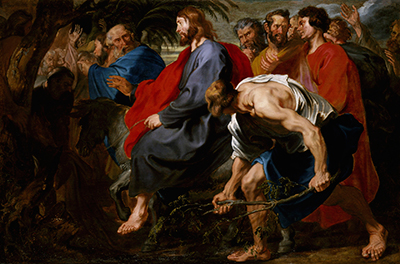
A man bends low across Christ’s path, gripping leafy branches with both hands. His bare back catches the light; behind him, heads and hands crowd together around the arriving rider. In The Entry of Christ into Jerusalem , dated about 1617, Anthony van Dyck gives a biblical welcome the weight and urgency of bodies sharing a narrow space. [1]
At a Glance
- Artist Anthony van Dyck
- Title The Entry of Christ into Jerusalem
- Date About 1617
- Medium Oil on canvas
- Canvas dimensions 59½ × 90¼ inches, approximately 151.1 × 229.2 cm
- Collection Indianapolis Museum of Art at Newfields
- Accession number 58.3
- Subject Christ’s arrival in Jerusalem, welcomed with branches and garments. [1] [2]
This work across Anthony van Dyck’s career
Frans Snyders
about 1620Rinaldo and Armida
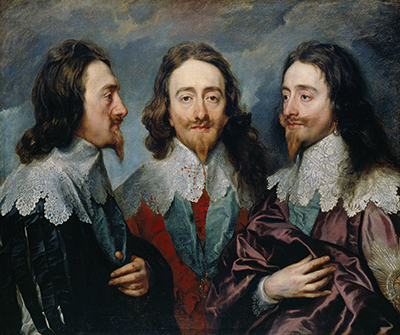
1629–1632; Louvre commentary proposes late1631–spring1632Charles I in Three Positions
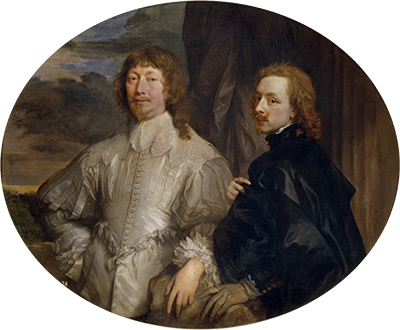
1635–before June 1636Lord John Stuart and his Brother
about 1638Cupid and Psyche
1639–40Self Portrait
c. 1640Contents
- A welcome made visible
- The man with the branches
- Christ among the moving bodies
- A crowd with little room to spare
- An early painting in Rubens’s orbit
- The painting’s later journey
A welcome made visible
Matthew’s Gospel describes Jesus approaching Jerusalem by way of Bethphage and the Mount of Olives. He sends two disciples to fetch a donkey and her colt; they place clothes on the animals, and he rides towards the city. People spread garments along the road, while others cut branches from trees and lay them in his path. The crowd ahead and behind calls out its welcome to the son of David. [2]
Van Dyck brings that act of preparation into the foreground. The man with the branches has to stoop, reach and balance himself as the procession comes close. His action makes the story legible even before the viewer has sorted out the faces. The welcome is something people do with their hands, their clothes and the things they can gather beside the road.
The animal also matters to the Gospel’s meaning. Matthew connects the arrival with a prophetic promise of a king coming in meekness, riding a donkey. The crowd’s acclaim and the modest mount belong together: this is a royal welcome whose form carries a religious claim. [2] Van Dyck keeps the rider surrounded by people at close quarters.
Matthew ends the arrival with a question from the stirred city: “Who is this?” The multitude answers by identifying Jesus as the prophet from Nazareth in Galilee. The following episode takes him into the temple, where he overturns the traders’ tables and heals those who come to him. [2] The painting concentrates on the encounter at the entrance to the city. Its many faces invite us to consider how a crowd sees and responds to the figure passing through it.
The man with the branches
The most forceful body belongs to someone without a name. At the right, the branch-bearer’s bent back forms a broad diagonal. Pale cloth has slipped away from much of his upper body, exposing the shoulder and arm, while darker blue fabric gathers below. His head drops towards the action of his hands. One bare foot stretches towards the lower right corner, anchoring the pose close to the edge.
Follow his hands and the composition begins to move. The branches travel across the lower foreground towards the left, cutting across the direction of his braced leg. Above them, his back leads the eye towards the standing figures. These different angles give the stooping action a sense of effort: the body turns and reaches while the procession presses behind it.
The branches are comparatively thin and irregular beside the mass of the arm. Van Dyck lets a small narrative object organise a large stretch of the picture. Leaves break up the dark area near the ground, and the stems carry our attention across forms that would otherwise merge into shadow. The gesture is practical, yet its scale within the composition makes it a principal expression of the welcome.
The figure’s prominence also changes our position as spectators. We seem to stand near the roadside, where a bending body can fill the view and partly obscure the people beyond. Looking past him requires the same adjustment that looking through an actual gathering might require. Christ remains visible, but the picture makes us encounter the surrounding people as well.
Watch: Van Dyck’s art and working methods
Choose a museum introduction, a specialist lecture or a conservation film to continue exploring Van Dyck’s work.
Alejandro Vergara: Van Dyck and the Problems of Youth
Alejandro Vergara examines the ambitions and problems of Van Dyck’s early career.
Watch on YouTubeChrist among the moving bodies
Christ sits to the left of centre, his head raised above the lowered head of the branch-bearer. A red mantle opens across the darker blue-grey of his clothing. The red is easy to follow even where the folds overlap and turn into shadow: it draws a clear path around the seated figure and towards his extended hand.
His gesture is less strained than the movements around him. The hand held out towards the left and the relatively upright head give him a steadier presence within the restless group. The rider and the branch-bearer occupy different rhythms within the same event.
A bare foot hangs below the heavy folds. This small exposed shape helps connect the elevated seated body with the darker area beneath it. The donkey’s subdued presence keeps attention on the human meeting, while still establishing the kind of arrival described in the Gospel. Much of the animal disappears among cloth, limbs and shadow, so the picture asks us to recognise the subject through several connected signs: rider, mount, branches and greeting hands.
Colour helps hold those signs together. The blue-cloaked older man ahead of Christ, the warm ochre clothing behind him and the red garment at the right create distinct patches within a dense gathering. They keep one figure from dissolving entirely into the next. The bright flesh of the foreground shoulder has another effect, pulling the eye forward towards the surface of the painting.
A crowd with little room to spare
Faces cluster across the upper part of the canvas. Some appear in profile; others turn more towards us or emerge only partly from behind a neighbour. Raised hands add to the pattern of heads. The crowd has a shared direction, but its members do not repeat one identical pose. Their varied angles make the gathering feel as though it is taking shape around a moving centre.
The setting offers little relief from this concentration. A dark tree rises at the left, with foliage spreading overhead. Patches of grey sky open above the figures, yet the space between the people remains compressed. No detailed panorama is needed to make the arrival convincing. The meeting itself supplies the event’s scale.
This is a useful place to slow down. Start with Christ’s face, follow his extended hand towards the people ahead, then return through the dark lower forms to the branches. From there, the branch-bearer’s arm and back lift the eye into the heads at the right. The route shows how a crowded scene can remain readable without giving each participant a separate area.
An early painting in Rubens’s orbit
Newfields relates the muscular foreground figure and crowded composition to the young Van Dyck’s response to Peter Paul Rubens . Its label notes Rubens’s high praise of him in 1618; the painting may date as early as the previous year, when Van Dyck was eighteen. [1]
The relationship is especially useful when looking at the branch-bearer. Anatomy becomes an instrument of storytelling: the turn of a shoulder and the stretch of an arm give the religious action physical force. Yet the picture also rewards attention to the smaller interruptions within that force—the irregular branches, the differences between adjacent faces and the places where one body hides another.
For the broader chronology, Van Dyck’s Antwerp years provide the surrounding story. Here the early date matters because it allows us to meet a painter already testing how much activity a canvas can hold. The work gives a particularly direct introduction to his religious and mythological paintings : meaning emerges through the relationships between bodies, gestures and a recognisable narrative action.
The painting’s later journey
Newfields traces the canvas through Paul Mersch in Paris, a Berlin sale in 1905, Rudolf Kohtz by 1909 and Paal Kaasen by 1924. It later passed through Colnaghi before its purchase for Indianapolis in 1958 with funds from Mr and Mrs Herman C. Krannert. [1] These later ownership records leave the original commission unresolved.
Artworks directory
A selected directory of paintings, drawings and prints, including works discussed in the articles and the Frick’s 2016 portraiture exhibition. It is not a complete catalogue of Van Dyck’s work. Print titles identify collaborators or later printmakers; disputed and workshop attributions are retained. The exhibition checklist supplies additional object records; current collection information governs the updated article entries. [3]
Frequently Asked Questions
It belongs to the Indianapolis Museum of Art at Newfields, accession number 58.3. [1]
He bends to bring leafy branches into Christ’s path. Matthew describes people cutting branches and spreading them along the road as part of the welcome. [2] Van Dyck gives the action unusual prominence through the figure’s exposed back, reaching arms and widely braced stance.
Matthew 21 refers to branches cut from trees without specifying a species. [2] The important connection here is between the painted branches and the crowd’s preparation of the road. Naming every plant in the picture would require more specific evidence.
The Gospel supplies the larger narrative of Jesus, disciples and the welcoming multitude. [2] It does not provide a name for each person represented in this composition. Different ages, clothes, head angles and gestures help distinguish the figures visually without establishing individual identities.
Discussion
Look again at the images and ideas explored in Entry of Christ into Jerusalem. These editorial prompts invite your observations.
Reader Insights
How does the branch-bearer’s position affect the order in which you notice the figures?
Which gestures make this gathering feel like a welcome, and how do they relate to Christ’s own gesture?
What changes in your reading of the scene when you concentrate on the dark, partly concealed donkey?
Join the Conversation
Share a detail, comparison or question about Entry of Christ into Jerusalem below.
References
- Indianapolis Museum of Art at Newfields , The Entry of Christ into Jerusalem , accession 58.3. View source .
- Bible Gateway , Matthew 21 , King James Version, English translation from Greek; especially verses 1–17. View source .
- The Frick Collection, Van Dyck: The Anatomy of Portraiture, online exhibition checklist (2016). View source.