

 Buy Art Prints Now
from Amazon
* As an Amazon Associate I earn from qualifying purchases.
Image reference [image]
 by Tom Gurney
Tom Gurney BSc (Hons) is an art history expert with over 20 years experience
Published on August 14, 2026 / Updated on August 14, 2026
Email: tomgurney1@gmail.com / Phone: +44 7429 011000
The Missal: Introduction
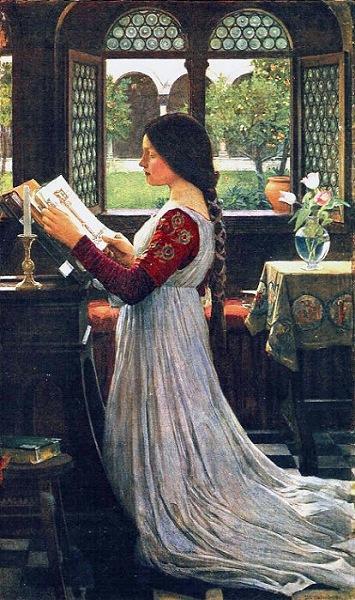
John William Waterhouse's The Missal places reading between two kinds of illumination. A young woman studies a large open book beside a candle, while daylight enters through leaded windows and reveals a garden beyond. The page requires close concentration; the room opens towards leaves, fruit and air. Devotion is therefore both enclosed and connected with the visible world.
Exhibited in 1902 alongside The Crystal Ball, the painting forms an instructive pair. One woman looks into an object associated with occult vision; the other reads a Christian liturgical book. Both are absorbed, solitary and framed by historicising interiors. Waterhouse does not reduce either woman to an answer. He paints the act of seeking knowledge—through text in one picture and a reflective sphere in the other—while keeping the content of what is learned beyond the viewer. [1] [2] [3]
At a Glance
- ArtistJohn William Waterhouse
- Date1902 [1]
- MediumOil on canvas [1]
- Approximate dimensions120.7 × 78.7 cm [4]
- CollectionPrivate collection [4]
- ExhibitionRoyal Academy, 1902 [1] [2]
- Companion exhibitThe Crystal Ball [1]
- SubjectA young woman reading a large missal in a historicising interior
- What a missal containsTexts, prayers, chants and directions for celebrating Mass [5]
- Key visual contrastCandlelit book and daylight garden
Contents
- Introduction
- What The Missal shows
- What a missal is—and what it is not
- Reading as the central action
- Candle and window: two kinds of light
- Interior and garden
- Dress, hair and historical atmosphere
- The Missal and The Crystal Ball
- Books in Waterhouse's art
- Devotion, agency and the viewer
What The Missal shows
A woman in a pale dress with richly coloured sleeves bends or stands close to a large open volume supported at reading height. Her long dark hair is braided. A candle rises beside the book, while a tall window or glazed opening fills the background with daylight and a view into a planted court or garden.
The room includes carefully selected domestic and devotional details: patterned cloth, flowers in a vessel, furniture, tiled or structured floor and leaded glazing. Waterhouse does not crowd the interior. Each object contributes to an atmosphere of cultivated seclusion.
The woman's face is turned towards the pages. She does not look at the garden, the candle or the spectator. Her attention establishes the book as the narrative centre even though the page is not made legible to us.
That withholding is crucial. A painting of a reader can either disclose the text through title and legible inscription or make reading itself the subject. The Missal does both partially. The title identifies the class of book, but no specific Mass, feast or passage is securely recoverable from the reproduced page.
The scene is quiet, yet not static. Eyes move across writing; hands support or approach the volume; candle flame changes; daylight travels through the room. Waterhouse makes small forms of time replace external action.
What a missal is—and what it is not
A missal is a service book containing the texts required for the celebration of Mass across the liturgical year. Depending on period and use, it can include prayers, readings, chants, responses and ceremonial directions. [5] [6]
It is not simply another word for Bible. A Bible gathers scriptural books. A missal organises worship, incorporating scriptural passages within the sequence of the Mass along with prayers and instructions. Calling the woman “reading the Bible” loses the specificity supplied by Waterhouse's title.
Nor is every missal necessarily an illuminated medieval book. Missals existed as handwritten and printed books, could be richly decorated or relatively functional, and served clergy or private devotion in different circumstances. The book in the painting appears large and precious, but the accessible image does not allow a secure identification with one specific historical volume.
Illumination refers to hand-painted decoration, often using gold, silver and rich colour. [6] Waterhouse's interest in an elaborate page would connect naturally with Pre-Raphaelite admiration for medieval book art, but technical and iconographic claims about the exact opening should wait for a clear object study.
The title nevertheless changes the woman's activity from general learning into relation with ritual. She may be preparing, studying, praying or meditating upon the text. The painting does not establish her clerical role, and she should not be labelled a nun without evidence in dress or documentation.
This careful terminology protects interpretation. “Devotional reader” describes the visible and titled relation. “Nun reading Scripture” adds two claims that the work may not support.
Reading as the central action
Reading is difficult to paint because its decisive event occurs inwardly. The body may barely move while attention travels through words, memory and imagination. Waterhouse uses posture to make that inward movement visible.
The woman's inclination brings face and page into a narrow circuit. Her braided hair leads the eye down her back towards the book. The volume's open spread answers the width of shoulders and sleeves, converting reading into a stable bodily arrangement.
The spectator remains outside that circuit. We can see that she reads but not read over her shoulder with confidence. This respects the privacy of the act while allowing it to become exhibition spectacle.
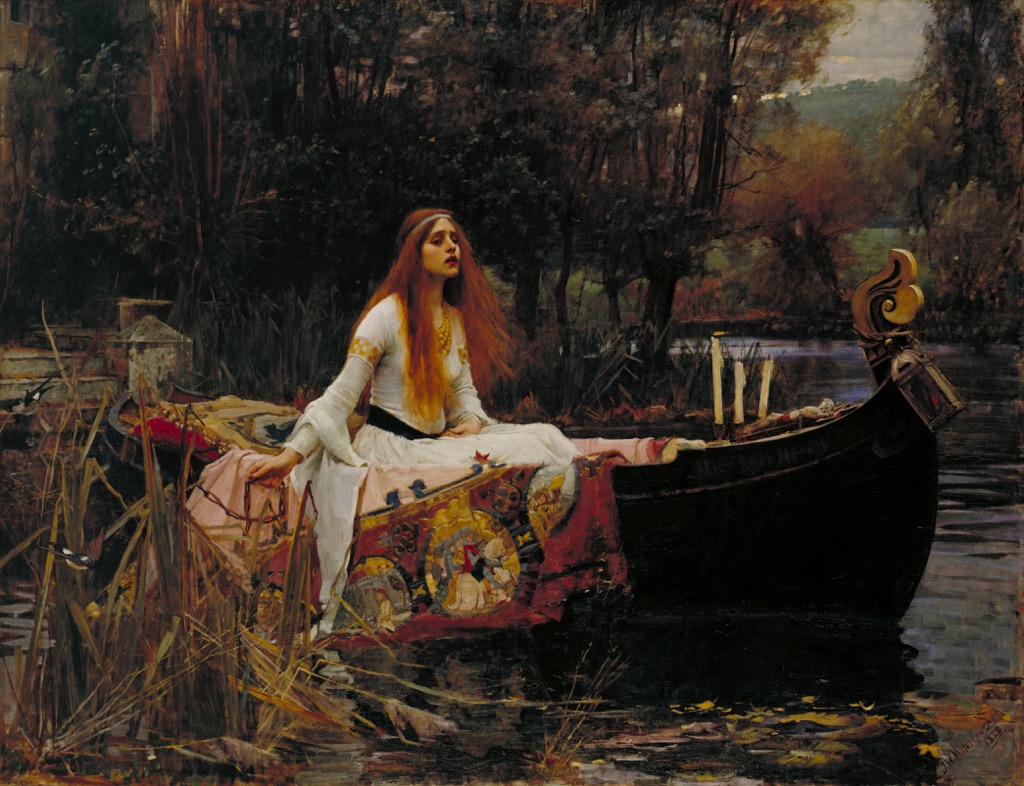
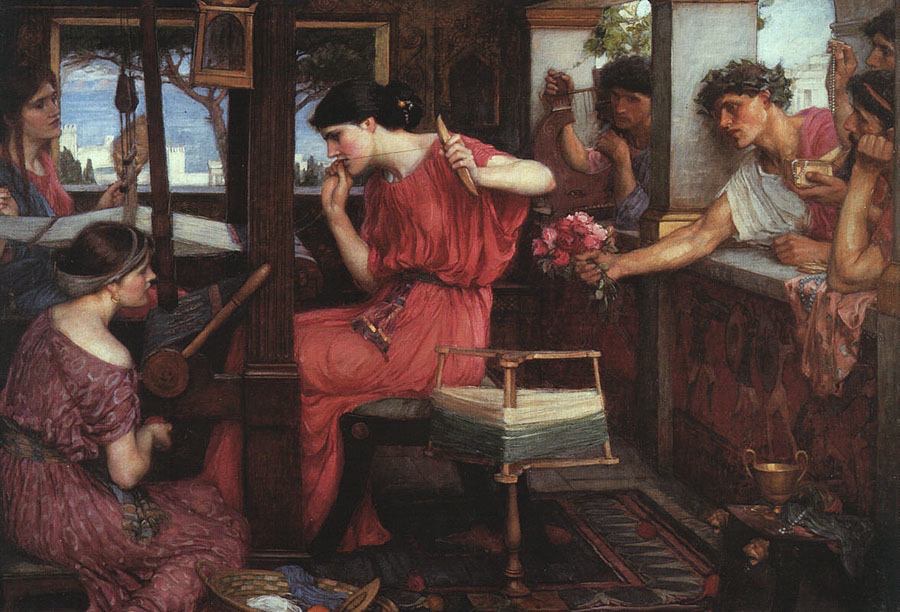
Her solitude differs from passive waiting. Reading is work: attention must be held, text interpreted and ritual language remembered. Waterhouse's literary women are often described as dreamers, yet several are engaged in making, reading or purposeful observation. Penelope weaves, Psyche approaches forbidden knowledge, the Lady of Shalott creates a web and this woman studies a service book.
The page also offers authority beyond the room. A missal belongs to a community and calendar of worship. Even if the reader is alone, the text connects her with repeated words and collective ritual.
At the same time, private reading can personalise formal religion. The woman encounters the book outside a visible church congregation. Waterhouse creates a devotional interior in which institutional text becomes individual experience.
Candle and window: two kinds of light
Light is both practical and symbolic in The Missal. A candle stands beside the reader, while an open or glazed window admits natural light. Each source belongs to a different scale.
The candle is local. It can illuminate the page, signal sustained attention and recall the use of lamps in worship. Its small flame requires protection and proximity. It is made and tended by human action.
Daylight is expansive. It arrives from outside, filling the window and revealing garden growth. Within Christian interpretation it can suggest divine illumination or creation, but the painting does not require one fixed allegory. It first establishes time, atmosphere and spatial depth.
The two lights need not compete as spirit and nature. Their cooperation makes reading possible. Waterhouse often unites inherited sacred or literary activity with sensuous natural observation. Here written ritual and living garden occupy one field of vision.
The candle may appear unnecessary in a bright room, which makes it semantically visible. It could indicate early or changing light, a devotional practice continued beyond practical need, or simply the painter's desire for a warm vertical accent. Any one explanation should remain provisional.
The page itself becomes a third luminous area. Pale paper or parchment receives both candle and daylight. If decoration includes colour or gold, it returns light rather than generating it. Illumination in the book-maker's sense and illumination in the spiritual sense overlap without becoming identical.
Interior and garden
The window is not a flat backdrop. It opens the room towards foliage, fruit trees or a planted court. The woman's mind remains with the book, while the spectator's eye is invited beyond it.
This creates a division of attention. She reads inward and downward; we look both at her and outward through the architecture. Waterhouse gives the spectator a mobility denied to a figure concentrating on one task.
Gardens in his work can signify enclosure, desire, cultivation and changing seasons. In The Soul of the Rose, a wall makes scent intimate. In Psyche Opening the Door into Cupid's Garden, a threshold separates curiosity from paradise. In The Missal, garden and room are visually connected but functionally distinct.
The fruit tree can suggest fertility, knowledge, paradise or the cycle of seasons, yet no precise species or symbolic programme should be asserted from a reproduction alone. Its most secure role is to make the exterior living, abundant and different from the still interior.
Leaded or stained glass complicates the threshold. Glass allows light and partial sight while maintaining separation. The reader remains sheltered, but the world beyond is present. This balance between enclosure and aperture recurs throughout Waterhouse's interiors.
The historicising room is not a documented medieval site. Patterned textiles, arches, old furniture and glazing create a composite past. Waterhouse's aim is not to reconstruct the original setting of one surviving missal. He makes a believable environment for contemplative reading.
Dress, hair and historical atmosphere
The woman's dress combines pale flowing fabric with red or richly patterned sleeves. Colour directs attention to her upper body and hands, the area nearest the book.
Long braided hair contributes to the historical register. It distinguishes the figure from a formal Edwardian portrait sitter while preserving a practical order suitable for reading. The braid is both decorative line and bodily detail.
The costume should not be dated too precisely without dress-historical evidence. Waterhouse's late interiors draw upon medieval, Renaissance and Aesthetic visual languages rather than illustrating an exact year. “Medievalising” or “historicising” is safer than naming a court or century from appearance alone.
Nor does costume identify the model. Waterhouse repeatedly transformed contemporary sitters through imagined dress. The person who posed has not been securely named in the cited sources.
Her clothing also mediates between body and devotion. It is beautiful but not ostentatiously ceremonial. The red sleeves bring warmth into the room; the pale skirt joins window light. Visual pleasure is not excluded from a religious subject.
Waterhouse's attention to cloth parallels the missal's materiality. Both dress and book are crafted surfaces carrying pattern. The reader is surrounded by human making: weaving, binding, glazing, furniture and painting itself.
The Missal and The Crystal Ball
Waterhouse exhibited The Missal and The Crystal Ball at the Royal Academy in 1902. [1] [2] Their pairing is one of the most productive in his career.
Both paintings centre a solitary young woman in an old interior. Each woman is absorbed by a rounded or opened object that promises access to knowledge. Neither acknowledges the viewer. Candles, architectural openings and carefully arranged furnishings turn private concentration into pictorial drama.
The difference lies in authority. A missal contains an organised, communal Christian liturgy. A crystal ball is associated with divination and images not guaranteed by institutional text. One offers fixed words interpreted through reading; the other offers reflection or vision interpreted through occult practice.
Waterhouse does not caricature either seeker. The crystal gazer is not shown as fraudulent or monstrous, and the reader is not reduced to pious stereotype. Both possess seriousness.
This parallel complicates easy accounts of Waterhouse as choosing religion or magic. His deeper subject is mediated knowledge. Books, mirrors, vessels, pools and spheres allow figures to encounter something absent from ordinary sight.
The exhibition audience could compare the works on the same visit. Their relation should therefore be preserved in internal linking, but the two paintings must remain separate pages. The Crystal Ball has its own provenance complication: a skull visible in an early photograph was later painted over and subsequently restored. [3] That object history does not belong to The Missal.
Books in Waterhouse's art
Waterhouse was an active reader and used literature across his career. The 2008–10 retrospective included volumes of Tennyson and Shelley associated with sketches or annotations, alongside studies and sketchbooks. [7]
Books in the finished paintings can be sources of authority, private escape or structured memory. They differ from the texts outside the image that inspired a subject. The Lady of Shalott comes from a poem, but the heroine does not read it. The Missal makes the physical book itself the visible action.
The open volume also belongs to a long tradition of Annunciations, saints and learned women represented with books. Waterhouse's 1914 Annunciation would address sacred revelation more directly. In The Missal, no angel or miracle interrupts reading.
This absence makes study dignified. The woman does not require supernatural spectacle to justify attention. The extraordinary event is sustained concentration.
The book's material size matters. A large volume supported on a stand or surface implies weight and communal or liturgical use rather than a pocket book casually held. Page turning becomes a bodily task.
Waterhouse withholds legible text, so literary quotation should not be invented for the open book. No biblical verse should be inserted merely because it fits the mood. The title gives genre; the exact words remain unknown.
Devotion, agency and the viewer
The reader's agency is quiet but real. She has chosen or accepted the act of reading and controls her attention. No male instructor, priest or observer appears within the scene.
The spectator nevertheless gains visual access to a private interior. As in The Shrine and The Soul of the Rose, Waterhouse makes a woman's inward experience available without reciprocal gaze. This creates intimacy and asymmetry at once.
Her modest historical dress and religious book can encourage idealisation as purity. Such language should be used carefully. The painting represents concentration; it does not provide a moral biography of the model.
Similarly, “contemplating life” is too vague if it displaces the visible book. A missal contains specific liturgical material. The woman may experience private reflection, but the picture grounds it in reading.
The garden can tempt the spectator away from the page, yet she does not turn. Her discipline contrasts with Waterhouse figures whose glance crosses a forbidden threshold. Psyche opens; Pandora lifts; this reader remains within an authorised text.
That difference does not make the work less dramatic. It shifts drama from transgression to attention. In an exhibition crowded with large narratives, a woman reading could assert stillness as a form of power.
Exhibition, reproduction and evidence limits
The Missal was shown at the Royal Academy in 1902 with The Crystal Ball. [1] [2] Waterhouse was already a full Academician and an experienced exhibitor. The paired concentration of the two works would have been visible to contemporary audiences even if reviews evaluated them separately.
The painting was reproduced in Rose Sketchley's 1909 lifetime survey of Waterhouse. [4] That reproduction indicates continued importance within accounts of his career, while also reminding modern readers that period illustrations could not fully convey colour.
The work is recorded in a private collection, with dimensions around 120.7 × 78.7 centimetres in later scholarship. [4] Publicly accessible object information is thinner than for a museum painting. Exact provenance, frame, technical examination and current condition should not be invented.
Interpretation should therefore distinguish secure object facts from visual description. Date, artist, title and Academy exhibition are stable. Identification of every plant, illuminated-book decoration or architectural source requires additional evidence.
The current location is sometimes repeated more specifically online, but the accessible authoritative source set used here does not justify publishing a private owner's identity or address. “Private collection” is sufficient.
The original scale gives the figure substantial presence. A narrow web reproduction can make the picture resemble a decorative book illustration; at more than a metre high, the reader approaches the viewer's bodily scale.
That scale also changes the relation between viewer and book. The volume is not a tiny accessory supplied merely to identify “learning.” Its open pages occupy enough space to become a second presence beside the figure. A detail of the candle, hands and opening can be useful, but it should never substitute for the full composition: the garden aperture is necessary to the painting's balance of inward reading and outward life.
The title should remain The Missal rather than being expanded to an unsupported devotional scene such as Woman Reading the Bible. Plain-language explanation can clarify the term while preserving Waterhouse's more exact designation. This both improves clarity and protects the historical difference among Bible, book of hours and Mass book.
That exactness is essential to the interpretation's value.
Related Pages
- The Shrine: Compare another Waterhouse painting where private devotion and sensory attention unfold in a narrow, enclosed setting.
- Saint Cecilia: Follow another religiously inflected subject from Waterhouse, centred on absorbed attention and inward experience.
- Psyche Opening the Golden Box: Set The Missal beside another scene of a solitary woman approaching knowledge through a charged object.
Frequently Asked Questions
It is a liturgical book containing prayers, readings, chants and directions for celebrating Mass through the church year. [5]
The title identifies the book as a missal, not simply a Bible. A missal includes scriptural readings within a wider liturgical structure.
Waterhouse also showed The Crystal Ball in 1902. [1]
No source used here securely identifies her as a nun. She is best described as a woman reading a missal in a historicising interior.
It provides local light and can suggest devotion or spiritual illumination, but no artist statement fixes one symbolic meaning.
It is recorded in a private collection. [4]
The model is not securely named in the cited sources. Repeated Waterhouse facial types do not prove identity.
Discussion
The Missal makes reading visible without surrendering its content. The title tells us what kind of book lies open; the page itself remains private. That balance preserves religious specificity while refusing to turn the painting into a sermon illustration.
The paired lights deepen the effect. A candle attends human concentration; daylight opens the room to a garden. Crafted text and living nature meet without requiring the woman to choose between them.
Reader Insights
Which visible detail most changes the way you read this page?
Which source or comparison helps the work feel less familiar and more specific?
What question would you bring back to the painting after reading?
Join the Conversation
Share your reading of this page below.
References
- Image reference
- Wikimedia Commons, “File: John William Waterhouse - The Missal.JPG,” object data for The Missal (1902), oil on canvas, and public-domain image record. View source
- Royal Academy, Royal Academy Pictures, 1902, digitised exhibition volume. View source
- Christie's, “The Crystal Ball,” catalogue essay on the 1902 companion painting, exhibition and object history. View source
- R. E. D. Sketchley, The Life and Work of Mr. J. W. Waterhouse, R.A., Art Annual, 1909, lifetime reproduction and catalogue information; bibliographic record cited by the Art Gallery of New South Wales. View source
- Hill Museum & Manuscript Library, “Missal,” manuscript lexicon defining contents and ceremonial role. View source
- Victoria and Albert Museum, “Illuminated Manuscripts,” definition, materials and collection context including missals. View source
- Royal Academy of Arts / Victorian Web, “J. W. Waterhouse: The Modern Pre-Raphaelite,” retrospective account including Waterhouse's literary volumes and sketchbooks. View source