


 Winslow Homer.jpg)
 by Tom Gurney
Tom Gurney BSc (Hons) is an art history expert with over 20 years experience
Published on June 19, 2020 / Updated on August 2, 2026
Email: tomgurney1@gmail.com / Phone: +44 7429 011000
Contents
- Introduction
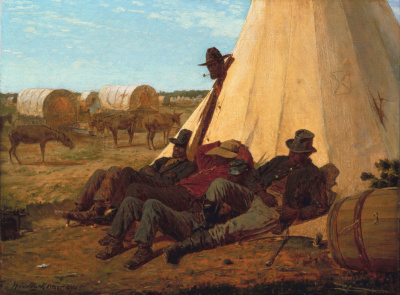
- From Illustration To Oil Painting
- Civil War And Postwar Painting
- Rural Childhood, Leisure And The 1870s
- Reconstruction And Black Subjects
- Fishing Communities And The Sea
- Prouts Neck, Weather And Late Nature
- How To Browse The Paintings
Introduction
Winslow Homer's paintings give readers one of the clearest routes through his career: the Civil War artist who learned to watch people closely, the postwar painter of childhood and leisure, the artist of Reconstruction tension, the observer of fishing communities, and finally the Prouts Neck painter who made sea, weather and animal life feel larger than human control. [1]
This guide is designed as a browse guide rather than a simple list. Some Homer paintings are famous because they feel instantly readable, like boys in a sailboat or children playing in a field. Others resist easy reading: soldiers pause between war and civilian life, freedwomen meet the old social order face to face, fishermen turn back toward fog, and late seas strike the rocks without needing a human figure at all. Taken together, the paintings show Homer changing the scale of American subject matter. He could make a small rural game, a working boat, a rescue line or a breaking wave carry the weight of history. [2]
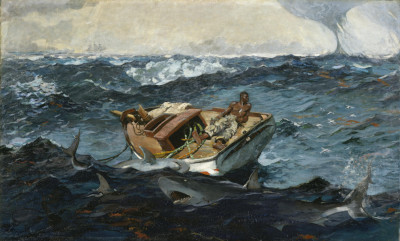
Use the painting pages from here in two ways. If you want the major landmarks first, begin with The Gulf Stream, Breezing Up, Prisoners from the Front, Snap the Whip, The Fog Warning, The Fox Hunt, The Life Line and A Visit from the Old Mistress. If you want the career story, move chronologically from the Civil War and postwar figure pictures into rural leisure, Reconstruction, fishing communities, Prouts Neck, and the late works about weather, hunting and the sea. [3]
From Illustration To Oil Painting
Homer did not begin as a museum painter. He trained in the world of commercial imagery, working as a lithographer and illustrator before becoming closely associated with Harper's Weekly. That background matters because his paintings rarely feel like detached academic exercises. Even when the surface becomes richly painterly, the scene is usually built around observation: a posture, a pause, a piece of work, a boat's position, a line of weather on the horizon. [4]
The move from illustration into oil painting did not mean that Homer abandoned narrative. It meant that he slowed narrative down. In illustrated reportage, a scene often has to declare itself quickly. In many Homer paintings, the event is held at the point of uncertainty. A soldier looks at prisoners; a fisherman measures the distance to a schooner; a child turns inside a game; a shipwrecked figure drifts in a sea that carries political and historical force. The paintings ask readers to look longer because Homer often withholds the final explanation. [5]
The relationship between oil painting and watercolor also matters. Homer worked across media throughout his mature career, and the medium hubs is best read together. Oil painting often carried the public, exhibition-facing weight of his reputation, while watercolor gave him mobility, speed and a laboratory for color and light. The paintings hub therefore includes works that belong to a legacy browse structure rather than a perfectly purified medium taxonomy. Some listed subjects overlap with watermedia, travel and print culture. Until the module is formally reviewed, that overlap is best treated as part of the inherited browse pathway, not as a problem to solve casually. [6]
Civil War And Postwar Painting
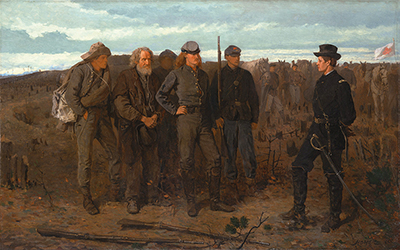
The Civil War gave Homer one of his first major public subjects. His work as an artist-correspondent and illustrator trained him to notice the ordinary mechanics of military life as well as the public drama of conflict. Prisoners from the Front is the essential painting in this phase. It turns an encounter between Union authority and Confederate prisoners into a careful study of class, rank, defeat and aftermath. The scene is not battlefield spectacle. It is a political and human pause at the edge of surrender. [7]
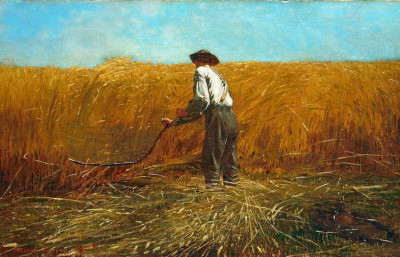
That restraint is one of Homer's strongest early qualities. He often avoids the obvious climax. Rather than painting war as a single heroic event, he attends to what war does to bodies, clothing, stance and social relation. Later Civil War aftermath works, including The Veteran in a New Field, extend that pressure into peacetime. The veteran's return to agricultural labor can seem quiet at first glance, but the subject carries the memory of service, loss and national repair. [8]
The paintings from and after the war also help explain why Homer became such a compelling American painter. He did not need grand allegory to make public history visible. A field, a uniform, a group of men on a road, or the silence after an encounter could do the work. That approach continues through the rest of the career: large histories often enter through ordinary scenes. [9]
Rural Childhood, Leisure And The 1870s
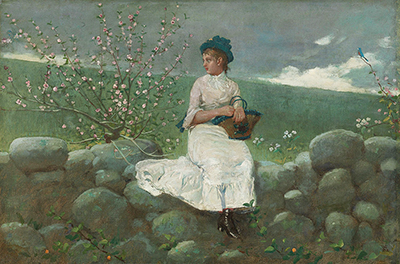
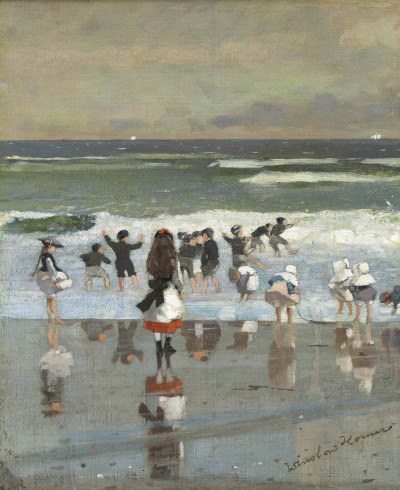
Homer's 1870s paintings can look lighter than the Civil War works, but they are not minor interludes. Children in fields, boys in boats, croquet players, beachgoers, vacationers and rural figures gave him a way to study modern American life after the war. These paintings are often bright, open and legible, yet their structure is rarely casual. [10]
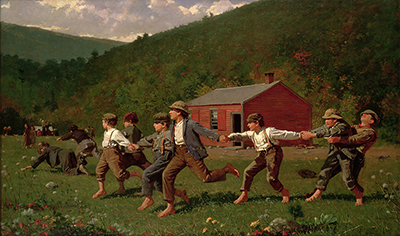
Snap the Whip is the key rural childhood painting. It presents play as energy, balance and risk: bodies strung together, motion about to break, a schoolhouse and open field setting the game inside a recognizable American landscape. Breezing Up (A Fair Wind) works differently, but it also turns youth and motion into a broader national image. The boys and man in the boat are not just a pleasant family group. They carry a sense of skill, trust, weather and direction that made the painting one of Homer's central public successes. [11]
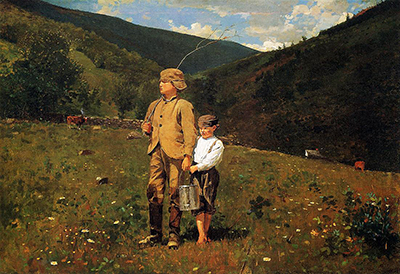
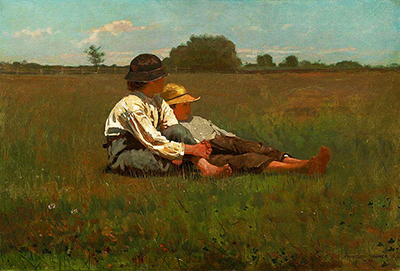
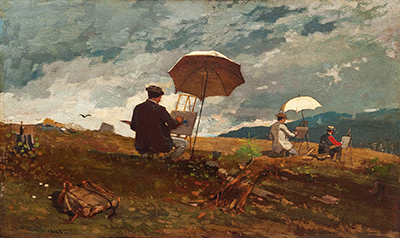
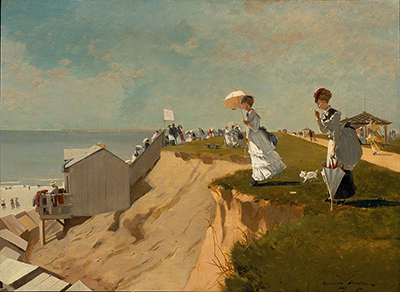
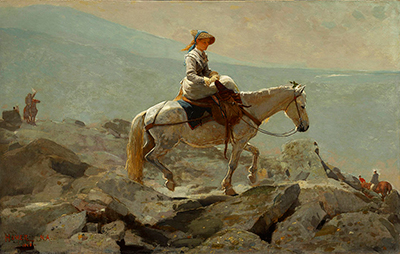
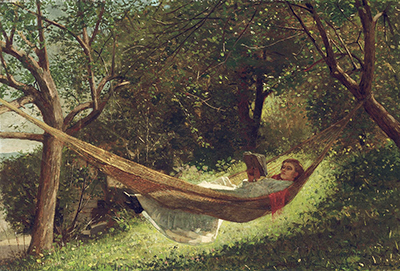
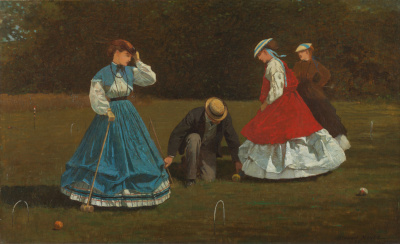
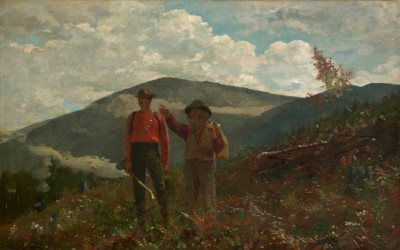
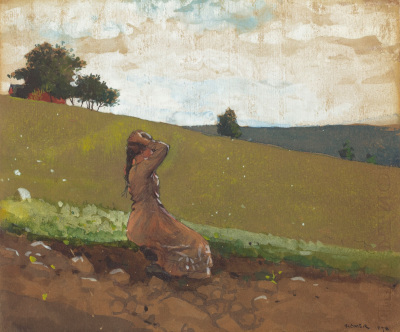
Other rural and leisure subjects broaden the middle career. Croquet Scene, Crossing the Pasture, Boys in a Pasture, Girl in the Hammock, Long Branch, New Jersey, Eagle Head, Manchester, Massachusetts (High Tide) and White Mountain subjects all belong to the world of postwar recreation, childhood, tourism and regional identity. Homer treats these subjects without pretending that leisure is empty. His figures often stand, wait or move inside a world shaped by class, gender, work and national recovery. [1]
This is also the period in which Homer's trip to France is best handled carefully. The sources support a broader international awareness, especially around modern subjects, light and composition, but they do not require a simple story of direct avant-garde conversion. Homer's painting career develops through contact with many visual worlds: American illustration, European exhibition culture, outdoor observation, watercolor practice, and a growing commitment to subjects close to modern life. [2]
Reconstruction And Black Subjects
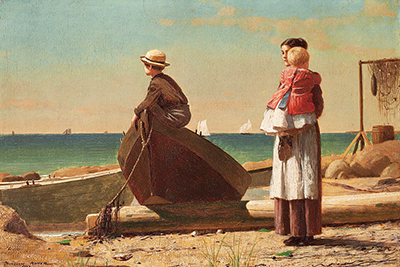
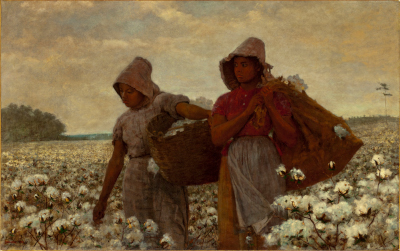
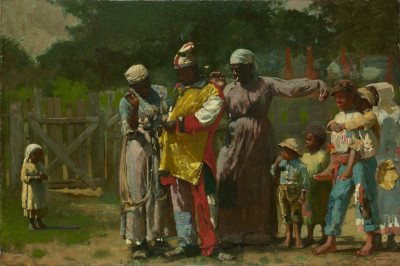
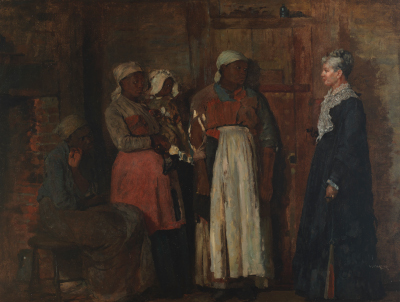
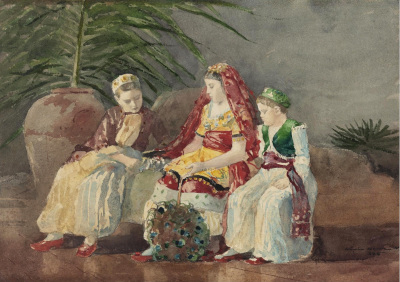
Homer's Reconstruction-era paintings require a slower kind of looking. Works such as A Visit from the Old Mistress, The Cotton Pickers, Dressing for the Carnival and The Bright Side sit within the aftermath of slavery and the uncertain social order of the post-emancipation United States. These pictures should never be reduced to genre scenes without history. [3]
A Visit from the Old Mistress is the most direct encounter. Homer arranges the scene around a meeting between Black women and a former enslaver or mistress figure. The painting's force comes from posture, spacing and withheld speech. It does not resolve the new relationship into comfort. Instead, it lets the viewer feel the tension of a society in which legal freedom has arrived but social power, economic pressure and memory remain present. [4]
The Cotton Pickers approaches the same historical field through labor and landscape. Two women stand in a cotton field, monumental but not sentimentalized. The painting asks the viewer to see endurance and uncertainty together. Cotton is not neutral scenery in a Reconstruction picture; it carries the history of forced labor, the plantation economy and the difficult futures facing Black workers after emancipation. [5]
Fishing Communities And The Sea
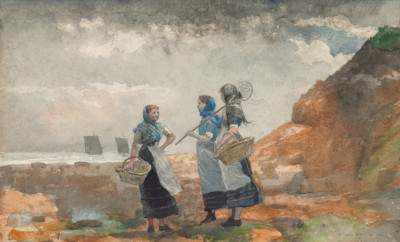
In the 1880s Homer's work turns with new intensity toward fishing communities, coastal labor and the sea. His time in Cullercoats and Tynemouth in England sharpened his interest in working coastal figures, especially women and fishing families. After he settled at Prouts Neck in Maine, marine subjects became even more central. [6]
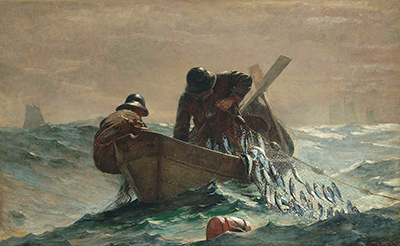
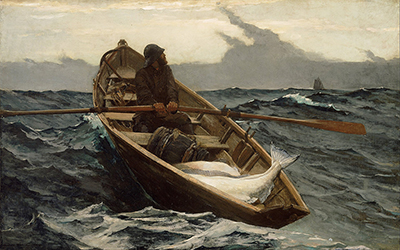
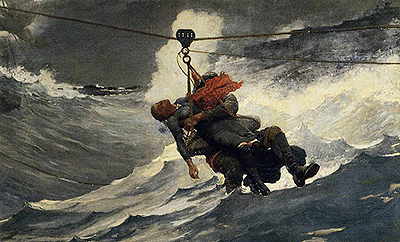
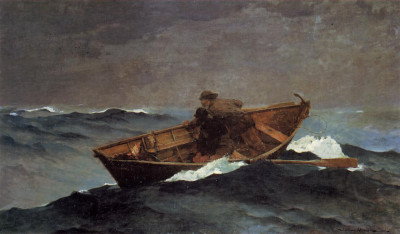
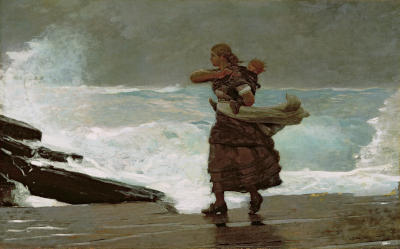
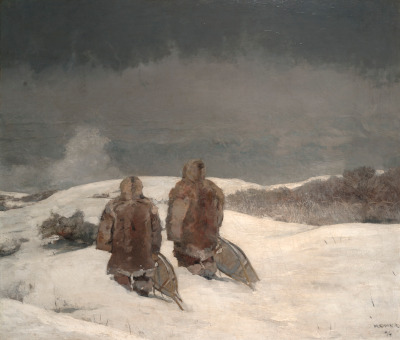
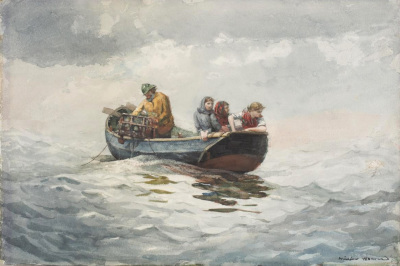
The shift is visible in works such as The Herring Net, The Fog Warning and The Life Line. These paintings are not simple seascapes. They are pictures of labor, risk and dependence. A dory is small against open water. A fisherman must read weather as a matter of survival. A rescue apparatus turns modern technology into drama. A net, a buoy line or a distant schooner can become the structural hinge of the whole painting. [7]
The Herring Net emphasizes teamwork and the physical scale of fishing work. The Fog Warning isolates a fisherman at the moment when success may become danger. The Life Line turns coastal rescue into a modern subject, with the human body suspended between disaster and safety. Together, these paintings show Homer moving from anecdote toward pressure. The story remains present, but the sea begins to dominate the terms of the story. [8]
These works also connect the paintings hub to the watercolors hub. Homer studied coastal places across media, and some of his most important observations of fishing communities appear on paper. The medium distinction is useful for browsing, but the career itself is connected. A reader who starts with the marine paintings should also visit the watercolors and the Cullercoats-related pages as those rebuilds mature. [9]
Prouts Neck, Weather And Late Nature
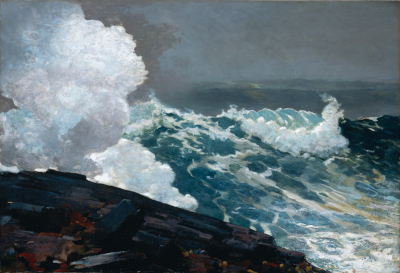
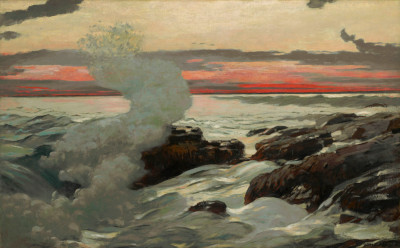
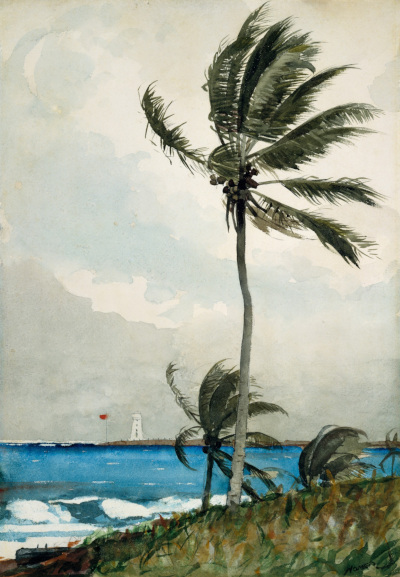
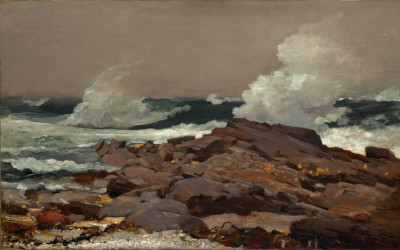
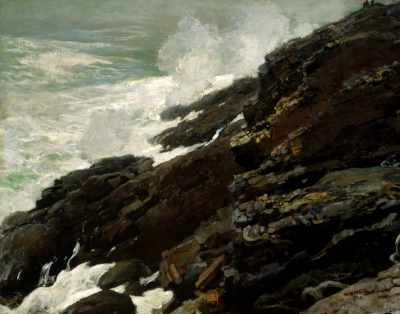
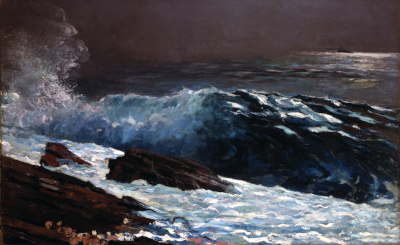
Prouts Neck changed the scale of Homer's late painting. The Maine coast gave him a place where rock, surf, weather and distance could become subjects in their own right. In the late marine works, human drama often recedes or disappears. What remains is force: water hitting stone, wind reshaping a surface, light crossing a cliff, or a storm reducing human control to a small part of a larger natural order. [10]
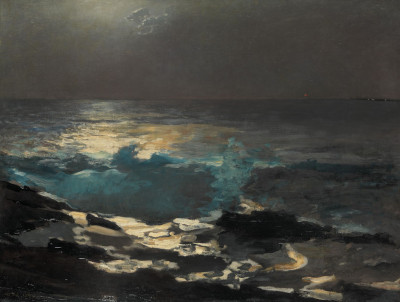
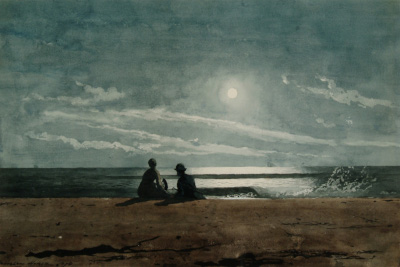
Northeaster, High Cliff, Coast of Maine, Sunlight on the Coast, Moonlight, Wood Island Light, West Point, Prout's Neck, Eastern Point and Moonlight all belong to this late coastal field. The paintings are not empty landscapes. They are studies of encounter: rock against water, light against weather, stillness against impact. Homer's restraint becomes more severe here. He does not need a crowd or a narrative device to create tension. [11]
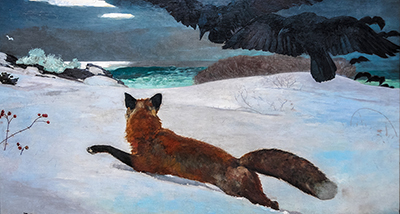
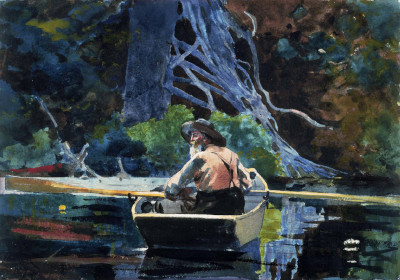
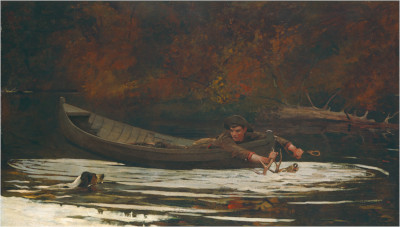
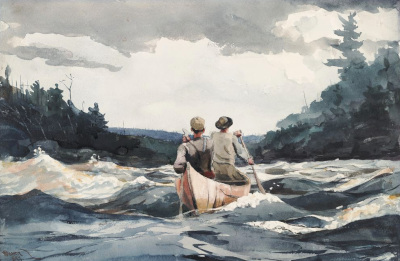
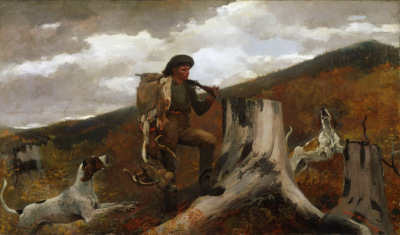
The late hunting and animal pictures belong beside the seascapes because they also explore nature without sentimental comfort. The Fox Hunt, Homer's largest painting to that point, places the viewer inside a winter scene of pursuit, hunger and survival. Hound and Hunter, A Huntsman and Dogs, Below Zero, Two Guides and related Adirondack or hunting subjects extend the same interest into woods, snow, sport and mortality. [1]
By the end of the career, Homer's paintings often feel both direct and unstable. The objects are clear: rocks, waves, birds, boats, bodies, guns, nets, dogs, foxes. The meaning is less settled. Is the sea a workplace, a threat, a route of empire, a field of rescue, or a force beyond human story? Homer keeps returning to that question without closing it down. [2]
How To Browse The Paintings
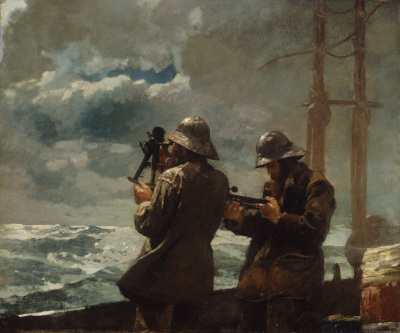
For a quick path through Homer, start with four works: Prisoners from the Front for the Civil War and public history, Breezing Up for postwar confidence and childhood, A Visit from the Old Mistress for Reconstruction, and The Gulf Stream for the late career's global and marine power. Add The Fog Warning, The Herring Net and The Life Line to understand fishing, rescue and labor. Add The Fox Hunt and Northeaster to see how late Homer turns nature into the main actor. [3]
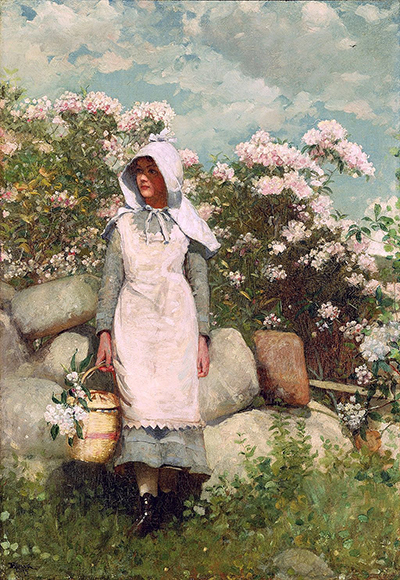
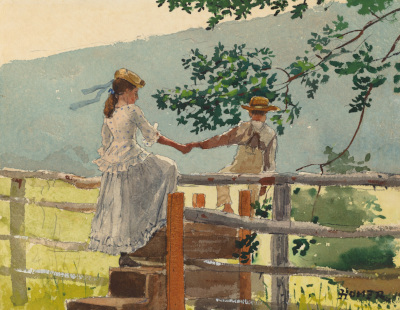
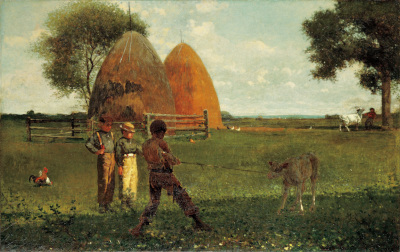
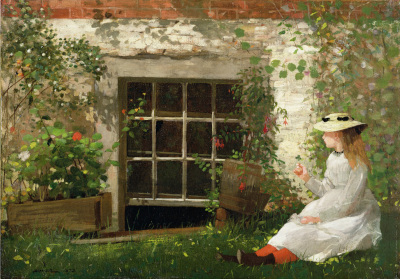
For childhood and leisure, move through Snap the Whip, Crossing the Pasture, Boys in a Pasture, Croquet Scene, Girl in the Hammock, Four Leaf Clover, Weaning the Calf, On the Stile and Long Branch, New Jersey. These works show Homer treating play, rest and rural life as serious modern subjects. [4]
For Reconstruction and Black subjects, read A Visit from the Old Mistress, The Cotton Pickers, Dressing for the Carnival and The Bright Side together, with attention to the historical context each page provides. These works is best handled as a focused interpretive pathway, not as isolated genre pictures. [5]
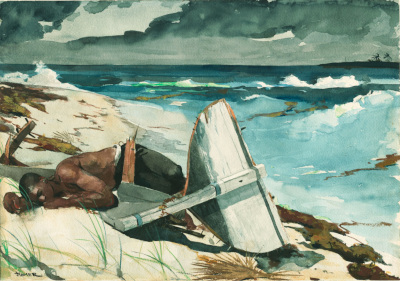
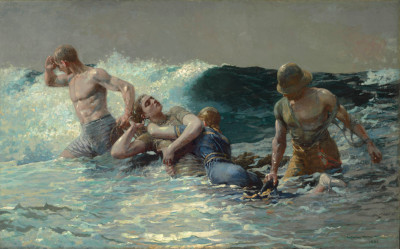
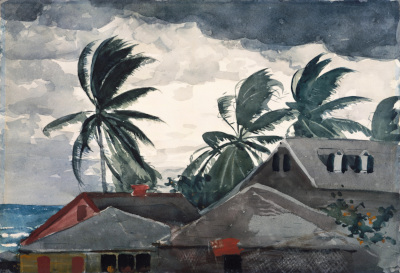
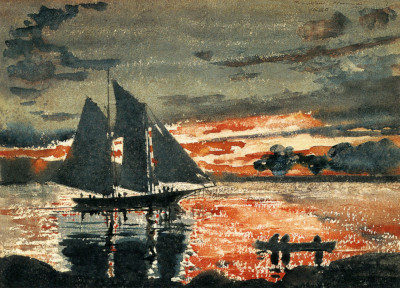
For the sea, follow The Herring Net, The Fog Warning, The Life Line, Undertow, Lost on the Grand Banks, After the Hurricane, Bahamas, The Gulf Stream, Northeaster, High Cliff, Coast of Maine, Sunlight on the Coast and Sunset Fires. This path shows the sea moving from workplace to peril to elemental force. [6]
The existing Paintings module below remains the practical browse engine for this article. Its visible links is best preserved until a later Tom-approved module plan decides whether to reclassify, replace images, add new candidates or reorganize the grid. [7]
Browse The Works
 Winslow Homer.jpg)
Discussion
Winslow Homer rewards close looking because his strongest images rarely close down into one easy meaning. Use the prompts below to test how the work changes as you move between subject, place, medium and history.
Reader Insights
First Look
What detail in Paintings changes how the whole work feels?
Homer's Method
Where do you see Homer's balance between clear observation and unresolved meaning?
Cluster Context
Which related Homer work helps you read this page more carefully?
Join the Conversation
Share a thoughtful observation below, especially if a detail, source connection or related Homer page changed the way you read the work.
References
- National Gallery of Art artist record: https://www.nga.gov/artists/1401-winslow-homer
- National Gallery of Art, Winslow Homer publication: https://www.nga.gov/research/publications/winslow-homer
- Smithsonian American Art Museum artist record: https://americanart.si.edu/artist/winslow-homer-2283
- Archives of American Art, Winslow Homer collection biographical note: https://www.aaa.si.edu/collections/winslow-homer-collection-6714/biographical-note
- Portland Museum of Art, Winslow Homer Studio: https://www.portlandmuseum.org/visit/winslow-homer-studio-tours/
- National Gallery, London, Force of Nature introduction: https://www.nationalgallery.org.uk/exhibitions/past/winslow-homer-force-of-nature/introduction-to-winslow-homer
- Metropolitan Museum of Art Timeline essay, Winslow Homer: https://www.metmuseum.org/essays/winslow-homer-1836-1910
- Art Institute of Chicago, Watercolors by Winslow Homer: The Color of Light overview: https://archive.artic.edu/homer_exhb/overview/
- Art Institute of Chicago, Color of Light about page: https://archive.artic.edu/homer/about/
- Art Institute of Chicago, Color of Light exhibition themes: https://archive.artic.edu/homer_exhb/exhibthemes/
- Page-level source packets and object-record leads recorded in the local Winslow Homer Phase 1A files dated 2026-07-20.