 by Tom Gurney
Tom Gurney BSc (Hons) is an art history expert with over 20 years experience
Published on June 19, 2020 / Page Updated on November 5, 2026
Email: tomgurney1@gmail.com / Phone: +44 7429 011000
Introduction
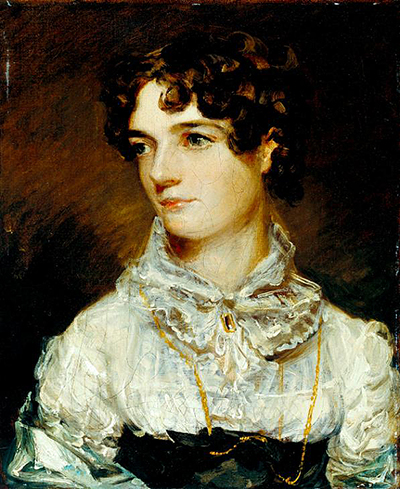
John Constable's Portrait of Maria Bicknell is one of the most personal small paintings in his career. It is not a landscape, not a public exhibition picture and not a grand social portrait. It is a compact image of the woman he would marry in October 1816, painted in the same year as their long courtship finally moved toward marriage. Its scale is modest, but its place in Constable's life and art is unusually charged.
The preferred object title is Maria Bicknell, Mrs John Constable. Tate-linked metadata identifies the painting as an 1816 oil on canvas in Tate Britain, with the accession number N02655 and former National Gallery number NG2655.[1][2] The Art UK/Tate-derived metadata gives the dimensions as about 30.5 by 25.1 centimetres.[2] The local title Portrait of Maria Bicknell is therefore accurate as a subject title, but the fuller museum title reminds us that the work entered public memory as the image of Maria Bicknell Constable.
The portrait shows Maria in three-quarter view, turned to the viewer's left. Her dark curls frame a pale, carefully lit face; a white dress and lace collar catch the light against a dark ground; a small gold ornament or necklace detail gives the image a delicate point of colour. The face is more tightly described than the surrounding dress and background. That contrast between likeness and loose painterly handling is central to the portrait's intimacy.
At a Glance
- ArtistJohn Constable (1776–1837)
- TitleMaria Bicknell, Mrs John Constable [1][2]
- Date1816 [1][2]
- MediumOil on canvas [1][2]
- Dimensions30.5 × 25.1 cm [2]
- SitterMaria Bicknell, later Mrs John Constable [3]
- CollectionTate / Tate Britain [1][2]
- AccessionN02655 [1][2]
- Former numberNational Gallery NG2655 [1][2]
- BequestAssociated with George Salting’s 1910 bequest [1][2]
Contents
- Introduction
- Object Identity
- The Sitter
- Courtship and Marriage
- Looking at the Portrait
- Constable as Portrait Painter
- Maria in Constable's Wider Art
- Intimacy and Restraint
- Why the Painting Matters
Object identity
The painting should be identified as Tate N02655, Maria Bicknell, Mrs John Constable, painted in 1816.[1][2] Some reproductions and older references give rounded dimensions of about 30 by 25 centimetres, while the Art UK/Tate-linked record gives 30.5 by 25.1 centimetres.[1][2] It is a small oil portrait, not a large commissioned likeness, and its physical scale matters. It was made to be close at hand.
The Tate collection identity is the underlying reference point, while the accessible metadata comes through Tate-linked public records on Wikimedia Commons and Art UK-derived image data.[1][2] These records also explain the dual numbering: N02655 belongs to Tate, while NG2655 reflects the earlier National Gallery inventory history.[1][2] The painting was associated with the Salting bequest of 1910 and later became part of Tate's Constable holdings.
The portrait belongs to a moment of transition. Maria Bicknell was still Maria Bicknell when Constable painted her, but she would become Maria Constable within months. The title therefore holds two times together: the woman during courtship and the wife remembered afterward. That double identity is one reason the work feels so historically and emotionally dense.
It is also worth stressing what the painting is not. It is not a formal marriage portrait, not a large family likeness and not a commissioned society picture. Its intimacy comes partly from its small dimensions and partly from its timing. Constable was painting a person who already mattered to him profoundly, but whose place in his household and future was still unsettled by family and financial resistance. The result is a portrait with private urgency inside a conventional format.
The sitter
Maria Bicknell was born into a socially secure family. National Trust material identifies her father, Charles Bicknell, as a London lawyer connected with the Prince Regent and the Admiralty, and her grandfather, the Rev. Dr Durand Rhudde, as rector of East Bergholt.[4] These family circumstances mattered because they shaped the resistance to her marriage with Constable.
The National Portrait Gallery's 2009 exhibition account explains that Maria's family opposed the match largely on economic grounds: Constable did not yet earn enough as a painter to support a wife and children.[3] Rhudde's position in East Bergholt, and his quarrel or resistance toward the Constable family, added another pressure.[3] The courtship lasted for seven years before the couple married in October 1816 at St Martin-in-the-Fields, London, by Constable's friend John Fisher.[3]
It is important not to let this context turn Maria into only a figure in Constable's struggle. She was the sitter, the person whose likeness the painting preserves. The portrait should be read as an image of Maria herself as well as a document in Constable's biography. Her face is given concentration, brightness and individuality; the painting's power depends on that specific presence.
The sitter's later history adds poignancy, but it should be handled with care. Maria died of tuberculosis in November 1828, aged 41, leaving seven children.[4] That fact changed the meaning of the portrait after her death, but it was not painted as a memorial. In 1816, it belonged to anticipation rather than bereavement.
That distinction matters because hindsight can easily overwhelm the image. Viewers know that Maria's health would become fragile, that the family would move repeatedly partly for her wellbeing, and that Constable would be widowed in 1828. But the painting itself belongs before that later grief. It shows Maria not as a future loss, but as a living sitter in the decisive year of marriage. A good reading should let both facts stand: the later sorrow is real, but it should not erase the portrait's original moment.
Maria's family position also shaped how the portrait would have been understood. She was not a rural figure from Constable's Suffolk landscapes, although East Bergholt linked their lives. She came from a lawyer's family with connections to London, the Admiralty and the Prince Regent.[4] The painting therefore joins different worlds: Constable's provincial artistic formation, Maria's social background and the London marriage into which they would step.
Courtship and marriage
The portrait is closely tied to the final months before marriage. The National Portrait Gallery describes Constable's courtship of Maria as prolonged and obstructed by family opposition, ending with their October 1816 marriage.[3] Local Flatford material gives a similar chronology, adding that Constable was 40 and Maria 28 when they married, and that no members of either family attended.[7]
This was not a simple romantic tale. Money, social standing, family authority and illness all mattered. Constable's career was still financially uncertain, and portrait painting itself was one possible way for him to earn more reliable income than landscape.[3][4] Maria's family had practical concerns as well as social ones. The portrait was made within that real-world pressure.
That pressure helps explain why the painting feels intimate rather than casual. It is not a display of household status after marriage. It is an image made during a difficult passage from courtship to legal and social commitment. Constable's attention to the face, the softness of the dress and the dark background all focus the viewer on presence rather than setting.
The well-known letter tradition around the portrait should be used sparingly. Later accounts record that Constable valued the portrait intensely and found it a source of steadiness when he and Maria were apart.[9] The essential point is not the exact flourish of the words, but the role the picture played: it was a likeness that mattered privately before it became an artwork in a public collection.
That private use distinguishes the painting from many portraits made for display. A commissioned portrait often has to balance likeness, status and social readability. Maria's portrait is more concentrated. It gives little information about setting, wealth or household identity. There is no room interior, no landscape view, no table, no letter, no book and no elaborate costume. Constable suppresses context so that the face and dress carry almost all the pictorial burden.
The timing also places the painting beside a change in Constable's working life. In 1816 he was still struggling to reconcile artistic ambition with the income expected of a husband. The National Portrait Gallery notes that opposition to the marriage was tied to his inability to support a wife and children securely.[3] The portrait therefore sits at the threshold between courtship and responsibility. Its tenderness is inseparable from the practical seriousness of the decision to marry.
Looking at the portrait
Maria is shown bust-length, with her body angled and her head turned slightly away from the viewer. Her gaze does not confront us directly. It moves sideways, giving the portrait a reflective quality without making her seem withdrawn. The pose is simple, but the slight turn gives the face life.
The handling of the face is more controlled than the surrounding paint. Constable defines the eyes, nose, mouth and cheek with care, while the lace, dress and background are looser and more animated. The contrast is not accidental. The painter concentrates finish where likeness matters most and lets the rest remain fresh, almost sketch-like.
The white dress is crucial. It catches light and frames the head, while the dark ground pushes Maria's face forward. The lace collar and small gold detail create texture without becoming ostentatious. The portrait does not turn Maria into a society display. It keeps attention on light, skin, expression and nearness.
There is also a delicacy in the colour. The painting depends on warm flesh tones, dark brown hair, off-white fabric and a subdued background rather than brilliant display. Constable's landscapes often use sky and foliage to create atmosphere; here, atmosphere is compressed into the space around a head and shoulders. The result is a portrait with landscape-like sensitivity to light.
The face is not idealised into smooth anonymity. Constable gives Maria a long nose, alert eyes, a firm mouth and the slight asymmetry that makes a likeness feel observed. The beauty of the painting lies less in decorative glamour than in the way attention gathers around the sitter's particular features. This is important because Constable's portraits, at their best, tend to feel direct rather than flattering in a fashionable manner.
The dark background also serves a practical pictorial purpose. It removes distraction and allows the head, collar and dress to read as a single illuminated form. The loose brown ground and lively handling behind Maria create movement without assigning a specific place. She appears close, but not trapped by a domestic setting. The painting keeps the viewer near the sitter while leaving the surrounding world open and undefined.
The dress is handled with a freedom that prevents the portrait from becoming dry. The white fabric and lace are not finished stitch by stitch. They are built from touches, folds and flashes of light. That looseness is one of the painting's pleasures. It allows Constable to combine careful likeness with painterly vitality, a balance that later viewers often associate more readily with his landscapes than with his portraits.
Constable as portrait painter
Constable is remembered above all as a landscape painter, but the National Portrait Gallery's 2009 exhibition stressed that he also excelled at likenesses and personalities.[3] The exhibition brought together more than fifty portraits and sketches, including images of friends and family, and argued that his portraits reveal his environment and personal circle.[3] This matters for Maria's portrait because it prevents the work from being treated as an isolated anomaly.
Portraiture was also practical. National Trust notes that Constable's mother thought portraits might be more lucrative than landscapes, and that he completed about 100 portraits.[4] In the early nineteenth century, portraits could support a painter financially in ways landscape often could not. Constable's reputation eventually rested on landscape, but his ability to paint people was real.
Maria's portrait sits at the intersection of those two truths. It is not a commissioned likeness of a social patron, yet it is not amateur domestic sketching either. Constable brings professional seriousness to a private subject. The portrait is small, but it is not casual.
The National Portrait Gallery's account is helpful because it places the family portraits within a wider body of work rather than treating them as biographical footnotes.[3] Constable painted relations, friends, patrons, clergymen, doctors, lawyers and local figures. These portraits belonged to the same social world as his life: provincial families, professional people, acquaintances and intimate ties. Maria's portrait is the most personally charged example, but it is not outside his practice.
The painting also clarifies why portraiture could be difficult for Constable. Landscape gave him a way to pursue feeling through place, weather and memory. Portraiture required a different discipline: the stillness of a sitter, the social expectations of likeness and the pressure of face-to-face resemblance. In Maria's portrait, the intimacy of the relationship may have made that discipline more demanding rather than easier. The person mattered too much for the picture to be merely competent.
That is why the painting helps broaden the idea of Constable's art. His landscapes are often praised for emotional truth rooted in place. Maria's portrait shows that his feeling for presence could also work through the human face. The same attentiveness that made him look hard at trees, clouds and rivers could be turned toward a sitter he knew intimately.
Maria in Constable's wider art
Maria appears elsewhere in Constable's visual world. The Guardian's archive of the 2009 National Portrait Gallery exhibition includes a later image of Maria with two children, c.1820, also associated with Tate.[8] Flatford and Constable material also points visitors toward Tate-linked images of Maria from different moments in her life.[6] These related works show that Maria was not represented only once.
Even so, the 1816 portrait has a distinctive place. It comes before the strain of childbirth, illness and family pressure that marked later years. It is an image from the threshold of marriage, not from the domestic life that followed. That timing gives it a special clarity.
The portrait should also be kept separate from the broader family narrative. Constable and Maria had seven children, and Maria's illness affected the family's movements to Hampstead and Brighton.[4][5] Those facts belong to the larger biography, but in this article they matter mainly because they show how the later viewer inevitably reads the 1816 image through what came afterward.
For Constable, family and art were deeply interwoven. The V&A introduction notes that he married Maria in 1816, set up home in Bloomsbury the following year and later settled at Hampstead as family circumstances changed.[5] The portrait stands at the beginning of that shared household history.
The Hampstead and Brighton contexts belong mostly to later works, but they cast a quiet light back on the 1816 portrait. Maria's health shaped where the family lived and travelled during the 1820s.[5] Constable's cloud studies, Hampstead views and Brighton sketches were not produced in isolation from family life. They were made during years in which household care, financial pressure and artistic ambition overlapped. Maria's portrait is one of the earliest and most concentrated images in that family archive.
At the same time, the article should not turn every later landscape into a coded portrait of Maria. The connection is biographical, not a license for overinterpretation. The value of the 1816 portrait is that it gives Maria her own visual presence. It does not require her to be hidden symbolically in skies, trees or rivers. She is directly before us.
Intimacy and restraint
The difficulty of writing about this portrait is that it invites sentiment. It is small, personal and connected with a hard-won marriage that ended in early death. Yet the painting itself is restrained. It does not dramatise the courtship, and it does not show Maria as an emblem of suffering. It gives her a calm, luminous presence.
That restraint should guide interpretation. The portrait is intimate because of scale, handling and circumstances, not because it needs exaggerated claims. It shows a person close to the artist, painted with attention and tenderness, but still within the conventions of early nineteenth-century portraiture. The dark ground, bust-length format and turned head are familiar devices, made personal by the particular sitter.
The looseness of the dress and background keeps the image alive. If the face were embedded in a fully polished surface, the portrait might feel more formal. Instead, Constable allows movement around the likeness. The paint at the edges seems to breathe. Maria's face emerges from that painterly darkness as the one area of steady focus.
This is where the portrait connects quietly with Constable's landscapes. He was never only interested in outline or description. He cared about how light made a subject present. In Maria's portrait, light does the work of affection without needing narrative. It touches the face, collar and dress, and leaves the surrounding space in shadow.
That shadow is part of the portrait's restraint. It does not announce emotion through theatrical gesture. Maria does not clasp a letter, look upward, weep or perform feeling. She simply turns, looks aside and remains present. The viewer senses intimacy because the image is close and concentrated, not because it is melodramatic.
This is also why the painting rewards slow looking. At first it may seem like a modest personal likeness. After a longer look, the relationship between finish and looseness becomes more striking: the face carefully held, the dress flickering, the ground dissolving into warmth and darkness. Constable allows uncertainty around the edges while preserving the sitter's identity at the centre.
Why the painting matters
Portrait of Maria Bicknell matters because it brings Constable's private life into direct contact with his art. The painting was made in 1816, at the moment when a long, difficult courtship was becoming marriage. It records a sitter who was central to his life, but it does so with pictorial intelligence as well as personal feeling.
It also matters because it reminds us that Constable's talent was not limited to landscape. The National Portrait Gallery's portrait exhibition made clear that his likenesses of family, friends and patrons form a significant part of his work.[3] Maria's portrait is among the most intimate examples of that achievement.
The painting's later history adds another layer. As Tate N02655, with older National Gallery numbering, it became part of the public record of Constable's career.[1][2] A portrait once valued privately by the artist is now one of the works through which viewers understand the human circle around his landscapes.
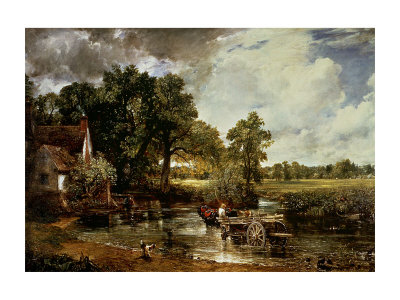
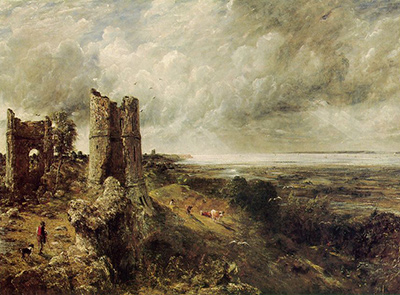
Most of all, the painting matters because it is quiet and direct. It does not need the scale of The Hay Wain, the drama of Hadleigh Castle or the atmospheric science of the cloud studies. It asks for a different kind of attention: to a face, a small canvas, a marriage about to begin and a painter capable of making private likeness feel enduring.
It also matters because it protects Constable from being simplified. He was not only a painter of weather, fields and rivers. He was a son, husband, father, friend and working professional who had to paint people as well as places. Portrait of Maria Bicknell brings those roles together without noise. It is personal, but disciplined; affectionate, but not sentimental; small, but central to understanding the emotional range of his art.
Frequently Asked Questions
Discussion
What gives Portrait of Maria Bicknell its intimacy: the small scale, Maria's sideways gaze, the contrast between her firmly described face and looser dress, or the painting's place before marriage?
Reader Insights
Where does Constable tighten his description, and where does he let paint remain visibly free?
How can knowledge of the courtship deepen the portrait without reducing Maria to a biographical role?
What changes when a personally valued likeness becomes Tate N02655 and part of Constable's public record?
Join the Conversation
Share your reading below.
References
- Wikimedia Commons, John Constable - Maria Bicknell, Mrs John Constable.jpg, https://commons.wikimedia.org/wiki/File%3AJohn_Constable_-_Maria_Bicknell%2C_Mrs_John_Constable.jpg
- Wikimedia Commons, John Constable (1776-1837) - Maria Bicknell, Mrs John Constable - N02655 - National Gallery.jpg, https://commons.wikimedia.org/wiki/File%3AJohn_Constable_%281776-1837%29_-_Maria_Bicknell%2C_Mrs_John_Constable_-_N02655_-_National_Gallery.jpg
- National Portrait Gallery, Constable Portraits: The Painter and His Circle, https://www.npg.org.uk/whatson/exhibitions/20091/constable-portraits-the-painter-and-his-circle/
- National Trust, “John Constable at Flatford,” https://www.nationaltrust.org.uk/visit/suffolk/flatford/john-constable-at-flatford
- Victoria and Albert Museum, “John Constable – an introduction,” https://www.vam.ac.uk/articles/john-constable-an-introduction
- Flatford and Constable, “Wife – Maria Bicknell 1788-1828,” https://www.flatfordandconstable.org.uk/the-constable-family/maria-bicknell-1788-1828/
- Flatford and Constable, “Constable in Love,” https://www.flatfordandconstable.org.uk/chronology-john-constable/constable-in-love/
- The Guardian, “Lost and found: Constable's portraits,” 4 March 2009, https://www.theguardian.com/artanddesign/gallery/2009/mar/04/constable-portraits-national-portrait-gallery
- The Guardian, “For love or money,” 28 February 2009, https://www.theguardian.com/artanddesign/2009/feb/28/john-constable-portraits