 by Tom Gurney
Tom Gurney BSc (Hons) is an art history expert with over 20 years experience
Published on June 19, 2020 / Updated on November 6, 2026
Email: tomgurney1@gmail.com / Phone: +44 7429 011000
Introduction
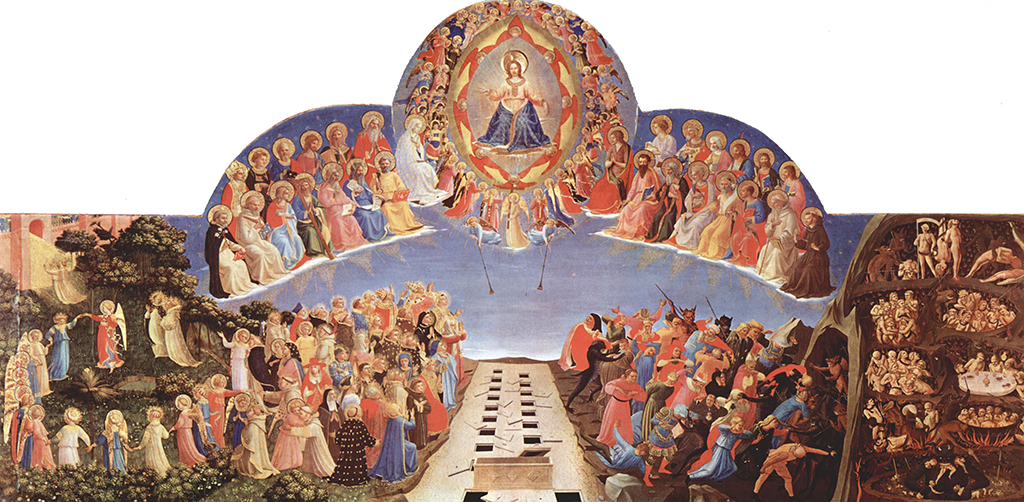
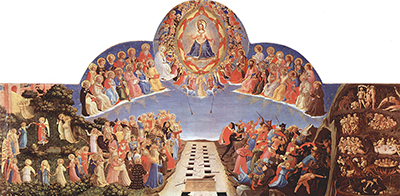
Fra Angelico’s Last Judgement, painted around 1425–28 and now in the Museo di San Marco in Florence, is one of the most ambitious and inventive works of his early career. The panel presents the final division of humanity after resurrection. Christ appears as judge. The blessed move towards Paradise. The damned descend towards Hell. Open tombs recede dramatically through the centre of the composition. This central avenue is one of the painting’s most remarkable formal inventions.
It transforms Christian eschatology into a spatial system. The dead rise from graves that diminish into depth, creating a powerful perspectival recession. The Museo di San Marco has described the work as a pioneering iconographic invention and has dated it securely to approximately 1425–28. Modern restoration has further transformed how the painting is understood. A major conservation campaign recovered colouristic brilliance, clarified the geometry of the composition and generated new questions about the panel’s original frame and function.
The painting’s afterlife is equally important. In 2026, an exhibition at the Galleria Sabauda in Turin placed Angelico’s Last Judgement directly beside Bartholomeus Spranger’s 1570–71 version, which was explicitly inspired by Angelico’s prototype. That comparison demonstrated the extraordinary longevity of Angelico’s invention. The work therefore deserves to be understood through three simultaneous histories: as a theological image of judgement; as an Early Renaissance experiment in spatial organisation and colour; and as an influential visual model that remained active well into the later sixteenth century. [1]
At a Glance
- ArtistFra Angelico [6]
- TitleThe Last Judgement [1]
- Datec. 1425–28 [1]
- Mediumtempera and gold on panel [1]
- Current locationMuseo di San Marco, Florence [5]
- Original functionuncertain; probably a religious institutional setting [1]
- Distinctive featurecentral perspective of open graves receding into depth [1]
- Principal zonesChrist as judge, blessed, Paradise, damned and Hell [1]
- Paradise innovationangels and saved souls dance harmoniously [1]
- Restorationmajor modern conservation completed before return to display [2]
- Technical findingsbrilliant costly pigments including ultramarine, vermilion and red lakes [4]
- Reception historyinfluenced Bartholomeus Spranger’s Last Judgement of 1570–71 [3]
Contents
- Introduction
- The Last Judgement in Christian Art
- Christ as Judge
- The Open Graves
- The Blessed
- Paradise
- Hell
- Restoration
- Geometry
- Why the Last Judgement Matters
The Last Judgement in Christian Art
The Last Judgement belongs to one of the most important themes in Christian visual culture. At the end of time, Christ returns as judge. The dead rise. Souls are separated. The saved enter eternal life. The damned receive punishment. The subject offered painters an enormous challenge. They had to organise cosmic history within one image. Multiple times and spaces needed to coexist. Heaven, earth, resurrection and Hell all had to remain legible. Angelico’s solution is remarkable because he balances complexity with structural clarity. [1]
Christ as Judge
Christ occupies the upper central position. His placement establishes hierarchy immediately. The judgement radiates outward from him. Angelico does not need to make Christ physically enormous in order to establish authority. Position, gesture and surrounding celestial order create dominance. The entire composition depends upon his verdict. [1]
Angels surround the divine judge. They participate in the celestial order. Trumpets and gestures connect heaven with the resurrection below. The Last Judgement was traditionally associated with angelic trumpets summoning the dead. Angelico uses this imagery within an otherwise remarkably controlled composition. Heaven is ordered. The chaos lies in the differing human destinies below. [1]
The Open Graves
The central avenue of open tombs is perhaps the painting’s most famous innovation. Rectangular graves recede through the centre. Their diminishing scale creates a strong illusion of depth. The device turns resurrection into perspective. Bodies rise from geometrically organised earth. This is a striking synthesis of new Renaissance spatial thinking and traditional Christian subject matter. [1]
The perspective is not simply an artistic exercise. It gives theological meaning physical structure. Humanity emerges from death across a measurable world. The tombs create a path between foreground and divine judgement. The viewer’s eye is drawn inward. Space therefore becomes an instrument of salvation history. This is one of the clearest examples of Angelico using Renaissance technique for religious meaning. [1]
The Blessed
The saved appear on one side of the composition. Their movements are increasingly ordered and joyful. They progress towards Paradise. The figures are not merely passive recipients of judgement. They enter a transformed community. The emotional atmosphere changes as they move away from the earthly zone. [1]
The damned move in the opposite direction. Their bodies and gestures become increasingly agitated. Order gives way to violence and fear. The contrast between the two groups is not simply a matter of destination. Their bodily behaviour reveals spiritual condition. The saved become harmonious. The damned become fragmented and chaotic. [1]
Paradise
Angelico’s Paradise is one of the painting’s most distinctive areas. Angels and saved souls participate in a circular dance. This is unusual. Paradise is not represented only as solemn hierarchy or static contemplation. It includes movement, music and communal joy. The saved do not simply arrive. They participate. The image therefore makes salvation emotionally attractive. [1]
The dancing figures create a striking contrast with the violent movement of Hell. Both sides contain motion. Their quality differs. Paradise is rhythmic and harmonious. Hell is disordered and coercive. Movement itself becomes moral. This is one of Angelico’s most sophisticated visual ideas. [1]
The saved enter a beautiful garden. Nature is cultivated and peaceful. The setting recalls Eden while transforming it into restored perfection. The association is important. Humanity lost Paradise through the Fall. The Last Judgement restores the saved to a sacred garden. The whole history of salvation is therefore compressed into landscape. [1]
Hell
Hell occupies the opposite moral and visual extreme. Demons attack and punish the damned. Bodies are forced into violent situations. The environment becomes darker and more oppressive. Angelico’s hellish imagery is far removed from the serene Annunciations for which he is popularly known. This is another reason the painting matters. It demonstrates the breadth of his imagination. [1]
The demons embody disorder. Their bodies and actions contrast sharply with angels. Where angels guide and celebrate, demons seize and torment. The moral universe is therefore expressed through bodily behaviour. Angelico creates a visual anthropology of salvation and damnation. [1]
Different forms of punishment can be understood through the medieval tradition of associating sins with particular consequences. The exact iconographic identifications may vary in interpretation. What is clear is that Hell is structured rather than random. Punishment is imagined as the visible consequence of moral disorder. The painting therefore functions as warning as well as doctrine. [1]
The Unusual Shape
The panel has an unusual trilobed or arched upper form. Its original architectural context remains uncertain. This is one of the places where modern scholarship should preserve caution. The exact commission and original frame have generated debate. Restoration has contributed new evidence without resolving every question completely. The uncertainty belongs to the object’s history. [1]
The painting has often been connected with a religious institutional setting, possibly Santa Maria degli Angeli in Florence. Current San Marco research places it within the intellectual and devotional world of early fifteenth-century Florence but remains cautious about some details of original use. This is preferable to forcing an exact provenance where documentation is incomplete. [1]
The Camaldolese humanist Ambrogio Traversari has been associated with the intellectual environment surrounding the painting. Traversari was an important theologian, scholar and reformer. His presence in Florentine religious-humanist culture provides a plausible context for a work combining traditional theology with striking formal innovation. The relationship is best treated as an intellectual and institutional context rather than as a fully documented patronal contract. [1]
Early Renaissance Innovation
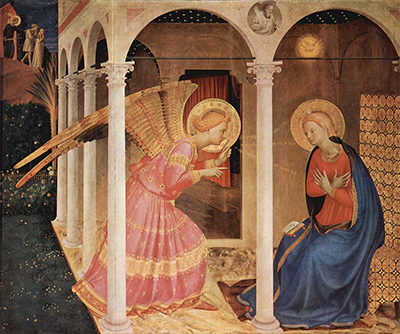
The Last Judgement belongs to the same years in which Angelico was painting the Prado Annunciation. The comparison is revealing. Both works use new spatial thinking. Both retain brilliant colour and traditional sacred imagery. Yet they solve completely different problems. The Annunciation focuses on two principal figures within architecture. The Last Judgement organises hundreds of bodies across cosmic space. This range demonstrates how quickly Angelico had become a major Early Renaissance painter. [6]
The early 1420s were the period in which Masaccio’s innovations transformed Florentine painting. Angelico’s central grave perspective belongs to the same broad world of spatial experiment. He does not imitate Masaccio directly. Instead, he finds a completely different theological use for coherent recession. The comparison supports the idea of Angelico and Masaccio as parallel innovators rather than master and follower. [6]
The work combines gold and spatial depth. This combination is essential to understanding Angelico. Gold belongs to sacred tradition. Perspective belongs to new Renaissance naturalism. The two coexist. Heaven can remain materially precious while the earth below becomes geometrically measurable. Angelico does not perceive a contradiction. [1]
Colour
Modern conservation has reinforced the importance of Angelico’s palette. Scientific comparison connected with the 2026 Spranger exhibition identified rich materials including ultramarine, vermilion and insect-derived red lakes. These pigments were expensive. The painting’s original colouristic impact would therefore have been intense. Aged surfaces can make Early Renaissance panels appear muted. Technical research restores the sense of material splendour. [4]
Ultramarine was derived from lapis lazuli and ranked among the most costly blue pigments available. Its presence signals both visual ambition and material expense. Angelico uses costly colour within a subject concerned with eternal destiny. The sacred image was materially precious. This is not incidental to its function. [4]
Vermilion provides intense red. Red lakes derived from organic sources create transparent saturated colour. Their combination allows complex chromatic effects. Scientific identification of such materials gives precision to discussions of Angelico as a colourist. His brilliance was not metaphorical. It depended upon expensive physical substances. [4]
Restoration
The modern restoration of the Last Judgement was one of the major conservation events in recent San Marco history. Cleaning recovered chromatic relationships. Structural work stabilised the panel. Technical examination clarified aspects of construction and geometry. The restored work returned to display with a significantly transformed visual presence. [2]
One of the important results was renewed appreciation of the depth created by the graves. Old surface alteration had weakened spatial clarity. Restoration made the recession more convincing. It also restored distinctions within Paradise and the groups of the damned. This demonstrates why conservation can change interpretation. Spatial innovation cannot be judged accurately when the surface is visually flattened by later alteration. [2]
Conservation also produced clues concerning the lost frame. This matters because the unusual shape of the panel raises questions about original architectural use. A frame is not merely decorative border. It determines how an image belongs to an altar, wall or furnishing. Recovering evidence for the frame therefore contributes to recovering function. [2]
Geometry
The painting’s structure has attracted attention because the apparent complexity is carefully organised. Central axis. Grave recession. Heavenly hierarchy. Opposing saved and damned groups. Paradise and Hell. Geometry controls the enormous amount of information. This is another reason the work should not be interpreted primarily as a mystical outpouring. Angelico’s devotional vision depends upon rigorous design. [1]
The entire painting can be understood through the opposition between order and disorder. Christ’s court is ordered. The graves are ordered. The blessed become harmonious. Paradise becomes dance. The damned become increasingly disordered. Hell culminates in coercive violence. Formal organisation therefore carries moral meaning. [1]
Movement differs radically across the composition. The saved move voluntarily. They proceed, greet and dance. The damned are dragged, driven and attacked. This difference transforms movement into a theological category. Freedom belongs to salvation. Coercion belongs to damnation. [1]
Paradise is communal. The saved do not disappear into private individual bliss. They form a society. They dance with angels and one another. This would have had strong resonance within religious communities in which salvation was imagined collectively as well as individually. Angelico’s heaven is relational. [1]
A Last Judgement image has two devotional functions. It warns. It consoles. Hell generates fear. Paradise generates hope. Angelico balances both. The painting is not simply punitive. The joy of the saved is visually compelling. This balance makes the work suitable for sustained religious reflection. [1]
Comparison with Later Last Judgements
Later Renaissance painters would make the subject increasingly monumental. Michelangelo’s Sistine Last Judgement is the obvious famous example. Angelico’s earlier solution is very different. His figures remain organised within clear moral zones. Cosmic drama does not overwhelm legibility. The comparison demonstrates how flexible the subject remained across Renaissance art. [3]
The 2026 exhibition at the Galleria Sabauda demonstrated one specific later reception. Bartholomeus Spranger painted a Last Judgement in 1570–71 for Pope Pius V. The later work was explicitly inspired by Angelico’s prototype. This establishes a concrete line of artistic influence more than a century after Angelico’s death. [3]
The exhibition title effectively asked viewers to see Angelico through Spranger’s later response. This is valuable because influence reveals which aspects of a work remained memorable. Composition can survive even when style changes dramatically. Spranger belonged to a Mannerist world very different from Angelico’s Florence. Yet Angelico’s structural invention remained usable. [3]
The gap between approximately 1425–28 and 1570–71 spans around a century and a half. That longevity challenges the idea of Angelico as a painter admired only for devotional sweetness. His compositions could serve later artists facing major formal problems. The Last Judgement was technically and iconographically inventive enough to be studied long after its original context changed. [3]
The Last Judgement is now displayed in the Museo di San Marco rather than its uncertain original site. This gives the work a new context. It can be compared directly with Angelico’s later San Marco panels and frescoes. The museum setting helps viewers understand development. It also separates the painting from whatever original liturgical or institutional function it once had. [5]
Why the Last Judgement Matters
The Last Judgement matters because it reveals an Angelico very different from the simplified image of a painter of serene Madonnas. The work is intellectually ambitious. Spatially innovative. Materially rich. Emotionally extreme. The central tombs demonstrate mastery of recession. Paradise becomes dance. Hell becomes controlled visual disorder. Gold, perspective and costly pigments coexist. Theology becomes geometry. The painting also shows how early Angelico reached a mature level of invention.
Around 1425–28, he was already solving problems of cosmic organisation that few painters attempted at this scale. Modern restoration has made that achievement clearer by recovering the spatial and chromatic force of the surface. Modern reception has also expanded our understanding. Spranger’s later response demonstrates that Angelico’s composition remained influential well into the sixteenth century. For these reasons the Last Judgement stands as one of the principal monuments of Angelico’s early career. [1]
Frequently Asked Questions
Discussion
Which part of the Last Judgement most powerfully turns doctrine into a spatial and emotional experience?
Reader Insights
How does the receding path of open graves organise the painting’s moral divisions?
What makes the dance of angels and saved souls feel so different from the vision of Hell?
How do restored colour and gold change the way the panel’s structure is perceived?
Join the Conversation
Share your reading of Fra Angelico’s Last Judgement below.
References
- Direzione regionale Musei nazionali Toscana, Museo di San Marco research on Fra Angelico’s Last Judgement, c. 1425–28. Museo di San Marco work, dating and iconography.
- Direzione regionale Musei nazionali Toscana, restoration and return-to-display resources for the Last Judgement. Museo di San Marco restoration and return to display.
- Direzione regionale Musei nazionali Toscana, 2026 exhibition Beato Angelico negli occhi di Bartholomeus Spranger. Giudizi universali a confronto. 2026 Angelico–Spranger comparison and return to San Marco; Exhibition loan and comparison record.
- Direzione regionale Musei nazionali Toscana, technical comparison of Angelico and Spranger pigments. Official technical findings from the 2026 comparison.
- Museo di San Marco, collection and conservation resources. Museo di San Marco collection information; Current Sala del Beato Angelico display.
- National Gallery, London, Fra Angelico artist biography and Early Renaissance context. National Gallery Fra Angelico biography.
.jpg)
 Fra Angelico.jpg)