 by Tom Gurney
Tom Gurney BSc (Hons) is an art history expert with over 20 years experience
Published on June 19, 2020 / Updated on October 27, 2026
Email: tomgurney1@gmail.com / Phone: +44 7429 011000
An Arizona Sunset near the Grand Canyon: Introduction
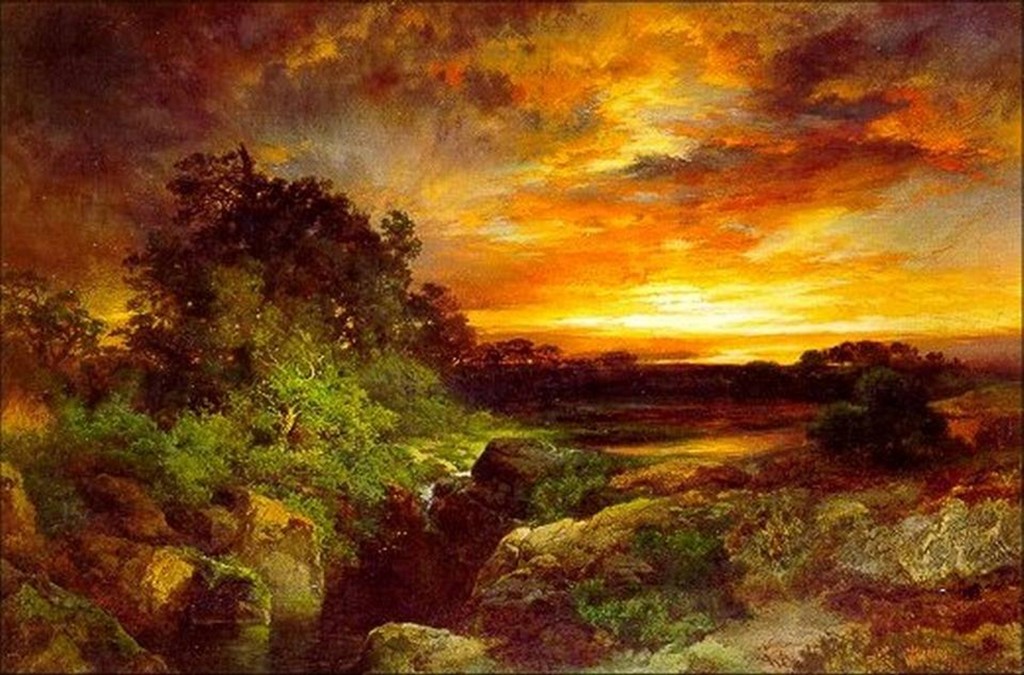
Thomas Moran's An Arizona Sunset near the Grand Canyon belongs to the Butler Institute of American Art's western collection. The museum's selection identifies the artist and title. In the picture, an intensely coloured sky rises above trees, rough ground and a low horizon, making sunset the principal event of the view. [1]
The title locates the subject near the Grand Canyon, but the composition is not an extensive panorama into a canyon's depths. Its strongest effects develop above and across the ground: a bright opening near the horizon, darker cloud overhead, and trees silhouetted against changing light.
At a Glance
- ArtistThomas Moran
- TitleAn Arizona Sunset near the Grand Canyon
- CollectionButler Institute of American Art
- Main visual emphasisSunset, cloud and a low horizon
- ForegroundRocks, uneven ground and trees
- Exact dateNot established by the museum collection page used here
- Exact dimensionsNot supplied by that page
- Related readingMoran's canyon paintings and his published views on idealisation
Selected dated works from Moran’s career
The Chasm of the Colorado
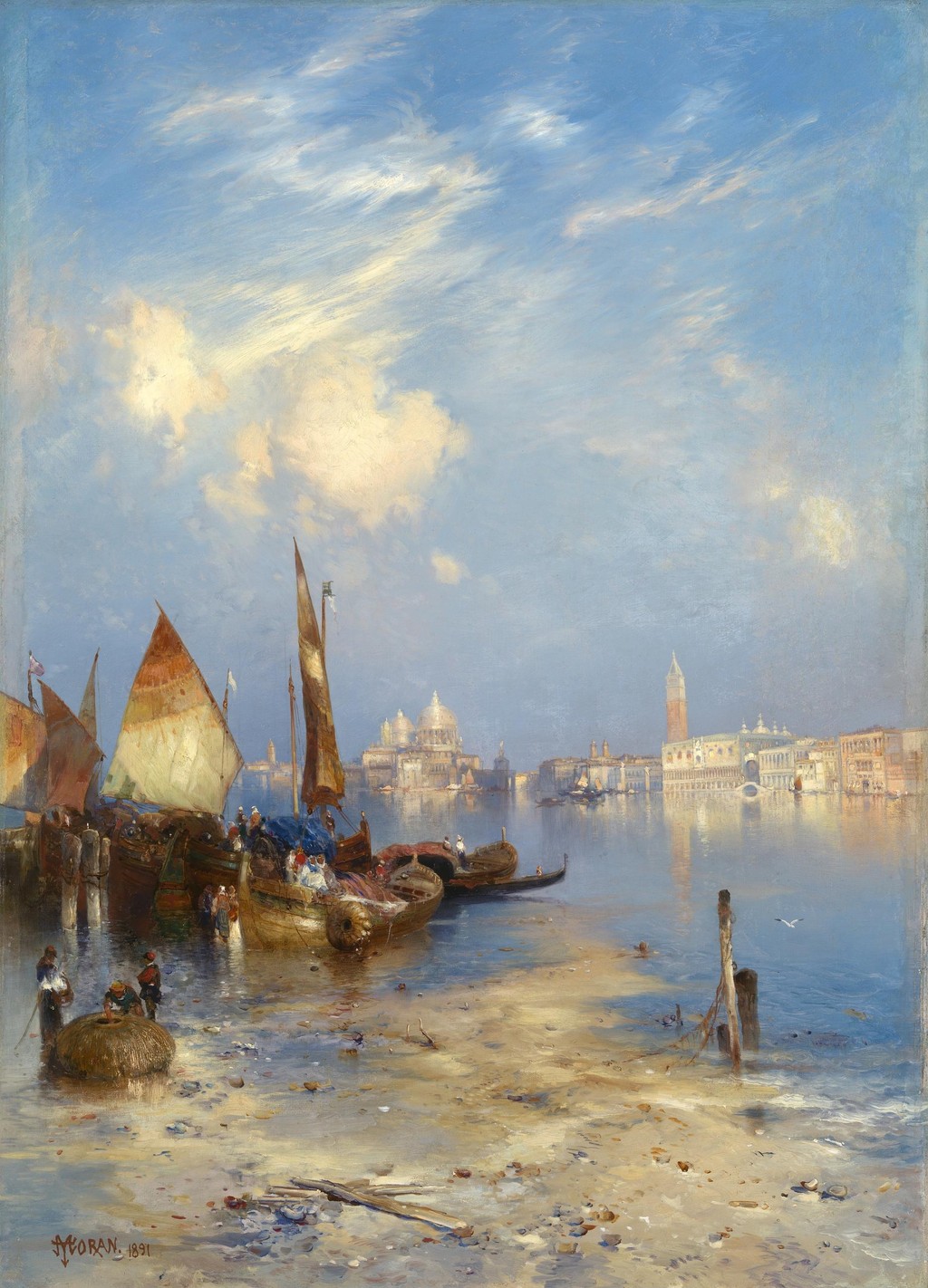
1873–1874; completed in 1874A View of Venice
1891Point Lobos, Monterey, California
1912, signed and datedThe museum collection page used here does not establish an exact date for this painting. The timeline therefore compares other selected, dated works. [1]
Contents
- The sky as the main event
- Trees against the changing light
- Rough ground close to the viewer
- A low horizon and a broad interval
- Moran's interest in idealisation
- Near the canyon, with a different focus
The sky as the main event
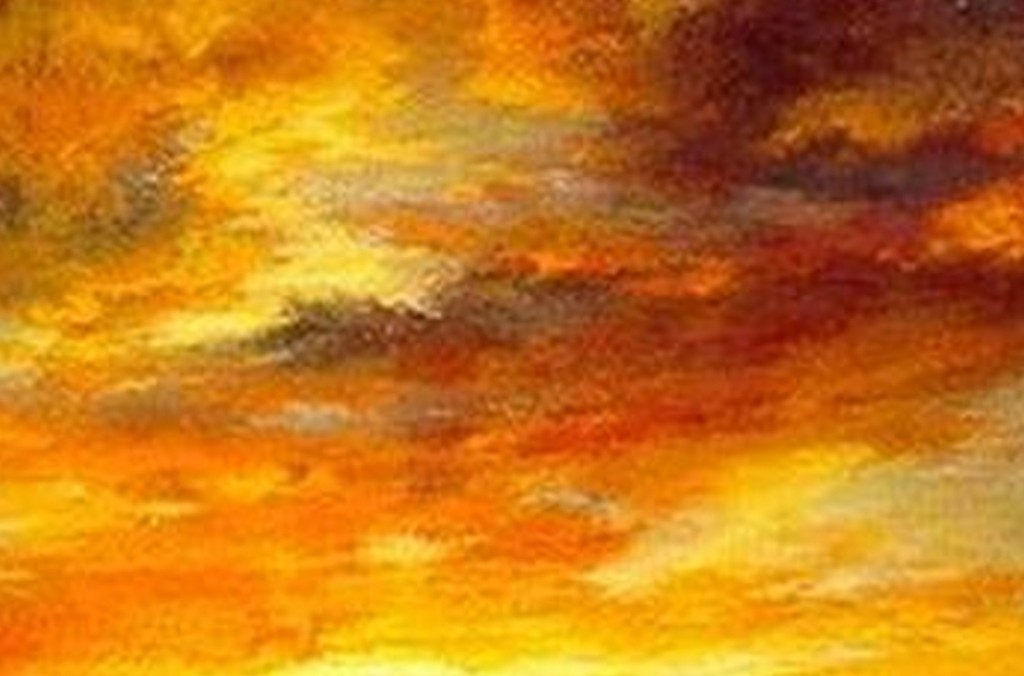
The sky occupies a substantial part of the image, with brightness concentrated near the horizon and across the middle. Yellow, orange and red passages spread beneath darker clouds. The colour changes are more dramatic than the relatively low line of the distant land.
The brightest interval appears near the centre-right, just above the horizon. It gives the eye a clear destination. Surrounding warmer bands lead towards it, while darker clouds above make its light more apparent. The effect depends on the arrangement of contrasting passages rather than on one isolated patch of yellow.
The cloud forms are varied in size and shape. Some stretch broadly across the sky; others break into smaller, less definite areas. Their changing boundaries make the atmosphere feel active. Light appears to pass through openings and meet resistance from denser forms around them.
The sky is therefore organised, even at its most vivid. Its brightest areas do not occur uniformly everywhere. Moran places intensity where it can be framed by darker cloud and land. The viewer's attention moves across those differences, following a sunset that is also a carefully balanced composition.
Annotated Details from An Arizona Sunset near the Grand Canyon
Compare these details with the full composition. The numbered overview and crops come from the same original image.
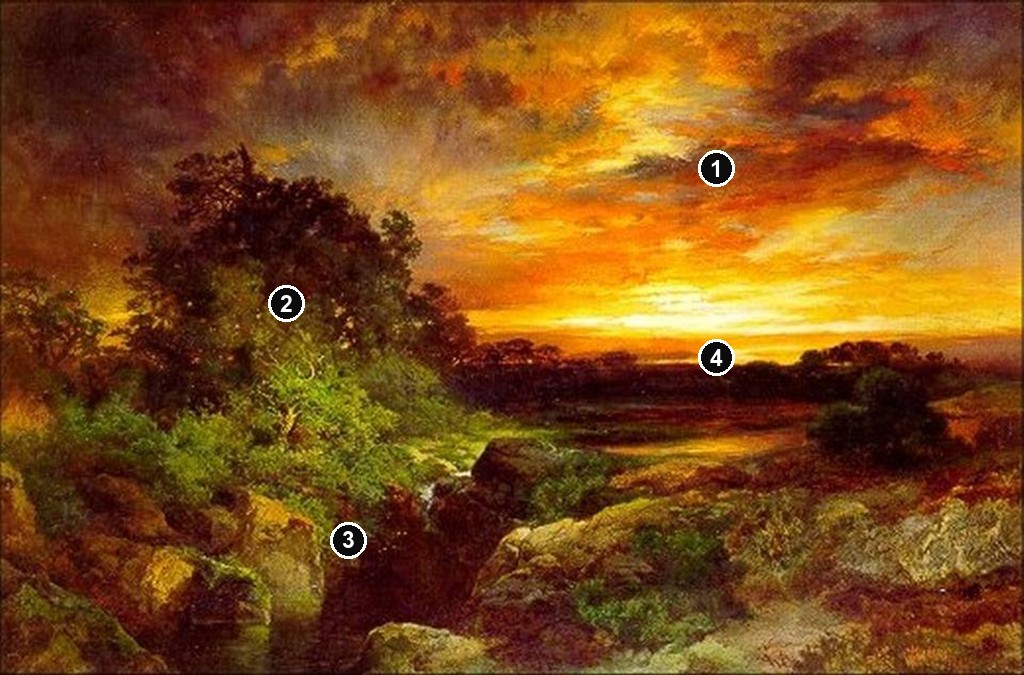
Details from AN ARIZONA SUNSET NEAR THE GRAND CANYON
Open a detail to see it more closely.
The sky as the main event
The sky occupies a substantial part of the image, with brightness concentrated near the horizon and across the middle. Yellow, orange and red passages spread beneath darker clouds. The colour changes are more dramatic than the relatively low line of the distant land.
Trees against the changing light
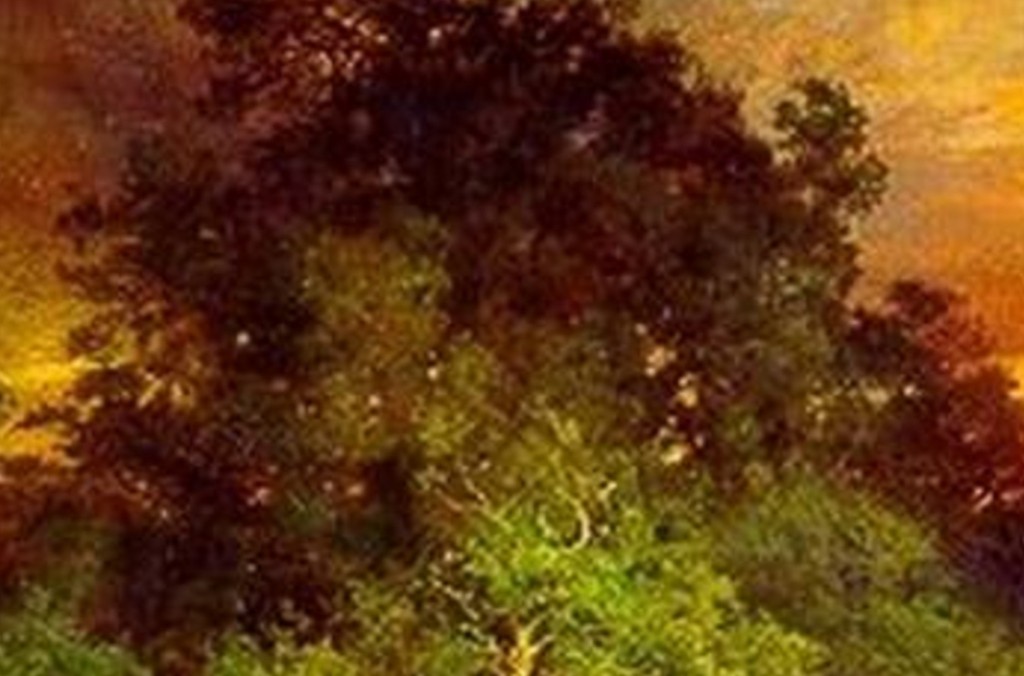
A large tree group rises on the left. Its dark upper foliage stands against warm sky, producing one of the picture's most emphatic silhouettes. The shape is uneven, with projecting branches and gaps rather than a smooth outline. It makes the sky's brightness visible through contrast.
Rough ground close to the viewer
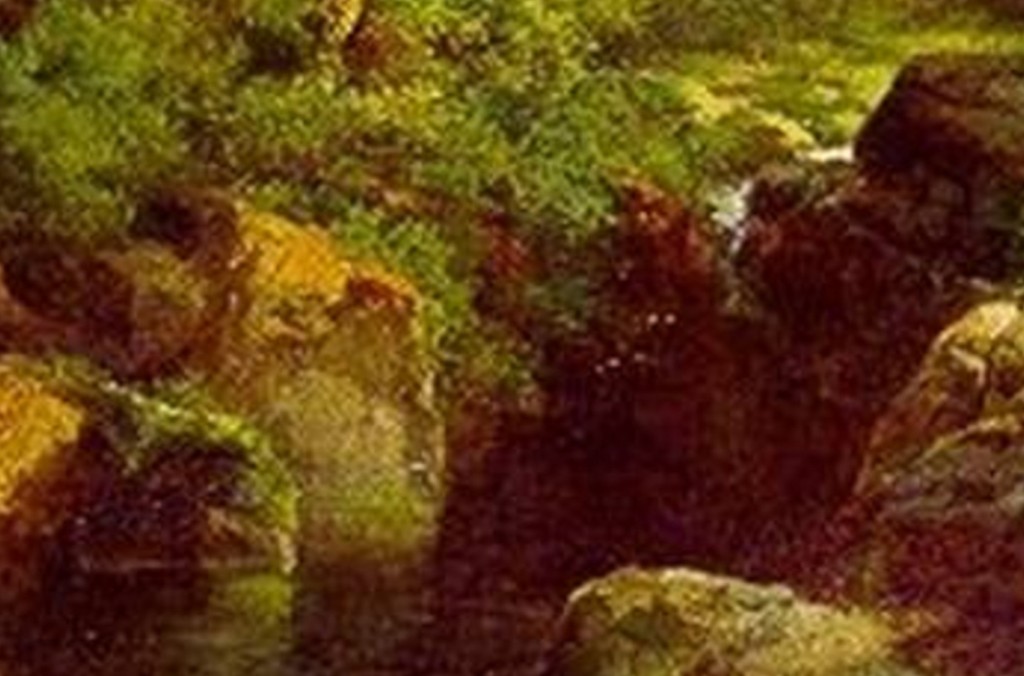
Rocks and uneven surfaces fill much of the lower picture. Warm light catches some edges, while deeper gaps separate them. The ground has a physical roughness that differs from the softer cloud boundaries above. The eye can move between a tangible foreground and an atmosphere with less stable forms.
A low horizon and a broad interval
The distant land runs horizontally beneath the bright sky. Its low profile gives the atmosphere room to expand. There is no single towering peak controlling the view. Sunset gains prominence because the land allows light and cloud to occupy so much of the composition.
Trees against the changing light
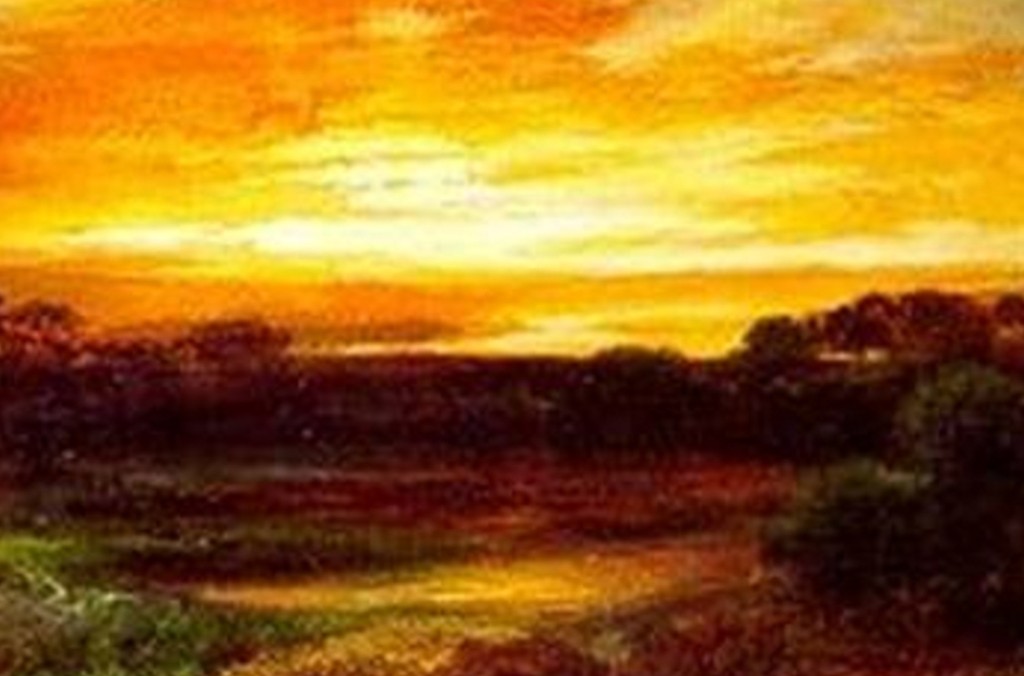
A large tree group rises on the left. Its dark upper foliage stands against warm sky, producing one of the picture's most emphatic silhouettes. The shape is uneven, with projecting branches and gaps rather than a smooth outline. It makes the sky's brightness visible through contrast.
Lower branches and vegetation receive green and warmer touches of light. This keeps the group from becoming uniformly black. Parts of the foreground remain readable within the evening atmosphere. The tree's upper silhouette and lower illuminated passages give it different roles at different heights.
The group also interrupts the horizon. We look past it towards the brighter opening, rather than seeing an entirely unobstructed strip of distant land. That partial concealment places the spectator within a nearer landscape. Sunset is encountered from ground occupied by trees and rocks.
On the right, smaller vegetation provides an answering mass without repeating the left-hand silhouette. Its lower height leaves more sky exposed. The unequal balance makes the composition feel spacious while retaining a strong foreground presence. Moran uses different forms to weigh the two sides of the view.
Rough ground close to the viewer
Rocks and uneven surfaces fill much of the lower picture. Warm light catches some edges, while deeper gaps separate them. The ground has a physical roughness that differs from the softer cloud boundaries above. The eye can move between a tangible foreground and an atmosphere with less stable forms.
A dark opening runs through the nearer rocky area. It introduces depth on a smaller scale than the broad horizon. The viewer encounters a local interruption before looking out towards the distant light. This gives the lower landscape an internal structure rather than making it merely a base for the sky.
Green vegetation occupies intervals between the rocks. Its colour introduces another contrast with the warm sunset. The ground responds to the light without becoming identical to it. Stone, foliage and sky remain different kinds of surface even where brightness connects them.
The foreground is relatively crowded with small changes of direction. Further away, those changes become harder to separate, and the land settles into longer, lower passages. This shift helps create distance. Moran gradually changes the scale of description as the eye approaches the horizon.
Watch: Thomas Moran
Choose a film to explore the artist’s work, its interpretation and its wider setting.
The painting that inspired a National Park
A close discussion of Moran’s landscape and its relationship to the idea of Yellowstone.
Watch on YouTubeA low horizon and a broad interval
The distant land runs horizontally beneath the bright sky. Its low profile gives the atmosphere room to expand. There is no single towering peak controlling the view. Sunset gains prominence because the land allows light and cloud to occupy so much of the composition.
The brighter ground towards the middle also opens an interval between the foreground vegetation and horizon. Its shape provides a passage for the eye. The viewer can look out from a rough, enclosed place towards a comparatively open distance.
This relationship gives the picture its scale. Close rocks and trees are substantial, while the distant land becomes a narrow band. The broad sky extends over both. The effect is expansive even though the view does not depend on a spectacularly deep canyon immediately beneath the spectator.
Moran's interest in idealisation
In Sheldon’s American Painters, published in 1879, Moran describes his priorities through idealisation and says he places no value upon literal transcripts from nature. The statement concerns his general practice. It is not a specific account of how this sunset picture was made. [2]
It nevertheless offers a useful way to consider the arrangement. A sunset involves changing light, but a finished image gives those changes a durable structure. The artist decides where brightness should concentrate, how trees should interrupt it, and how much ground should remain visible below.
The picture's vivid colour can consequently be considered alongside its quieter organisation. Unequal tree groups, a low horizon and an opening near the centre-right help the composition hold together. The intensity of the atmosphere depends on those relationships as much as on the individual colours.
Near the canyon, with a different focus
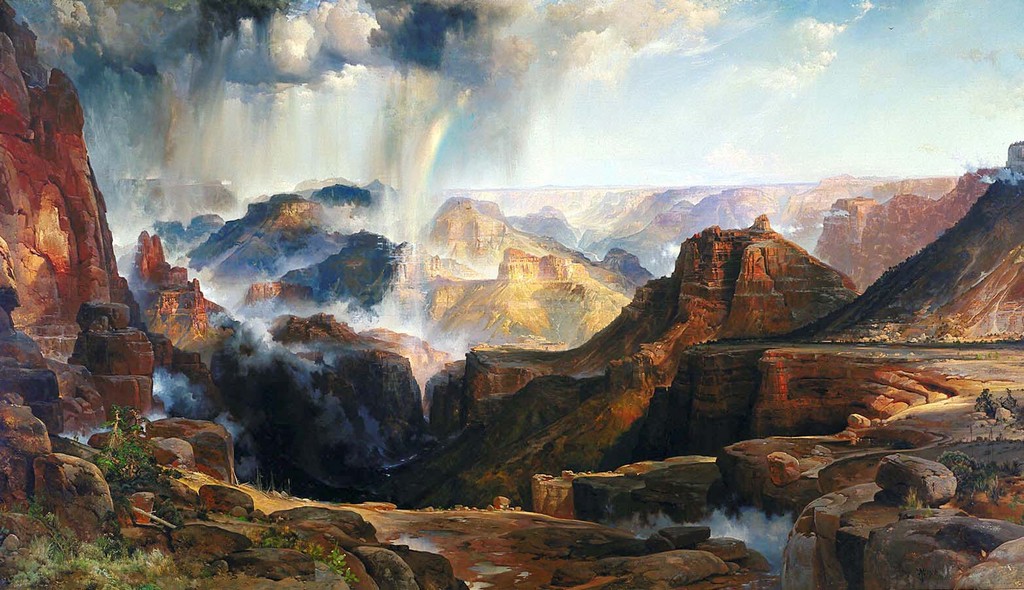
Moran's The Chasm of the Colorado makes canyon depth, rock and storm central to a vast view. This sunset brings attention closer to vegetation and rough ground, then directs it towards an illuminated horizon. The paintings offer different experiences of western landscape.
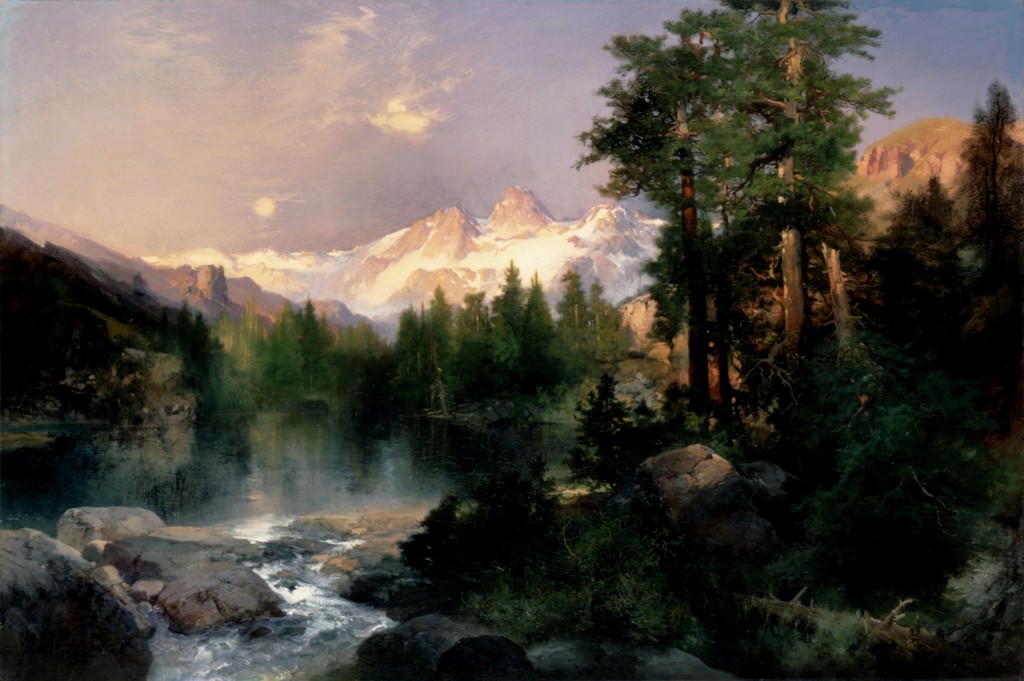
The Teton Range provides another contrast. Its bright mountain snow has a clearly structured physical surface, while the Arizona sky develops through softer clouds and changing openings. Both images use near trees and ground to give a distant brightness greater force.
The Butler's collection page does not establish the sunset's precise date, measurements or full provenance. Those gaps should remain open. The picture's most accessible qualities are already specific: a rough foreground, an uneven frame of trees and a sky whose light gathers above a low horizon. They make sunset a subject that can be explored through form as well as colour.
Artworks directory
Selected documented works and distinct versions. This directory is not a comprehensive catalogue raisonné. Dates and media retain the distinctions explained in the articles and museum records.
| Name | Date | Medium |
|---|---|---|
| An Arizona Sunset near the Grand Canyon | Date not securely established | Oil painting |
| Autumn Afternoon, the Wissahickon by Thomas Moran | 1864 | Oil on canvas |
| Cascade Falls, Yosemite | Commonly catalogued as 1905 | Catalogued as oil on canvas |
| The Chasm of the Colorado | 1873–1874; completed in 1874 | Oil on canvas, currently mounted on aluminium |
| Children of the Mountain | 1866 in the current museum title; 1867 in the 1997 National Gallery catalogue | Oil on canvas |
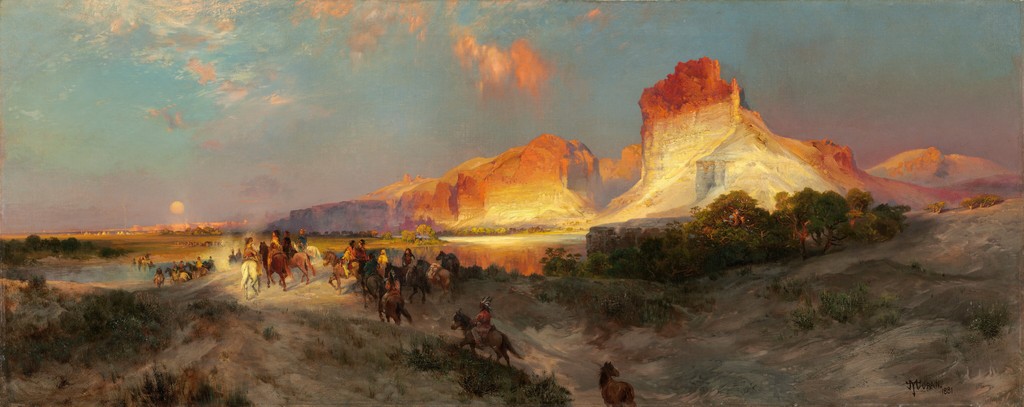
| Cliffs of Green River | 1874 | Oil on canvas |
| Cliffs of the Upper Colorado River, Wyoming Territory | 1882 | Oil on canvas |
| East Hampton, Long Island , also captioned Easthampton, L.I | 1897 | Oil on canvas laid on board, according to the reproduction record |
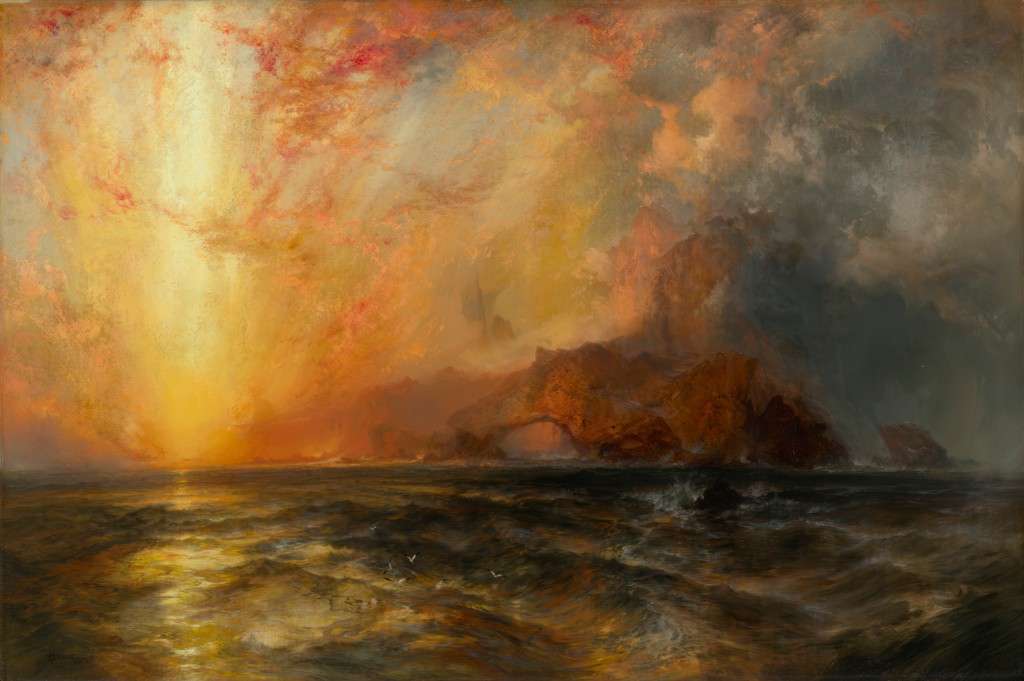
| Fiercely the red sun descending, Burned his way along the heavens | 1875–76 | Oil on canvas |
| Forest Scene | 1870 | Oil on canvas |
| Grand Canyon of the Colorado River | 1892 and 1908 | Oil on canvas |
| Green River Cliffs, Wyoming | 1881 | Oil on canvas |
| Green River, Wyoming | 1878 | Oil on panel |
| The Juniata, Evening | 1864 | Oil on canvas |
| Mosquito Trail, Rocky Mountains of Colorado | 1875 in the 1997 National Gallery exhibition catalogue | Watercolour |
| Mountain of the Holy Cross | 1875 | Oil on canvas |
| The Much Resounding Sea | 1884 | Oil on canvas |
| Point Lobos, Monterey, California | 1912, signed and dated | Oil on canvas |
| Shoshone Falls on the Snake River | 1900 | Oil on canvas |
| Summit of the Sierras | 1872/75, as catalogued by the Art Institute of Chicago | Gouache over graphite on cream laid paper |
| The Teton Range | 1897 | Oil on canvas |
| The Three Tetons | 1895 | Oil on canvas |
| Tower Falls, Yellowstone | 1872 | Watercolour and gouache over graphite on blue laid paper |
| A View of Venice | 1891 | Oil on canvas |
| The Grand Canyon of the Yellowstone | 1872 | Oil on canvas, currently recorded as mounted on aluminium |
| Mountain of the Holy Cross, Colorado (etching) | 1888 | Etching, roulette and aquatint |
| The Resounding Sea (etching) | 1880 | Etching |
| The Much Resounding Sea (later etching) | 1886 in heading; 1888 on plate | Etching, drypoint and roulette |
| Tower Falls (Prang print) | c. 1875; portfolio issued 1876 | Chromolithograph |
| Shoshone Falls (early watercolour) | 1874 | Watercolour |
| Venice (watercolour) | 1888 | Watercolour over graphite |
Frequently Asked Questions
The Butler Institute of American Art lists it among its western collection selections.
The museum collection page used here does not give an exact date.
Its title places the subject nearby, while the visible composition concentrates on sunset, trees, ground and a low horizon.
No dimensions are supplied on the collection page used for this article.
Discussion
Look first at the brightest opening near the horizon, then at the largest tree silhouette. How do the darker forms make the sky's colour and apparent extent more powerful?
Reader Insights
Editorial prompts for close looking and discussion.
Look first at the brightest opening near the horizon, then at the largest tree silhouette. How do the darker forms make the sky's colour and apparent extent more powerful?
Which source or image helps you assess the interpretation?
How does this page compare with the related works linked above?
Join the Conversation
Share your reading of this page below.
References
- Butler Institute of American Art, Western Collection, selected-work listing for An Arizona Sunset Near the Grand Canyon by Thomas Moran.
- G. W. Sheldon, American Painters, 1879, Moran chapter, especially p. 125; general published statement, not an artwork-specific account of its making.
- Splash image source.
An Arizona Sunset near the Grand Canyon. Butler Institute of American Art; faithful reproduction via Wikimedia Commons. Image source. Public Domain Mark; faithful two-dimensional reproduction. Resized only; complete source image retained.
- Splash image source.
An Arizona Sunset near the Grand Canyon. Butler Institute of American Art; faithful reproduction via Wikimedia Commons. Image source. Public Domain Mark; faithful two-dimensional reproduction. Numbered circles added to the overview; details cropped from the original reproduction. No colour adjustment or sharpening.
- Splash image source.
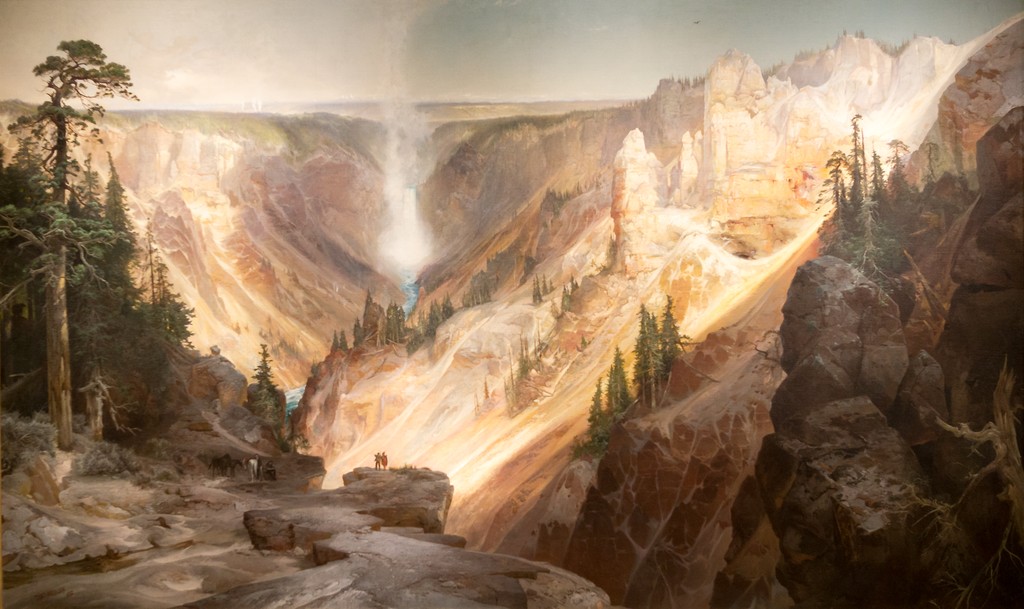
The Grand Canyon of the Yellowstone, 1872. Wuselig / Wikimedia Commons, CC BY-SA 4.0; U.S. Department of the Interior Museum painting. Image source. CC BY-SA 4.0; also marked PD-Art. Outer museum frame cropped; resized. Painted composition retained; photographic perspective unchanged. This image derivative is available under the same licence.
- Splash image source.
The Chasm of the Colorado, 1873–1874. U.S. Department of the Interior Museum; faithful reproduction via Smithsonian American Art Museum / Wikimedia Commons. Image source. Public Domain Mark; faithful two-dimensional reproduction. Resized only; complete source image retained.
- Splash image source.
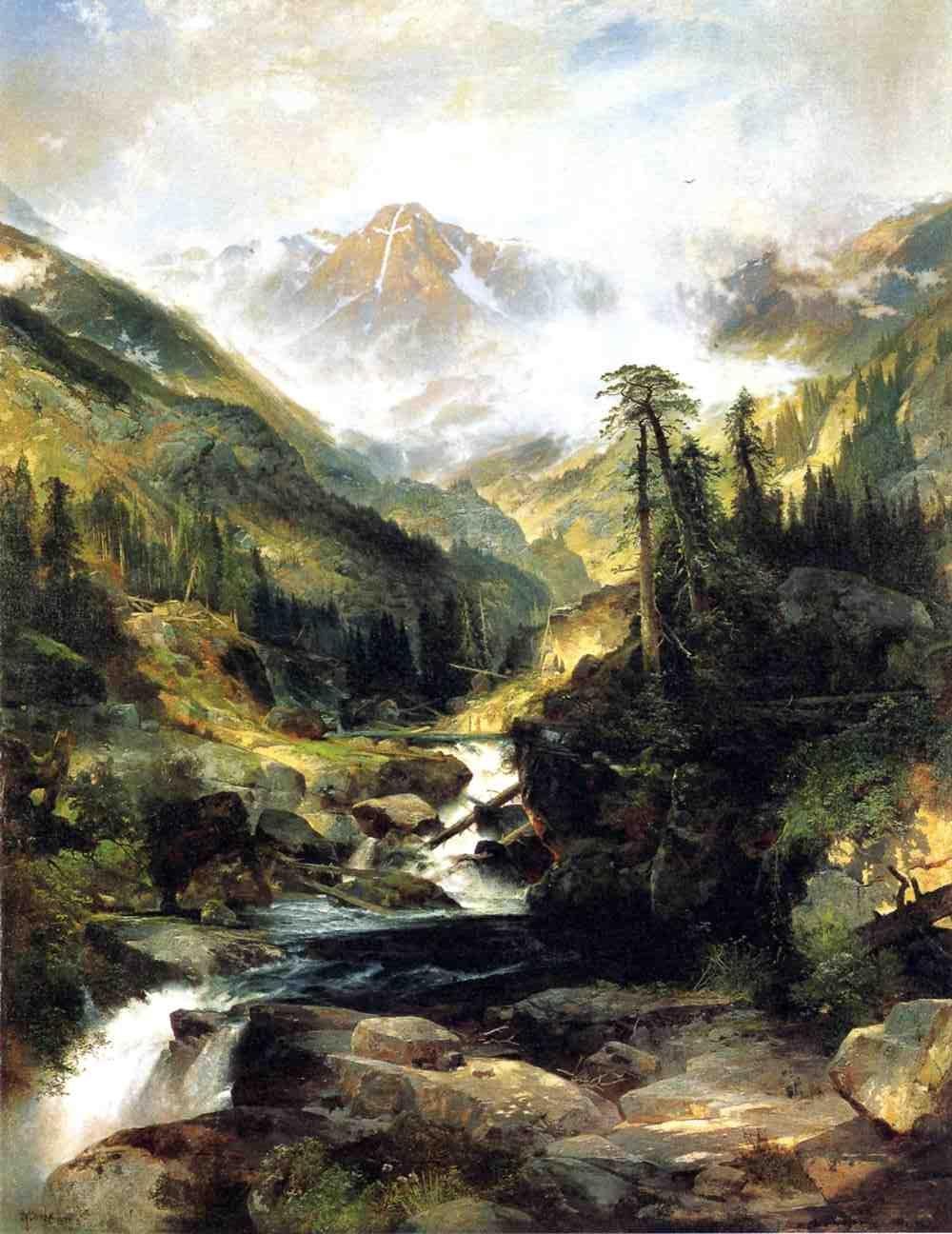
Mountain of the Holy Cross, 1875. Autry Museum of the American West; faithful reproduction via Wikimedia Commons. Image source. Public Domain Mark; faithful two-dimensional reproduction. Resized only; complete source image retained.
- Splash image source.
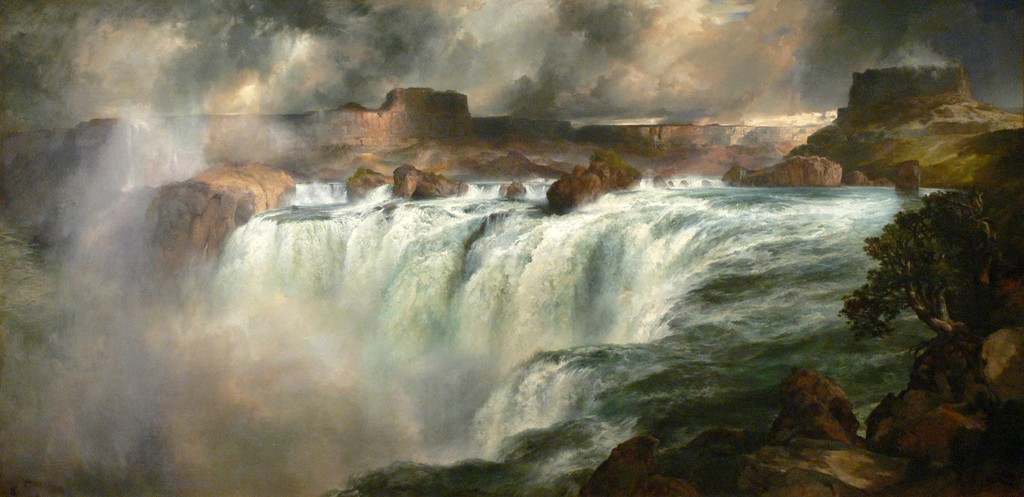
Shoshone Falls on the Snake River, 1900. Wolfgang Sauber / Wikimedia Commons, CC BY-SA 3.0; Gilcrease Museum painting. Image source. CC BY-SA 3.0; also marked PD-Art. Resized only; complete source image retained. This image derivative is available under the same licence.
- Splash image source.
Green River Cliffs, Wyoming, 1881. National Gallery of Art, Gift of the Milligan and Thomson Families. Image source. Public domain; NGA Open Access. Resized only; complete source image retained.
- Splash image source.
A View of Venice, 1891. Smithsonian American Art Museum, Transfer from the U.S. Department of the Interior, National Park Service, 1968.120.1. Image source. Free to use; Smithsonian Open Access. Resized only; complete source image retained.
- Splash image source.
The Three Tetons, 1895. The White House Collection, Gift of C. R. Smith; faithful reproduction via Wikimedia Commons. Image source. Public Domain Mark; faithful reproduction of a two-dimensional public-domain work. Resized only; complete source image retained.