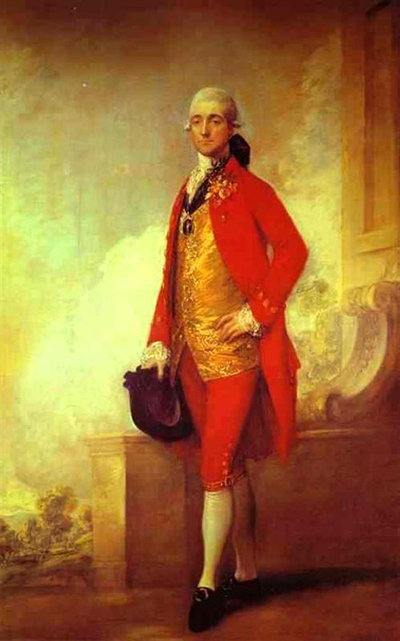
 by Tom Gurney
Tom Gurney BSc (Hons) is an art history expert with over 20 years experience
Published on June 19, 2020 / Page Updated on November 5, 2026
Email: tomgurney1@gmail.com / Phone: +44 7429 011000
Introduction
Thomas Gainsborough's Captain William Wade belongs to the theatre of Bath society rather than to the battlefield. Wade had a military title, but the portrait's central identity is civic and ceremonial: he was Master of Ceremonies at Bath from 1769 to 1777.[1] Bath in Time, using Victoria Art Gallery material, dates the painting to 1771, identifies Gainsborough as artist, gives the medium as painting, places it in the Victoria Art Gallery collection, and records the library reference as BATVG:P:1988.1.[1]
The portrait is therefore best understood as a Bath image. Wade was elected Master of Ceremonies as a compromise candidate after a contentious election, became known as the Bath Adonis, and is shown wearing the medallion of his office.[1] These facts explain why Gainsborough did not need to make him look like a soldier in action. Wade's power in the picture comes from elegance, office, bearing and social visibility.
This makes the painting a compact case study in Gainsborough's Bath portraiture. Gainsborough's House notes that after moving to Bath in 1759, the artist attracted more cosmopolitan and aristocratic clientele, while portraiture remained the more lucrative side of his career.[2] Wade belonged to exactly the public world such portraiture served: rooms, assemblies, rules, display, reputation and the careful management of sociable order.
At a Glance
- ArtistThomas Gainsborough
- TitleCaptain William Wade [3]
- Date1771 [1]
- MediumOil on canvas [3]
- Dimensions234.3 × 153 cm [3]
- Current holderVictoria Art Gallery, Bath [1]
- AccessionBATVG:P:1988.1 [1]
- Sitter’s officeMaster of Ceremonies at Bath, 1769–1777 [1]
- Display historyRoyal Academy, then Bath Assembly Rooms [6]
- ExploreBiography; The Blue Boy; Mr and Mrs Andrews; Paintings; Portraits
Contents
- Introduction
- The Victoria and Bath Record
- Master of Ceremonies
- Bath Adonis
- Frame and Display
- Gainsborough in Bath
- Scandal and Restraint
- How to Look at the Portrait
- Why the Portrait Matters
The Victoria and Bath Record
The accessible Bath in Time record gives the strongest local trail for the work. It lists the title as Captain Wade, 1771, names Thomas Gainsborough as artist, gives the collection as VAG, identifies the library as Victoria Art Gallery, Bath, and credits Bath & North East Somerset Council.[1] Art UK-derived metadata preserved through Wikimedia Commons gives the fuller title Captain William Wade, oil on canvas, 1771, accession BATVG:P:1988.1, and dimensions of 234.3 × 153 cm.[3]
That combination should be handled carefully. Bath in Time is a local image-library and Victoria Art Gallery trail, not a full catalogue essay. The Art UK-derived metadata is useful for title, date, medium, dimensions and accession, but the interpretation should not pretend that those data alone provide a complete provenance or technical history. The safest account separates object facts, sitter context and frame evidence.
The painting's scale is significant. At over two metres high, Wade is not treated as a minor Bath official. He is given full-length portrait authority. The body, costume, medallion and setting convert his social role into public presence. The portrait makes the office visible through the man.
The date of 1771 is also important.[1][3] Wade had become Master of Ceremonies in 1769, so Gainsborough painted him early in his tenure. The portrait is not a retirement image or a distant memorial. It belongs to the years when Wade's authority in Bath society was active and freshly established.
Master of Ceremonies
The office of Master of Ceremonies mattered because Bath's social world depended on rule as well as pleasure. Assemblies, balls, introductions and public rooms required order. A Master of Ceremonies helped turn fashionable sociability into a managed ritual. Wade's medallion, noted by Bath in Time, makes that office visible.[1]
This means the portrait is not simply about charm. Wade may have been known as the Bath Adonis, but his role was institutional.[1] He embodied a public function. The elegance of his clothing and posture should be read together with the medallion: personal style and civic office reinforce one another.
Gainsborough understood that kind of social theatre. His Bath sitters often needed to look natural and polished at once. Too much formality could deaden the likeness; too much ease could weaken authority. Wade's portrait works in the middle space. It shows a man whose profession was, in part, the performance of ease.
The title Captain also needs precision. It gives Wade a rank or social identity, but it does not define the portrait's main argument. In the image, the office of Master of Ceremonies is more important than military action. The medallion is more interpretively useful than the word captain. Gainsborough paints the man as Bath knew him.
That distinction keeps the work from being confused with a naval or military portrait such as the Hervey full-length at Ickworth. Hervey's portrait uses uniform, anchor, captured ensign and distant Havana reference to convert service into aristocratic memory.[4] Wade's portrait belongs to another world: not the sea, but the public room; not martial commemoration, but sociable command.
Bath Adonis
Bath in Time records that Wade was known as the Bath Adonis.[1] The nickname should not be treated as a throwaway ornament. It tells us that his appearance and manner were part of his public identity. In a city built around display, health, fashion, dance and conversation, beauty and polish could become social capital.
Gainsborough's portrait gives that reputation visual form. A full-length image allows Wade's body, dress and bearing to carry the argument. He is not reduced to a face. He appears as a composed social figure, measured from head to foot, with the medallion focusing the connection between elegance and office.
There is a danger here: the nickname can make the sitter seem merely vain or decorative. The painting is more interesting than that. Wade's elegance was practical. A Master of Ceremonies needed to command attention without appearing crude, to regulate society while seeming to belong naturally at its centre. Beauty, polish and ceremonial authority worked together.
The portrait therefore belongs to a culture in which masculinity could be performed through refinement. Hervey performs aristocratic naval ease; Wade performs civic and social grace. Gainsborough's male portraiture is flexible enough to distinguish them. One man stands among maritime symbols; another becomes the visible face of Bath's rooms.
Rosenthal's Paul Mellon Centre study is useful here as a reminder that Gainsborough's portraits operated within markets of attention, taste and professional opportunity.[5] Wade's image belongs to that economy in a very direct way. It translates a local public role into an image grand enough to hang in a communal setting, while also advertising Gainsborough's ability to turn civic ceremony into fashionable portraiture.
In that sense, Wade is a sitter made by office as much as by likeness.
Frame and Display
The National Portrait Gallery's frame study adds an unusually valuable layer. Jacob Simon notes that Gainsborough was paid in October 1771 for framing his full-length portrait of Captain William Wade, Master of Ceremonies at Bath.[6] The study further states that the portrait was first shown at the Royal Academy in 1771 and then in the new Assembly Rooms at Bath.[6]
That evidence changes the way the painting should be understood. The frame was not a peripheral accessory. It belonged to the portrait's public arrival. A full-length Wade, framed by Gainsborough, shown at the Royal Academy and then placed in Bath's Assembly Rooms, was an image made for visibility across more than one arena.[6]
Simon also identifies Wade's frame as a distinctive heavy ogee-profiled type found in Gainsborough's later Bath years.[6] He describes features including egg-and-dart, large stylised curled leaves, berries, an ogee hollow, bead-and-reel and a hatched ground, and argues that its relative plainness enhances the composition.[6] That last point matters because it shows that framing could shape the painting's effect without overwhelming it.
The frame evidence also fits the sitter. Wade's role was about managed display, and the portrait's frame managed display too. It controlled how the image appeared in public rooms. Gainsborough's concern with framing, exhibition and presentation was part of the same visual economy as the painting itself.
This is why the Assembly Rooms connection should be kept precise. It is not a licence to retell the whole social history of Bath. It tells us where the portrait went after Royal Academy display and how closely the image was tied to Wade's public office. The painting was not merely about Bath; it entered Bath's own ceremonial environment.
That sequence also helps explain the portrait's tone. A likeness destined only for private family use could have emphasised intimacy, memory or personal affection. Wade's portrait needed something different. It had to make him recognisable, but also acceptable as a public emblem for the rooms in which he exercised authority. Gainsborough therefore gives the figure clarity, scale and polish rather than psychological privacy.
The frame becomes part of that public grammar. Simon's account makes clear that the Wade frame is not merely an old surround that happens to survive.[6] It belongs to a documented moment of presentation, and its relative restraint helps the large figure read strongly. The frame does not compete with Wade's medallion or body. It reinforces the portrait's job: to make ceremonial office appear stable, elegant and fit for display.
Gainsborough in Bath
Gainsborough's Bath years are often described through fashionable clientele, but Wade sharpens that picture. Here the sitter is not simply an aristocratic patron or private family member. He is a figure of public sociability, linked to the management of assemblies. The portrait therefore shows Gainsborough painting not only rank, but social function.
Gainsborough's House records that the artist moved to Bath in 1759 and found more cosmopolitan and aristocratic clients there.[2] It also notes that he often fused portraiture and landscape, and that portraiture remained financially important even though landscape remained a central passion.[2] Wade's portrait belongs to the portrait business, but its setting and presentation still show Gainsborough thinking about display beyond simple likeness.
By 1771, Gainsborough was established enough to send work to London exhibitions while maintaining his Bath practice. The NPG frame study notes the Royal Academy showing in that year.[6] That matters because Wade's image moved between local and metropolitan attention. It was a Bath portrait with London exhibition visibility.
The portrait also sits near the end of Gainsborough's Bath period. He moved to London in 1774.[2] Wade therefore belongs to the mature Bath years, when the artist knew the city's rituals, patrons and pressures well. The work is not an early experiment in provincial practice. It is a confident image of a highly visible local figure.
The setting should be read with that confidence in mind. Whether the visible environment is understood through architecture, room, or a more general portrait space, the point is not natural landscape. It is presentation. Wade is placed where the viewer can read him as a finished social presence.
Scandal and Restraint
Bath in Time records that Wade was forced to retire after being named in divorce proceedings involving Elizabeth Campbell, whom he later married.[1] This belongs to the sitter's biography, but it should not dominate the portrait. The painting dates to 1771, while Wade's tenure ran from 1769 to 1777.[1] The image presents him during the height of office, not through the later scandal.
The temptation is obvious. Bath society, handsome Master of Ceremonies, public reputation, divorce proceedings: the story almost writes itself. But a responsible reading should keep biography in proportion. The portrait is evidence for how Wade wished, or was permitted, to appear in the public culture of Bath. It is not a moral verdict on his later life.
The scandal does, however, deepen the image's irony. A portrait built around ceremonial order now carries the memory of a man who left Bath after disorder entered public view. That later knowledge can sharpen modern looking, but it should not be smuggled back into every painted detail. The medallion, posture and elegance still belong to the official image of 1771.
This distinction is especially important because portraits are acts of selection. Gainsborough's painting selects Wade's poise, office and social appeal. It does not select the later rupture. The work is therefore historically layered: a confident public image, later touched by biographical complication.
That layered reading is stronger than gossip. It asks how eighteenth-century portraiture could preserve a self that later events unsettled. Wade remains the Bath Adonis and Master of Ceremonies in the painting, even if the man later left the role under pressure. Paint can hold a public identity at the moment of its height.
How to Look at the Portrait
Begin with the scale. A full-length portrait turns Wade into a body of public authority. The viewer is not invited only to inspect features. The whole figure matters: stance, costume, hand, medallion, proportion and bearing.
Then look for the medallion. Bath in Time identifies it as the sign of his office.[1] It is the key object in the portrait because it transforms clothing into ceremony. Without it, Wade might seem merely fashionable. With it, fashion becomes institutional.
Next, consider the polish of the image. Gainsborough's Bath portraits often depend on a balance between relaxed naturalness and highly calculated display. Wade needed both. A Master of Ceremonies could not look stiff; nor could he look casual in a way that undermined the office. The portrait's social success lies in that balance.
The frame evidence should also affect looking. If Gainsborough arranged the frame, and if the portrait moved from the Royal Academy to the Assembly Rooms, then the painting was designed for more than private enjoyment.[6] The viewer should imagine not only the painted figure, but the figure entering rooms, exhibitions and civic memory through a completed object.
Finally, keep the military title in proportion. Captain William Wade is the title by which the work is known, but the visual argument is Bath ceremonial identity. This is a portrait of a man whose authority was exercised in social space. Gainsborough makes that authority elegant enough to command the room without shouting across it.
Why the Portrait Matters
Captain William Wade matters because it preserves a type of eighteenth-century public identity that is easy to underestimate. Bath's social world was not trivial simply because it revolved around assemblies, appearances and manners. It was a serious arena of class, reputation, introduction and performance. Wade stood near the centre of that arena.
The portrait also matters for Gainsborough's career. It shows him working confidently within the Bath market, producing a full-length image that moved through exhibition, framing and public-room display.[6] It is not merely a sitter likeness. It is a portrait embedded in the machinery of social visibility.
The frame evidence makes the work especially valuable. Because Gainsborough is documented as having supplied the frame, and because the frame type is discussed in relation to his Bath practice, the portrait becomes a rare case where painting and presentation can be read together.[6] Wade's public body and the portrait's public objecthood reinforce one another.
The painting also provides a useful contrast with other Gainsborough men. Hervey shows naval-aristocratic memory; Abel shows musical culture; Wade shows Bath ceremony. Gainsborough did not paint masculinity as one fixed formula. He adapted costume, setting, pose and accessory to the form of public life each sitter represented.
Wade's portrait is finally a study in controlled glamour. The Bath Adonis appears not as a mythological beauty, but as a polished official of sociable order. The medallion, the full-length format, the frame and the Assembly Rooms connection all pull in the same direction. Gainsborough makes elegance look like office, and office look like elegance.
Frequently Asked Questions
Discussion
How does Gainsborough turn Wade’s Bath office into public portrait authority?
Reader Insights
How does the medallion convert fashionable dress into ceremonial identity?
How do the documented frame and Assembly Rooms setting shape the work’s civic role?
Where does the portrait balance personal polish with institutional command?
Join the Conversation
Share your reading below.
References
- Bath in Time / Victoria Art Gallery, “Captain Wade, 1771,” image reference 55590, library reference BATVG:P:1988.1. View source.
- Gainsborough's House, “About Thomas Gainsborough.” View source.
- Wikimedia Commons, “Thomas Gainsborough, Captain William Wade,” Art UK-derived metadata for Victoria Art Gallery object BATVG:P:1988.1. View source_-_Captain_William_Wade_-_BATVG_,_P_,_1988.1_-_Victoria_Art_Gallery.jpg).
- National Trust Collections, “Thomas Gainsborough, Commodore the Hon. Augustus Hervey, later Vice-Admiral, and 3rd Earl of Bristol.” View source.
- Michael Rosenthal, The Art of Thomas Gainsborough: "A Little Business for the Eye" (New Haven and London: Yale University Press for the Paul Mellon Centre for Studies in British Art, 1999). Publication record.
- Jacob Simon, “Thomas Gainsborough and picture framing,” National Portrait Gallery. View source.