

 by Tom Gurney
Tom Gurney BSc (Hons) is an art history expert with over 20 years experience
Published on June 19, 2020 / Updated on July 19, 2026
Email: tomgurney1@gmail.com / Phone: +44 7429 011000
Lady Agnew of Lochnaw by John Singer Sargent: Introduction
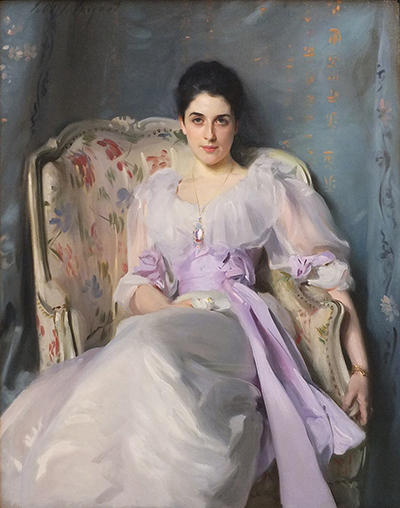
John Singer Sargent's Lady Agnew of Lochnaw is one of the great society portraits of the 1890s because it makes ease look powerful. Gertrude Vernon, Lady Agnew, sits back in a Louis XVI chair before a patterned Chinese silk hanging, dressed in white with lilac accents, and meets the viewer with a direct gaze. The pose is relaxed, but the encounter is not passive. Sargent turns aristocratic composure into a vivid event of looking.
Painted in 1892 and shown at the Royal Academy in London in 1893, the portrait helped secure Sargent's reputation in Britain at a critical moment. He had moved to London after the hostile Paris reception of Portrait of Madame X, and his continental brushwork had not immediately reassured British patrons. Lady Agnew changed the tone. It was praised, discussed, and remembered as the kind of portrait that could make both painter and sitter newly visible [1], [2].
The painting matters because it joins surface beauty to social intelligence. The white dress and lilac sash are dazzling, but they do not overwhelm the sitter. The studio props are elegant, but they do not reduce her to decor. The brushwork feels swift, but the image is carefully staged. Lady Agnew appears at rest, yet the painting is full of pressure: the pressure of being looked at, of looking back, of becoming known through an image.
Sargent's achievement is to make a fashionable portrait feel alert rather than merely flattering. The National Galleries of Scotland stresses that her confident gaze and relaxed posture were unusual in contemporary portraiture, and the Frick emphasizes the compelling connection produced by her frontal look and informal pose [1], [2]. Those facts give the painting its central tension. Lady Agnew reclines, but she commands. The painting gives society portraiture a new temperature: cool, luxurious, amused, and alive.
At a Glance
- ArtistJohn Singer Sargent [1]
- TitleGertrude Vernon, Lady Agnew of Lochnaw (1864-1932), often called Lady Agnew of Lochnaw [1]
- Date1892 [1]
- MediumOil on canvas [1]
- Dimensions127 x 101 cm; framed 159.5 x 133.3 x 14.5 cm, according to the National Galleries of Scotland [1], [3]
- SitterGertrude Vernon, Lady Agnew of Lochnaw [1]
- First major exhibition contextRoyal Academy, London, 1893 [1]
- CollectionNational Galleries of Scotland, Scottish National Gallery, Edinburgh [1], [3]
- Accession numberNG 1656 [1]
- AcquisitionPurchased with the aid of the Cowan Smith Bequest Fund in 1925 [1]
- DisplayListed by the National Galleries of Scotland as on display at the National [1], [3]
- Image statusthe National Galleries of Scotland record gives specific personal and non-commercial terms for its image; reuse for any other purpose requires separate checking [1], [3]
Contents
- Introduction
- Annotated Details
- Gertrude Vernon and the Agnew Commission
- Sargent in 1892
- Pose, Gaze and Relaxed Authority
- Dress, Lilac Sash and Studio Props
- Brushwork and the Six Sittings
- Royal Academy Success and Reputation
- Collection, Sale and Display Afterlife
- Madame X, Lady Agnew and Sargent's Portrait Range
- How to Look at Lady Agnew
- Related Works And Where To Go Next
Annotated Details from Lady Agnew of Lochnaw
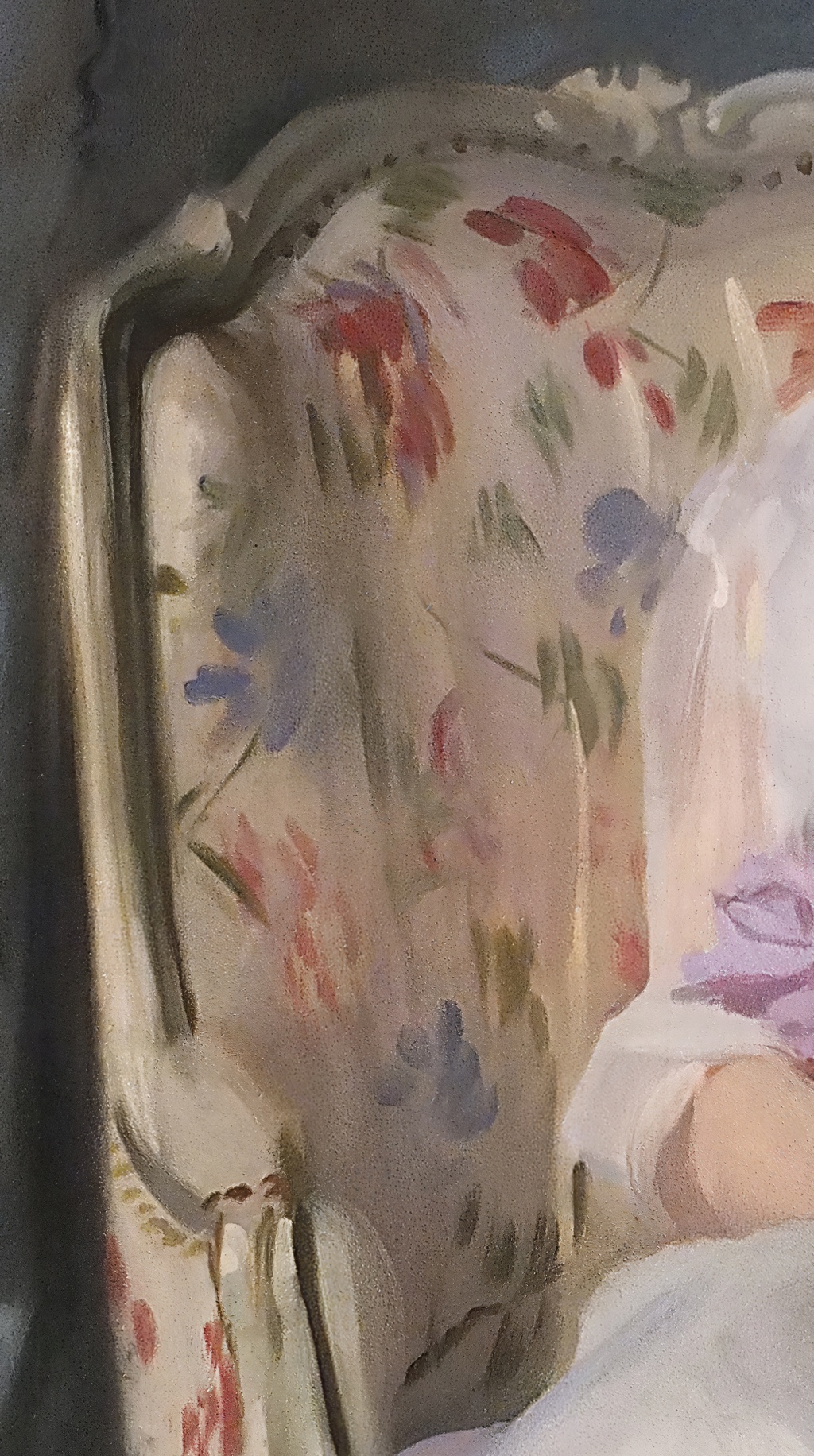
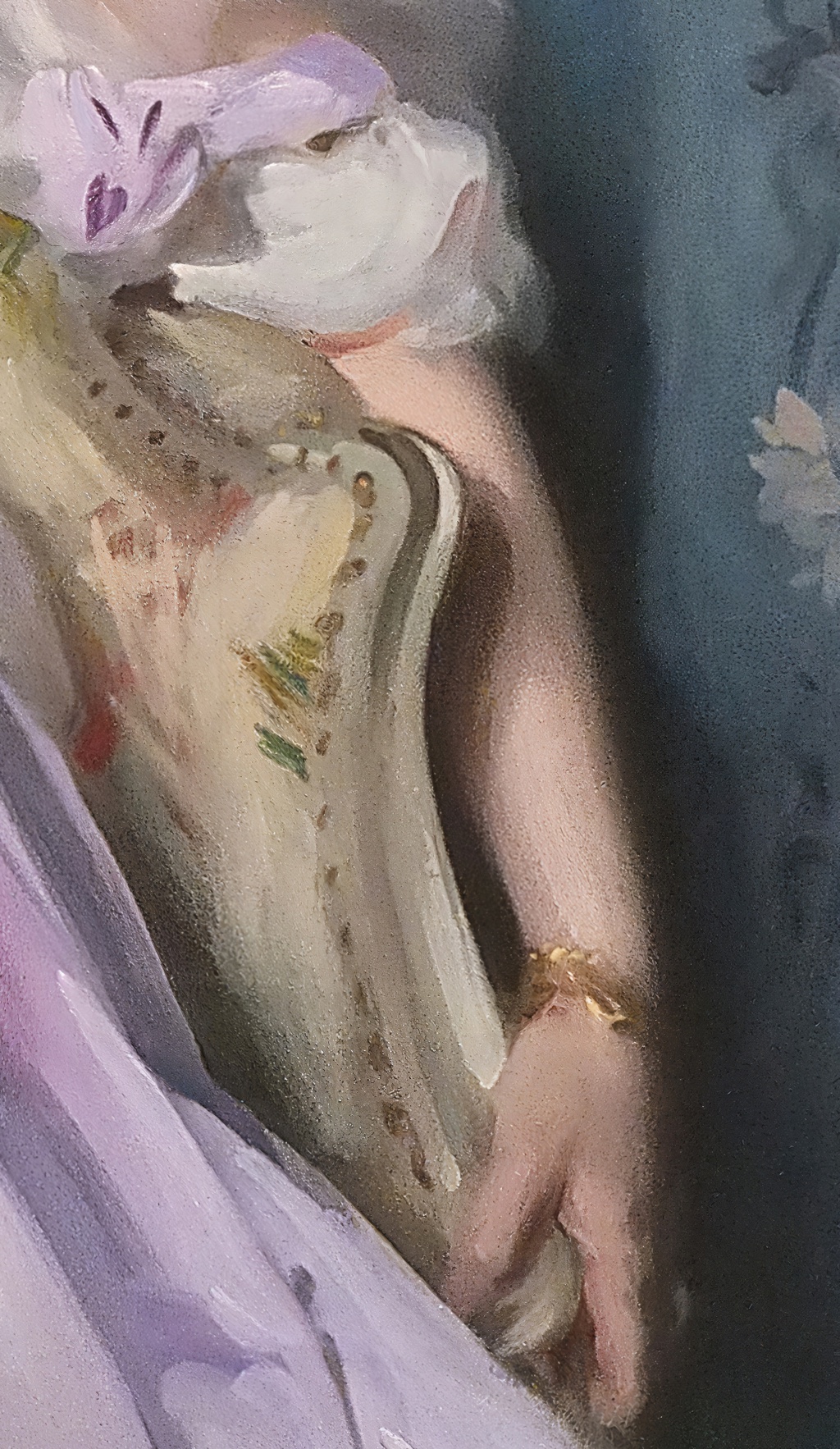
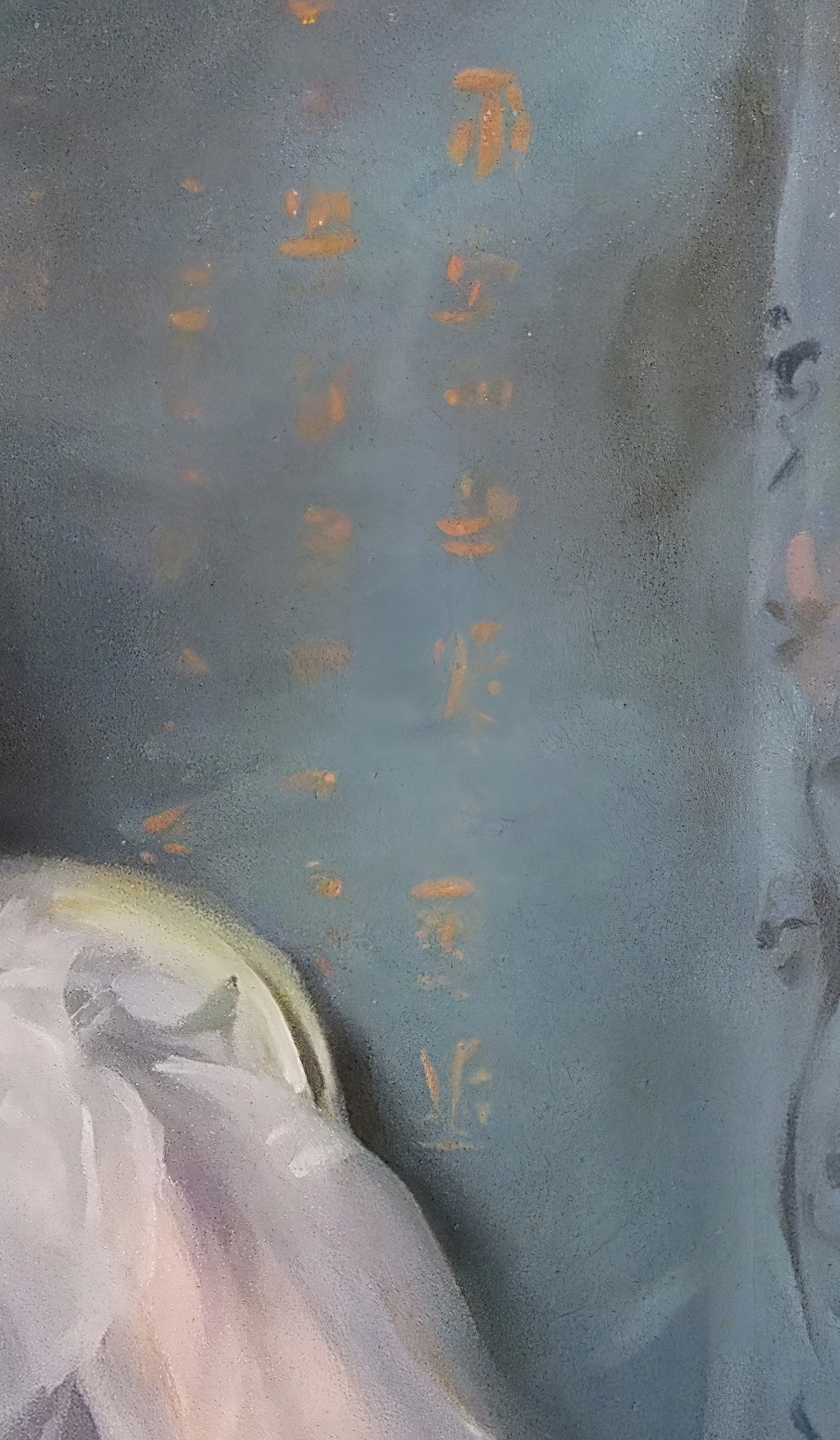
The numbered details move from Lady Agnew's direct gaze and pendant through the lilac sash, floral chair, relaxed hand and flickering patterned wall.
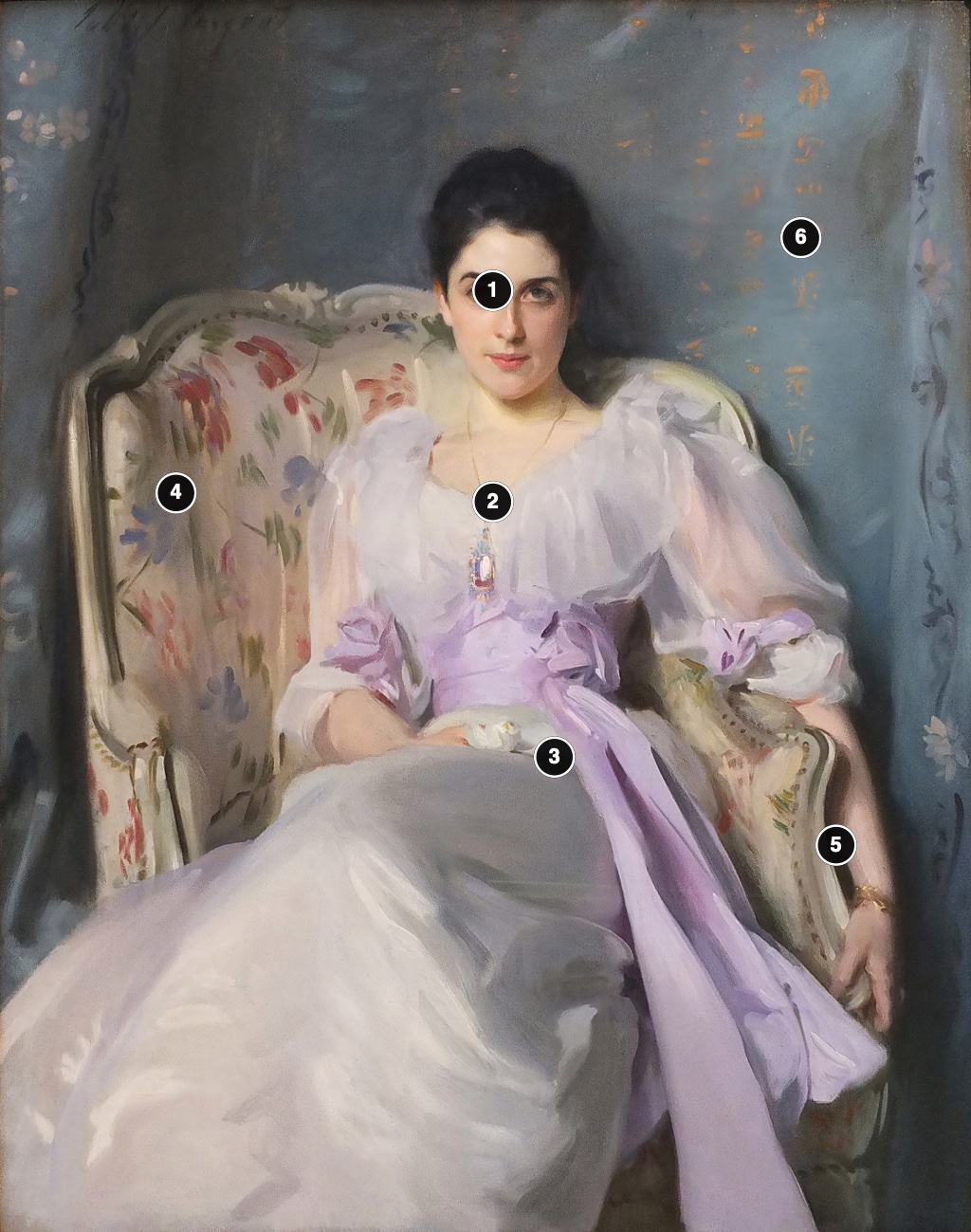
Details from LADY AGNEW OF LOCHNAW
Close looking reveals how fine facial modelling is surrounded by increasingly broad, fluid strokes across dress, upholstery and background.
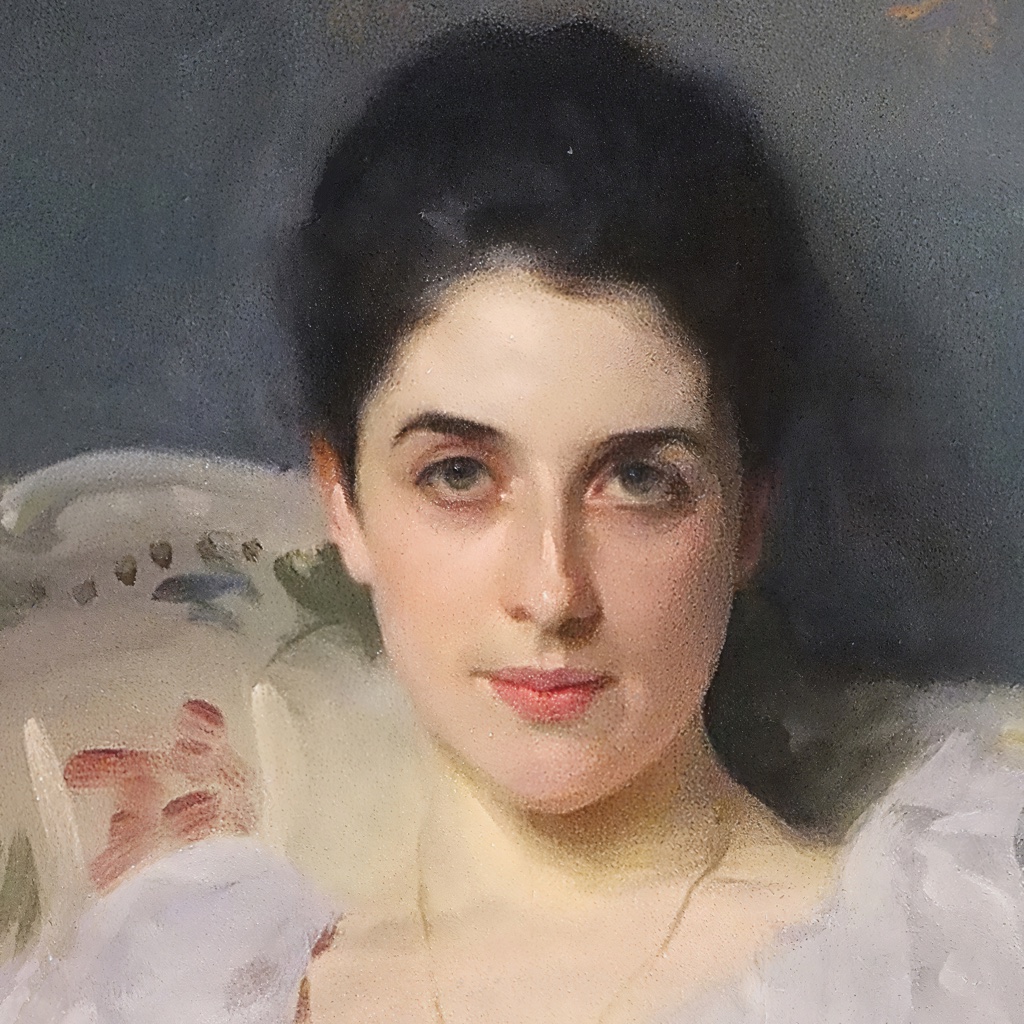
Direct gaze and dark hair
The face is modelled with small controlled transitions while the dark hair forms a compact frame against the cool wall.
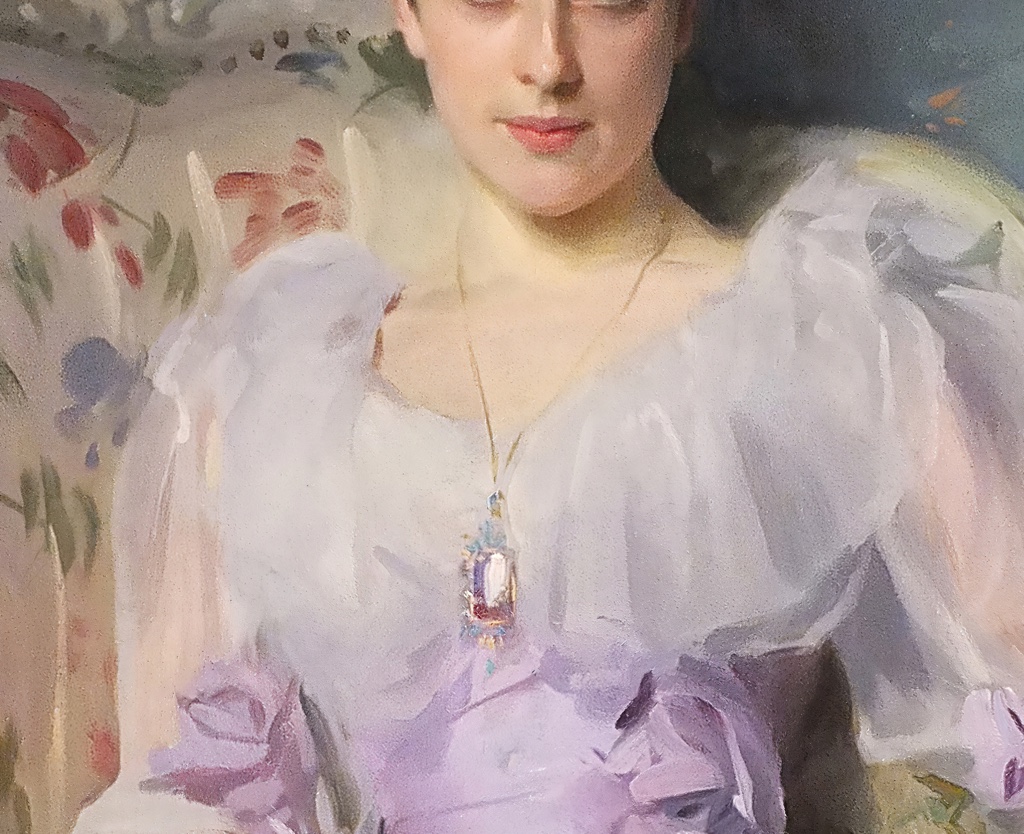
Pendant and translucent sleeves
A long pendant hangs over the pale bodice as soft lilac and white strokes make the sleeves appear thin and luminous.
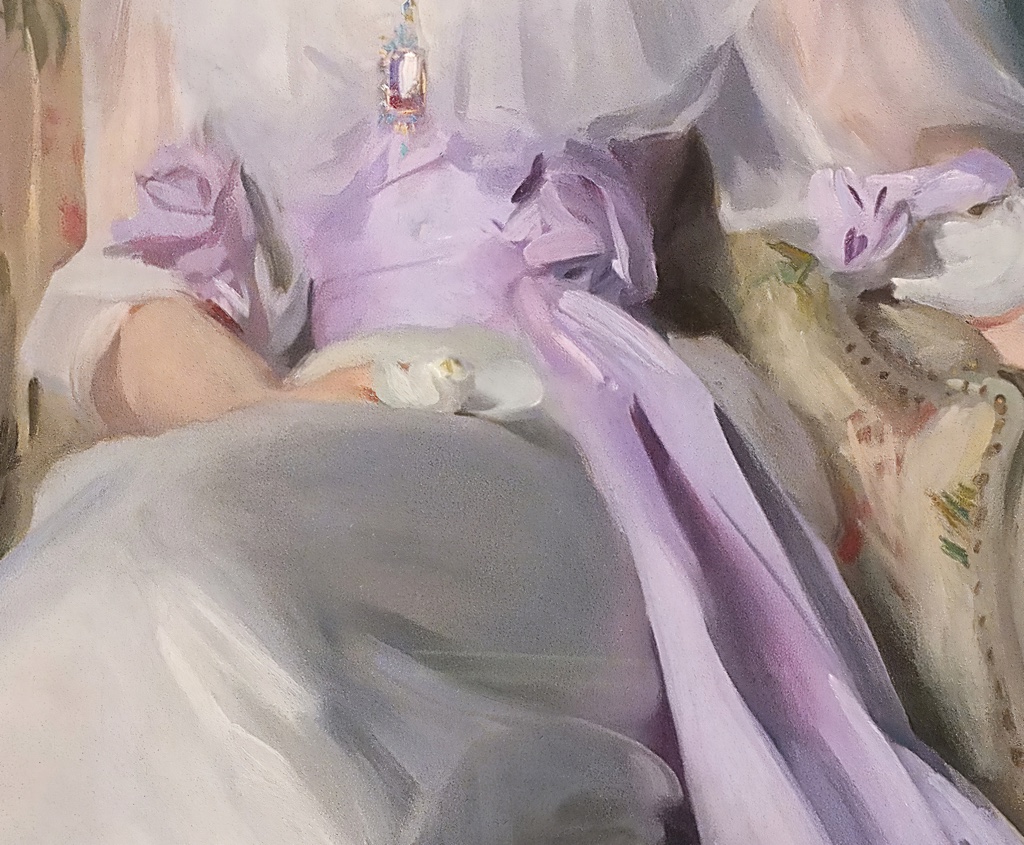
Lilac sash across the dress
The sash gathers at the waist and then falls in broad violet folds, giving the seated pose a strong diagonal movement.
Floral chair back
Loose red, green and blue marks suggest flowers across the chair back, balancing pattern with the sitter's pale dress.
Relaxed hand and bracelet
Her hand drops over the chair arm with fingers loosely extended, and a small gold bracelet marks the wrist.
Blue patterned wall
Scattered gold and darker marks flicker across the blue wall, creating a shallow decorative field around the sitter.
Gertrude Vernon and the Agnew Commission
The sitter was born Gertrude Vernon in 1864. In 1889 she married Andrew Noel Agnew, a Scottish barrister who later became an MP and deputy lieutenant in Wigtownshire. In 1892, the year Sargent painted the portrait, Andrew Agnew succeeded his father as the ninth Baronet of Lochnaw, raising Gertrude's title and social visibility at almost the same moment the portrait was made [1].
That timing matters, but it should not be overstated. The National Galleries of Scotland notes that the exact circumstances of the commission are not known. It also suggests that the Agnews may have met Sargent through mutual American friends [1]. The painting should therefore be read as a society commission with strong contextual clues, not as a fully documented transaction with every social step preserved.
The Frick record is more direct about the patronage: it identifies the portrait as commissioned by Sir Andrew Noel Agnew [2]. Whether the initial contact came through friends, marriage networks, or social recommendation, the result placed Sargent before a sitter whose image could serve several purposes at once. It was a likeness of a newly titled woman, a display of cultivated taste, a public announcement of status, and a test of Sargent's standing in London portraiture.
Gertrude Vernon was not a public official, performer, or artist-friend in the way some Sargent sitters were. Her importance to the painting lies in how Sargent made social identity visible. She appears neither as a remote dynastic figure nor as an anecdotal personality. She is presented as a presence: dressed, seated, observed, and self-possessed. The painting's famous force comes from that conversion of social position into visual command.
The National Galleries account also notes a health context, reporting that Lady Agnew had recovered slowly from a severe bout of influenza in 1890 and may still have been convalescent or exhausted when she sat to Sargent [1]. That information should be handled carefully. It may help explain the pale, almost spectral quality of the face and body, but it does not license a full psychological story. The painting does not simply show illness. It transforms pallor into one element within a larger construction of elegance, fatigue, beauty, and gaze.
The portrait's later social effect confirms how powerful that construction became. The National Galleries writes that the Royal Academy success helped make Lady Agnew a celebrity figure in high society [1]. A portrait could do more than reflect prominence. Under the right conditions, it could help produce it.
Sargent in 1892
Sargent came to the Lady Agnew portrait with both triumph and damage behind him. Born in Florence in 1856 to American parents, he trained in Paris with Carolus-Duran from 1874 and absorbed lessons from old masters such as Velazquez, Rembrandt, Hals, Van Dyck, and Reynolds. The National Galleries of Scotland artist page describes his fluid painting style, bold handling of light, travel, landscapes, and later war work, while also noting the decisive disruption caused by Madame X [4].
That disruption forms the background to Lady Agnew. Sargent's 1884 portrait of Virginie Gautreau had been provocative and unconventional. Its reception at the Paris Salon damaged his position there and helped prompt his move to London. The National Galleries object text says that after settling in London in 1886, he initially found clients difficult to secure because his bravura continental style attracted suspicion [1].
By 1892, then, Sargent needed more than commissions. He needed British confidence. His talent was not in doubt, but the question was whether London society would accept his manner as flattering, elegant, and safe enough for its own purposes. Lady Agnew answered yes, while preserving enough sharpness to remain unmistakably Sargent.
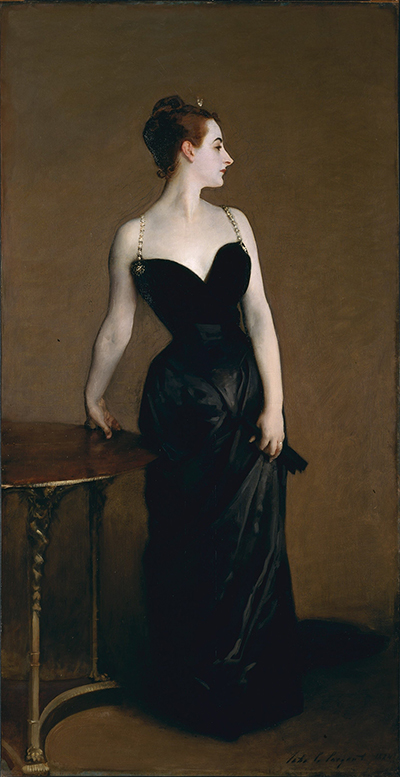
The painting is not a retreat from the risks of Madame X. It is a recalibration. In Madame X, the sitter turns her face away in profile, the black dress sharpens the body, and the whole image feels severe enough to unsettle the social world around it. In Lady Agnew, Sargent keeps the fashionable sitter, the strong costume, the controlled space, and the drama of being seen. But he changes the social pitch. Instead of icy profile and exposed scandal, he gives frontal intelligence, luminous dress, and cultivated ease.
This is why the portrait belongs at the center of Sargent's London career. It shows him finding a form of society portraiture that could succeed without becoming bland. He did not abandon technical bravura; he made it persuasive. He did not stop staging identity; he made staging feel effortless. He did not stop testing the sitter-viewer relation; he made the test feel like charm.
Pose, Gaze and Relaxed Authority
The painting begins with the body in the chair. Lady Agnew is seated rather than standing in the full-length language of aristocratic portraiture. She leans back, her torso angled, one arm set across the chair, the white dress spreading through the lower part of the canvas. The posture is informal by the standards of late nineteenth-century society portraiture, but it is not slack. The relaxation is designed.
The direct gaze changes everything. A reclining sitter could easily become an object of display. Lady Agnew does not. She looks outward with enough directness to make the viewer aware of being addressed. The National Galleries calls the combination of confident gaze and relaxed posture unusual in contemporary portraiture [1]. That unusual pairing explains the painting's lasting charge. Her body says ease; her eyes say control.
Sargent does not give the gaze a single fixed meaning. It can seem amused, reserved, fatigued, knowing, or cool depending on the viewer's angle of attention. The safest interpretation is not to choose one emotion and claim it as the sitter's private truth. The painting's brilliance is that it creates the effect of intelligence without explaining it away. Lady Agnew appears aware of the viewer, but she does not become readable in a simple way.
The frontal encounter also distinguishes this portrait from Madame X. Gautreau's profile refuses the viewer's gaze and turns visibility into distance. Lady Agnew's look makes visibility reciprocal. She is seen, but she also sees. That reciprocity softens the scandalous pressure of Sargent's earlier portrait while creating another kind of power. The viewer cannot simply admire her as an arrangement of dress, chair, and silk. The sitter interrupts admiration by looking back.
The chair supports the drama. Because Lady Agnew sits back in it, the furniture becomes part of the pose rather than a neutral accessory. The arms of the chair frame her body; the patterned upholstery adds color and movement; the slight backward lean gives the whole figure a sense of leisure. Yet the chair also helps create authority. She does not perch uncertainly. She occupies the seat as if the room has adjusted to her.
The informality is therefore social rather than accidental. Sargent's society portraits often operate by making public identity seem natural. Here, cultivated ease looks like character, but the painting makes clear that ease is constructed from many things: furniture, costume, studio setting, pose, painterly finish, and the sitter's ability to withstand scrutiny.
One of the portrait's deepest pleasures is the way it makes command feel quiet. There is no raised arm, no official emblem, no theatrical action. Lady Agnew's power is in the angle of the body, the directness of the face, and the calm refusal to be reduced to ornament. Sargent gives her a social authority that does not need to announce itself loudly.
Dress, Lilac Sash and Studio Props
The white dress is one of the painting's great pictorial fields. It catches light, absorbs reflection, and lets Sargent show how much can happen inside pale fabric. The National Galleries points to the highlights, reflections, and colored shadows as brilliant passages of surface painting [1]. The dress is glamorous, but it is not flat display. It is an active structure.
The lilac sash is crucial because it prevents the white from becoming generalized brightness. It introduces color at the waist, draws attention to the turn of the body, and echoes the cooler tones in the surrounding fabrics. Frick describes the gown as elegant and trimmed in lilac, while the National Galleries notes the white silk dress and lilac sash as central attractions within the picture [2], [1].
The costume also negotiates between fashion and paint. A real gown may have had its own social meaning, but Sargent transforms it into an arrangement of strokes, edges, folds, and reflected color. The viewer may first notice elegance, then painterly decision. Some passages are brought into focus; others remain broad and suggestive. The dress is both clothing and demonstration.
The Chinese silk hanging behind the sitter is equally important. It gives the background pattern and color without turning into a fully described room. The Frick and National Galleries both identify the hanging as a studio prop, and the National Galleries adds that it was one of the standard props in Sargent's studio along with the chair [1], [2]. That fact changes the way the portrait should be read. The setting does not document the Agnew home. It constructs a refined environment inside the painter's working space.
Studio props were not deceitful in any simple sense. Portraiture has always used settings, furniture, costume, and attributes to create meaning. What matters is how Sargent uses them. The chair, silk hanging, and dress create a world of aristocratic taste, but because they are studio elements, they also reveal the portrait as a staged encounter. Lady Agnew's presence feels natural precisely because Sargent has arranged so much around her.
The patterned background prevents the sitter from floating in emptiness. It gives her a decorative field against which the pale dress can glow. At the same time, the pattern remains subordinate. Sargent lets the hanging enrich the portrait without stealing the sitter's authority. This balance is delicate. Too much description would flatten the gaze into decor. Too little would lose the sense of luxury. Sargent finds a middle ground in which the setting breathes but the sitter dominates.
The portrait's materials of display also point to the larger world of late nineteenth-century taste. Chinese silk, French-style furniture, white dress, lilac sash, and Anglo-Scottish title all meet in the London studio of an American-born artist trained in Paris. The portrait is cosmopolitan in its very props. It belongs to a society where identity was fashioned through objects, travel, inheritance, display, and the prestige of artists able to make those elements look inevitable.
Brushwork and the Six Sittings
Both the National Galleries and the Frick note the striking speed associated with the portrait. According to notes in Sir Andrew Agnew's diary and Sargent's later recollection, the painting progressed swiftly and may have been completed in only six sittings [1], [2]. That fact has become part of the portrait's legend because the finished image looks fresh without feeling underbuilt.
Six sittings should not be mistaken for carelessness. Sargent's speed depended on training, decision, and control. His Paris education under Carolus-Duran had taught a direct method in which the painter established major tonal and structural relations early. In Lady Agnew, this means the angle of the body, the pale mass of the dress, the face, the chair, and the background had to be organized quickly enough to keep the surface alive.
The National Galleries describes the spontaneous feel as enhanced by fluid and sweeping brushwork [1]. That phrase is useful because it connects appearance to method. The painting feels spontaneous not only because it was made quickly, but because Sargent preserved the look of decisions being made with confidence. A fold, sleeve, highlight, or shadow may remain open enough for the viewer to sense the stroke.
White fabric is the great test. If painted too tightly, it would become stiff and decorative. If painted too loosely, the body underneath would collapse. Sargent lets the dress shimmer while keeping the figure believable. The same balance appears in the face. It is not overloaded with detail, but the gaze has enough focus to hold the whole canvas.
The arm and hand are especially important. They help convert relaxation into structure. The left arm, placed along the chair, is not a casual afterthought. It carries weight, direction, and rhythm. Modern visitor response to the painting often returns to that arm, and the National Galleries feature by Phill Jupitus records a viewer's fascination with details including the eyes, pendant, sash, curtain, and arm [3]. Such responses are not scholarly evidence for meaning by themselves, but they show how strongly Sargent distributed attention across the portrait.
The brushwork also keeps the sitter from becoming porcelain. Her pallor is striking, and the National Galleries cautiously links it to the reported health context of the sittings [1]. Yet the surface remains living. The face is pale, but not inert. The dress is white, but full of colored shifts. The background is decorative, but not dead pattern. Everywhere Sargent uses paint to keep stillness active.
This is the technical core of the portrait: controlled freshness. The viewer feels speed because the surface is open, but the major relations are secure. The sitter's presence does not depend on polished finish everywhere. It depends on Sargent knowing where finish mattered most.
Royal Academy Success and Reputation
When Lady Agnew appeared at the Royal Academy in 1893, it was an immediate success. The National Galleries states that the positive reception helped secure Sargent's reputation in Britain and launched Lady Agnew as a celebrity figure in high society [1]. The Frick similarly describes an outpouring of praise and stresses the effect on both sitter and painter [2].
One contemporary response, preserved in the National Galleries text, declared: "London is at his feet." The words matter because they capture the shift in Sargent's British position [1]. He had arrived in London with a reputation complicated by Madame X. By 1893, this portrait made his manner appear not dangerous but desirable.
The success also reveals how portraiture could operate in elite society. A portrait shown at the Royal Academy was not merely a private commission entering a public exhibition. It was a social event. Viewers saw the sitter, the artist, the dress, the pose, the technical flourish, and the implied world around the commission. Praise could become reputation. Reputation could become further commissions. A successful portrait could act almost like a social introduction.
For Sargent, the painting opened the British market more fully. The Frick webcast description of Richard Ormond's lecture frames the portrait as a breakthrough that opened the way to the British market and helped propel Sargent to transatlantic fame [5]. That is not just career background. It changes the painting's art-historical role. Lady Agnew is not a secondary society portrait after the more famous Madame X. It is one of the images through which Sargent rebuilt and redirected his career.
For Lady Agnew, the image also had consequences. The National Galleries writes that Sargent's portrait helped her become a leading light in fashionable circles and that she held lavish salons in her London home [1]. The painting therefore belongs to the making of a social identity, not simply its recording. It helped transform a newly elevated sitter into someone whose image circulated as elegance, beauty, and taste.
This effect can feel strange to modern viewers because celebrity now moves through photographs, film, and digital circulation. In the 1890s, a widely praised exhibition portrait could do similar cultural work within elite circles. It gave a face, a posture, a look, and a costume to a name. It fixed Lady Agnew's presence in a form that could outlast the season.
The Royal Academy success also helps explain why the portrait feels less scandalous than Madame X but not less potent. Sargent had learned that society portraiture could wound if it made display too severe. With Lady Agnew, he found a form of boldness that society could applaud. The sitter's directness is daring, but her beauty, costume, and seated ease make the daring socially acceptable.
Collection, Sale and Display Afterlife
The painting did not remain in the Agnew family permanently. The National Galleries notes an irony in its later history: Lady Agnew's costly hospitality eventually contributed to the sale of family pictures, including this portrait [1]. In 1925, the Scottish National Gallery purchased the work with the aid of the Cowan Smith Bequest Fund. Its accession number is NG 1656 [1].
That acquisition changed the portrait's life. A private image of a society sitter became one of the signature works in a national collection. The National Galleries of Scotland now lists it as on display at the National, and its object record treats it as one of Sargent's most famous portraits of fashionable London society [1].
The move to Edinburgh is especially appropriate because the sitter's title connects the portrait to Scotland, even though the painting was made in London by an American-born artist trained in Paris. The 2024 National Galleries book description presents the portrait as an English woman who married a Scot, painted by an American artist in London, and definitively housed in Edinburgh [6]. That convergence of identities is part of the painting's afterlife. It is not owned by one simple national story.
The portrait has also traveled. The Frick Collection presented it in New York as part of Masterpieces from the Scottish National Gallery from November 5, 2014, to February 1, 2015. The Frick past exhibition page records that the show featured ten paintings from the Scottish National Gallery, including Sargent's portrait, and that an expanded version traveled in 2015 to the de Young in San Francisco and the Kimbell Art Museum in Fort Worth [7].
The Frick context matters because it placed Lady Agnew among European masterworks spanning several centuries. The portrait was not treated merely as a glamorous late nineteenth-century likeness. It appeared as one of the paintings capable of representing the strength of the Scottish National Gallery on an American tour. That setting extended the work's transatlantic history: made by an American expatriate in London, housed in Edinburgh, and exhibited in New York and beyond.
The National Galleries feature by Phill Jupitus adds a different kind of afterlife evidence. It records a passionate modern viewer's repeated visits, the painting's temporary absence while on loan, its return for an American Impressionism exhibition, and the careful condition checking that accompanies a work arriving from travel [3]. The tone is personal rather than scholarly, but the details are useful. They show the painting as an object with a physical life: crated, examined, hung, moved, missed, and greeted again by viewers who know it well.
The same feature mentions a repaired tear visible only at close range when pointed out by a conservator [3]. That detail should not dominate interpretation, but it reminds us that even an image of effortless elegance has a material history. Canvas, frame, handling, travel, repair, and display all belong to the painting's life after the studio.
Madame X, Lady Agnew and Sargent's Portrait Range
The natural comparison is Portrait of Madame X. Both paintings center on fashionable women whose public images mattered. Both depend on dress, skin, pose, and the social risks of display. Both helped define Sargent's career. Yet their effects are almost opposite.
Madame X is vertical, severe, and distancing. Gautreau turns her face into profile and avoids the viewer's gaze. Her black dress and pale skin create a stark image of modern self-fashioning. The painting became controversial at the 1884 Paris Salon and contributed to Sargent's move away from Paris. Lady Agnew, by contrast, is seated, frontal, pale, and open to exchange. Its Royal Academy reception in 1893 was positive and helped establish Sargent in Britain [4], [1].
The difference is not simply scandal versus flattery. Lady Agnew is flattering, but it is not tame. The sitter's gaze has a cool force. The relaxed pose is almost too relaxed for old portrait etiquette. The studio props announce luxury without hiding their theatrical function. Sargent has not abandoned the modern problem of portraiture. He has changed its solution.
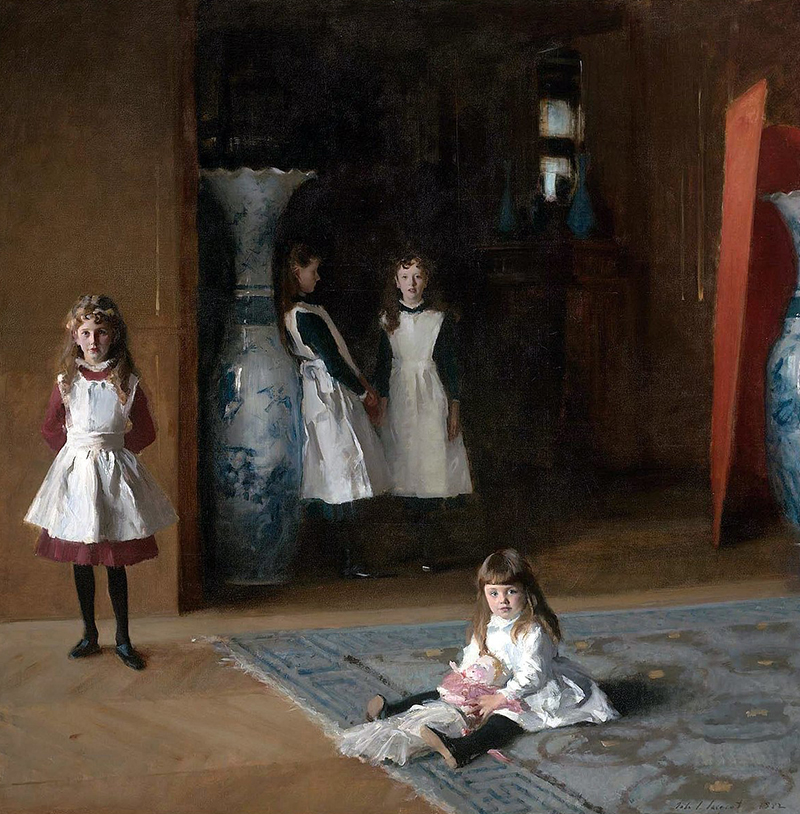
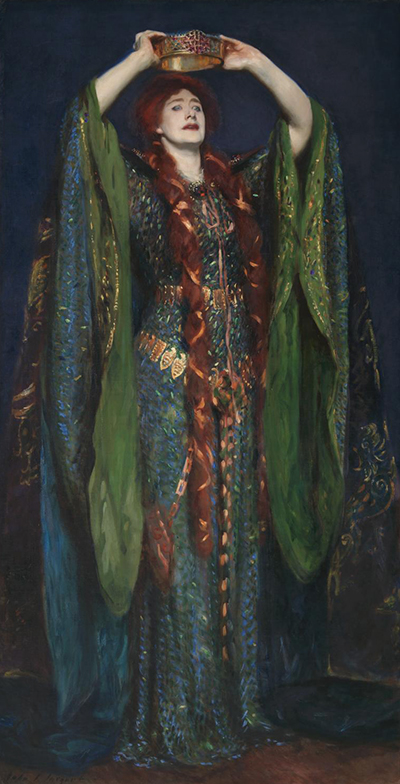
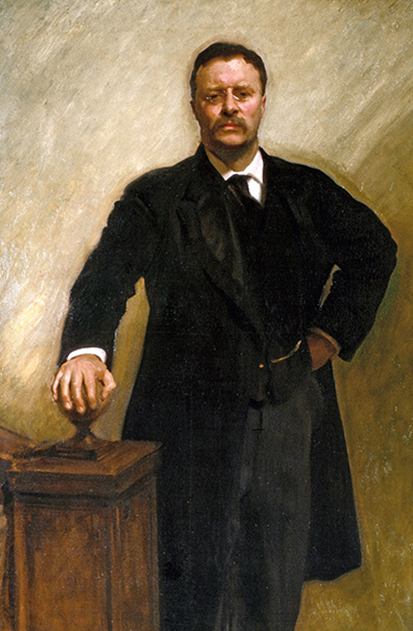
Other Sargent portraits clarify the range. The Daughters of Edward Darley Boit uses space and separation to unsettle family portraiture. Ellen Terry as Lady Macbeth turns theatrical costume and role into image. Claude Monet Painting by the Edge of a Wood shows an artist at work rather than a sitter posing. Theodore Roosevelt translates public office into bodily command. Beside these works, Lady Agnew represents society portraiture at its most balanced: glamorous, direct, staged, and psychologically suggestive without becoming narrative.
The painting also belongs naturally with Sargent's style and technique. It shows his ability to distribute finish: sharper where gaze and face matter, broader where dress and background can remain alive. It shows his use of props not as clutter but as stagecraft. It shows his old-master inheritance not as imitation but as authority of pose, space, and surface.
What makes Lady Agnew so durable is that it satisfies and complicates at once. It gives beauty, but not simple prettiness. It gives rank, but not stiff formality. It gives surface, but not emptiness. It gives directness, but not full disclosure. Sargent's portrait succeeds because it lets the sitter appear in command while preserving the mystery of how that command has been made.
How to Look at Lady Agnew
Begin with the eyes. The whole painting changes because Lady Agnew looks back. Notice how the gaze holds the portrait before the viewer has fully read the dress, chair, or background. The eyes create the encounter; everything else conditions it.
Then look at the posture. She is not upright in a rigid ceremonial pose. She sits back, angled and at ease. Ask how Sargent prevents that ease from becoming weakness. The answer lies in the chair, the arm, the centered face, and the control of the gaze. The relaxed body remains structurally firm.
The left arm deserves slow attention. It extends through the chair and helps hold the lower half of the composition together. Its placement adds languor, but also design. The arm tells the viewer that the pose is not casual in the ordinary sense. It is a carefully arranged state of ease.
Next, move to the white dress. Do not treat it as one color. Look for cool shadows, warm reflections, sharper highlights, and looser passages where Sargent lets the fabric remain open. The dress carries much of the painting's brightness, but it also reveals Sargent's hierarchy of finish.
The lilac sash is a small color event with large importance. It gathers the body at the waist, gives the pale fabric a point of contrast, and connects the sitter to the chromatic life of the background. It is one of the details that makes the portrait feel designed rather than merely observed.
The background should be read as studio staging. The Chinese silk hanging and Louis XVI chair do not simply show where Lady Agnew lived. They show how Sargent built a world for the portrait. The sitter is real; the room is partly invented from props. That mixture is central to society portraiture.
Finally, notice where Sargent stops explaining. Some areas are fluid, broad, or suggestive. The portrait feels complete because the essential relations are complete, not because every inch has the same finish. This is one of Sargent's strongest technical gifts: he lets the viewer complete the visual thought while never losing control of the sitter's presence.
Related Works And Where To Go Next
For Sargent's larger portrait practice, move to Portraits. That essay places Lady Agnew beside society portraits, artist-friend portraits, performance portraits, child portraits, political sitters, and military images.
For oil painting and major works, use Paintings. For brushwork, props, direct painting, costume, and finish, use Style and Technique. For the life story behind the London career, use Biography.
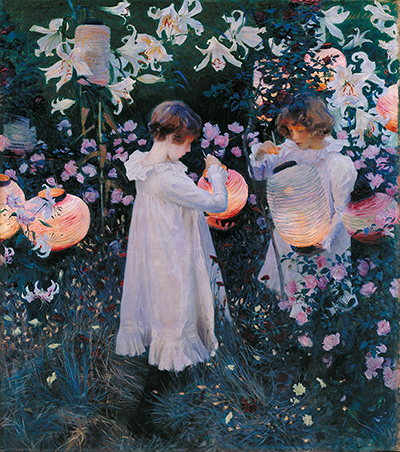
The strongest comparison is Portrait of Madame X, where society portraiture becomes scandalous and severe. Useful contrasts also include The Daughters of Edward Darley Boit, Carnation, Lily, Lily, Rose, and Ellen Terry as Lady Macbeth, each of which shows Sargent using pose, costume, space, or light to reshape what a portrait or figure painting can do.
Frequently Asked Questions
Lady Agnew was born Gertrude Vernon in 1864. She married Andrew Noel Agnew in 1889. He succeeded as the ninth Baronet of Lochnaw in 1892, the same year Sargent painted the portrait [1].
Sargent painted the portrait in 1892. It was exhibited at the Royal Academy in London in 1893, where it was an immediate success [1], [2].
The painting is in the National Galleries of Scotland, Scottish National Gallery, Edinburgh. The National Galleries record lists it as on display at the National and gives the accession number NG 1656 [1].
The Frick Collection identifies the portrait as commissioned by Sir Andrew Noel Agnew, Lady Agnew's husband. The National Galleries of Scotland notes that the exact circumstances behind the commission are not known, though the Agnews may have met Sargent through mutual American friends [2], [1].
The pose joins informality to command. Lady Agnew sits back in a relaxed way, but her direct gaze makes the viewer aware of her control. The National Galleries describes that combination of confident gaze and relaxed posture as unusual in contemporary portraiture [1].
The National Galleries and the Frick both report that the portrait progressed swiftly and that Sargent later recalled painting it in six sittings [1], [2].
Its success at the Royal Academy in 1893 helped secure Sargent's reputation in Britain after the difficult Paris aftermath of Madame X. It showed that his painterly, continental manner could become highly desirable in London society [1], [4].
Both portraits show fashionable women whose public images mattered, and both helped define Sargent's career. Madame X is severe, profile-based, and linked to scandal; Lady Agnew is frontal, seated, and linked to acclaim. Together they show how Sargent could make society portraiture risky in different ways.
Discussion
Lady Agnew of Lochnaw asks how much power can be contained in apparent ease. The sitter does not act, gesture dramatically, or occupy an official setting. She sits, looks, and lets Sargent's paint, props, and surface do the social work around her. That is why the portrait still feels so alive: it makes looking itself the event.
Reader Insights
What is the first detail that shapes your reading of Lady Agnew of Lochnaw by John Singer Sargent: pose, setting, light, costume, brushwork or historical context?
Which small visual decision begins to matter more after a longer look, and how does it change the mood of the page?
Which comparison helps most: another Sargent portrait, a travel subject, a public commission, or a work by one of his contemporaries?
Join the Conversation
Share a thoughtful comment below about what you notice, question or compare when looking at this page.
References
- National Galleries of Scotland, *Gertrude Vernon, Lady Agnew of Lochnaw (1864-1932)* https://www.nationalgalleries.org/art-and-artists/5396
- The Frick Collection, *Lady Agnew of Lochnaw* https://www.frick.org/exhibitions/scottish/sargent
- National Galleries of Scotland, *Phill Jupitus encounters Lady Agnew of Lochnaw* https://www.nationalgalleries.org/art-and-artists/features/phill-jupitus-encounters-lady-agnew-lochnaw
- National Galleries of Scotland, John Singer Sargent artist page https://www.nationalgalleries.org/art-and-artists/artists/john-singer-sargent
- The Frick Collection, *Video: Lectures Online* https://www.frick.org/exhibitions/scottish/webcast
- Christopher Baker, *Lady Agnew: A Painting by John Singer Sargent*, publisher page https://www.simonandschuster.com/books/Lady-Agnew/Christopher-Baker/9781911054481
- The Frick Collection, *Masterpieces from the Scottish National Gallery* https://www.frick.org/exhibitions/past/2014/scottish