

 by Tom Gurney
Tom Gurney BSc (Hons) is an art history expert with over 20 years experience
Published on June 19, 2020 / Updated on July 19, 2026
Email: tomgurney1@gmail.com / Phone: +44 7429 011000
Gassed by John Singer Sargent: Introduction
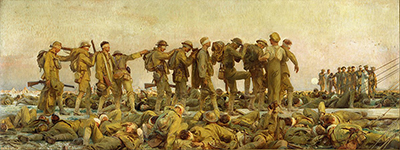
John Singer Sargent's Gassed is one of the most powerful paintings of the First World War because it turns military order into an image of shared vulnerability. A line of soldiers moves across a vast canvas, each man touching the shoulder of the man before him. Their eyes are bandaged after exposure to gas. Some step uncertainly along a duckboard, others sit or lie in the foreground, and a football match continues in the distance. The painting is monumental, but it is not triumphant.
Sargent made Gassed in 1919 after traveling to the Western Front as an official war artist. Imperial War Museums identifies the scene as the aftermath of a mustard gas attack in August 1918, witnessed by the artist near Le Bac-du-Sud on the Arras-Doullens Road [1], [2]. The work was commissioned for the British War Memorials Committee's planned Hall of Remembrance, a project that was meant to memorialize the war through major paintings but was never completed [1].
The painting matters because it tests what Sargent's art could do when elegance no longer mattered. The painter famous for society portraits, shimmering fabric and public likeness used the same gifts of pose, rhythm, scale and surface to show blinded men being led toward treatment. Gassed does not reject Sargent's earlier career. It transforms it.
At a Glance
- ArtistJohn Singer Sargent [1]
- TitleGassed [1]
- Date1919 [1]
- MediumOil on canvas [1]
- CollectionImperial War Museums, Art.IWM ART 1460 [1], [3]
- Dimensionssupport 2310 mm high by 6111 mm wide; frame 2700 mm high by 6500 mm wide [1]
- Subjectsoldiers affected by mustard gas on the Western Front [1]
- Related placeLe Bac-du-Sud on the Arras-Doullens Road, near Doullens, Somme, France [1]
- CommissionMinistry of Information commission, 1918; associated with the British War Memorials Committee and the unrealized Hall of Remembrance [1]
- Current display contextIWM describes the painting as on permanent display in IWM London's Blavatnik Art, Film and Photography Galleries [1]
Contents
- Introduction
- The War Artist Commission
- Finding The Subject At The Front
- Composition And Scale
- Mustard Gas And Temporary Blindness
- The Football Match In The Background
- Studies, Notes And Alternative Ideas
- Sargent's Late Career And The Burden Of The Subject
- The Hall Of Remembrance And IWM Afterlife
- Conservation And Renewed Viewing
- How To Read Gassed Now
- Related Works And Where To Go Next
The War Artist Commission
Sargent was an unusual but logical choice for a major war art commission. By 1918 he was in his early sixties and already internationally famous. He had built a career through portraits, murals, watercolors and public commissions. He was not a young front-line modernist, but he was a painter with the authority and scale needed for an official memorial project.
The British government's war art schemes had developed during the First World War into what IWM describes as an unprecedented act of government sponsorship of the arts [1]. The schemes began with propaganda and documentary aims, then widened into a more ambitious attempt to record and memorialize the war. The British War Memorials Committee planned a Hall of Remembrance, a space that would gather large paintings devoted to fighting subjects, home subjects, and war at sea and in the air.
Sargent's commission was intended for that world of official remembrance. IWM states that he was commissioned to contribute the central painting for the Hall of Remembrance [1]. The assigned theme was Anglo-American cooperation, a subject that matched Sargent's identity as an American artist long resident in Britain. Yet the theme proved difficult. The Met's essay on Sargent and the First World War explains that he spent months at the front, making watercolors and studies while struggling to find a subject large enough for a monumental composition [2].
That difficulty matters. Gassed was not a straightforward fulfillment of the original theme. It emerged because Sargent abandoned a diplomatic idea and chose an eyewitness scene of suffering instead. The painting's moral authority comes partly from that change. It is less an image of alliance than an image of men damaged by a modern weapon.
The shift also says something about the limits of official imagery. Anglo-American cooperation was politically meaningful, but it risked becoming abstract: flags, uniforms, shared command, linked armies. Sargent found a subject that was less programmatic and more immediate. The line of blinded men does not advertise alliance, yet it could stand for the war's human cost more powerfully than an allegory of cooperation.
The Hall of Remembrance brief also helps explain the painting's scale. The committee wanted large canvases with public force, images capable of carrying remembrance beyond journalism or private witness. Sargent answered with a work that looks back toward the long horizontal tradition of processions and friezes, while remaining anchored in a specific modern battlefield aftermath. The painting's grandeur comes from the tension between inherited monumental form and a subject that resists triumph.
Finding The Subject At The Front
In July 1918, Sargent went to France with the artist and physician Henry Tonks [1]. The trip brought him into contact with the Western Front at a late stage of the war, when the conflict had already produced years of industrialized injury. He made many watercolors and studies, but he found it difficult to imagine a large public painting from the scattered sights of the front.
IWM's object record preserves a revealing statement by Sargent about the problem. The closer one went to danger, he observed, the more scattered, hidden and sparse everything became; the more dramatic the situation, the more it turned into empty landscape [1]. The Ministry wanted an epic, but Sargent wondered how to make one without masses of men. The statement explains the problem that Gassed solved. The scene of blinded soldiers gave him both a mass of bodies and a modern subject.
The decisive encounter came after Sargent and Tonks heard of many gas cases at a corps dressing station on the Doullens Road at Le Bac-du-Sud [1]. Tonks later described parties of gas casualties arriving, led in groups by an orderly, with many men sitting or lying on the grass and suffering chiefly from their eyes. He wrote that Sargent was struck by the scene and made many notes [1].
The Met places the scene in August 1918 and identifies it as the basis for the final painting [2]. IWM describes the subject as the medical aftermath of a mustard gas attack on the Western Front [1]. The word "aftermath" is important. Sargent did not paint the moment of attack, the firing of shells, or the drama of combat. He painted what followed: treatment, waiting, pain, and the practical handling of injured men.
That choice separates Gassed from many traditional battle pictures. There is no heroic charge, no victory, no general on horseback, no clear enemy. The soldiers are not shown conquering ground. They are shown moving toward medical help. War appears through damage and care.
The place matters because it was not the front line in the theatrical sense of combat. A dressing station is a threshold between violence and treatment. Men arrive there after the event that injured them, before the longer processes of recovery, evacuation or death become clear. By selecting this threshold, Sargent found a subject suspended between immediate catastrophe and organized care.
Tonks's account also shows how quickly Sargent understood the scene's pictorial potential [1]. The arriving groups of men already had the form of a procession. Their bandaged eyes and linked hands created repeated gestures. The bodies on the grass created a lower register of suffering. The tents and road gave a destination. Sargent did not have to invent a symbolic structure from nothing; he recognized one in the medical handling of casualties.
At the same time, the final work is not a literal transcript of one glance. Sargent selected, organized and enlarged. The eyewitness origin gives the painting authority, but the final composition turns that origin into public art. That movement from witnessed detail to memorial form is the central artistic achievement of Gassed.
Composition And Scale
The first fact of Gassed is size. IWM gives the support dimensions as 2310 by 6111 mm, making it more than six meters wide [1]. The canvas is large enough to surround the viewer's field of vision. Its scale suits the Hall of Remembrance project, but Sargent uses monumentality in a disturbing way. The large format does not glorify the men by turning them into victors. It makes injury public.
The central procession is the painting's great structural invention. The bandaged soldiers move laterally across the canvas, each one using the man ahead as a guide. The touch from shoulder to shoulder creates rhythm and dependence at once. It is a military line, but it is also a chain of blindness. The order that once organized soldiers for action now organizes them for treatment.
The duckboard matters because it gives the procession a narrow path. The raised foot of one soldier makes the movement feel awkward and uncertain. Another man turns aside with his back to the viewer. IWM notes that one soldier turns away to vomit [1]. These details interrupt any temptation to read the line only as a solemn frieze. The men are not symbolic bodies alone. They are physically distressed.
The foreground deepens the scene. More gas-affected men lie or sit near the viewer; one drinks from a water bottle [1]. These figures slow the eye and thicken the emotional field. The central line is unforgettable, but the foreground insists that the procession is only part of a larger medical emergency. The wounded do not form a single neat group. They continue around and beyond the main line.
The background expands the scale further. IWM describes another line of temporarily blinded soldiers in the distance, a crowd of wounded men on the far side of the duckboard, tent ropes of a dressing station at the right, and a football match in the background [1]. The painting is therefore built in layers: immediate suffering, guided movement, medical destination, ordinary recreation and distant war atmosphere.
This layered structure is why Gassed remains so hard to exhaust. It can be understood from across a room as a line of blinded men, but close looking reveals many competing forms of action: guiding, vomiting, drinking, waiting, playing, treating, walking, lying down. Sargent's composition gives war injury an almost panoramic order without making it simple.
The horizontal rhythm is especially important. Sargent could have made the image more chaotic, filling the canvas with scattered bodies and smoke. Instead, he gives the central group a measured, almost ceremonial movement. That order does not reduce suffering; it makes suffering legible at scale. The viewer can follow the line because each soldier depends on the next.
The painting also works through repeated contrasts. Upright bodies cross the middle; prone bodies occupy the foreground. The guided soldiers move left to right; the background game moves in another register. Bandaged eyes meet open space. Military discipline meets bodily collapse. Evening light meets chemical injury. These contrasts create the painting's moral complexity.
Sargent's handling of the figures avoids individuality in the portrait sense, but not humanity. The men are not named sitters, yet the variations among them matter: one lifts a leg high, one turns aside, one bends, one grips, one drinks. The group becomes collective without becoming anonymous mass. That balance is one of the reasons the painting can bear its huge public role.
The absence of the enemy is also a compositional decision. Nothing in the picture gives the viewer a figure to hate. The violence is present through injuries, not through an attacker. This makes the painting less narratively satisfying and more disturbing. The enemy is not a body in the scene but a weapon's effect distributed across many bodies.
Mustard Gas And Temporary Blindness
The subject of the painting is not death in battle but the bodily aftermath of chemical warfare. IWM identifies the weapon as mustard gas and describes it as indiscriminate, causing widespread injury and burns as well as affecting the eyes [1]. The Met's object record for Two Soldiers at Arras also emphasizes temporary blindness as one of the grave effects of mustard gas exposure [4].
Sargent shows this injury through bandages and touch rather than through explicit spectacle. The men's eyes are covered. Their hands reach forward. Their bodies depend on one another. The painting asks viewers to imagine the loss of sight by watching men who can no longer move independently.
That makes the central line emotionally precise. Blindness changes the meaning of every gesture. A hand on a shoulder is not camaraderie in the ordinary sense; it is navigation. The raised foot is not theatrical emphasis; it is the uncertainty of stepping without sight. The orderly is not a grand military figure; he is the link between injury and care.
The painting also shows the practical management of casualties. IWM notes that the scene gives clues about treatment, the lack of protective clothing, and the extent and routine nature of the attack [1]. Gassed is therefore both symbolic and observational. It offers a monumental image, but it is grounded in details of medical response.
The restraint of the image is part of its force. Sargent does not need to show gas itself. The weapon is absent as a visible cloud, but present through its effects. The men carry the weapon's meaning in their bandages, posture and touch. The result is a painting about invisible violence made visible through bodies.
Mustard gas was particularly suited to this kind of representation because its violence often unfolded through delayed suffering rather than a single explosive instant. The painting does not ask the viewer to witness impact; it asks the viewer to witness consequence. The covered eyes become the central sign of an attack that cannot be seen directly.
That focus on the eyes has larger meaning in a painting. Painting depends on sight. Viewers approach Gassed through looking, while the figures at the center have had sight taken from them. Sargent uses the visual medium to confront visual injury. The viewer's ability to see becomes ethically uncomfortable because the subject is a line of men who cannot.
The bandages also create a kind of terrible equality. Faces are partly hidden, ranks are reduced, and individuals become linked by a shared condition. The men are soldiers, but in the moment Sargent shows they are primarily patients. Their common vulnerability overwhelms the signs of military identity.
The treatment of sight also changes the viewer's role. The soldiers cannot return the gaze. Unlike Sargent's portraits, where a sitter's eyes often establish social pressure, Gassed removes reciprocal looking almost completely. The viewer sees men who cannot see back. That imbalance can feel uncomfortable, and it should. Sargent makes the act of viewing part of the painting's ethical weight.
The Football Match In The Background
One of the painting's most haunting details is the football match in the distance. IWM describes the game as continuing in the background and notes that it alludes to the routine nature of such attacks [1]. The players are physically coordinated and visually organized in contrast to the blinded men [1].
The footballers can be read in several ways at once. They may suggest that military life continues around suffering because it must. They may show the strange coexistence of recreation and injury near the front. They may also sharpen the tragedy by opposing full-bodied movement to impaired movement. In the foreground, soldiers cannot see; in the distance, other men run, aim, coordinate and play.
The detail is not cruelly dismissive. It is more unsettling than that. The game makes the gas casualties seem part of a wider routine. The football match does not stop the war, and the war does not stop the match. Sargent's background turns ordinary physical coordination into a painful counterpoint.
Conservation later made the football scene newly legible. IWM's feature explains that cleaning clarified details of the match, including teams in different colored shirts and the sunlit setting [1]. That discovery matters because the footballers are not a vague anecdote. They are part of the painting's carefully structured contrast between bodily capacity and bodily damage.
The background also prevents the painting from closing into a single mood. Gassed is solemn, but it contains irony, routine, distance and ordinary life. That complexity is part of its modernity. War is not presented as one grand emotion. It is shown as simultaneous realities occupying the same field of vision.
The football match also changes the painting's sense of time. The procession moves slowly, almost painfully, while the game implies quick reaction and bodily freedom. The two tempos coexist. Sargent makes the wounded men's slowed movement feel even more fragile by setting it against distant athletic motion.
There is also a hard visual intelligence in the way the footballers are placed far back. If they were too prominent, the detail might become melodramatic or cruelly ironic. Kept in the distance, the game remains a background fact that gradually changes the viewer's understanding. The painting does not announce the contrast; it lets the viewer discover it.
The football match also prevents a false reading of the scene as exceptional in a clean, isolated way. The war around these men has not paused to acknowledge them. Other bodies keep moving in other patterns. The game may be ordinary recreation, but in the painting it becomes part of the war's frightening normality: suffering and routine occupying the same evening light.
Studies, Notes And Alternative Ideas
Gassed was built from observation, studies and changes of direction. The final painting looks inevitable, but the source material shows Sargent searching for a subject and a structure. MFA Boston's The Road, painted in 1918, helps show one abandoned path [5]. The MFA notes that Sargent first worked with the idea of a road filled with troops and traffic, with fresh troops approaching and wounded soldiers moving away. He later abandoned this motif and chose the frieze-like procession of gas-blinded men instead.
The Road is important because it shows how close Gassed came to being a different kind of war picture. A road encumbered with military movement could have become an image of traffic, supply, modern machinery and troops. Sargent himself worried that the theme might look like a social outing unless handled carefully [5]. The final painting avoids that problem by concentrating the composition around a single bodily condition: loss of sight.
The Met's Two Soldiers at Arras presents the subject on a much smaller and more intimate scale [4]. The watercolor and graphite work shows two debilitated men lying in the grass, one still wearing a gas mask while the other clutches his eyes. The Met connects it to Gassed and explains that it may have formed part of Sargent's artistic process for the monumental composition, while also standing as an independent work.
The National Gallery of Art's Studies for "Gassed" offers another view of the process [6]. The sheet, dated 1918-1919, shows military figures and hand studies. Its medium is charcoal on laid paper, and the NGA states that the image is free and in the public domain [6]. The study makes clear that Sargent needed to work through bodily contact: arms, hands, support, balance and the linked movement of men.
The Cleveland Museum of Art's Studies of a Soldier Drinking, for Gassed adds still more specificity [7]. The drawing studies a soldier drinking from a cup, a detail connected to the foreground figures in the final painting. Cleveland identifies the work as a study for one of the soldiers in Gassed and marks it Public Domain. The sheet reminds viewers that the monumental picture depends on small actions: drinking, leaning back, recovering enough to breathe and wait.
Together, these related works show that Sargent did not simply enlarge a single memory. He transformed a witnessed scene through repeated decisions. He considered other motifs, made studies of individual figures, drew hands and bodies, and then fused observation into a vast public image. The painting's solemn order was made, not found ready-made.
The studies also reveal how much of Gassed depends on contact. The NGA sheet includes figures and hand studies; the Cleveland sheet isolates the act of drinking; the Met watercolor shows the closeness of suffering bodies [6], [7], [4]. These are not incidental details around a grand idea. They are the mechanisms through which the grand idea works.
Sargent's work in watercolor during the war also matters. The Met essay notes that many of the sheets made near the front were unfinished and not exhibited in his lifetime [2]. They were not always public statements. Some were records of seeing, attempts to understand what kind of image the war could produce. Gassed belongs to that field of searching, but it is the work in which the searching hardened into a definitive public form.
The Road is especially valuable because it preserves the path not taken [5]. Roads, vehicles and troops were obvious modern war subjects, but they risked becoming busy rather than grave. In choosing the gas casualties, Sargent found a way to make modern war monumental through bodies rather than machines.
The relation between study and final work also changes how one reads the central procession. In the finished painting, the linked figures can look inevitable, as if Sargent had instantly found the perfect form. The related sheets show a more deliberate process. He looked at men lying down, men drinking, men grouped together, men moving along roads, and men held by other men. The final procession gathers those observations into one controlled image of dependence.
The studies therefore protect the painting from becoming too abstract in interpretation. However symbolic Gassed has become, its power remains tied to observed bodies. Sargent did not invent blindness as a metaphor first and then attach soldiers to it. He encountered men injured by gas and then found a form large enough to carry what he had seen.
Sargent's Late Career And The Burden Of The Subject
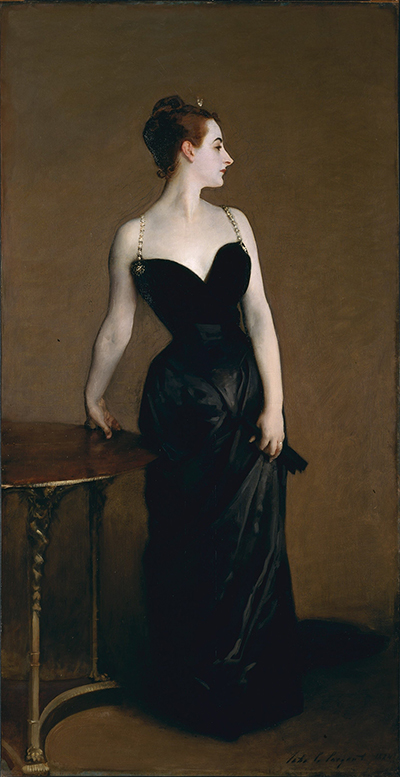
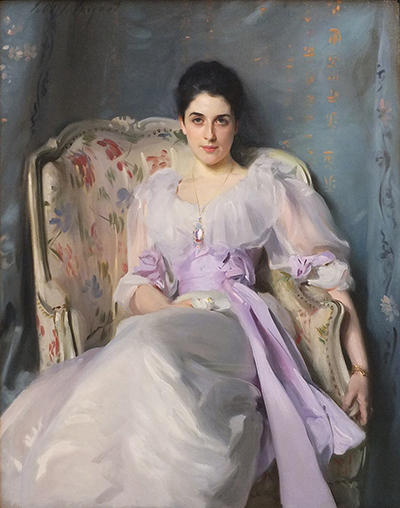
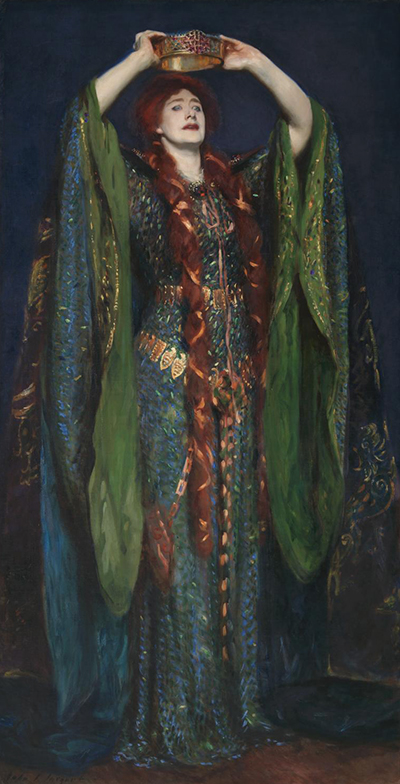
Gassed can seem startling because it comes from the painter of Portrait of Madame X, Lady Agnew of Lochnaw, Ellen Terry as Lady Macbeth and other portraits of performance, status and social presence. Yet the continuity is real. Sargent had always been a painter of bodies under public pressure. In Gassed, that pressure becomes literal injury.
His portrait skills still matter. He knew how to make a hand expressive, how to give fabric weight, how to coordinate figures across a large surface, and how to make pose carry social meaning. In the portraits, a hand might express elegance, command or unease. In Gassed, touch becomes dependence. The same artistic intelligence is redirected toward a much heavier purpose.
His mural work also matters. Sargent was experienced with large public projects and with images meant for architectural or institutional settings. Gassed is not a private easel picture in spirit, even though it is a painting on canvas. It was conceived for a memorial program, and it asks to be read at public scale.
The Met's essay adds a personal dimension to Sargent's response to the war. His niece Rose-Marie Ormond, who had worked as a nurse treating blinded soldiers, was killed in the bombing of the church of Saint-Gervais in Paris in 1918 [2]. The essay suggests that Sargent likely associated the wounded soldiers in Gassed with her role in the war effort. That context should be handled carefully, but it deepens the painting's emotional field. Public commission and private grief may have met in the same subject.
The painting therefore belongs to the late career not as an exception but as a revelation. It shows that Sargent's command of appearance could serve public mourning. The polished skills of the portraitist did not disappear. They were placed under new moral pressure.
There is also a striking inversion of Sargent's earlier relationship to public image. In society portraiture, he often made a sitter's status visible. In Gassed, status recedes. The men are defined by injury, not by social identity. Their uniforms matter, but less as signs of honor than as signs of common exposure.
Sargent's technical fluency could have been a danger here. A less careful painting might turn suffering into spectacle through excessive virtuosity. Gassed avoids that by keeping brilliance largely at the service of structure: the long movement, the evening light, the modulated foreground, the controlled recession. The painting is beautifully made, but its beauty does not feel detached from the subject.
The late-career context also gives the painting unusual authority. Sargent had nothing left to prove as a fashionable portraitist. His reputation was already secure. That makes Gassed feel less like an attempt to gain fame than a testing of what fame and skill were for. The result is not a repudiation of his earlier art, but a severe answer to it.
The Hall Of Remembrance And IWM Afterlife
The Hall of Remembrance was never built. IWM's war art article explains that lack of funding after the war prevented the project, and the commissioned paintings were given to the Imperial War Museum [1]. That unrealized destination is central to the painting's history. Gassed was made for a national memorial space that remained imaginary.
This failed architectural context changes how the painting is read. It was meant to form part of a planned memorial environment, not to stand alone as a conventional gallery picture. Its huge horizontal format and central procession make sense in that setting. The soldiers would have occupied a space of collective remembrance, facing viewers who came to contemplate the cost of the war.
Instead, the painting's permanent institutional life developed at IWM. IWM's feature describes Gassed as a favorite among visitors and one of the museum's most requested images by researchers and publishers [1]. The work became an anchor of public memory even though the Hall of Remembrance did not materialize.
The painting's afterlife therefore includes a paradox. The original memorial plan failed, but the painting itself succeeded as a memorial image. Its power did not depend on the building imagined for it. It found a different public life through IWM's collection, display and conservation. [1], [3]
The War Memorials Register gives another way to understand the painting's status [1]. It records Gassed as a painting or print memorial and locates it at Imperial War Museum, Lambeth Road, London. This classification is useful because it treats the painting not only as an artwork but as a commemorative object. It belongs to art history and memorial culture at the same time.
That dual identity shapes how viewers approach it. In a museum, one looks for composition, technique and artistic significance. Before a memorial, one also brings a different kind of attention: respect, witness and historical accountability. Gassed asks for both kinds of looking. It is a painting to analyze and a memorial image to stand before.
The painting's status as a visitor favorite adds another layer [1]. Popularity can sometimes flatten a work into an icon, but in the case of Gassed it also shows that the image continues to communicate across generations. Viewers may arrive knowing little about the British War Memorials Committee, Sargent's assigned theme or the conservation history. The linked bodies still make immediate sense.
That immediacy is why the painting can carry both historical specificity and broad memorial force. It belongs to August 1918, mustard gas, Arras-Doullens Road, and an official British commission. It also belongs to a larger human language of dependence, injury and care. Sargent's achievement was to keep both scales active.
Conservation And Renewed Viewing
IWM's recent conservation material is especially important because it shows that the meaning of Gassed has changed with its physical condition. Ahead of re-display in the Blavatnik Art, Film and Photography Galleries, the painting underwent major conservation, including varnish removal, structural work and frame conservation [1].
The varnish issue is not merely technical. IWM explains that a discolored varnish from the 1970s had made the painting appear strongly yellow, shaping how audiences and staff interpreted the work [1]. Because the subject involved mustard gas, sunrise or sunset light and khaki uniforms, the yellowed effect could be absorbed into the story people told about the image. Conservation revealed that this appearance was partly the result of aged material rather than only Sargent's intention.
Cleaning changed the viewing experience. IWM's transcript describes newly visible cool distant colors, pinks and blues, and clearer detail in the football match, including teams with different colored shirts [1]. These discoveries matter because they reconnect Gassed to Sargent's broader color intelligence. The painting is not only brown, yellow and mournful. It contains evening light, depth and subtle chromatic structure.
IWM also worked with Factum Foundation to capture high-resolution data of the painting in 3D, color and infrared [1]. Factum describes the 2023 recording and notes the painting's imposing size, measuring about 2.3 by 6.11 meters [8]. The recording created a new conservation record of surface and color. This kind of imaging does not replace looking at the painting, but it preserves information that can guide future study.
The conservation history also underscores the fragility of public memory. A painting famous for showing wartime injury is itself a vulnerable object. Varnish ages, frames need care, surfaces need study, and interpretation can drift with material change. The renewed Gassed is therefore not a different painting, but a clearer encounter with Sargent's choices.
The scale made conservation a logistical as well as artistic challenge. IWM describes the painting as the largest in its collection and notes its near-constant display since 1919 [1]. A work that large and that visible accumulates both physical strain and interpretive habit. Taking it out of its frame created an opportunity not only for treatment but for new technical recording.
Factum's recording also points to the future of art-historical study. Surface, color and infrared data can preserve aspects of the object that ordinary photography cannot [8]. For a painting as large as Gassed, this matters because small passages can be difficult to study in relation to the whole. High-resolution recording allows details such as distant planes, footballers, impasto and surface relief to be examined without losing sight of the monumental scale.
The conservation story also corrects an overly monochrome memory of the painting. If audiences had come to think of Gassed as yellow because of aged varnish, then conservation changed not only appearance but interpretation [1]. The cooler tones, pinks and blues restored by cleaning place the work back within Sargent's broader visual world, where light is rarely simple.
This renewed color matters because it changes the emotional temperature of the work. A uniformly yellow image can seem sealed inside poison, dust or historical distance. The recovered variety makes the scene more immediate and more contradictory. Evening light becomes beautiful again, and that beauty makes the suffering sharper rather than softer.
The restoration also clarifies Sargent's connection to his own art. IWM notes that after conservation the painting fits better with the rest of his work [1]. That observation is important for a Sargent article because it resists the idea that Gassed is visually alien to him. The subject is different, but the painter's handling of color, light, spacing and bodily rhythm remains recognizably his.
How To Read Gassed Now
The easiest mistake is to treat Gassed as heroic because it is monumental. Sargent uses the scale and order of heroic painting, but he turns them toward injury rather than victory. The soldiers form a procession, but not a triumphal one. They move because they must be led.
Another mistake is to read the men only as symbols. They do carry collective meaning, but the painting's force depends on bodily facts: bandaged eyes, raised feet, hands on shoulders, men lying in grass, a soldier drinking, another turning away sick. The details keep the image from becoming abstract memorial language.
The painting also needs to be read as a work of public art. It was commissioned for national remembrance, and it was made to speak beyond private grief or studio experiment. Yet Sargent avoided easy patriotism. There is no enemy body to blame, no victory flag, no clean moral resolution. The public message is not glory. It is cost.
Gassed remains modern because it shows war as systems and aftermath. The attack has happened elsewhere. The painting shows processing, care, waiting and routine. The football match continues. The medical tents await. The line moves forward. Modern war appears not as one decisive moment but as an organized field of consequences.
The painting's beauty makes the problem sharper. Sargent's rhythm, light and composition are undeniably powerful. Yet that power serves a scene of suffering. The viewer has to confront the unease of admiring a beautifully made image of injury. Gassed does not resolve that unease. It makes it part of the experience.
For a modern viewer, the painting also raises questions about distance. The event is over a century old, and the men are unnamed. Yet the scale of the canvas and the clarity of touch keep the scene from feeling safely remote. The line of hands on shoulders is immediate because dependence remains readable across time.
The painting should also be read against simpler ideas of masculine endurance. The soldiers endure, but Sargent does not make endurance look invulnerable. Their strength is relational. They move because they are supported. The painting's deepest image of discipline is not attack or defense, but mutual guidance.
That is why Gassed can still feel more truthful than many images of combat. It does not claim to show the whole war. It shows one scene of aftermath with enough force to suggest the larger system that produced it. The painting's restraint is a form of moral seriousness.
The painting's monumentality is therefore inseparable from humility. It is huge, but it does not pretend to master the war. It does not explain strategy, assign blame in pictorial form, or turn suffering into a clear lesson. It offers a scene of men moving through damage with help from others. That limited claim is what gives the painting its lasting dignity.
For Sargent's wider legacy, Gassed is indispensable because it stops the career from closing around elegance. Without it, Sargent can too easily be reduced to virtuoso portraiture and travel brilliance. With it, his art includes a public reckoning with modern violence. The same painter who made social presence glitter could also make collective injury unforgettable.
Related Works And Where To Go Next
The closest study sequence runs through Two Soldiers at Arras, the NGA Studies for "Gassed", the Cleveland Studies of a Soldier Drinking, for Gassed, and MFA Boston's The Road [4], [6], [7], [5]. Together, they show Sargent moving from front-line observation and alternative motifs toward the final procession.
Within Sargent's career, Gassed belongs with his biography, public commissions, drawings, watercolors, and style and technique. It is especially useful beside the portrait pages because it changes the meaning of pose and touch. In the portraits, bodies often negotiate status. In Gassed, bodies negotiate survival.
The painting also belongs in conversation with the broader First World War art scheme. IWM's article places Sargent alongside other artists commissioned for the Hall of Remembrance and related war art programs [1]. That context shows Gassed not as a solitary act of witness, but as part of a larger effort to create public images for a war that strained older forms of representation.
Frequently Asked Questions
Gassed shows soldiers affected by mustard gas on the Western Front. The central figures have bandaged eyes and are being led toward treatment while other injured men sit or lie around them.
Gassed is in the collection of Imperial War Museums, Art.IWM ART 1460. IWM describes it as on permanent display in IWM London's Blavatnik Art, Film and Photography Galleries. [1], [3]
Sargent was commissioned by the British government for the British War Memorials Committee's planned Hall of Remembrance. Although he was first asked to address Anglo-American cooperation, he chose a scene of gas casualties that he had witnessed near the front.
Yes. IWM and Met materials connect the painting to a scene witnessed in August 1918 near Le Bac-du-Sud on the Arras-Doullens Road, where gas casualties were arriving at a dressing station. [1], [3]
The football match creates a disturbing contrast with the blinded soldiers. IWM notes that it alludes to the routine nature of gas attacks and contrasts coordinated, sighted players with injured men being led toward treatment. [1], [3]
Yes. Related works include Met's Two Soldiers at Arras, NGA's Studies for "Gassed", Cleveland's Studies of a Soldier Drinking, for Gassed, and MFA Boston's The Road. [6], [5]
Gassed shows Sargent using the skills of a portraitist and mural-scale public painter for a subject of collective wartime injury. It is one of his most important late works and one of the major war paintings of the First World War.
Discussion
Gassed asks whether a war painting can be monumental without becoming triumphant. How does Sargent use order, rhythm and beauty to make damage visible rather than heroic?
Reader Insights
What is the first detail that shapes your reading of Gassed by John Singer Sargent: pose, setting, light, costume, brushwork or historical context?
Which small visual decision begins to matter more after a longer look, and how does it change the mood of the page?
Which comparison helps most: another Sargent portrait, a travel subject, a public commission, or a work by one of his contemporaries?
Join the Conversation
Share a thoughtful comment below about what you notice, question or compare when looking at this page.
References
- Imperial War Museums, Gassed object record https://www.iwm.org.uk/collections/item/object/23722
- Imperial War Museums, How The British Government Sponsored The Arts In The First World War https://www.iwm.org.uk/history/how-the-british-government-sponsored-the-arts-in-the-first-world-war
- Imperial War Museums, Gassed by John Singer Sargent https://www.iwm.org.uk/gassed-by-john-singer-sargent
- Metropolitan Museum of Art, Two Soldiers at Arras https://www.metmuseum.org/art/collection/search/751623
- Museum of Fine Arts Boston, The Road https://mfaboston6.emuseum.com/objects/31794/the-road
- National Gallery of Art, Studies for "Gassed" https://www.nga.gov/artworks/194710-studies-gassed
- Cleveland Museum of Art, Studies of a Soldier Drinking, for Gassed https://www.clevelandart.org/art/1997.256
- Factum Foundation, John Singer Sargent's Gassed https://factumfoundation.org/our-projects/digitisation/john-singer-sargents-gassed/