

 by Tom Gurney
Tom Gurney BSc (Hons) is an art history expert with over 20 years experience
Published on June 19, 2020 / Updated on July 19, 2026
Email: tomgurney1@gmail.com / Phone: +44 7429 011000
El Jaleo by John Singer Sargent: Introduction
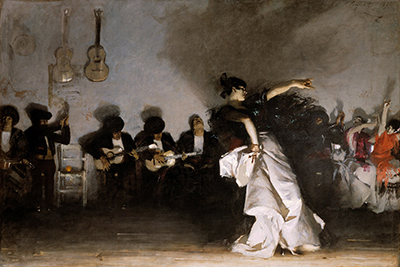
John Singer Sargent's El Jaleo is a painting that seems to make noise. A dancer stretches across a blazing patch of light while musicians and singers sit against the dark wall behind her. Guitar bodies, clapping hands, bent arms, tilted heads, sharp shadows, and the white flare of the dancer's skirt combine to create a scene that feels heard as much as seen. The work is monumental, but its subject is not a ruler, a battle, or a formal portrait. It is performance.
Painted in 1882, El Jaleo belongs to Sargent's early Paris triumphs and to his deep fascination with Spain. The painting grew from drawings made during his 1879 travels in southern Spain, where he studied dancers, musicians, costumes, and the theatrical force of Andalusian performance. At the Paris Salon of 1882, the work helped make him one of the most talked-about painters in the city. It showed that the young artist could turn travel, stagecraft, music, and Spanish art into a canvas of startling scale. [1]
The painting also has an unusual museum life. Bought in 1882 by Thomas Jefferson Coolidge and given in 1914 to Isabella Stewart Gardner, it became one of the great landmarks of the Gardner Museum in Boston. Gardner did not hang it as a neutral wall picture. She set it in the Spanish Cloister inside a deep niche, with an arch, mirror, lighting, and surrounding objects that extend the sensation of performance into the viewer's space. [2], [3]
El Jaleo matters because it tests how far painting can go toward another art form. Sargent cannot give the viewer actual music, but he can make paint behave rhythmically. He cannot make the dancer move, but he can make stillness feel like suspended motion. He cannot re-create a Spanish performance without distance or mediation, but he can show how nineteenth-century audiences, including himself, were captivated by Spain as an artistic idea. The work is thrilling, theatrical, and uneasy in ways that still reward close looking. [1]
It is also one of the clearest early proofs that Sargent's art was not confined to likeness. The same painter who could make a portrait sitter socially legible could also make a room pulse with music. In El Jaleo, identity gives way to rhythm. The figures are not named sitters, yet each carries a role: dancer, guitarist, singer, hand-clapper, watcher, participant. Sargent makes a whole performance culture appear through the arrangement of bodies in light.
Contents
- Introduction
- Annotated Details
- Spain And The 1879 Journey
- Dance, Music And The Title
- Composition And Stage Space
- Drawing And Study Process
- Salon 1882 And Paris Success
- Performance, Spectacle And Cultural Framing
- Gardner, Coolidge And Acquisition
- The Spanish Cloister Installation
- Later Exhibition And Afterlife
- How To Look At El Jaleo
- Related Works And Where To Go Next
Annotated Details from El Jaleo
The numbered details move from the dancer's sweeping gesture and white skirt to the musicians, clapping spectators, flashes of red and hanging guitars that animate the stage.
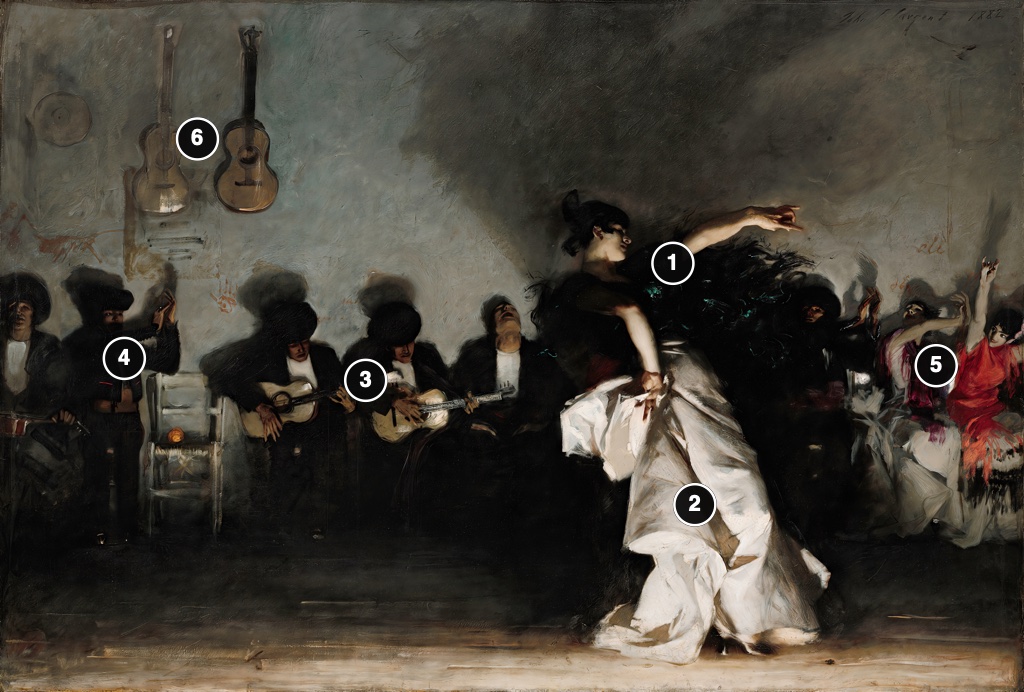
Details from EL JALEO
Close looking reveals how a narrow band of figures, hard-edged shadows and a few bright colour accents turn the wide stage into a charged performance space.
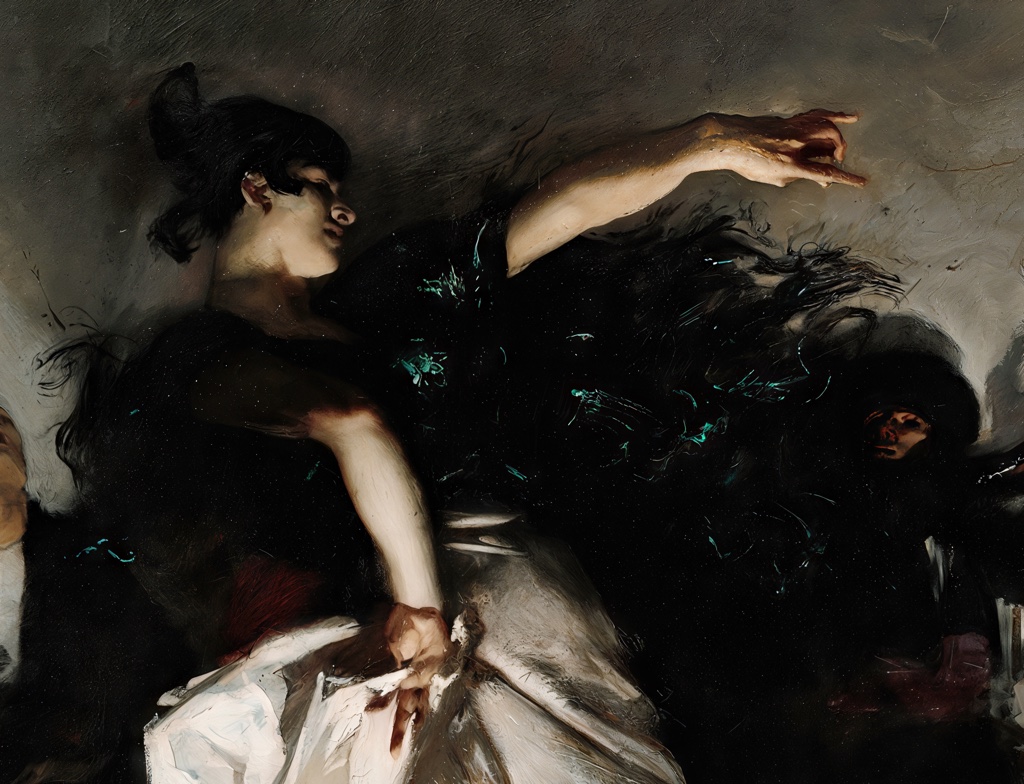
Dancer's extended arm
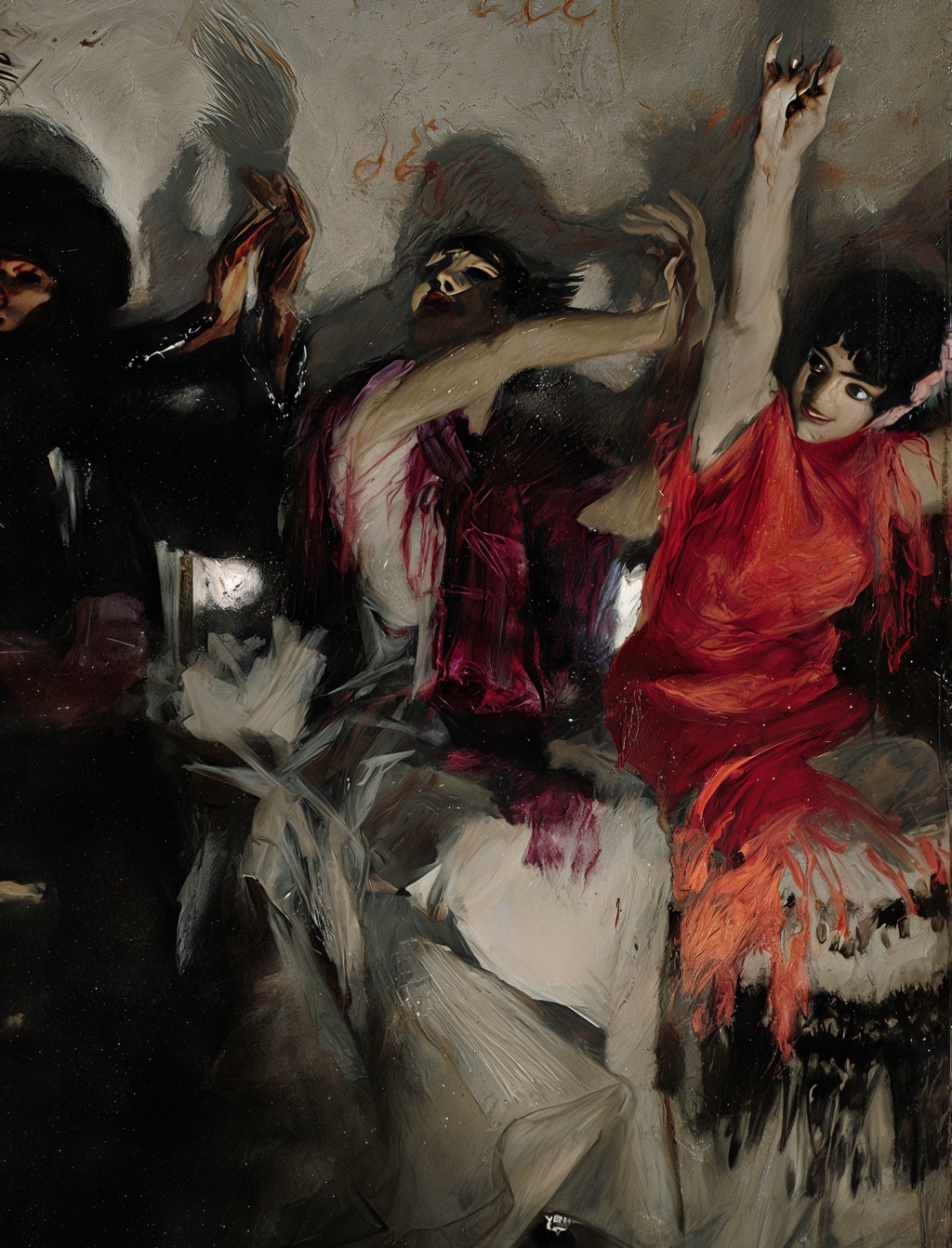
The dancer's raised arm cuts across the grey wall while her head turns back into the shadow, concentrating the performance in one angular gesture.
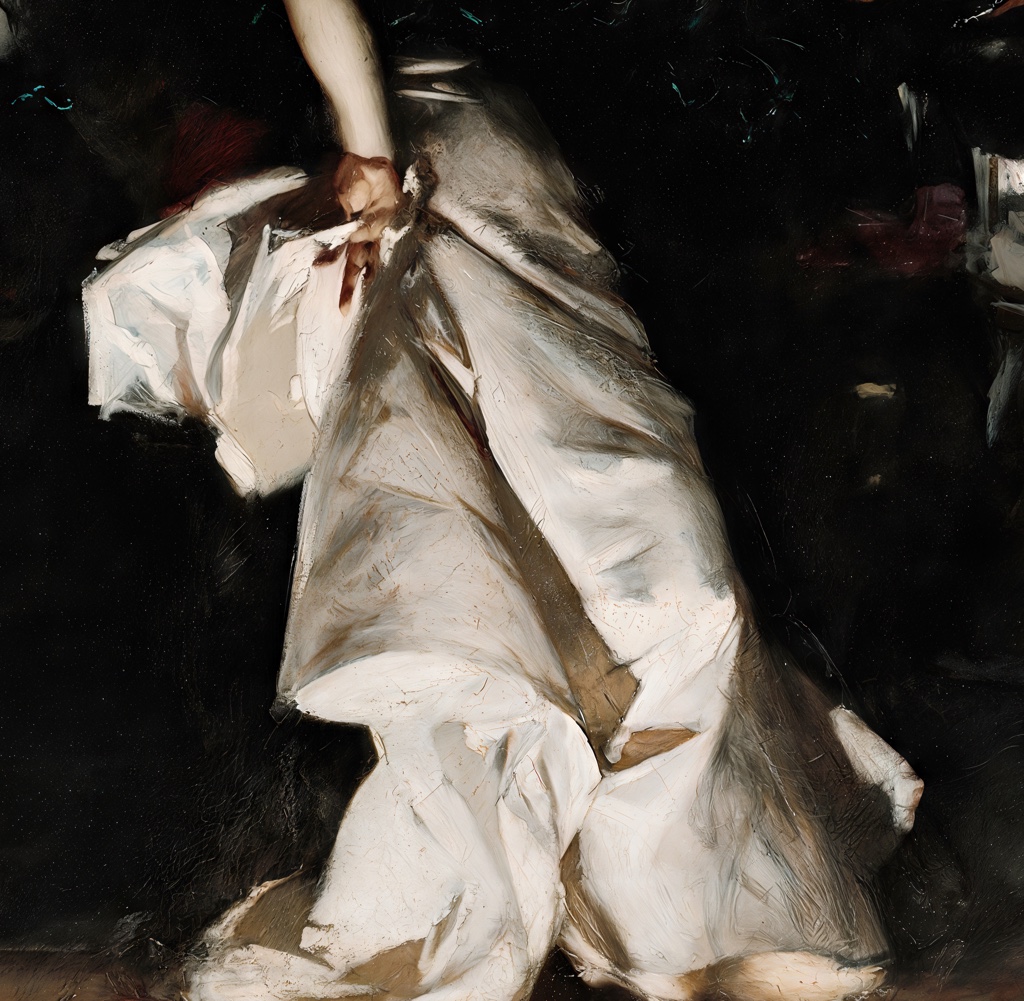
White skirt and poised feet
Broad folds of white fabric descend toward two small, dark shoes placed close to the stage edge, where light is strongest.
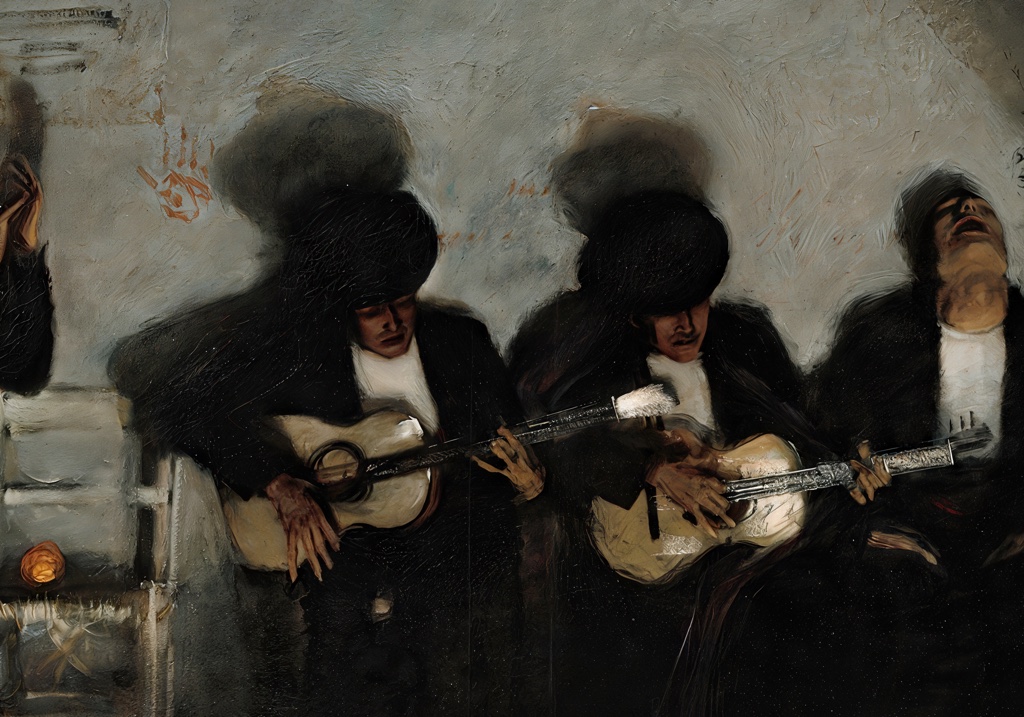
Seated guitarists
The guitarists form a dense horizontal group, their hands and pale instruments emerging rhythmically from black clothing and shadow.
Clapping hands at left
Raised and folded hands punctuate the left side of the stage, making the beat visible among the seated figures.
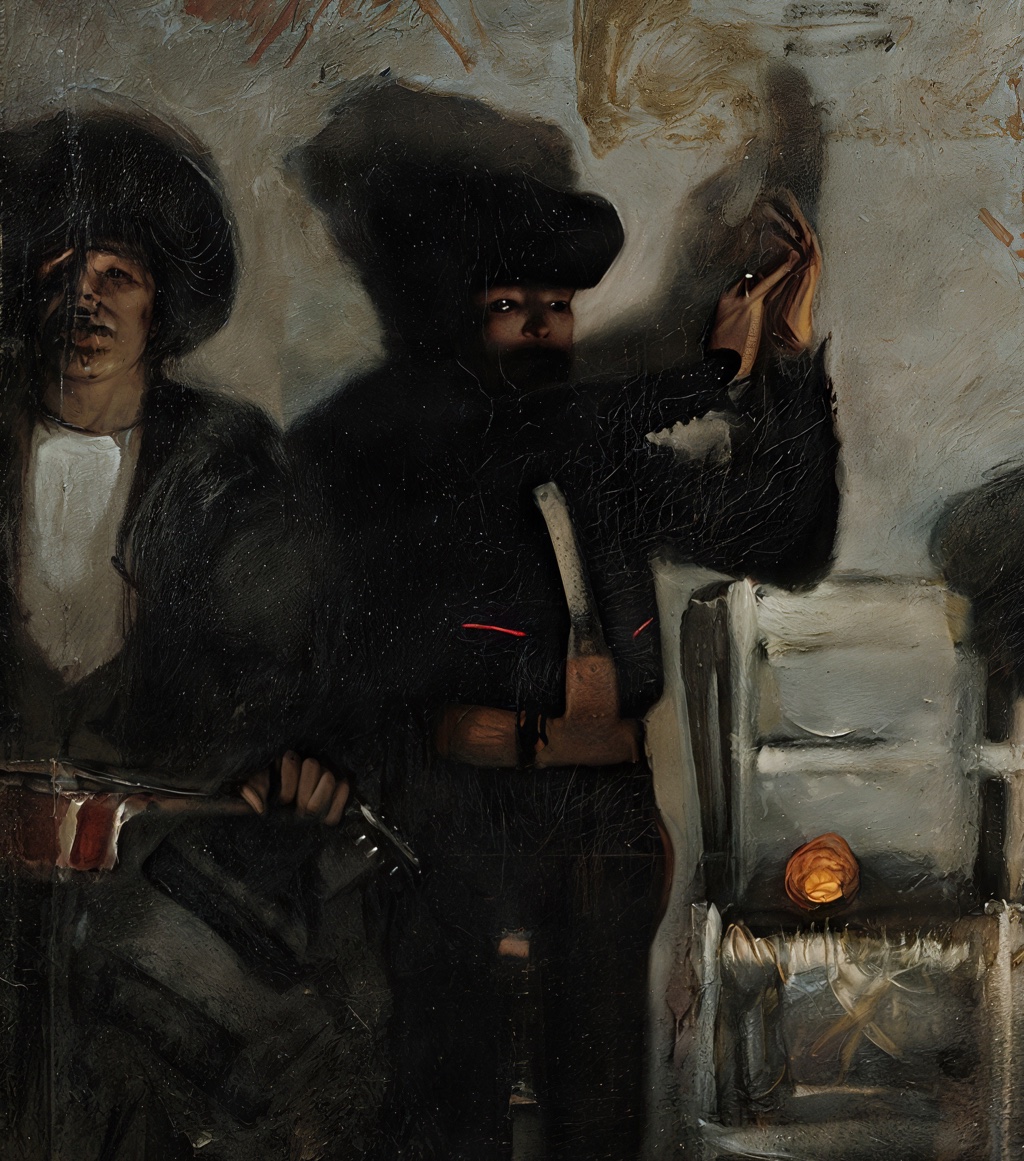
Red shawls and raised hands
At the far right, red and magenta shawls flare against the restrained palette as spectators lift their hands toward the dancer.
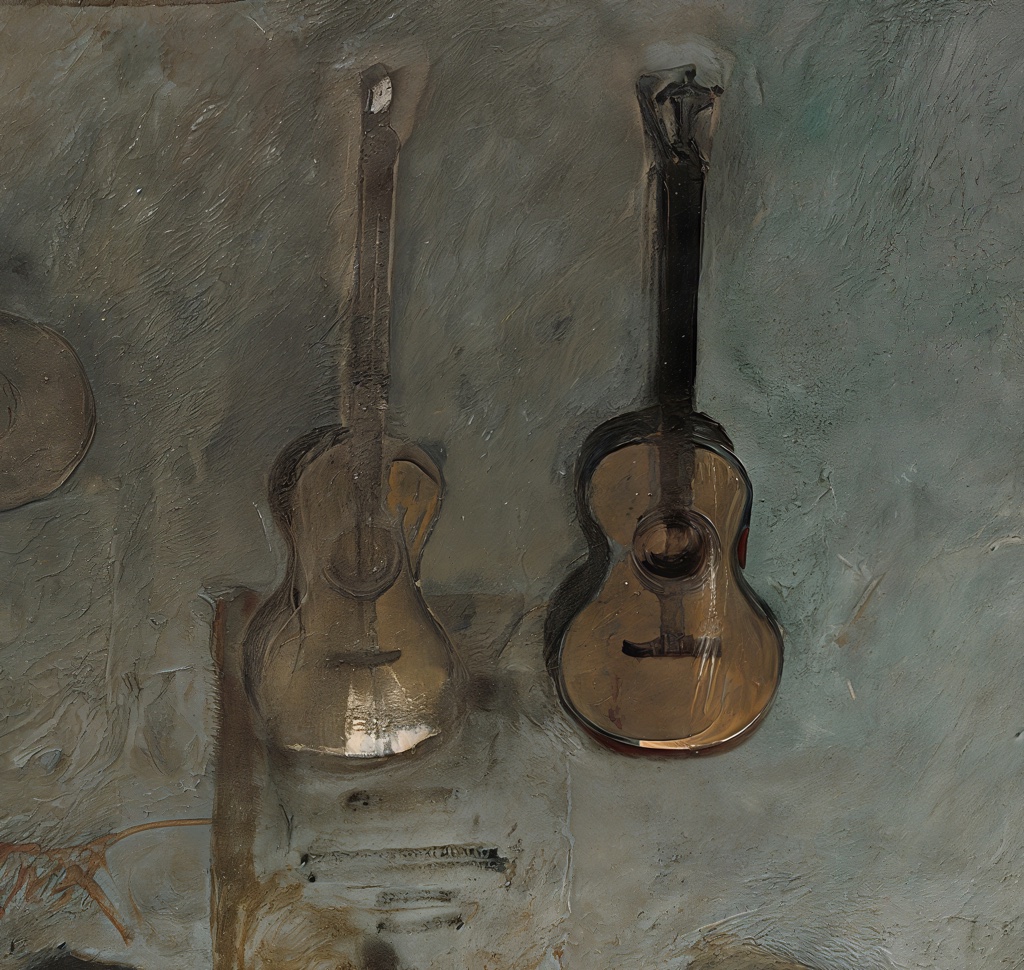
Guitars on the wall
Three instruments hang above the performers, their vertical silhouettes echoing the musical activity below while leaving a broad expanse of wall.
Spain And The 1879 Journey
Sargent's relationship with Spain began before El Jaleo, but the extended adult trip of 1879 was decisive. The National Gallery of Art's Sargent and Spain material describes the young painter's immersion in Spanish art, especially Velazquez at the Prado, and his interest in Spanish contemporaries such as Mariano Fortuny Marsal and Joaquin Sorolla. Spain offered Sargent both old-master authority and modern performance subjects. [4], [1]
The Prado mattered because it taught him lessons about figure placement, shallow space, silhouette, and restrained color. Those lessons can be felt in El Jaleo. The painting is not a copy of Velazquez, but its shallow theatrical space, dark ground, and dramatic concentration of the figure against a subdued wall show how Sargent absorbed Spanish pictorial intelligence.
Southern Spain gave him another source: living performance. The Gardner Museum notes that El Jaleo was based on drawings Sargent made in southern Spain in 1879. The subject belongs to the performing arts he enjoyed and studied, especially traditions associated with Andalusia. The National Gallery of Art's 2022 exhibition material places El Jaleo within a wider group of Spanish dancers, musicians, watercolors, sketches, and later images connected with Carmen Dauset Moreno, known as La Carmencita. [2], [3]
That combination of museum study and travel observation is central. Sargent did not simply paint Spain as scenery. He translated Spanish art, music, dance, costume, and stage space into a Paris Salon picture. The result is both observation and invention. It carries the force of direct sketches, yet it also turns performance into a monumental composition designed for an international exhibition audience. [1]
The Spain trip also gave Sargent a way out of narrow portrait expectations. He would become famous for portraits, but in the early 1880s he was still presenting himself as a painter of range: portraits, interiors, travel scenes, genre subjects, and large-scale images of modern life. El Jaleo declared that range boldly. It showed that he could make a theatrical Spanish scene carry the weight of a major Salon statement. [1]
This Spanish work also connects to Sargent's wider habit of learning through travel. He did not visit Spain once and then leave the subject behind. Gardner Museum writing notes that he traveled to Spain several times as an adult, and the National Gallery of Art's later Sargent and Spain exhibition was organized around that repeated engagement. El Jaleo is therefore not an isolated souvenir. It is the most commanding early statement within a larger Spanish strand that ran through drawings, paintings, watercolors, and friendships. [2], [3]
Dance, Music And The Title
The title is essential. The Gardner Museum explains that El Jaleo is named for an Andalusian dance and can be translated broadly as a ruckus or hubbub. A Gardner shop text adds the association with the jaleo de jerez, while also stressing the wider sense of noise and excitement. Sargent chose a word that points to both dance and atmosphere. [2], [3]
The painting earns that title through structure. The dancer's arms flare outward, her skirt twists, and her body leans into a position that feels caught at the height of action. Behind her, musicians and singers create a line of sound. The guitar players are not decorative extras; they are the source of the rhythm the dancer answers. The seated figures at the right intensify the response with raised hands and active bodies.
The work therefore refuses the silence of ordinary genre painting. Of course every painting is silent in the literal sense, but El Jaleo fights that silence. The viewer sees sound through repeated gestures: clapping hands, open mouths, guitar necks, bent wrists, and the dancer's stamped presence. The white skirt becomes almost percussive, as if light itself has become an instrument.
Sargent also stages listening. Some figures seem absorbed, some active, some almost overwhelmed by the performance. The audience within the painting becomes a guide for the audience outside it. We are not just looking at the dancer. We are watching people watch, hear, accompany, and respond.
The historical Salon title used a term then applied to Roma performers. Modern viewers have to approach that context with care. Sargent's painting belongs to a nineteenth-century European fascination with Spanish and Roma-associated performance, a fascination often bound up with romance, projection, and unequal looking. The painting is not innocent of that climate. Its excitement depends partly on the very theatricality with which Spain was imagined for foreign audiences. [1]
Still, the work is more than an exotic fantasy. Its force comes from concentrated pictorial intelligence: the placement of the dancer, the severe light, the compressed space, the rhythm of seated figures, and the capacity of paint to imply sound. The cultural frame is complicated; the artistic achievement is not a simple costume show.
The word also gives Sargent a way to make disorder controlled. A ruckus might suggest chaos, but the painting is tightly ordered. The dancer's diagonal, the back row of musicians, the right-side response group, the hanging guitars, and the hard band of light all discipline the energy. The title promises tumult; the composition shapes it.
Composition And Stage Space
The most striking feature of El Jaleo is the horizontal stage. The canvas is over eleven feet wide, and Sargent uses that width to create a shallow band of performance. The dancer dominates the foreground, while the musicians and singers occupy the rear wall like an irregular frieze. The space is not deep in the manner of a landscape or interior. It is compressed, theatrical, and directed outward.
The dancer's body is the hinge of the entire composition. Her torso bends, one arm stretches across the space, the other lifts outward, and the skirt opens into a white form that catches the strongest light. Her head turns, her neck curves, and her body seems to balance between control and abandon. She is both figure and shape: a performer and a bright diagonal of paint.
Light turns her into an event. The intense illumination at the front makes the dancer's skirt blaze against the surrounding darkness. Shadows rise behind her, magnifying the sense of movement. The Gardner Museum's installation text notes how lighting from below in the Spanish Cloister echoes the floodlight effect in the painting. That observation matters because the canvas itself already behaves like a stage with footlights. [2], [3]
The musicians create the second structure. At the left, guitars hang on the wall. Across the back, figures sit in a row, some playing, some singing, some clapping. Their bodies are darker, more compressed, and less individually spotlighted than the dancer's. Yet they hold the painting together. Without them, the dancer would be a solo figure against darkness. With them, she becomes part of an event.
The women at the right provide a different kind of energy. Their gathered bodies and raised hands create a surge of response. The composition seems to intensify from the left-side guitars through the central dancer toward the right-side group. The viewer senses not a frozen tableau but a build-up of rhythm and noise.
Sargent also uses emptiness with precision. The dark wall behind the figures is not a blank backdrop. It carries shadows, hanging instruments, and the pressure of the dancer's silhouette. The wall makes the performance legible. It strips away outdoor setting and forces attention onto bodies, light, music, and gesture.
The painting's shallow space is one reason it feels so modern. It does not invite the viewer to wander into depth. Instead, it presents performance as a charged surface, a band of action pressed close to us. This compression gives the canvas its impact. The dancer is not far away on a distant stage. She occupies the viewer's field with near-physical force.
The wall also lets Sargent work with silhouette. Many of the figures are readable less through detailed facial expression than through outline, tilt, and gesture. A bent head, a raised arm, a guitar neck, a hand against darkness: these become the language of the performance. The simplification is not lack of finish. It is how Sargent turns a crowded scene into a pattern that can be grasped from across a Salon room.
The dancer's shadow is especially important. It doubles and enlarges her movement, making the wall seem to vibrate with the force of the dance. The figure is therefore present in two ways: as a lit body in front and as a dark echo behind. That echo is one of the ways Sargent makes movement survive within still paint.
Drawing And Study Process
El Jaleo looks spontaneous, but it was built from sustained study. The Gardner Museum states that Sargent based the painting on drawings made in southern Spain in 1879. The National Gallery of Art's 1992 focus exhibition brought together the painting with related paintings, forty drawings and watercolors, and books on the Spanish dance theme. That scale of related material shows how seriously Sargent developed the subject. [2], [3]
The Gardner Museum holds Study for El Jaleo: Seated Musicians, a charcoal and graphite sheet from 1881. It shows two seated male musicians, one playing guitar and another with hands on his thighs and head tilted upward as if singing. The drawing is small compared with the final canvas, but it contains the crucial relation between music and bodily posture. Sargent had to make seated figures feel active. [2], [3]
The provenance of the Gardner study is also revealing. The museum records it as a gift from Sargent to Isabella Stewart Gardner in a sketchbook containing eighteen sheets with twenty-two drawings in 1919. By that point, El Jaleo had been in Gardner's collection for several years. The study became part of the relationship between artist, collector, and museum memory. [2], [3]
The Metropolitan Museum of Art holds After "El-Jaleo", a graphite and watercolor work on prepared clay-coated paper dated about 1882. Its title suggests a work made after the painting rather than only before it, but it still shows how Sargent continued to reduce and rethink the figure. The Met identifies the object as a gift of Mrs. Francis Ormond in 1950. [5]
Other related studies, including Harvard/Fogg study images listed through Commons and exhibition histories, show that the seated figures and musicians were a major concern. This is easy to understand. The painting's drama depends not only on the dancer but on the entire performance environment. The background figures must feel noisy, rhythmic, and alive, even though they are darker and less individually isolated.
The study process also protects the painting from a false reading as mere bravura. Sargent's brushwork is dazzling, but the effect rests on drawing. The dancer's posture, the guitarists' arrangement, the seated row, and the right-side group all depend on decisions worked out before and around the final canvas. What feels like improvisation is supported by structure.
The Gardner study of seated musicians also points to Sargent's interest in accompaniment rather than solo display. A lesser version of the subject might have treated the dancer as everything and the musicians as atmospheric blur. Sargent knew that flamenco-associated performance depends on exchange among dancer, guitarist, singer, and responders. The seated figures had to carry their own intensity. [6]
The Met's After "El-Jaleo" adds another kind of evidence. Made around the time of the finished painting, it suggests that Sargent could compress the scene after the fact into a smaller, more portable image. That reduction matters because the large painting is so wide and immersive. To remake it on paper required him to identify the essential rhythm: the dancer's flare, the seated band, the thrust of shadow, and the activated right side. [5]
The study evidence also underlines how far El Jaleo is from ethnographic record. Sargent did not set out to make a neutral document of one performance. He gathered, selected, heightened, and recomposed. The result is a Salon image made from Spanish experience, not an unmediated transcript of it.
Salon 1882 And Paris Success
The Paris Salon of 1882 was a major moment for Sargent. The Metropolitan Museum of Art's Sargent and Paris exhibition material states that critics celebrated his portrait of Charlotte Burckhardt, while El Jaleo made him the most talked-about painter in Paris. That pairing matters. He succeeded with both portraiture and a huge Spanish performance scene. [5]
The Salon audience would have seen El Jaleo as a work of spectacle and daring. Its scale alone demanded attention. Its subject, lighting, and wide format made it very different from a conventional portrait or polite genre scene. It had the excitement of performance and the authority of a serious exhibition picture.
The success also came before the shock of Madame X. In 1882, Sargent's risk-taking looked triumphant. He could send a brilliant society portrait and a dramatic Spanish dance scene and emerge as a young painter of remarkable promise. The pressure created by that success helps explain why 1883 and 1884 mattered so much. After El Jaleo, viewers expected Sargent to keep producing extraordinary Salon works.
The painting's early sale added to its importance. The Gardner object record states that Schaus Gallery bought it from the Paris Salon of 1882 for 10,000 francs and that Thomas Jefferson Coolidge purchased it from Schaus that same year. The work quickly crossed from Paris exhibition culture into American collecting. It was not a painting that slowly found its audience. It announced itself, sold, and began a long American afterlife. [2]
Sargent's Salon success also complicates his later reputation. He is often remembered as a portraitist of elites, but El Jaleo shows that his ambition in the early 1880s was broader and more theatrical. It places him among artists trying to make modern exhibition painting vivid, international, and sensorial.
It also helps explain why the 1882 Salon had such consequences for him. A painter who could succeed with Charlotte Burckhardt and El Jaleo in the same exhibition seemed capable of almost anything. Portraiture, spectacle, Spanish subject matter, dark tonal design, fashionable display, and old-master knowledge all appeared within reach. That is the level of expectation Sargent carried into the next phase of his career.
Performance, Spectacle And Cultural Framing
Modern viewers should approach El Jaleo with both admiration and care. The painting comes from a period when many European and American artists were fascinated by Spain, especially Andalusia, flamenco, and Roma-associated performance. That fascination could produce serious artistic study, but it could also turn people and cultures into theatrical signs for outsiders. [1]
Sargent's painting participates in that world. The historic Salon title makes the ethnic framing explicit. The dancer and musicians are presented as intense, exotic, and spectacular for a Paris audience. The painting's power depends partly on the thrill of watching a culture staged as heightened performance. That is not a reason to dismiss the work, but it is a reason to see its conditions clearly.
The strongest reading holds two facts together. First, El Jaleo is a brilliant painting, full of technical daring and compositional intelligence. Second, it belongs to a nineteenth-century gaze that often consumed Spanish and Roma subjects through romance and theatrical desire. The painting is not outside history because it is beautiful. Its beauty is historical.
At the same time, Sargent gives the performers unusual force. The dancer is not a passive object. She commands the scene. Her body controls the light, the rhythm, and the viewer's attention. The musicians are not minor ornaments; they create the sound-world that makes the dance possible. The work's energy comes from performance as collective action.
The painting is also less anecdotal than many images of foreign entertainment. It does not provide a tourist narrative, a street scene, or a detailed social setting. Instead, it compresses the event into stage space. This makes the cultural frame more abstract and more intense. The viewer is asked to experience performance before story.
That intensity is what makes the painting both thrilling and unsettled. It gives viewers a dazzling performance, while also revealing the appetite for Spanish difference that shaped Sargent's audience. The best response is not to flatten the work into either celebration or critique. It is to see how both are present.
The figures' anonymity is part of the difficulty. Because the performers are not named in the painting's standard records, the image easily becomes an emblem of "Spanish dance" rather than a record of specific people. Sargent's art gives them enormous visual force, but the exhibition system gives them less historical individuality than portrait sitters received. That imbalance is part of what a modern viewer has to notice.
Yet the painting also resists total objectification through energy. The dancer is not inert before the viewer. She commands the scene through movement. The musicians are not silent furniture. Their bodies are charged by sound. Sargent's spectators, both painted and real, are drawn into the performance rather than placed above it.
Gardner, Coolidge And Acquisition
The painting's American life is inseparable from Isabella Stewart Gardner, although she did not own it at first. The Gardner Museum's acquisition essay explains that El Jaleo was bought by Boston collector Thomas Jefferson Coolidge in 1882. Gardner and Coolidge moved in related Boston circles and shared a family connection. She may have first seen the painting in an 1888 exhibition at the St. Botolph Club, and it was also on view at the Museum of Fine Arts, Boston, for several years beginning in 1897. [2], [3]
Gardner's desire for the painting lasted decades. This matters because she was not simply adding a famous Sargent to a collection. She wanted a work that could anchor a Spanish environment in her museum. Sargent's Spain and Gardner's Spain became connected through the painting. [1]
The friendship between Gardner and Sargent deepened that connection. The Gardner Museum notes that Henry James introduced them in London in 1886 and that they became close friends. They corresponded, discussed art and music, and shared cultural interests. Sargent was one of the contemporary artists Gardner promoted, and he even used one of her upstairs galleries as a studio in 1903. [2], [3]
Gardner completed the setting for El Jaleo before the painting belonged to her. The museum explains that after Fenway Court opened in 1903, she acquired tapestries that required architectural change, and in 1913 she began reshaping the museum space. By December 1914, she had created a setting for El Jaleo in the Spanish Cloister. When Coolidge saw what she had made, he gave her the painting.
The story is extraordinary because installation preceded ownership. Gardner imagined the painting's place so persuasively that the owner yielded it. The act reveals her as more than a collector. She was a maker of environments, someone who understood that the meaning of an artwork could be intensified by placement, architecture, light, and surrounding objects.
Coolidge's gift also shows how personal networks shaped the movement of major artworks in Boston. El Jaleo passed from a Paris Salon sale into a private American collection, then into Gardner's museum through kinship, friendship, admiration, and theatrical persuasion. Its history is not only a chain of ownership. It is a story of people recognizing what kind of room the painting wanted.
The Spanish Cloister Installation
The Gardner Museum's installation of El Jaleo is one of the most important aspects of the painting's afterlife. Gardner set the massive canvas in a deep niche in the Spanish Cloister, framed by a Moorish arch. The museum notes that a mirror at the left seems to extend the space, while everyday objects placed in front continue the illusion that viewers have entered the painted scene. [2], [3]
This is not neutral display. Gardner turned the painting into an environment. The Spanish Cloister does not simply show El Jaleo; it stages it. The viewer stands before a painted performance that is itself embedded in a theatrical museum space. The boundary between painting and room becomes porous.
Lighting is central. The Gardner acquisition essay explains that Gardner lit the painting from below, echoing the floodlights that strike the dancer's white skirt and cast shadows behind her. This was an especially intelligent choice because the painting already contains its own stage lighting. The museum light answers the painted light. [3]
The mirror at the left is equally important. It extends the sense of space and draws the viewer into the scene. Mirrors are often used in interiors to widen rooms, but here the effect is more dramatic. The reflected space intensifies the feeling that the performance is not sealed inside the frame.
The surrounding tiles and Spanish objects create another layer. The acquisition essay notes that a nearby wall is embedded with hundreds of brightly colored tiles from a Mexican church, arranged by Gardner herself. The setting is historically layered rather than archaeologically pure. It reflects Gardner's own Spanish-inflected imagination as much as Sargent's.
This installation has become part of the painting's identity. To discuss El Jaleo only as an 1882 Salon picture is to miss what Gardner made of it. In Boston, the painting became a sensory experience of museum design: canvas, niche, arch, mirror, light, tile, and viewer all working together.
The installation also changes the viewer's role. In a standard gallery, one stands apart from a picture. In the Spanish Cloister, the viewer is made to feel like an audience member at the performance. The dancer faces outward, the musicians play behind her, and the room's architecture continues the act of staging. Gardner understood the painting's theatrical nature and amplified it.
There is a risk in such an installation: it can make the painting's Spanish fantasy even more immersive. But that risk is also historically revealing. Gardner's museum is not a white-box display; it is a record of her taste, travel, collecting, and staging. The Spanish Cloister shows how Sargent's image was received and extended by an American collector who had her own powerful idea of Spain. [1]
The result is a rare case in which display history becomes inseparable from interpretation. A viewer studying only a reproduction sees Sargent's composition. A visitor in the Gardner Museum encounters Sargent plus Gardner: painter and collector working across time to create a theatrical Spanish environment in Boston. [2], [3]
Later Exhibition And Afterlife
The painting rarely leaves the Gardner Museum, which made the National Gallery of Art's 1992 focus exhibition especially significant. The NGA record states that El Jaleo was loaned for the first time from the Gardner Museum and shown with seven related paintings, forty drawings and watercolors, and two books on the Spanish dance theme. The exhibition then traveled to the Gardner Museum later that year. [2], [3]
The 1992 exhibition mattered because it restored the painting's study environment. In the Spanish Cloister, El Jaleo is immersive and theatrical. In the NGA exhibition, it could be examined with related works that showed Sargent's process and Spanish dance interests. Both settings reveal different truths. [4], [1]
The NGA record also notes that the conservation and exhibition of El Jaleo were supported by grants. Conservation is important for a painting of this scale and darkness because surface condition affects how light, shadow, and rhythm are read. A work built from dramatic contrasts depends on material clarity. [4], [1]
The painting's later afterlife also includes Gardner Museum programming. The acquisition essay, collection writing, and music-related blog material show how the museum continues to treat El Jaleo as a living point of connection between painting, performance, archive, and audience. The work is not only looked at; it is used to think about music, dance, museum spaces, and Sargent's friendship with Gardner. [2], [3]
That continuing life suits the painting. El Jaleo is a picture of performance that has itself become performative in display. Each new viewer re-enters the audience Sargent painted and Gardner staged.
The painting's later presence in exhibitions and museum writing also keeps its study material active. Drawings, after-sketches, music references, and installation records prevent El Jaleo from hardening into a single famous image. They show it as a work made through travel, drawing, collecting, staging, and continued reinterpretation.
How To Look At El Jaleo
Begin with the dancer's skirt. It is the brightest and most active shape in the painting. Notice how it catches the light, bends with the body, and throws the figure forward against the dark wall. The skirt is both costume and compositional engine.
Then follow the arms. The dancer's extended arms create the picture's main rhythm. They lead the eye across the shallow stage and connect her to the figures behind her. The pose is dramatic, but not random. It is the hinge between body, music, and space.
Next, look behind the dancer. The musicians and singers are easy to treat as background, but they are essential. Their guitars, clapping hands, open mouths, and angled bodies make the sound visible. They turn the dancer's motion into a shared event.
The shadows deserve equal attention. They enlarge the dancer's presence and make the wall feel charged. Sargent uses shadow not just to describe lighting but to amplify movement. The performance seems to echo visually behind the body.
After that, think about the frame and setting. In the Gardner Museum, the Spanish Cloister extends the painting through architecture, mirror, and light. The canvas is already theatrical; the room makes that theater physical. [2], [3]
Finally, hold the excitement and discomfort together. The painting is a magnificent performance image, but it also belongs to a history of outsiders staging Spain for international audiences. Its complexity is part of its greatness. [1]
If seeing the painting in Boston, step back enough to include the niche, mirror, and surrounding space in the experience. Gardner's installation is not a footnote. It affects the painting's apparent depth, its light, and the viewer's sense of being drawn into the performance. Then move close enough to see how loosely some passages are handled. The painting's power depends on the swing between grand theatrical effect and rapid marks.
Related Works And Where To Go Next
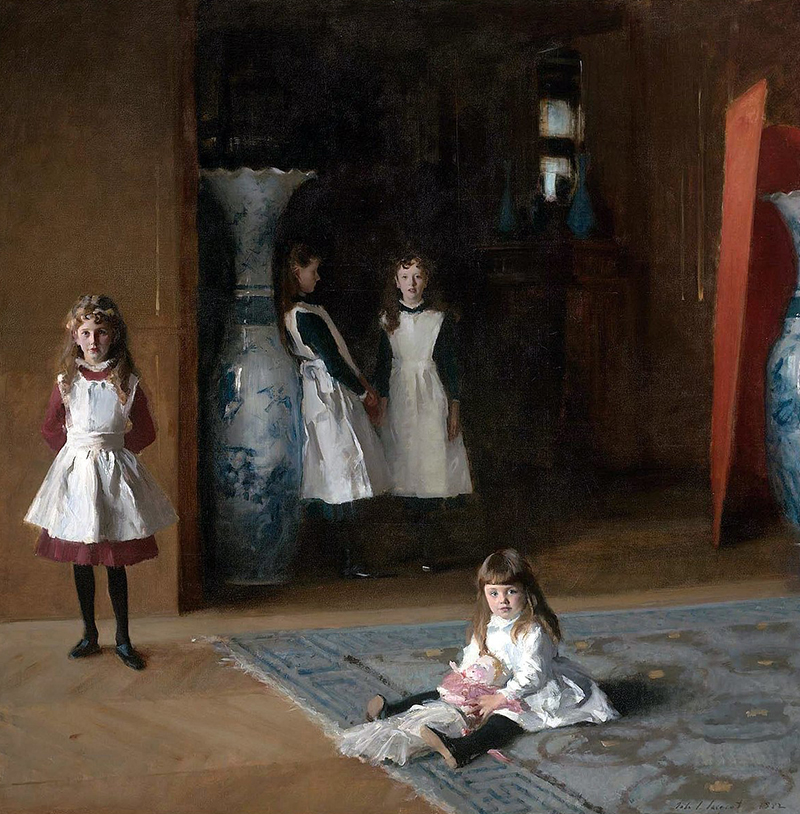
El Jaleo belongs beside The Daughters of Edward Darley Boit, another 1882 work that uses Spanish lessons in space, light, and dramatic arrangement. The two paintings are very different in mood, but both show Sargent pushing beyond conventional portraiture.
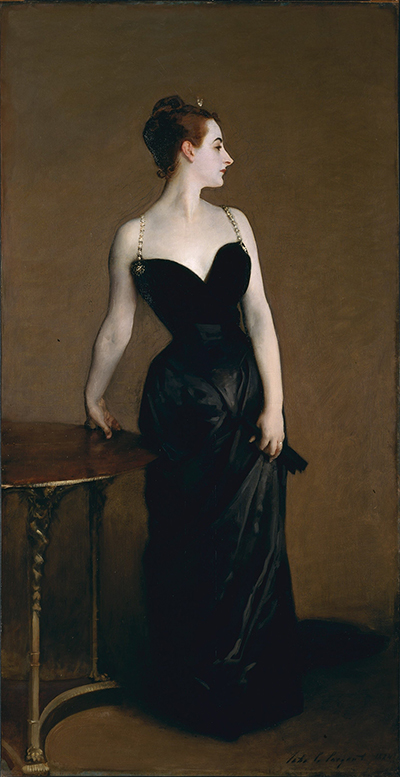
It also connects to Portrait of Madame X. Both works prove that Sargent's early career was built on risk: theatrical risk in El Jaleo, social and stylistic risk in Madame X. The Salon success of El Jaleo helps explain the expectation that surrounded Sargent before the later scandal.
Within the Spain group, La Carmencita, Spanish dancer studies, musician drawings, and watercolors form the natural orbit. The National Gallery of Art's Sargent and Spain material places these works within his repeated return to Spanish performance, travel, and visual memory. [4], [1]
For the wider Sargent site, El Jaleo also belongs with drawings, paintings, style and technique, public display, and the biography page because it touches all of those themes at once.
Frequently Asked Questions
It shows a Spanish dancer performing before seated musicians and singers. The scene includes guitars, clapping hands, strong stage light, deep shadows, and an audience-like group at the right.
The painting is in the Isabella Stewart Gardner Museum in Boston. It is displayed in the Spanish Cloister, where Isabella Stewart Gardner created an immersive setting around it. [2], [3]
Sargent painted El Jaleo in 1882, after developing the subject from drawings made during his 1879 travels in southern Spain. [1]
The Gardner Museum explains that the title names an Andalusian dance and can also suggest a ruckus or hubbub. The meaning fits the painting's sense of music, clapping, dance, and collective excitement. [2], [3]
Yes. It was exhibited at the Paris Salon of 1882 under the title El Jaleo: Danse des gitanes. Its success helped establish Sargent as one of the most exciting young painters in Paris.
Schaus Gallery bought the painting from the 1882 Paris Salon, and Thomas Jefferson Coolidge purchased it later that year. Coolidge gave the work to Isabella Stewart Gardner in 1914. [2], [3]
Gardner placed the painting in the Spanish Cloister within a deep niche, with an arch, mirror, lighting from below, and surrounding objects. The setting extends the painting's theatrical effect into the viewer's space.
The painting is linked to Andalusian dance and flamenco-associated performance traditions. It should be understood within Sargent's nineteenth-century fascination with Spanish music, dance, and stage imagery, while also recognizing the complex cultural gaze involved.
Discussion
The central question of El Jaleo is whether a painting can make performance feel present without turning culture into spectacle. Sargent's answer is dazzling, but it is not simple.
Reader Insights
What is the first detail that shapes your reading of El Jaleo by John Singer Sargent: pose, setting, light, costume, brushwork or historical context?
Which small visual decision begins to matter more after a longer look, and how does it change the mood of the page?
Which comparison helps most: another Sargent portrait, a travel subject, a public commission, or a work by one of his contemporaries?
Join the Conversation
Share a thoughtful comment below about what you notice, question or compare when looking at this page.
References
- National Gallery of Art, *Sargent and Spain* press material https://www.nga.gov/press/john-singer-sargents-fascination-spain-explored-landmark-exhibition-national-gallery-art
- Isabella Stewart Gardner Museum, *El Jaleo* https://www.gardnermuseum.org/experience/collection/13259
- Isabella Stewart Gardner Museum, "Winning El Jaleo" https://www.gardnermuseum.org/experience/acquiring-el-jaleo
- National Gallery of Art, *John Singer Sargent's El Jaleo* https://www.nga.gov/exhibitions/john-singer-sargents-el-jaleo
- The Metropolitan Museum of Art, *After "El-Jaleo"* https://www.metmuseum.org/art/collection/search/12327
- Isabella Stewart Gardner Museum, *Study for El Jaleo: Seated Musicians* https://www.gardnermuseum.org/experience/collection/24329