

 by Tom Gurney
Tom Gurney BSc (Hons) is an art history expert with over 20 years experience
Published on June 19, 2020 / Updated on July 19, 2026
Email: tomgurney1@gmail.com / Phone: +44 7429 011000
Auguste Rodin by John Singer Sargent: Introduction
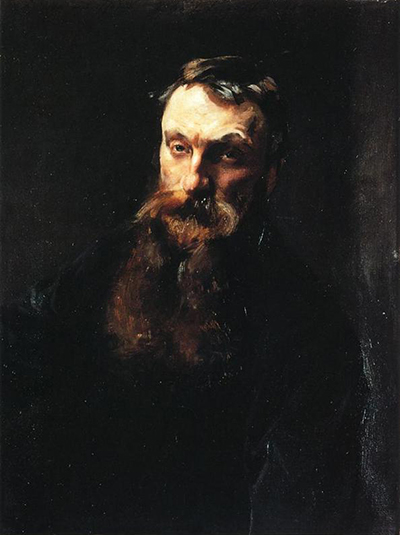
John Singer Sargent's Auguste Rodin is a portrait of one maker looking at another. It belongs to the part of Sargent's career where portraiture becomes more than society likeness: artists, writers, performers, and friends appear not as clients arranged for rank, but as people whose creative identity has to be made visible in paint. [1], [2]
For Rodin, that problem was unusually sharp. Rodin was a sculptor, famous for bodies, surfaces, and expressive form. Sargent was a painter whose portraits could turn pose, gaze, costume, and finish into public identity. The portrait therefore asks how sculptural authority can be translated into painted presence.
Contents
- Introduction
- Rodin As Sitter
- An Artist-Friend Portrait
- The Original Painting And The Later Print
- Painting Sculptural Authority
- Sargent's Network Of Makers
- How To Look At The Portrait
- Related Works And Where To Go Next
Rodin As Sitter
Rodin was not the kind of sitter Sargent usually needed to flatter through costume, furniture, social ease, or inherited status. He was a maker whose authority came from the physical drama of sculpture. His reputation rested on modeling, touch, bodies under pressure, and surfaces that seem to hold movement even when the figure is still. To paint him was to face a strong artistic identity already built in another medium.
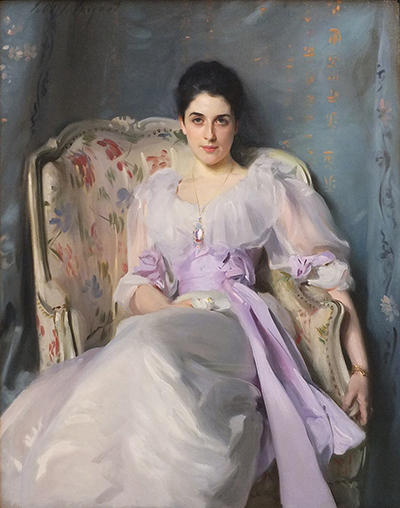
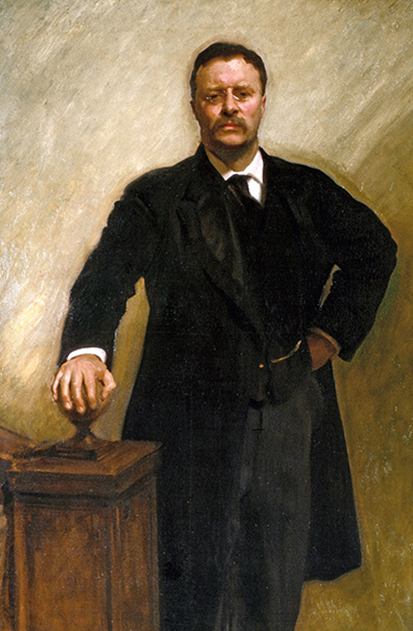
That makes the portrait different from a society picture such as Lady Agnew of Lochnaw or a public office portrait such as Theodore Roosevelt. Lady Agnew's portrait turns dress, chair, gaze, and studio arrangement into aristocratic command. Roosevelt's portrait has to carry presidential force. Rodin brings another kind of presence. He stands for the sculptor's labor: looking, handling, shaping, and turning mass into expressive form.
Sargent did not need to present Rodin through the literal tools of sculpture for the portrait to work. The important issue is the nature of the sitter's fame. A portrait of a sculptor asks the viewer to imagine the body as the site of creativity. The head, shoulders, posture, and surface become signs of thought and making. Sargent's problem is not to narrate Rodin's career. It is to make the sitter feel like someone whose authority comes from form.
This is where Sargent's portrait intelligence matters. He understood that identity is not only a face. It is the relation between body, pose, surface, role, and viewer. With Rodin, the role is not rank. It is authorship. The portrait asks what a sculptor looks like when another major artist has to make his creative power visible without turning him into a monument.
An Artist-Friend Portrait
The Metropolitan Museum of Art's Sargent: Portraits of Artists and Friends exhibition helps frame this kind of work. It treats Sargent's images of artists, writers, actors, musicians, dancers, and friends as a major current within his career, often more intimate and experimental than his formal commissions [1]. The National Portrait Gallery in London makes the same point in its exhibition archive, naming Rodin among the friends and contemporaries whose portraits showed Sargent working with unusual freedom [2].
That category matters because it changes the expectations around likeness. In a formal commission, the portrait has to negotiate patron satisfaction, family status, display, costume, and future reputation. In an artist-friend portrait, the sitter's creative identity can become the main subject. The painting does not have to behave like a social trophy. It can ask how one artist recognizes another.
Sargent's Claude Monet Painting by the Edge of a Wood is the clearest comparison. Monet is shown outdoors at an easel, absorbed in the act of painting. His identity appears through work. Rodin's portrait belongs to the same broad field, even though it does not need the same narrative of action. Monet is an artist seen making a picture; Rodin is an artist made present as a force of form. One portrait shows creative practice in progress. The other concentrates creative reputation into the figure of the sitter. [3]
The artist-friend group also keeps Sargent from being reduced to a painter of high society. He knew performers, writers, painters, patrons, and sculptors; he moved through a modern creative world as well as an elite social one. Rodin's presence in that world is important because sculpture gave Sargent another kind of artistic peer. Monet represented outdoor painting and modern light. Ellen Terry represented theatre and transformation. Rodin represented the expressive body and the sculpted surface.
In these portraits, Sargent was mapping a cultural network. The sitters were not just famous names. They were ways of making art visible: painting, acting, writing, sculpting, performing. Rodin's portrait therefore belongs not only to Sargent's portrait practice but to a wider record of how late nineteenth-century creative authority could be pictured.
The Original Painting And The Later Print
The most important practical distinction for readers is simple: the Musee Rodin record concerns the original Sargent portrait, while the Smithsonian American Art Museum record concerns a print after Sargent [4], [5]. The two records are connected by subject and by Sargent's image, but they are not the same object.
That distinction matters because the original painting and a print after it have different art-historical roles. The painting is Sargent's direct portrait image of Rodin, held by the museum most closely associated with the sculptor's own legacy. The SAAM object is valuable because it shows the image's later circulation and survival in another form, but it should not be described as the original canvas. [5]
Prints after paintings can be useful historical witnesses. They can spread an image beyond the place where the original is kept. They can preserve a composition for viewers who may never see the painting. They can also shape how a portrait is remembered. But they change the viewer's relation to the work. A print after Sargent does not carry the same material surface, paint handling, scale, or direct physical presence as the painting.
For Sargent, that difference is especially important because surface is never incidental. His portraits depend on the distribution of finish and looseness: where the brush sharpens, where it opens, where the face or body is held, and where the surrounding passage breathes. A later print can convey the design, likeness, and broad arrangement, but it cannot fully convey the painted surface that made Sargent's portrait art so alive.
For Rodin, the distinction is even sharper because the sitter's own art was so committed to surface. Rodin's sculptures are often discussed through modeling, touch, and the movement of form through matter. Sargent's painted surface is therefore part of the portrait's meaning. A print after the portrait is a meaningful descendant, not a substitute for the original painted encounter.
Painting Sculptural Authority
Sargent's portrait of Rodin is most powerful when read as a meeting between two kinds of surface. Rodin's art made sculpture feel alive through mass, modeling, and the expressive tension of the body. Sargent's art made portraiture feel alive through brushwork, pose, tonal relation, and selective finish. The portrait joins those worlds without pretending that painting and sculpture do the same thing.
Sculpture gives form physical weight. Painting gives form an image made from pigment, light, and illusion. When Sargent paints Rodin, he does not carve him. He creates a painted equivalent for the sculptor's presence. That equivalent has to come through the visible body: the arrangement of the head, the bearing of the figure, the sense of concentration, and the surface through which the viewer reads authority.
This is why the portrait should not be approached as celebrity likeness alone. Rodin was famous, but Sargent's subject is not fame in the usual social sense. It is creative force. A society sitter might be made memorable through fashionable dress or a charged gaze. A performer might be made visible through costume and role. A sculptor has to be made visible as someone who understands the body from the inside out, someone for whom form is thought.
Sargent's broader portrait method gives the painting its strength. He knew how to make a sitter seem present without describing everything equally. In many portraits, the face, hands, or posture carry the central force while other passages remain open. That hierarchy of finish is one of the ways Sargent turns looking into interpretation. The viewer is guided toward the parts of the figure that matter most.
With Rodin, the viewer can look for the portrait's pressure points: the head as the seat of thought, the body as a maker's instrument, the surface as the meeting of paint and sculptural identity. Even without a narrative setting, the portrait can imply a life of making. It does not need to show the studio or the sculpture stand. Rodin himself becomes the sign of the work.
The result is a portrait of authority stripped of many usual props. There is no need for aristocratic ease, theatrical costume, presidential architecture, or military uniform. Sargent gives the viewer a creative sitter whose power is carried through physical presence and the painter's handling of it.
Sargent's Network Of Makers
Rodin's portrait becomes richer when placed beside Sargent's other creative sitters. Sargent's portrait career was built from commissions, but it also depended on friendships, admiration, and artistic exchange. The portraits of artists and friends show him inside a world of makers rather than standing outside it as a hired observer. [1], [2]
Monet is the natural companion. In Claude Monet Painting by the Edge of a Wood, Sargent shows the painter outdoors, in the act of looking and working. The painting is about Monet's method as much as his likeness. Rodin's portrait does something more concentrated. It does not show the sculptor shaping clay or plaster. It lets the sitter's presence stand for the act of shaping. [3]
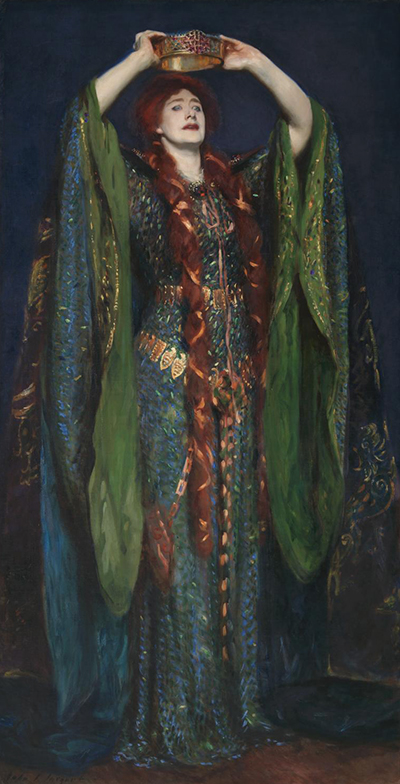
Ellen Terry offers a different comparison. In Ellen Terry as Lady Macbeth, Sargent paints an actor through role, costume, and theatrical command. Terry's creative identity is transformation. Monet's is outdoor looking. Rodin's is form. Sargent adjusts the portrait grammar each time because each sitter's authority comes from a different artistic practice.
That flexibility is one reason Sargent remains a major portraitist. He did not simply apply one formula to every sitter. He could make society ease, theatrical drama, political confidence, childhood distance, military rank, painterly absorption, and sculptural force all feel distinct. Rodin helps prove that range. A painter who can picture a sculptor as a creative presence is thinking about art itself, not only about likeness.
The portrait also creates a bridge to Rodin's own artistic world. Readers interested in the sitter can move outward to Auguste Rodin as a sculptor: the artist of bodies, thresholds, fragments, monuments, and surfaces that hold touch. Readers interested in Sargent can move back through portraits and biography to see how the Rodin image fits a larger career of artist-friend portraiture.
How To Look At The Portrait
Begin with the kind of authority the portrait asks you to see. Rodin is not being presented as a fashionable sitter. The point is not elegance in the society-portrait sense. Look instead for weight, concentration, and the relation between the head and the body.
Then think about medium. Sargent is painting a sculptor. That means the portrait is partly about translation. Sculpture works through mass, surface, and physical presence; painting works through pigment, light, and illusion. The portrait's interest lies in how Sargent creates a painted equivalent for a sculptor's authority.
Notice where Sargent's broader portrait habits would matter: pose, head, body, surface, and the hierarchy of attention. His portraits often sharpen what carries identity and loosen what does not need equal description. In a portrait of Rodin, that selective structure can make the sitter feel physically and mentally concentrated.
It also helps to compare the portrait with Claude Monet Painting by the Edge of a Wood. Monet is defined by action, seated outdoors and working at an easel. Rodin is defined by presence. The difference tells us how carefully Sargent could vary the artist portrait. He did not need every creative sitter to perform creativity in the same way. [3]
Finally, keep the versions clear. A print after Sargent can help circulate and preserve the image, but the original painting is the central object for reading Sargent's painted response to Rodin. The distinction is not pedantic. It changes how the viewer thinks about surface, material presence, and the relationship between painter and sitter.
Related Works And Where To Go Next
For Sargent's wider portrait practice, continue to Portraits. That essay places Rodin beside society sitters, artists, performers, children, political figures, and military portraits.
For the artist's life and career, use Biography and the main John Singer Sargent page. For another artist-friend portrait, compare Rodin with Claude Monet Painting by the Edge of a Wood, where Sargent shows Monet actively painting outdoors.
For technique, Style and Technique explains Sargent's controlled freshness, use of finish and looseness, and habit of making identity through pose and surface. For the sitter's own career, Auguste Rodin gives the natural companion page for Rodin's sculpture.
Frequently Asked Questions
The sitter is Auguste Rodin, the French sculptor. Sargent's portrait presents him as a creative figure rather than as a society sitter or public official.
The original Sargent portrait is represented by the Musee Rodin object record. That museum context is important because it places the image within the institution most closely associated with Rodin's own legacy. [4]
The Smithsonian American Art Museum record concerns a print after Sargent. It is related to the portrait image, but it is not the original painting. [5]
It matters because Sargent's portrait art depends strongly on painted surface, finish, and physical presence. A print after the painting can preserve the design and spread the image, but it cannot stand in for the original painted surface.
The article's strongest frame is the artist-friend portrait. Museum exhibition material on Sargent's artists and friends places Rodin among the creative sitters who allowed Sargent to work beyond the usual expectations of formal society portraiture. [1], [2]
The portrait does not need to show Rodin sculpting to evoke sculpture. Its interest lies in how Sargent translates a sculptor's authority into painted presence: body, head, surface, and the sense of form as creative identity.
Claude Monet Painting by the Edge of a Wood shows an artist at work outdoors. Auguste Rodin is more concentrated on presence. Together they show Sargent adapting portraiture to different kinds of artistic identity. [3]
It shows Sargent inside a network of major creative figures. The portrait helps balance the familiar story of society commissions by showing him painting another maker's authority.
Discussion
Sargent's portrait of Rodin asks whether a painter can make another artist's medium visible without showing that medium directly.
Reader Insights
What is the first detail that shapes your reading of Auguste Rodin by John Singer Sargent: pose, setting, light, costume, brushwork or historical context?
Which small visual decision begins to matter more after a longer look, and how does it change the mood of the page?
Which comparison helps most: another Sargent portrait, a travel subject, a public commission, or a work by one of his contemporaries?
Join the Conversation
Share a thoughtful comment below about what you notice, question or compare when looking at this page.
References
- Metropolitan Museum of Art, *Sargent: Portraits of Artists and Friends* https://www.metmuseum.org/exhibitions/listings/2015/sargent-portraits-of-artists-and-friends
- National Portrait Gallery, *Sargent: portraits of artists and friends* https://www.npg.org.uk/whatson/exhibitions/2014/sargent-portraits-of-artists-and-friends-aa
- *Claude Monet Painting by the Edge of a Wood* article: Claude Monet Painting by the Edge of a Wood
- Musee Rodin, *Portrait de Rodin* https://collections.musee-rodin.fr/documento/portrait-de-rodin/6385d6c405c32181005cbac3?pgn=0&pos=1&q=P.07341&s=domaine&so=desc
- Smithsonian American Art Museum, *Portrait of Rodin* https://americanart.si.edu/artwork/portrait-rodin-5151