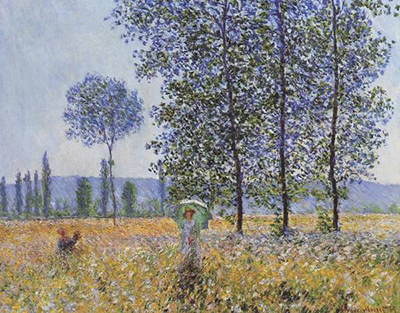
 by Tom Gurney
Tom Gurney BSc (Hons) is an art history expert with over 20 years experience
Published on October 6, 2016 / Updated on February 1, 2026
Email: tomgurney1@gmail.com / Phone: +44 7429 011000
Claude Monet print reproductions offer ways to explore his landscapes, gardens and studies of light at home. This guide compares familiar subjects and the main choices between paper, canvas and framing.
Monet was a leading figure of French Impressionism whose landscapes helped shape later approaches to colour and perception. [9]
His role in the movement’s development is one reason that his paintings continue to attract attention, alongside the variety of subjects and formats across his long career.
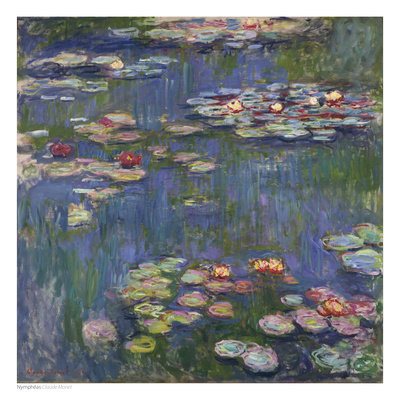
Claude Monet produced several series of paintings based on his specially created back garden, the best known of which were the water lilies.
The pond gave Monet repeated opportunities to study light near his home. His water-garden pictures include blues, greens, pinks and violets in different combinations. When comparing reproductions, consider the particular painting’s palette rather than assuming that every Water Lilies picture has the same colours.
Monet returned to the garden at different times of day and over many years as its planting developed. Reproductions can help a viewer compare these changing relationships of colour, reflection and light, provided that the particular versions remain clearly identified.
Original Water Lilies paintings belong to collections including the National Gallery in London, while the Musée de l’Orangerie in Paris holds the monumental decorative ensemble. These are different works within a broad theme, not interchangeable examples of a single canvas. [1] [15]
Poppy-field pictures offer a different approach to flowers and open space from Monet’s later series such as Haystacks and Water lilies. A securely identified example is Poppies, painted in 1873 and now in the Musée d’Orsay, inventory RF 1676. Monet showed it at the first Impressionist exhibition in 1874. [4]
Its red flowers enliven a predominantly green landscape, while the figures and the diagonal movement through the field give the scene structure. A reproduction can make these relationships easy to compare with the more enclosed views of the later garden.
Flowers and plants recur throughout Monet’s work, both in outdoor views and in arranged still lifes. A flower-field picture, a vase of blooms and a pond surface offer different ways of combining natural forms and colour. Comparing these subjects can help establish whether you prefer a broad landscape or a more concentrated floral image.
Monet’s landscapes can also be compared with work by other painters of rivers, fields and coasts. Look at how a horizon divides the image, how figures establish scale and how colours link foreground and distance. These comparisons offer a practical starting point for choosing a landscape reproduction.
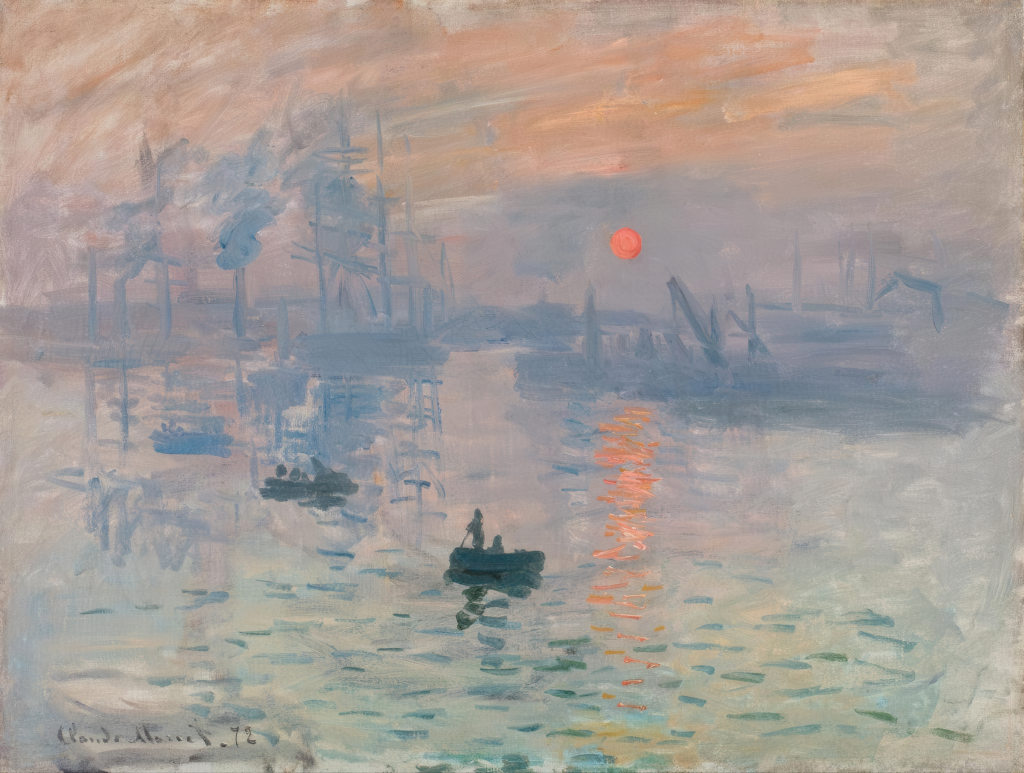
Impression, Sunrise has a particular place in the history of Impressionism. Its appearance in the independent exhibition of 1874 prompted the critical language through which the group’s name became established.
The work features Monet's typical balance of colour into a dreamy landscape with objects visible but only as part of an overall landscape which gives a calming feeling to the viewer.
Monet’s waterside subjects often include signs of human activity: boats, quays, bridges and buildings. Coastal harbours and the Thames provided different relationships between water and the inhabited landscape. A print of an open sea view can therefore have a very different structure from one of a city river.
Japanese Bridge
Reproductions of the Japanese bridge offer another way into Monet’s Giverny garden. Monet collected Japanese woodblock prints; the Japanese prints in his collection were works by other artists, including Hokusai, Hiroshige and Utamaro. They should be distinguished from modern reproductions of Monet’s own paintings. [3]
His interest in Japanese imagery formed part of the setting he created at Giverny. The bridge over the pond recalls bridges seen in Japanese prints, while its surrounding planting belongs to a garden Monet designed and tended in Normandy. The connection is an aspect of his collecting and gardening, rather than evidence that he made the Japanese woodcuts himself. [3]
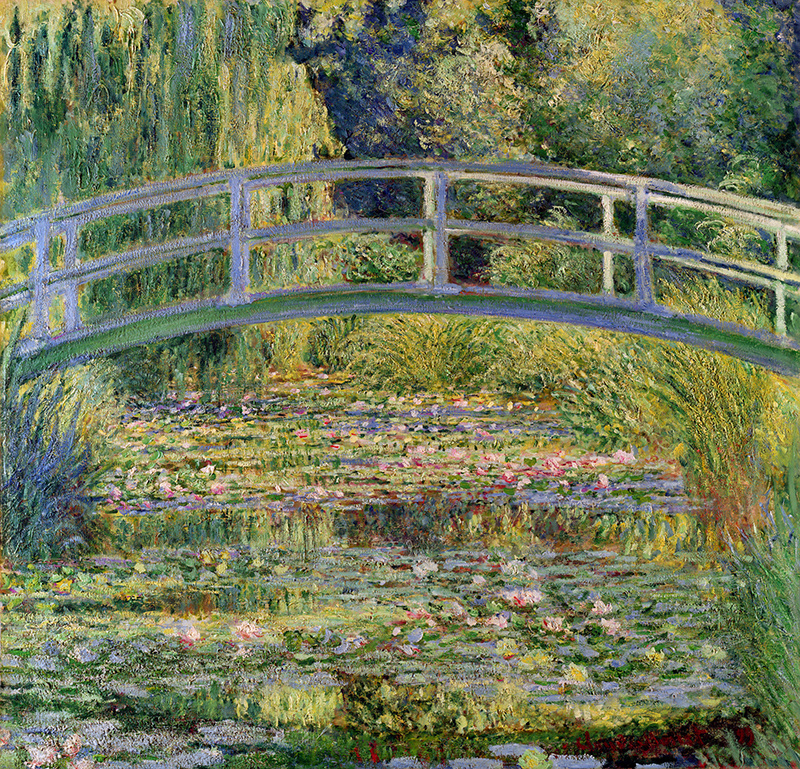
Bridge paintings can bring together the arch of the crossing, floating leaves, water and surrounding vegetation. The bridge provides a recognisable structure within the shifting colour of the garden. Compare its placement and the area of pond visible in the particular version being reproduced.
Monet returned to the Japanese bridge in different periods. The handling and colour of the early and late pictures can differ markedly, so a title alone is not enough to establish which painting a reproduction shows. A date, collection and full view of the composition make the comparison more precise.
Haystacks
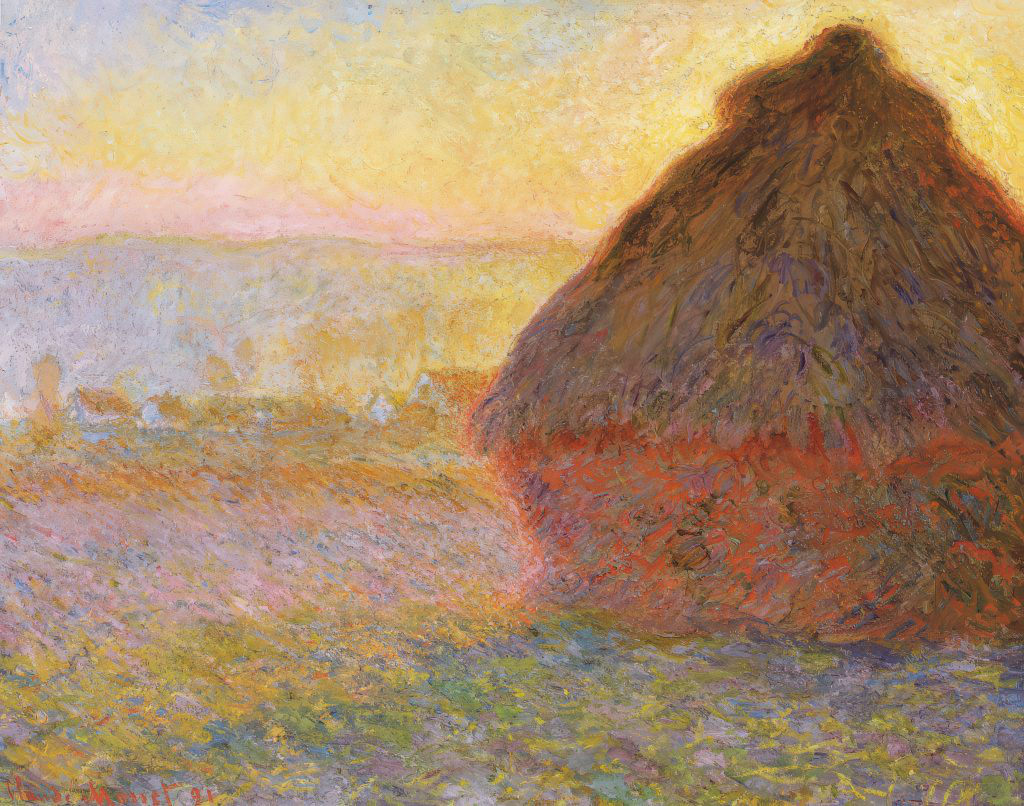
The Haystacks or grainstacks series explores how the appearance of familiar forms changes with light, weather and season.
The stacks remain identifiable while their colour, shadows and relation to the field change. The subject allows a viewer to follow differences across a group without needing a wholly new motif for each picture.
The differences were easy to understand when parts of the Haystacks series are displayed together offering subtle but important variations from one to the next.
Woman with Parasol
Camille Monet and the couple’s son Jean appear in Woman with a Parasol—Madame Monet and Her Son, painted in 1875 and held by the National Gallery of Art, Washington, accession 1983.1.29. This identifies the family scene more precisely than the shortened title Woman with a Parasol alone. [5]
The upright format, lifted parasol, moving dress and expansive sky make it a different choice from a horizontal pond or field scene. Its family subject is part of the painting, but the interplay of wind, sunlight and colour also contributes to its effect.
Camille served as a model in many contexts, and Monet painted both individual figures and family groups. These images invite attention to pose, clothing, setting and the relationships within the composition. They do not by themselves establish one universal role for women in nineteenth-century society.
When comparing figure subjects, consider the space around the person as well as the face. A parasol can organise a large area of sky; a dress can catch reflected colour from the grass. Those broad shapes remain important when a reproduction is viewed from across a room.
Other identifiable examples include Camille Monet on a Garden Bench and Camille on Her Deathbed. These belong to very different settings and occasions. Descriptive reproduction titles can vary, so use the artist, date and collection to distinguish one work from another rather than treating every reference to Madame Monet as the same portrait. [9] [14]
Houses of Parliament
Claude Monet produced several series of paintings outside of his native France through extended trips to key locations around Europe which included the UK and Italy.
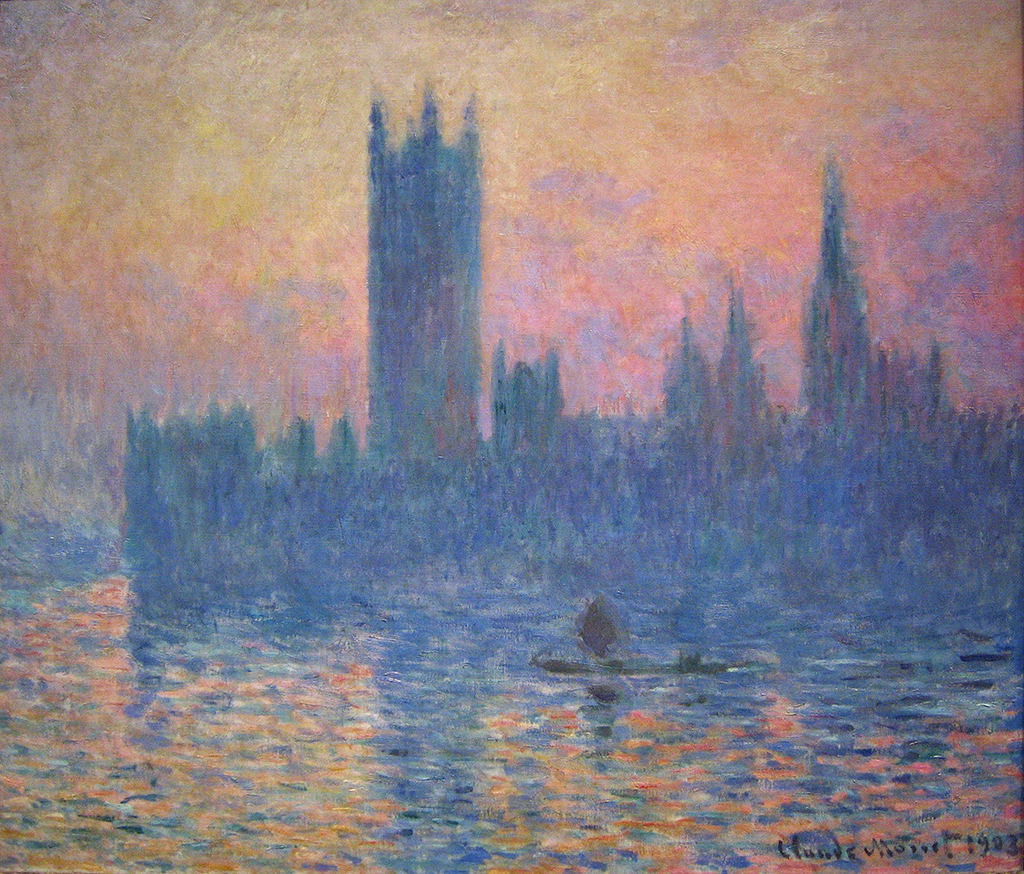
London’s architecture offered Monet recurring motifs, including the Houses of Parliament and Charing Cross Bridge. He began pictures during his visits and continued working on canvases in France. Their atmospheric colour was developed through repeated work, rather than every canvas being completed during a single short stay in the city. [16]
The London pictures vary in the balance between buildings, water, fog and sunlight. Their bridges and the silhouette of Parliament provide recognisable structures, while the treatment of atmosphere can change the mood considerably. For a reproduction, compare the precise version and its proportions rather than relying only on a general London title.
Monet also painted in Venice in 1908 and travelled to many locations in France. These journeys supplied coastal, river and architectural subjects alongside the garden pictures made at home. His work can be explored through this range of places as well as through the series associated with individual motifs.
His importance rests on both the subjects he chose and his sustained investigation of their appearance. A familiar landscape could become an opportunity to reconsider the relation between colour, touch and changing light.
The Houses of Parliament, London, with the Sun Breaking Through the Fog, 1904
Artist's House at Argenteuil
The Artist’s House at Argenteuil, painted in 1873 and held by the Art Institute of Chicago, inventory 1933.1153, brings domestic life into a garden setting. A child stands among flowerpots and a figure appears in the doorway. This is a house-and-garden composition, distinct from the later Giverny pond paintings. [6]
The path, pots and entrance give this kind of garden view an architectural framework. When choosing a reproduction, look at how much of that framework is retained in the image and whether the proportions preserve the relationship between the figures and their surroundings.
The Luncheon, a decorative panel of about 1873 in the Musée d’Orsay, inventory RF 2774, offers another view of garden life. A table remains after a meal and little Jean plays beneath the foliage. The museum records its appearance as a decorative panel at the second Impressionist exhibition in 1876. [8]
Artist's Garden at Giverny
Monet developed the garden at Giverny over many years. The Artist’s Garden at Giverny of 1900, now in the Musée d’Orsay as RF 1983 6, is one identifiable flower-garden picture. The museum’s provenance records the title Les iris at a sale in 1928, providing a useful reference when identifying reproductions of the flowerbeds. [7]
Monet settled at Giverny in 1883 and acquired land for the water garden in 1893, long before the cataract diagnosis of 1912. His planting gave him subjects close at hand as well as an environment that he could shape over time. [10]
Paths, flowerbeds, trees, pond and bridge offered different viewpoints and relationships of colour. Choosing a garden print therefore involves more than choosing a floral theme: some compositions lead the eye into depth, while others concentrate on a surface of water or dense planting.
The restored house and gardens now preserve an important setting of Monet’s work. Their later life as a visitor destination is distinct from the changing garden he maintained and painted during his lifetime.
The qualities in his paintings make them highly popular as art print reproductions for those looking to add his colour and imagination to their homes.
Monet prints are famous all over the world with Monet himself now established as one of the most respected and influential artists of all time.
This guide introduces garden, flower-field, river and city subjects, with a list of further titles below. The range provides starting points for comparison rather than a ranking of the ten best or best-selling reproductions.
Before following a shopping link, decide which painting or theme you want, the available wall space and the approximate proportions of the image. Different Water Lilies compositions can vary greatly in width and height.
A reproduction is both an image and a physical object. Compare its stated material, image dimensions and overall dimensions, including any border or frame.
For a grainstack print, compare the light effect and season shown in the particular painting. A pale snow scene and a warm sunset can belong to the same series yet create very different colour relationships in a room.
A stretched canvas is a print on fabric fitted over supporting bars. It may be displayed without an additional outer frame, or placed in a frame designed for canvas. Paper and canvas are different supports; neither automatically guarantees finer detail. Giclée printing can be used for canvas as well as for paper, so the printing description and the material should be read together. [11] [12]
Framing adds another choice of scale, border and finish. A paper print may be offered with a mount and glazing, while a canvas may have an exposed edge or an outer frame. Compare the actual specifications rather than assuming that every framed print or every giclée has the same construction or colour performance. [11] [13]
Garden views also differ in the way they distribute flowers across the surface. Before ordering, compare the full composition with the reproduction preview: cropping can alter the balance of a path, a building or a mass of planting even when the colours appear similar.
Reproductions may be offered as unframed paper prints, posters, framed prints, canvas or textile products such as tapestries. Check the listing for the particular item’s material and finish. These formats describe different objects, not a single quality level or a guaranteed current product range from one retailer.
For Impression, Sunrise, look at the relation between the orange sun, its reflection and the surrounding blue-grey harbour. A print should allow those contrasts to remain legible. The choice between paper and canvas is separate from identifying the painting and does not establish colour accuracy by itself.
Impression, Sunrise is the title of the particular 1872 Le Havre harbour painting in the Musée Marmottan Monet, inventory 4014. Monet painted other harbours and light effects, but these should not be conflated with a series of identical versions of this named canvas. [2]
The shopping link on this page accompanies the guide to subjects and formats. Use the individual listing to establish the size, material, framing and final appearance of the reproduction you are considering.
The aim is to connect an interest in Monet’s paintings with informed choices about how a reproduction will look in the home.
Claude has a great list of oil paintings from his long and distinguished career. You can see a list of the best known works further down this page.
His long career left a substantial body of paintings that can be encountered through museum collections, books and reproductions. Prints, posters, canvas and textiles offer different ways of bringing an image into a domestic setting.
Formats to compare include:
- Giclee Print
- Tapestry
- Stretched Canvas
- Framed Art Print
Claude Monet's paintings are classified into certain locations from where he produced many of his best works. Giverny and Argenteuil are two such places, with several works coming from both of these picturesque French locations, as Claude Monet took advantage of their natural beauty.
Subjects associated with these places include poppy fields, domestic gardens and water. A general reproduction title such as Monet’s Garden can refer to different compositions; a fuller title and collection help distinguish them.
Destinations included London where he produced a series of paintings of the Houses of Parliament plus several other key London sites.
Further painting titles and themes to explore include:
- Water-Lilies
- Venice Twilight
- Bouquet Of Sunflowers
- The Japanese Bridge
- Impression Sunrise
- Monet’s Garden at Argenteuil
- The Water Lily Pond
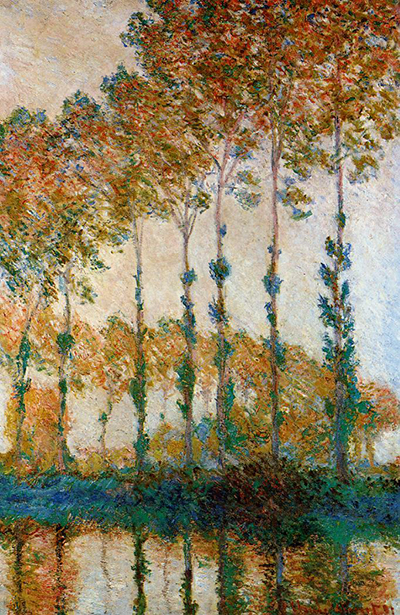
- Poplars On The Epte
- La Japonaise
- Houses Of Parliament London
- Wild Poppies at Argenteuil
- La Grenouillere
- Dejeuner Sur L'Herbe
- Monet's Garden
- Rue De La Bavolle
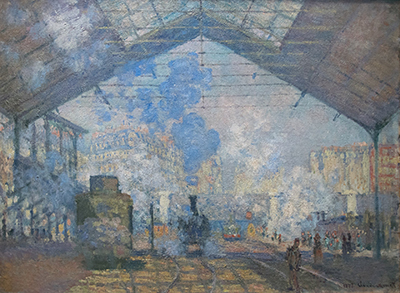
Further titles and themes include La Promenade, The Boat Studio, Beach at Trouville, The Houses of Parliament, Sunset, Regatta at Argenteuil, The Saint-Lazare Station, Argenteuil, Chrysanthemums, Hunting Trophy, Wheatstacks, Field of Poppies, The Highway Bridge at Argenteuil, The Floating Ice, Meadows at Giverny and Vétheuil. Use these as starting points, then identify the particular work before choosing its reproduction.
References
- The National Gallery, Water-Lilies, NG6343; an identifiable London collection example. View source
- Musée Marmottan Monet, Impression, soleil levant, 1872, inventory 4014. View source
- Maison et jardins de Claude Monet, Les estampes japonaises, Monet’s collection and its relation to his garden. View source
- Musée d’Orsay, Coquelicots, 1873, RF 1676, exhibited in 1874. View source
- National Gallery of Art, Woman with a Parasol—Madame Monet and Her Son, 1875, 1983.1.29. View source
- Art Institute of Chicago, The Artist’s House at Argenteuil, 1873, 1933.1153. View source
- Musée d’Orsay, Le Jardin de l’artiste à Giverny, 1900, RF 1983 6; historical title Les iris. View source
- Musée d’Orsay, Le Déjeuner. Panneau décoratif, about 1873, RF 2774. View source
- Laura Auricchio, The Metropolitan Museum of Art, Claude Monet (1840–1926), 2004, subjects, family and studio working methods. View source
- Maison et jardins de Claude Monet, Timeline, Giverny and eyesight chronology. View source
- National Galleries of Scotland, Custom Print Finishes, paper, stretched canvas and outer framing specifications. View source
- National Gallery of Art Custom Prints, Help and FAQs, separate choices of paper, canvas, size and optional frame. View source
- National Gallery Shop, Custom art prints information, image reproduction, paper, mounts and glazing. View source
- Musée d’Orsay, Camille sur son lit de mort, 1879, RF 1963 3. View source
- Musée de l’Orangerie, Les Nymphéas de Claude Monet, the Paris decorative ensemble. View source
- The Courtauld, Monet and the Changing City, learning resource, 2024, p. 2; London observation and later studio work in Giverny. View source