 by Tom Gurney
Tom Gurney BSc (Hons) is an art history expert with over 20 years experience
Published on October 6, 2016 / Updated on May 19, 2026
Email: tomgurney1@gmail.com / Phone: +44 7429 011000
Claude Monet’s paintings combine direct observation, experiments with colour and repeated study of changing light. Their later reception also became part of the history of modern art.
Watch: Monet's World of Water, a 30-painting slideshow
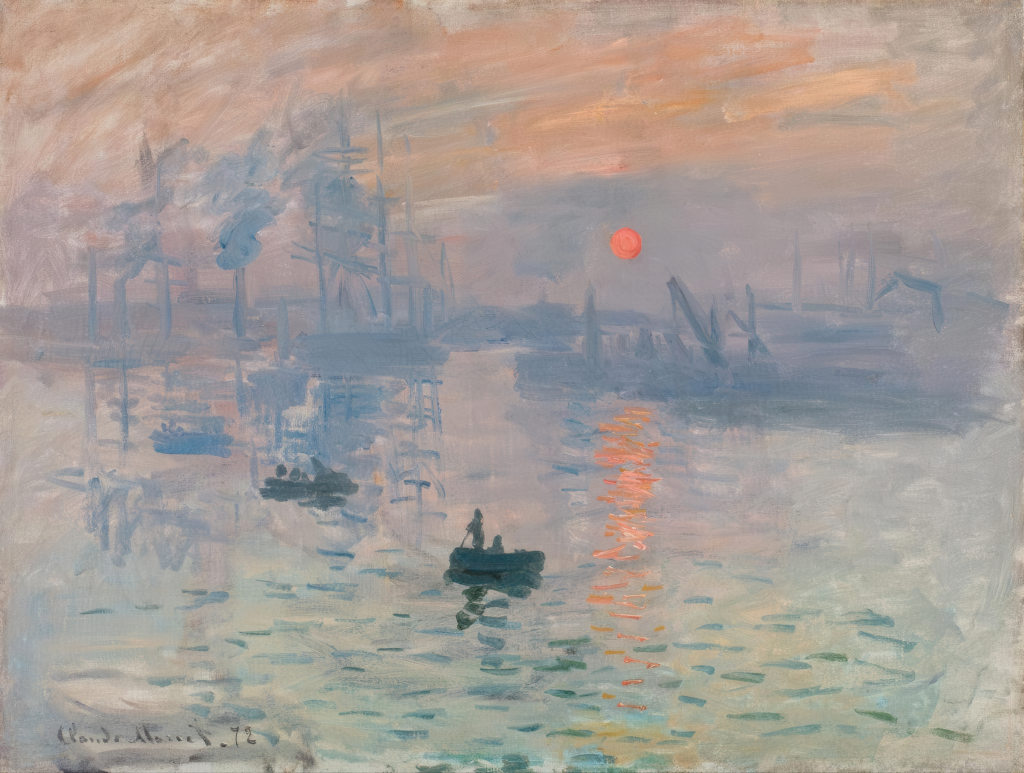
Monet’s place in twentieth-century art cannot be reduced to a single line of influence. Artists as different as Kazimir Malevich, Henri Matisse, Robert Delaunay and Piet Mondrian followed distinct paths through modernism. Monet’s late Water Lilies also entered a later discussion of abstraction, especially alongside Jackson Pollock and Mark Rothko. Basquiat belongs to a younger generation and should not be grouped with the original Abstract Expressionists. The connection between Monet and American abstraction concerns the reception of his late paintings, rather than a claim that Impression, Sunrise founded that movement. [1] [2]
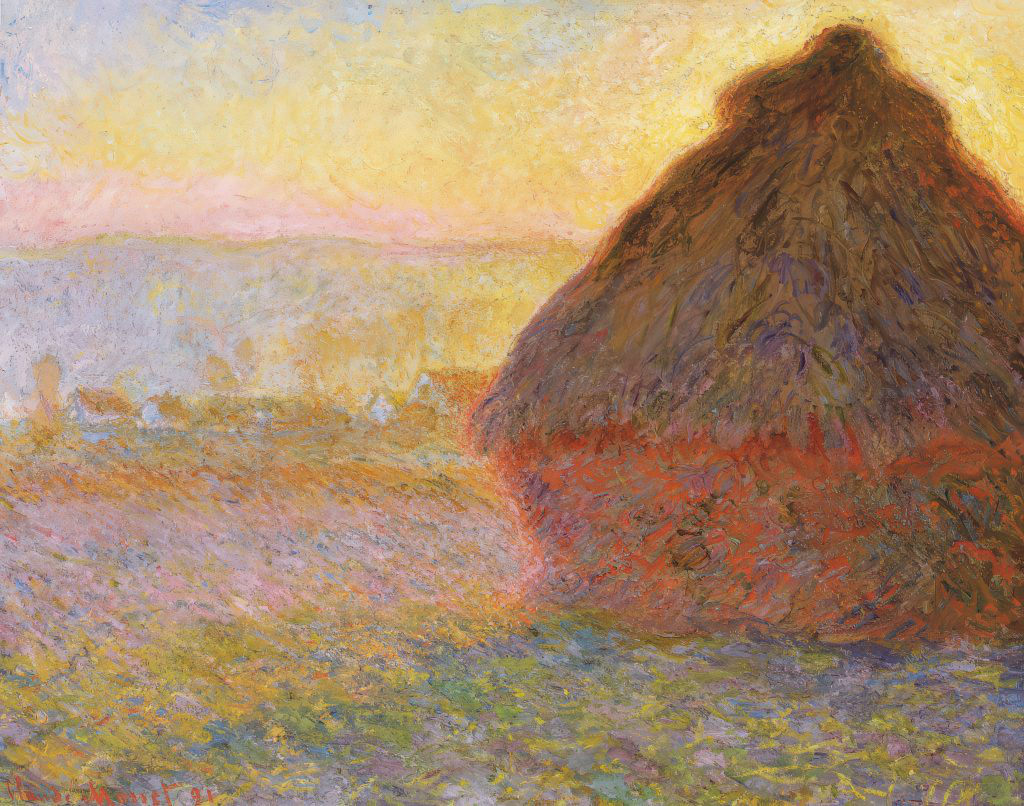
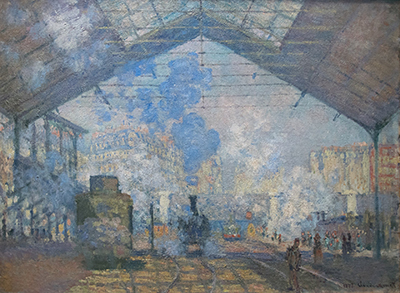
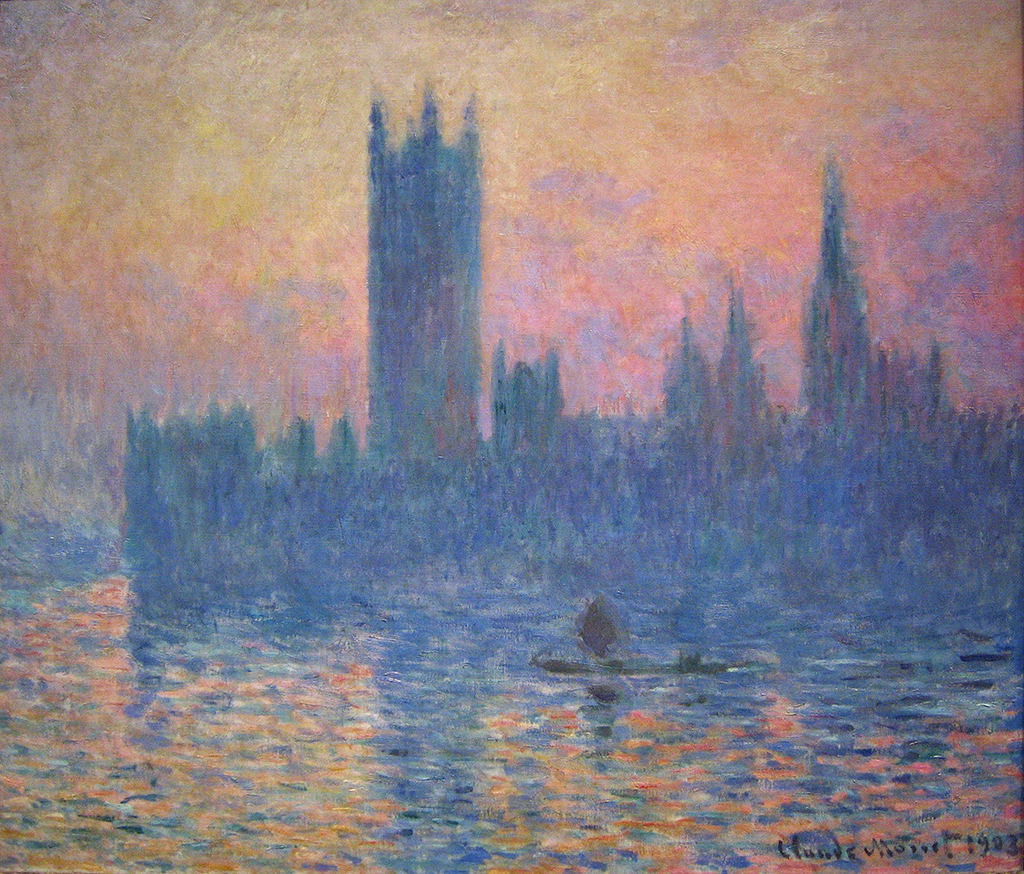
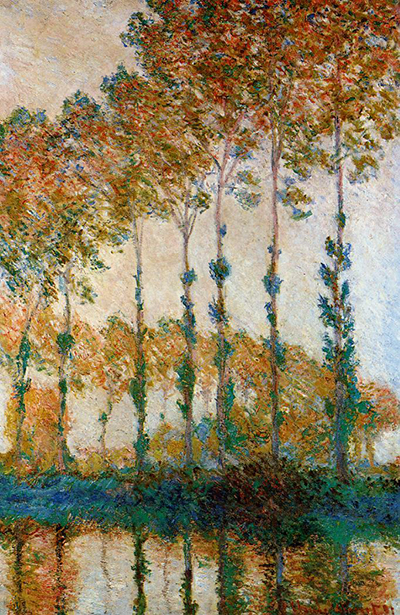
Monet’s series investigate the relationship between a recognisable subject and its changing appearance. A stack of grain, a line of trees or a cathedral façade provides a stable point of comparison, while light and atmosphere alter its colours and contours. These are paintings of perception, rather than scientific measurements of weather or climate. Photography already existed during Monet’s career; his achievement does not depend on an absence of photographic images. His paintings ask what colour, brushwork and a sequence of canvases can reveal about a place that a single view cannot contain. The variety within a series is as significant as the recurring motif: repetition becomes a means of exploring difference. [3]
Monet made a landscape accessible for sustained study by developing his own garden at Giverny. This section introduces his paintings and the techniques, materials and themes that connect individual works with the larger course of his career. [11]
The Oil Painting Techniques, Materials and Themes of Claude Monet
During the nineteenth century, Monet and other Impressionists made painting outdoors central to their practice. They extended an existing tradition rather than inventing it. Monet’s oil paintings combine close attention to particular places with arrangements of colour and brushwork that can give a scene a vivid, sometimes dreamlike character. [4]
This guide considers Monet’s work outdoors and in the studio, the practical materials of oil painting and the subjects he explored through individual canvases and series.
The en plein air style of painting: the hallmark of the Impressionists
The French expression en plein air means painting in the open air: the artist works before the landscape or another outdoor subject. It does not require every stroke of a finished picture to be applied outside. Oil sketches made directly from nature preceded Impressionism by generations, and Corot and Daubigny were important nineteenth-century practitioners. Monet developed this inheritance through sustained observation of light, water and atmosphere. Working in front of a subject allows the painter to compare the colours actually seen with those already placed on the canvas. A shadow can change as a cloud passes, while a reflection breaks apart when the water moves. Such conditions create practical difficulties as well as opportunities. The apparently immediate effect of a painting should therefore not be confused with proof that it was completed in a single outdoor session. Observation, selection and later revision could all contribute to the finished image. [4] [5]
The challenges of painting en plein air and the Impressionists' use of the box easel
Painting outside requires the artist to carry a support, colours, brushes and other equipment to the chosen site. A portable paint box and an easel make this task more manageable; some designs combine storage, a palette and a support for the canvas. A nineteenth-century paint box with a detachable easel and folding palette survives in the Petit Palais collection. This is evidence of the equipment available to painters, rather than proof that Monet or the Impressionists invented the box easel. Portability matters because a painter must be able to reach a viewpoint and set up before the conditions have altered. The supplies also need protection during the journey and between working sessions. Another important development was the collapsible metal paint tube. The American painter John Goffe Rand patented such tubes in 1841, with further improvements following. They helped keep prepared paint usable and made it easier to transport. Commercially prepared colours did not eliminate the palette: painters could still combine them or add white to adjust a tone. Nor did the tube create outdoor painting from nothing, since artists had already carried prepared colours in other containers. Its importance lies in convenience and preservation. Nineteenth-century developments in pigment manufacture also widened the range of available colours. Monet’s palette changed over his long career, so a list of pigment invention dates cannot serve as a recipe for every painting. The choice of colour, its mixture and its placement on the canvas remained artistic decisions, even when the materials came from a supplier. [6] [7] [8]
The importance of natural light: the Impressionists and the Barbizon school
Monet’s interest in natural light belongs to a longer history of landscape painting. The Barbizon painters, active in nineteenth-century France, took their name from a village beside the Forest of Fontainebleau. They shared a commitment to landscape as a subject worthy of serious attention, although their individual methods differed. Important figures associated with this history include Théodore Rousseau, Charles-François Daubigny and Millet. Their work helped establish the value of close observation of rural places and ordinary labour. Their relationship with Romanticism was more complex than a simple rejection of feeling in favour of factual description. An intense emotional response to nature could coexist with the study of particular trees, fields and changing skies. Outdoor observation and studio work were also compatible. Corot, for example, brought his experience of nature back into the studio, while Daubigny developed paintings from a floating workshop. The comparison with Monet is useful because it shows both continuity and change: landscape did not suddenly become an independent subject with Impressionism, but Monet explored new possibilities in its colours, surfaces and repeated motifs. Similar subject matter does not make all these artists members of one uniform style. [5]
Claude Monet's Impressionist style
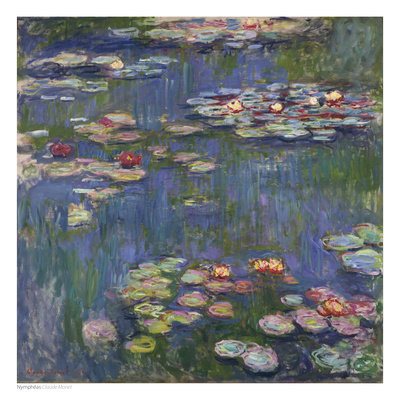
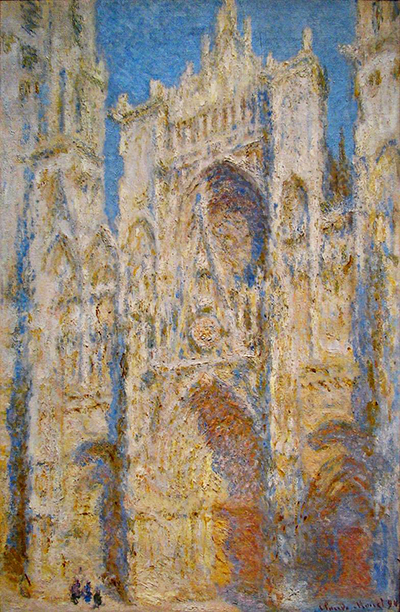
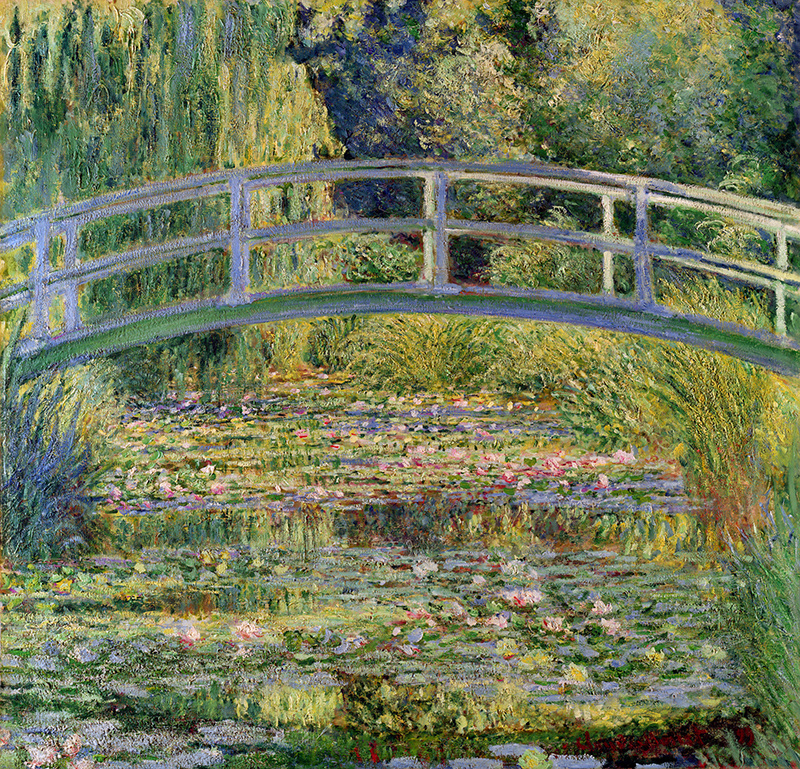
Monet’s paintings can preserve a recognisable structure while allowing colour and brushwork to loosen its outlines. In a sequence of bridge paintings, the arch may remain an organising shape even as the water, foliage and reflections change. Comparing canvases makes these differences easier to see: a cool passage can draw attention to shade, while warmer paint gives another version a different emphasis. His series include grainstacks, poplars, Rouen Cathedral and the water-lily pond. These groups should not be treated as interchangeable experiments conducted under identical conditions. The cathedral paintings, for instance, were largely made from rooms facing the façade, rather than from an easel in the street. Monet worked in Rouen in 1892 and 1893 and continued revising canvases at Giverny. The series contains more than thirty views, with twenty selected for the Paris exhibition of 1895. Across such works, the building may appear dense and shadowy or dissolve into brighter, softer colour. Looking at a group encourages attention to the relationship between architectural form and passing illumination. A solid subject can seem unstable without losing its identity. The water-lily paintings offer another kind of spatial problem, since reflections and floating plants can share a surface without a conventional horizon. Their variety also reflects changes in Monet’s scale and working methods over many years. A series is therefore more than a record of successive moments: it is a constructed group in which each picture can alter how the others are understood. [3] [9]
Building up the paint on the canvas
Monet’s paintings were not governed by a rule that a canvas had to be started and finished in the same outdoor session. Returning to a picture could mean adjusting relationships across the whole surface, rather than merely adding small details to a complete view. Oil paint also permits different kinds of contact between layers. Fresh paint worked into another wet passage can blend, while a stroke placed over dry paint can remain more distinct. Technical study confirms that Monet used mixtures as well as purer colour; the claim that he refused to mix on a palette is incorrect. His materials and handling changed over time, and no single brush shape or fixed sequence explains every canvas. Thick paint, often called impasto, gives a surface physical relief. Smaller touches can interrupt or connect broader passages, but they need not function simply as finishing detail. A viewer can follow the direction of a stroke, notice where an underlying colour shows through or compare the density of adjacent areas. Such effects help distinguish the painted surface from the landscape it represents. They also explain why a picture that appears effortless from a distance may reveal sustained, complex work on closer inspection. The sense of changing light is achieved through decisions about paint, as well as through the conditions observed before the subject. [10]
Exploring the paintings of Claude Monet
Monet’s paintings connect the practical possibilities of oil paint with an unusually sustained attention to places and changing appearances. Portable equipment and prepared colours supported outdoor work, while the studio provided space for revision and for ambitious late compositions. His series bring related canvases into dialogue, making differences of colour, atmosphere and handling part of the subject itself. Neither spontaneous observation nor careful construction alone explains the results. To explore his work, compare individual paintings within a series, then look closely at the surfaces and at the different settings in which they were made. The garden at Giverny, the cathedral at Rouen and the waterside views of his earlier career offer distinct problems of space and light. Their connections become clearer when Monet’s practice is understood as developing over time, rather than as a fixed formula of unmixed colour applied outdoors.
References
- Musée de l’Orangerie, Nymphéas. L’abstraction américaine et le dernier Monet, exhibition, 2018; reception in the 1950s. View source
- The Museum of Modern Art, Jean-Michel Basquiat, 1960–1988; New York and his emergence in the 1980s. View source
- The National Gallery, London, Monet’s Rouen painting series, observation, studio revision and the 1895 exhibition. View source
- The National Gallery, London, The Landscape Oil Sketch, 2007–2008; the history of outdoor oil studies. View source
- Dita Amory, The Metropolitan Museum of Art, The Barbizon School: French Painters of Nature, 2007. View source
- Petit Palais, Paris Musées, Boîte de peinture avec chevalet démontable et palette pliante, collection record. View source
- National Portrait Gallery, British artists’ suppliers, 1650–1950: John Goffe Rand, patents and early suppliers. View source
- The National Gallery, London, Guide to Impressionism: Painting quickly, paint tubes and The Beach at Trouville. View source
- Amgueddfa Cymru — Museum Wales, Rouen Cathedral: setting sun (symphony in grey and black), series chronology and count. View source
- Ashok Roy, The National Gallery, Monet’s Palette in the Twentieth Century: Water-Lilies and Irises, Technical Bulletin 28, 2007, pp. 58–68; especially p. 61. View source
- Maison et jardins de Claude Monet, Timeline; Giverny and the development of the garden. View source