 by Tom Gurney
Tom Gurney BSc (Hons) is an art history expert with over 20 years experience
Published on October 6, 2016 / Updated on February 1, 2026
Email: tomgurney1@gmail.com / Phone: +44 7429 011000
Oscar-Claude Monet was born on 14 November 1840. His paintings made him one of the central figures of Impressionism, a movement developed with other artists rather than founded by a single painter. [1] [2]
To this very day, he is one of the most well-known painters in the world and his works continue to influence many modern artists.
Monet was born in Paris and grew up in Le Havre, where his family moved in 1845. His early successes were caricatures, which attracted attention before his mature career as a landscape painter. During these formative years he met Eugène Boudin, an artist who became both a mentor and a friend. Boudin introduced him to painting outdoors, encouraging him to look closely at nature rather than relying only on the conventions of the studio. This encounter helped give direct observation an enduring place in Monet’s work. [1] [3]
Monet went to Paris in 1859, at eighteen, and spent time at the Académie Suisse. His development involved contact with other painters as well as study of the visible world. Édouard Manet became an important influence in the 1860s, but the two men had distinct careers. The Giverny chronology dates their meeting to 1866, after Monet had already shown at the Salon. [1] [3]
For a complete chronology of Monet's life and artistic development, see the Claude Monet timeline.
Monet’s developing career was interrupted by military service in Algeria in 1861–1862. After returning to France, he resumed his artistic training. The interruption belongs to the beginning of his career, before the friendships and experiments that would bring him into the circle of the future Impressionists. [1]
In 1862–1863 Monet worked in the Paris studio of Charles Gleyre, an academic history painter. There he formed friendships with Frédéric Bazille, Pierre-Auguste Renoir and Alfred Sisley. Although they received traditional training, these young artists increasingly explored ways of painting modern life and outdoor light. Broken touches of colour and visible brushwork would become important to their experiments, but Impressionism was not simply a doctrine taught to Monet by Gleyre. It developed through exchanges among artists and through their individual work. [1] [4]
Initial Works and Marriage
Monet began the monumental Luncheon on the Grass in 1865, intending it for the Salon, but left it unfinished before the 1866 exhibition. His portrait Camille, also known as The Woman in the Green Dress, brought him success at the Salon in 1866. Camille Doncieux also posed for Women in the Garden. Their first son, Jean, was born in 1867, and they married in 1870, shortly before the Franco-Prussian War. [1] [5]
The family took refuge in London during the war, and Monet settled in Argenteuil late in 1871 after a stay in the Netherlands. Financial insecurity had already marked his early career, despite occasional recognition: his silver medal at the Le Havre maritime exhibition dates to 1868. The difficulties were real, but they did not mean that every work was refused or that he never found supporters. The surviving fragments of Luncheon on the Grass have their own troubled history: he pledged the canvas against rent, later recovered it damaged by damp, and cut it into sections. [1] [5]
While in England, Monet encountered the British landscape tradition associated with painters such as Turner and Constable. These predecessors offered important comparisons for an artist interested in atmosphere and water, although his own method continued to develop through many different encounters. He then spent the summer of 1871 in Zaandam in the Netherlands before returning to France. The journey widened his range of subjects; it should not be reduced to a single moment at which a complete Impressionist style suddenly appeared. [1] [13]
The Relationship Between Monet and Impressionism
Monet and his colleagues repeatedly encountered the hostility of the Salon jury, but their relationship with official exhibitions was not one of uninterrupted exclusion. Monet had paintings accepted in the 1860s as well as important works rejected. The Salon was an exhibition system, not simply another name for the Académie des Beaux-Arts. An independent exhibition offered the artists a way to show and sell work without submitting each picture to the official jury. [1] [2]
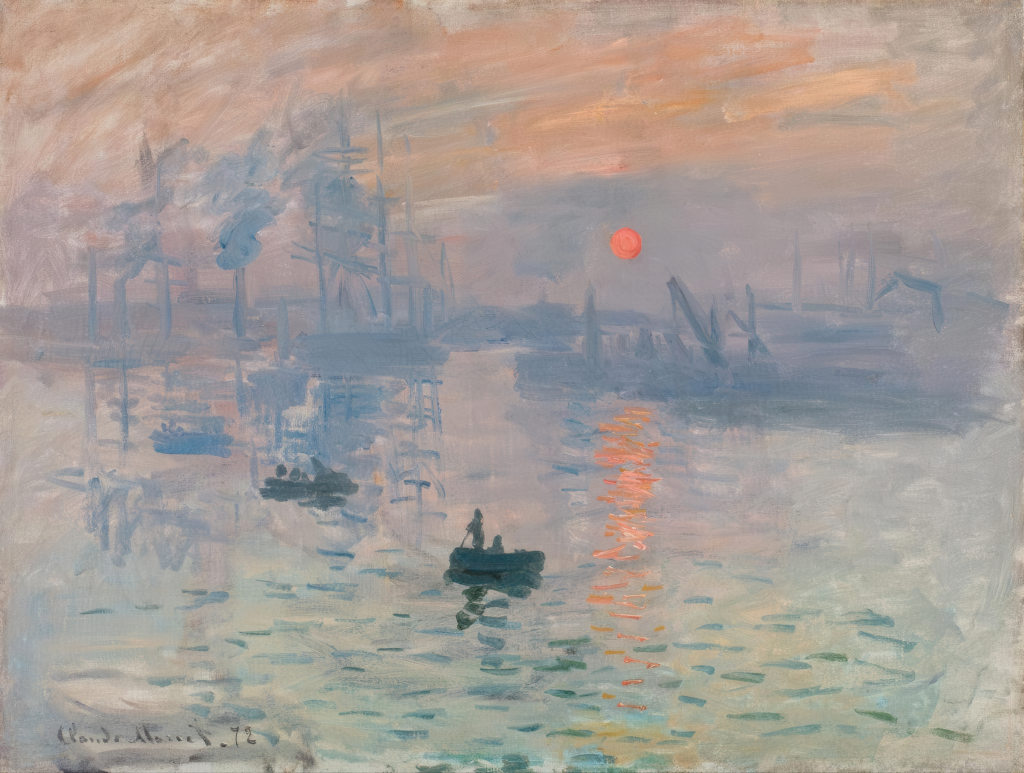
The Société anonyme des artistes peintres, sculpteurs et graveurs was established in 1873. Monet belonged to the group alongside artists including Camille Pissarro, Alfred Sisley and Pierre-Auguste Renoir. Its first exhibition opened in 1874, and Monet contributed Impression, Sunrise. Louis Leroy’s mocking response to that title helped attach the word “Impressionist” to the group. The name emerged from this particular public encounter, while the artists themselves continued to pursue varied subjects and methods. [2]
During his years at Argenteuil, Monet used a small boat as a floating studio. It allowed him to work on the river and look at the banks from positions unavailable on land. The boat also appears in a painting by his friend Manet, who depicted Monet at work with Camille aboard in 1874. Such exchanges show how closely their work and friendships could intersect. [6]
Family Troubles and Grief
Camille’s health declined during the later 1870s. Their second son, Michel, was born in 1878, and she died on 5 September 1879 at the age of thirty-two. Her death left Monet with two young sons and brought a profound personal loss into the period when he was working around Vétheuil. [1]
Monet painted Camille on Her Deathbed in 1879. The work, now in the Musée d’Orsay, brings his sustained attention to colour and light to a deeply personal subject. It stands apart from his better-known outdoor scenes without ceasing to be a painting made through observation. The picture records the presence of the woman who had been his model and companion, giving this intimate subject a place within his wider exploration of painted appearances. [7]
From Vétheuil to Giverny
Around Vétheuil and during the early 1880s, Monet continued painting landscapes and water. Changes in season, weather and illumination gave familiar places different appearances. He also travelled to coastal locations, extending rather than abandoning his interest in the French landscape. These years connect his Argenteuil work with the more sustained series paintings that would later become central to his reputation. His work continued to draw on the places where he lived and travelled, as familiar stretches of river and coast offered new effects to explore. [1] [4]
Alice Hoschedé was the wife of Monet’s patron Ernest Hoschedé. The two families became closely connected, and Alice helped care for the children after Camille’s death. Monet, Alice, his two sons and her six children eventually settled at Giverny in 1883, after the intervening years around Vétheuil and Poissy. Monet would remain at Giverny for the rest of his life. Ernest died in 1891, and Monet married Alice in July 1892. The change in their legal relationship thus came after years in which they had already shared family life. [4] [8]
Changing Fortunes and Comfort
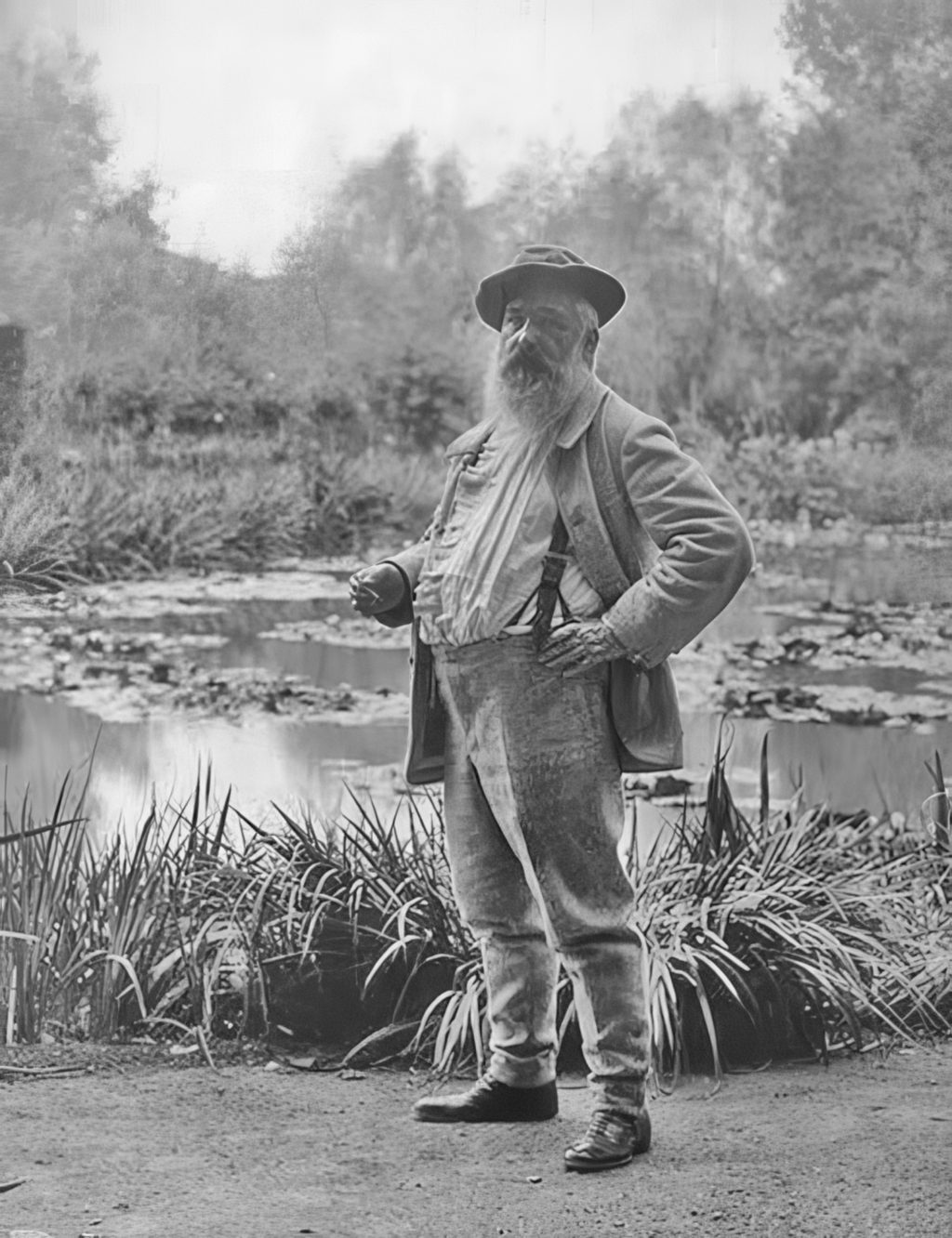
Giverny and its nearby surroundings proved to reflect a more peaceful time in the life of Monet. With the help of Alice and the children, they would renovate their home and plant large gardens. His paintings likewise enjoyed mainstream success and he was able to purchase the house in 1890. He also procured the surrounding land in order to experience a greater sense of peace and tranquillity. The garden in particular was quite large and Monet gave daily instructions in regards to its layout and the plants that should be present.
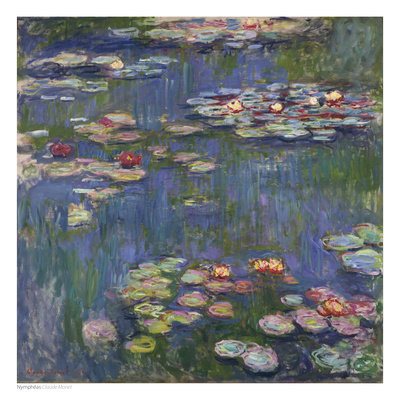
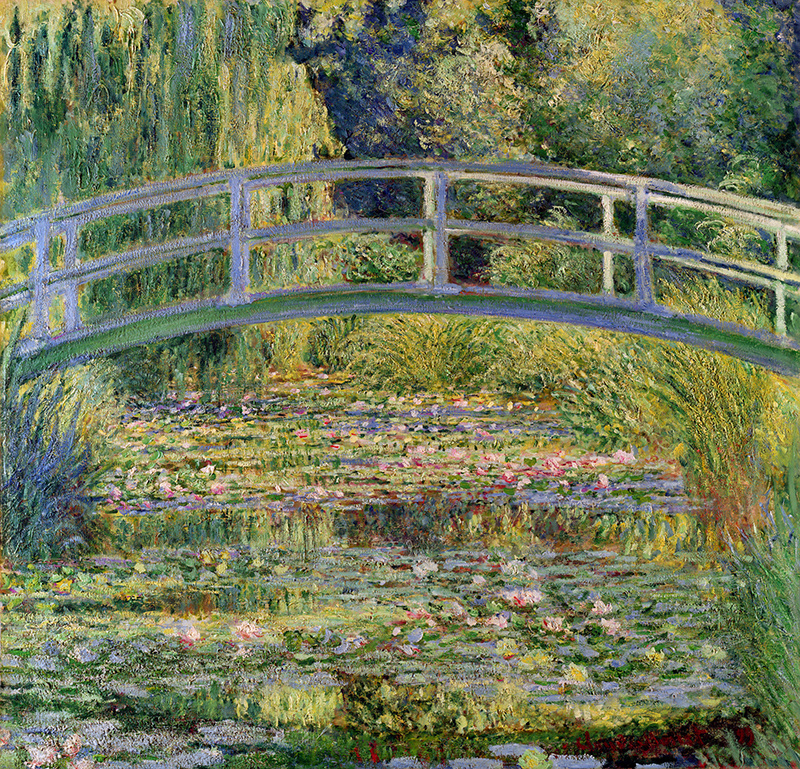
Monet devoted considerable time to developing the garden and its surroundings. He acquired land for the water garden in 1893, creating the setting that would later become the subject of the Water Lilies. The garden’s creation and the first paintings of its lilies were separate developments: the Giverny account dates the beginning of the lily paintings to 1897. By the end of the century, the pond offered a subject through which plants, sky and reflected light could be brought together on one surface. [9]
Later Years
Further losses marked Monet’s later years. Alice died in 1911 and his eldest son Jean in 1914. His problems with eyesight had begun earlier: the Giverny chronology records difficulties in 1908 and a cataract diagnosis in 1912. The difficulties with his sight overlapped with continuing artistic experiments. His late paintings deserve attention to their composition and handling as well as to the personal circumstances in which they were made. [1]
Monet continued painting during the First World War, concentrating increasingly on his water garden and large decorative canvases. He underwent cataract surgery in 1923. The later history of these works belongs both to his difficult personal circumstances and to a continuing artistic project. In 1918 he promised paintings to France, and the donation deed was signed in 1922. The large Water Lilies installation opened at the Orangerie in 1927, after his death. [1] [3]
Death
Claude Monet died on 5 December 1926, aged eighty-six, and was buried at Giverny after a simple funeral attended by family, friends and villagers. The later preservation of his home should be distinguished from his own death: it was his son Michel who bequeathed the property and its collections to the Académie des Beaux-Arts in 1966. After a substantial restoration, the house and gardens opened to the public on 3 June 1980. Their survival allows visitors to encounter the setting that Monet shaped over decades, rather than only the paintings that emerged from it. [1] [10] [14]
Impact Upon the World of Art
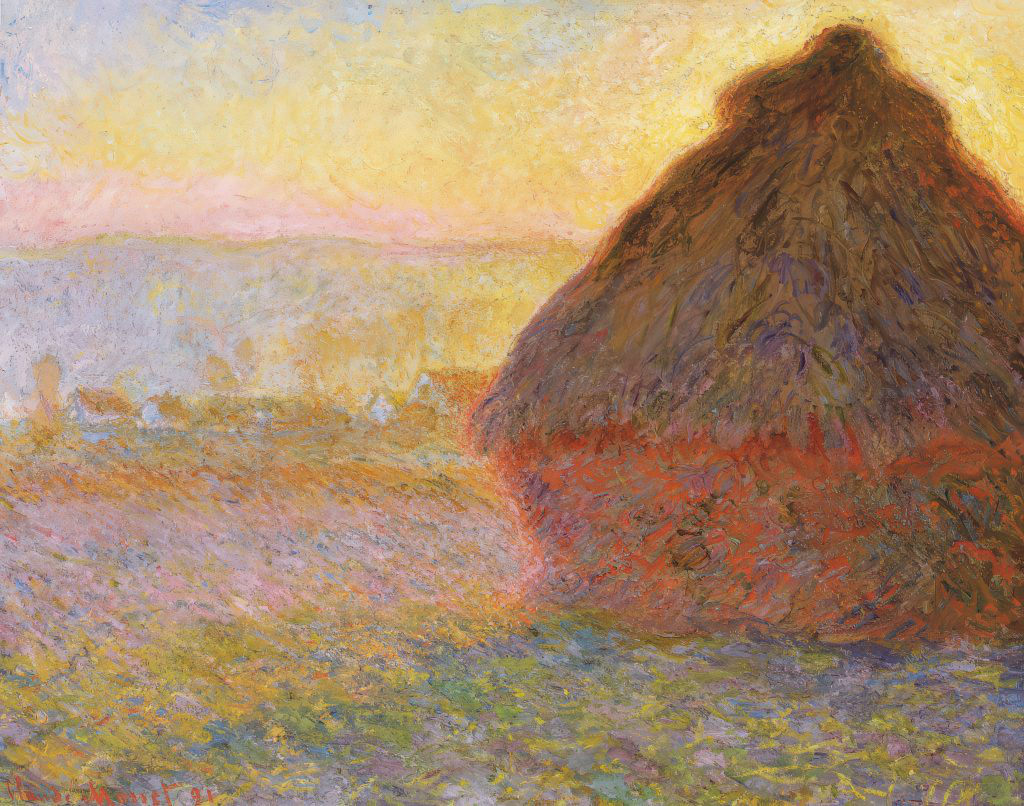
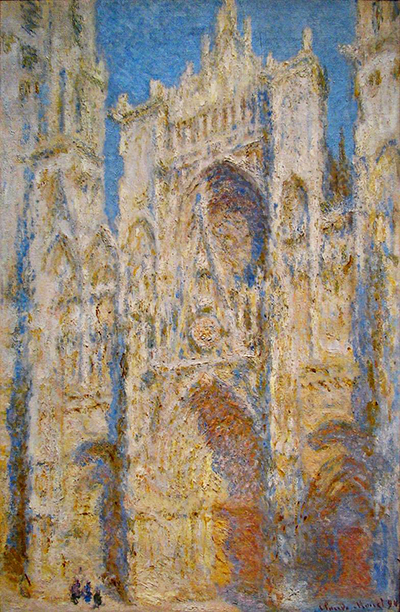
Monet was one of Impressionism’s central figures, and his work had an important influence during his lifetime and after his death. His repeated studies of familiar motifs made perception itself a major subject of painting. A haystack, cathedral or pond could remain recognisable while changing profoundly through the handling of light and colour. This sustained attention helped make his work a significant point of reference for later artists. [4]
The apparent immediacy of these pictures should not be confused with an absence of thought or revision. Monet worked outdoors, but also returned to canvases in the studio. In his series, he could move between several paintings as the light changed and later rework them. Visible brushstrokes and fluid colour were therefore compatible with a long process of selection and adjustment. Impressionism embraced different personalities, while later painters such as Van Gogh and Seurat pursued their own responses to colour rather than simply repeating one shared recipe. [2] [4]
Posthumous Sales and Fame
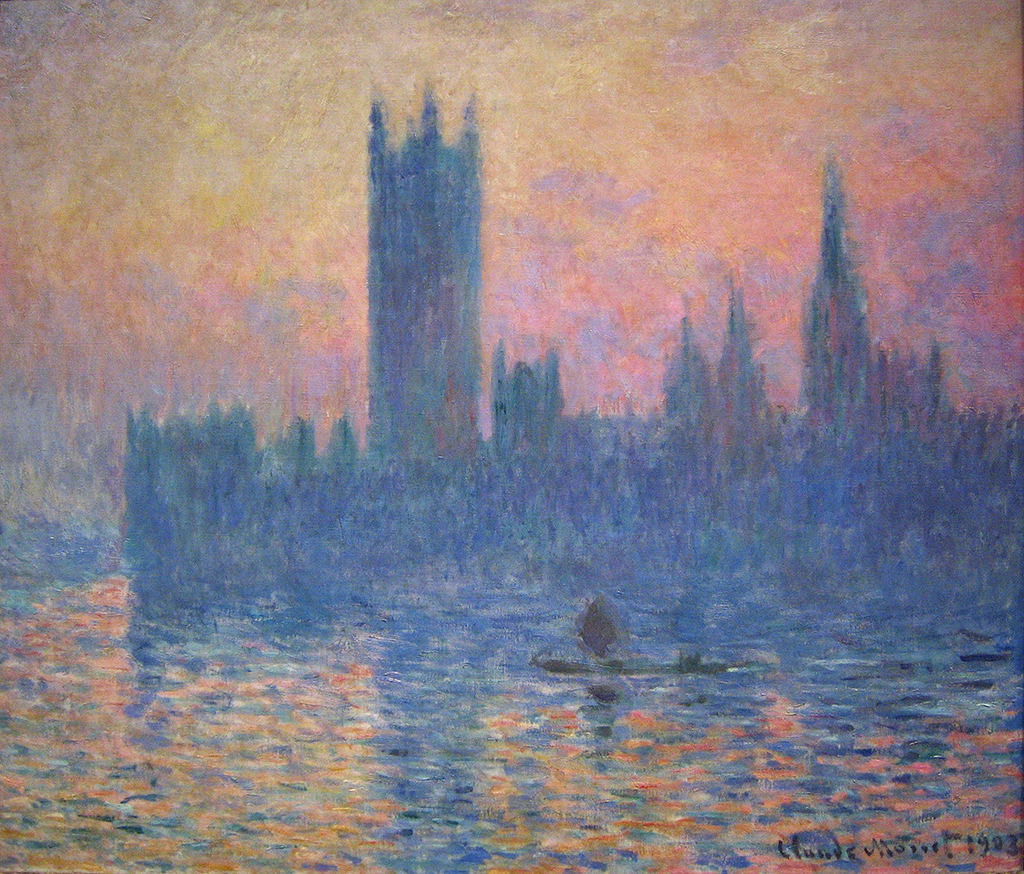
Monet’s reputation also continued through later sales of his paintings, although these transactions were not earnings received by the artist after his death. In 2004, London, the Parliament, Effects of Sun in the Fog sold at Christie’s for about US$20.1 million, as contemporary reporting recorded. Le Pont du chemin de fer à Argenteuil realised US$41,481,000 in New York on 6 May 2008. Le bassin aux nymphéas realised £40,921,250, reported as US$80,451,178, in London on 24 June 2008. The last result was an auction record for Monet at that time. These historical prices form one part of the later reception of his work, alongside the museum collections, exhibitions and studies through which his paintings continue to reach new audiences. [11] [12]
References
- Maison et jardins de Claude Monet, Timeline, biographical chronology. View source
- Musée d’Orsay, Au temps des expositions impressionnistes (1874–1886), collective movement and independent exhibitions. View source
- Musée de l’Orangerie, Claude Monet, biographical overview. View source
- Laura Auricchio, The Metropolitan Museum of Art, Claude Monet (1840–1926), 2004, training, places and working methods. View source
- Musée d’Orsay, Le Déjeuner sur l’herbe, 1865–1866, RF 1987 12; unfinished Salon project and later history. View source
- Bayerische Staatsgemäldesammlungen, Édouard Manet, Die Barke, 1874, inventory 8759; Monet and Camille aboard the studio boat. View source
- Musée d’Orsay, Camille sur son lit de mort, 1879, RF 1963 3. View source
- Maison et jardins de Claude Monet, 16 juillet 1892 : Claude Monet épouse Alice, family relationships and marriage chronology. View source
- Maison et jardins de Claude Monet, Le jardin d’eau, 1893 land acquisition and 1897 beginning of lily paintings. View source
- Maison et jardins de Claude Monet, Gilbert Vahé: This book is a historical record, Michel’s bequest and restoration. View source
- Ula Ilnytzky, Associated Press, via Chron, Monet painting fetches $20.1 million at auction, 6 November 2004; contemporary report. View source
- Christie’s, 2008 full-year results, 12 February 2009, historical top-lot prices and dates. View source
- The National Gallery, The National Gallery acquires painting by Camille Pissarro, July 2020; Monet and Pissarro in London, British landscape painting. View source
- Maison et jardins de Claude Monet, Les simples funérailles de Claude Monet, burial and mourners. View source