


 by Tom Gurney
Tom Gurney BSc (Hons) is an art history expert with over 20 years experience
Page Created on September 22, 2026 / Page Updated on September 22, 2026
Email: tomgurney1@gmail.com / Phone: +44 7429 011000
Introduction
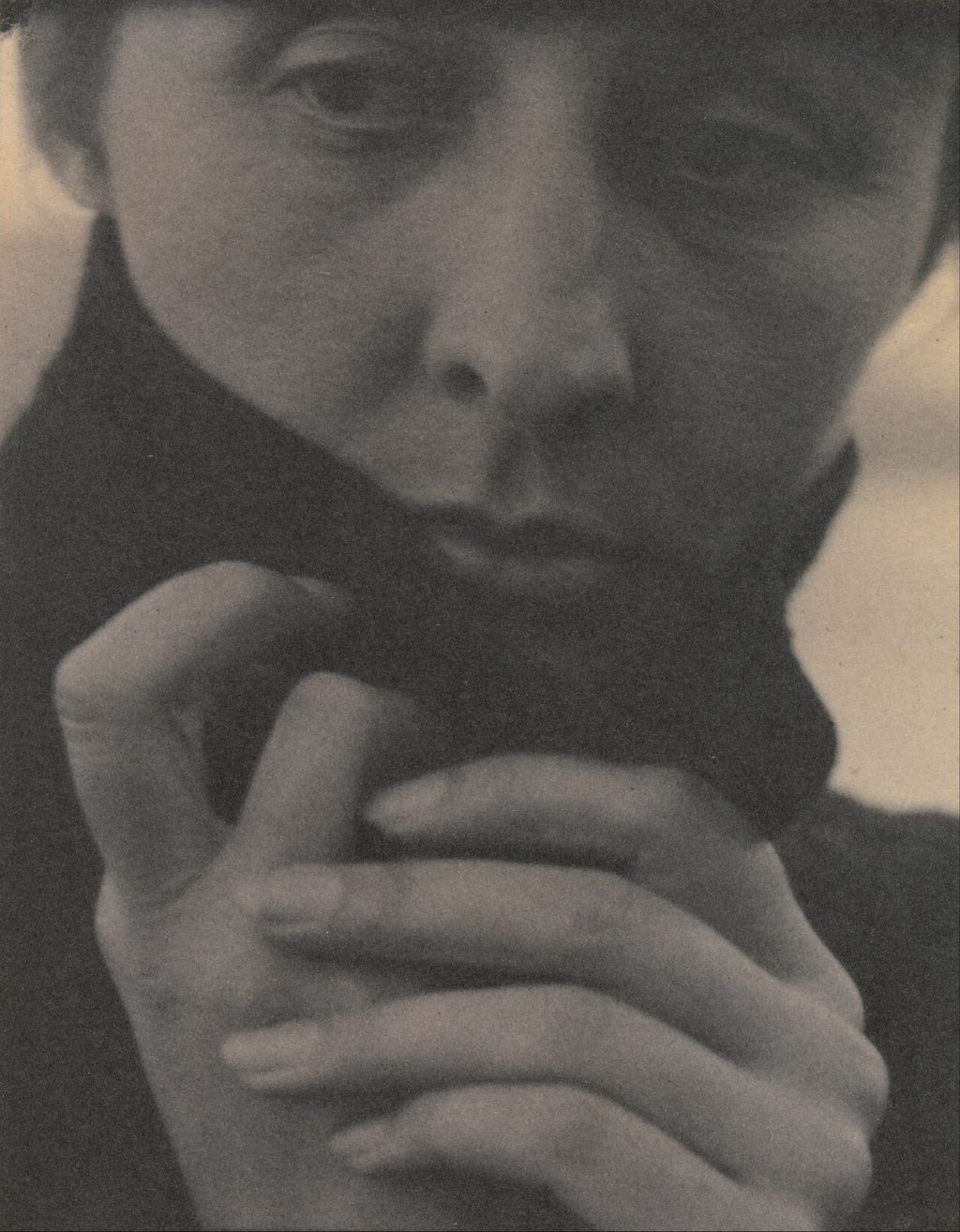
Georgia O’Keeffe’s paintings cannot be reduced to a row of enlarged flowers. Across seven decades she painted abstractions, Texas canyons, Lake George trees and buildings, Manhattan towers, shells, bones, crosses, adobe walls, desert hills, doors, roads, rivers and clouds. Subjects recur, but they do not remain fixed. She changed their scale, crop, orientation, colour, medium and relation to the edge until seeing itself became the subject.
The current catalogue framework matters. Access O’Keeffe begins with the 2,029 works published in Barbara Buhler Lynes’s 1999 catalogue raisonné and adds information supplied by more than 130 institutions.[1] A painting’s familiar title, date or ownership can therefore be revised. Any overview is a map of a living record rather than a final list of masterpieces.
Its public launch on 4 March 2026 made more than 2,200 works searchable with visual descriptions, archival connections, exhibition histories and research data.[31] The higher total reflects an evolving digital catalogue rather than a silent replacement of the printed volumes. Public-collection information was checked systematically from 2023 to 2025, while private holdings largely retained the earlier catalogue data and research continues.[1] Readers should therefore distinguish the number in the 1999 sequence from the larger body now discoverable through the platform.
At a Glance
- ArtistGeorgia O’Keeffe
- SubjectGeorgia O’Keeffe Paintings
- Artistic contextAmerican modernism
- Art formPainting
Contents
- Painting as sustained inquiry
- From academic control to a personal grammar
- Representation and abstraction
- Texas and Lake George
- Flowers and contested meaning
- New York architecture and light
- New Mexico: subjects remade
- Bones, shells and symbolism
- Doors, patios and thresholds
- Roads, rivers and flight
- Clouds and monumental scale
- Materials, colour and studio control
- Underdrawing, revision and edges
- Frames, titles and provenance
- Conservation and ageing paint
- Reception and wider modernism
- Late painting and assistance
- How to look across the paintings
Painting as sustained inquiry
O’Keeffe often worked in sequences. A plant might move from recognisable leaves and blossom to a narrow internal structure; a building might be tested in daylight, darkness and changing perspective; a mountain profile might return under different skies. MoMA’s study of her serial practice argues that repetition allowed her to develop and transform a motif between observation and abstraction.[8] Series resist two common mistakes.
The first is to treat every canvas as an isolated symbol. The second is to assume that a repeated subject means repetition of an idea. Small differences can be the point: a contour closes, a colour interval sharpens, a horizon rises, or an object presses beyond the frame. Comparison reveals decisions that a single reproduction hides. This method also linked painting to work on paper.
Charcoal, graphite, watercolour and pastel were independent media, yet they could test rhythms later carried into oil. The National Gallery’s O’Keeffe on Paper and MoMA’s To See Takes Time both recover paper as a continuing arena of experiment, including flower studies, portraits and aerial views.[8][25] Paintings belong within that larger movement of forms. The career does not divide neatly into styles, but its changing problems can be traced.
From 1915 to 1918 O’Keeffe concentrated on how few lines or colour masses an image could contain while still carrying energy. During the 1920s she moved between non-objective forms, Lake George subjects, magnified flowers and Manhattan architecture. The 1930s added New Mexico churches, crosses, bones and composite still lifes without ending work in the East. During the 1940s the pelvis, cottonwood and architectural series enlarged openings and thresholds. The 1950s and 1960s brought patio walls, roads, aerial rivers and clouds.
After sight loss, painting continued with assistance for a defined period rather than stopping at a single dramatic moment.[2][30] This chronology prevents place from becoming destiny. New Mexico did not suddenly create the simplified forms: the charcoals, Texas watercolours and Lake George paintings had already established reduction and serial revision. Conversely, settling in New Mexico did change access to light, buildings, collected objects and repeated routes. Continuity of method and specificity of place can both be true.
Nor did later paintings merely repeat earlier solutions. The aerial works removed the stable ground line from landscape. The large cloud canvases used repetition at mural scale. Patio paintings turned a domestic compound into a field of planes and openings. The problem changed even when the means—crop, contour, colour interval—remained recognisable.
From academic control to a personal grammar
O’Keeffe had conventional training before she rejected its limits. Her early academic success showed that she could model objects and organise illusionistic space. Arthur Wesley Dow’s teaching later offered a different grammar: line, dark and light masses, and colour relations could structure an image without copying nature. The 1915 charcoal abstractions were the decisive trial of that grammar. They were not oil paintings, but they established habits that remained: restriction as a means of discovery, large rhythms built from few forms, and a willingness to let an image hover between bodily, botanical, geological and non-objective suggestion.[2][6]
Oil then offered density, saturation and revision. Early canvases such as the abstract Series I works translated the mobility of drawing into layered colour. The Whitney’s 2009 survey argued that this abstract production was not an eccentric youthful phase. It continued through the career, declined in quantity after 1930 and returned with a changed vocabulary in the mid-1940s.[6]
Two modest museum objects complicate any clean story in which recognisable subject matter simply gave way to abstraction. Untitled (Horse) (1914; CR 42) is an oil on cardboard seen from above: a small red toy horse and a plate occupy a shallow tabletop field. Its verso carries CR 43, an oil-and-graphite restatement of the same arrangement, so one support preserves both painted observation and exploratory drawing. Together they show O’Keeffe testing viewpoint, colour and revision before the better-known charcoal breakthrough.[35][36]
Church Bell, Ward, Colorado (1917; CR 213) belongs to a different kind of looking. The sharply cropped church roof and bell rise before small buildings and wooded mountains whose colours soften with distance. Oil on board allowed a compact, controlled construction in which architecture anchors a lived settlement rather than serving as a generic symbol. The backing record links title, place and date, while later museum display confirms the work’s continuing relevance to accounts of early O’Keeffe beyond abstraction.[37]
Representation and abstraction
O’Keeffe distinguished between careful attention to the external world and the use of form to clarify an internal experience, yet she did not treat the two as mutually exclusive. MoMA records her insistence that an objective picture still had to work abstractly as lines and colours.[7] A flower may be botanically prompted and formally strange; an apparent abstraction may begin with a river seen from an aircraft.
This position explains why labels often fail. Calling a canvas abstract does not mean it has no observed source. Calling it a landscape does not explain how space has been compressed into bands. Her paintings repeatedly ask when recognition begins and whether naming an object ends looking too soon. The National Gallery collection makes this instability visible.
It ranges from small shell studies to the six-foot-wide Sky with Flat White Cloud, from serial flowers to Black White and Blue and Winter Road I.[11][12] Museum categories may separate still life, landscape and abstraction, while the paintings use the same formal devices across them. An opening in a shell, a gap in bone and a road curving into distance can all become structures for looking through.
Texas and Lake George
The Texas years brought watercolour and oil into contact with the scale of the Panhandle. Palo Duro Canyon was not copied as a conventional vista. Sketches reduced walls, drops and vegetation; later versions turned and compressed those parts until the canyon could read as an enveloping vertical structure.[8] The distinction between sketch and finished painting is therefore unstable. A small drawing could hold an observed relation with exceptional economy, while a canvas could amplify it through colour and scale.
Texas established a process O’Keeffe would use elsewhere: isolate the structure that made a place visually urgent, then rebuild it without promising topographic completeness. At Lake George, O’Keeffe painted barns, trees, fruit, leaves, hills, water and weather. The subjects can look domestic beside Manhattan and New Mexico, but the site was one of her major laboratories. Natural fragments became cropped verticals; storms became dark, compressed fields; architecture became a contest between rectangles and surrounding land. My Shanty, Lake George makes that contest explicit.
The Phillips Collection records both its modest building and the critical conditions under which O’Keeffe later described exhibiting it.[18] The painting’s importance lies partly in refusing a hierarchy that made grand flowers or expressive abstractions more worthy than a plain studio structure. Technical research can complicate what appears visually settled. Examination of Storm Cloud, Lake George revealed evidence beneath its surface and supplied a more material account of O’Keeffe’s decisions.[28] Such findings do not replace visual interpretation, but they show that the final image may conceal changes.
Flowers and contested meaning
O’Keeffe began the large flower paintings in the 1920s. Their novelty did not lie in inventing floral still life. It lay in scale, crop and duration: a small botanical form was enlarged until viewers had to confront its curves, colour transitions and internal architecture. The Jack-in-the-Pulpit sequence of 1930 demonstrates the method. Across six paintings made at Lake George, leaves and surrounding space recede while the flower’s central structure moves closer and becomes increasingly difficult to name.
Five are now in the National Gallery. The series passes from plant portrait towards hard-edged, vertical abstraction without abandoning the observed flower.[12][13] Sexual readings followed O’Keeffe early, encouraged by gendered criticism and by the public exhibition of Stieglitz’s photographs of her body. Some viewers see vulval forms; O’Keeffe repeatedly rejected critics’ confidence that they had found a single key.
The responsible account preserves the history of that reception while keeping other evidence in view: botany, photography, Art Nouveau, scale, colour and serial abstraction.[12] The flower paintings also became a commercial identity that obscured other work. Their popularity was real, but it should not be mistaken for the proportion or full meaning of the career.
The Whitney abstraction survey and later European retrospectives were partly acts of correction.[6][21][22] Colour carries much of their argument. O’Keeffe could build a flower from minute tonal transitions, place complementary colours into tension or let a nearly monochrome form depend on a narrow edge. Colour is neither decorative addition nor a fixed code. Red does not always mean passion, white purity or blue distance.
Its function changes according to adjacency, amount, surface and scale. The edge of the canvas is equally active. Petals leave the frame; leaves become corners; central forms are cut before their full outlines can be known. Photography offered a contemporary precedent for radical cropping, yet O’Keeffe’s painted edge emerged through slow adjustment. The result can make a stationary subject feel as if it continues beyond the viewer’s field.
New York architecture and light
The New York paintings place O’Keeffe inside metropolitan modernism. Towers rise through narrow formats; lit windows puncture dark masses; streets and sky become wedges between buildings. The city is neither simply hostile nor a symbol of triumph. It is a structure of height, enclosure, artificial light and partial views. Recent exhibitions at the Art Institute of Chicago and Detroit Institute of Arts restore architecture to a career too often divided between flowers and desert.
They connect Manhattan skyscrapers with Lake George farm buildings and New Mexico adobe, showing that constructed space remained a durable concern.[19][20] Photography mattered here as a way of organising a view. Cropping, enlargement and steep perspective were shared modern strategies, although a painting’s slow colour construction differs from the camera’s exposure. O’Keeffe used these devices to make buildings press against the canvas edge and to turn recognisable towers into relations of light and dark.
New Mexico: subjects remade
After 1929, New Mexico supplied new forms but did not erase earlier methods. O’Keeffe collected bones, stones and shells, transported them to the studio and arranged them. Hills and cliffs were revisited from known routes. Crosses, churches and adobe walls were selected from a region already inhabited and culturally complex. The resulting paintings are constructions, not transparent field notes.
A bone may float against distant land; a flower may be paired with a skull; a wall may be cropped until a door becomes a dark plane. Scale collapses the difference between something held in the hand and a horizon miles away. Cow’s Skull: Red, White, and Blue was painted in 1931, probably at Lake George from a bone sent east, despite its association with the Southwest.[14][15]
Its flag-like bands invite nationalist readings, but newer Met scholarship also points to visual relations with Pueblo ceremonial masks, Hispano crosses and Navajo textiles. That account adds needed cultural context while warning that paintings emptied of visible people helped sustain the myth of an untouched Southwest.[16] This is a larger historiographic problem. O’Keeffe’s intense attention to landforms was genuine, but the “priestess of the desert” persona could make neighbours, workers and Indigenous and Hispano histories disappear.
Paintings can be formally spare without the places they draw upon being vacant. New Mexico also needs geographic precision. Ghost Ranch and Abiquiú are not interchangeable, and Taos, Ranchos de Taos, the Black Place, White Place and views of Cerro Pedernal refer to different routes, communities and formations. Titles sometimes name a place while the image simplifies it severely.
Identifying the location can enrich comparison, but the painting should not be judged as a substitute map. Churches and crosses require similar care. They are formal structures and features of living Hispano Catholic communities. An account concerned only with stark geometry repeats the extraction by which architecture becomes picturesque scenery. Current architectural scholarship helps return buildings to the career while inviting a fuller history of the people who made and maintained them.[19]
The 2025–26 exhibition Tewa Nangeh/Tewa Country advances that history by placing O’Keeffe’s paintings and possessions in dialogue with new work and knowledge from the six Tewa Pueblos of northern New Mexico.[32] It identifies sacred space, cultural ownership and continuous Indigenous presence as matters that the romantic “O’Keeffe Country” narrative suppresses. This intervention changes comparison: the question is not whether a sparse landscape secretly pictures Tewa life, but how the painting’s exclusions and later celebration operated within an inhabited homeland whose artists speak for themselves.
Bones, shells and symbolism
Bones and shells offered edges, cavities, bleached surfaces and negative spaces. They could be observed objects, emblems of endurance, compositional apertures or surrogates through which near and far were joined. No single symbolic dictionary explains the series. The 1984 Metropolitan Museum Bulletin traced how O’Keeffe isolated bones or set them against landscape while Stieglitz also incorporated skulls into photographs of her.[14]
Those photographs influenced reception, but they should not be used to transfer Stieglitz’s symbolism automatically into her paintings. Later skull paintings such as From the Faraway, Nearby make scale deliberately unstable. The object is monumental, the distance compressed and the title itself stages separation. The paintings are strongest when the bone remains materially specific and interpretively open.
Composite paintings add another level of construction. O’Keeffe could place a collected object against a landscape that was not literally visible through it, or combine forms encountered at different times. Such images are neither documentary views nor dreams detached from observation. They are studio propositions about memory, possession, distance and the power of one object to organise a field.
Shells carried other histories of movement. Collected on beaches, exchanged with friends and later arranged in New Mexico, they linked distant coasts with the desert studio. Their spirals and apertures could be studied at hand scale, enlarged or paired with bones. The portability of the object contrasts with the apparent permanence of the mountain beyond it.
The touring exhibition Georgia O’Keeffe and Henry Moore tested these procedures against another modernist without claiming direct influence. Both artists assembled bones, stones and shells in rural studios, then used shifts of viewpoint, scale and layering to move observed forms towards abstraction.[33] The comparison places O’Keeffe’s collected objects within a wider transatlantic interest in biomorphic form, alongside Barbara Hepworth, Jean Arp and Arthur Dove. It also sharpens difference: Moore worked principally through sculpture, whereas O’Keeffe made a portable object reorganise depth, colour and distance on a flat support.
Doors, patios and thresholds
At Abiquiú, O’Keeffe repeatedly painted patio walls and doors. These works are sometimes called minimal, but their geometry comes from a lived and altered compound. Sun changes an earthen wall; a dark doorway cuts into a warm plane; a strip of sky establishes depth with almost no descriptive incident.
The recurrence of a door does not necessarily encode one psychological meaning. It records a long inquiry into threshold, proportion and light. Architecture supplied a ready-made arrangement that O’Keeffe could simplify while retaining the pressure of a particular place.
Roads, rivers and flight
International travel and air travel opened another spatial problem. Roads seen from the ground already curved through New Mexico landscapes; rivers seen from aircraft could become long, calligraphic bands with almost no horizon. MoMA’s collection history notes that images appearing wholly abstract could originate in what O’Keeffe considered a realistic view from the air.[7]
The aerial paintings join early abstraction to late observation. They also show why chronology should not be written as a move from realism to abstraction or the reverse. O’Keeffe repeatedly converted perceived structure into a form whose source could remain present after recognisability had thinned.
Clouds and monumental scale
The cloud series turned the view above a cloud layer into repeated white forms extending towards a distant band of sky. In smaller versions, repetition suggests movement and measure. In Sky above Clouds IV, completed in 1965, the motif expands to a canvas about twenty-four feet long.[17]
The Art Institute records that the painting was made in a Ghost Ranch garage and later given by the artist. Its scale makes an aircraft view architectural: the viewer confronts a wall of repeated forms rather than a portable window on atmosphere. The work also refutes any idea that O’Keeffe’s ambition narrowed in old age.
Materials, colour and studio control
The apparent simplicity of many paintings rests on exacting preparation. The Thyssen-Bornemisza examined five works dated from 1921 to 1957 using imaging and material analysis. Its study found carefully defined layers and confirmed O’Keeffe’s sustained concern for how paintings would age.[9] Studio research records an extensive group of colour-reference cards and a working process attentive to proportions, textures and combinations.[10]
MoMA conservators have also noted specialised handling, including a brush used to make transitions between colours in Abstraction Blue.[7] These findings replace the myth of effortless inspiration with repeated testing and craft. They do not prove that every painting was made identically. Supports, grounds, paint thickness and revisions vary. Access O’Keeffe publishes technical descriptions only when approved examination exists and explicitly notes that reports are unavailable for many works.[4]
Evidence must remain attached to the object examined. The roughly 320 surviving colour-reference cards studied by the Thyssen-Bornemisza provide unusual evidence of how O’Keeffe managed hue outside a finished composition.[10] They suggest a durable memory aid and working vocabulary, not a mechanical recipe. A card can preserve a mixture or relation, while the painting still depends on the area, ground, neighbouring tone and manner of application. Studio control extended to dimensions and materials.
O’Keeffe considered proportions before a painting was complete and maintained records that linked works, owners and exhibitions. This administrative discipline belongs to technique in a broad sense: it helped a long, serial practice remain legible to its maker. Memory became more explicit in late work, but it had always operated. A transported bone, a recurrent hill or a remembered aerial view was separated from the instant of seeing. The studio was where observation was retained, selected and changed.
Underdrawing, revision and edges
Infrared photography, X-ray fluorescence and microscopy can locate drawing, altered contours or layer structures that ordinary viewing misses.[3][9] The results may show planning or change, but neither is inherently more authentic. An abandoned boundary records a decision; the visible edge is still the one O’Keeffe chose to present. This matters because smooth surfaces can produce a false idea of inevitability.
A painting that appears to have arrived complete may contain adjusted proportions or reused material. In one technical record, Untitled (Road to Pedernal) has another oil painting on its reverse whose canvas, weave and application differ from documented O’Keeffe practice, raising questions about whether she reused another artist’s support.[4] The report is valuable precisely because it preserves the question.
Frames, titles and provenance
O’Keeffe cared about framing. She worked with makers on restrained modern designs that shaped the transition between painting, wall and room. The Georgia O’Keeffe Museum’s frame research documents historic examples and protective replicas, including a modern reconstruction of her clam-shell type.[5] Annual exhibitions organised by Stieglitz made sequencing and presentation central to early reception. After his death, retrospectives at MoMA in 1946, the Whitney in 1970 and the National Gallery in 1987 reordered the career for different publics.[2][23][24]
A painting’s meaning is partly historical: it has appeared beside different neighbours and within changing arguments. Titles can look like transparent descriptions, but they have histories. Numbering may locate a work within a series; punctuation and the spelling of colours vary among records; a familiar popular title may not match the preferred catalogue form. The title can direct recognition without guaranteeing that it records O’Keeffe’s first thought. Dates also require evidence.
A canvas may have been begun in one place, completed in another and first exhibited the following year. Cow’s Skull: Red, White, and Blue demonstrates why place of inspiration and place of execution must not be conflated. The catalogue, inscriptions, correspondence and exhibition records may each contribute part of the answer. Provenance is more than a list of prestigious owners. It explains how paintings travelled through Stieglitz’s galleries, collectors, gifts, estates and museums.
The National Gallery’s five Jack-in-the-Pulpit paintings came through O’Keeffe’s bequest as additions to the Alfred Stieglitz Collection, while Cow’s Skull: Red, White, and Blue entered the Met with the Stieglitz Collection in 1952.[12][15] These paths shaped which series could later be reconstructed in one room. Reported sales require special caution. Publicity, consignment and completed payment are not the same event. Market fame can reveal reputation, but it should not replace documented ownership or make price the measure of artistic importance.
Conservation and ageing paint
Paintings continue to change. O’Keeffe works can develop small protrusions associated with material reactions within the paint. Scientific teams have used ultraviolet-induced fluorescence and photometric stereo to map such surface changes non-invasively, providing a basis for monitoring rather than relying on visual memory.[26] Conservation also involves transport, light, framing and environmental control. The O’Keeffe Museum examines works before and after loans and uses techniques including reflectance transformation imaging, XRF, photogrammetry and infrared photography.[3]
Public treatment of Spring made this normally hidden labour visible and connected the object to the difficult estate-settlement years in which it was painted.[27] Conservation evidence can reveal process, but its first duty is care. A scan is not automatically an interpretation, and a material anomaly should not be turned into a dramatic story without corroboration.
Reception and wider modernism
O’Keeffe’s public identity formed unusually early around her gender, Stieglitz’s photographs and critics’ erotic interpretations. Later feminist audiences claimed her as a predecessor even when she resisted categories that separated women’s art from art as such. These positions belong to different moments and should not be collapsed. The exhibition record shows recurring correction. MoMA’s 1946 retrospective asserted institutional stature; the Whitney’s 2009 exhibition restored abstraction; Tate’s 2016 survey introduced a broad career to a large British public; and the Madrid–Paris–Basel project of 2021–22 placed her within European accounts of American modernism.[6][21][22][23][29]
The Centre Pompidou described a path from early American modernism through the identity debates of the 1930s to a renewed relation with hard-edge abstraction in the 1960s.[21] That French framing is useful because it dislodges the familiar biography of flowers followed by desert solitude. Reception also changes through reproduction. Cropped illustrations can remove frames; colour balance can shift; photographs flatten impasto and turn monumental paintings into book-sized images.
Works that reproduce well may become canonical, while quiet or materially complex canvases receive less attention. Digital catalogues widen access but do not eliminate the need for dimensions, condition and installation history. The most productive critical histories do not seek a final label. They show why flowers could be understood through sexuality, botany, photography and modern design; why bones could participate in formal, regional and national arguments; and why abstraction could be both an early experiment and a late historiographic recovery.
Late painting and assistance
Central-vision loss altered O’Keeffe’s practice after 1971. The museum chronology distinguishes her last unaided oil painting in 1972 from oils produced with assistance until 1977. Without such help, she still used watercolour and charcoal to 1978 and graphite as late as 1984.[30]
Those dates prevent both sentimental extremes: that she simply conquered impairment unchanged, or that art ended immediately. Assistance must be documented work by work. It can include preparing materials, extending physical reach or helping execute decisions. A general overview can state the chronology, but it cannot assign an identical authorship process to every late object.
Recent scholarship also moves the definition of “late” backwards. Randall C. Griffin’s 2025 study begins after the Second World War and follows major sequences through the early 1980s, including the Abiquiú courtyard, airborne rivers, Arizona canyons, clouds and Washington Monument paintings.[34] By relating them to postwar art and to questions of ecology, spirituality, class, race, gender and Indigeneity, it rejects the assumption that innovation belonged mainly to the early abstractions and celebrated flowers. Those contexts remain interpretive propositions requiring object-level testing, not universal meanings.
How to look across the paintings
Begin with comparison. Put works from one series beside one another and note what moves: the central axis, distance, crop, colour temperature, interval between forms and amount of unpainted or quiet space. Then compare subjects that are usually separated.
A Manhattan tower and an Abiquiú door may share vertical pressure; a shell opening and a pelvis may frame distance; a river and an early charcoal may share a single moving line. Look at scale in relation to the body. Reproduction makes a seven-inch shell study and a twenty-four-foot cloud canvas equally wide on screen. Dimensions change how a curve is encountered.
Frames and installation also matter. Finally, keep several kinds of evidence apart long enough to make them useful. A title identifies but may have changed. A letter records a statement at a particular time. A technical image shows material structure.
A critic documents reception. A painting remains the meeting point, not the illustration of any one source. O’Keeffe’s paintings endure because they reward this slow comparison. Their economy is dense with choices. Familiar subjects become unfamiliar, and apparently abstract forms retain contact with things seen, handled, remembered and revised.
Discussion
Which piece of evidence most changes the way you read Georgia O’Keeffe Paintings?
Reader Insights
Which visible detail most changes your reading of Georgia O’Keeffe Paintings?
How do medium, setting and documented history shape the encounter?
What remains uncertain when documented fact is separated from interpretation?
Join the Conversation
Share your reading of Georgia O’Keeffe Paintings below.
References
- Georgia O’Keeffe Museum, “Access O’Keeffe Project Documentation”, View Source
- Access O’Keeffe, “Artist’s Chronology”, View Source
- Georgia O’Keeffe Museum, “Conservation”, View Source
- Georgia O’Keeffe Museum, “Conservation and Technical Documentation”, View Source
- Georgia O’Keeffe Museum, “Preserving a Legacy: Frames of Mine”, View Source
- Whitney Museum of American Art, “Georgia O’Keeffe: Abstraction”, View Source
- Museum of Modern Art, “Georgia O’Keeffe”, View Source
- Museum of Modern Art, “Georgia O’Keeffe: To See Takes Time”, View Source
- Museo Nacional Thyssen-Bornemisza, “Georgia O’Keeffe in the Thyssen-Bornemisza Collections”, View Source
- Museo Nacional Thyssen-Bornemisza, “El taller de Georgia O’Keeffe”, View Source
- National Gallery of Art, “Georgia O’Keeffe”, View Source
- National Gallery of Art, “Building the Collection: Alfred Stieglitz and His Circle”, View Source
- National Gallery of Art, “Jack-in-the-Pulpit – No. 2”, View Source
- Metropolitan Museum of Art, Georgia O’Keeffe, Bulletin 42, no. 2, View Source
- Metropolitan Museum of Art, “Cráneo de vaca: rojo, blanco y azul”, View Source
- Metropolitan Museum of Art, “The Art of the Great Depression”, View Source
- Art Institute of Chicago, “Sky above Clouds IV”, View Source
- The Phillips Collection, “My Shanty, Lake George”, View Source
- Detroit Institute of Arts, “Georgia O’Keeffe: Architecture”, View Source
- Art Institute of Chicago, “Georgia O’Keeffe: My New Yorks”, View Source
- Centre Pompidou, “Georgia O’Keeffe”, View Source
- Fondation Beyeler, “Georgia O’Keeffe” press dossier, View Source
- Museum of Modern Art, “Georgia O’Keeffe”, 1946, View Source
- National Gallery of Art, “Georgia O’Keeffe 1887–1986”, View Source
- National Gallery of Art, “O’Keeffe on Paper”, View Source
- B. Salvant et al., “Photometric Stereo by UV-Induced Fluorescence to Detect Protrusions on Georgia O’Keeffe’s Paintings”, View Source
- Georgia O’Keeffe Museum, “Live Conservation of Georgia O’Keeffe’s Spring, 1948”, View Source
- Georgia O’Keeffe Museum, “Conservation Reveals Hidden Insights into Storm Cloud, Lake George”, View Source
- Tate, “Georgia O’Keeffe”, 2016, View Source
- Georgia O’Keeffe Museum, “Timeline”, View Source
- Georgia O’Keeffe Museum, “Access O’Keeffe, a Groundbreaking Digital Catalogue Raisonné”, 23 February 2026, View Source
- Georgia O’Keeffe Museum, “Tewa Nangeh/Tewa Country”, 7 November 2025–1 November 2026, View Source
- Museum of Fine Arts, Boston, “Georgia O’Keeffe and Henry Moore”, 2024, View Source
- Randall C. Griffin, Georgia O’Keeffe: The Late Work, Yale University Press, 2025, View Source
- Access O’Keeffe, “Untitled (Horse), 1914”, CR 42. View Source
- Access O’Keeffe, “Untitled (Horse), 1914”, CR 43. View Source
- Access O’Keeffe, “Church Bell, Ward, Colorado, 1917”, CR 213. View Source