Buy Art Prints Now
from Amazon
* As an Amazon Associate I earn from qualifying purchases.
 by Tom Gurney
Tom Gurney BSc (Hons) is an art history expert with over 20 years experience
Published on June 19, 2020 / Updated on October 16, 2026
Email: tomgurney1@gmail.com / Phone: +44 7429 011000
Patroclus: Introduction
Patroclus is one of Jacques-Louis David's early male academy studies, an oil painting now held by the Musee Thomas Henry in Cherbourg-en-Cotentin. French museum records identify the work more precisely as Academie d'homme, with Patrocle as an older or customary title. That distinction matters because the painting is not the same object as David's large Funeral of Patroclus in Dublin. It is a concentrated study of the male body, made during the artist's Roman formation, where the classical body became a testing ground for discipline, anatomy and expressive force. [1] [2]
The work dates to around 1780 in the local tradition and in the French object record. It belongs to David's years as a pensioner at the Academie de France in Rome, after his long-sought Grand Prix victory in 1774. In Rome, he studied antique sculpture, Renaissance painting and the discipline expected of ambitious history painters. Patroclus shows that training in compact form. There is no elaborate setting, no battlefield and no crowded ancient narrative. The drama rests in a single male nude seen from behind. [1] [2]
At a Glance
- ArtistJacques-Louis David [1] [2]
- Active TitlePatroclus [1]
- Official French Record TitleAcademie d'homme ; Patrocle (ancien titre) [1]
- Notice Reference06770000002 [1]
- Date1780; Musee Fabre frames the Roman academy-study context around 1778-1780 [1] [2]
- MediumOil on canvas [1]
- Dimensions121.5 x 170.5 cm, without frame [1]
- CollectionCherbourg-en-Cotentin, Musee Thomas Henry [1] [3]
- Creation ContextStudent work at the Academie de France in Rome; life-size figure [1] [2]
- SubjectMale nude, seated, seen from behind, with bow and arrow [1]
- Antique ReferenceMusee Fabre connects Patrocle with the Dying Gaul or Galate mourant [2]
- Related StudyMusee Fabre discusses Patrocle with Hector as Roman academy studies by David [2]
- AcquisitionCommune property, manual donation, 1835 acquisition, Thomas Henry collection association [1]
- Route CautionDistinct from Funeral Games of Patroclus and Hector; retain/merge policy remains later report-only [1] [2]
- Image CautionCurrent page image retained; POP/Joconde image credit and reuse terms remain Amber/Hold [1] [2]
Contents
- Introduction
- An Academy Study, Not a Narrative Scene
- Rome, Antiquity and the Dying Gaul
- Patroclus, Hector and David's Early Training
- The Body as Evidence
- Image and Source Cautions
- Why Patroclus Matters
An Academy Study, Not a Narrative Scene
The French title Academie d'homme is the safest way to understand the object. In eighteenth-century academic language, an academy was a study from the nude model, often made to demonstrate mastery of anatomy, pose, light and proportion. David's Patroclus is exactly that kind of exercise, but it is not merely a school task. It turns study into a painting with emotional weight. [1]
The figure sits low, turned away from the viewer. His back, shoulders and legs carry nearly all the visual information. David withholds the face, so expression has to come from posture, weight and light. The body is not presented as a polished heroic statue. It feels heavy, folded and vulnerable. The viewer reads the figure through muscle, skin, shadow and the angle of the spine. [1]
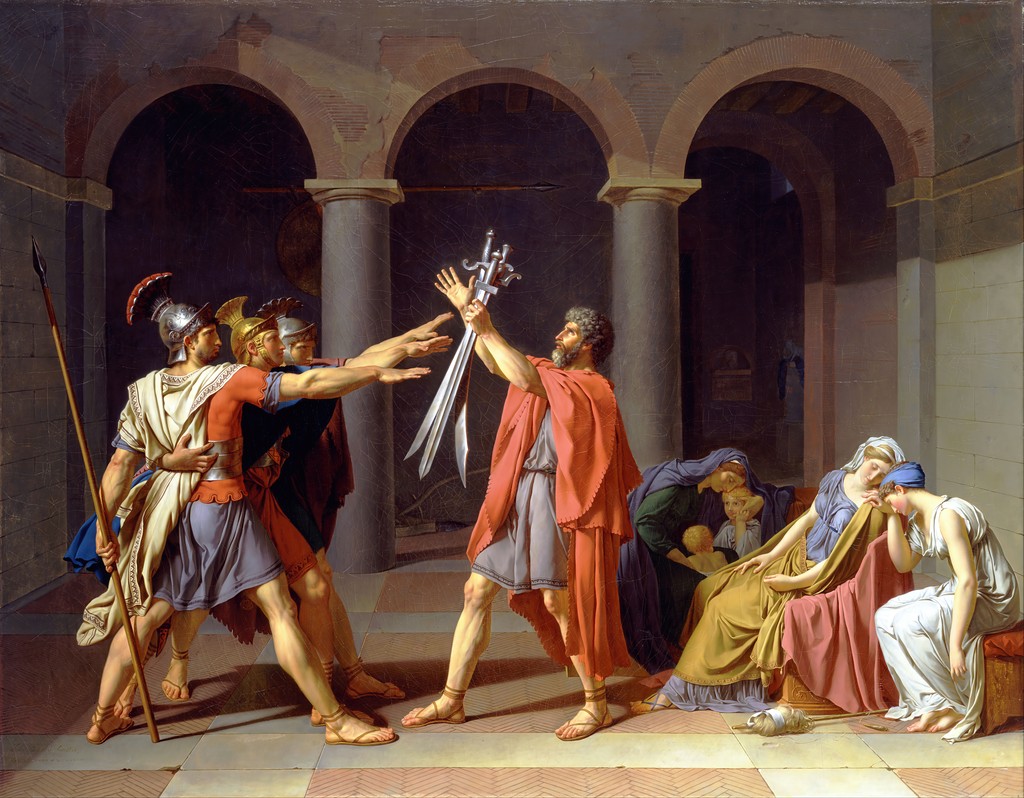
That makes the painting useful for seeing how David learned to make anatomy speak. In later works such as The Death of Socrates, The Oath of Horatii and The Death of Marat, the body becomes a vehicle for moral meaning. Patroclus shows that concern at an early stage, before David had turned ancient and modern history into his most famous public images. [1]
Rome, Antiquity and the Dying Gaul
Musee Fabre connects David's Patrocle with the antique sculpture known as the Dying Gaul, preserved in Rome at the Capitoline Museums. The Cherbourg record follows the same line, presenting the study as a Roman work shaped by antique example. The connection is visible in the way David treats the male back and the collapsed heroic body. He was not copying antiquity as decoration. He was testing how an ancient model could be made newly alive through paint. [1] [2]
The painting also shows a darker, more physical side of David's Roman training. Musee Fabre contrasts the earlier Hector academy with the later Patrocle, noting David's increasingly firm drawing and sophisticated handling of light and shadow. The result is a figure that feels sculptural and bodily at once. The pose recalls antique pathos, but the painted surface pulls attention toward flesh, weight and fatigue. [1] [2]
This is why the work should not be reduced to a simple illustration of the Homeric Patroclus. The title points toward the Trojan War world, and the figure's vulnerability can be read through that heroic frame. Yet the real subject is also the academy itself: the artist studying a body until it can carry feeling without a story being spelled out around it. [1] [2]
Patroclus, Hector and David's Early Training
Patroclus belongs beside David's related Hector academy, now associated with Musee Fabre. Both works focus on the male nude as a vehicle for history painting. Both strip away much of the external narrative and ask the body to bear the meaning. Together they show David working through the problem of heroic death before he reached the larger public language of his mature Neoclassicism. [1] [2]
The comparison is valuable, but it also needs care. Hector and Patroclus are separate active subjects in the David cluster, while The Funeral Games of Patroclus is another object again. The Funeral Games painting is a broad Homeric composition. Patroclus is a single-figure academy study. Confusing them makes David's early work look less precise than it is. [1] [2]
Seen correctly, Patroclus helps explain the bridge between training and invention. David was learning from antique sculpture, but he was also learning how to control attention. The absence of facial drama forces the viewer to look harder at contour, lighting and physical pressure. This discipline would become one of his great strengths. His later figures often seem authoritative because their bodies are organized with almost architectural clarity. [1] [2]
The Body as Evidence
The most striking part of Patroclus is the back. David builds the figure through the long curve of the spine, the breadth of the shoulders and the complex turn of the torso. Light catches the muscles without dissolving them into display. The figure is powerful, but the pose denies easy triumph. Strength and collapse are held together. [1] [2]
The legs and feet deepen that ambiguity. They do not simply complete an anatomical study; they make the body feel grounded, tired and mortal. David's later art is often discussed through politics and public virtue, but this painting reminds us that his authority began with looking. He understood that a history painter had to know what a body could say before adding oath, sword, robe or inscription. [1] [2]
The painting's relative simplicity is therefore not a weakness. Its spareness is the point. By removing setting and facial expression, David turns the figure into an argument about form. The heroic body can be beautiful, but it can also be exposed. It can suggest antiquity, but it can also feel immediate and human. [1] [2]
Image and Source Cautions
This page keeps Patroclus as a compact source-safe academy-study route, but it also preserves the merge-watch caution. The object should not be confused with The Funeral Games of Patroclus, the active Hector route, or any later release-policy decision about whether small academy-study URLs should be retained or merged. The current page image is retained as a bounded legacy file because POP/Joconde and Musee Fabre identify the work and matching subject, while the POP image credit and reuse language still require final release-lane confirmation. [1] [2] [3]
Why Patroclus Matters
Patroclus matters because it preserves David at the moment when academic training was becoming a personal language. The painting is small in narrative range but large in implication. It shows an artist who would soon become famous for civic virtue, revolutionary martyrdom and imperial theatre still absorbed in the elemental problem of the human figure. [1] [2]
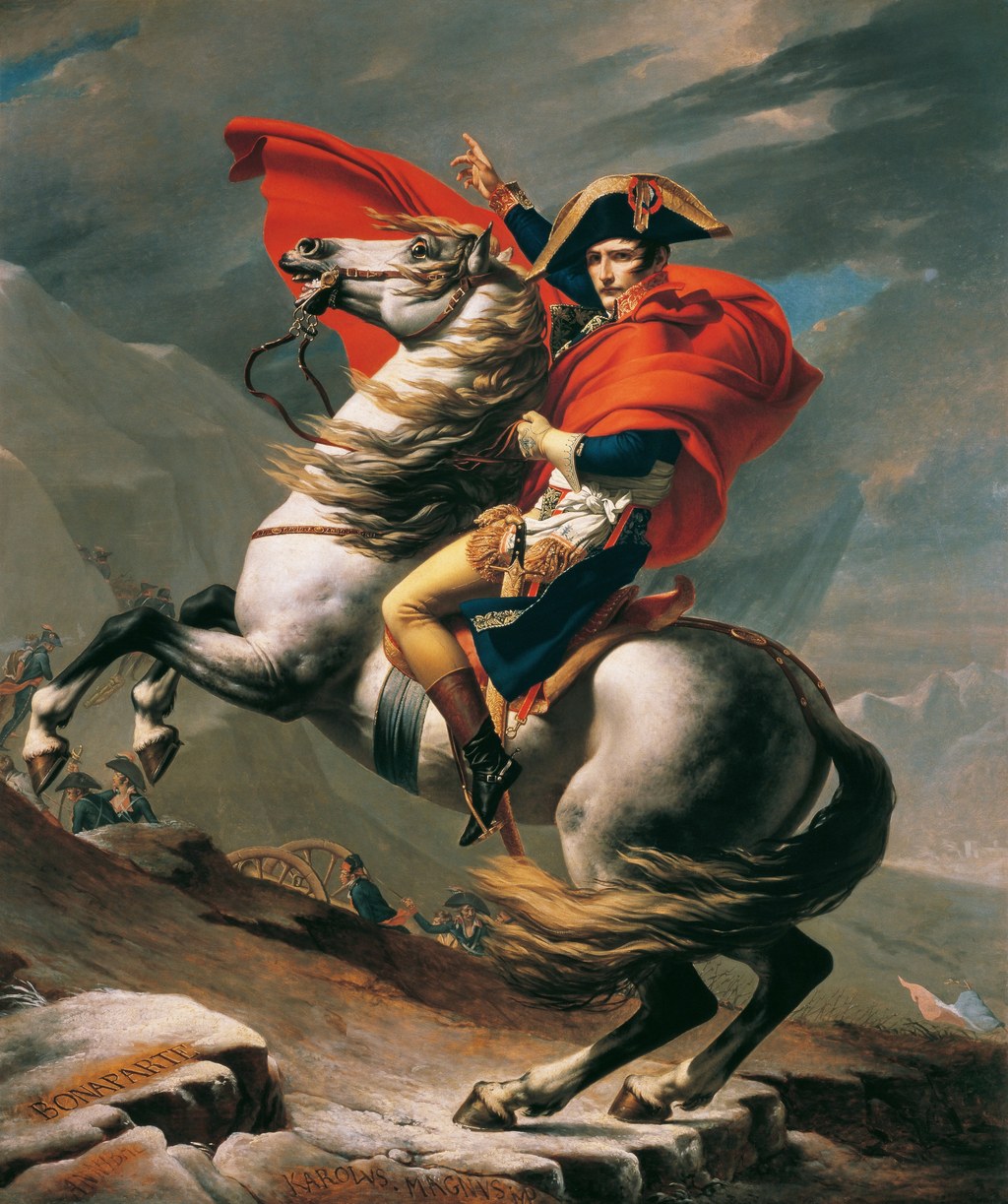
It also gives readers a clearer route through David's early career. Before the severe public drama of The Oath of Horatii, before the charged revolutionary image of The Death of Marat, and before the imperial rhetoric of Napoleon Crossing the Alps, David had to master the body as structure, emotion and sign. Patroclus is part of that mastery. [1] [2]
For the wider David cluster, this painting is best read alongside Hector, The Funeral Games of Patroclus, The Death of Seneca and Erasistratus Discovering the Cause of Antiochus' Disease. Together, they show David before the Revolution: ambitious, scholarly, competitive and already convinced that antique form could become modern force. [1] [2]
Frequently Asked Questions
Discussion
Patroclus is a useful page precisely because it is not the large Funeral Games painting.
Use the prompts below to think about anatomy, antique models and the line between study and subject.
Reader Insights
How does the absence of face and setting make the body carry the painting's force?
What does the Dying Gaul comparison add to the figure's turned back and collapsed posture?
Why does separating Patroclus from Funeral Games and Hector make David's early training easier to understand?
Join the Conversation
Share your reading of Patroclus below.
References
- POP: Plateforme ouverte du patrimoine, Academie d'homme ; Patrocle ancien titre, accessed 27 July 2026.
- Musee Fabre, Patrocle et Hector: deux academies romaines de Jacques-Louis David reunies, accessed 27 July 2026.
- Cherbourg-en-Cotentin, Musee Thomas Henry, Jacques-Louis David, accessed 27 July 2026.