

 by Tom Gurney
Tom Gurney BSc (Hons) is an art history expert with over 20 years experience
Published on June 19, 2020 / Updated on July 26, 2026
Email: tomgurney1@gmail.com / Phone: +44 7429 011000
Mistress and Maid by Johannes Vermeer: Introduction
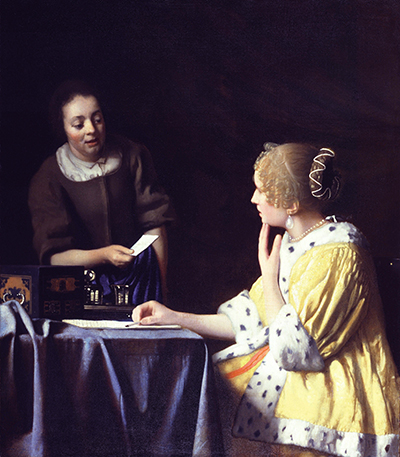
Johannes Vermeer’s Mistress and Maid turns a simple exchange into a concentrated drama. A maid presents a letter to a seated woman. The woman pauses, one hand near her chest, her face caught between surprise, thought and reserve. The scene contains almost no visible setting, yet it feels emotionally full.
The Frick Collection records Mistress and Maid as a painting by Johannes Vermeer, about 1664-67, oil on canvas, 35 1/2 by 31 inches, with accession number 1919.1.126. [1] It belongs to Vermeer’s mature period, when letters, women, servants and quiet domestic interiors became some of his richest subjects.
At a Glance
- ArtistJohannes Vermeer
- TitleMistress and Maid
- DateAbout 1664-67
- MediumOil on canvas
- CollectionFrick Collection, New York
- Accession number1919.1.126
- Key themesLetters, messenger figure, emotional ambiguity, class, silence, late interior painting
Contents
- Introduction
- At a Glance
- What the Painting Shows
- The Letter as Event
- The Mistress
- The Maid
- A Darker Interior
- Colour and Structure
- Emotional Ambiguity
- Relation to Lady Writing a Letter with her Maid
- Relation to The Love Letter
- Place in Vermeer’s Work
What the Painting Shows
The painting shows two women at a table. The seated mistress wears a yellow jacket and is turned toward the maid. The maid stands beside her, leaning forward with a letter. The moment is suspended between delivery and response.
Vermeer gives the viewer very little narrative information. We do not know who wrote the letter, what it says, whether it is welcome or unwelcome, or whether the maid knows more than she reveals. The drama lies in that uncertainty. A small object has entered the room and altered the emotional atmosphere.
This is one of Vermeer’s most compressed letter scenes. Unlike The Love Letter, which uses doorways, foreground objects and a layered interior, Mistress and Maid places the figures close together against a dark background. The psychological exchange becomes the main architecture.
The Letter as Event
In Vermeer’s letter paintings, the letter is rarely just a prop. It is a carrier of absence. Someone outside the visible room has entered the scene through writing. The sender is not present, but the letter makes that person active.
In Mistress and Maid, the letter is still in transition. The maid has brought it forward, but the mistress has not yet fully absorbed it. That in-between moment gives the painting its energy. It is not the reading of a letter, but the arrival of one.
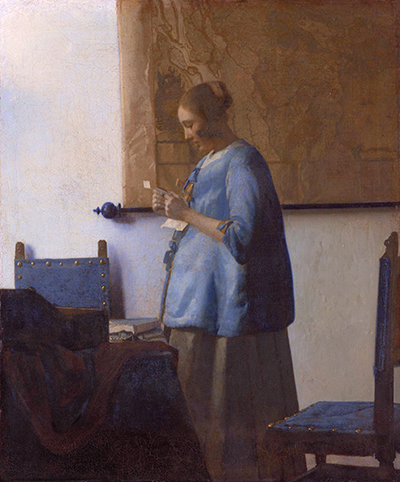
The difference matters. In Woman in Blue Reading a Letter, the reader is already enclosed in the act of reading. In A Lady Writing, the woman is composing a message. In Mistress and Maid, communication interrupts the room. The drama begins before the words are known.
The Mistress
The seated woman is the emotional centre of the painting. Her gesture is restrained but expressive. She does not recoil theatrically. She does not lean eagerly toward the letter. Instead, Vermeer gives her a poised, ambiguous response.
That restraint is characteristic of Vermeer. He avoids melodrama even when the subject invites it. The woman’s raised hand can suggest surprise, hesitation, self-protection or attention. The painting does not decide for us.
Her yellow jacket also links the work to other Vermeer interiors. Similar garments appear in several paintings, including A Lady Writing and Woman with a Pearl Necklace. The garment therefore belongs to Vermeer’s visual vocabulary of domestic refinement, light and private self-presentation.
The Maid
The maid is more than a secondary figure. She brings the letter, but she also shapes the exchange. Her body leans toward the mistress, and her presence creates the tension between service and knowledge. She may be only a messenger, but the act of delivering a letter gives her temporary power within the room.
Vermeer does not turn the maid into a caricature or servant stereotype. Her role is controlled and necessary. She stands between the absent sender and the seated recipient, making communication visible.
This creates a subtle social drama. The mistress may occupy the higher social position, but the maid controls the moment of delivery. Vermeer lets that reversal exist without making it overt.
A Darker Interior
The dark background is one of the painting’s most important features. It removes many of the descriptive elements found in Vermeer’s more spacious interiors: maps, tiled floors, windows, pictures, instruments and carefully measured walls. The reduced setting makes the figures feel close and immediate.
The darkness also heightens the yellow, white and flesh tones. Light falls across the figures and the table, concentrating attention on faces, hands, fabric and paper. The room becomes less a literal space than an emotional chamber.
This distinguishes Mistress and Maid from the cooler, more measured geometry of works such as Woman in Blue Reading a Letter. Here Vermeer is not primarily describing a room. He is isolating a moment of human exchange.
Colour and Structure
The painting is built around a limited but forceful colour structure. Yellow, white and black dominate. The mistress’s jacket, the maid’s light clothing, the dark background and the pale letter produce strong contrasts without theatrical excess.
The yellow jacket draws the eye first, but the letter redirects it. The viewer moves from costume to gesture, from gesture to paper, from paper to the maid’s action. Vermeer uses colour and placement to make the act of delivery visible.
The composition also depends on diagonals. The maid leans forward, the mistress turns, and the letter occupies the space between them. The two figures are close, but they are not fused. Their relationship is defined by the object passing from one to the other.
Emotional Ambiguity
The painting’s emotional power comes from what Vermeer withholds. The letter might bring news of love, danger, obligation, gossip, betrayal or ordinary business. The mistress’s response is readable enough to matter, but not readable enough to settle the story.
This ambiguity places the viewer in a delicate position. We witness the moment, but we do not fully understand it. Vermeer invites interpretation while refusing narrative closure.
That refusal is not weakness. It is the painting’s method. In a lesser genre scene, the viewer might be given a comic clue or moral message. Vermeer gives an atmosphere of consequence instead.
Relation to Lady Writing a Letter with her Maid
Mistress and Maid should be read alongside Lady Writing a Letter with her Maid in Dublin. Both paintings involve a mistress, a maid and a letter, but their structures differ sharply.
In the Dublin painting, the mistress writes while the maid waits by the window. The scene is spacious, geometric and cool. The maid’s stillness becomes part of the room’s order. In Mistress and Maid, the maid is active. She brings the message into the scene and changes the mistress’s state.
The comparison shows how flexibly Vermeer used the same social ingredients. Mistress, maid and letter could become a meditation on writing, waiting, delivery, secrecy or interruption depending on how the figures were arranged.
Relation to The Love Letter
The painting also connects with The Love Letter. In the Rijksmuseum work, a maid delivers or discusses a letter with a seated woman holding a lute. The scene is framed through a doorway, making the viewer feel like an outsider looking in.
Mistress and Maid removes that elaborate spatial framing. There is no strong foreground barrier. The viewer is brought closer to the figures, but still denied certainty. The privacy is psychological rather than architectural.
Together, the works show Vermeer’s range within the letter theme. He could build suspense through doorways and distance, or through near figures and a darkened field.
Place in Vermeer’s Work
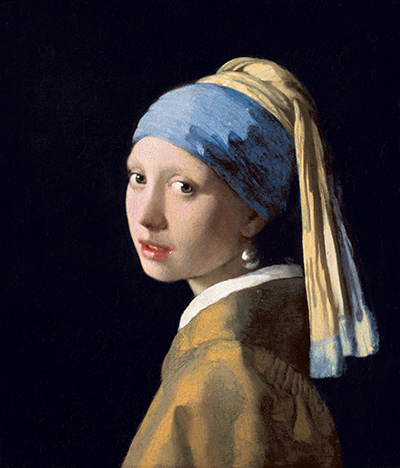
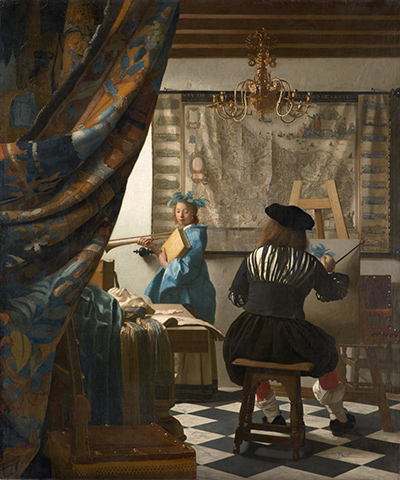
Mistress and Maid is a crucial support page for Vermeer’s mature letter paintings. It is less famous than Girl with a Pearl Earring and less structurally expansive than The Art of Painting, but it shows Vermeer’s gift for making a small domestic exchange feel momentous.
It also helps balance the discussion of women in Vermeer’s interiors. Vermeer’s women are not all solitary readers, musicians or household workers. Some are participants in social networks of messages, servants, absent correspondents and controlled emotion.
The painting’s importance lies in compression. With two figures, one letter and a darkened space, Vermeer creates a full drama of communication.
Frequently Asked Questions
Mistress and Maid is in the Frick Collection in New York. [1]
The Frick Collection dates the painting to about 1664-67. [1]
The painting does not reveal the contents of the letter. Vermeer uses that uncertainty to create emotional tension.
Yes. The maid is the messenger who brings the letter into the scene. Her action creates the painting’s central moment.
It belongs with A Lady Writing, Woman in Blue Reading a Letter, The Love Letter and Lady Writing a Letter with her Maid. Each painting explores a different stage or social setting of written communication.
Discussion
What feels most revealing about Mistress and Maid: Vermeer's handling of light, the silence of the scene, the object details, the attribution history, or the way the painting fits within Dutch Golden Age art?
Reader Insights
Vermeer rewards slow attention. Begin with the main action, then move outward to light, edges, objects and the quiet spaces that hold the composition together.
Many of these paintings are small, but their meanings open through Delft, collecting history, technical study and comparison with related Dutch interiors.
Pair this article with the biography and one neighbouring Vermeer work to see how subject, light and attention shift across the artist's compact oeuvre.
Join the Conversation
Have a thought or observation about Mistress and Maid? Share it below. Thoughtful responses may be added to this section as the Vermeer pages develop.
References
- Frick Collection, Mistress and Maid, object record.
- Frick Collection, Vermeer and letter-painting context.
- Vermeer research notes on letter paintings, servant figures and related works.