

 by Tom Gurney
Tom Gurney BSc (Hons) is an art history expert with over 20 years experience
Published on June 19, 2020 / Updated on July 26, 2026
Email: tomgurney1@gmail.com / Phone: +44 7429 011000
The Milkmaid by Johannes Vermeer: Introduction
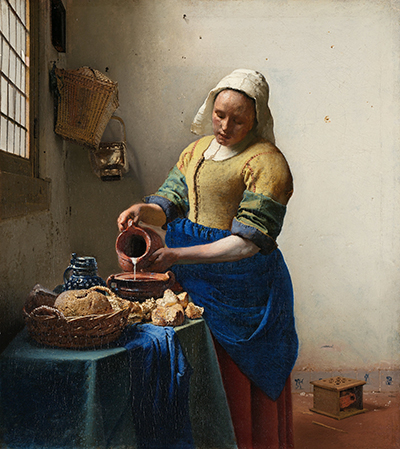
Johannes Vermeer’s The Milkmaid is one of the most concentrated paintings of ordinary labour in European art. A woman stands at a table and pours milk from an earthenware jug into a bowl. Bread lies before her. Light enters from the left. The room is plain, the action is small, and almost nothing appears to happen. Yet the painting has the gravity of a monument.
The Rijksmuseum records the work as The Milkmaid, about 1660, oil on canvas, 45.5 by 41 cm, object number SK-A-2344. [1] The title is familiar, though the figure is better understood as a kitchen maid or domestic servant rather than a milkmaid in the agricultural sense. Vermeer does not make that distinction pedantic. He gives the woman’s task weight, dignity and absolute concentration.
At a Glance
- ArtistJohannes Vermeer
- TitleThe Milkmaid
- DateAbout 1660
- MediumOil on canvas
- Dimensions45.5 x 41 cm
- CollectionRijksmuseum, Amsterdam
- Object numberSK-A-2344
- Key themesDomestic labour, light, stillness, bread, service, attention
Contents
- Introduction
- At a Glance
- Annotated Close Reading
- What the Painting Shows
- Stillness and Labour
- Light, Colour and Surface
- The Foot Warmer and the Tiles
- A Small Painting with Monumental Force
- The Stream of Milk
- Bread, Texture and the Foreground
- Changes Beneath the Final Image
- Household Work and Interpretation
- The Kitchen Maid and the Title
Annotated Details from The Milkmaid
These annotated details follow the painting from the pouring milk to the bread, window light, foot warmer and bare wall that give this small domestic scene its monumental gravity.
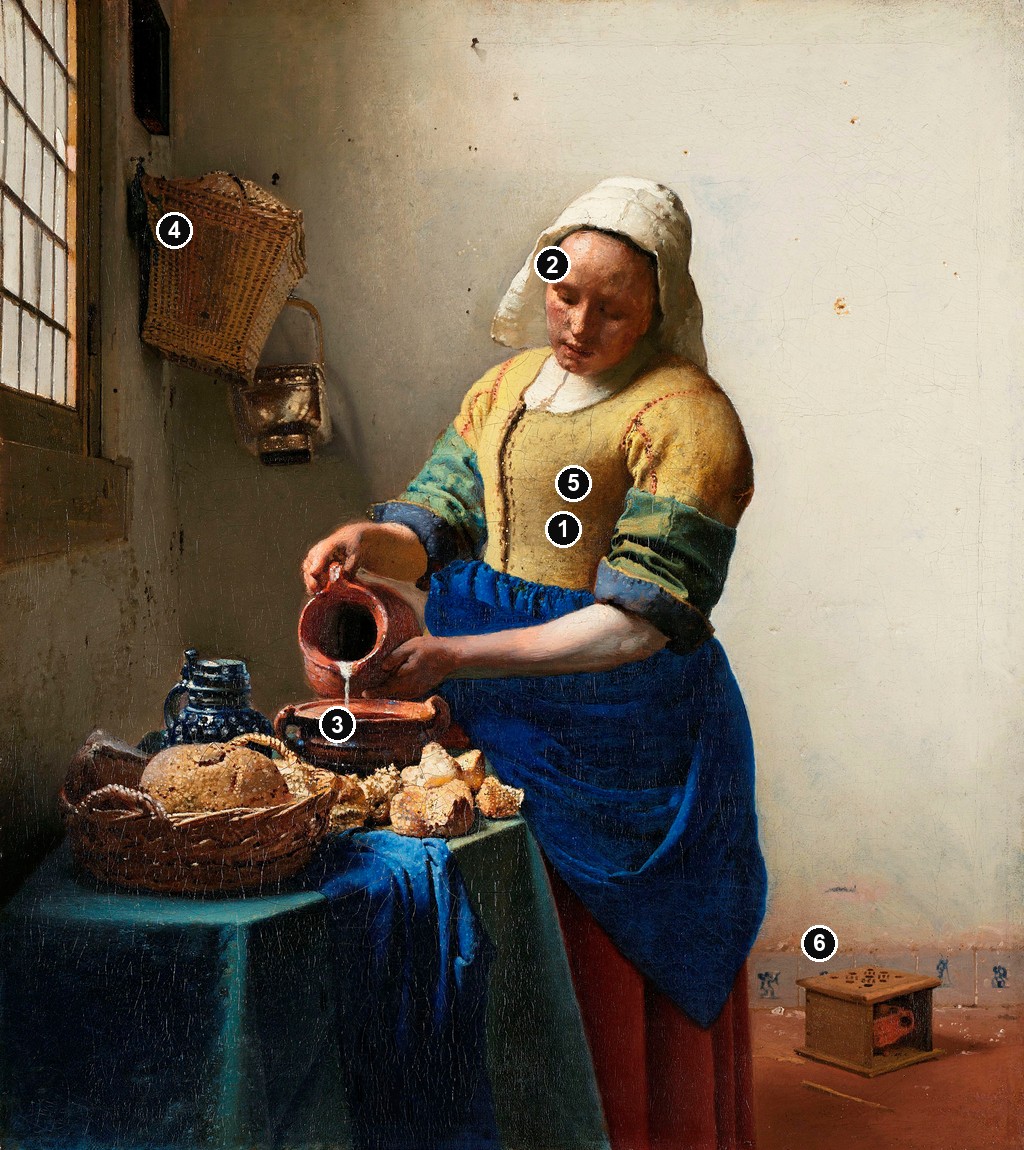
Details from THE MILKMAID
Close looking reveals how Vermeer makes ordinary labour feel concentrated, material and almost timeless.
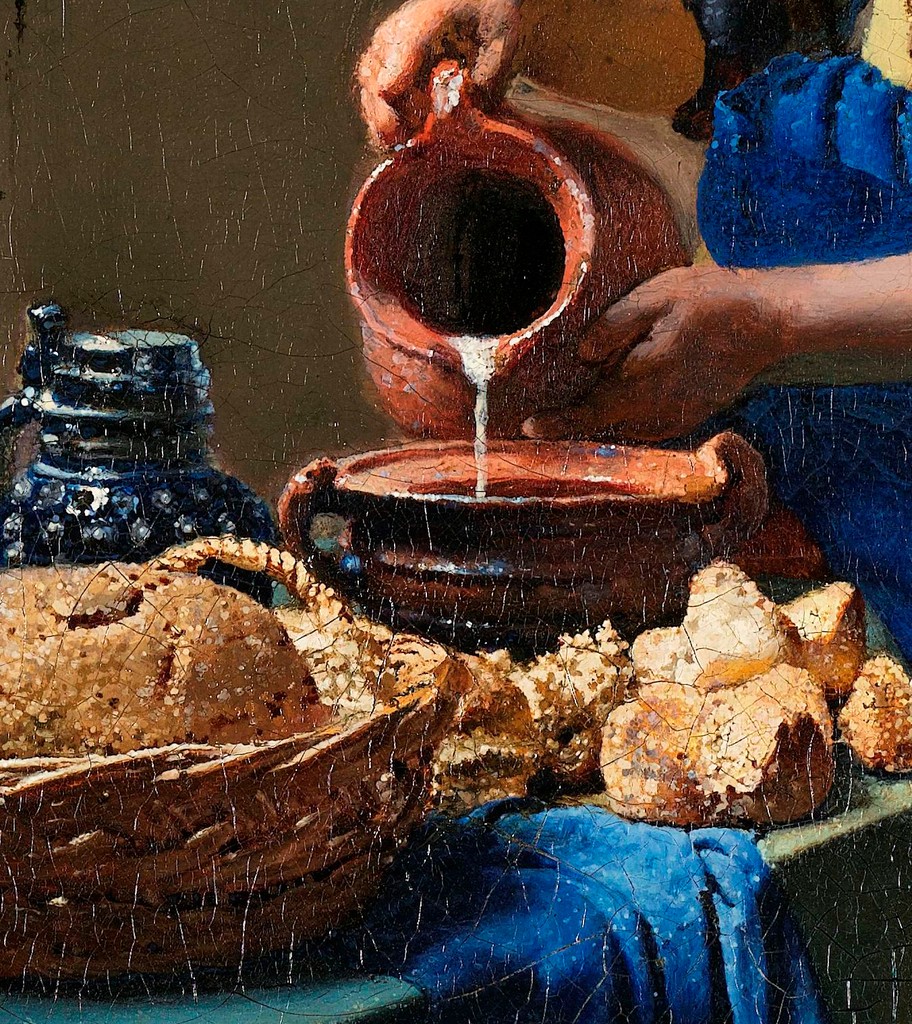
The stream of milk
The narrow stream of milk is the painting's central event. Almost everything else is still, so this small movement carries the scene's sense of time.
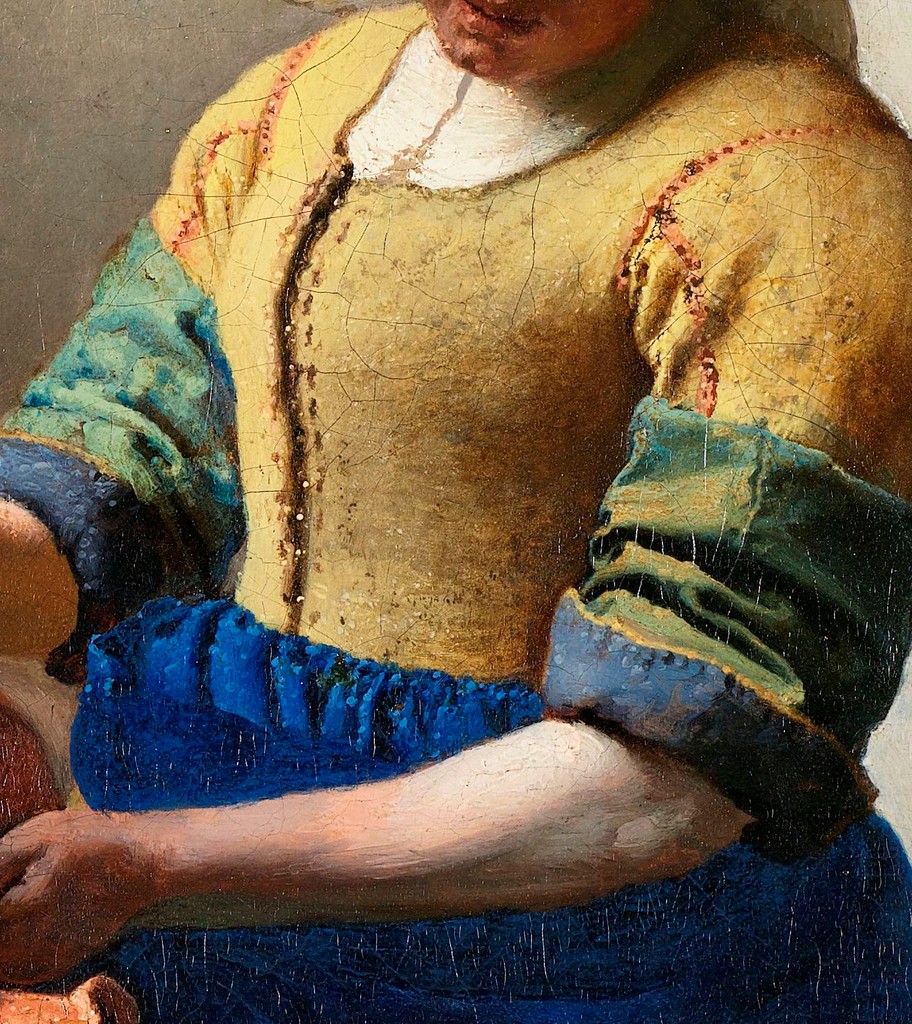
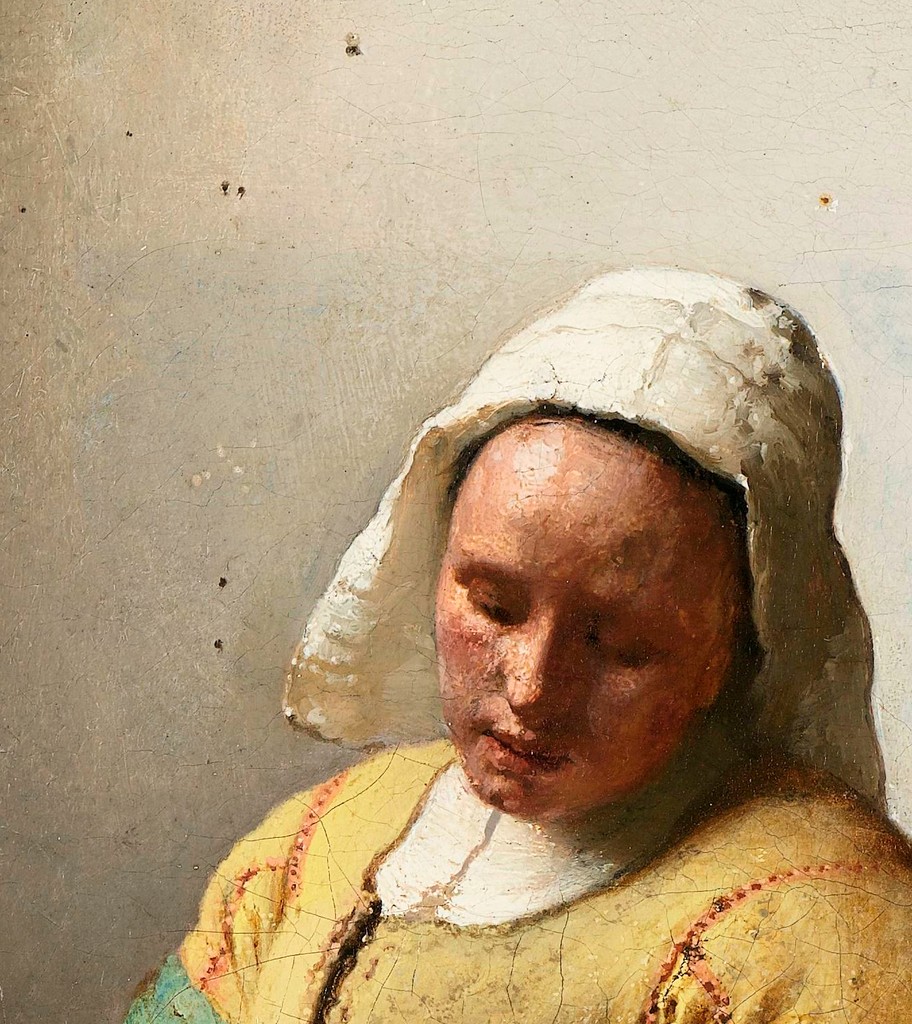
The maid's absorbed face
The downturned face keeps attention on the task. Vermeer gives the figure dignity through concentration rather than display.
Bread and broken texture
The bread forms a dense still life in the foreground. Its rough crusts and small highlights make domestic material feel unusually present.
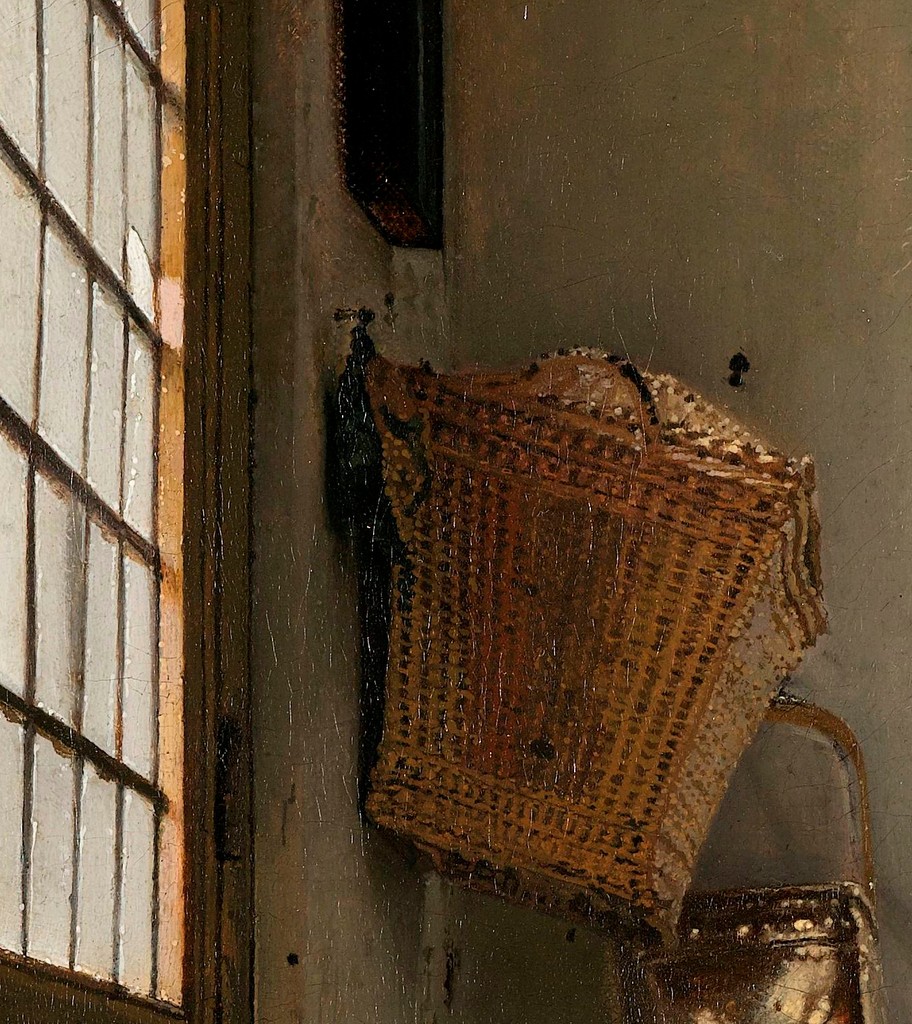
Window and left light
The window is the source of the painting's calm illumination. The light enters quietly, catching wall, cloth, bread and hands.
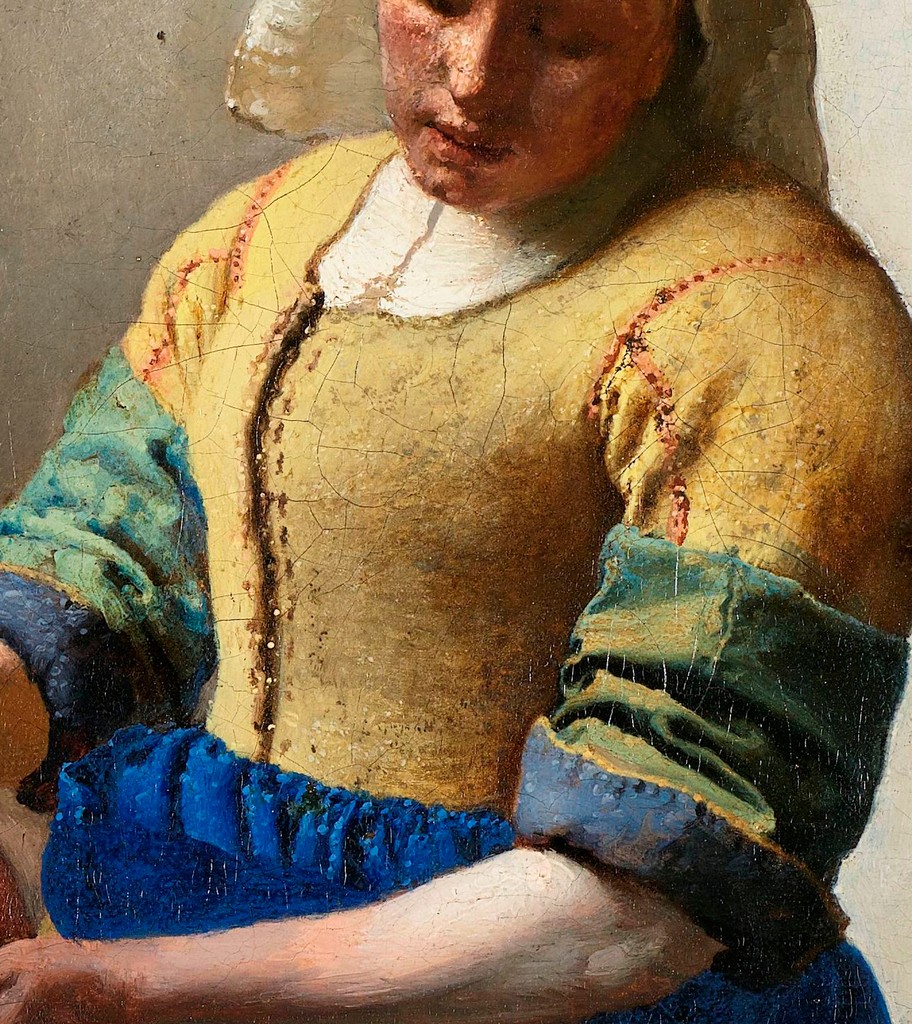
The yellow bodice and blue apron
The yellow and blue create the painting's strongest colour chord. They give the servant's body a visual authority usually reserved for grander subjects.
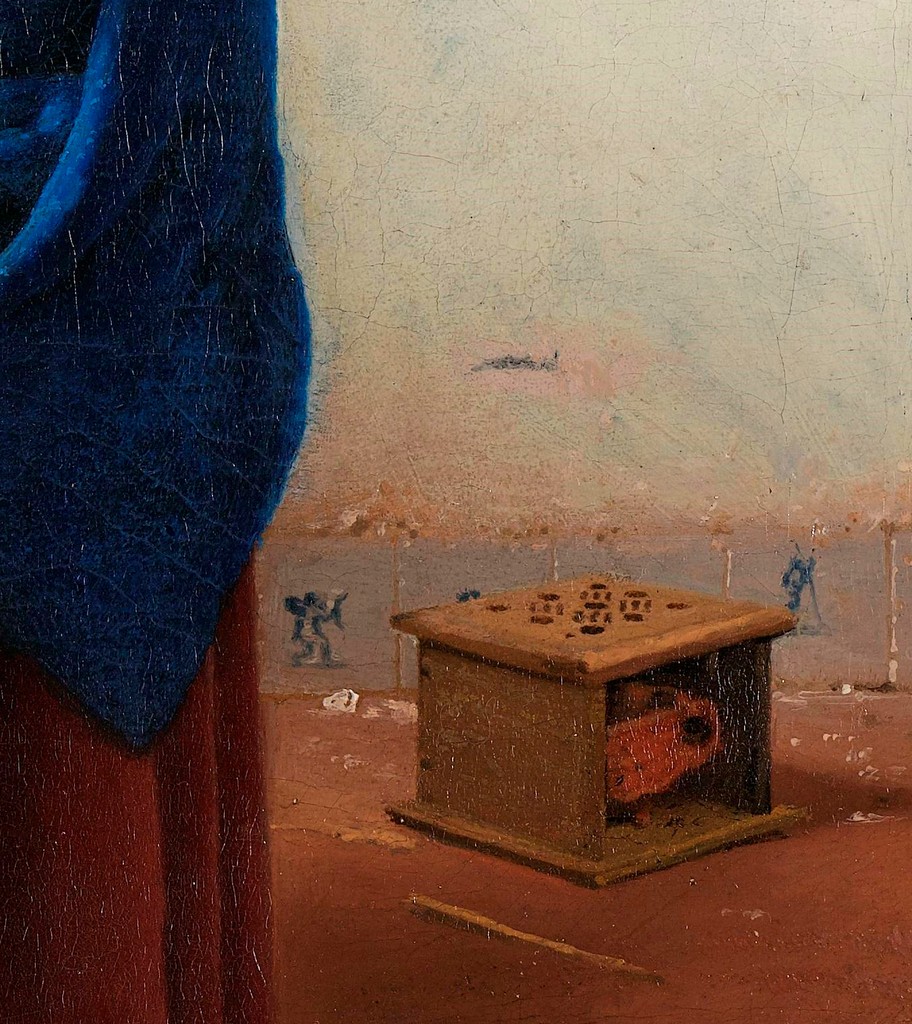
Foot warmer and floor edge
The foot warmer anchors the lower right and complicates the domestic setting. It works as both object and compositional weight.
What the Painting Shows
The composition is direct. A young woman stands behind a table, holding a jug with both hands as she pours milk into a vessel below. Her sleeves are rolled for work. She wears a yellow bodice, blue apron and white cap. Around her are bread, a basket, a stoneware jug, a foot warmer and a tiled wall. The window at the left is the source of the painting’s light, but Vermeer does not turn it into a theatrical beam. It enters quietly, catching objects one by one.
The most important action is the stream of milk. It is narrow, bright and steady. Vermeer makes the whole painting gather around this small white line. The woman’s gaze follows it, and the viewer’s eye does the same. Her work is practical, but the image makes it contemplative. The milk falls in real time, yet the scene feels suspended.
The table is just as important as the figure. The broken bread, basket and cloth create a dense foreground of texture. Vermeer paints the bread with remarkable attention to crust, colour and reflected light. The objects do not distract from the woman; they give her work a material world. This is a painting about touch as much as sight: bread, earthenware, linen, wall, sleeve, milk and hand.
Stillness and Labour
The power of The Milkmaid lies in its refusal to rush the action. Many Dutch genre paintings invite the viewer to decode a story, a joke or a moral lesson. Vermeer is more restrained. The maid’s task may carry associations of service, nourishment, domestic virtue or desire, but the painting does not collapse into any single reading. It remains first of all a scene of attention.
That attention changes the status of labour. The woman is not idealised into an allegorical goddess, but neither is she treated as a comic servant. She is absorbed in work that requires care. Her body is stable, her hands are firm, and her gaze is directed downward. The painting honours the act by making it precise.
The room reinforces this stillness. The back wall is bare except for small marks, a nail and a few details near the floor. This emptiness gives the figure space, but it also makes every object count. The bread and jug become almost architectural. The woman is framed by quiet walls and measured light.
Light, Colour and Surface
Vermeer’s colour in The Milkmaid is simple but powerful. The yellow bodice and blue apron create the central chord. The white cap, the pale wall and the milk provide cooler accents. Brown bread and earthenware ground the scene in everyday material. The result is not bright in a decorative sense; it is luminous because every colour has a job.
Technical study has shown how deliberate this effect is. Rijksmuseum exhibition materials describe a surviving pinprick above the woman’s right arm, evidence of Vermeer’s construction of the composition. They also record that a jug rack and a fire basket were once included and later painted out. [2] Those changes matter because the final painting feels inevitable, but it was not simply found at once. Vermeer reduced and clarified the room until the remaining objects carried the necessary weight.
The same source notes Vermeer’s use of tiny dots of light on the bread and basket. [2] These points are often discussed in relation to optical effects, but they should also be understood as painterly decisions. They make the foreground shimmer without dissolving into confusion. They help the bread feel present, rough and alive under the light.
The Foot Warmer and the Tiles
At the lower right is a foot warmer, an object often associated in Dutch art with domestic comfort and sometimes with erotic implication. The tiles behind it include small painted figures. These details have encouraged moralising interpretations, but Vermeer handles them with restraint. They add complexity without overtaking the painting.
The foot warmer is also a compositional object. It anchors the lower right and balances the table. The tiled base of the wall gives the room a measurable edge, while the warmer’s dark form prevents the lower corner from becoming empty. Like many details in Vermeer, it works both as an object in a room and as a structural element in a painting.
A Small Painting with Monumental Force
The painting’s scale is modest, but its effect is large. Vermeer achieves this by simplifying the action and enlarging its significance. The maid’s body is solid, almost sculptural. The table pushes toward the viewer. The back wall removes distractions. The pouring milk becomes the scene’s central event.
This is why The Milkmaid has often been seen as one of Vermeer’s most complete statements. It brings together domestic subject, optical attention, colour, revision and stillness. Nothing in the painting feels casual. Even the plain wall has been made active through light and surface.
The Stream of Milk
The narrow stream of milk is one of the most important details in the painting because it turns a domestic task into a measured event. It is not dramatic in itself. A kitchen maid pouring milk could easily be an anecdotal subject, a minor scene of household work. Vermeer instead makes the stream the visual hinge of the composition. The woman looks downward, the jug tilts, the vessel waits, and the viewer’s attention follows the line of liquid.
This gives the picture a special sense of time. Most of the objects are still: bread, basket, jug, wall, foot warmer and tiles. The milk alone is visibly moving. Yet even that motion feels slowed by the painting’s concentration. Vermeer captures action without noise. The viewer senses duration rather than incident.
The stream also helps define the woman’s character. Her grip on the jug is firm but not tense. She does not glance outward or perform for the viewer. Her attention belongs to the task. Vermeer’s respect for that concentration is one of the reasons the painting avoids the comic or moralising tone often found in servant imagery. The maid is not a joke, temptation or social type first. She is a worker absorbed in careful action.
Bread, Texture and the Foreground
The foreground is almost a still life within the larger figure scene. Bread lies broken on the table, its crusts and exposed interiors catching the light in different ways. A basket, cloth and ceramic vessels add roughness and weight. Vermeer gives these ordinary materials unusual dignity by making them optically active.
The Rijksmuseum’s discussion of small coloured dots of light is especially important here. [2] These marks make the bread and basket sparkle without making them decorative. They suggest light scattering across uneven surfaces, but they also show Vermeer’s willingness to let paint behave visibly as paint. The dots do not disappear into smooth illusion. They sit on the surface and make the viewer aware of perception.
That foreground density matters because it balances the maid’s quiet figure. The table projects toward the viewer, creating a tactile zone before the more restrained wall and figure. The bread is not merely food; it is the material world of the kitchen. Vermeer makes nourishment, labour and vision meet in one compact arrangement.
Changes Beneath the Final Image
The final painting looks inevitable, but technical evidence shows that Vermeer arrived at this clarity through revision. Rijksmuseum exhibition materials record a surviving pinprick above the woman’s right arm, as well as a jug rack and a fire basket that were once present and later painted out. [2] These details are useful because they contradict the idea that Vermeer simply copied a perfect scene before him.
The removed objects would have made the room busier. By suppressing them, Vermeer strengthened the role of the bare wall and the figure’s silhouette. The emptiness behind the maid is not a lack of invention. It is the result of selection. The wall allows the yellow bodice, blue apron, white cap and tilted jug to stand with greater force.
This process also helps explain Vermeer’s maturity. He is not interested in filling the room with information for its own sake. He edits the scene until the remaining details become decisive. The painting’s seriousness depends as much on what Vermeer removed as on what he left visible.
Household Work and Interpretation
Dutch genre painting often attaches moral or social meanings to household scenes. Servants, kitchens, foot warmers, jugs and tiles could all carry associations beyond their practical function. The Milkmaid allows for that world of meaning, but it does not reduce itself to a single emblematic message. Its greatness lies in the balance between interpretation and looking.
The foot warmer at the lower right is a good example. In some Dutch paintings, such an object can suggest bodily comfort or erotic implication. In Vermeer’s composition, it is present but subdued. It anchors the corner, clarifies the room and gives the floor area weight. It may add moral or social resonance, but it does not turn the maid into a caricature.
The same restraint applies to the maid herself. Vermeer shows a domestic servant, but he does not make her picturesque in a sentimental way. Her body is sturdy, her clothing practical and her action specific. The painting gives household labour a visual seriousness normally associated with grander subjects.
The Kitchen Maid and the Title
The title The Milkmaid is familiar, but it can mislead if taken too literally. The Rijksmuseum’s subject terms and description support the figure as a maidservant or kitchen servant shown pouring milk in an interior. [1] She is not a rural dairy worker in an outdoor agricultural setting. She belongs to the domestic economy of a house.
That distinction matters because Vermeer’s painting is not simply about milk. It is about service, food preparation, household order and the concentration required by ordinary work. The traditional title survives because it names the visible action, but the social role is broader than the English word can suggest.
Vermeer handles this social difference carefully. He does not disguise the woman’s working status. Rolled sleeves, sturdy body, practical clothing, bread and kitchen objects all establish the world of labour. But he also refuses to reduce her to a type. The painting does not mock the servant or turn her into a moral example. It gives her task visual authority.
This is part of the painting’s modern force. Viewers often respond to the dignity of the figure before they identify the historical category of servant. Vermeer’s art does not erase social hierarchy, but it makes attention itself a form of value. The maid’s work becomes worthy of sustained looking.
The Wall as Active Space
The plain wall behind the figure is one of the painting’s quiet achievements. At first it may seem empty, but it performs several important tasks. It clarifies the maid’s silhouette, amplifies the yellow and blue of her clothing, and gives the whole scene a feeling of silence.
Technical evidence that Vermeer painted out a jug rack and fire basket makes this wall even more important. [2] The emptiness is not merely a record of a bare room. It is a compositional decision. By removing objects, Vermeer makes the maid, table and stream of milk more forceful.
The wall also slows the painting down. A busier background would invite the viewer to decode more objects. The final background asks the viewer to stay with fewer things: the woman’s body, the falling milk, the bread, the light and the tactile objects around the table.
This restraint helps explain why The Milkmaid feels monumental despite its domestic subject. The wall gives the figure space similar to the space around a sculptural form. The maid stands before it with unusual gravity, as if ordinary labour had been given the visual weight of history painting.
Provenance and Reputation
The Rijksmuseum object record preserves the painting’s modern institutional identity and records its 1908 acquisition with support from the Vereniging Rembrandt. [1] The broader provenance route also connects the work to the Van Ruijven, De Knuijt and Dissius collecting line that is central to the survival of many Vermeer paintings. [1]
That history matters because The Milkmaid is now one of the defining images of the Rijksmuseum and of Vermeer’s public reputation. Its current fame can make the painting seem inevitable, but its survival and visibility depend on collection history, sale history and museum stewardship.
The 1696 Dissius sale is especially important in Vermeer studies because so many works are connected to that collecting context. For The Milkmaid, provenance is not just ownership detail. It places the painting inside the network through which Vermeer’s art moved from Delft households into modern public collections.
Modern reputation has also changed the painting’s meaning. What might once have been one domestic genre scene among others has become a flagship image of concentrated looking. The painting’s popularity should not flatten it into a postcard of Dutch domestic virtue. Its fame is deserved because its visual construction remains unusually rigorous.
How to Look at The Milkmaid
A useful way to look at the painting is to begin with the stream of milk, then let the eye move outward. The stream leads to the woman’s hands, the jug, her lowered face and the vessel below. From there the viewer can move to the bread, basket, cloth, foot warmer and wall.
This sequence reveals how tightly Vermeer controls attention. Nothing in the room is random, but nothing feels ostentatiously arranged either. The painting’s order is quiet enough to seem natural, which is one reason it rewards repeated viewing.
Looking at the bread and basket after the figure is especially important. These passages show that Vermeer’s realism is not a matter of smooth description. The small light dots and textured surfaces make the foreground vivid, almost tactile. They also show how ordinary food can become a major pictorial event.
Finally, the viewer should return to the figure’s stillness. The woman’s body gives the painting its stability. Her task is modest, but her concentration is complete. Vermeer’s achievement is to make that concentration feel sufficient.
Colour and Class
The yellow bodice and blue apron are not incidental costume notes. They give the figure her visual authority. The yellow sits close to the centre of the picture, warmed by the incoming light. The blue apron drops downward and provides a strong counterweight. Together they create a chord that is both simple and memorable.
This colour structure also helps Vermeer avoid dull realism. The room is plain, but the painting is not grey or dry. The maid’s clothes, the bread, the earthenware and the wall all carry different kinds of colour. The domestic setting becomes visually rich without ceasing to feel ordinary.
That tension is central to the painting. Vermeer does not pretend that the maid is socially elevated. He does something more interesting: he treats her work, body and surroundings with the same pictorial seriousness that another artist might reserve for a saint, noble sitter or mythological figure.
Place in Vermeer’s Work
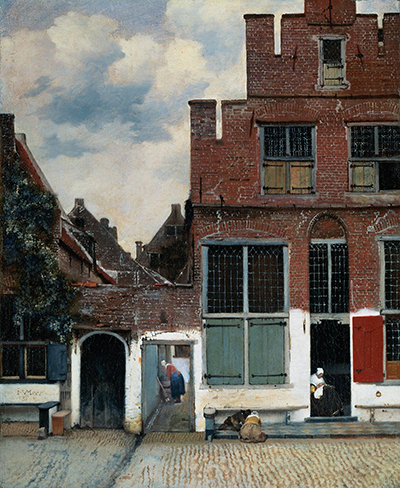
The Milkmaid belongs near the centre of Vermeer’s development. It is more concentrated than his early large-scale works and more physically robust than some of the later letter and music paintings. It also connects naturally with The Little Street, another painting in which ordinary life becomes a subject of deep pictorial seriousness.
The painting also helps explain Vermeer’s difference from many of his contemporaries. He does not need a complicated story. He makes a single action sufficient. The viewer is asked to remain with it, to notice the slow fall of milk, the weight of bread, the touch of light and the discipline of a woman at work.
It also connects strongly to Vermeer’s technical story. The pinprick, revisions and dotted light effects make the painting a useful example of how carefully he constructed images that appear quiet and natural. The painting is therefore not only a beloved domestic scene. It is evidence of Vermeer’s discipline as a maker.
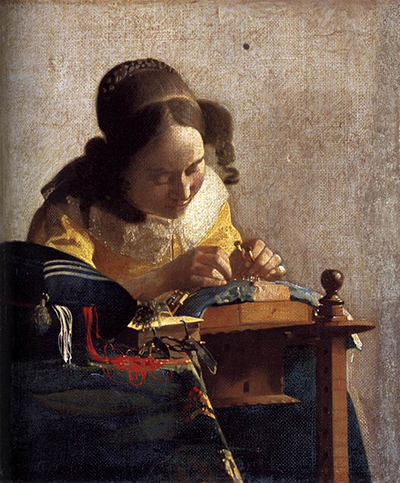
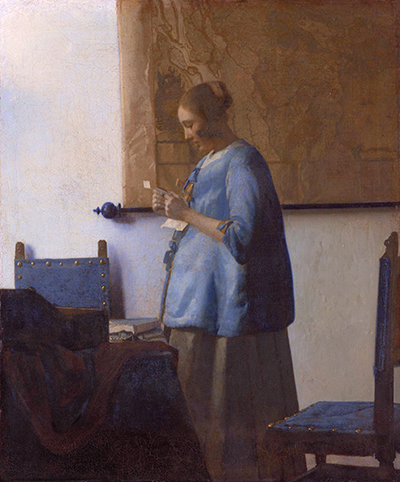
The painting also forms a natural bridge to Woman in Blue Reading a Letter and The Lacemaker. In all three works, Vermeer presents inward attention without theatrical incident. The subject changes from pouring milk to reading or making lace, but the artistic problem remains similar: how to make concentration visible.
Frequently Asked Questions
The Milkmaid is in the Rijksmuseum in Amsterdam. [1]
The Rijksmuseum dates The Milkmaid to about 1660. [1]
The traditional title is The Milkmaid, but the figure is better understood as a kitchen maid or domestic servant shown pouring milk in an interior.
It is important because Vermeer turns a simple domestic task into a painting of great stillness, structure and material intensity.
Discussion
What feels most revealing about The Milkmaid: Vermeer's handling of light, the silence of the scene, the object details, the attribution history, or the way the painting fits within Dutch Golden Age art?
Reader Insights
Vermeer rewards slow attention. Begin with the main action, then move outward to light, edges, objects and the quiet spaces that hold the composition together.
Many of these paintings are small, but their meanings open through Delft, collecting history, technical study and comparison with related Dutch interiors.
Pair this article with the biography and one neighbouring Vermeer work to see how subject, light and attention shift across the artist's compact oeuvre.
Join the Conversation
Have a thought or observation about The Milkmaid? Share it below. Thoughtful responses may be added to this section as the Vermeer pages develop.
References
- Rijksmuseum, The Milkmaid, SK-A-2344.
- Rijksmuseum, Vermeer exhibition and technical materials on The Milkmaid.