

 by Tom Gurney
Tom Gurney BSc (Hons) is an art history expert with over 20 years experience
Published on June 19, 2020 / Updated on July 30, 2026
Email: tomgurney1@gmail.com / Phone: +44 7429 011000
Portrait of Philippe de Croy: Introduction
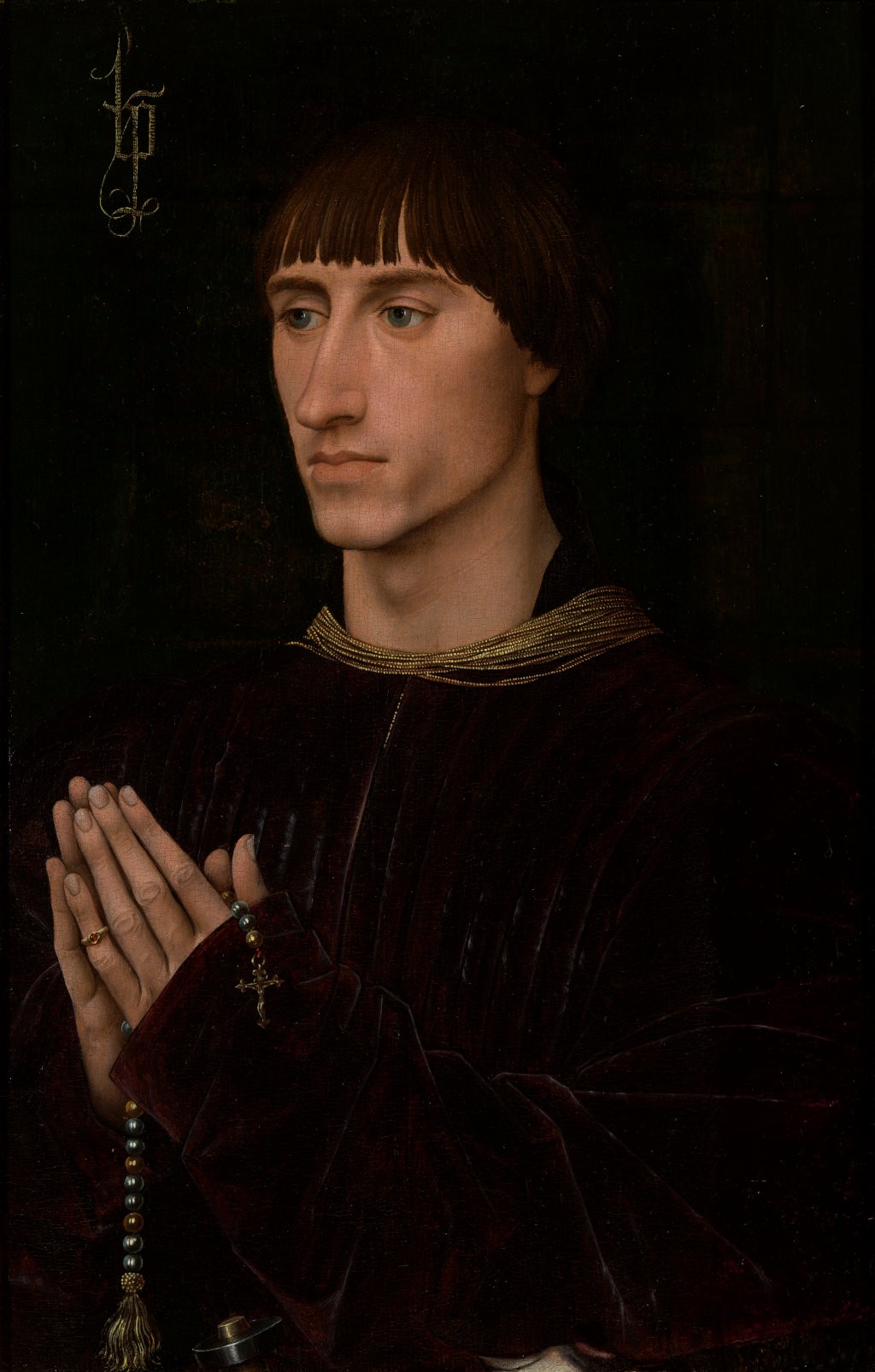
The Portrait of Philippe de Croy is one of Rogier van der Weyden's strongest surviving male portraits. The portrait panel is in Antwerp, at KMSKA, and the museum dates it to 1460. [1]
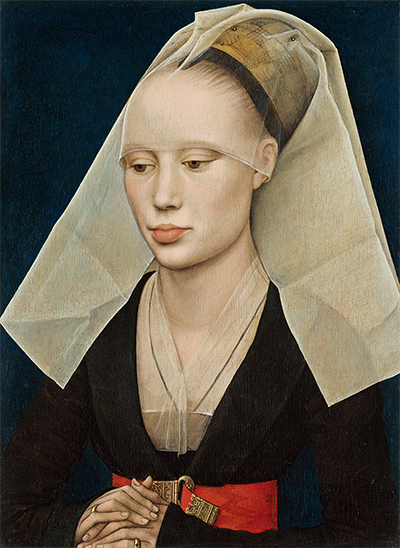
The page is important because it keeps the Rogier portrait route anchored in the Burgundian Netherlands. Portrait of a Lady shows severe inward restraint; Portrait of Francesco d'Este opens an Italian courtly route; Philippe de Croy brings the reader back to Burgundian noble identity, prayer and diptych format.
The work is also valuable because KMSKA provides a strong regional source layer. That matters for Rogier, whose career was shaped by Tournai, Brussels, Burgundian patronage and the visual culture of the fifteenth-century Netherlands.
At a Glance
- ArtistRogier van der Weyden
- TitlePortrait of Philippe de Croy / Philippe de Croÿ
- DateAround 1460
- MediumOil on panel
- Measurements49 x 31.2 cm
- KMSKA inventory254; diptych route 254-254bis
- Portrait locationKMSKA, Antwerp
- Possible counterpartVirgin and Child, Huntington Library, San Marino, California
- SubjectBurgundian nobleman Philippe de Croy
Contents
- Introduction
- At a Glance
- Annotated Details
- A Burgundian Nobleman
- Face, Hands And Costume
- Portrait And Devotion
- KMSKA And Regional Context
- Reverse Evidence And Identity
- Comparing Rogier's Portraits
- Why It Matters
- FAQs
- Discussion
- References
Annotated Details from Portrait of Philippe de Croy
Philippe de Croy is a compact but important portrait page because it connects Rogier's late portrait language with Burgundian status, devotion and regional KMSKA evidence. These details focus on face, hands, costume and the panel's diptych logic.
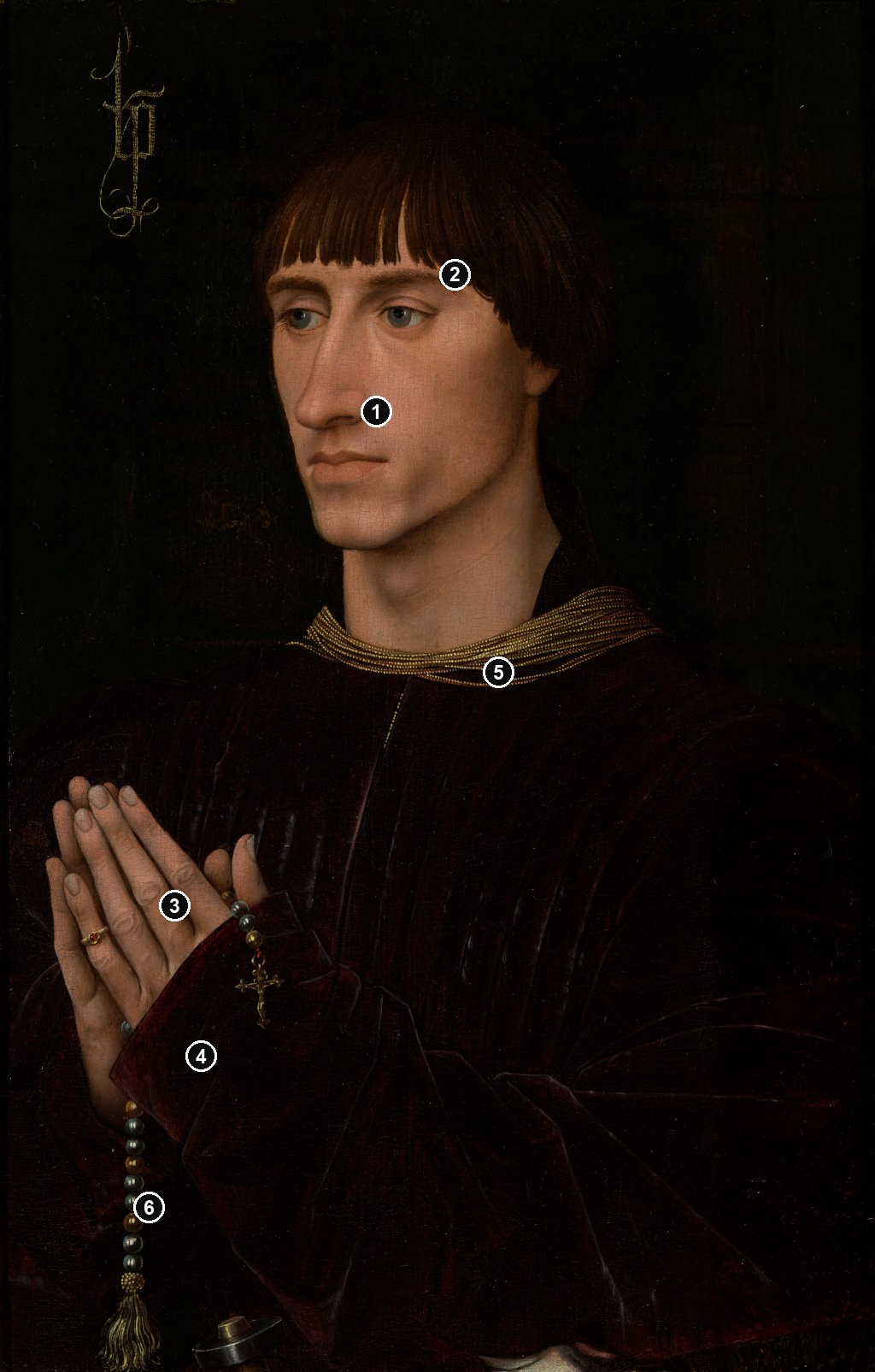
Details from PORTRAIT OF PHILIPPE DE CROY
The crops show how the portrait makes authority feel quiet rather than loud: attention gathers around eyes, prayer, fabric, jewelry and the dark interior.
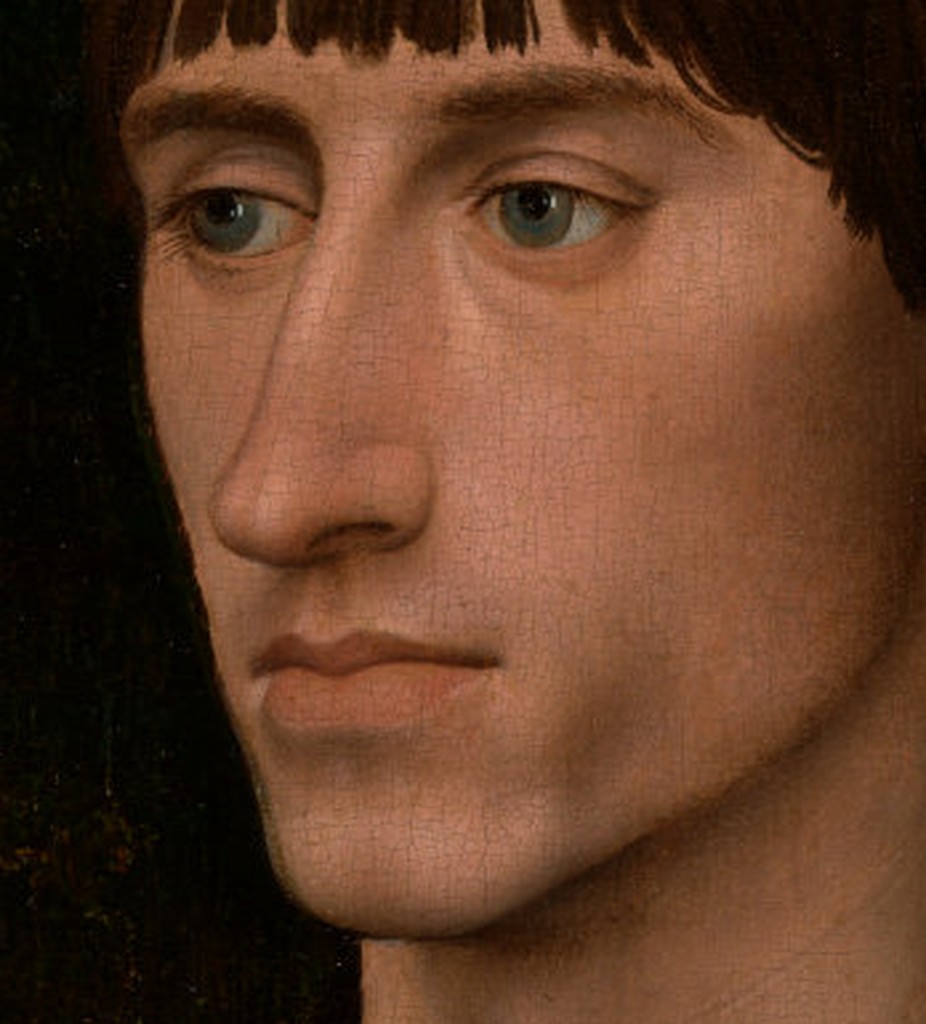
Face and lowered attention
The face is precise but restrained. Philippe's gaze does not confront the viewer; it turns inward, fitting the portrait's devotional format.
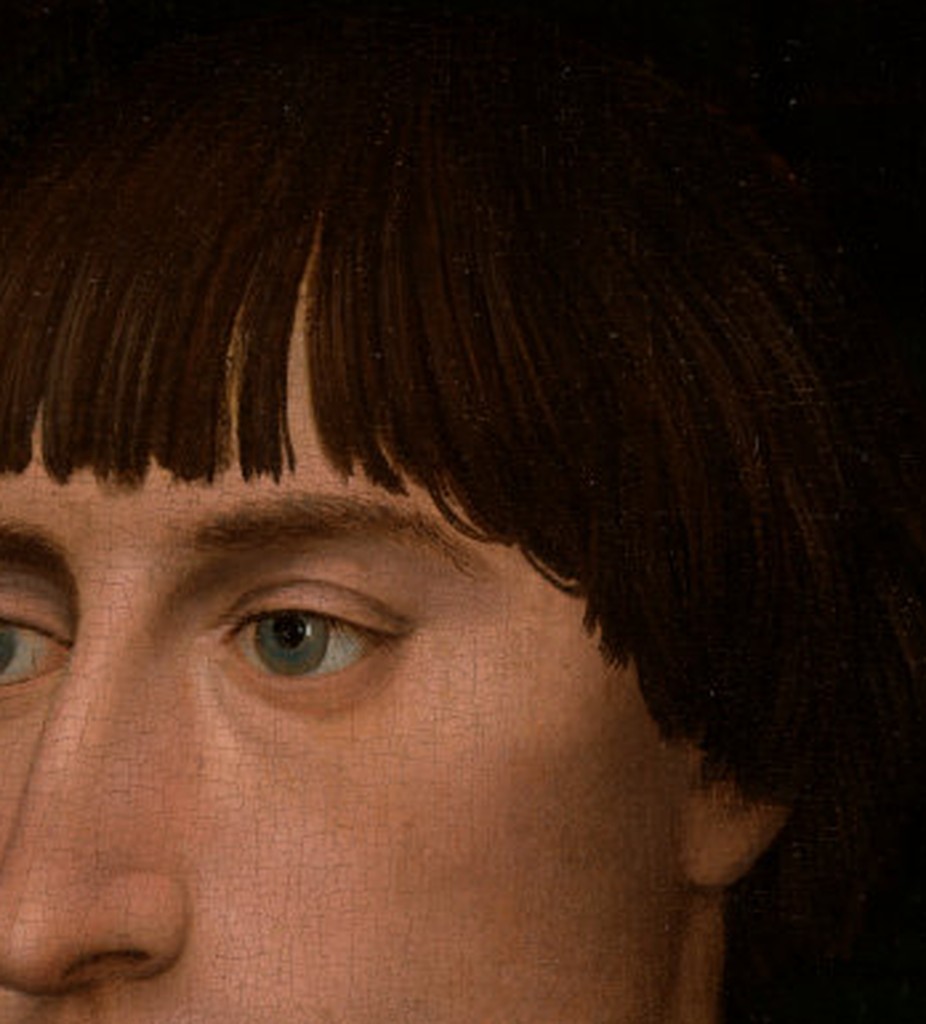
Hair and profile structure
The cropped fringe and clean profile give the head a firm silhouette. Rogier turns hairstyle and outline into social signs.
Joined hands in prayer
The joined hands make the portrait devotional rather than purely secular. Their position also suggests the missing or paired object toward which the sitter turns.
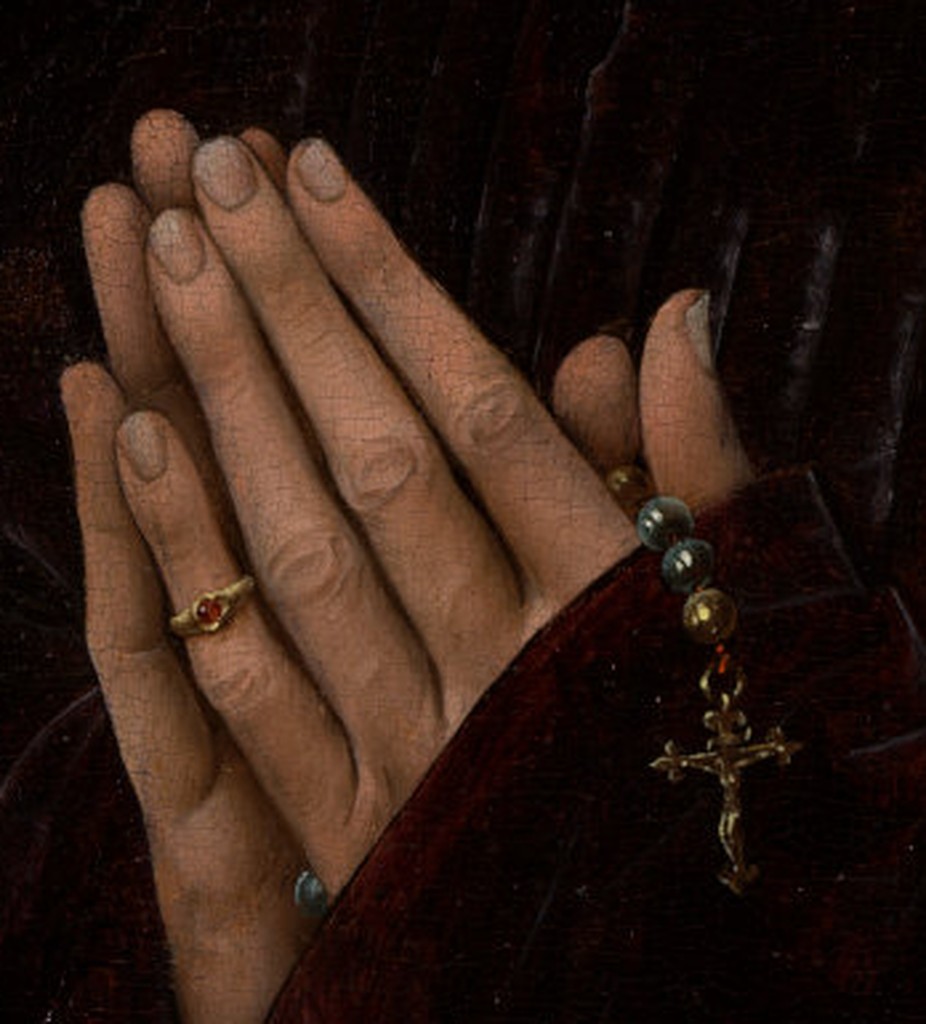
Rosary and rings
The rosary and rings combine piety and rank. They let the viewer read identity through objects held close to the body.
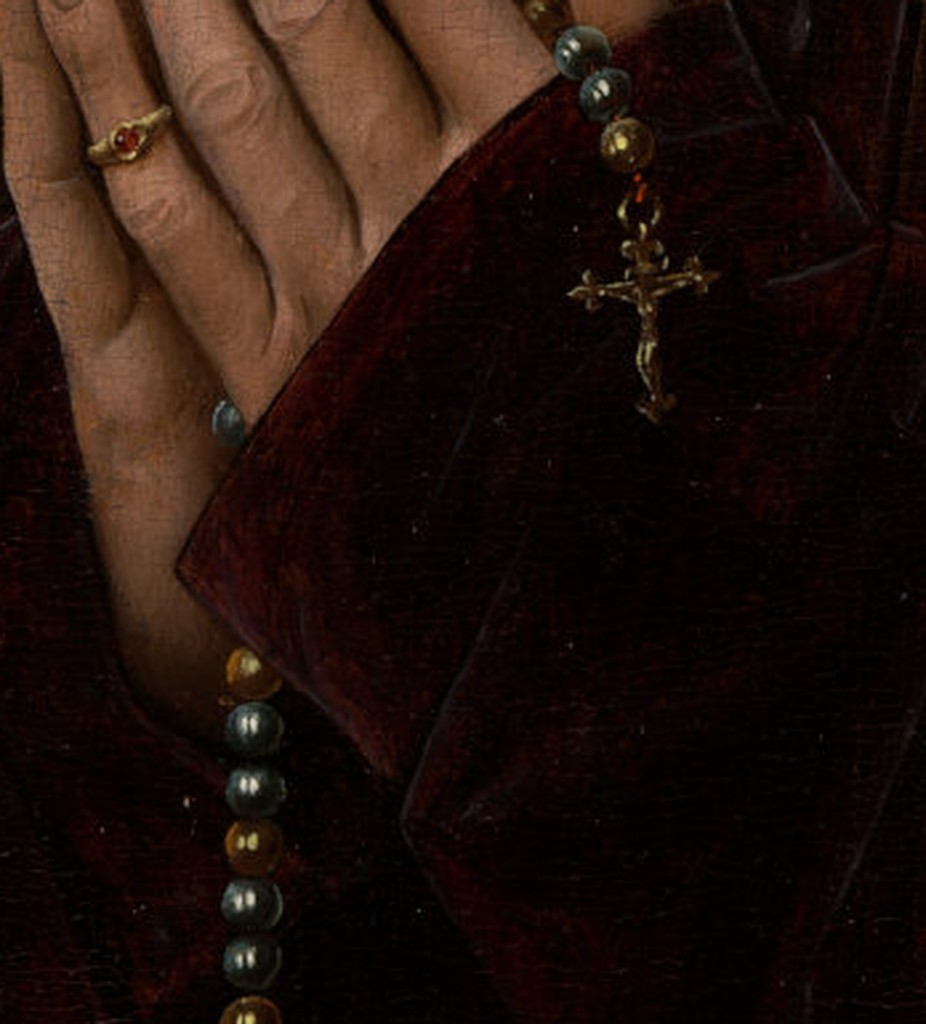
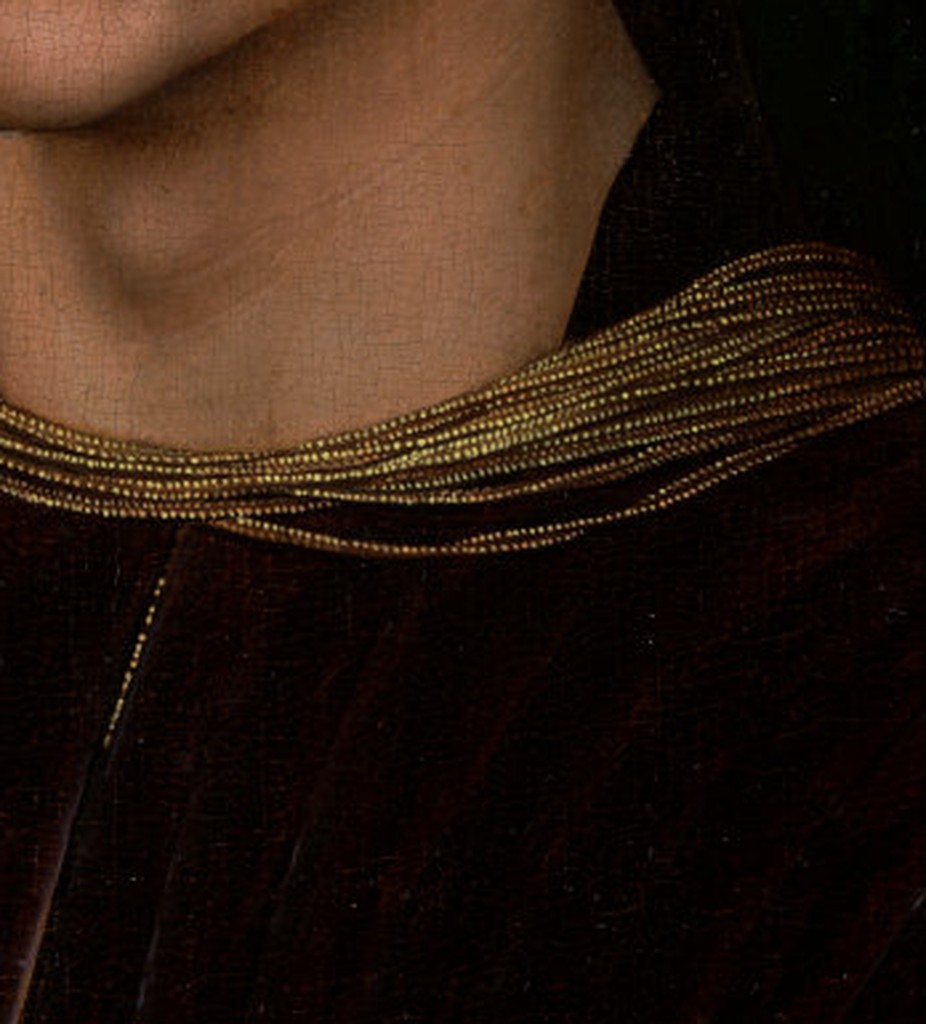
Gold collar and dark costume
The gold collar catches light against deep fabric. Rogier uses this small band of brightness to register elite status without disrupting the portrait's gravity.
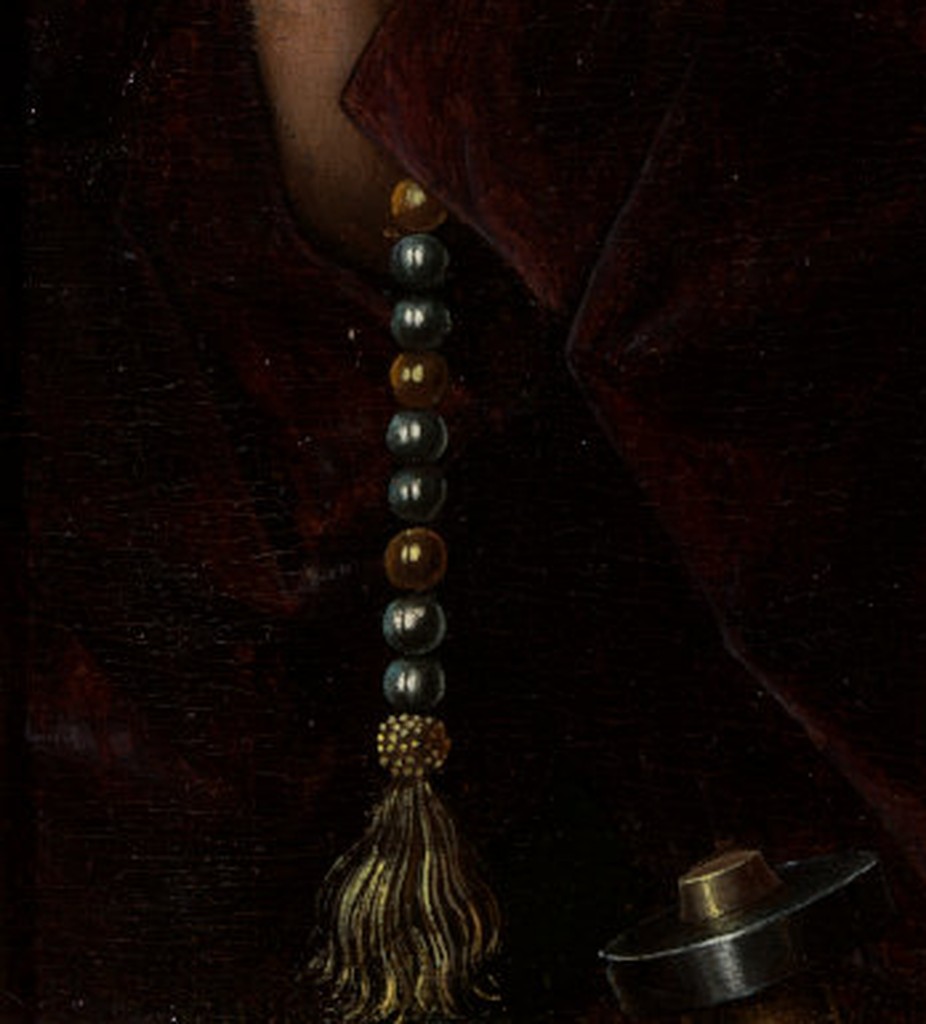
Rosary tassel and lower edge
The hanging rosary and lower edge keep prayer physically present in the portrait. The detail links Philippe's status image to devotional handling and private attention.
A Burgundian Nobleman
Philippe de Croy belonged to the Burgundian noble world around Philip the Good. Source summaries identify him as connected with Chimay and the title of Sempy/Quiévrain in this period. [1]
Rogier's portrait presents him with refinement and devotional restraint. Like Portrait of a Lady, the image idealizes without becoming empty. The face, hands and costume become signs of rank, piety and controlled identity.
Rogier does not need an elaborate setting to show status. The sitter's posture, narrowed silhouette, joined hands and controlled expression create an image of noble self-possession. In a devotional diptych context, that self-possession is placed before sacred presence rather than offered to the viewer as pure display.
The portrait therefore belongs to two worlds at once. It is a social image of a Burgundian nobleman, and it is probably a devotional image of a man praying before the Virgin and Child.
Face, Hands And Costume
The face is youthful and controlled. Rogier does not exaggerate expression. He lets small shifts in gaze, mouth and profile suggest inward concentration. This is the same discipline that gives Portrait of a Lady its authority, though the social effect is different.
The hands are especially important. Joined in prayer, they define the sitter's role. He is not merely displaying rank; he is shown as a devotional participant. Rings, costume and collar may signal status, but the hands direct that status toward prayer.
The dark clothing and gold details also matter. Rogier makes the sitter's body emerge through carefully controlled contrast. The result is elegant but severe, courtly but devout. This balance is one of Rogier's great strengths as a portrait painter.
Compared with the Francesco d'Este portrait, Philippe's image feels more openly prayerful. Francesco is presented through courtly objects, reverse evidence and international identity. Philippe is presented through devotion as much as status. The comparison helps readers see how Rogier could adjust his portrait formula without abandoning restraint.
The portrait also asks the viewer to read surfaces carefully. Hair, skin, jewellery and dark fabric are not only displays of technical skill. They help define the sitter's rank and spiritual posture. Rogier's realism serves identity.
Portrait And Devotion
The likely diptych context is crucial. If the portrait was paired with a Virgin and Child, the sitter would have faced a sacred image in prayer. That format changes the meaning of the portrait. It is not simply a record of appearance. It is a devotional self-positioning.
A portrait wing and a sacred wing may now live in different institutions, but their original meaning may have depended on the act of facing. The sitter looked toward the holy figure; the modern reader has to rebuild that relationship through evidence.
This makes the portrait a useful partner for Portrait of Francesco d'Este. Francesco's reverse helps identify the sitter and courtly identity; Philippe's possible diptych context helps explain how portraiture and prayer were joined.
The facing relationship is essential. A devotional diptych is not just two panels stored together. It creates a visual conversation. The sitter's prayer is directed toward the sacred figure, and the sacred figure gives the portrait its devotional purpose. If the panels are now separated, the interpretation has to restore that lost dialogue.
KMSKA And Regional Context
Its place in the Royal Museum of Fine Arts Antwerp keeps the portrait close to the Netherlandish and Burgundian context from which Rogier's art emerged. [1] [2]
That regional layer matters for the whole cluster. Major UK, US, French and German sources are essential, but Rogier also needs sources from the old Netherlandish region wherever possible. KMSKA gives this page institutional authority from within that regional world.
The portrait links Burgundian nobility, Netherlandish portrait practice and modern Belgian collection history. It helps the cluster feel less like a list of famous museum holdings and more like a map of Rogier's cultural geography.
Reverse Evidence And Identity
Like the Portrait of Francesco d'Este, this work shows why old-master portraits need to be treated as physical objects as well as likenesses. Backs, inscriptions, coats of arms and collection histories can all shape identity.
For Philippe de Croy, the wider diptych record matters. KMSKA's portrait and diptych routes help preserve the sense that the panel belongs to a larger devotional object, even if parts of that object are now separated. [1] [2]
This also teaches a useful method. A portrait page should not ask only "what did he look like?" It should ask how the panel functioned, what evidence identifies the sitter, and what relationship the sitter originally had to sacred imagery.
Comparing Rogier's Portraits
Together, Portrait of a Lady, Portrait of Francesco d'Este and Portrait of Philippe de Croy show the range of Rogier's portrait art. The woman in Washington is inward, geometric and intensely controlled. Francesco d'Este is courtly, secular and identified partly through reverse-side evidence. Philippe de Croy is courtly too, but strongly devotional.
This comparison prevents the portraits from becoming repetitive. Rogier uses restraint in all three, but restraint has different meanings in each image. It can signal inwardness, dynastic identity or prayer.
The Philippe portrait is especially useful because it shows how elite identity could be placed before sacred presence. The sitter's rank is visible, but the likely devotional format turns rank into prayer.
This is why the page should be part of the main portrait route, not treated as a minor aristocratic likeness. It links portraiture, devotion and Burgundian identity in one compact object. It also strengthens internal links to Portrait of a Lady, Portrait of Francesco d'Este, Virgin and Child and the workshop-and-influence page.
Why It Matters
The portrait adds six useful routes into the cluster: a major Burgundian portrait subject, KMSKA regional authority, a diptych format explanation, a link to the Huntington Virgin and Child, portrait comparison with Francesco d'Este and Portrait of a Lady, and reverse/arms evidence for sitter identification.
Its deeper value is that it shows Rogier making portraiture serve devotion. The sitter is noble, elegant and carefully presented, but the likely original context directs that identity toward the sacred. That makes the work central to understanding Rogier's portrait psychology.
The KMSKA collection record also gives the page a strong local-regional foundation. Rogier's works now sit in collections across Europe and the United States, but the Philippe portrait keeps the cluster connected to the Burgundian-Netherlandish world in which this portrait language developed. That regional authenticity is especially important for an artist whose career cannot be understood only through later international collecting.
For readers moving through the portrait pages, Philippe de Croy should feel like the devotional counterpart to Francesco d'Este. Both are elite men, but the images ask different questions: one about courtly identity and reverse evidence, the other about prayer, diptych format and Burgundian piety.
FAQs
The portrait panel is in KMSKA, Antwerp. [1]
It was probably one wing of a devotional diptych, often linked with a Virgin and Child panel now at the Huntington Library. [1] [2]
Arms and inscriptional evidence on the reverse help identify the sitter and his status. [1]
It connects Burgundian nobility, devotional diptych format, regional KMSKA authority and Rogier's wider portrait language.
Discussion
What does the Portrait of Philippe de Croy suggest about status, youth, devotion, courtly image-making and Rogier's portrait formulas?
Reader Insights
Portraits of elite sitters depend on tiny signals: costume, hand position, gaze and the balance between individuality and social role.
Rogier's portraits often feel psychologically alert because so much is withheld. The viewer reads posture and surface as mental clues.
This page belongs with Portrait of a Lady and Francesco d'Este as a compact portrait route through the cluster.
Join the Conversation
Have a thought or observation about Portrait of Philippe de Croy? Share it below. Thoughtful responses may be added to this section as the Rogier van der Weyden cluster develops.
References
- KMSKA Antwerp, Philippe de Croy, accessed 2026-07-11. https://kmska.be/en/masterpiece/philippe-de-croy
- KMSKA Antwerp, Diptych of Philippe de Croy, accessed 2026-07-11. https://kmska.be/en/masterpiece/diptych-of-philippe-de-croy
- Wikipedia (French), Portrait de Philippe de Croy, accessed 2026-07-11. https://fr.wikipedia.org/wiki/Portrait_de_Philippe_de_Cro%C3%BF
- Huntington Library reference entry for Virgin and Child counterpart, accessed 2026-07-11. https://huntington.org/
- John Oliver Hand, Catherine Metzger and Ron Spronk, Prayers and Portraits: Unfolding the Netherlandish Diptych, 2006.
- Lorne Campbell, "More on Philippe De Croÿ and Jean De Froimont," The Burlington Magazine, 2005.