


 by Tom Gurney
Tom Gurney BSc (Hons) is an art history expert with over 20 years experience
Published on June 19, 2020 / Updated on August 9, 2026
Email: tomgurney1@gmail.com / Phone: +44 7429 011000
The Man with the Golden Helmet: Introduction
That distinction matters because the picture remains famous under Rembrandt's name. For many readers, the helmet still glows in memory as if it were one of the great Rembrandt heads. The face in shadow, the lowered eyes and the astonishing metal surface all seem to belong to the world of Rembrandt's dramatic light and thick paint. Yet the modern status of the work is different. The strongest way to explain the painting today is to tell the story of its former fame, its reassessment and its value as a lesson in attribution.
The page is therefore kept for correction rather than confirmation. It helps readers who search for a familiar "Rembrandt man with helmet" understand why the old label changed, why the painting is still worth studying, and how Rembrandt's name became attached to works made around him, near him or in his manner.
Contents
- Introduction
- What the Painting Is
- Why It Is Not a Simple Rembrandt Page
- How the Doubts Developed
- The Role of Technical Research
- The Helmet Itself
- Johann Ulrich Mayr and the Unresolved Attribution
- Why the Page Is Still Worth Keeping
- Comparison with A Man in Armour
- What This Tells Us About Rembrandt's Corpus
Annotated Details from Man with Helmet
These annotated details support the page's attribution-aware reading of the painting, focusing on the dazzling helmet, the shadowed face and the construction of a Rembrandt-like effect.
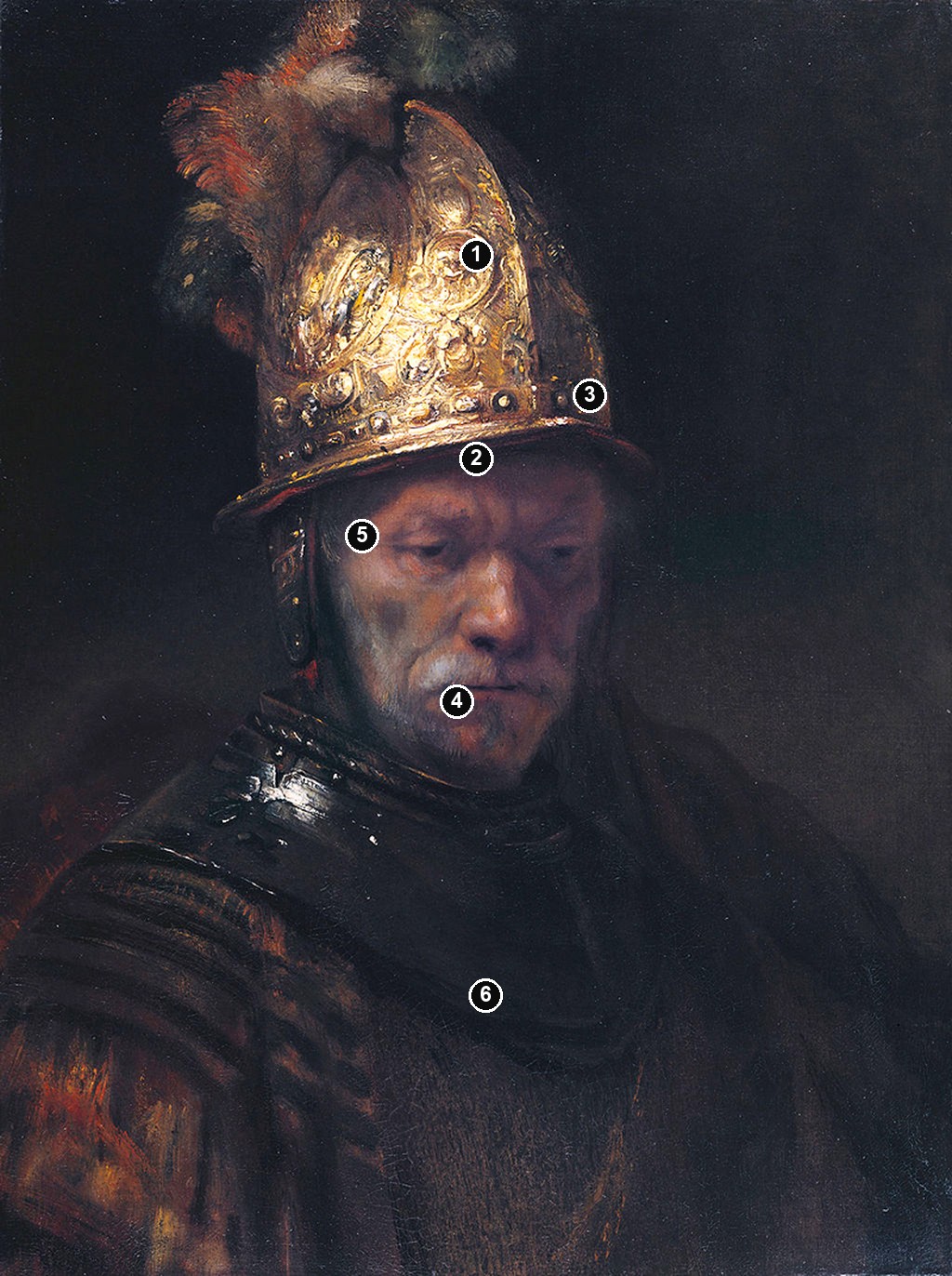
Details from MAN WITH HELMET
Close looking helps explain why the work long attracted Rembrandt's name, while still respecting the modern questioned-attribution status.
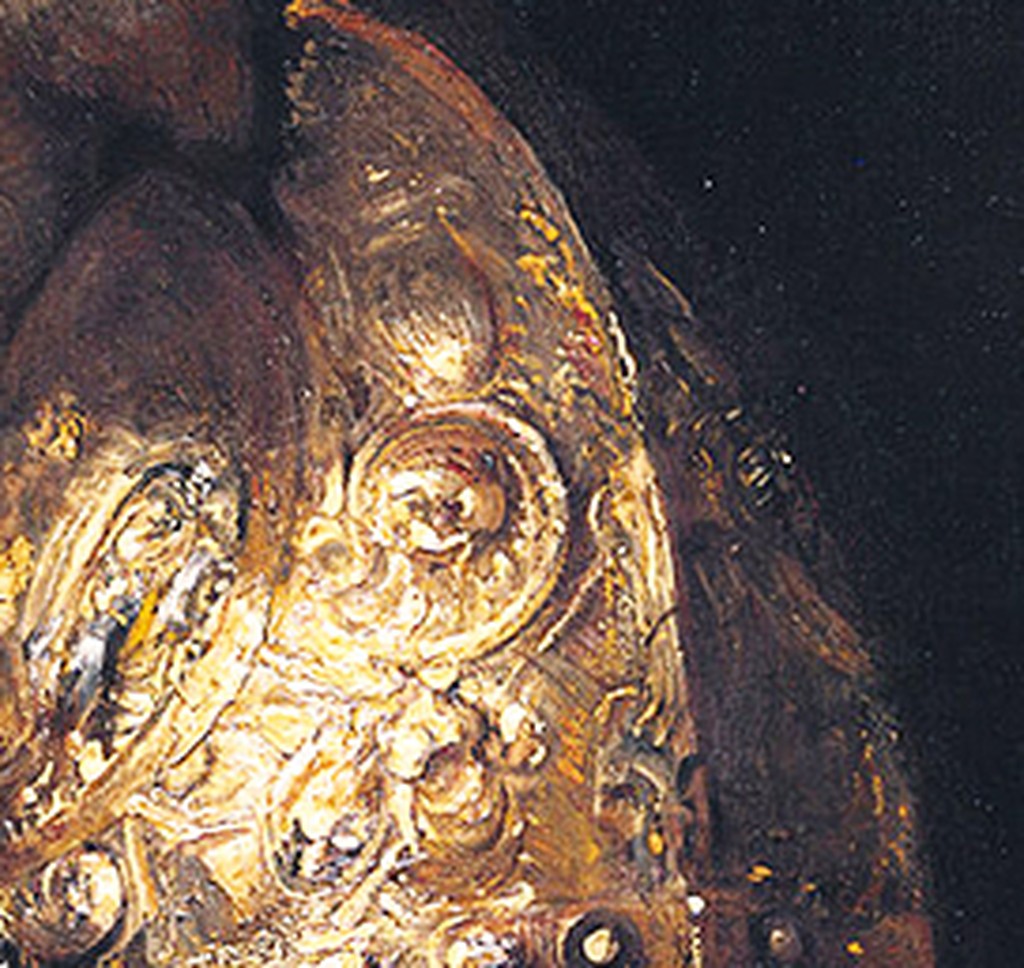
The shining helmet
The helmet is the work's great visual claim. Its metallic highlights create the drama that helped the painting enter Rembrandt's orbit.
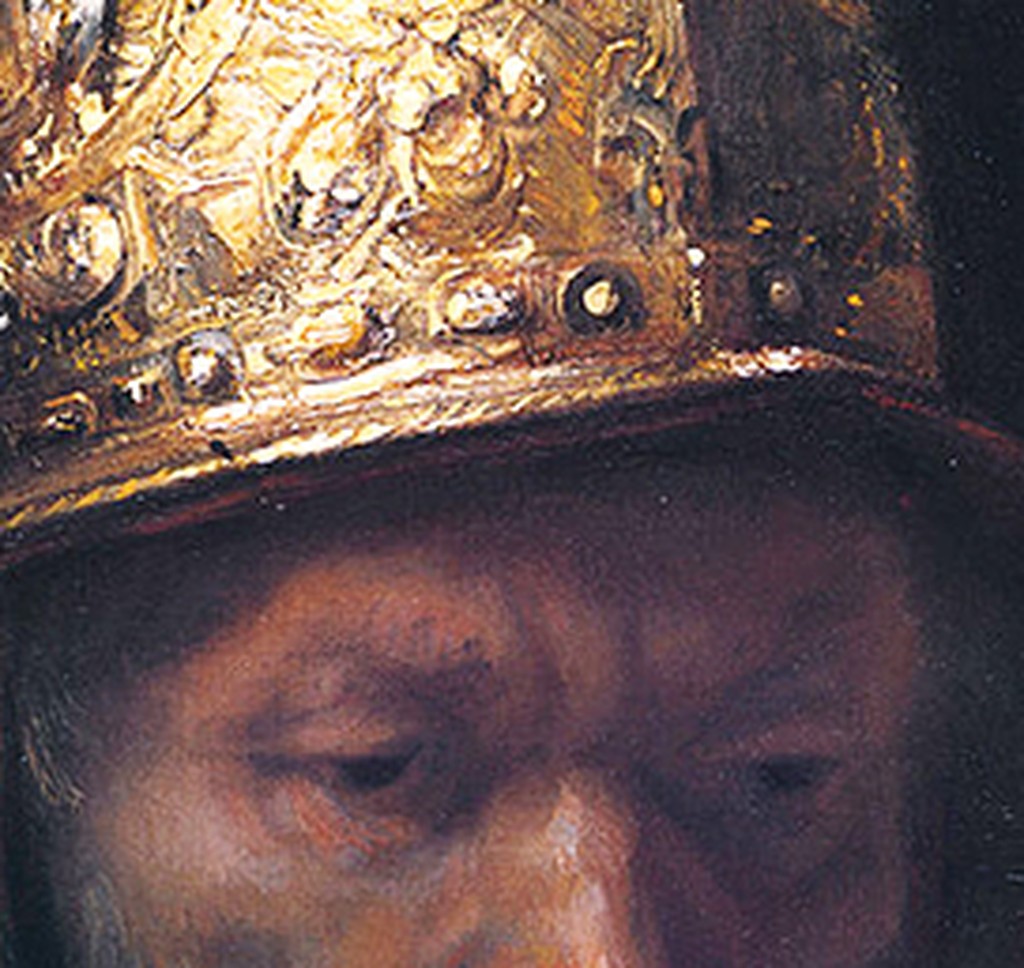
The shadowed face
The face is comparatively subdued beneath the helmet. That imbalance matters for an attribution-aware reading.
Light against darkness
The painting relies on strong light-dark contrast. The effect feels Rembrandtesque without requiring a secure Rembrandt attribution.
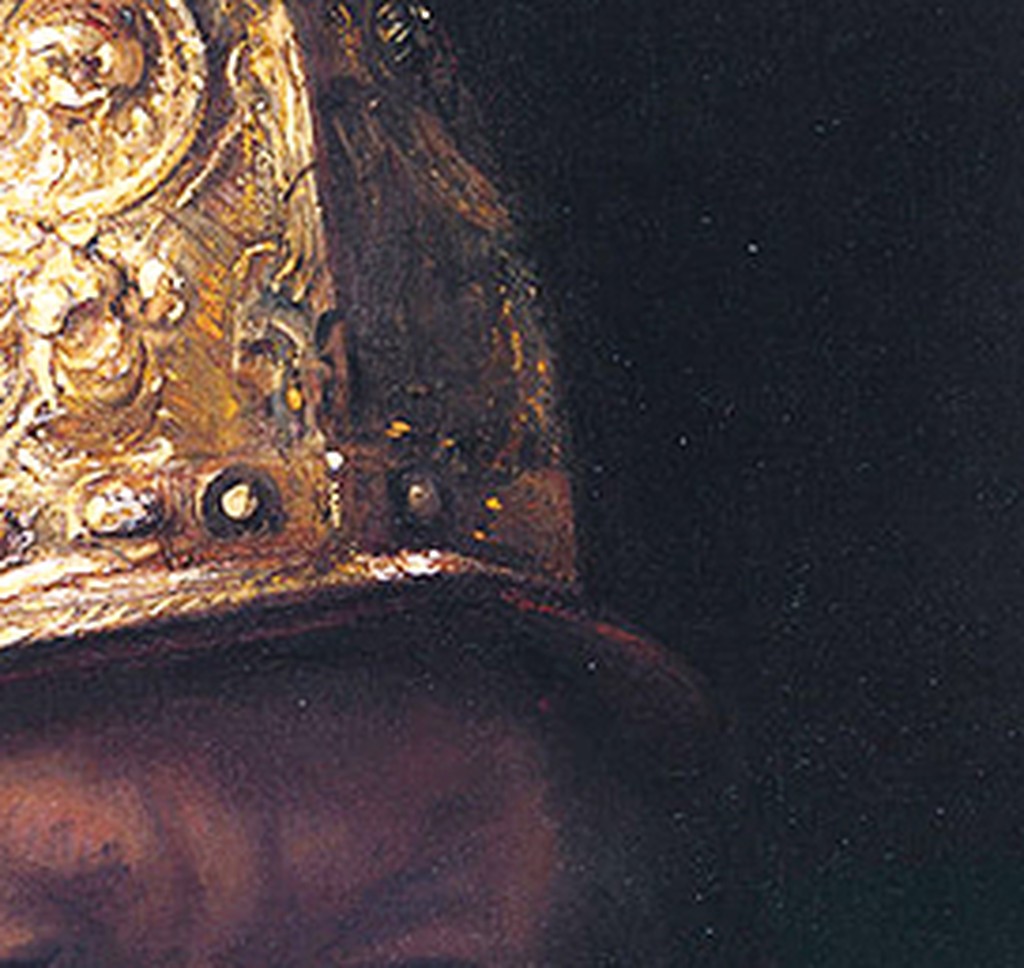
Armour and costume
The costume presents a character type rather than a securely identified sitter. It belongs close to the world of tronies and studio invention.
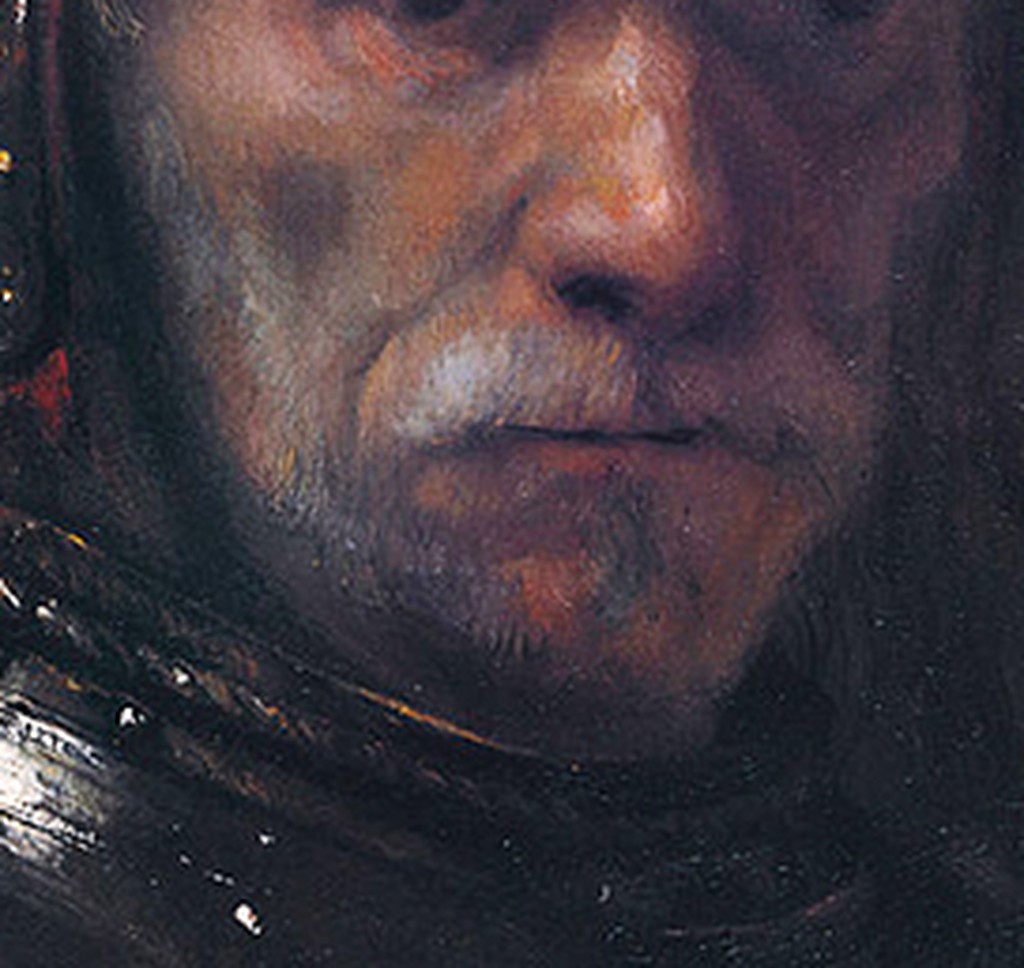
Edges and modelling
Soft transitions and heavier passages invite close comparison with Rembrandt and his circle. They are exactly the kinds of details attribution history weighs.
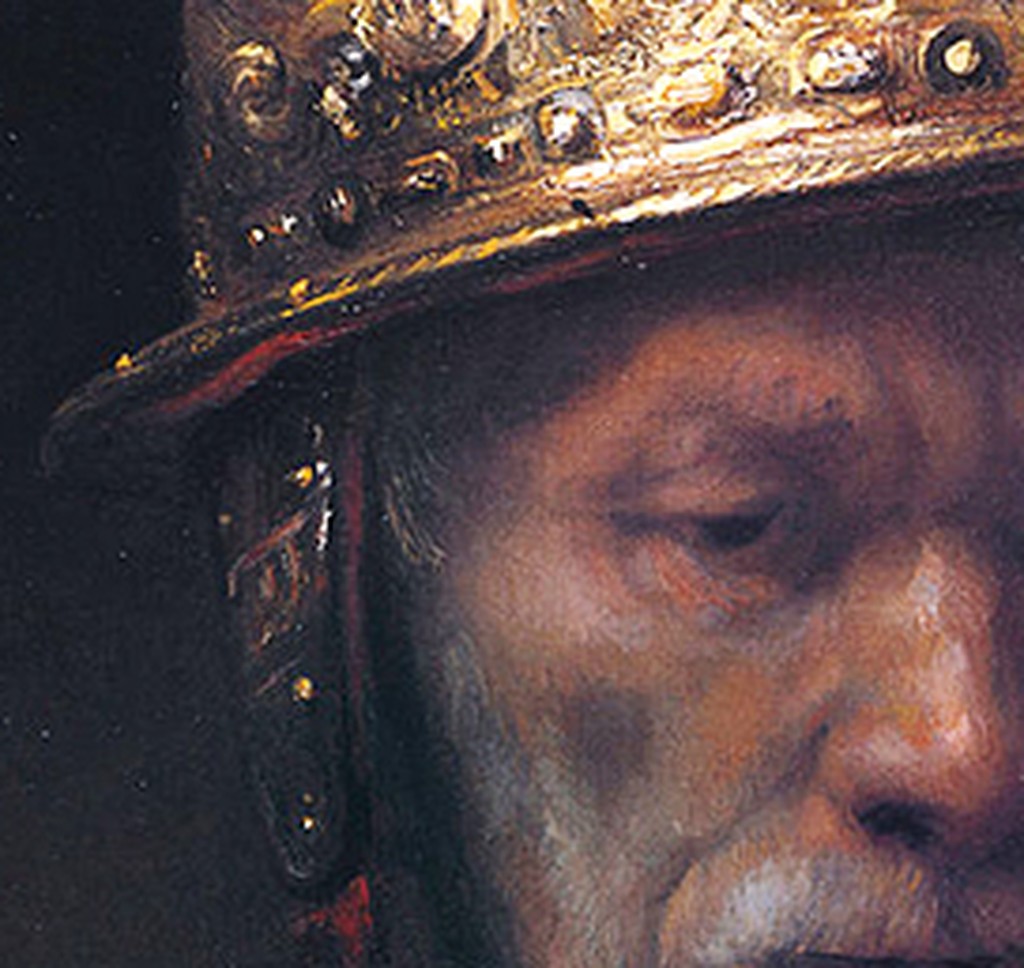
Lower body and finish
The lower passages help show how the figure is completed and staged. Close looking keeps the page focused on evidence rather than name alone.
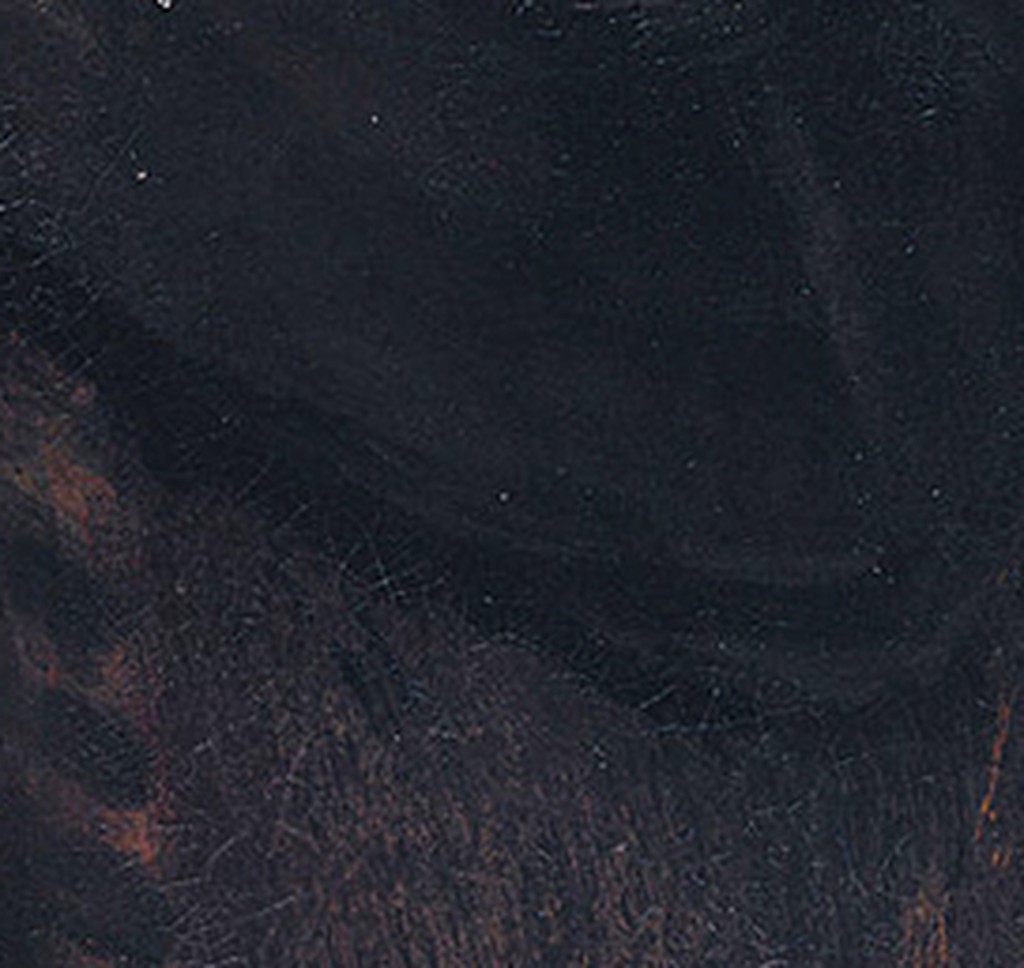
What the Painting Is
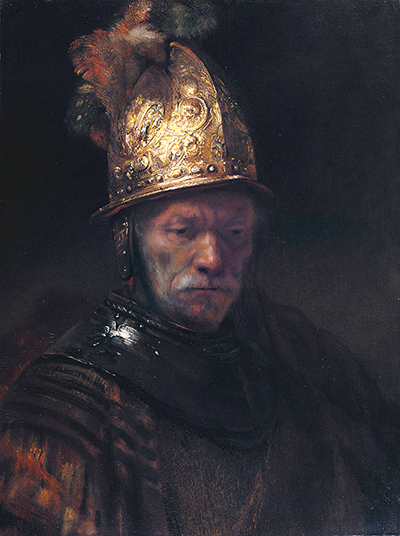
The work usually meant by this title is Der Mann mit dem Goldhelm, or The Man with the Golden Helmet. The Kaiser Friedrich Museumsverein connects it with the Berlin Gemaldegalerie context, gives the catalogue number 811A and dates the work to 1655. The source also records the older prestige of the picture: it was acquired in 1897 and became one of the best-known paintings once associated with Rembrandt.
The subject is simple at first glance. A man wears a magnificent golden helmet. His face is turned down and partly lost in darkness. The body is quiet, while the headgear dominates the painting with ridged metal, reflected light and almost sculptural paint. The helmet looks theatrical rather than practical. It belongs to the world of studio costume, historical fantasy and dramatic character study, not to a plain modern portrait.
That kind of image sits close to Rembrandt's interests. Rembrandt and painters around him often used old armour, turbans, caps, chains and exotic costumes to create figures from history, scripture, antiquity or imagined character types. A figure in armour might be a historical hero, a soldier, a biblical person, an allegory or a study of expression and surface. The visual world overlaps with Rembrandt paintings, with tronies and with studio practice.
But overlap is not authorship. The current question is not whether the painting looks Rembrandtesque in a broad sense. It clearly does. The question is whether the handling, structure, evidence and history support Rembrandt himself as the painter. Current Berlin-related presentation says they do not.
Why It Is Not a Simple Rembrandt Page
Kaiser Friedrich Museumsverein states the point directly: the work is not by Rembrandt, but it is also not a forgery. That second half is important. A deattributed Old Master is not automatically a fake. It may be a work by a pupil, follower, associate or painter in the circle of a famous master. It may have entered collections under a name that later scholarship no longer supports. It may still be old, serious and visually powerful, even when the artist line changes.
The label Rembrandt, Umkreis means Rembrandt's circle. It places the painting in the orbit of Rembrandt rather than in his accepted body of work. This is a meaningful historical category. It says that the painting belongs near Rembrandt's artistic environment, but not securely to Rembrandt's own hand.
For readers, this is the central correction. The painting should not be introduced as "Rembrandt's The Man with the Golden Helmet." It is better described as a famous formerly Rembrandt-attributed painting, now assigned to Rembrandt's circle. That wording may feel less tidy, but it is more honest.
It also protects the larger Rembrandt story. If every famous picture once linked to Rembrandt is treated as securely his, the artist becomes harder to understand. His own paintings, his workshop, his followers and later collectors' habits all collapse into one mythic name. The history of The Man with the Golden Helmet shows why modern Rembrandt pages need careful links to the corpus of Rembrandt paintings and to workshop and attribution questions.
How the Doubts Developed
The doubts did not appear overnight. KFMV notes that questions about the attribution had been raised since the 1960s. Those doubts were later strengthened by technical, scientific and art-historical research.
This is typical of serious attribution change. A painting is rarely reassigned because one viewer simply dislikes it. The discussion usually grows from multiple kinds of evidence. Scholars compare the work with accepted paintings. They study brushwork, composition, surface structure and the logic of light. They check provenance, old catalogues and collection history. Technical researchers look below the visible surface where possible. The result is a judgment made from converging evidence rather than a single dramatic test.
In this case, the visual problem centres partly on the very thing that made the painting famous: the helmet. It is painted with brilliant, relief-like force. KFMV describes the effect as an over-intensification of Rembrandtesque qualities. In other words, the painting amplifies effects associated with Rembrandt rather than carrying them with the pictorial balance expected from Rembrandt himself.
That is a subtle but important idea. A follower can admire and heighten the master's manner. A later viewer may see the thick paint, dark setting and golden light and think immediately of Rembrandt. Yet a Rembrandt-like effect is not the same as Rembrandt's own decision-making across the whole picture. Attribution study often turns on this difference between resemblance and authorship.
The Role of Technical Research
The Staatliche Museen zu Berlin's Gemaldegalerie research page adds an important scientific context. It records that a cooperation begun in 1983 between the Gemaldegalerie, the Rathgen-Forschungslabor and what is now Helmholtz-Zentrum Berlin was prompted in part by the disputed attribution of Mann mit dem Goldhelm. The aim was to clarify whether the painting could still be assigned to Rembrandt.
The method involved neutron autoradiography, a technique that can help reveal information from within paint layers. SMB explains the method as useful for studying pigments, brushwork, condition and stages of creation. For a painting whose surface has long invited Rembrandt comparisons, such information matters. It can help researchers see how the picture was built, not only how it looks under gallery light.
It would be a mistake, though, to present science as a magic switch. Technical research did not simply press a button and remove Rembrandt's name. The strongest account is a combined one: technical and scientific evidence worked with art-historical judgment. The visible painting, the material evidence, the history of doubts and comparison with Rembrandt's accepted work all contributed to the current position.
That is also why the story belongs beside Rembrandt's style and technique. Questions of surface, paint, light and material structure are not only matters of visual pleasure. They can affect the most basic label a painting carries.
The Helmet Itself
The helmet is the painting's main actor. It catches the light more strongly than the man's face. Its raised forms and dark recesses make the metal feel heavy, ornate and almost touchable. The viewer's eye returns to its ridges, highlights and shadowed bands.
That dominance is one reason the painting became unforgettable. It gives the work a strong image identity: a dark head beneath a blazing object. In reproduction, the helmet can stand for Rembrandt's supposed mastery of gold, armour and theatrical light. It is easy to see why the picture became popular.
Yet the same intensity also supports the modern caution. KFMV points to extreme verism and relief-like impasto in the helmet as evidence of an overdriven Rembrandtesque effect. The painting appears to press one celebrated aspect of Rembrandt's style very hard. The surface dazzles, but the balance between head, body, character and paint does not support Rembrandt's authorship in the current assessment.
This does not make the helmet less interesting. On the contrary, it makes it more revealing. The object shows what later viewers wanted from Rembrandt: depth, darkness, light, material richness and psychological gravity. It also shows how a painter near Rembrandt's world could produce a powerful version of those qualities without being Rembrandt himself.
Johann Ulrich Mayr and the Unresolved Attribution
KFMV notes one possible attribution proposal: Johann Ulrich Mayr. The suggestion is connected to the helmet's identification as Augsburg work. Mayr came from Augsburg, a major goldsmithing centre, and is documented in Rembrandt's workshop. That combination makes him an intriguing candidate.
But intriguing is not the same as settled. The painting has not been securely reassigned to Mayr in the way that the old Rembrandt attribution has been rejected. The proper reader-facing position is therefore cautious: Mayr has been proposed, but the new attribution remains unresolved.
This unresolved status is valuable in itself. It shows that attribution is not always a neat exchange of one name for another. Sometimes research can say with confidence that an old name no longer fits, while still leaving the new name open. "Not Rembrandt" is a conclusion. "Mayr" remains a proposal.
Readers sometimes find this frustrating because museum labels feel more satisfying when they give a single artist. But uncertainty is not a failure when it is clearly stated. It is part of responsible art history. A work can move from a famous name into a more careful category, and the category can remain more accurate than a false certainty.
Why the Page Is Still Worth Keeping
If the painting is not by Rembrandt, why keep a page for it in a Rembrandt section at all? The answer is that the work's Rembrandt history is real, even if Rembrandt's authorship is not.
First, the painting has legacy fame. It was widely known under Rembrandt's name and still appears in memory, older books and casual searches that way. Removing all explanation would leave many readers with the wrong old answer.
Second, the search demand is corrective. People who look for "Rembrandt man with helmet" are often not trying to study an anonymous painter from scratch. They are trying to identify a familiar picture. A responsible account meets that search and then corrects it clearly.
Third, the painting teaches attribution history better than an abstract explanation can. It shows the difference between a secure Rembrandt, a work from Rembrandt's circle, a forgery and a disputed work. It shows why museum labels change. It shows how scientific study, connoisseurship and catalogue history can reshape a famous object.
Finally, the picture still helps readers understand Rembrandt's artistic environment. Even when not by Rembrandt, it belongs near the problems raised by Rembrandt paintings: workshop practice, studio props, dramatic light, impasto, costume, historical fantasy and the moving boundaries of the accepted corpus.
Comparison with A Man in Armour
The Man with the Golden Helmet should also be kept distinct from A Man in Armour. The two titles sound related, and both involve armour, historical costume and Rembrandt's world. But their current attribution issues are different.
Glasgow Museums presents A Man in Armour as by Rembrandt Harmenszoon van Rijn. The caution there concerns the subject: the figure has been interpreted in several ways, including Alexander the Great and other heroic or mythological possibilities. In that case, the safest wording is subject caution.
The Man with the Golden Helmet has a different problem. The subject may be unnamed, but the major warning concerns authorship. Current Berlin-related sources do not treat the painting as by Rembrandt. It needs attribution caution, not merely subject caution.
This distinction is useful across the Rembrandt section. Some pages ask "Who is represented?" Some ask "Which version is this?" Some ask "Did Rembrandt paint it?" Some ask "How much did pupils, assistants or later copyists shape what we see?" A careful guide should not use the same warning for every uncertainty. It should name the exact kind of uncertainty each painting carries.
What This Tells Us About Rembrandt's Corpus
The Man with the Golden Helmet belongs naturally with the larger history of the Rembrandt corpus. The accepted list of Rembrandt paintings has changed over time. Older catalogues often gave Rembrandt a larger body of works than modern scholarship accepts. Later research has moved many works into categories such as circle, workshop, follower, copy, after Rembrandt or formerly attributed to Rembrandt.
The Rembrandt Research Project and the wider corpus tradition made these changes especially visible. The Rembrandt Database also helps readers see how documentation, literature and technical evidence surround individual works. The point is not that the Rembrandt corpus is chaotic. The point is that it has been actively studied, tested and revised.
That revision can feel like loss when a famous painting leaves Rembrandt's accepted work. But it can also be a gain in clarity. Rembrandt becomes more specific. His workshop and followers become more visible. Museums can explain why an old label changed rather than silently preserving inherited fame.
In that sense, The Man with the Golden Helmet is not a weak Rembrandt painting. It is an important non-Rembrandt Rembrandt story. It clarifies how fame, style and evidence can pull in different directions.
How to Look at It Now
The best way to look at The Man with the Golden Helmet today is with two ideas in mind at once.
First, look at the painting as a compelling image. The helmet is spectacular. The face is subdued. The contrast between metal brilliance and human darkness is powerful. The work has enough visual force to explain why viewers once embraced it as Rembrandt.
Second, look at the painting as a historical correction. Its current attribution to Rembrandt's circle changes how the viewer should understand that force. The painting no longer demonstrates Rembrandt's own hand. It demonstrates the attraction of Rembrandt's manner, the skill of painters around him and the long afterlife of Rembrandt's name.
That double view is more interesting than the old one. A simple Rembrandt label made the painting famous, but the current attribution story makes it instructive. It asks readers to look closely, but also to read labels closely. It reminds us that Old Master paintings are not only images; they are objects with histories of ownership, naming, study, doubt and reassessment.
For readers moving through Rembrandt paintings, workshop and attribution, the corpus of Rembrandt paintings, A Man in Armour and style and technique, this work is a useful checkpoint. It shows why not every familiar Rembrandt title belongs to Rembrandt, and why careful attribution can deepen rather than diminish the story.
Frequently Asked Questions About The Man with the Golden Helmet
No. KFMV makes the important distinction that the painting is not by Rembrandt, but it is also not a forgery. It is better understood as a work connected with Rembrandt's circle and later attribution history.
The painting was long famous under Rembrandt's name, and its dramatic light, shadow and rich paint handling are strongly Rembrandtesque. That historical connection remains worth explaining even though the current attribution has changed.
The current attribution is unresolved. Johann Ulrich Mayr has been proposed, partly because of the Augsburg connection of the helmet and Mayr's documented link with Rembrandt's workshop, but this is not a settled attribution.
Doubts had existed since the 1960s and were strengthened by technical, scientific and art-historical research. SMB also records that neutron autoradiography research in Berlin was connected in part with the disputed attribution of this painting.
The title The Man with the Golden Helmet can be used for recognition, but it should not be presented as a painting by Rembrandt. Safer wording is "The Man with the Golden Helmet, formerly attributed to Rembrandt" or "The Man with the Golden Helmet, now attributed to Rembrandt's circle."
Discussion
What feels most important in The Man with the Golden Helmet: Rembrandt's light, the figure's expression, the material surface, the historical source, or the way the work sits beside his other paintings and prints?
Reader Insights
Begin with one detail in The Man with the Golden Helmet, then move outward to light, gesture, surface and the surrounding space.
Connect the work to Rembrandt's biography, workshop, medium and the museum record rather than reading it as an isolated image.
Which detail changes the interpretation most once you know the date, subject, attribution history or present collection?
Join the Conversation
Have a thought or observation about The Man with the Golden Helmet? Share it below. Thoughtful responses may be added to this section as the Rembrandt pages develop.
References
- Kaiser Friedrich Museumsverein, Der Mann mit dem Goldhelm (in German): https://kaiser-friedrich-museumsverein.de/der-mann-mit-dem-goldhelm/
- Staatliche Museen zu Berlin / Gemaldegalerie, neutron autoradiography research (in German): https://www.smb.museum/museen-einrichtungen/gemaeldegalerie/sammeln-forschen/forschung/erforschung-und-analyse-von-gemaelden-mithilfe-der-neutronenautoradiografie/
- Staatliche Museen zu Berlin, use of object images and data: https://www.smb.museum/en/open-science/use/
- Rembrandt Database, mission and scope: https://rembrandtdatabase.org/about/mission-and-scope.html
- Rembrandt Database, A Corpus of Rembrandt Paintings: https://rembrandtdatabase.org/literature/corpus.html
- National Gallery of Art, Washington, Issues of Attribution: Rembrandt and Workshop: https://www.nga.gov/research/publications/dutch-paintings-seventeenth-century/issues-attribution-rembrandt-workshop
- Glasgow Museums, A Man in Armour: https://collections.glasgowmuseums.com/mwebcgi/mweb?request=record%3Bid%3D166852%3Btype%3D101
 Rembrandt.jpg)