

 by Tom Gurney
Tom Gurney BSc (Hons) is an art history expert with over 20 years experience
Published on June 19, 2020 / Updated on December 23, 2025
Email: tomgurney1@gmail.com / Phone: +44 7429 011000
Modigliani, Picasso and the Portrait of Pablo Picasso (1915)
The Italian artist Amedeo Modigliani is mainly recognized for his many modern style portraits and paintings of nudes with elongated faces, but his oeuvre also includes several drawings and sculptures.
Introduction
Spending his youth in Italy, Modigliani studied Renaissance art in Livorno and moved to Paris in 1906. In spite of his somewhat reserved and introverted disposition, he eventually became acquainted with artists such as Juan Gris, Gino Severini, and Pablo Picasso.
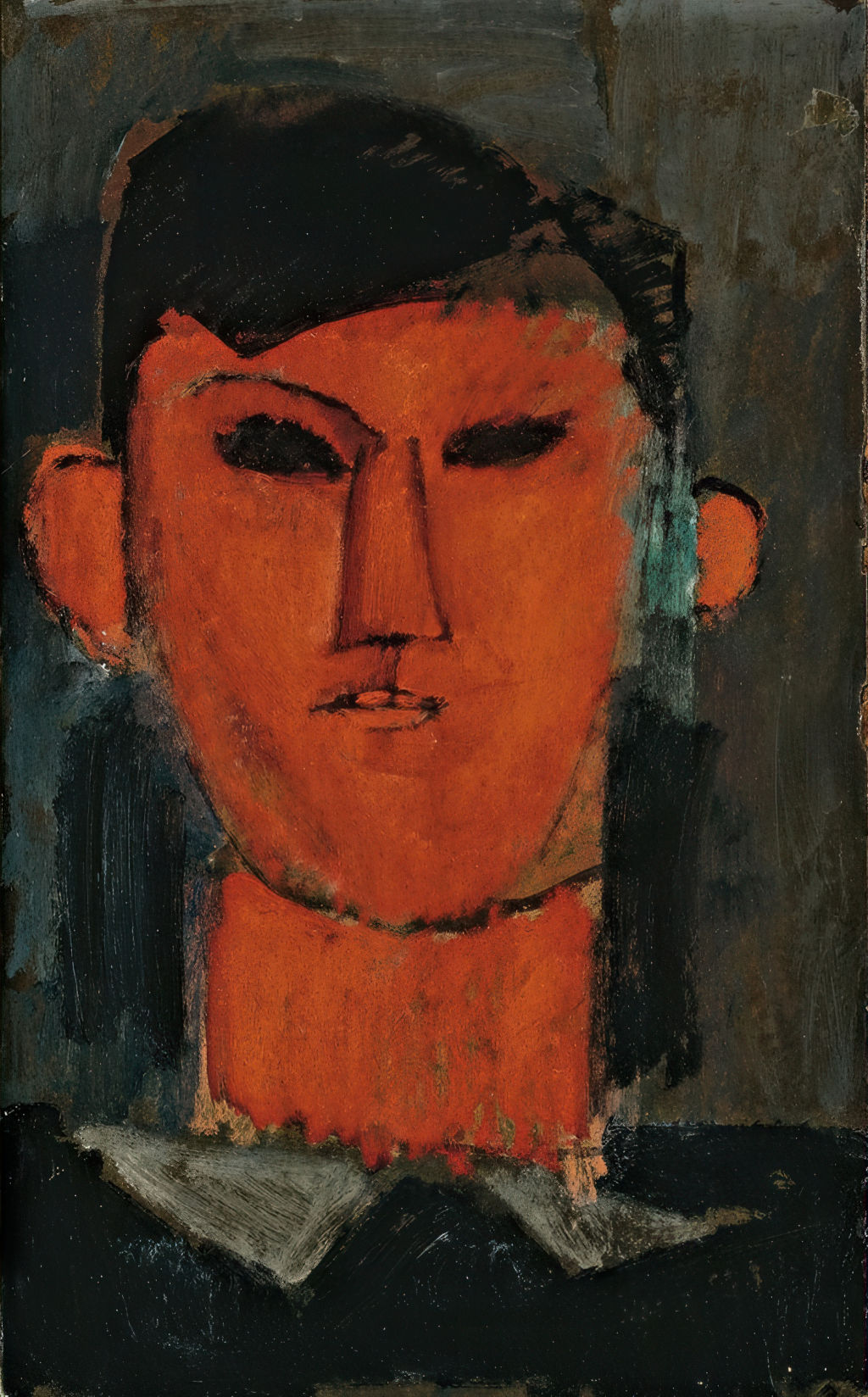
Modigliani portrayed Picasso as emotionally distant within this portrait from around 1915. The artist would do similar with others close to him, and he once exclaimed that he would only start to include more detail and connection within his portraits once he truly understood a model's soul.
The two had a short but significant relationship which we will examine in this article. They respected each other as artists but their personalities would eventually clash after a fruitful period working and socialising together. Now we will look more deeply into their relationship, and examine how that impacted the artwork in front of us here.
- Artist:Amedeo Modigliani
- Title:Portrait of Pablo Picasso
- Year:1915
- Medium:Oil on board
- Movement:Modernism
- Subject:Pablo Picasso
Modigliani and Picasso: Friendship, Rivalry and Artistic Exchange
Amedeo Modigliani and Pablo Picasso knew each other personally in Paris, which at the start of the 20th century was the leading artistic melting pot in the world. The two moved within artistic circles in the districts of Montmartre and Montparnasse, and would share their ideas openly, hoping to bring new influences into their work. Modigliani arrived in Paris in 1906, and Picasso was already there building a strong reputation for innovation and technical mastery.
Upon meeting Picasso, who was garbed in his trademark workman's attire, Modigliani remarked that possessing artistic genius was no excuse for dressing poorly. Picasso, on the other hand, was noted to have said that Modigliani was the only person he knew who really knew how to dress.
Modigliani lived in Le Bateau-Lavoir, an artistic community in Montmartre, where Picasso also had a studio. Picasso not only sat for Modigliani, but also owned several of his paintings, including The Girl with the Brown Hair.
They found a common interest in African art, particularly sculpture and would draw different elements of them into their work. Picasso would purchase some of his friend's work, and was clearly an admirer of his alternative style of portraiture. Sadly, though, Amedeo's lifestyle was too turbulent even for Pablo Picasso, and the latter could only tolerate his friend's company for short periods.
Picasso's Les Demoiselles d'Avignon was a key moment in his development and this came about soon after he met Modigliani for the first time. Both artists would create sculptural effects in their portraits and figurative paintings, though Picasso would look to fragment, whilst Modigliani chose a smoother, elegant flow. Photographs exist from their friendship, drinking in bars around Paris, often with other friends.
World War I also brought a similar experience to them, as both foreign nationals living in Paris, France. They would eventually exhibit together, at the gallery of Germaine Bongard in late 1915, and again in the following year. Picasso has grown to like Amedeo, and consequently chose to sit for him, for the portrait featured here - this would have happened in either 1914 or 1915, though Amedeo chose to produce the painting on board, rather than canvas.
List of All Picasso Portraits by Modigliani
Alongside this famous portrait, from 1915, there was also another oil painting and two drawings.
Provenance
Portrait of Pablo Picasso (1915) was once owned by Frank-Burty Haviland, from a famous Industrialist family who lived on the Rue Schoelcher. He was also a collector, and his African artowrks were of particular interest to both Picasso and Modigliani.
In time, the friendship between the two artists eroded. Picasso disapproved of Modigliani's lifestyle and with this, they eventually drifted apart. It must be noted, however, that Picasso did attend Modigliani's funeral.
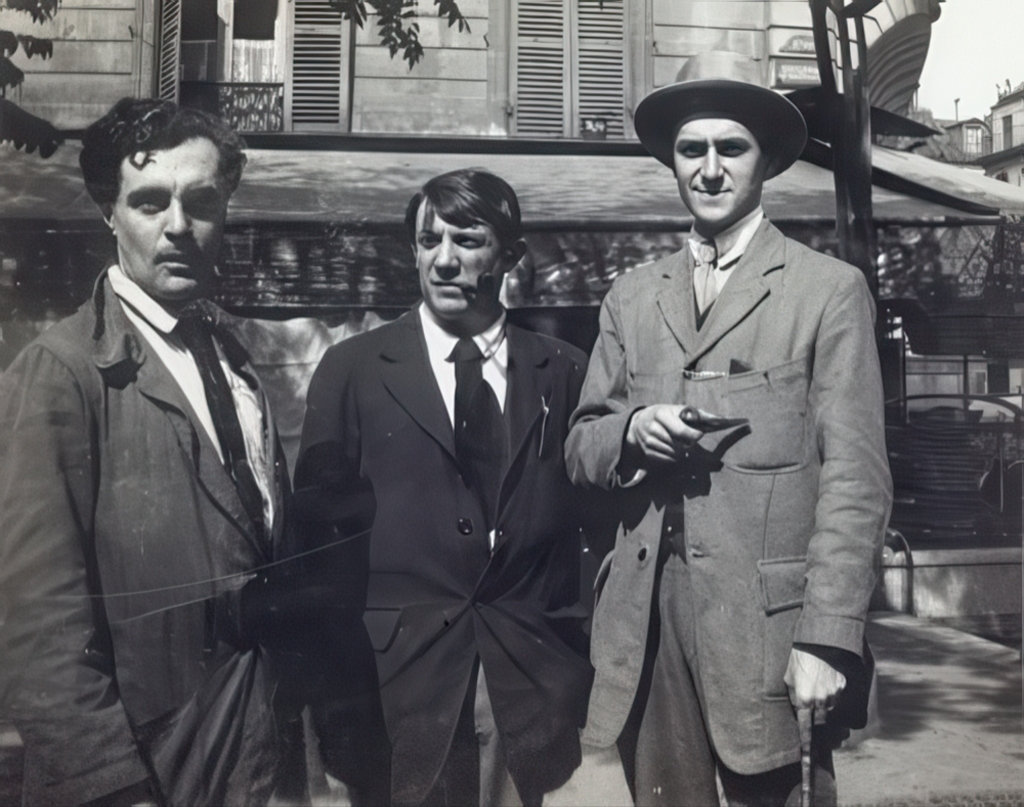
Amedeo Modigliani and Pablo Picasso in front of the Café de la Rotonde in Montparnasse, Paris - August, 12th 1916
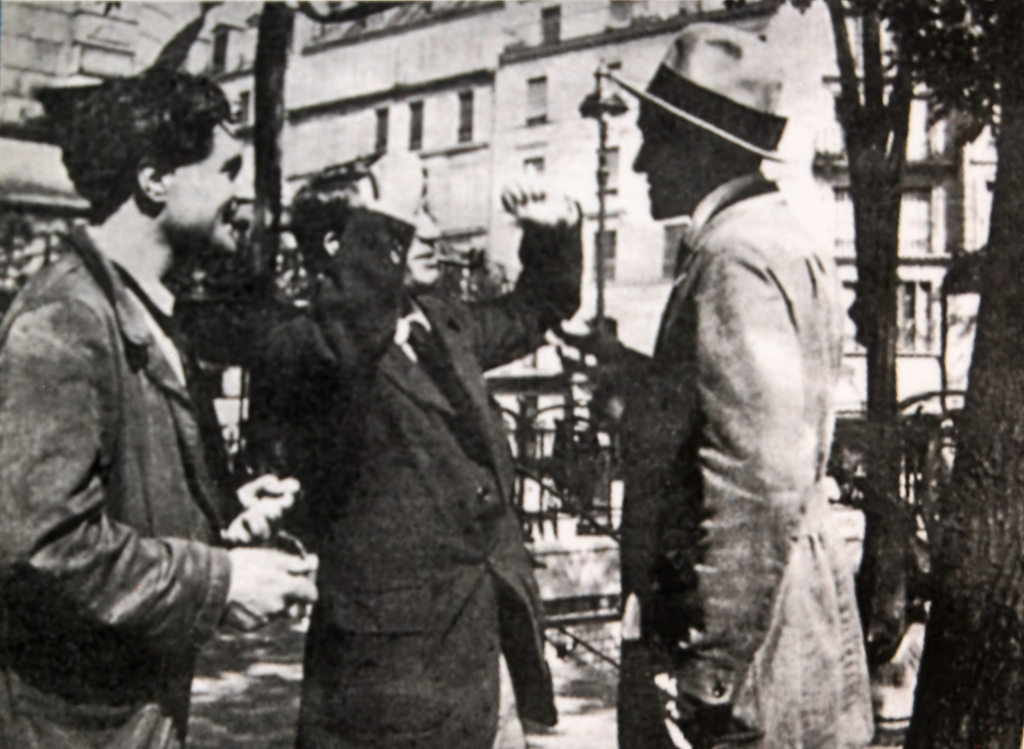
Amedeo Modigliani and Pablo Picasso in front of the Café de la Rotonde in Montparnasse, Paris (Photograph Two)
Analysis of the Portrait
In 1915, Amedeo Modigliani painted this portrait of his fellow artist Pablo Picasso. While the two artists shared an artistic rivalry, theirs was also a relationship of mutual admiration.
Description
This duality can be seen in this portrait. The uneven, two-toned face of the subject seems to suggest an inner conflict within the artist, and also between artist and subject. Picasso was a vibrant character, but in this artwork we see him as reflective and introverted.
His face is reduced to abstract shapes, his pupils removed from his eyes, and the background left entirely plain. This was Modigliani in all his glory - drawing on the influences of sculpture from around the world, combined with elements of Cubism and other contemporary art styles spreading around Paris at that time.
There is no effort to replicate reality, this was about the artist expressing their feelings towards, and from the model. It is mask-like in this regard, with Picasso's eyes entirely neutral, bringing a mystery to the painting, as well as their relationship.
Along with the subdued, introspective tone, the palette is also reduced - with dark tones across the background, clothing and for Picasso's hair - this allows the brighter skin tone to show off radiantly.
Modigliani's Portraits
Modigliani painted many portraits in his career, and in each one, his work conveyed the personality of each model, while adhering to his distinct and very recognizable style. In most works by Modigliani, the faces are elongated, with darkened, almond-shaped eyes.
Here, in this portrait of Picasso, the eye shape is the same, but the head is more rounded, symbolising Modigliani's respect for his fellow artist's intelligence. This is even written subtly in the corner with the word, "savoir," meaning "to know," in French.
As with all of his portraits, Modigliani does not attempt to perfectly replicate Picasso's facial features, but instead focuses on producing a psychological study, based on their knowledge of each other, having spent time socialising together. In comparison to his other portraits, any stylistic differences in this painting are believed to be from a background of complimenting his friend.
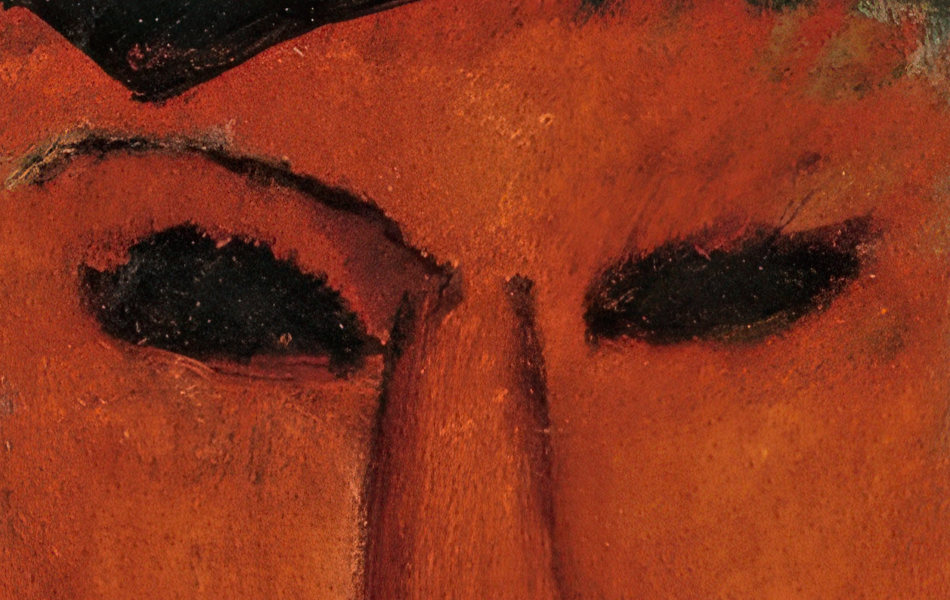
Picasso Portrait Blank Eyes
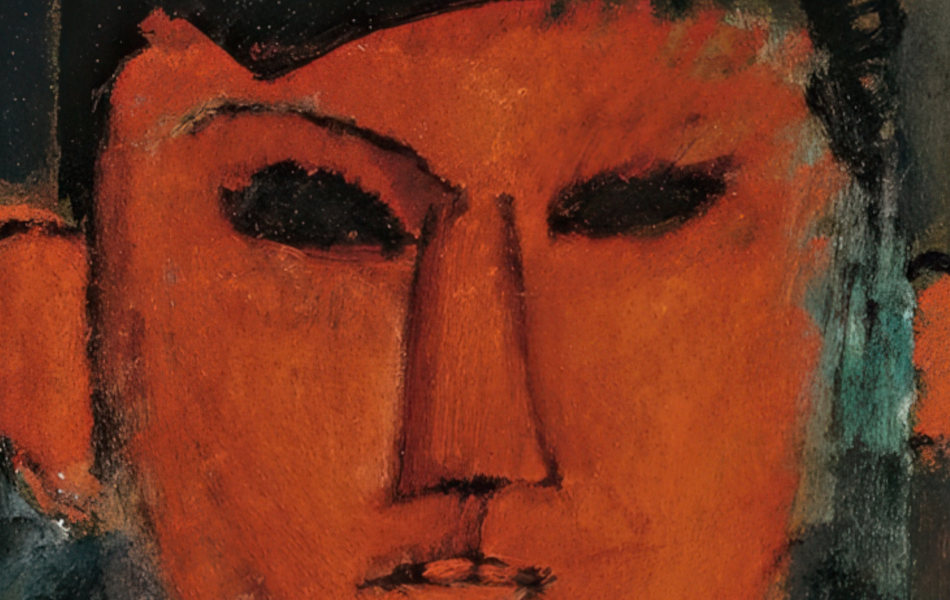
Head Detail of Picasso by Modigliani
A Career Cut Short Early
Amedeo Modigliani continued painting and creating his distinctive works of art, but sadly, found little success during his short life. He passed away in 1920, destitute at the age of 35, achieving posthumous success. To this day, his influence and reputation continue to reach new heights.
The Painting in Detail
FAQs
References
- Sotheby's Auction Page for Modigliani's Portrait of Pablo Picasso
- Secret Modigliani List for Portrait of Pablo Picasso
- John Richardson, A Life of Picasso, 1907-1917, London, 1996, p. 368